
Volcanic Dust Veils: The Science Behind Little Ice Age Cooling

Welcome to Volcano Explorers!
Imagine a world plunged into a mini ice age by something as seemingly insignificant as dust. Our planet's fiery giants hold secrets that ripple across continents and centuries. Today, we're peeling back the layers of history to understand the profound volcanic dust impact on climate, exploring how past eruptions may have triggered periods of unusual cold. Dive in to uncover the chilling truth behind "Volcanic Dust Veils: The Science Behind Little Ice Age Cooling," and prepare to see the power of volcanoes in a whole new light. What if the next eruption changes everything?
- Introduction: Exploring the Link Between Volcanoes and the Little Ice Age
-
Frequently Asked Questions
- What is a volcanic dust veil and how does it form?
- How does volcanic dust impact the Earth's climate?
- What role did volcanic dust veils play in the Little Ice Age?
- How long does the cooling effect of a volcanic dust veil typically last?
- Besides cooling, what are some other potential impacts of volcanic dust on the environment?
- Final Reflection: Echoes of Ash, Whispers of Change
- Unearth the Secrets: Could History Repeat Itself?
Introduction: Exploring the Link Between Volcanoes and the Little Ice Age
Volcanoes and Climate: Unveiling the Power of Eruptions
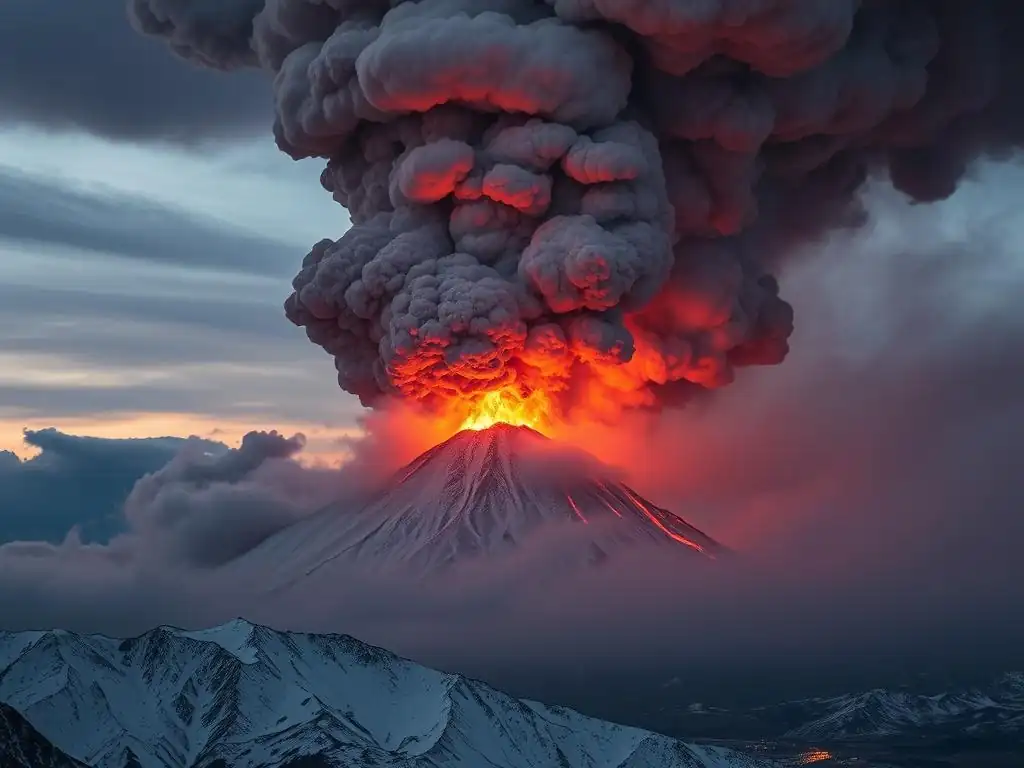
Volcanoes, often perceived as agents of destruction, wield a profound influence on Earth's climate system. Their eruptions, while dramatic and localized in their immediate impact, release massive quantities of gases and particles into the atmosphere. These emissions, particularly sulfur dioxide, can ascend high into the stratosphere, far beyond weather systems in the troposphere.
Once in the stratosphere, sulfur dioxide undergoes chemical reactions to form sulfate aerosols, tiny droplets that can persist for months or even years. This longevity allows them to spread globally, creating a veil of volcanic dust that can reflect incoming sunlight back into space, thereby reducing the amount of solar radiation reaching the Earth’s surface.
The climatic impact of volcanic eruptions is not merely a matter of geological curiosity; it is a crucial factor in understanding past climate variability and potentially predicting future climate scenarios. Throughout history, periods of significant volcanic activity have been linked to noticeable shifts in global temperatures and weather patterns. The scale of these impacts depends on several factors, including the eruption's magnitude, the height of the eruption column reaching the stratosphere, and the latitude of the volcano.
Equatorial eruptions tend to have a more global reach due to stratospheric circulation patterns, distributing aerosols more evenly across both hemispheres. Understanding these complex interactions is paramount to deciphering the intricate relationship between volcanic activity and Earth's climate.
Setting the Stage: The Little Ice Age and its Unexplained Cooling
The Little Ice Age, a period of regional cooling particularly evident in the Northern Hemisphere, spanned roughly from the 14th to the mid-19th century. This era was characterized by colder winters, shorter growing seasons, and the expansion of glaciers in mountainous regions. Historical records, such as paintings depicting frozen canals in the Netherlands and accounts of hardship due to crop failures, vividly illustrate the societal impact of this prolonged cold spell. While the term "Little Ice Age" might suggest a globally uniform cooling, the reality was more nuanced, with temperature anomalies varying geographically and temporally.
The causes of the Little Ice Age have been a subject of intense scientific debate, with no single factor fully explaining the observed cooling. While natural climate variability, solar irradiance fluctuations, and changes in ocean circulation patterns have all been considered, evidence strongly suggests a significant contribution from increased volcanic activity. The timing of several major volcanic eruptions coincides remarkably well with periods of intensified cooling within the Little Ice Age.
This temporal correlation has prompted researchers to investigate the role of volcanic aerosols in driving and sustaining the cooler temperatures experienced during this epoch. The "volcanic dust impact on climate" during the Little Ice Age is therefore a compelling area of study, offering insights into the potent influence of natural forces on global climate.
Frequently Asked Questions
What is a volcanic dust veil and how does it form?
A volcanic dust veil is a layer of fine volcanic ash and aerosols ejected into the upper atmosphere during a volcanic eruption. These particles can stay suspended for extended periods, spreading globally.
How does volcanic dust impact the Earth's climate?
Volcanic dust veils reflect incoming solar radiation back into space. This reduces the amount of sunlight reaching the Earth's surface, leading to a temporary cooling effect.
What role did volcanic dust veils play in the Little Ice Age?
Multiple large volcanic eruptions, creating significant dust veils, are believed to have contributed to the cooling trends observed during the Little Ice Age. These eruptions exacerbated already cooler climatic conditions.
How long does the cooling effect of a volcanic dust veil typically last?
The cooling effect of a volcanic dust veil is usually short-lived, lasting from a few months to a few years. The particles eventually settle out of the atmosphere due to gravitational settling and precipitation.
Besides cooling, what are some other potential impacts of volcanic dust on the environment?
Volcanic dust can also affect precipitation patterns, leading to regional droughts or increased rainfall. Additionally, it can impact air quality and agriculture in areas downwind of the eruption.
Final Reflection: Echoes of Ash, Whispers of Change
The science we've explored regarding volcanic dust's impact on climate isn't just a historical curiosity; it's a crucial lens through which we can understand the complexities of our planet's delicate balance today. The Little Ice Age serves as a stark reminder that seemingly localized events, like volcanic eruptions, can trigger widespread and prolonged climatic shifts, a lesson profoundly relevant in our era of accelerated global warming.
The enduring influence of volcanic eruptions on climate, both past and present, is undeniable. It's humbling to consider how something as seemingly ephemeral as airborne ash can reshape landscapes and influence human history. The climate is what we expect, the weather is what we get.
This quote, often attributed to Mark Twain, underscores the inherent unpredictability of our planet's systems, and the role volcanic dust plays in skewing those expectations. We must remember that natural forces, like volcanic activity, continue to interact with anthropogenic climate change, creating a complex and often unpredictable future.
As you reflect on the science of volcanic dust and its impact on climate, consider the power of understanding these intricate systems. What role can you play in advocating for informed policies and sustainable practices that mitigate the risks of both natural and human-induced climate change? Let the lessons of the Little Ice Age inspire you to become a more conscious and engaged steward of our planet, ensuring a more stable and predictable future for generations to come.
Unearth the Secrets: Could History Repeat Itself?
Thanks for exploring the chilling science behind volcanic dust veils and their impact on the Little Ice Age. We hope you've gained a deeper understanding of how these natural phenomena can drastically reshape our climate. Now, let's turn that knowledge into action!
Here's how you can continue your journey with Volcano Explorers:
- Dive into our extensive global volcano database to analyze eruption patterns and atmospheric impacts of major historical volcanic events.
- Share this article to spark a conversation about the power of volcanoes and their potential role in future climate scenarios.
- Explore more articles on Volcano Explorers to compare the impacts of various volcanic eruptions and learn about current scientific efforts to track and predict these events.
What specific volcanic eruption intrigues you most, and how might it compare to those that triggered the Little Ice Age? Share your thoughts in the comments below!