Volcanic Forensics: Investigating the Timing of Past Eruptions
Uncover the secrets of Earth's fiery past! VolcanoExplorers.org reveals cutting-edge techniques used to precisely determine the timing of past volcanic eruptions, offering…
Read article
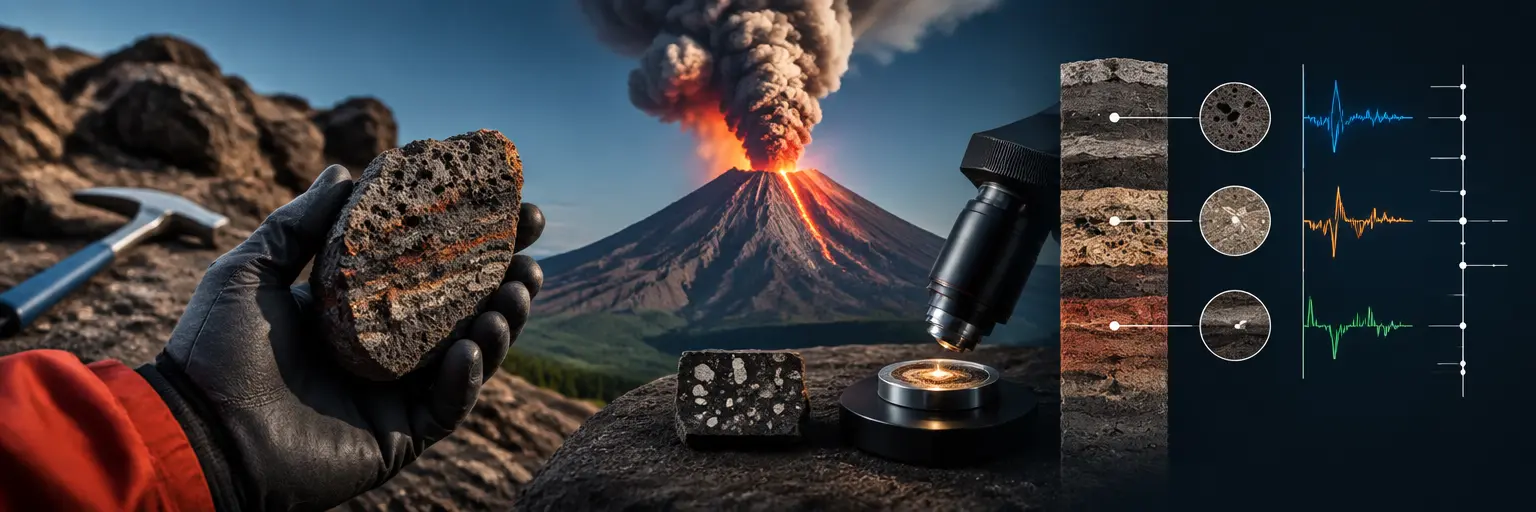
Volcanoes are nature’s most dramatic time capsules, and unlocking their secrets requires precisely dating the layers of ash, lava, and rock they leave behind. Dating volcanic eruptions blends geology, chemistry, and physics to reconstruct when past eruptions occurred, helping scientists understand eruption frequency, hazard recurrence, and Earth’s climatic history. Radiometric techniques—such as potassium-argon (K-Ar) and argon-argon (Ar-Ar) dating—measure the decay of radioactive isotopes in minerals like sanidine and biotite, offering absolute ages from thousands to millions of years old. For more recent events, carbon-14 dating of charred organic material buried beneath tephra provides high-precision timelines, while tephrochronology uses distinct volcanic ash layers as global marker beds to correlate and date sedimentary sequences. Luminescence dating (OSL and TL) reveals when quartz or feldspar grains were last exposed to sunlight or heat, ideal for deposits lacking organic matter. Additionally, dendrochronology (tree-ring counting) and ice core analysis capture annual signatures of past eruptions, enabling cross-referencing with historical records.
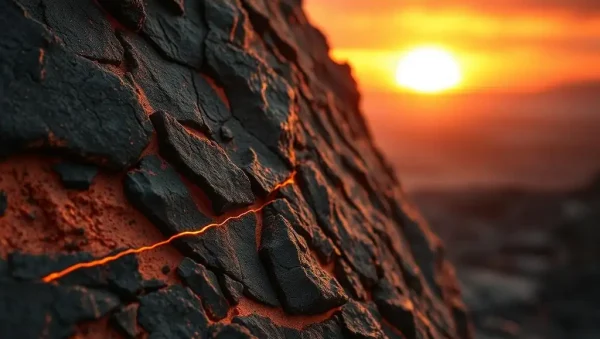
Uncover the secrets of Earth's fiery past! VolcanoExplorers.org reveals cutting-edge techniques used to precisely determine the timing of past volcanic eruptions, offering…
Read article
Unlock the secrets of volcanic eruption age determination! Microscopic analysis of volcanic deposits reveals precise eruption timelines, providing crucial insights into volcanic…
Read article
VolcanoExplorers.org reveals how precise dating of past eruptions helps refine models for predicting volcanic eruption cycles, improving forecasting accuracy and enhancing safety…
Read article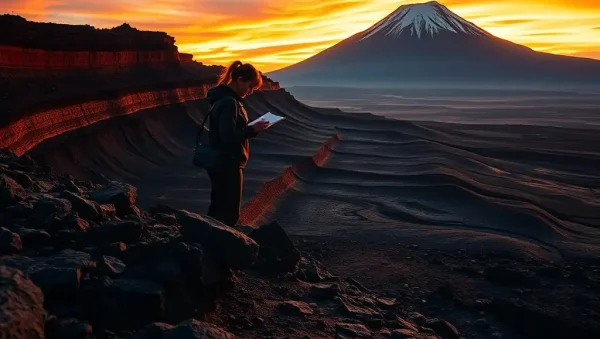
Uncover the secrets hidden within volcanic landscapes! Learn how to decipher geological strata to accurately date past eruptions and predict future activity…
Read article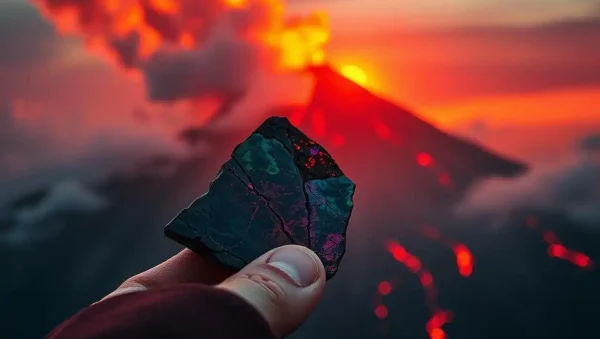
Uncover the secrets of Earth's fiery past! VolcanoExplorers.org explores cutting-edge techniques for dating ancient volcanic eruptions, revealing the dramatic history hidden within…
Read articleUnlocking the precise timeline of past volcanic eruptions is essential for understanding Earth’s dynamic history and assessing future hazards. At VolcanoExplorers.org, our Dating Volcanic Eruptions subcategory dives deep into the scientific toolkit used to reconstruct when ancient volcanoes erupted. From radiometric dating to tephrochronology, these techniques help volcanologists piece together eruption chronologies, correlate ash layers across continents, and refine risk models. Whether you’re a geology enthusiast or a student, this guide offers a clear, SEO-rich exploration of the most reliable methods, practical applications, and real-world case studies that bring prehistoric eruptions to life.
Radiometric dating is the gold standard for determining the absolute age of volcanic rocks, particularly lava flows and ash deposits. By measuring the decay of radioactive isotopes like potassium-40 to argon-40 or uranium-238 to lead-206, scientists can calculate eruption ages with remarkable precision, often to within a few thousand years. The potassium-argon (K-Ar) method is especially powerful for older eruptions, while carbon-14 dating works on organic material trapped beneath ash layers. These techniques provide the backbone for constructing global eruption timelines, enabling researchers to link volcanic activity to climate shifts, mass extinctions, and human migration patterns.
For readers, expect to learn how each isotope system works, which materials are suitable for dating, and the inherent uncertainties involved. We’ll also highlight famous examples, such as dating the Santorini eruption (circa 1600 BCE), where radiometric results helped debate the fall of Minoan civilization. Understanding these methods empowers you to critically evaluate news about ancient eruptions and appreciate the meticulous lab work behind every published eruption date.
Tephrochronology is a cornerstone technique that uses distinct volcanic ash (tephra) layers as chronological markers in sedimentary sequences. Each explosive eruption produces a unique chemical fingerprint, allowing researchers to identify and correlate the same ash layer across different locations—sometimes thousands of kilometers apart. By combining with radiometric dating on the tephra itself or associated organic material, this method creates a precise relative chronology for archaeological sites, ice cores, and lake sediments. The Younger Dryas boundary and the Laacher See eruption are classic examples where tephra layers solved dating puzzles.
This section will guide you through the process of sampling, geochemical analysis (using electron microprobe or ICP-MS), and correlation techniques. You’ll discover how tephra layers act as isochronous horizons, meaning they represent the exact same moment in time globally. For volcanologists and archaeologists alike, tephrochronology offers a powerful way to synchronize disparate records, making it a must-know tool for anyone studying past eruptions or ancient civilizations affected by volcanic events.
Before absolute dating, geologists relied on stratigraphy—the study of rock layers—to determine the relative age of eruptions. The principle of superposition states that in undisturbed sequences, older layers lie beneath younger ones. Volcanic deposits, such as lava flows, pyroclastic flows, and ash falls, are easily recognizable in the field, enabling scientists to build a chronological stack of events without knowing exact years. This method is invaluable for establishing eruption sequences at a single volcano, like Mount St. Helens’ numerous prehistoric layers, and for correlating with floral or faunal fossils to estimate age ranges.
Expect practical insights into field techniques: measuring bed thickness, identifying unconformities (gaps in the record), and mapping lateral continuity. We’ll also explain how stratigraphy complements radiometric dating—while stratigraphy gives order, absolute methods provide numbers. By understanding this layering logic, you’ll better interpret geological maps and cross-sections, gaining a hands-on appreciation for how volcanologists reconstruct eruption histories at sites like Vesuvius or Krakatoa.
For high-resolution dating, ice cores and tree rings offer annual precision unmatched by other methods. Volcanic eruptions inject sulfate aerosols into the stratosphere, which leave a distinct acidic signal in polar ice cores—a technique called volcanic forcing. By counting annual ice layers and matching acidity spikes, scientists can pinpoint the exact year an eruption occurred, even for prehistoric events like the unknown volcano of 1257 CE (later identified as Samalas). Similarly, dendrochronology (tree-ring dating) uses frost rings or reduced growth caused by volcanic winters to date eruptions with year-by-year accuracy.
Readers will explore how ice cores from Greenland and Antarctica are drilled, processed, and cross-referenced globally, revealing synchronized eruption histories. We’ll showcase case studies like Tambora’s 1815 eruption, which produced the “Year Without a Summer,” and how tree-ring data confirmed its climatic impact. These techniques are crucial for constraining eruption timing with annual resolution, which is essential for linking eruptions to historical famines, societal collapses, and short-term climate anomalies. This subcategory will empower you with a deeper respect for these natural archives.
No single dating method is flawless, so modern volcanology embraces a multi-proxy approach, integrating radiometric, tephrochronological, stratigraphic, and annual-layer data. For instance, a lava flow’s K-Ar age might have a 50,000-year uncertainty, but if it lies between two dated tephra layers, its age can be bracketed more tightly. Bayesian statistical models are now used to combine these datasets, producing robust probability distributions for eruption ages. This synergy is critical for high-stakes applications like forecasting future eruptions and assessing volcanic hazards at sites such as Yellowstone or Campi Flegrei.
This final section will walk you through real-world examples of multi-method calibrations, such as the dating of the Campanian Ignimbrite (39,000 years ago), which required aligning tephra, argon dating, and paleomagnetic data. You’ll learn how to assess the reliability of different methods, handle conflicting results, and understand why uncertainties are unavoidable but manageable. By the end, you’ll appreciate that dating eruptions is as much an art of integration as it is a hard science—a skill that makes volcanic chronologies trustworthy and actionable.
Absolute radiometric dating, particularly argon-argon or potassium-argon, offers the highest accuracy for older eruptions, often within 1-2% uncertainty. For recent eruptions (under 50,000 years), carbon-14 dating on associated organic material is extremely reliable. However, no method is universally perfect—combining multiple techniques often yields the most precise ages.
Yes, dendrochronology is highly effective for eruptions from the past few thousand years. Volcanic winters cause narrow or frost-damaged tree rings, which can be cross-dated across regions. This method achieved annual precision for the 1815 Tambora eruption and the 1257 Samalas event.
For eruptions older than a million years, geologists rely on radiometric methods like uranium-lead or argon-argon dating on zircon or feldspar crystals. They also use stratigraphic correlation with marine sediments and magnetic polarity reversals, which help build a global timeline.
Ash layers are isochronous markers—they represent the same instant across wide areas. Their unique chemical fingerprints allow correlation between sites, and when dated, they provide a time stamp for associated fossils, artifacts, or climate records. Tephrochronology is thus a powerful linking tool.
If no volcanic rocks are preserved, scientists can use indirect evidence like ice core acidity spikes, tree-ring growth anomalies, or historical documents. These proxy methods are especially useful for eruptions in the last 10,000 years, helping to date events even when lava or ash is absent.