How Volcanic Eruptions Altered Ancient Trade Routes
Welcome to Volcano Explorers, where we trace the seismic shifts that volcanic eruptions caused in the ancient world’s economic and cultural bloodstream. Far beyond destruction, these catastrophic events served as accidental engineers of history, rerouting caravans, reshaping ports, and redrawing maps. In this subcategory, “The Impact of Volcanic Eruptions on Ancient Trade Routes”, we examine how the ashes of Vesuvius, Thera, and lesser-known giants choked or cleared pathways for silk, spices, and gold, forcing empires to adapt or perish. By blending geology with historical cartography, we reveal the hidden hand of magma in the rise and fall of commercial hubs.
🌋 The Pompeii Effect: Vesuvius and Mediterranean Commerce
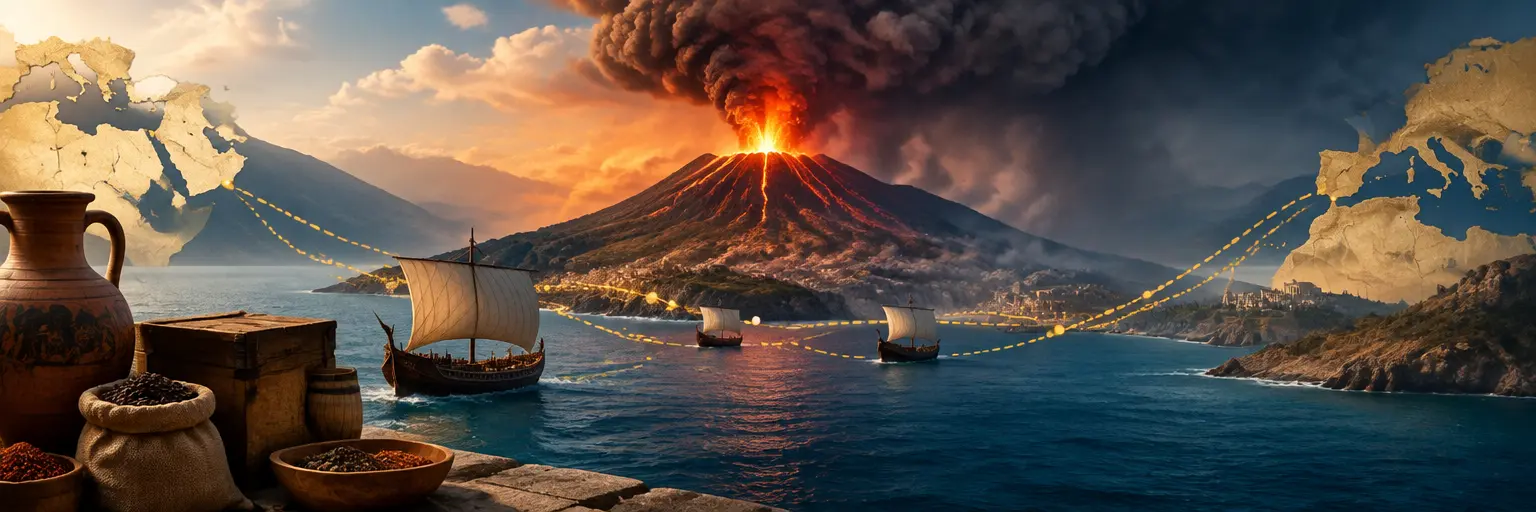
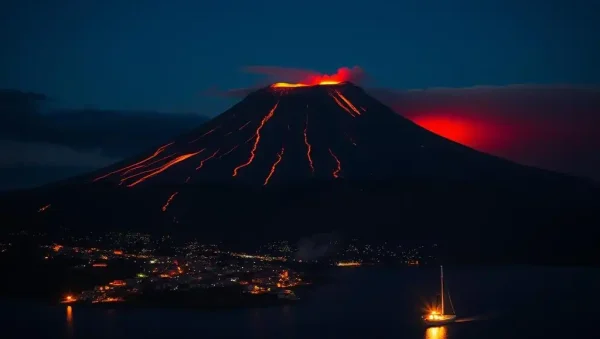
The eruption of Mount Vesuvius in 79 CE did more than bury Pompeii and Herculaneum; it severed the Bay of Naples from its lucrative maritime trade network. Roman merchant ships, which once docked at these bustling ports to exchange wine, olive oil, and garum, were suddenly redirected south to Ostia and Puteoli. The ash that blanketed the region poisoned farmland for decades, forcing reliance on imported grain from Egypt and North Africa, thereby shifting the balance of naval power within the empire.
Moreover, the resulting disruption fostered piracy in the eastern Mediterranean as patrolling Roman fleets were repositioned to manage supply crises in Italy. Routes that had been safe for generations became perilous, pushing traders to invest in overland alternatives through the Alps. This geological catastrophe inadvertently accelerated the development of overland trade posts in Gaul and Germania, deepening the empire’s territorial integration while increasing the cost of exotic goods for Roman citizens.
🏛️ Thera’s Tsunami: Redrawing Aegean Trade Networks
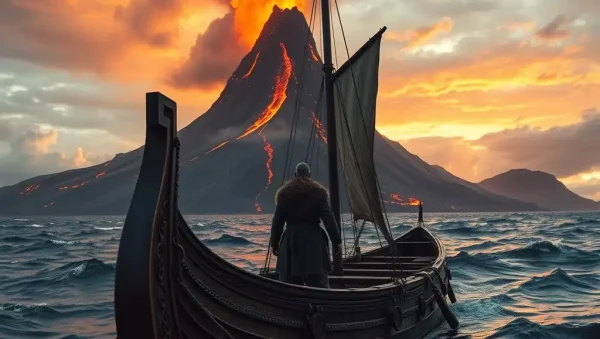
Around 1600 BCE, the colossal eruption of Thera (modern Santorini) sent tsunamis crashing into Minoan coastal cities like Palekastro and Amnissos. These ports were the gateways for the Minoan civilization’s trade in saffron, copper, and fine pottery across the Aegean. The destruction of these harbors allowed Mycenaean Greeks to step into the vacuum, pivoting trade toward mainland centers like Mycenae and Pylos, which previously had acted as secondary brokers rather than dominant players.
The ash cloud carried by the eruption also blocked solar radiation, plunging the region into a mini “volcanic winter” that caused crop failures in northern Greece and western Anatolia. Subsequent famines reduced the volume of grain trade, encouraging longer-distance exchange of preserved goods such as dried fish and olive-based spreads. By recalibrating the economic hierarchy, Thera’s blast indirectly accelerated the fall of Minoan maritime supremacy and the ascent of the Greek mainland’s palatial economies.
🐪 The Ash Roads of the Middle East: Eruptions and the Silk Road
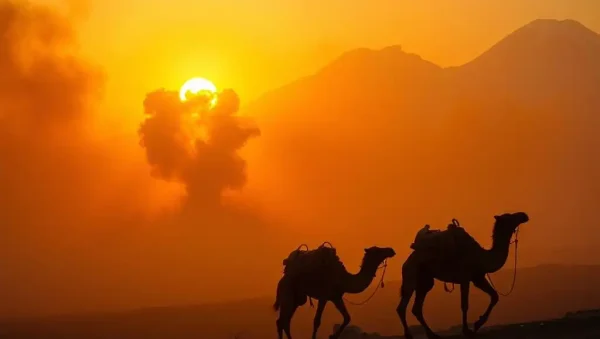
While the Silk Road is often viewed as a continuous ribbon of exchange, volcanic eruptions in the Caucasus and Anatolia frequently acted as violent traffic stops. For instance, the eruption of Mount Nemrut in the first millennium CE deposited thick tephra over caravan routes that linked Persia to the Levant. Merchants transporting Chinese silk and Indian spices had to wait for seasonal winds to clear the ash, creating bottleneck slowdowns that inflated prices in Roman markets.
In the long term, these disruptions encouraged the development of parallel sea routes through the Red Sea and Persian Gulf. Ports like Berenike and Charax Spasinu rose in prominence as traders sought alternatives to ash-choked mountain passes. This diversification meant that a single eruption could no longer cripple the entire transcontinental network, but it catalyzed diplomatic missions between Roman emperors and Parthian kings to ensure safe passage for essential caravans, effectively turning a geological hazard into a geopolitical negotiation tool.
🌊 South Pacific Volcanic Tsunamis and Polynesian Navigation
The volcanic islands of the South Pacific, including Tonga and Vanuatu, frequently erupted with tsunamis that reshaped regional trade in obsidian, basalt, and precious feathers. When a major eruption wiped out a waypoint island, navigators would have to recalibrate their star maps and ocean currents, sometimes discovering new islands in the process. This accidental exploration expanded the Polynesian triangle, accelerating the settlement of remote archipelagos like Hawaii and Easter Island.
Local maritime cultures developed advanced oral traditions of hazard mapping, recording escape routes and safe harbors away from volatile coastlines. By the medieval period, these communities established seasonal trading cycles that intentionally held off on voyages during high volcanic activity periods, based on cloud formations and sea surface temperature anomalies. The net effect was a more resilient, though slower, inter-island exchange network that valued knowledge of geology as much as seamanship.
⚱️ The Volcanic “Ferry” of Obsidian: From Trade Commodity to Strategic Leverage
Obsidian, a glassy volcanic rock, was one of the most traded commodities in ancient times, used for blades, mirrors, and ritual objects. Eruptions that created new obsidian sources, such as at Mount Bora-Bora or in central Mexico, dramatically shifted the economic clout of nearby tribes. When a volcano erupted and exposed fresh obsidian, local groups could monopolize the supply, forcing neighboring states to forge alliances for access.
Accordingly, ancient treaties frequently included clauses about obsidian extraction rights, with volcanic landscapes serving as both resource mines and political boundaries. The decline of a volcano’s obsidian supply, due to cooling lava flows or altered landscape, could equate to a region’s economic collapse, as occurred in ancient Sardinia. This geological control extended into warfare, as possessing a unique obsidian source meant superior weaponry, reinforcing that the impact of eruptions on trade was as much about material richness as pathway disruption.
Frequently Asked Questions
Were all ancient trade disruption effects permanent?
No, some effects were temporary. For example, ash deposits often became fertile soil within a few decades, allowing farmland recovery and a gradual return of old routes. However, if a port was destroyed by a tsunami or sunk beneath pyroclastic flow layers, the trade route had to be reinvented, which sometimes took centuries before reaching the previous volume.
Did eruptions ever create new trade routes?
Yes, absolutely. Eruptions that created islands or reshaped coastlines sometimes opened new navigable passages or shallow bays suitable for anchorage. Additionally, ash-enriched soil promoted agricultural surplus in new areas, which attracted traders and led to the emergence of fresh market towns along previously peripheral routes.
How did ancient merchants know about volcanic risks?
They relied on empirical observation, oral traditions, and seasonal forecasting. Many cultures passed down knowledge of precursory earthquakes, animal behavior changes, and unusual water discoloration. This wisdom was often encoded in folk tales or navigation chants, enabling traders to delay journeys until they deemed the earth’s “breathing” safe.
Which ancient eruption had the most long-lasting trade impact?
The Minoan eruption of Thera is considered the most profound because it collapsed the Minoan thalassocracy and reshaped the entire Aegean economy for centuries. Its effects rippled into Egypt, Anatolia, and the Levant, altering trade agreements that had lasted for generations and creating a domino effect in political alignment.
Are there modern lessons from these ancient volcanic trade disruptions?
Yes, modern supply-chain planners study these events to understand fragility and redundancy. For example, the eruption’s role in encouraging multiple trade paths gives a lesson for today’s ports and shipping lanes. Geological hazard mapping is increasingly integrated into logistics planning, ensuring that alternative routes are pre-established before a disaster strikes.