Explore Roman Accounts of Volcanic Eruptions
Step back in time to the ancient world, where the ground trembled and mountains roared with fire. Roman accounts of volcanic eruptions offer some of the most dramatic and vivid eyewitness descriptions in human history, blending raw observation with myth and prophecy. At Volcano Explorers, this subcategory of Historical Eruptions unpacks the letters, poems, and historical records that captured the fury of Vesuvius, Etna, and other volcanic giants. You will discover how Romans interpreted these disasters as divine warnings, and how their writings shaped modern volcanology.
📜 The Eyewitness Letters of Pliny the Younger
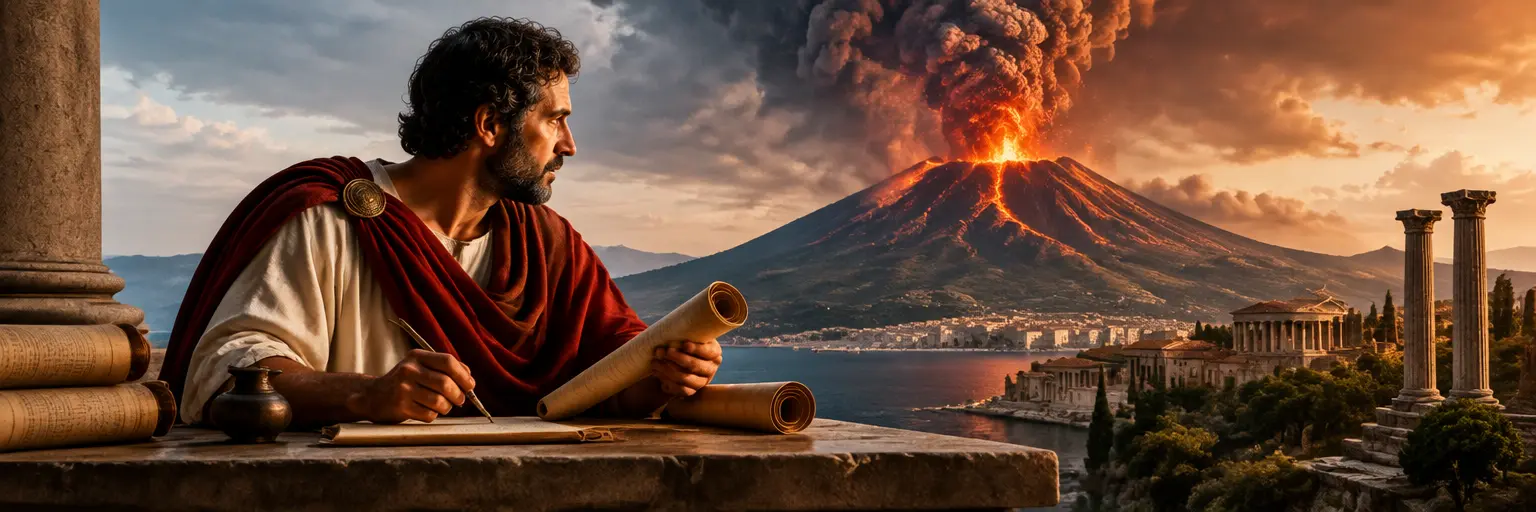
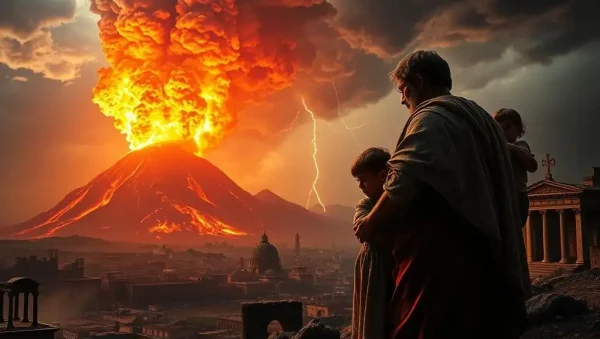
Pliny the Younger’s two surviving letters to the historian Tacitus remain the cornerstone of our understanding of the 79 AD eruption of Mount Vesuvius. These accounts describe the towering pine-tree-shaped cloud, the rain of ash, and the desperate flight of refugees, while also chronicling the heroic death of his uncle, Pliny the Elder, who led rescue missions by sea. The letters are celebrated as the first detailed scientific observations of a volcanic phenomenon, coining terms like "Plinian eruption."
Visitors to this section will find annotated translations, maps of ancient Pompeii and Herculaneum, and timelines that cross-reference the letters with archaeological evidence. We also explore how Pliny’s calm, factual tone contrasts with the panic of the era, offering a unique window into Roman stoicism and intellectual curiosity. Whether you are a history buff or a geology enthusiast, these primary sources reveal how one family’s tragedy became humanity’s first volcanic case study.
🏛️ Roman Myth and Volcanic Deities
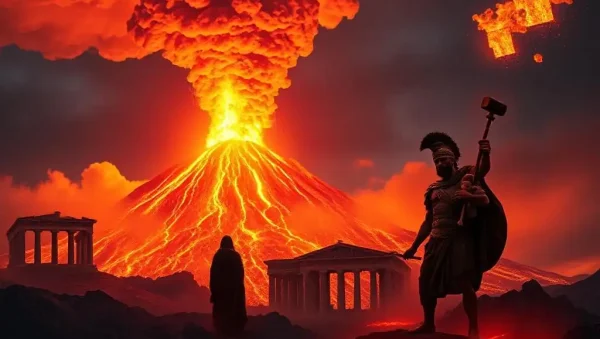
Before science, there was mythology. Romans attributed eruptions to the wrath of gods, especially Vulcan, the blacksmith of the gods, whose forges were believed to be housed beneath Mount Etna. Poets like Virgil and Ovid wove volcanoes into epic tales, portraying eruptions as battles between giants and deities, or as punishment for human arrogance. These narratives served both religious and political purposes, reinforcing the power of emperors who claimed to pacify the gods through rituals and offerings.
Here, you will explore how temple inscriptions, coinage, and festival calendars reveal the civic responses to eruptions, including public sacrifices and the construction of altars. We analyze the symbolic role of fire in Roman culture, linking volcanic activity to concepts of rebirth and destruction. By separating metaphor from fact, you will gain a richer appreciation for how ancient peoples made sense of catastrophic natural events, and how those interpretations influenced early attempts at disaster management.
⚱️ Archaeological Evidence from Pompeii and Herculaneum
Roman literary accounts gain depth when paired with the frozen remains of their cities. Excavations at Pompeii and Herculaneum have unearthed graffiti, official notices, and even shopping lists that hint at daily life right before the eruption of 79 AD. The carbonized scrolls from the Villa of the Papyri, though largely unread, promise lost works of Roman science and philosophy. Meanwhile, plaster casts of victims reveal precise body positions, offering a chilling counterpoint to the written record.
In this segment, we examine how modern dating techniques and volcanic ash stratigraphy confirm or challenge the dates given by Roman historians. We also highlight recent discoveries, like the remains of a wealthy freedman in a villa at Civita Giuliana, which show how social status influenced escape attempts. By cross-referencing texts with artifacts, you will see how archaeology breathes new life into ancient words, and how each dig adds fresh lines to the story of Rome’s most famous catastrophe.
🌋 Comparing Roman Records with Modern Science
How accurate were Roman observers compared to today’s volcanologists? This section benchmarks their descriptions against modern geological models, using pyroclastic flow dynamics, eruption column heights, and tephra dispersion simulations. We find that Pliny the Younger’s “umbrella pine” description perfectly matches a plinian column, while his report of earthquakes and tsunamis aligns with the sequence of magmatic and phreatomagmatic phases. Even the Romans’ belief in subterranean winds mirrors early theories of gas expansion.
However, we also highlight where they erred—for instance, attributing eruptions to seasonal weather or divine moods. By comparing ancient narratives with instrumental records, data from seismometers, and gas emission readings, you will learn how to critically evaluate historical sources as scientific data. This comparative approach is invaluable for researchers working on ancient hazards and for educators who want to show the evolution of earth science from observation to prediction.
📚 Legacy of Roman Volcanology in Renaissance and Modern Thought
The rediscovery of Roman manuscripts during the Renaissance reignited European fascination with volcanoes, directly influencing early geologists like Georgius Agricola and Sir William Hamilton. Hamilton’s letters on Vesuvius, written in the 18th century, mirror Pliny’s style, blending empirical detail with vivid narrative. This legacy persists in modern disaster journalism, where eyewitness accounts remain vital for both public awareness and scientific documentation.
Here, we trace how Latin terms like "ignivomous" (fire-vomiting) entered technical vocabularies, and how Roman administrative responses—such as emergency funds and relocation plans—foreshadowed today's civil protection protocols. You will also find a curated bibliography of Roman texts available in translation, plus digital reconstructions of how Vesuvius appeared in antiquity. This section proves that the ancients not only witnessed eruptions but also laid the intellectual groundwork for our own volcanic observations.
Frequently Asked Questions
What is the most famous Roman account of a volcanic eruption?
The letters of Pliny the Younger, written in 106 AD, are the most famous. They describe the 79 AD Vesuvius eruption, including the giant ash cloud and his uncle’s death. These letters are the only detailed eyewitness source from that event and remain foundational to volcanology.
Did Romans believe eruptions were caused by gods?
Yes, many Romans attributed eruptions to divine wrath, especially from Vulcan or Jupiter. Poets and historians often framed eruptions as omens or punishments. However, some writers like Lucretius offered naturalistic explanations based on air and fire, showing a blend of myth and early physics.
How did Roman records help modern scientists?
Roman accounts provide precise observations of eruption phenomena, such as cloud shapes, ash fall timing, and ground shaking. Modern scientists use these records to calibrate eruption magnitude and sequence. Pliny’s descriptions, for example, match plinian columns and pyroclastic flows, aiding in hazard modeling.
What did Romans do after an eruption?
Romans often held public rituals, sacrifices, and consultative sessions with priests. For rebuilding, they received imperial aid and tax relief. At Pompeii, evidence shows immediate excavation attempts to recover valuables, though many areas stayed buried for centuries.
Are there Roman texts about other volcanoes?
Yes, besides Vesuvius, Romans described Mount Etna and the Aeolian Islands. The poet Virgil mentioned Etna in the Aeneid, while the historian Diodorus Siculus described a 396 BC eruption. These texts offer broader insights into Mediterranean volcanic activity in antiquity.