
Volcanic Ash and Ancient Caravans: Dust Clouds That Choked the Silk Road?

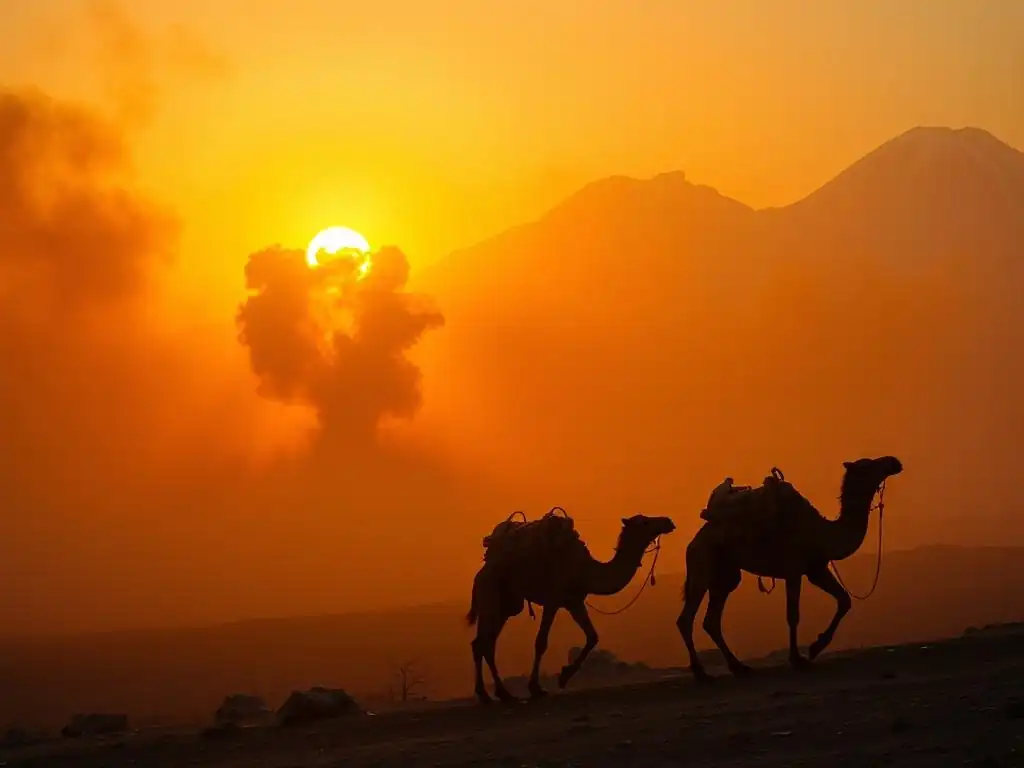
Welcome to Volcano Explorers, where the Earth's fiery heart beats for all to see! Ever wondered how a single eruption could ripple through history, disrupting trade routes and shaping civilizations? Dive into our latest exploration and uncover the surprising impact of volcanic ash on trade, beginning with a fascinating look at whether dust clouds choked the Silk Road, leaving ancient caravans stranded and empires reeling. The story erupts from here...
- Introduction: The Silk Road and the Threat of Volcanic Eruptions
- The Impact of Volcanic Ash on Trade: A Historical Perspective
- Case Studies: Volcanic Eruptions That Affected the Silk Road
- Long-Term Consequences of Volcanic Ashfall on Silk Road Trade
- Adapting to Volcanic Hazards: Strategies Employed by Silk Road Travelers
- Lessons Learned: The Enduring Relationship Between Volcanoes and Human History
-
Frequently Asked Questions
- How does volcanic ash impact trade routes, particularly like the Silk Road?
- What are the primary dangers posed by volcanic ash to caravans or transport vehicles?
- Can volcanic ash affect the goods being transported along trade routes?
- Are there any historical examples of volcanic eruptions impacting major trade routes?
- What measures can be taken to mitigate the impact of volcanic ash on trade and transport?
- Final Reflection: Echoes of Ash in the Winds of Commerce
- Unearth Your Own Discoveries: The Silk Road Awaits!
Introduction: The Silk Road and the Threat of Volcanic Eruptions
Volcanoes and History: Exploring the Intersection of Trade and Volcanic Activity
Volcanoes, often perceived as agents of destruction, have profoundly shaped not only the Earth's geology but also the course of human history. Their eruptions, while capable of devastating local environments, have also exerted influence on global climate patterns, resource availability, and even the trajectory of civilizations. The Silk Road, an ancient network of trade routes that connected the East and West, flourished for centuries, facilitating an unprecedented exchange of goods, ideas, and cultures.
This intricate web of pathways was, however, not immune to the vagaries of nature, including the dramatic and often unpredictable forces unleashed by volcanic eruptions. Understanding the interplay between volcanic activity and human endeavors, particularly trade along the Silk Road, reveals a fascinating dimension of historical resilience and adaptation.
The Silk Road’s dependence on predictable environmental conditions for agriculture, animal husbandry, and safe passage made it inherently vulnerable to large-scale natural events. Volcanic eruptions, with their capacity to generate widespread ashfall, atmospheric disturbances, and climatic shifts, posed a significant threat to the stability of this vital trade artery.
Examining historical and geological records allows us to explore how these natural events may have intersected with and potentially influenced the ebb and flow of trade, the movement of peoples, and the very fabric of societies along the Silk Road. The intersection of volcanology and history provides a unique lens through which to view the past, revealing the profound and sometimes subtle ways in which natural forces have shaped human civilization.
Understanding the Vulnerability of Ancient Trade Routes to Natural Disasters
Ancient trade routes like the Silk Road were lifelines of commerce and cultural exchange, yet their very nature rendered them susceptible to a range of natural disasters. Unlike modern transportation systems that benefit from advanced infrastructure and forecasting, caravans traversing the Silk Road relied on rudimentary infrastructure, seasonal weather patterns, and a deep understanding of local terrains.
Events such as earthquakes, landslides, floods, and droughts could severely disrupt these routes, damaging pathways, depleting resources, and endangering travelers. The vulnerability was compounded by the vast distances and diverse environments spanned by the Silk Road, from arid deserts and high mountain passes to fertile river valleys, each presenting its own set of natural hazards.
Among natural disasters, volcanic eruptions stood out due to their potential for widespread and long-lasting impact. While localized events like earthquakes might destroy sections of a route, a large volcanic eruption could blanket vast regions with ash, alter weather patterns across continents, and trigger secondary disasters like lahars and floods.
The lack of sophisticated communication systems in ancient times meant that information about such events would travel slowly, leaving caravans and settlements unprepared for the ensuing disruptions. This combination of widespread impact, prolonged effects, and limited communication amplified the vulnerability of the Silk Road to volcanic eruptions, making them a particularly potent threat to the intricate network of trade and exchange it facilitated.
The Impact of Volcanic Ash on Trade: A Historical Perspective
Defining Volcanic Ash: Composition, Dispersion, and Effects
Volcanic ash, despite its name, is not the product of combustion like wood ash. It is composed of fine fragments of pulverized rock, minerals, and volcanic glass created during explosive volcanic eruptions. These particles, typically less than 2 millimeters in diameter, are ejected into the atmosphere in colossal plumes that can reach tens of kilometers into the stratosphere.
The composition of volcanic ash varies depending on the type of volcano and the magma involved, but it often contains silica, aluminum, iron, and other elements. Its abrasive nature stems from the sharp, angular shapes of the individual particles, which are capable of causing significant abrasion and irritation.
The dispersion of volcanic ash is governed by prevailing wind patterns and the altitude reached by the eruption plume. Large eruptions can inject ash into the jet stream, enabling it to travel thousands of kilometers downwind, affecting regions far removed from the volcano itself. Ashfall can range from a light dusting, barely noticeable, to thick accumulations several centimeters or even meters deep. The effects of volcanic ash are manifold and can be devastating.
For humans and animals, inhaling ash can cause respiratory problems, eye irritation, and skin damage. Vegetation can be smothered, leading to crop failures and livestock losses. Infrastructure, including buildings and transportation routes, can be damaged or rendered unusable. Furthermore, volcanic ash can contaminate water supplies and disrupt communication and transportation networks, all of which have significant implications for trade and human activity.
How Volcanic Ash Disrupts Caravan Routes: Visibility, Terrain, and Resources
Volcanic ash poses a multifaceted threat to caravan routes, directly impacting visibility, altering terrain, and depleting crucial resources. The most immediate impact is a drastic reduction in visibility. Even a relatively thin layer of ash suspended in the air can create conditions akin to dense fog, making navigation extremely difficult and dangerous. Caravans relying on visual landmarks for orientation would find themselves lost and disoriented, especially in already challenging terrains like deserts or mountain passes. Thicker ashfall can completely obliterate visibility, bringing travel to a standstill and forcing caravans to seek shelter, if available, or risk becoming hopelessly lost.
Beyond visibility, volcanic ash significantly alters the terrain itself. Ash deposits can make pathways slippery and treacherous, particularly on slopes or in areas prone to even slight moisture. Animal hooves and human feet struggle for traction on ash-covered surfaces, slowing travel and increasing the risk of accidents and injuries to both people and animals.
Furthermore, heavy ashfall can bury trails, making them impassable and requiring significant effort to clear. The abrasive nature of ash also damages animal hooves and wears down footwear and equipment at an accelerated rate. Finally, volcanic ash contaminates water sources, rendering them undrinkable or requiring extensive filtering.
Pasturelands become covered in ash, depriving animals of food and necessitating the transport of fodder, a logistical nightmare for long-distance caravans already burdened with trade goods. The cumulative effect of these disruptions – reduced visibility, treacherous terrain, and depleted resources – could cripple caravan routes and severely impede trade along the Silk Road.
Case Studies: Volcanic Eruptions That Affected the Silk Road
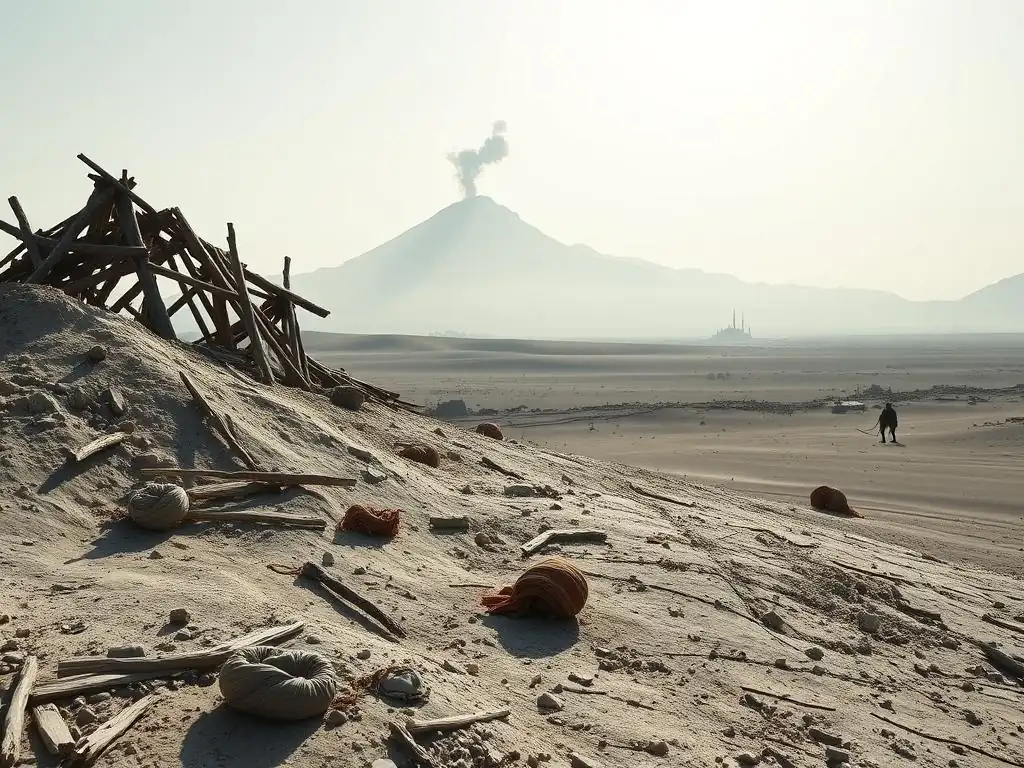
Case Study 1: The 1257 Samalas Eruption and its Potential Impact on Mongol Expansion
The Geographic Context: Lombok, Indonesia and its Downwind Ashfall Zones
The Samalas volcano, located on the island of Lombok, Indonesia, erupted in 1257 CE in one of the largest volcanic events of the Holocene epoch. Lombok is situated within the Indonesian archipelago, a region characterized by intense volcanic and tectonic activity. Its geographic location is significant because, during the summer monsoon season, prevailing winds in this region typically blow from the southeast to the northwest.
This means that the ash plume from a large eruption in Lombok would have been carried across the Indian Ocean and potentially impacted regions as far west as India and even the Middle East, areas connected to the southern routes of the Silk Road. While the primary ashfall would have been concentrated closer to the source, finer particles could have been transported globally, contributing to atmospheric haze and climate anomalies worldwide.
The Eruption Event: VEI-7 Eruption, Global Climate Anomaly
The 1257 Samalas eruption was a colossal event, estimated to be a Volcanic Explosivity Index (VEI) 7, placing it among the most powerful eruptions in the past few millennia. Ice core records from both Greenland and Antarctica provide compelling evidence of a massive sulfate spike in the years immediately following 1257, a clear signature of a major volcanic eruption. These records, combined with geological evidence from Lombok itself, have allowed scientists to reconstruct the scale and impact of the eruption.
The eruption injected vast quantities of sulfur dioxide into the stratosphere, leading to a significant reduction in solar radiation reaching the Earth's surface. This, in turn, triggered a period of global cooling, with historical records from Europe and Asia documenting unusually cold summers and crop failures in the years following 1257.
Direct Impacts on Caravans: Potential Disruption of Trade Routes and Mongol Military Campaigns
The timing of the Samalas eruption coincides with a period of significant Mongol expansion across Asia. While direct historical accounts explicitly linking the eruption to Mongol campaigns are scarce, the potential for disruption to trade and logistics is considerable. The southern Silk Road routes, passing through India and potentially areas further west affected by the eruption's ashfall, could have experienced significant disruptions.
Caravans transporting goods would have faced challenges from reduced visibility, ash-covered terrain, and resource scarcity. Furthermore, the eruption's impact on climate and agriculture could have led to food shortages and economic instability across vast regions, potentially affecting the Mongol Empire's supply lines and resource base. While not definitively proven, the Samalas eruption presents a plausible scenario for a natural event that could have indirectly impacted the Mongol expansion by disrupting trade networks and creating logistical challenges for military campaigns reliant on long-distance supply chains.
Case Study 2: The 536 AD Event and its Possible Link to Reduced Trade along the Northern Silk Road
The Geographic Context: Unidentified Source, Northern Hemisphere Impact
The year 536 AD is marked by a mysterious global event characterized by a prolonged period of atmospheric dust veiling the sun, leading to widespread cooling and societal upheaval. Unlike the Samalas eruption, the precise volcanic source of the 536 AD event remains unidentified. However, ice core data reveals evidence of a volcanic eruption around this time, suggesting a likely volcanic origin for the atmospheric dust veil.
The impact of this event was primarily felt across the Northern Hemisphere, with historical accounts from Europe, the Middle East, and Asia describing a dimming of the sun, reduced daylight, and unusually cold weather. The northern Silk Road routes, traversing Central Asia and connecting China with the West, would have been directly within the affected zone, experiencing the brunt of the climatic and environmental consequences.
The Eruption Event: Prolonged Dimming of Sunlight, Climate Cooling
The 536 AD event was not characterized by a single, cataclysmic eruption like Samalas, but rather by a more sustained period of atmospheric haze, likely caused by one or possibly multiple volcanic eruptions in quick succession. Tree-ring data shows a sharp drop in growth rates around 536 AD across various regions in the Northern Hemisphere, indicating a period of significant environmental stress. Historical records from the Byzantine Empire, China, and elsewhere describe reduced crop yields, famine, and social unrest.
The prolonged dimming of sunlight would have disrupted agricultural cycles, leading to widespread food shortages and economic hardship. The extended period of cooling and reduced sunlight distinguishes the 536 AD event from a typical volcanic eruption's immediate aftermath, suggesting a more prolonged and pervasive atmospheric disturbance.
Direct Impacts on Caravans: Reduced Agricultural Productivity, Famine, and Trade Decline
The 536 AD event and its subsequent years of climate disruption likely had a significant negative impact on trade along the northern Silk Road. Reduced agricultural productivity across Central Asia would have led to food shortages and famine, destabilizing local economies and potentially disrupting trade networks.
Caravans relying on local provisions along their routes would have found resources scarce and expensive, increasing the costs and risks of travel. The general economic downturn caused by widespread crop failures and famine could have reduced demand for luxury goods traded along the Silk Road, further contributing to trade decline.
While the 536 AD event was not solely caused by volcanic ashfall directly disrupting caravan routes, its broader climatic and economic consequences would have created a hostile environment for trade, potentially leading to a period of reduced activity and economic contraction along the northern Silk Road. The impact of volcanic ash on trade in this case is indirect but profound, mediated through climate change and economic disruption.
Long-Term Consequences of Volcanic Ashfall on Silk Road Trade
Economic Disruptions: Decreased Trade Volume and Increased Costs
Volcanic ashfall, even when not directly impacting trade routes continuously, can trigger long-term economic disruptions that ripple through trade networks like the Silk Road. Immediate effects such as route closures and caravan delays translate directly into increased transportation costs. Goods take longer to reach their destinations, perishable items spoil, and merchants face higher labor and animal feed expenses. Beyond immediate disruptions, ashfall can damage infrastructure, including roads, bridges, and settlements that served as trading posts and resupply points along the Silk Road. Rebuilding and repairing this infrastructure requires significant investment and time, further hindering trade recovery.
Perhaps the most significant long-term economic impact stems from the effect of volcanic ash on agriculture. Ashfall can contaminate soil, reduce soil fertility, and damage crops for years following an eruption. Regions heavily reliant on agriculture for their economies and as suppliers to caravans along the Silk Road would suffer prolonged economic hardship. Reduced agricultural output leads to food shortages, price inflation, and decreased purchasing power, all of which stifle trade.
Furthermore, the uncertainty and risk associated with volcanic events can discourage long-term investment in trade and related infrastructure. Merchants may become hesitant to commit resources to routes perceived as vulnerable to volcanic disruptions, leading to a sustained decrease in trade volume and a shift towards safer, albeit potentially less profitable, alternatives. Therefore, the impact of volcanic ash on trade extends far beyond immediate disruptions, creating long-lasting economic challenges.
The economic disruptions caused by volcanic ashfall inevitably lead to significant social and political consequences. Resource scarcity, particularly food and water, becomes a major driver of social unrest and migration. Regions experiencing crop failures and famine due to ashfall may see populations displaced as people seek more fertile lands and stable food supplies. Mass migrations can strain resources in receiving areas, leading to competition and conflict. Along the Silk Road, which traversed diverse political entities and ethnic groups, resource scarcity triggered by volcanic events could exacerbate existing tensions and potentially spark conflicts over land, water, and trade routes.
Furthermore, volcanic eruptions, as dramatic and often terrifying natural events, can undermine the legitimacy of existing political authorities. Societies lacking scientific understanding of volcanism may interpret eruptions as signs of divine displeasure or political instability. The inability of rulers to mitigate the effects of volcanic disasters or provide adequate relief to affected populations can erode public trust and potentially contribute to political upheaval.
In the context of the Silk Road, where trade and political stability were intertwined, volcanic events capable of causing widespread social and political disruption could have had cascading effects, destabilizing empires and altering the geopolitical landscape. The impact of volcanic ash on trade is thus intricately linked to broader social and political stability.
Environmental Changes: Soil Degradation and Impact on Agriculture
Volcanic ash, while initially providing some nutrients to the soil, can also cause long-term environmental changes that negatively impact agriculture and consequently, trade. The immediate effect of ashfall can be beneficial in the short term, as volcanic ash contains minerals that can enrich soil fertility over time. However, thick ash deposits can physically smother vegetation, blocking sunlight and hindering plant growth. The abrasive nature of ash can also damage plant tissues and make it difficult for animals to graze. Moreover, volcanic ash can alter soil pH, sometimes making it too acidic or alkaline for optimal crop growth.
In the long term, repeated ashfall events can lead to soil degradation. While a single, thin layer of ash may be beneficial, thick and frequent deposits can disrupt soil structure, reduce water infiltration, and create hardpans that hinder root growth. The long-term impact on agriculture is particularly significant in regions along the Silk Road that relied on rain-fed agriculture or irrigation systems vulnerable to ash contamination.
Reduced agricultural productivity not only affects local populations but also diminishes the capacity of these regions to supply caravans with provisions and trade goods, further impacting the overall flow of trade. The environmental changes caused by volcanic ash, therefore, represent a persistent and often overlooked long-term consequence of volcanic eruptions on the Silk Road trade network.
Adapting to Volcanic Hazards: Strategies Employed by Silk Road Travelers
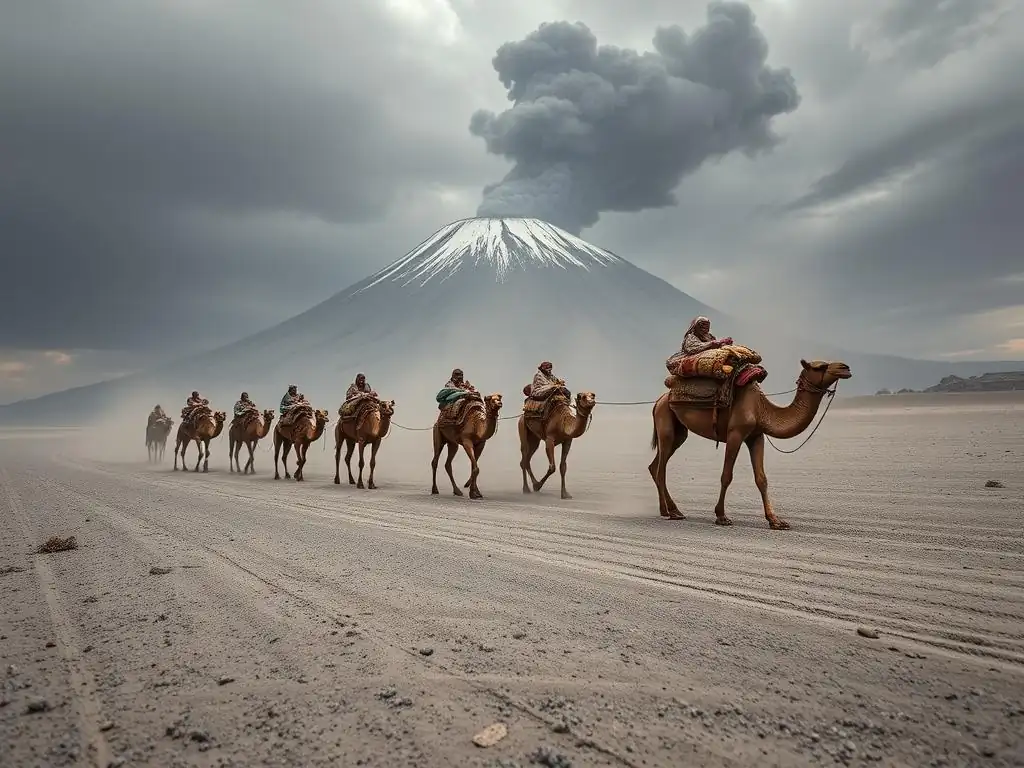
Route Diversification: Finding Alternative Paths to Avoid Ashfall
Silk Road travelers, acutely aware of the unpredictable nature of their journey, likely employed strategies to mitigate risks from various natural hazards, including volcanic eruptions. Route diversification, the practice of utilizing multiple pathways and alternative routes, would have been a key adaptation to volcanic ashfall. When faced with reports or signs of volcanic activity along a primary route, caravans could divert to alternative paths, even if longer or less convenient, to avoid areas likely to be affected by ashfall. The Silk Road was not a single road but rather a network of interconnected routes, offering some flexibility in navigation.
Knowledge of local terrains, weather patterns, and potential volcanic areas would have been crucial for effective route diversification. Local guides and experienced caravan leaders would have possessed invaluable knowledge about alternative pathways and safe havens. Furthermore, the decentralized nature of Silk Road trade, with numerous merchants and caravan operators acting independently, allowed for a degree of resilience.
If one route became impassable due to volcanic ash, others could remain operational, ensuring the continued flow of trade, albeit perhaps at a reduced volume. Route diversification, therefore, represents a proactive adaptation strategy employed by Silk Road travelers to minimize the impact of volcanic ash on trade routes.
Resource Management: Stockpiling Water and Food Supplies
Resource management, particularly the stockpiling of water and food supplies, would have been another essential strategy for Silk Road travelers to cope with volcanic hazards. Volcanic ashfall can contaminate water sources and disrupt agricultural production, making these essential resources scarce. Caravans anticipating potential disruptions would have carried extra supplies of water and food to sustain themselves and their animals during periods of ashfall or route closures. This might involve carrying water skins or containers, and transporting preserved food items like dried fruits, grains, and salted meats.
Furthermore, knowledge of reliable water sources and food caches along alternative routes would have been crucial. Caravans might have established or utilized pre-existing storage points along less frequently used pathways, ensuring access to resources in case primary routes were blocked by volcanic ash.
Efficient resource management not only enhanced the resilience of individual caravans but also contributed to the overall robustness of the Silk Road trade network by allowing travelers to weather periods of disruption caused by volcanic events or other natural disasters. Stockpiling and strategic resource allocation were vital adaptations to minimize the impact of volcanic ash on trade journeys.
Communication Networks: Sharing Information About Volcanic Activity
While lacking modern communication technologies, Silk Road communities and travelers likely relied on established communication networks to share information about various threats, including volcanic activity. Word-of-mouth communication, passed along trade routes and through settlements, would have been a primary means of disseminating news. Messengers and travelers returning from affected areas could report on volcanic eruptions, ashfall zones, and route conditions. Trading posts and caravanserai, acting as hubs of information exchange, would have played a vital role in collecting and disseminating news about volcanic hazards.
The speed and reliability of these communication networks would have varied depending on the distance and the urgency of the information. While not as instantaneous as modern communication, these networks would have provided some level of early warning and situational awareness, allowing caravans to make informed decisions about route selection, resource management, and travel timing.
Effective communication, even in its rudimentary forms, was essential for mitigating risks and enabling adaptation to volcanic hazards, contributing to the overall resilience of the Silk Road trade system. Sharing information about volcanic events helped to reduce the impact of volcanic ash on trade by enabling proactive responses.
Lessons Learned: The Enduring Relationship Between Volcanoes and Human History
The Importance of Understanding Volcanic Hazards in Trade and Travel
The historical relationship between volcanic eruptions and the Silk Road underscores the critical importance of understanding volcanic hazards in the context of trade and travel, even in the modern era. While transportation systems have become more technologically advanced, they remain vulnerable to large-scale volcanic events. Air travel can be severely disrupted by volcanic ash clouds, as demonstrated by numerous incidents in recent decades, causing significant economic losses and travel delays. Ground transportation networks can also be affected by ashfall, lahars, and other volcanic hazards.
Furthermore, global supply chains, much like the ancient Silk Road, are intricate and interconnected. Volcanic eruptions in key regions could disrupt agricultural production, manufacturing, and resource extraction, leading to cascading economic impacts worldwide. Understanding volcanic hazards, monitoring volcanic activity, and developing effective mitigation strategies are therefore crucial for ensuring the resilience of modern trade and transportation systems. The lessons from the Silk Road remain relevant, highlighting the enduring need to consider natural hazards, including volcanoes, in planning and managing global trade and travel networks. The impact of volcanic ash on trade is a lesson that transcends time.
Future Research: Uncovering More Evidence of Volcanic Impacts on the Silk Road
Future research holds the potential to uncover more detailed evidence of volcanic impacts on the Silk Road, enhancing our understanding of this complex relationship. Archaeological investigations along Silk Road routes could focus on identifying layers of volcanic ash in ancient settlements and caravan sites. Analyzing the chemical composition of these ash layers could help pinpoint the source volcanoes and the timing of eruptions. Paleoclimatic studies, using tree rings, lake sediments, and other proxies, can provide more refined data on past climate anomalies potentially linked to volcanic eruptions and their impact on regions traversed by the Silk Road.
Historical records from various cultures along the Silk Road, including Chinese, Persian, Arabic, and Byzantine sources, could be further examined for mentions of unusual weather events, crop failures, or societal disruptions that might correlate with known volcanic eruptions. Interdisciplinary research combining geological, archaeological, and historical data is essential for building a more comprehensive picture of the impact of volcanic ash on trade and human societies along the Silk Road. Further investigation promises to reveal more nuanced and detailed insights into this fascinating intersection of natural and human history.
Volcanoes and History: Continuing to Explore the Power and Influence of Volcanoes
The story of volcanic ash and ancient caravans on the Silk Road is just one example of the profound and enduring influence of volcanoes on human history. Volcanoes have shaped landscapes, influenced climates, and impacted civilizations across millennia. From the fertile volcanic soils that have supported agriculture in many regions to the devastating eruptions that have reshaped societies, volcanoes have been both creators and destroyers. Continuing to explore the relationship between volcanoes and human history is crucial for understanding the long-term interplay between natural forces and human endeavors.
By studying past volcanic events and their societal consequences, we can gain valuable insights into how to better prepare for and mitigate the risks posed by volcanoes in the present and future. Understanding the impact of volcanic ash on trade, migration, and societal stability in the past can inform strategies for building more resilient communities and sustainable economies in volcanically active regions and beyond. The ongoing exploration of volcanoes and history promises to reveal even more about the power and influence of these dynamic geological forces on the human story.
Frequently Asked Questions
How does volcanic ash impact trade routes, particularly like the Silk Road?
Volcanic ash can severely disrupt trade by reducing visibility, making routes impassable due to thick ash deposits, and damaging infrastructure such as roads and bridges. This can lead to significant economic losses.
What are the primary dangers posed by volcanic ash to caravans or transport vehicles?
The main threats are engine damage from ingested ash, reduced traction on ash-covered surfaces, and health hazards to travelers inhaling the fine particles. Navigation also becomes difficult due to poor visibility.
Can volcanic ash affect the goods being transported along trade routes?
Yes, volcanic ash can contaminate and damage goods. It can corrode metals, scratch surfaces, and render food unsafe for consumption. This reduces the value and saleability of the transported items.
Are there any historical examples of volcanic eruptions impacting major trade routes?
While specific eruptions directly "choking" the Silk Road are debated, large-scale eruptions have undoubtedly impacted global trade and climate. Indirectly, eruptions impacting regions connected to the Silk Road would have had consequences.
What measures can be taken to mitigate the impact of volcanic ash on trade and transport?
Mitigation strategies include route diversions, ash removal efforts, the use of protective gear for travelers, and implementing air filtration systems in vehicles. Early warning systems are also crucial.
Final Reflection: Echoes of Ash in the Winds of Commerce
The narrative of volcanic ash and its impact on the Silk Road, as we've explored, isn't just a historical anecdote; it's a potent reminder of the fragility of interconnectedness and the enduring power of natural forces to reshape human endeavors. Understanding how these ancient trade routes were disrupted by seemingly distant volcanic events offers invaluable insights into the resilience, adaptability, and ultimately, the vulnerability of global networks, even today.
The story of volcanic ash choking the Silk Road resonates deeply because it underscores the unpredictable nature of global events and their cascading effects. It reminds us that even the most meticulously planned systems can be upended by forces beyond our immediate control. The only constant is change,
a sentiment Heraclitus expressed centuries ago, and one that rings especially true when considering the volatile interplay between nature and human enterprise.
As we conclude this journey through time and ash, let us consider the lessons learned. How can we, in our own lives and in our global systems, build greater resilience against unforeseen disruptions? How can we learn from the past to better prepare for the future? The echoes of volcanic ash still whisper in the winds of commerce, urging us to reflect on the delicate balance between progress and the forces that shape our world.
Unearth Your Own Discoveries: The Silk Road Awaits!
Thank you for exploring the fascinating intersection of volcanic activity and ancient history! We hope you enjoyed learning about the potential impact of volcanic ash on the Silk Road. Now, let's continue the journey.
Here's how you can delve deeper:
- Formulate your own hypothesis about the Silk Road: Using geological data and historical records, can you identify other volcanic events that may have disrupted trade routes?
- Explore our interactive map of active volcanoes and trace their proximity to historical trade routes. Share your insights in the comments section below!
- Learn about modern communities living near active volcanoes: What lessons can they teach us about resilience and adaptation?
What unexpected volcanic connections to history will you uncover today?