
Mount Fuji's Eruptions and Japanese Trade Routes: Shaping the Landscape of Commerce

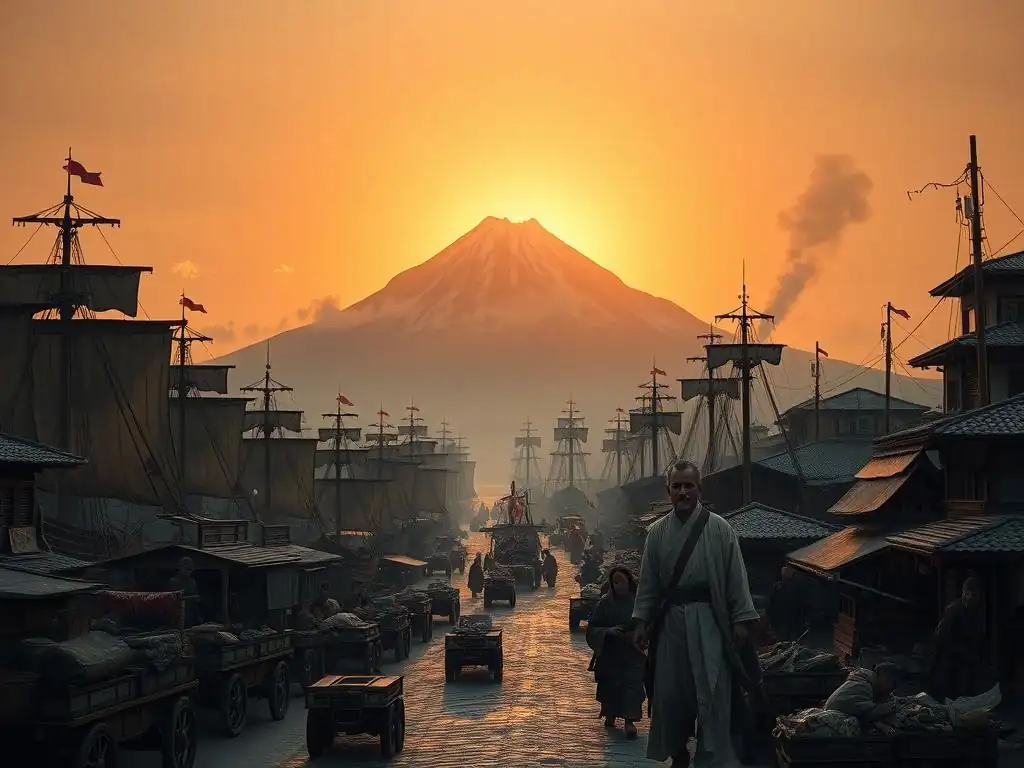
Welcome to Volcano Explorers, where we unearth the Earth's fiery secrets! Have you ever considered the profound impact a volcanic eruption can have, not just on the landscape, but on the very fabric of society? Prepare to be amazed as we delve into the past to explore how Mount Fuji's eruptions impacted trade routes, forever shaping the flow of commerce in Japan. But what hidden consequences lay beneath the ash? Read on to discover the unexpected ways this iconic volcano has influenced the world around it.
- Introduction: Mount Fuji, Trade, and Historical Impact
- The Geological History of Mount Fuji and Eruptive Patterns
- Ancient Japanese Trade Routes: An Overview
- How Mount Fuji Eruptions Impacted Trade Routes
- Adapting to Volcanic Activity: Mitigation Strategies and Trade Route Adjustments
- Long-Term Effects: Shaping the Economic Landscape of Japan
- Conclusion: Mount Fuji's Eruptions Impact Trade and Lessons for the Future
-
Frequently Asked Questions
- What is the potential impact of a Mount Fuji eruption on trade routes in Japan?
- How have past eruptions of Mount Fuji affected Japanese trade historically?
- What types of trade are most vulnerable to disruption from a Mount Fuji eruption?
- What measures are being taken to mitigate the potential trade impacts of a future Mount Fuji eruption?
- How can businesses prepare for the possibility of a Mount Fuji eruption and its impact on trade?
- Final Reflection: The Enduring Legacy of Volcanic Influence
- Chart Your Course: Rediscover the Power of Volcanic Landscapes!
Introduction: Mount Fuji, Trade, and Historical Impact
Mount Fuji, or Fuji-san as it's reverently known in Japan, is more than just a breathtakingly beautiful stratovolcano; it is a cultural icon deeply intertwined with the nation's history and economy. For centuries, its majestic silhouette has dominated the Japanese landscape, a constant presence overseeing the ebb and flow of life and commerce.
However, this iconic mountain is also an active volcano, and its eruptions have, throughout history, profoundly impacted the intricate network of trade routes that crisscrossed Japan. Understanding the interplay between Mount Fuji's volcanic activity and these trade routes is crucial to grasping the historical development of Japanese commerce and the resilience of its people in the face of natural challenges.
This article will explore the geological history of Mount Fuji, the established trade routes of pre-modern Japan, and the significant ways in which volcanic eruptions, particularly those of Mount Fuji, have reshaped the landscape of commerce, leaving a lasting legacy on the economic and social fabric of the nation.
The strategic location of Mount Fuji, near major population centers and vital transportation arteries, meant that its eruptions had far-reaching consequences. Ancient Japan relied heavily on overland and coastal trade routes to transport essential goods, fostering economic growth and cultural exchange. When Mount Fuji erupted, the disruptions to these routes were not merely logistical inconveniences; they were significant events that could trigger economic hardship, social upheaval, and necessitate innovative adaptations.
By examining historical records and geological evidence, we can uncover the tangible impact of Mount Fuji's eruptions on Japanese trade, revealing a dynamic relationship between natural forces and human endeavors. This exploration will not only illuminate a fascinating aspect of Japanese history but also offer valuable insights into the vulnerabilities and resilience of trade networks in volcanically active regions around the world.
The Geological History of Mount Fuji and Eruptive Patterns
Formation of Mount Fuji: A Stratovolcano's Evolution
Mount Fuji's imposing presence is the result of a complex geological history spanning hundreds of thousands of years. Its formation began approximately 700,000 years ago, initiating with the older volcanoes Komitake and Ashitaka. The current Mount Fuji, known as Shin-Fuji or "New Fuji," started developing around 10,000 years ago, rising upon the foundations of these earlier volcanic structures.
This makes Mount Fuji a relatively young stratovolcano, a type of volcano characterized by its conical shape built up by many layers of hardened lava, tephra, pumice, and volcanic ash. These layers are formed from successive eruptions over long periods, with each eruption contributing to the volcano's increasing height and complexity.
The volcanic activity that sculpted Mount Fuji is driven by the subduction of the Pacific Plate beneath the Okhotsk Plate and the Philippine Sea Plate. This tectonic setting creates intense pressure and heat deep within the Earth, melting rock to form magma. The magma, being less dense than the surrounding solid rock, rises towards the surface.
Over millennia, repeated eruptions of lava and pyroclastic material solidified, layer upon layer, creating the iconic symmetrical cone we recognize today. The composition of Mount Fuji's volcanic materials is primarily basalt and andesite, typical of stratovolcanoes found in subduction zones. The ongoing tectonic activity in this region means that Mount Fuji remains an active volcano, with the potential for future eruptions, a reality that has shaped the lives and trade routes of the surrounding populations for centuries.
Understanding Mount Fuji's Eruption History: Past Events and Future Predictions
Mount Fuji's eruption history is punctuated by periods of both intense activity and relative quiescence. Historical records and geological studies indicate that Mount Fuji has experienced several significant eruptions throughout the Holocene epoch.
One of the earliest recorded eruptions dates back to 800 AD, known as the Enryaku eruption, which, according to historical texts, lasted for several months and caused considerable ashfall in the surrounding regions. Subsequent eruptions occurred intermittently over the centuries, including notable events in 864-866 AD (Jogan eruption), which significantly altered the landscape by creating the vast Aokigahara forest on the northwestern flank of the volcano from lava flows.
The most recent confirmed eruption of Mount Fuji was the Hoei eruption in 1707, during the Edo period. This eruption, unlike many others, did not produce lava flows but was primarily a phreatic eruption, driven by the interaction of magma with groundwater. It unleashed massive amounts of volcanic ash and pumice, which blanketed Edo (present-day Tokyo), located over 100 kilometers away.
The sheer scale of the ashfall from the Hoei eruption provides a stark reminder of the potential reach and impact of Mount Fuji's activity. While Mount Fuji has been dormant since 1707, volcanologists continuously monitor the volcano for signs of unrest.
Using techniques such as seismographs, GPS measurements of ground deformation, and gas analysis, scientists track subtle changes that might indicate magma movement beneath the surface, allowing for better predictions and preparedness for potential future eruptions. While predicting the exact timing and magnitude of future eruptions remains a complex challenge, ongoing research and monitoring efforts are crucial for mitigating risks associated with this iconic, yet potentially hazardous, volcano.
Volcanic Hazards Associated with Mount Fuji: Ashfall, Lahars, and Pyroclastic Flows
Mount Fuji, as an active stratovolcano, poses a range of volcanic hazards that can significantly impact surrounding areas and, historically, trade routes. Ashfall is one of the most widespread and frequently experienced hazards. Volcanic ash, composed of fine particles of rock and glass, can be carried by wind over vast distances, disrupting transportation, damaging infrastructure, and affecting agriculture. Even relatively thin layers of ash can render roads and waterways impassable, causing significant delays and blockages to trade networks. The abrasive nature of ash can also damage machinery, including vehicles and ships, further compounding transportation challenges.
Lahars, volcanic mudflows or debris flows, are another serious hazard associated with Mount Fuji, especially given its snow cap and steep slopes. Lahars are triggered when volcanic eruptions melt snow and ice or when heavy rainfall mobilizes loose volcanic debris on the volcano's flanks. These flows can travel at high speeds down river valleys, destroying everything in their path, including bridges, roads, and settlements.
The dense and destructive nature of lahars makes them particularly dangerous and capable of causing widespread devastation to both overland and coastal trade infrastructure. Pyroclastic flows, although less frequent in Mount Fuji's recent history, represent an extremely hazardous phenomenon. These are fast-moving currents of hot gas and volcanic debris that can sweep down the volcano's slopes at speeds exceeding 100 kilometers per hour and temperatures reaching hundreds of degrees Celsius.
Pyroclastic flows are incredibly destructive and pose a significant threat to any infrastructure or settlements located in their path. Understanding and preparing for these diverse volcanic hazards is crucial for mitigating the impact of future Mount Fuji eruptions on trade and communities in the region.
Ancient Japanese Trade Routes: An Overview
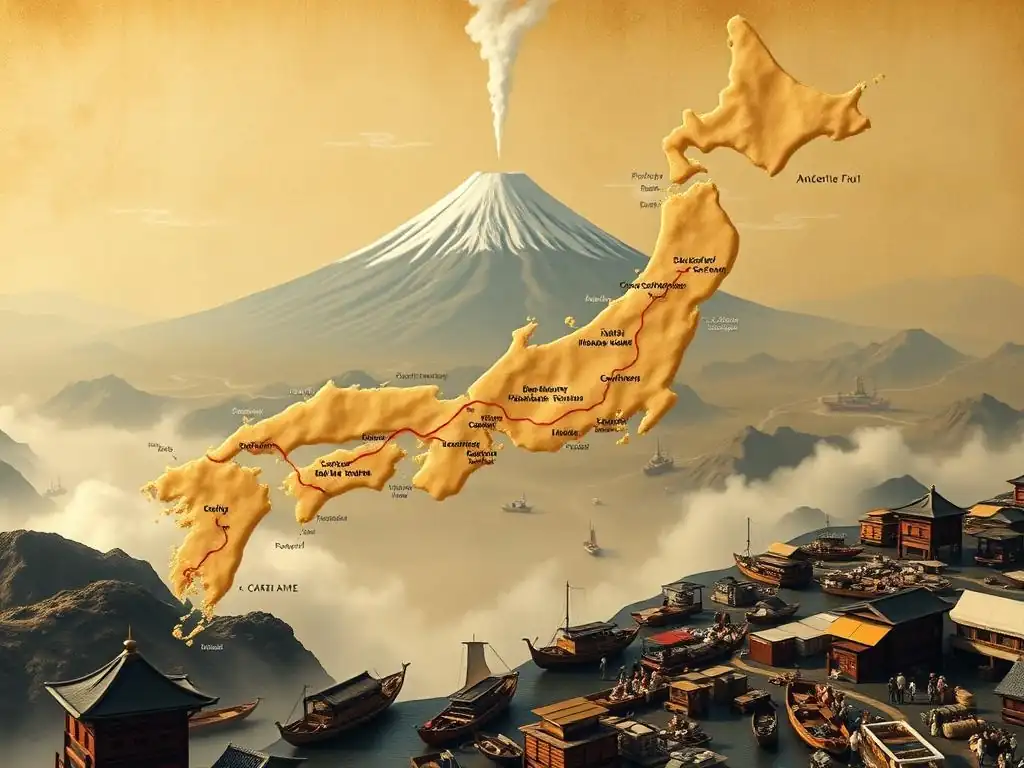
Key Trade Routes in Pre-Modern Japan: The Tokaido, Nakasendo, and Hokurikudo Roads
Pre-modern Japan relied on a network of well-established trade routes that facilitated the movement of goods and people across the archipelago. Among the most significant overland routes were the Gokaido, or Five Routes, established during the Edo period. However, their origins and importance predate this era.
The Tokaido, or "Eastern Sea Road," was arguably the most crucial, connecting Edo (Tokyo) and Kyoto, the imperial capital. This route hugged the eastern coastline, traversing provinces like Musashi, Sagami, Suruga, and others, passing close to Mount Fuji. The Nakasendo, or "Central Mountain Road," offered an inland alternative between Edo and Kyoto, winding through mountainous regions and providing a more sheltered route, though often more challenging to traverse.
The Hokurikudo, or "Northern Land Road," ran along the Sea of Japan coast, connecting Kyoto to the northern provinces. This route was vital for accessing resources and trade from the north, including regions that now constitute prefectures like Fukui, Ishikawa, and Toyama. These major overland routes were supplemented by a complex web of smaller roads and trails that connected local communities and facilitated regional trade.
Travel along these routes was typically on foot, by horseback, or using palanquins for wealthier individuals. Goods were transported using pack animals, carts, and human porters. These routes were not merely pathways for trade; they were also conduits for cultural exchange, communication, and the movement of political power across the Japanese islands.
Goods Traded Along These Routes: Rice, Silk, Salt, and Crafts
The trade routes of pre-modern Japan facilitated the exchange of a diverse range of goods, essential for daily life and economic prosperity. Rice, the staple food, was a primary commodity transported along these routes. Regions with surplus rice production, such as the fertile plains, supplied areas with deficits, ensuring food security across the country. Silk, a luxury good and a significant export, was another crucial trade item. Silk production centers, particularly in regions like Shinano (present-day Nagano), relied on these routes to distribute their high-value product to markets and ports for both domestic consumption and international trade.
Salt, a necessity for food preservation and various industrial processes, was also a vital commodity. Coastal regions, where salt was produced through seawater evaporation, traded with inland areas, ensuring a stable supply of this essential mineral. In addition to staple and luxury goods, various crafts and regional specialties were actively traded.
These included textiles, ceramics, metalwork, paper, and medicinal herbs. For example, Mino ware pottery from present-day Gifu prefecture, and Echizen paper from present-day Fukui prefecture, were transported along these routes to reach wider markets. The exchange of these diverse goods fostered economic specialization and interdependence between different regions of Japan, creating a vibrant internal market and laying the foundation for future economic growth.
The Importance of Coastal Routes for Maritime Trade
While overland routes were crucial, coastal routes played an equally vital role in pre-modern Japanese trade, particularly for bulk goods and long-distance transportation. Japan, being an archipelago, naturally developed a strong maritime tradition. Coastal shipping was significantly more efficient for transporting large quantities of goods compared to overland routes, especially for items like rice, timber, and minerals.
Sea routes connected major port cities and coastal regions, forming a network that complemented the overland routes. The Inland Sea, in particular, became a major artery for maritime trade, sheltered from the open ocean and connecting important economic centers like Osaka, Kyoto (via Yodo River), and ports in western Honshu and Kyushu.
Coastal vessels, ranging from small boats to larger ships capable of navigating longer distances, were essential for this maritime trade. These ships transported goods between regions, facilitated inter-island trade, and connected Japan with other parts of East Asia. Important port cities, such as Sakai near Osaka, and Hakata in Kyushu, flourished as centers of maritime commerce, serving as hubs for both domestic and international trade.
Coastal routes were also crucial for distributing goods brought in through international trade. For instance, goods arriving at ports in Kyushu from Korea and China were often transported along coastal routes to reach markets in Honshu and beyond. The combination of efficient coastal shipping and well-maintained overland routes created a robust and interconnected trade network that was fundamental to the economic and social development of pre-modern Japan.
How Mount Fuji Eruptions Impacted Trade Routes
Disruptions to Overland Trade: Ashfall and Road Blockages
Mount Fuji's eruptions have historically caused significant disruptions to overland trade routes, primarily through ashfall and road blockages. Volcanic ash, even in relatively small quantities, can render roads treacherous and impassable. The fine particles reduce traction, making it difficult for animals and people to traverse, and can clog waterways, hindering boat traffic on rivers used for transport. Heavy ashfall can bury roads entirely, requiring extensive clearing efforts before trade can resume. The abrasive nature of ash also damages the surfaces of roads and the mechanisms of carts and vehicles, further impeding transportation efficiency.
Beyond ashfall, volcanic eruptions can trigger landslides and debris flows, which physically block roads and trails. Earthquakes associated with volcanic activity can also cause road collapses and structural damage to bridges and infrastructure along trade routes. The proximity of Mount Fuji to major overland routes like the Tokaido and Nakasendo meant that eruptions had a direct and substantial impact on the flow of goods.
Merchants and travelers faced delays, detours, and increased transportation costs due to these volcanic disruptions. In some cases, trade routes had to be temporarily abandoned or rerouted, leading to significant economic consequences for regions dependent on the smooth flow of commerce.
Case Study: The 1707 Hoei Eruption and its Impact on the Tokaido Road
The 1707 Hoei eruption provides a stark example of the devastating impact of Mount Fuji's volcanic activity on overland trade, particularly the vital Tokaido Road. This eruption, characterized by massive ashfall, blanketed the Tokaido Road with thick layers of volcanic ash. Historical accounts describe the ashfall as being so severe that it darkened the sky even in Edo (Tokyo), over 100 kilometers away. Closer to Mount Fuji, the ash accumulation was much more substantial, rendering the Tokaido Road virtually unusable for extended periods.
Travel along the Tokaido Road was paralyzed. Pack animals struggled to navigate the ash-covered paths, and wheeled carts became bogged down. The movement of goods, people, and information was severely curtailed. Local economies along the Tokaido, heavily reliant on trade and transportation services, suffered immediate economic losses.
The disruption to the Tokaido Road also had wider implications, as it was the primary artery connecting eastern and western Japan. The flow of essential goods, including food supplies and commodities destined for Edo, was interrupted, leading to localized shortages and price increases. While the Hoei eruption did not produce lava flows that directly blocked the Tokaido Road, the sheer volume of ashfall proved to be a formidable obstacle, highlighting the vulnerability of overland trade routes to even ash-producing volcanic eruptions.
Effects on Coastal Trade: Tsunamis and Port Closures
While overland routes bore the brunt of ashfall and road blockages, Mount Fuji's eruptions also had repercussions for coastal trade, primarily through tsunamis and port closures. Although Mount Fuji is not directly on the coastline, significant eruptions can trigger submarine landslides or volcanic earthquakes that can generate tsunamis. These tsunamis, even if relatively small compared to those caused by major offshore earthquakes, can still impact coastal areas and port facilities, disrupting maritime trade. Tsunami waves can damage ports, harbors, and coastal infrastructure, making them temporarily unusable.
Beyond tsunamis, volcanic eruptions can lead to port closures due to other hazards. Heavy ashfall, while primarily affecting overland routes, can also reach coastal areas and ports, accumulating in harbors and waterways. This ash accumulation can impede navigation, clog harbor facilities, and damage ships.
Furthermore, the risk of pyroclastic flows or lahars reaching coastal areas, although less common from Mount Fuji, cannot be entirely discounted, and these hazards could necessitate temporary port closures for safety reasons. Disruptions to coastal trade, even if localized or temporary, can have significant economic consequences, particularly for regions heavily reliant on maritime commerce and the import/export of goods through ports.
Analysis of the 1707 Hoei Eruption's Tsunami and its Impact on Maritime Trade
The 1707 Hoei eruption is historically documented to have generated a tsunami, although its size and impact are debated among researchers. While not a massive, destructive tsunami on the scale of those associated with major earthquakes, the Hoei eruption tsunami did reportedly affect coastal areas, particularly in Suruga Bay, which is relatively close to Mount Fuji's eastern flank. Historical records suggest that the tsunami caused flooding in coastal communities and some damage to port facilities in the region. The tsunami, combined with the widespread ashfall, likely compounded the disruptions to both overland and maritime trade.
The impact of the Hoei eruption tsunami on maritime trade would have included temporary port closures in affected areas. Even a relatively small tsunami can cause significant damage to docks, warehouses, and ships anchored in harbors, necessitating repairs and cleanup before port operations can resume. Furthermore, the psychological impact of a tsunami, even a minor one, can lead to temporary disruptions as people evacuate coastal areas and shipping activities are suspended as a precautionary measure.
While the 1707 Hoei eruption is primarily remembered for its extensive ashfall, the associated tsunami serves as a reminder that volcanic eruptions near coastal regions can pose multiple hazards, impacting both land-based and sea-based trade networks. The combined effect of ashfall and tsunami from the Hoei eruption would have significantly hampered trade activities in the Mount Fuji region, highlighting the complex ways in which volcanic events can disrupt economic activities.
Economic Consequences of Trade Route Disruptions: Price Increases, Shortages of Essential Goods
The disruptions to both overland and coastal trade routes caused by Mount Fuji's eruptions had significant economic consequences, most notably price increases and shortages of essential goods. When trade routes were blocked or made hazardous, the transportation of goods became slower, more costly, or even impossible. This led to immediate supply chain disruptions, particularly for regions reliant on goods transported through the affected areas. The scarcity of goods, coupled with increased transportation costs for alternative routes, inevitably drove up prices.
Essential goods, such as food supplies like rice and salt, were particularly vulnerable to price spikes during trade route disruptions. If rice shipments from surplus regions were delayed or blocked, regions dependent on those supplies faced shortages and rapidly escalating rice prices, potentially leading to social unrest and hardship. Similarly, disruptions to salt trade could impact food preservation and other industries reliant on salt, causing further economic strain.
Beyond essential goods, the prices of other commodities, including crafts, textiles, and raw materials, also increased due to transportation bottlenecks and reduced availability. The economic consequences of trade route disruptions were not limited to immediate price increases and shortages. Prolonged disruptions could lead to longer-term economic instability, impacting regional economies and potentially altering trade patterns as merchants sought alternative routes and sources of supply to mitigate future risks.
Adapting to Volcanic Activity: Mitigation Strategies and Trade Route Adjustments
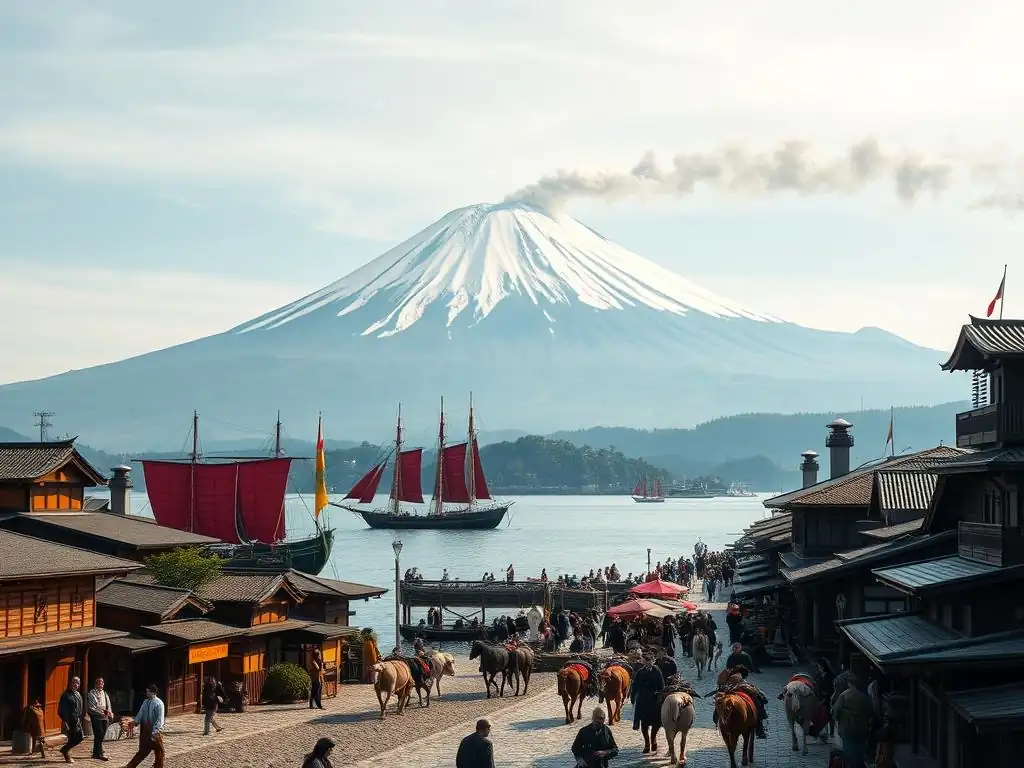
Infrastructure Development: Building Roads Resistant to Volcanic Hazards
Throughout history, communities and authorities in Japan have developed various strategies to adapt to volcanic activity and mitigate its impact on trade routes. One key approach has been infrastructure development aimed at building roads and transportation systems more resistant to volcanic hazards. This includes techniques to minimize the impact of ashfall, lahars, and other volcanic phenomena.
For example, elevated roads or causeways can be constructed in areas prone to flooding or lahar flows, ensuring that transportation can continue even during minor volcanic events. Road surfaces can be designed to be more easily cleared of ash, and drainage systems can be improved to prevent ash accumulation from clogging waterways and causing further disruptions.
In areas particularly vulnerable to landslides or debris flows, engineering solutions such as retaining walls, debris basins, and diversion channels can be implemented to protect roads and infrastructure. Bridges can be designed and reinforced to withstand seismic activity associated with volcanic eruptions, ensuring the continuity of critical transportation links.
Furthermore, the strategic placement of storage facilities and alternative transportation hubs outside of high-risk volcanic hazard zones can help to maintain the flow of goods even when primary routes are disrupted. Investing in resilient infrastructure is a long-term strategy that reduces the vulnerability of trade routes to volcanic activity, minimizing economic disruptions and enhancing community resilience.
Alternative Trade Routes: Adapting to Closed Pathways
When volcanic eruptions inevitably disrupt primary trade routes, the ability to adapt and utilize alternative pathways becomes crucial for maintaining commerce and minimizing economic losses. Historically, merchants and authorities in Japan developed and utilized alternative overland and coastal routes to circumvent areas affected by volcanic hazards. For example, if the Tokaido Road was blocked by ashfall, merchants might divert to the Nakasendo Road or utilize less direct but still passable regional routes.
Coastal shipping offered another vital alternative when overland routes were compromised. If land routes near Mount Fuji were impassable, goods could be transported by sea along coastal routes, bypassing the affected areas.
The development of a diversified transportation network, with multiple overland and coastal options, provided redundancy and resilience in the face of volcanic disruptions. This flexibility allowed trade to continue, albeit perhaps at a slower pace or increased cost, minimizing the overall economic impact. The knowledge of alternative routes and the ability to quickly adapt to changing conditions became essential skills for merchants and transportation operators in volcanically active regions. The historical record suggests that this adaptive capacity, the ability to find and utilize alternative trade routes, played a significant role in mitigating the economic consequences of Mount Fuji's eruptions.
Community Resilience: Local Responses to Eruption Events
Beyond infrastructure and route adjustments, community resilience played a vital role in mitigating the impact of volcanic eruptions on trade and daily life. Local communities directly affected by volcanic events often developed robust coping mechanisms and mutual support systems. During ashfall events, communities organized ash removal efforts to clear roads, rooftops, and agricultural fields. Local residents collaborated to assist those most severely affected, sharing resources and providing mutual aid. Merchants and local businesses often demonstrated flexibility and adaptability, adjusting their operations, finding alternative suppliers, and supporting local recovery efforts.
Traditional knowledge and practices, passed down through generations, also contributed to community resilience. This included knowledge of volcanic hazards, evacuation procedures, and techniques for mitigating the impact of ashfall on agriculture and infrastructure. Strong social networks and community bonds fostered cooperation and collective action, essential for effective response and recovery. The resilience of local communities, their ability to adapt, cooperate, and support each other, was a critical factor in minimizing the long-term social and economic consequences of Mount Fuji's eruptions and ensuring the eventual recovery of trade and livelihoods in affected regions.
Long-Term Effects: Shaping the Economic Landscape of Japan
The Influence of Volcanic Events on Regional Economies
Mount Fuji's volcanic eruptions have had long-lasting effects on the regional economies of Japan, shaping patterns of settlement, agriculture, and trade. Volcanic eruptions, while causing immediate disruptions, also deposit volcanic materials that can enrich soils over time. Volcanic ash, in particular, weathers down to release nutrients that enhance soil fertility, benefiting agriculture in the long run.
However, the initial impact of ashfall can be devastating to crops and farmland, requiring periods of recovery before the long-term benefits are realized. Regions repeatedly affected by volcanic eruptions have had to adapt their agricultural practices, developing crops and farming techniques suited to volcanic soils and the risk of future eruptions.
Volcanic activity has also influenced patterns of settlement. While some areas close to Mount Fuji have been repeatedly impacted by eruptions, others have benefited from fertile volcanic soils and abundant water resources originating from the volcano. The availability of geothermal energy in volcanic regions has also been a factor in shaping local economies, supporting hot spring resorts and related industries.
Furthermore, the dramatic landscapes created by volcanic activity, including Mount Fuji itself, have become significant tourist attractions, contributing to the modern economy through tourism and related services. The long-term influence of volcanic events on regional economies is complex and multifaceted, encompassing both challenges and opportunities.
Mount Fuji Eruptions Impact Trade: A Lasting Legacy
The historical impact of Mount Fuji eruptions on trade extends beyond immediate disruptions, leaving a lasting legacy on the economic and logistical landscape of Japan. The repeated challenges posed by volcanic activity spurred innovation in transportation infrastructure and trade route management. The development of more resilient roads, alternative routes, and efficient coastal shipping networks can be seen, in part, as a response to the recurring threat of volcanic disruptions. The experience of dealing with volcanic emergencies also fostered a culture of preparedness and risk management within Japanese society, influencing approaches to disaster response and infrastructure planning more broadly.
The economic consequences of past eruptions, such as price fluctuations and supply chain vulnerabilities, highlighted the importance of diversifying trade routes and developing robust contingency plans. This legacy of adaptation and resilience continues to inform modern disaster preparedness strategies in Japan, particularly in volcanically active regions. The awareness of the potential for Mount Fuji eruptions to impact trade remains relevant in the contemporary context, even with modern transportation systems. While modern infrastructure is more resilient, major eruptions could still cause significant disruptions, underscoring the enduring legacy of Mount Fuji's volcanic activity on Japanese trade and economy.
The Growth of Osaka as a Major Trading Hub Due to Coastal Trade Diversification
The history of Mount Fuji eruptions and their impact on trade routes may have indirectly contributed to the rise of Osaka as a major trading hub in Japan. While not a direct causal link, the challenges posed to overland routes, particularly the Tokaido Road, by volcanic activity, may have incentivized a greater reliance on coastal shipping and maritime trade.
Osaka, strategically located at the head of Osaka Bay and connected to the Inland Sea, was ideally positioned to benefit from the growth of maritime commerce. Its access to coastal routes, less vulnerable to volcanic disruptions compared to overland routes near Mount Fuji, may have enhanced its attractiveness as a trading center.
Furthermore, Osaka's proximity to major rice-producing regions and its efficient port facilities facilitated the distribution of rice and other commodities throughout Japan via coastal routes. As disruptions to overland routes, including those potentially caused by Mount Fuji eruptions, created uncertainties in overland trade, the reliability and efficiency of coastal shipping from Osaka may have become increasingly valued.
While many factors contributed to Osaka's rise as a major economic center, the historical context of volcanic activity and its impact on trade routes provides a potential perspective on the long-term shifts in trade patterns and the increasing importance of maritime trade in Japan's economic development.
Conclusion: Mount Fuji's Eruptions Impact Trade and Lessons for the Future
The Intertwined History of Volcanic Activity and Human Commerce
The history of Mount Fuji and Japanese trade routes vividly illustrates the intertwined relationship between volcanic activity and human commerce. For centuries, the majestic volcano has not only shaped the landscape but also profoundly influenced the flow of goods, the development of trade networks, and the economic fortunes of communities across Japan. Mount Fuji's eruptions, through ashfall, lahars, tsunamis, and other hazards, have repeatedly disrupted both overland and coastal trade routes, causing economic hardship and necessitating adaptation. However, these disruptions have also spurred innovation, resilience, and the development of strategies to mitigate volcanic risks.
The story of Mount Fuji and trade routes is a testament to the enduring human capacity to adapt to natural challenges and to build resilient systems in the face of environmental uncertainties. It highlights the vulnerability of trade networks to natural hazards, but also the ingenuity and determination of societies to overcome these obstacles and maintain economic activity. Understanding this intertwined history provides valuable insights into the complex relationship between human societies and their environment, particularly in volcanically active regions around the world.
Understanding and Mitigating the Risks of Volcanic Eruptions on Modern Trade
The lessons learned from the historical impact of Mount Fuji eruptions on trade are highly relevant to understanding and mitigating the risks of volcanic eruptions on modern trade and global supply chains. While transportation systems have become more advanced, volcanic eruptions still pose significant threats. Ashfall can disrupt air travel, road and rail transport, and port operations, causing widespread delays and economic losses. The eruption of Eyjafjallajökull in Iceland in 2010, which disrupted air travel across Europe due to volcanic ash, demonstrated the far-reaching consequences of volcanic eruptions in a globally interconnected world.
Modern supply chains are increasingly complex and vulnerable to disruptions. Volcanic eruptions in key economic regions could trigger cascading effects, impacting global trade flows and economic stability. Therefore, understanding volcanic hazards, improving monitoring and early warning systems, and developing robust contingency plans are crucial for mitigating the risks of volcanic eruptions on modern trade. Investing in resilient infrastructure, diversifying supply chains, and fostering international cooperation in volcanic hazard management are essential steps to minimize the economic impact of future volcanic eruptions in Japan and around the world.
Future Research: Investigating the Impact of Climate Change on Volcanic Activity and Trade
Future research should focus on investigating the potential impact of climate change on volcanic activity and its implications for trade. Climate change is altering weather patterns, melting glaciers and ice caps, and potentially influencing tectonic stresses. These changes could have complex effects on volcanic activity, potentially increasing the frequency or intensity of eruptions in some regions, including those with historically active volcanoes like Mount Fuji. Changes in precipitation patterns could also affect the frequency and magnitude of lahars and other volcanic mudflows.
Furthermore, climate change is already impacting global trade routes through sea-level rise, extreme weather events, and shifts in agricultural production. Understanding how climate change might interact with volcanic activity to further disrupt trade networks is a critical area for future research. Investigating the potential for increased volcanic hazards due to climate change and assessing the vulnerability of modern trade routes to these combined risks is essential for developing effective adaptation strategies and building more resilient global supply chains in the face of a changing climate and ongoing volcanic activity.
Frequently Asked Questions
What is the potential impact of a Mount Fuji eruption on trade routes in Japan?
A significant eruption could cause widespread disruption to transportation infrastructure, including roads and railways, leading to delays and increased costs for trade and commerce. Ashfall can also severely impact air travel, further hindering trade.
How have past eruptions of Mount Fuji affected Japanese trade historically?
Historically, eruptions have resulted in temporary disruptions to local economies and trade routes. While specific long-term impacts directly attributable solely to Mount Fuji are debated, volcanic activity generally has influenced settlement patterns and agricultural practices, indirectly affecting trade.
What types of trade are most vulnerable to disruption from a Mount Fuji eruption?
Trade reliant on timely delivery and sensitive to spoilage, such as fresh produce and perishable goods, is particularly vulnerable. Industries dependent on efficient transportation networks would also face significant challenges.
What measures are being taken to mitigate the potential trade impacts of a future Mount Fuji eruption?
Japan has invested in volcanic monitoring and early warning systems. Disaster preparedness plans include strategies for managing ashfall and ensuring the continued flow of essential goods and services.
How can businesses prepare for the possibility of a Mount Fuji eruption and its impact on trade?
Businesses should develop business continuity plans that address potential supply chain disruptions, transportation challenges, and communication breakdowns. Diversifying suppliers and exploring alternative transportation routes are also crucial risk mitigation strategies.
Final Reflection: The Enduring Legacy of Volcanic Influence
The narrative of Mount Fuji's eruptions and their impact on Japanese trade routes is not merely a historical account; it's a testament to the unyielding power of nature shaping human endeavors. The story we've explored underscores how volcanic activity, seemingly destructive, has paradoxically sculpted the very arteries of commerce in Japan, leaving an indelible mark on its economic and cultural landscape.
The enduring influence of these geological events resonates even today, reminding us of the delicate balance between human ambition and the forces of nature. Understanding this historical interplay allows us to appreciate the resilience and adaptability of Japanese society, qualities that continue to define its economic prowess. The mountains are our masters, they teach us patience and humility.
- Traditional Japanese Proverb. This proverb encapsulates the deep respect and understanding that has allowed Japan to thrive despite, and sometimes because of, its volatile environment.
As we conclude this exploration, let us consider the lessons learned from Mount Fuji's eruptions. How can we, in our own lives and communities, learn to anticipate, adapt to, and even leverage the challenges that shape our world? Embrace the spirit of resilience and innovation that has allowed Japan to flourish, and strive to build a future where we are not merely reactive to change, but proactive in shaping a more sustainable and prosperous world for all.
Chart Your Course: Rediscover the Power of Volcanic Landscapes!
Thank you for exploring the fascinating connection between Mount Fuji's eruptions and the evolution of Japanese trade routes. You've gained insights into how geological forces have shaped the commercial landscape of Japan. Now, it's your turn to connect with this powerful history.
- Dive deeper! Research a specific eruption of Mount Fuji and its impact on a local trading community. Share your findings with others interested in Volcanic Explorers on social media.
- Plan your own virtual (or real!) journey along an ancient trade route influenced by Mount Fuji's landscape. Imagine the challenges and opportunities traders faced centuries ago.
- Contribute to our community map: suggest unique ways geological events impact modern industries near volcanic regions, and let's all build a living story of resilience and innovation!
What surprising connection between a volcano and modern business can you unveil?