
Andean Trade Networks and Volcanic Peaks: HighAltitude Commerce Under Volcanic Threat

Welcome to Volcano Explorers! Ever wondered how ancient civilizations navigated the volatile landscapes of the Andes, building thriving trade networks beneath the shadow of towering, active volcanoes? We invite you to unravel the fascinating story of Andean commerce and the ever-present volcanic threats that shaped its destiny. Prepare to journey back in time and discover the resilience and ingenuity of those who dared to trade under the watchful gaze of these fiery peaks. What strategies did they employ to survive, and what can we learn from their experiences? Let's explore...
- Introduction: The Intersection of Andean Commerce and Volcanic Activity
- The Geography of Andean Trade: A Volcanic Landscape
- The Impact of Volcanic Eruptions on Andean Commerce
- Adapting to Volcanic Threats: Strategies of Ancient Andean Traders
- The Role of Andean Beliefs and Rituals in Mitigating Volcanic Risk
- Case Study: The Inca Empire and Their Trade Practices in Volcanic Regions
- Modern Implications: Lessons from Ancient Andean Commerce
- Conclusion: The Enduring Legacy of Andean Commerce Under Volcanic Threat
-
Frequently Asked Questions
- How did volcanic activity impact Andean trade networks?
- What types of volcanic hazards are most concerning for Andean commerce?
- How did Andean communities adapt to the constant threat of volcanic eruptions?
- What role did the high altitude of the Andes play in the impact of volcanic eruptions on trade?
- Does VolcanoExplorers.org offer resources for businesses impacted by volcanic activity in the Andes?
- Final Reflection: Enduring Commerce Amidst Volcanic Shadows
- Unearth Your Own Andean Adventure!
Introduction: The Intersection of Andean Commerce and Volcanic Activity
Setting the Scene: Ancient Trade Routes in the Shadow of Andean Volcanoes
The Andes Mountains, a formidable chain stretching along the western edge of South America, have been a cradle of civilization for millennia. Long before European contact, sophisticated societies thrived in this challenging environment, developing intricate trade networks that crisscrossed valleys, deserts, and high-altitude passes. These routes were not merely paths for exchange; they were arteries of cultural diffusion, political control, and economic sustenance.
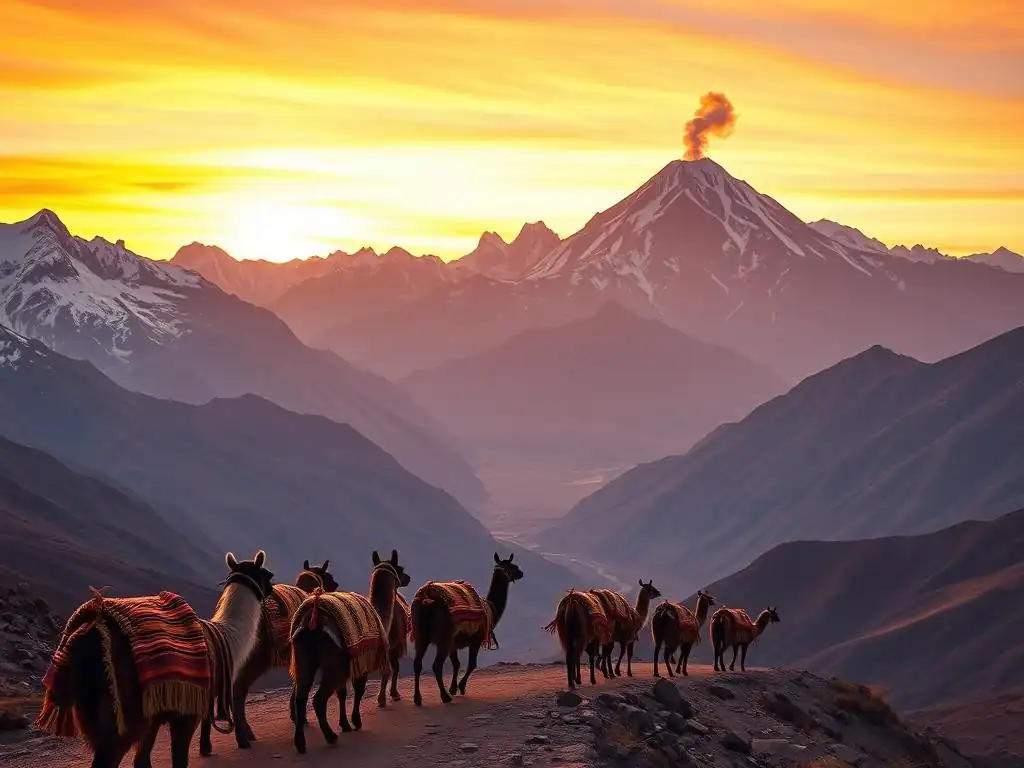
Imagine caravans of llamas laden with goods traversing precarious trails, connecting disparate communities from the Pacific coast to the Amazonian foothills and beyond. This vibrant system of Andean commerce, however, operated under a constant, often unpredictable threat: the region's numerous active volcanoes.
The Andean Volcanic Belt, a consequence of the Nazca Plate subducting beneath the South American Plate, is one of the most volcanically active regions on Earth. Towering volcanic peaks, many perpetually snow-capped, dominate the Andean landscape and have profoundly shaped the lives of its inhabitants for generations. From the fertile volcanic soils that supported agriculture to the devastating eruptions that could obliterate settlements and disrupt trade, volcanoes were an inescapable reality.
Ancient Andean peoples developed a complex relationship with these geological forces, one that intertwined commerce, survival, and spiritual beliefs. Understanding this intersection of Andean commerce and volcanic activity is crucial to appreciating the resilience and ingenuity of these past societies.
The Dual Challenge: High Altitude and Volcanic Hazards
Andean traders faced a unique combination of environmental challenges. The high altitude itself presented a significant hurdle. Reduced oxygen levels made physical exertion more demanding, impacting both human and animal porters. Temperatures could fluctuate dramatically, from scorching sun during the day to freezing conditions at night, requiring careful planning and specialized clothing. Furthermore, the rugged terrain, characterized by steep slopes, deep canyons, and swift-flowing rivers, made route construction and maintenance a constant struggle. Navigating these geographical obstacles demanded specialized knowledge, sturdy infrastructure, and acclimatized personnel.
Compounding the difficulties of high-altitude trade were the ever-present volcanic hazards. The Andean Volcanic Belt is punctuated by hundreds of volcanoes, many of which have erupted in recorded history. These eruptions could unleash a range of destructive phenomena directly impacting trade routes.
Ashfall, even from moderate eruptions, could blanket vast areas, disrupting visibility, contaminating water sources, and rendering trails impassable. More violent eruptions could trigger lahars – volcanic mudflows – that swept away bridges and settlements, or pyroclastic flows, scorching avalanches of hot gas and rock, that could devastate entire regions in moments. The dual challenge of high altitude and volcanic hazards demanded that Andean traders develop sophisticated strategies to mitigate risk and ensure the continuity of commerce.
The Geography of Andean Trade: A Volcanic Landscape
Mapping Ancient Trade Routes: The Inca Road and Coastal Trade Routes
The most famous example of Andean trade infrastructure is undoubtedly the Inca Road system, or Qhapaq Ñan. This vast network of roads, trails, and bridges spanned over 40,000 kilometers at its peak, connecting the Inca Empire from modern-day Colombia to Chile and Argentina. While the Inca Road is often associated with highland routes, it also incorporated pre-existing coastal trade paths.
These coastal routes, vital for the exchange of marine resources like fish and shells, often ran parallel to the volcanic arc, making them particularly vulnerable to eruptions from volcanoes situated closer to the Pacific coast. The Qhapaq Ñan itself, especially in its highland sections, frequently traversed or skirted volcanic regions, strategically utilizing passes and valleys formed by volcanic activity.
Beyond the Inca Road, numerous other regional and local trade routes existed, predating and coexisting with the Inca Empire. Archaeological evidence reveals complex exchange networks between highland and lowland communities, often facilitated by river systems that originated in volcanic areas. For instance, river valleys provided relatively easier routes through the rugged terrain and were essential for transporting goods like coca leaves from the eastern slopes of the Andes to the highlands.
These river routes, however, could also become conduits for volcanic lahars, posing a significant threat to trade and settlements established along their banks. Understanding the interplay between these various trade routes and the volcanic landscape is crucial to appreciate the geographical context of Andean commerce.
Key Trading Centers and Their Proximity to Active Volcanoes
Several key trading centers in the ancient Andes were located in close proximity to active volcanoes. Cusco, the Inca capital, while not directly adjacent to a major active volcano, was situated within a volcanically active region and relied on trade routes that passed through volcanic areas.
Other important pre-Inca and Inca centers, like Tiwanaku near Lake Titicaca and various settlements in the southern Peruvian highlands and northern Chilean Andes, were even closer to major volcanic complexes. These locations were not chosen despite the volcanic threat, but often, in part, because of the resources volcanic landscapes provided, such as obsidian for tools, fertile volcanic soils for agriculture, and geothermal energy sources.
The proximity of these trading centers to volcanoes meant that they were regularly exposed to volcanic hazards. Archaeological investigations have uncovered layers of volcanic ash in many Andean settlements, demonstrating the frequency of volcanic events and their impact on daily life. For example, the city of Arequipa in southern Peru, a significant trading hub since pre-Columbian times and still a major city today, is located in the shadow of the active Misti volcano.
Similarly, settlements along the Pan-American Highway in Ecuador and Colombia, modern descendants of ancient trade routes, continue to face volcanic risks from volcanoes like Cotopaxi and Galeras. The strategic placement of these trading centers, despite the volcanic threat, highlights the complex risk-benefit calculations made by Andean societies.
The Geological Context: Understanding Volcanic Zones in the Andes
The Andean Volcanic Belt is not a uniform entity, but rather a series of volcanic zones with varying characteristics and eruption styles. The Central Volcanic Zone (CVZ), encompassing parts of Peru, Bolivia, Chile, and Argentina, is particularly active and characterized by large stratovolcanoes capable of explosive eruptions.
This zone coincides with a significant portion of the Inca Empire and ancient trade routes, making it a critical area for understanding volcanic impacts on commerce. Further south, the Southern Volcanic Zone (SVZ), extending through Chile and Argentina, also features numerous active volcanoes, although eruption styles and compositions may differ from the CVZ.
Understanding the specific geological context of each volcanic region is essential for assessing the types and magnitudes of volcanic hazards that Andean traders faced. For instance, volcanoes in the CVZ are known for producing large volumes of volcanic ash and pumice, which can travel long distances and disrupt trade over wide areas.
Some volcanoes in both the CVZ and SVZ are also prone to generating lahars, particularly during periods of heavy rainfall or snowmelt. Furthermore, the geological history of each volcanic region, revealed through studies of past eruptions and volcanic deposits, provides crucial insights into the frequency and potential scale of future volcanic events, informing our understanding of the long-term volcanic threat to Andean commerce.
The Impact of Volcanic Eruptions on Andean Commerce
Disruptions to Trade: Ashfall, Lahars, and Pyroclastic Flows
Volcanic eruptions posed a multifaceted threat to Andean commerce, capable of causing both immediate and long-term disruptions. Volcanic ashfall, one of the most widespread volcanic hazards, could blanket trade routes, reducing visibility to near zero and making travel extremely hazardous. The fine particles of ash could also irritate eyes and lungs, affecting the health of both humans and animals, and contaminate water sources, further hindering trade activities. Even relatively thin layers of ash could make trails slippery and impassable, particularly for llama caravans carrying heavy loads.
Lahars, volcanic mudflows composed of water, ash, and rock debris, represented an even more immediate and destructive threat. These flows could travel at high speeds down river valleys, obliterating bridges, destroying sections of roads, and burying settlements along trade routes. Pyroclastic flows, although typically more localized than ashfall or lahars, were the most devastating hazard in close proximity to an erupting volcano.
These scorching avalanches could incinerate everything in their path, including infrastructure and trading caravans caught in their flow paths. The combined effects of these volcanic hazards could severely disrupt Andean commerce, causing delays, losses of goods, and even fatalities among traders.
Case Studies of Volcanic Eruptions and Trade Route Closures: The 1600 Huaynaputina Eruption and the 1991 Cerro Hudson Eruption
Historical records and geological evidence provide compelling case studies of how volcanic eruptions impacted Andean trade routes. The 1600 eruption of Huaynaputina volcano in southern Peru, one of the largest volcanic eruptions in South America in recent history, serves as a stark example. This eruption produced massive volumes of volcanic ash that blanketed a vast area, reaching as far as the coast and disrupting agriculture and trade across southern Peru and beyond.
Colonial accounts describe widespread crop failures, famine, and disruptions to silver mining operations, a key component of the Spanish colonial economy and reliant on Andean trade networks. The Huaynaputina eruption likely caused significant, albeit temporary, closures of trade routes in the region, impacting both indigenous and colonial commerce.
A more recent example, the 1991 eruption of Cerro Hudson volcano in southern Chile, illustrates the continued vulnerability of trade routes to volcanic activity. While Cerro Hudson is located in a less densely populated region than Huaynaputina, its eruption still had significant impacts on transportation and commerce.
The eruption produced substantial ashfall that disrupted air travel across southern South America and affected land transportation in parts of Chile and Argentina. Although ancient Andean trade routes did not rely on air travel, the Cerro Hudson eruption highlights how even in modern times, volcanic ash can cause widespread disruptions to transportation networks, mirroring the likely effects of ashfall on ancient Andean commerce, albeit on a different scale.
Short-Term and Long-Term Economic Consequences of Volcanic Activity
The economic consequences of volcanic activity for Andean commerce were both short-term and long-term. In the immediate aftermath of an eruption, trade routes could be closed for weeks or even months due to ashfall, lahar damage, or pyroclastic flow destruction. This led to immediate economic losses due to the inability to transport goods, spoilage of perishable items, and disruption of market access. Shortages of essential goods in affected areas could drive up prices, further exacerbating economic hardship. The interruption of trade could also disrupt the flow of tribute and taxes to ruling elites, impacting political stability.
In the long term, repeated volcanic eruptions could lead to more profound economic shifts. Frequent disruptions to trade might incentivize the development of more resilient trade routes or alternative economic activities less vulnerable to volcanic hazards. In some cases, volcanic eruptions could also have positive long-term consequences, such as the deposition of fertile volcanic ash that enriched agricultural lands over time. However, the overall long-term economic impact of volcanic activity on Andean commerce likely involved a complex interplay of disruptions, adaptations, and shifts in economic strategies, shaping the economic landscape of the Andes over centuries.
Adapting to Volcanic Threats: Strategies of Ancient Andean Traders
Route Diversification and Alternative Trade Paths
Faced with the constant threat of volcanic eruptions, ancient Andean traders developed various strategies to mitigate risk and ensure the continuity of commerce. One key approach was route diversification. Instead of relying on single, vulnerable pathways, traders likely utilized multiple parallel routes, allowing them to bypass areas affected by volcanic activity.
For example, if a major pass through a volcanic region was blocked by ashfall, traders could divert to alternative passes or routes, albeit potentially longer or more arduous. The extensive Inca Road system, with its numerous branches and interconnected trails, may have partly served this purpose, providing redundancy and alternative pathways in case of disruptions.
Another aspect of route diversification involved utilizing different types of trade paths. While highland routes were crucial, coastal and riverine routes offered alternative options, although each presented its own challenges. Coastal routes, while vulnerable to coastal volcanoes, might be less affected by eruptions from volcanoes situated further inland. River routes, while susceptible to lahars, could offer faster transportation in certain areas. By strategically combining different types of routes and maintaining a flexible approach to route selection, Andean traders could minimize the impact of localized volcanic events on the overall trade network.
Storage and Preservation Techniques for Goods: Minimizing Volcanic Ash Damage
Protecting goods from volcanic ash damage was another crucial adaptation. Volcanic ash is abrasive and can contaminate or damage various trade items, particularly textiles, foodstuffs, and delicate craft goods. Andean societies developed sophisticated storage and preservation techniques that likely served to minimize ash damage as well as protect goods from other environmental factors like moisture and pests. For example, underground storage pits ( qollqas) were widely used for storing grains and other agricultural products. These structures, often built with stone or adobe walls and roofs, could provide some protection from ashfall, especially if properly sealed.
Textiles, a valuable trade commodity in the Andes, were likely stored and transported in tightly woven containers or wrappings to shield them from ash and dust. Perishable goods, such as dried meats and fish, were preserved using techniques like salting, drying, and smoking, which not only extended their shelf life but also may have offered some degree of protection from ash contamination. By employing these storage and preservation methods, Andean traders could reduce losses from volcanic ash and maintain the quality of their goods during transport and storage in volcanically active regions.
Communication Networks: Warning Systems and Information Dissemination
Effective communication networks played a vital role in mitigating volcanic risk for Andean commerce. While pre-Columbian Andean societies did not have writing systems in the European sense, they developed sophisticated methods for recording and transmitting information. The quipu, a complex system of knotted strings, was used for record-keeping and potentially for conveying messages. Runners ( chasquis) were employed to rapidly relay information across the Inca Empire, utilizing a network of relay stations. These communication systems could have been adapted to disseminate warnings about volcanic activity and inform traders about route closures or hazardous areas.
Local knowledge and oral traditions also played a crucial role in volcanic risk communication. Communities living near volcanoes possessed generations of accumulated experience and knowledge about volcanic behavior, eruption precursors, and safe zones. This local expertise was likely shared and transmitted through oral histories, rituals, and practical observation.
Traders, often traveling along established routes and interacting with local communities, could have relied on this local knowledge to assess volcanic risks and make informed decisions about their journeys. The combination of formal communication systems and informal local knowledge networks likely contributed to a degree of preparedness and resilience in the face of volcanic threats to Andean commerce.
The Role of Andean Beliefs and Rituals in Mitigating Volcanic Risk
Appeasing Volcanic Deities: Offerings to Pachamama and Volcanic Mountain Spirits
Andean cosmology deeply intertwined the natural world with the spiritual realm. Volcanoes were not seen merely as geological formations, but as sacred mountains ( apus) inhabited by powerful spirits or deities. Pachamama, the Earth Mother, was a central deity in Andean religion, and volcanic mountains were often considered to be manifestations of her power.
To mitigate volcanic risk and ensure the favor of these powerful entities, Andean societies practiced elaborate rituals and offerings. These rituals were not simply acts of supplication, but integral components of a worldview that sought to maintain harmony and balance between humans and the natural world.
Offerings to volcanic deities varied depending on the specific volcano, the community, and the occasion. They could include food, chicha (fermented corn beer), coca leaves, textiles, precious metals, and even animal sacrifices. These offerings were often made at specific sacred sites on or near volcanoes, such as mountaintops, springs, or caves.
Rituals might be performed before embarking on long trade journeys through volcanic regions, or after volcanic events to appease the spirits and seek protection from future eruptions. The belief in the agency of volcanic deities and the efficacy of ritual offerings formed a significant aspect of Andean strategies for coping with volcanic risk.
Integrating Volcanic Activity into Andean Cosmology
Volcanic activity was not perceived as random chaos in Andean cosmology, but as a meaningful phenomenon integrated into their understanding of the world. Eruptions could be interpreted as signs of divine displeasure, warnings, or even acts of purification or renewal. Myths and legends often incorporated volcanic eruptions into narratives about creation, destruction, and the cyclical nature of time. These cosmological frameworks provided a way to make sense of volcanic events and integrate them into a broader worldview.
The integration of volcanic activity into Andean cosmology also influenced social practices and community responses to volcanic hazards. For example, certain rituals or social behaviors might be prescribed as ways to appease volcanic deities or restore balance after an eruption. Cosmological beliefs could also shape settlement patterns, with communities choosing to live in areas perceived as safer or more auspicious in relation to volcanic mountains. Understanding the cosmological context of volcanic activity provides insights into the cultural and psychological dimensions of Andean adaptation to volcanic risk.
The Cultural Significance of Volcanoes in Trade and Daily Life
Volcanoes held profound cultural significance in Andean societies, permeating various aspects of trade and daily life. Beyond their spiritual importance, volcanoes were also sources of valuable resources. Obsidian, a volcanic glass, was highly prized for making tools and weapons and was traded extensively across the Andes. Volcanic soils, while posing risks from eruptions, were also recognized for their fertility and agricultural potential. Geothermal areas associated with volcanoes provided hot springs used for medicinal and ritual purposes.
The presence of volcanoes shaped the landscape, influenced climate patterns, and contributed to the unique Andean environment that sustained trade and agriculture. Volcanic imagery and symbolism appeared in Andean art, textiles, and ceramics, reflecting the cultural importance of volcanoes. Trade routes themselves often followed pathways shaped by volcanic topography, and trading centers were sometimes located near volcanic resources or sacred sites. The cultural significance of volcanoes in Andean society was deeply intertwined with economic activities like trade, agriculture, and resource extraction, creating a complex and multifaceted relationship between humans and these powerful geological forces.
Case Study: The Inca Empire and Their Trade Practices in Volcanic Regions
Trade Goods and Their Vulnerability to Volcanic Eruptions
The Inca Empire, with its vast territorial reach and sophisticated trade network, provides a compelling case study for examining Andean commerce in volcanic regions. The Inca economy relied on the exchange of a diverse range of goods, many of which were vulnerable to volcanic eruptions. Agricultural products, such as maize, potatoes, quinoa, and coca leaves, were staple trade items and could be damaged or destroyed by ashfall, lahar flows, or volcanic gases.
Textiles, highly valued for their quality and craftsmanship, were susceptible to ash contamination and discoloration. Pottery, metalwork, and other craft goods could also be damaged during transport through volcanically active areas.
The vulnerability of these trade goods to volcanic hazards likely influenced Inca trade practices. The selection of trade routes, storage methods, and transportation techniques may have been adapted to minimize the risk of damage from volcanic eruptions. For example, certain types of goods might have been prioritized for transport along routes perceived as less volcanically hazardous, or special packaging might have been used to protect delicate items from ash. Understanding the vulnerability of specific trade goods to volcanic hazards provides insights into the logistical challenges and risk management strategies employed by the Inca Empire.
Infrastructure for Trade: Roads, Bridges, and Storage Facilities in Volcanic Zones
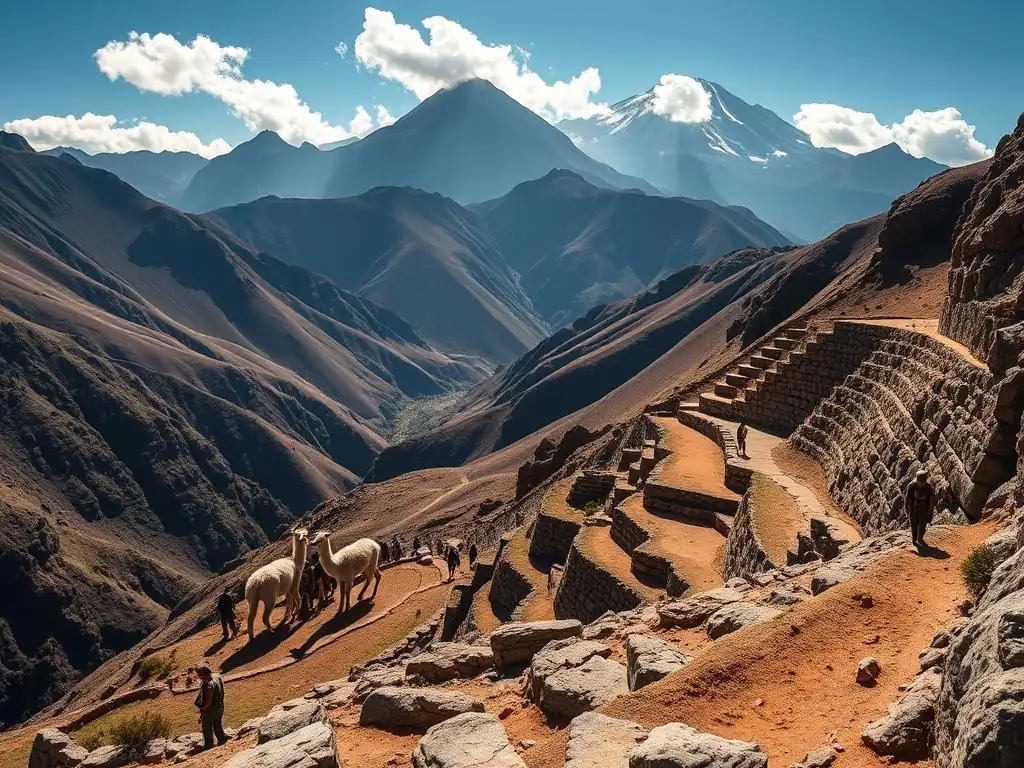
The Inca Empire invested heavily in infrastructure to support its extensive trade network, including roads, bridges, and storage facilities. The Inca Road system, as mentioned earlier, was a remarkable feat of engineering, designed to facilitate efficient movement of goods and people across diverse terrains, including volcanic regions.
Bridges, constructed from stone, rope, or wood, were crucial for crossing rivers and canyons, many of which were located in volcanically active areas and vulnerable to lahar flows. Storage facilities ( qollqas) were strategically located along trade routes to store goods and provision travelers, and their construction and placement may have considered volcanic risk factors.
The Inca infrastructure in volcanic zones demonstrates a significant investment in facilitating trade despite the inherent hazards. Roads were often built to withstand earthquakes and landslides, common occurrences in volcanic regions. Bridges were designed to be resilient to floodwaters and debris flows, although perhaps less so to large lahars. Storage facilities might have been located on higher ground or in areas less susceptible to volcanic hazards. The Inca infrastructure in volcanic regions highlights their engineering capabilities and their commitment to maintaining trade routes even in challenging environments.
Resilience and Adaptation Strategies of the Inca Empire
The Inca Empire exhibited remarkable resilience and adaptation in the face of volcanic threats to their trade network. Their decentralized administrative structure, with local officials responsible for managing resources and infrastructure in their regions, may have enhanced their ability to respond to localized volcanic events. The Inca system of redistribution, where goods and resources were collected and redistributed across the empire, could have helped mitigate the impact of volcanic disruptions in specific areas by providing alternative sources of supply.
The Inca likely incorporated indigenous knowledge and practices related to volcanic risk management into their imperial strategies. Local communities living near volcanoes possessed long-standing traditions and adaptations for coping with volcanic hazards, and the Inca may have drawn upon this expertise in planning trade routes, constructing infrastructure, and developing emergency response plans. The Inca Empire's resilience in the face of volcanic threats was likely a product of their sophisticated infrastructure, decentralized administration, redistribution system, and integration of local knowledge and adaptation strategies.
Modern Implications: Lessons from Ancient Andean Commerce
Understanding Vulnerability to Volcanic Hazards in Modern Trade
The study of ancient Andean commerce under volcanic threat offers valuable lessons for understanding and mitigating vulnerability to volcanic hazards in modern trade and transportation systems. While modern infrastructure and technologies are vastly different from those of the Inca, the fundamental principles of risk management remain relevant. Modern trade routes, including highways, railways, pipelines, and shipping lanes, still traverse volcanically active regions around the world, and are susceptible to similar volcanic hazards as ancient Andean routes: ashfall, lahars, pyroclastic flows, and volcanic gases.
Modern global supply chains are highly interconnected and reliant on efficient transportation networks. A major volcanic eruption in a key transportation corridor could have cascading effects on global trade, disrupting supply chains, impacting economies, and causing widespread economic losses. The Andean example underscores the importance of considering volcanic hazards in infrastructure planning, transportation route selection, and supply chain management in volcanically active regions today.
Applying Ancient Strategies to Contemporary Risk Management
Some of the adaptation strategies employed by ancient Andean traders can be applied to contemporary volcanic risk management. Route diversification remains a relevant principle. Developing alternative transportation routes and infrastructure in volcanically active regions can provide redundancy and resilience in case of volcanic disruptions. Improving storage and preservation techniques for goods, particularly essential supplies and perishable items, can reduce losses from volcanic ash and other hazards.
Investing in communication networks and early warning systems is crucial for mitigating volcanic risk in modern trade. Real-time monitoring of volcanic activity, rapid dissemination of warnings, and effective communication with transportation operators and communities can enable timely evacuations, route closures, and other risk reduction measures. Learning from ancient Andean strategies, combined with modern technologies and scientific understanding, can enhance our ability to manage volcanic risks in contemporary trade and transportation systems.
Sustainable Development and Volcanic Risk Reduction in the Andes
The Andean region remains volcanically active, and many communities continue to live and work in areas exposed to volcanic hazards. Sustainable development in the Andes must integrate volcanic risk reduction as a core component. This includes land-use planning that minimizes exposure to volcanic hazards, building codes that enhance infrastructure resilience, and community-based preparedness programs that empower local populations to cope with volcanic events.
Understanding the historical experiences of Andean societies with volcanic risk, including their adaptation strategies and cultural beliefs, can inform contemporary sustainable development efforts. Integrating indigenous knowledge and practices into volcanic risk reduction programs can enhance their effectiveness and cultural appropriateness. By learning from the past and applying modern science and technology, it is possible to promote sustainable development and reduce volcanic risk in the Andes, ensuring the well-being and resilience of communities living in this dynamic and volcanically active region.
Conclusion: The Enduring Legacy of Andean Commerce Under Volcanic Threat
The Importance of Understanding the Interplay Between Trade and Natural Hazards
The story of Andean commerce under volcanic threat highlights the enduring importance of understanding the interplay between trade and natural hazards. Throughout history, human societies have engaged in trade and economic activities in environments exposed to various natural hazards, including volcanoes, earthquakes, floods, and droughts. These hazards have shaped trade routes, influenced economic strategies, and impacted the development of civilizations.
Studying historical examples like Andean commerce provides valuable insights into the complex relationships between human societies and natural hazards. It underscores the need to consider natural hazards as integral factors in economic planning, infrastructure development, and risk management. By understanding the past, we can better prepare for the future and build more resilient and sustainable trade and economic systems in hazard-prone regions around the world.
Future Research Directions: Integrating Archaeological and Geological Data
Future research on Andean commerce and volcanic activity should focus on further integrating archaeological and geological data. Archaeological investigations can uncover more detailed evidence of ancient trade routes, settlements, and storage facilities in volcanic regions, providing insights into the spatial patterns of trade and the impact of volcanic eruptions on human settlements. Geological studies of volcanic deposits can reconstruct past eruption histories, assess volcanic hazards along trade routes, and provide a more precise timeline for volcanic events.
Combining archaeological and geological data through interdisciplinary research can offer a more comprehensive understanding of the long-term interaction between Andean societies, trade, and volcanic activity. This integrated approach can shed light on the frequency and magnitude of volcanic impacts on commerce, the adaptation strategies employed by Andean traders, and the long-term economic and social consequences of volcanic eruptions.
Protecting Andean Heritage in Volcanically Active Regions
The Andean region's rich cultural and archaeological heritage is inextricably linked to its volcanic landscape. Many archaeological sites, ancient trade routes, and cultural traditions are located in volcanically active areas and are vulnerable to volcanic hazards. Protecting this heritage is crucial for preserving the legacy of Andean civilizations and understanding their relationship with volcanoes.
Efforts to protect Andean heritage in volcanically active regions should include risk assessments of archaeological sites and cultural landscapes, mitigation measures to reduce volcanic risks to heritage sites, and community engagement in heritage preservation. Raising awareness about the cultural significance of volcanoes and the importance of protecting Andean heritage can contribute to sustainable development and resilience in this dynamic and volcanically significant region.
Frequently Asked Questions
How did volcanic activity impact Andean trade networks?
Volcanic eruptions posed a significant threat to trade routes, disrupting commerce through ashfall, landslides, and lahar flows. These events could damage infrastructure and render routes impassable, hindering the movement of goods.
What types of volcanic hazards are most concerning for Andean commerce?
Ashfall is a major concern as it can contaminate goods and reduce visibility, making travel dangerous. Lahars, or mudflows composed of volcanic debris, can destroy infrastructure and bury trade routes.
How did Andean communities adapt to the constant threat of volcanic eruptions?
Andean communities developed sophisticated early warning systems based on observing volcanic activity and traditional knowledge. They also constructed infrastructure designed to withstand volcanic hazards, such as elevated roads.
What role did the high altitude of the Andes play in the impact of volcanic eruptions on trade?
The high altitude environment exacerbated the impact of volcanic eruptions. Ash can travel further due to wind patterns, and cold temperatures can worsen the effects of ashfall on crops and infrastructure.
Does VolcanoExplorers.org offer resources for businesses impacted by volcanic activity in the Andes?
While VolcanoExplorers.org primarily focuses on general volcanic information and safety, it provides links to relevant organizations that offer support to businesses affected by volcanic hazards. It also provides real-time updates on volcanic activity worldwide.
Final Reflection: Enduring Commerce Amidst Volcanic Shadows
The intricate web of Andean trade networks, once a testament to human ingenuity and resilience, now faces an amplified challenge: the ever-present threat of volcanic activity. This delicate balance between commerce and natural disaster underscores the enduring vulnerability of communities deeply intertwined with their environment. The lessons learned from centuries of high-altitude trade, adaptation, and risk management are more relevant than ever in a world increasingly grappling with the impacts of climate change and geological instability.
The resilience of the Andean people, their ability to thrive in the face of adversity, continues to inspire. Their deep understanding of the land, passed down through generations, is a crucial asset in navigating the volatile landscape. This connection to the past, combined with innovative approaches to risk mitigation, offers a powerful model for sustainable development in other hazard-prone regions. The mountain gives and the mountain takes away. We must respect its power and learn to live in harmony with its rhythms.
- Andean Elder.
As we reflect on the enduring legacy of Andean commerce and the looming shadow of volcanic threats, let us consider how we can apply these lessons to our own lives. How can we foster greater resilience in our communities, build stronger connections to our environment, and embrace innovative solutions to mitigate the risks we face? The spirit of the Andes, a spirit of adaptation, collaboration, and unwavering hope, calls upon us to act, to learn, and to build a more sustainable and resilient future for all.
Unearth Your Own Andean Adventure!
Thank you for delving into the fascinating world of Andean trade and resilience! We hope you've gained a deeper appreciation for the ingenuity of communities navigating the challenges of volcanic landscapes. Now, it's time to take your understanding a step further!
Here are a few ways you can connect with the spirit of Andean exploration:
- Craft your own "Volcano Preparedness Kit" incorporating lessons learned from Andean communities, focusing on resourcefulness and community collaboration.
- Share this article with three friends who appreciate history, geography, or incredible human resilience!
- Explore the virtual exhibits of the Museo Andino to discover even more about the rich cultural heritage of the Andes.
What practical strategies from Andean trade could you adapt to your own local community to foster resilience in the face of unexpected challenges?