
Did Plato Describe a Volcanic Eruption? Unraveling the Atlantis Allegory

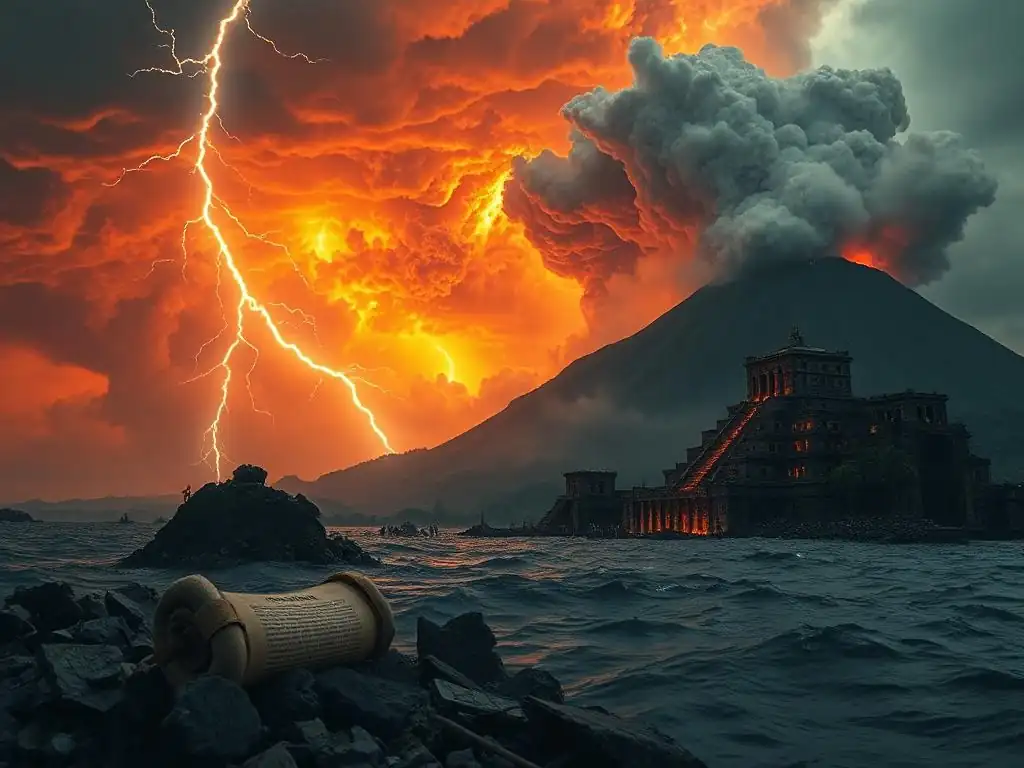
Welcome to Volcano Explorers!
Prepare to journey into the fiery heart of the Earth. But what if the most famous lost city of all time was a victim of a cataclysmic volcanic eruption? Dive into our exploration of the Plato volcanic eruption Atlantis theory and uncover the geological clues that might just rewrite history. Could Plato's Atlantis be more than just a myth? Read on, and decide for yourself.
- Did Plato Describe the Minoan Eruption? Unraveling the Atlantis Allegory
- Introduction: Plato, Atlantis, and the Minoan Eruption
- Plato's Atlantis: A Detailed Overview from Timaeus and Critias
- The Minoan Eruption: A Cataclysmic Event on Thera (Santorini)
- Analyzing the Archaeological and Geological Evidence: Connecting Thera to Atlantis
- Debunking and Supporting Arguments: Was Atlantis Inspired by the Minoan Eruption?
- Plato's Allegory: Interpreting Atlantis Beyond a Literal Interpretation
- Conclusion: The Enduring Mystery of Atlantis and the Power of the Minoan Eruption
-
Frequently Asked Questions
- Did Plato explicitly mention a volcanic eruption in his accounts of Atlantis?
- What connection is there between the Atlantis legend and volcanic eruptions?
- How does the Thera eruption relate to the "Plato volcanic eruption Atlantis" theory?
- If Plato didn't mention volcanoes, why is this theory so popular?
- Is there definitive proof that the Atlantis story is based on a real volcanic event?
- Final Reflection: Echoes of Atlantis in Our Time
- Uncover the Secrets of Atlantis: Join the Discussion!
Did Plato Describe the Minoan Eruption? Unraveling the Atlantis Allegory
Introduction: Plato, Atlantis, and the Minoan Eruption
Exploring the Mystery of Atlantis Through Plato's Writings
The legend of Atlantis, a powerful and technologically advanced island nation swallowed by the sea, has captivated imaginations for millennia. First introduced by the ancient Greek philosopher Plato in his dialogues Timaeus and Critias, Atlantis is depicted as a utopian society that, succumbing to hubris and corruption, incurred the wrath of the gods and was ultimately destroyed in a cataclysmic event. Plato’s detailed descriptions, while presented within a philosophical context, have fueled centuries of debate and speculation about the historical basis of this lost civilization.
Was Atlantis merely a philosophical allegory, or did it reflect a real, albeit embellished, historical event? The enigmatic nature of Atlantis continues to fascinate, prompting ongoing searches for its potential location and the truth behind its dramatic demise.
The enduring appeal of Atlantis lies in its rich narrative and the questions it raises about civilization, power, and the consequences of moral decay. Plato’s dialogues provide intricate details about Atlantis’s geography, societal structure, and military prowess, painting a vivid picture of a once-great empire.
This level of detail has led many to believe that Plato may have been drawing inspiration from existing historical accounts or legends, rather than inventing the entire story ex nihilo. Exploring Plato's writings is thus crucial to understanding the Atlantis narrative and to assess the possibility that it might be rooted in a real historical disaster, such as a significant volcanic eruption.
Volcanoes and Ancient Myths: A Potential Connection?
Volcanic eruptions, among the most dramatic and destructive natural phenomena, have profoundly shaped human history and mythology. From the fiery mountains of Olympus in Greek mythology to the volcanic deities of other cultures, volcanoes have long been associated with divine power, destruction, and rebirth. Ancient societies, lacking a scientific understanding of volcanism, often interpreted eruptions as acts of gods or supernatural forces. These interpretations frequently found their way into myths and legends, serving as cautionary tales or explanations for societal changes and environmental catastrophes.
The Mediterranean region, the cradle of Western civilization, is particularly volcanically active. The islands of Santorini, Sicily (with Mount Etna), and Italy (with Vesuvius and Stromboli) are all testament to the region’s volcanic dynamism. It is therefore plausible that significant volcanic events in the Mediterranean basin could have inspired or contributed to the formation of ancient myths, including the story of Atlantis. The sheer scale and suddenness of a major volcanic eruption, capable of generating tsunamis, burying cities, and altering landscapes, would undoubtedly leave a lasting impression on contemporary societies and be woven into their collective memory and narratives.
The Question: Could Plato's Atlantis Account Describe the Minoan Eruption?
Among the various theories attempting to ground the Atlantis myth in historical reality, the connection to the Minoan eruption on the island of Thera (modern Santorini) stands out as particularly compelling. This cataclysmic eruption, which occurred during the Bronze Age, around the 17th or 16th century BCE, was one of the largest volcanic events in human history. Its impact on the Minoan civilization, centered on Crete, and the wider Mediterranean region was likely profound and far-reaching.
The timing of the Minoan eruption, roughly a millennium before Plato wrote about Atlantis, aligns with the timeframe Plato suggests for Atlantis's destruction. Furthermore, the geological and archaeological evidence of a massive volcanic eruption, a devastating tsunami, and the subsequent decline of Minoan civilization offer intriguing parallels to the Atlantis narrative.
This raises a fundamental question: could Plato, or his sources, have been aware of the Minoan eruption and its consequences, and incorporated elements of this historical catastrophe into the allegorical tale of Atlantis? Exploring this possibility requires a detailed examination of both Plato’s account of Atlantis and the scientific understanding of the Minoan eruption.
Plato's Atlantis: A Detailed Overview from Timaeus and Critias
The Story of Atlantis: A Powerful Island Nation
Plato introduces Atlantis in his dialogues Timaeus and Critias as a powerful island nation located "beyond the Pillars of Heracles," generally understood to be the Strait of Gibraltar, placing it in the Atlantic Ocean. He describes Atlantis as a vast and wealthy kingdom, possessing advanced technology and a highly organized society. According to Plato, Atlantis was larger than Libya and Asia combined, a geographical scale emphasizing its immense power and influence. The Atlanteans were descendants of Poseidon, the god of the sea, and initially ruled with virtue and wisdom.
Plato details the Atlantean society as being divided into ten kingdoms, each ruled by descendants of Poseidon’s sons. He describes a sophisticated urban center with concentric rings of land and water, intricate canal systems, and magnificent temples and palaces. The Atlanteans are portrayed as skilled navigators and warriors, possessing a formidable military that extended its dominion over parts of Europe and Africa. This depiction of Atlantis as a technologically and militarily superior civilization sets the stage for their eventual conflict and downfall, emphasizing the themes of power and hubris central to Plato’s narrative.
Atlantis's Demise: War with Athens and Submersion
The downfall of Atlantis, as recounted by Plato, is attributed to their growing hubris and moral corruption. Initially virtuous and just, the Atlanteans became greedy, aggressive, and morally bankrupt. This shift in character led them to wage war against Athens and other parts of the Mediterranean world. Plato portrays Athens as the defender of justice and freedom against the tyrannical Atlantean empire. The conflict between Athens and Atlantis is depicted as a struggle between virtue and vice, order and chaos.
The climax of the Atlantis story is its sudden and catastrophic destruction. According to Plato, after the Atlantean defeat at the hands of Athens, the gods, angered by their wickedness, unleashed a series of earthquakes and floods that submerged Atlantis beneath the waves. Plato states that "in a single day and night of misfortune," Atlantis vanished into the sea, becoming an impassable mud shoal. This swift and complete annihilation serves as a stark warning about the consequences of moral decay and the inevitable downfall of even the most powerful civilizations when they succumb to hubris and injustice.
Key Details in Plato's Account: Geography, Society, and Destruction
Several key details in Plato’s account of Atlantis are crucial when considering the Minoan eruption theory. Geographically, Plato places Atlantis "beyond the Pillars of Heracles," but also describes it as a seafaring power that exerted influence in the Mediterranean, including conflicts with Egypt and lands bordering the Mediterranean. The description of concentric rings of land and water, while potentially allegorical, could be interpreted as reminiscent of volcanic caldera islands like Santorini.
Socially, the advanced and wealthy nature of Atlantean civilization, along with their maritime prowess, finds parallels with the Minoan civilization, known for its sophisticated culture, palaces, and extensive sea trade. The sudden and catastrophic destruction of Atlantis, attributed to earthquakes and floods, aligns with the known effects of a major volcanic eruption, which can trigger earthquakes, tsunamis, and widespread environmental devastation. These parallels, while not conclusive proof, provide a framework for exploring the potential link between Plato's Atlantis and the historical reality of the Minoan eruption.
The Minoan Eruption: A Cataclysmic Event on Thera (Santorini)

The Scale and Impact of the Minoan Eruption
The Minoan eruption, also known as the Thera eruption, was a colossal volcanic event that occurred on the island of Thera, now known as Santorini, in the Aegean Sea. Radiocarbon dating and ice core analysis place the eruption around 1627-1600 BCE, during the Late Bronze Age. Volcanologists classify the Minoan eruption as a VEI-7 (Volcanic Explosivity Index 7), making it one of the largest volcanic eruptions in the Holocene epoch, comparable in scale to the 1815 Tambora eruption. It ejected an estimated 30 to 40 cubic kilometers of volcanic material into the atmosphere.
The eruption sequence began with a series of earthquakes, followed by phreatic eruptions caused by seawater interacting with magma. These were precursors to the main Plinian eruption phase, characterized by a towering column of ash and pumice that reached tens of kilometers into the stratosphere.
This phase was followed by pyroclastic flows and surges, scorching clouds of hot gas and volcanic debris that swept across the island and into the sea. The final and most destructive phase was the caldera collapse, where the magma chamber emptied, causing the central part of the volcanic island to sink into the sea, creating the present-day Santorini caldera.
Evidence of a Tsunami and Its Reach
The Minoan eruption is widely believed to have generated a massive tsunami that radiated outwards across the Aegean Sea and potentially beyond. The sudden caldera collapse and the massive displacement of seawater during the eruption were the primary drivers of this tsunami. Geological evidence for the Minoan tsunami includes thick layers of pumice and ash deposited inland on coastlines around the Aegean, far beyond the immediate vicinity of Santorini.
Studies have identified tsunami deposits on Crete, the closest major island to Santorini and the center of Minoan civilization. These deposits are found at elevations of up to 10 meters above sea level in some coastal areas of Crete, indicating a significant wave height.
While the exact size and impact of the Minoan tsunami are still debated, it is clear that it was a substantial event that would have devastated coastal settlements and infrastructure across the Aegean. Some researchers even suggest that the tsunami may have reached the coasts of Egypt and the Levant, although evidence for this wider reach is less conclusive.
The Impact on Minoan Civilization
The Minoan eruption had a devastating impact on the Minoan civilization, although the precise nature and extent of this impact are subjects of ongoing debate. Santorini itself was largely destroyed and abandoned after the eruption. On Crete, which was heavily influenced by Minoan culture centered at Knossos, the eruption's effects were likely multifaceted. The tsunami would have caused immediate destruction to coastal settlements, harbors, and the Minoan fleet, which was crucial for their maritime trade and power.
Volcanic ashfall from the eruption would have blanketed Crete and surrounding regions, disrupting agriculture and leading to crop failures and famine. The long-term environmental consequences, including climate disruption due to the massive sulfur dioxide release into the stratosphere, could have further weakened Minoan society. While Minoan civilization did not immediately collapse after the eruption, archaeological evidence suggests a period of decline and disruption in the following centuries. The eruption may have weakened Minoan society, making it more vulnerable to subsequent Mycenaean Greek expansion and eventual Minoan cultural decline.
Analyzing the Archaeological and Geological Evidence: Connecting Thera to Atlantis
Examining Volcanic Ash Layers and Their Chronology
Volcanic ash layers, or tephra, provide crucial geological evidence for dating and tracing volcanic eruptions. The Minoan eruption left a distinct tephra layer across the Aegean Sea and beyond, which has been identified in sediment cores from the Mediterranean seabed, lakebeds in Turkey, and even ice cores from Greenland. The chemical composition of the Minoan tephra is unique, allowing scientists to confidently identify it in various locations and correlate it with the eruption on Santorini.
The chronology of the Minoan eruption, established through radiocarbon dating of organic material buried beneath the tephra and ice core dating of sulfate spikes associated with volcanic eruptions, places the event in the 17th or 16th century BCE. This timeframe aligns roughly with the Late Bronze Age, a period of significant cultural and societal changes in the Aegean region. The precise dating remains a subject of ongoing research, with some debates about the exact calendar year, but the general timeframe is well-established. This chronological context is essential for comparing the Minoan eruption to Plato's timeline for Atlantis.
Archaeological Findings on Santorini and Crete
Archaeological excavations on Santorini, particularly at Akrotiri, a Minoan Bronze Age city buried by the eruption, have revealed a sophisticated urban center remarkably preserved under layers of volcanic ash. Akrotiri provides a snapshot of Minoan society immediately before the eruption, showcasing advanced architecture, frescoes, pottery, and a thriving maritime culture. The evacuation of Akrotiri before the main eruption, as evidenced by the lack of human remains and valuable artifacts, suggests that the Minoans were aware of the impending volcanic crisis, possibly due to precursor earthquakes and phreatic eruptions.
On Crete, archaeological evidence reveals a complex picture of the eruption's impact. While Knossos and other major Minoan centers show continued occupation after the eruption, there are signs of disruption and change. Palace reconstructions and shifts in pottery styles suggest a period of social and economic upheaval. Some archaeological sites on Crete show evidence of tsunami damage, further confirming the reach of the eruption's destructive forces. The archaeological record, while not unequivocally demonstrating a complete Minoan collapse immediately after the eruption, supports the idea of a significant crisis and a period of decline.
Could Archaeological Data Support the Connection?
While archaeological and geological data cannot definitively prove that the Minoan eruption is the historical basis for Atlantis, they offer intriguing circumstantial evidence that supports the possibility. The scale and timing of the Minoan eruption, its devastating impact on a maritime civilization in the Mediterranean, and the generation of a large tsunami all resonate with elements of Plato's Atlantis narrative. The advanced nature of Minoan civilization, as revealed by archaeology, also aligns with Plato's description of Atlantis as a sophisticated and powerful society.
However, it is crucial to acknowledge that direct archaeological evidence linking Plato's Atlantis to Minoan Crete is lacking. There is no inscription or artifact that explicitly connects the two. The connection remains primarily an interpretative hypothesis based on parallels and suggestive coincidences. Nevertheless, the archaeological and geological record provides a tangible historical context for understanding how a real catastrophic event like the Minoan eruption could have contributed to the development of the Atlantis myth, either directly through historical memory or indirectly through the transmission of legends and stories.
Debunking and Supporting Arguments: Was Atlantis Inspired by the Minoan Eruption?
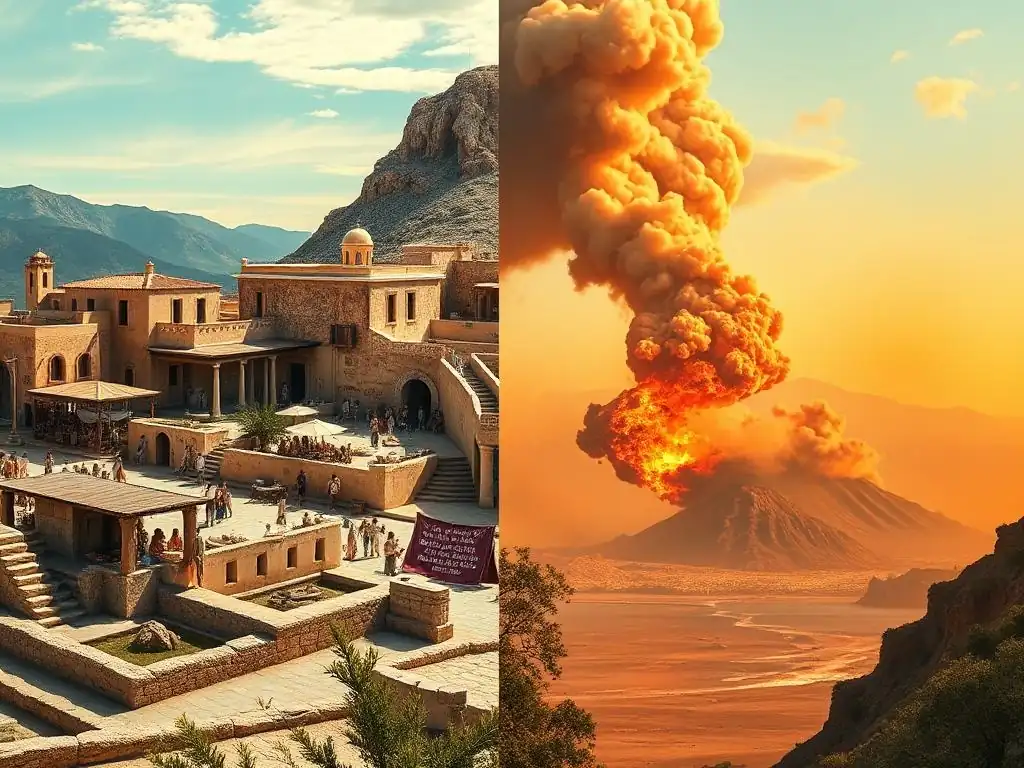
Arguments Against a Direct Link: Plato's Allegorical Intent
A primary argument against a direct historical link between Atlantis and the Minoan eruption is the widely accepted view that Plato intended Atlantis as an allegory, not a literal historical account. Plato's dialogues, Timaeus and Critias, are philosophical works exploring themes of ideal societies, political philosophy, and moral decay. Atlantis, in this interpretation, serves as a cautionary tale, illustrating the dangers of hubris, corruption, and the inevitable downfall of even the most powerful states when they abandon virtue.
Plato's description of Atlantis may be intentionally embellished and idealized to serve his philosophical purposes. The geographical scale, technological advancements, and societal perfection attributed to Atlantis could be exaggerations designed to create a compelling example of a once-great civilization that succumbed to moral failings. Furthermore, Plato places Atlantis in the Atlantic Ocean, "beyond the Pillars of Heracles," a location seemingly far removed from the Aegean Sea and Minoan Crete. These geographical and narrative elements suggest that Plato may have been more concerned with conveying philosophical lessons than accurately recording historical events.
Arguments in Favor: Similarities Between Atlantis and Minoan Civilization
Despite the allegorical interpretation, several arguments support the possibility that the Minoan eruption, or its memory, may have influenced Plato's Atlantis narrative. The chronological coincidence is notable: the Minoan eruption occurred roughly a millennium before Plato wrote about Atlantis, a timeframe that could allow for the transmission and transformation of historical memory into legend. Ancient Egyptian and Mycenaean Greek cultures, which predate Plato, may have preserved accounts or legends of the Minoan eruption and its impact, which could have been passed down to Plato's time.
The similarities between Minoan civilization and Plato's description of Atlantis are also striking. Minoan Crete was a wealthy, maritime-based society with advanced culture, palaces, and sophisticated technology for its time. The sudden decline of Minoan civilization after the eruption, whether directly caused by it or contributing to its vulnerability, could have been interpreted, over time, as a catastrophic destruction. The volcanic nature of Santorini, the tsunami generated by the eruption, and the potential for earthquakes and floods associated with volcanic activity all align with elements of Atlantis's demise in Plato's account.
The Importance of Context: Understanding Ancient Perceptions of Natural Disasters
To understand the potential link between the Minoan eruption and the Atlantis myth, it's crucial to consider ancient perceptions of natural disasters. In the absence of modern scientific understanding, volcanic eruptions, earthquakes, and tsunamis were often interpreted as divine acts, punishments from the gods, or manifestations of supernatural forces. Ancient societies lacked the geological framework to explain these events naturally, leading to mythological and religious interpretations.
Plato, while a philosopher, lived in a world where mythological explanations of natural phenomena were still prevalent. His incorporation of a catastrophic destruction into the Atlantis narrative, whether inspired by a specific historical event like the Minoan eruption or drawing on broader cultural anxieties about natural disasters, would resonate with ancient Greek audiences. The Atlantis story, in this context, can be seen as a philosophical allegory framed within a narrative that would have been readily understood and accepted by Plato's contemporaries, potentially drawing upon collective memories and fears associated with natural catastrophes, including volcanic eruptions.
Plato's Allegory: Interpreting Atlantis Beyond a Literal Interpretation
Atlantis as a Metaphor: Hubris, Power, and Natural Disasters
Even if Plato's Atlantis is not a literal historical account of the Minoan eruption, interpreting it as a metaphor allows us to appreciate its enduring relevance and philosophical depth. Atlantis, in this light, becomes a powerful symbol for the dangers of unchecked power, excessive pride (hubris), and moral corruption. The story serves as a cautionary tale for any society or civilization that becomes arrogant and unjust, suggesting that such hubris inevitably leads to downfall and destruction, potentially through natural disasters perceived as divine retribution.
The cataclysmic destruction of Atlantis by earthquakes and floods can be interpreted metaphorically as the destructive consequences of societal decay. Just as natural forces can overwhelm and obliterate a physical landscape, moral and political failings can erode the foundations of a society, leading to its collapse. Atlantis, therefore, transcends a simple historical question and becomes a timeless allegory about the cyclical nature of civilizations, the temptations of power, and the importance of maintaining virtue and justice for societal longevity.
The Role of Natural Disasters in Shaping Ancient Greek Thought
Natural disasters, including volcanic eruptions and earthquakes, played a significant role in shaping ancient Greek thought and culture. The Aegean region is seismically and volcanically active, and the Greeks experienced firsthand the destructive power of these natural forces. Myths and legends, including those about gods like Poseidon (associated with earthquakes and the sea) and Hephaestus (god of fire and volcanoes), reflect these experiences and anxieties.
The Atlantis myth, whether or not directly inspired by a specific volcanic eruption, can be seen as part of this broader cultural context. It reflects a Greek understanding of the world as being subject to powerful and unpredictable natural forces, and a belief that human actions could incur the wrath of the gods, leading to catastrophic consequences. The story of Atlantis, in this sense, is not just about a lost civilization, but also about the relationship between humanity, the natural world, and the divine order, as perceived by the ancient Greeks.
Examining the Philosophical Implications of Atlantis's Destruction
The philosophical implications of Atlantis's destruction are central to Plato's intended message. The narrative highlights the importance of moral and political virtue for the stability and longevity of a society. Atlantis's initial virtue and subsequent decline into corruption serve as a stark illustration of the consequences of abandoning ethical principles. Plato uses Atlantis to contrast an ideal, virtuous society (Athens in his dialogues) with a flawed, hubristic one, emphasizing the superiority of justice, wisdom, and moderation over power and material wealth.
The sudden and complete destruction of Atlantis underscores the fragility of even the most powerful civilizations. It serves as a philosophical warning against complacency and the belief that material or technological advancements alone can guarantee societal survival. Plato's Atlantis, therefore, is not merely a historical mystery or a geographical puzzle, but a profound philosophical allegory that continues to resonate with readers today, prompting reflection on the nature of civilization, power, and the enduring importance of ethical leadership and social justice.
Conclusion: The Enduring Mystery of Atlantis and the Power of the Minoan Eruption
The Lasting Fascination with Atlantis: A Timeless Tale
The legend of Atlantis continues to captivate and intrigue audiences across cultures and generations. Its enduring fascination stems from its multifaceted nature: it is a story of a lost civilization, a geographical mystery, a philosophical allegory, and a cautionary tale. The search for Atlantis, whether literal or metaphorical, reflects a deep human desire to understand the past, explore the limits of human civilization, and grapple with fundamental questions about power, morality, and the forces that shape human history.
The ambiguity surrounding Atlantis's historicity only adds to its allure. The lack of definitive proof, coupled with Plato's detailed descriptions and the suggestive parallels with real historical events like the Minoan eruption, allows for endless interpretation and speculation. Atlantis remains a powerful symbol in popular culture, literature, and art, constantly being reimagined and reinterpreted to reflect contemporary anxieties and aspirations.
The Minoan Eruption as a Turning Point in Mediterranean History
Regardless of whether it directly inspired the Atlantis myth, the Minoan eruption was undoubtedly a significant turning point in Mediterranean history. This cataclysmic volcanic event profoundly impacted the Minoan civilization and likely had wider repercussions across the Aegean and beyond. The eruption serves as a stark reminder of the power of natural forces to shape human societies and alter the course of history.
The Minoan eruption also highlights the interconnectedness of ancient Mediterranean cultures. Its effects likely extended beyond Crete and Santorini, potentially influencing Mycenaean Greek civilization and even impacting trade routes and political dynamics across the region. Understanding the Minoan eruption and its consequences is crucial for comprehending the Bronze Age Aegean and the broader historical context in which the Atlantis myth emerged and evolved.
Further Research: Investigating the Socio-Economic Impact of the Minoan Eruption
Further research into the Minoan eruption and its socio-economic impact is essential for a more complete understanding of its historical significance. Ongoing archaeological investigations on Santorini and Crete, combined with advanced geological and environmental analyses, continue to reveal new insights into the eruption's scale, chronology, and consequences. Interdisciplinary studies, integrating archaeology, volcanology, paleoclimatology, and ancient texts, are crucial for piecing together a comprehensive picture of this pivotal event.
Specifically, future research should focus on refining the dating of the eruption, further delineating the extent and impact of the Minoan tsunami, and more precisely assessing the long-term socio-economic consequences for Minoan Crete and the wider Aegean world. Understanding the full impact of the Minoan eruption not only sheds light on a crucial episode in ancient history but also provides valuable lessons about the resilience and vulnerability of societies in the face of catastrophic natural disasters, a topic of increasing relevance in our modern world.
Frequently Asked Questions
Did Plato explicitly mention a volcanic eruption in his accounts of Atlantis?
No, Plato's original texts detailing Atlantis do not directly reference a volcanic eruption. The destruction of Atlantis is attributed to earthquakes and floods, not specifically volcanic activity.
What connection is there between the Atlantis legend and volcanic eruptions?
The connection is largely interpretive and speculative. Some researchers believe Plato's descriptions of Atlantis may have been inspired by the Bronze Age eruption of Thera (modern Santorini).
How does the Thera eruption relate to the "Plato volcanic eruption Atlantis" theory?
The Thera eruption was a massive volcanic event that caused widespread devastation in the Mediterranean. Some scholars suggest the societal collapse following the eruption might have been the basis for Plato's Atlantis story.
If Plato didn't mention volcanoes, why is this theory so popular?
The theory appeals because it offers a plausible, real-world explanation for the Atlantis myth. The dramatic nature of volcanic eruptions aligns with the catastrophic destruction described by Plato.
Is there definitive proof that the Atlantis story is based on a real volcanic event?
There is no definitive proof. The link between Atlantis and volcanic eruptions, like the one at Thera, remains a compelling but unproven theory.
Final Reflection: Echoes of Atlantis in Our Time
The exploration of Plato's Atlantis, particularly through the lens of a potential volcanic eruption, reveals more than just historical speculation; it highlights the enduring power of myth as a vessel for profound truths. The questions raised about societal hubris, environmental vulnerability, and the cyclical nature of civilization remain strikingly relevant in our modern world, where we grapple with similar challenges on a global scale.
The enduring allure of Atlantis, fueled by the possibility of a real event buried beneath layers of allegory, speaks to our deep-seated anxieties about the fragility of progress. The search for Atlantis, whether literal or metaphorical, is ultimately a search for ourselves, a quest to understand the forces that shape our rise and fall. Human behavior flows from three main sources: desire, emotion, and knowledge.
- Plato. This quote underscores the very essence of the Atlantis story: a civilization undone by the imbalance of these forces.
Let us, therefore, consider the lessons embedded within the Atlantis myth. Let us strive to cultivate wisdom, humility, and a deep respect for the natural world. For in understanding the potential for destruction, both internal and external, we can work towards building a more sustainable and just future, one where the echoes of Atlantis serve not as a warning of inevitable doom, but as a call to conscious action and enduring hope.
Uncover the Secrets of Atlantis: Join the Discussion!
Thank you for exploring the intriguing link between Plato's Atlantis and the potential for a real volcanic eruption. We hope this article sparked your interest in the intersection of myth and geology! Ready to continue your investigation?
Here are a few ways to delve deeper:
- Share your thoughts and theories on which volcanic events might have inspired the Atlantis myth in the comments below. Let's unravel the mystery together!
- Explore our archives for more articles on ancient volcanic events and their impact on civilizations. You might discover further connections!
- Challenge yourself by researching specific volcanoes, like Santorini, mentioned in similar theories, and present your findings to a local history or geology group.
What evidence do you find most compelling in supporting or refuting the volcanic theory of Atlantis? Share your insights in the comments!