
Historical Eruptions
Step back in time and uncover the explosive events that have shaped our world at VolcanoExplorers.org. From the cataclysmic Minoan eruption of Thera that may have inspired Atlantis, to the chilling link between volcanic winters and historic famines, our "Historical Eruptions" section reveals how these fiery giants influenced the rise and fall of civilizations. Journey through Roman eyewitness accounts, the Little Ice Age's volcanic forcing, and the 19th-century birth of modern volcanology, while exploring cutting-edge dating techniques and the surprising potential connections between eruptions and pandemics. Discover how ancient trade routes were rerouted, medieval societies transformed, and disaster response evolved—all driven by the planet’s most dramatic natural phenomena. Whether you’re a history buff or a geology enthusiast, these stories of survival, collapse, and innovation offer a gripping lens on human resilience. Dive into the ash-covered past and see how prehistoric eruptions left their mark on the land and lore we live with today.
 Volcanic Eruptions in the 18th Century: Enlightenment Era Perspectives
 Roman Accounts of Volcanic Eruptions
 Prehistoric Volcanic Eruptions and their Evidence
 The Impact of Volcanic Eruptions on Ancient Trade Routes
 Volcanic Eruptions and Famines in History
 The Little Ice Age and Volcanic Forcing
 Volcanic Eruptions in the 19th Century: The Rise of Volcanology
 Volcanic Eruptions and the Fall of Civilizations
 Volcanic Eruptions and the Development of Disaster Response
 Medieval Volcanic Eruptions and their Societal Impacts
 Volcanic Eruptions and Pandemics: Possible Connections
 Dating Volcanic Eruptions: Methods and Techniques
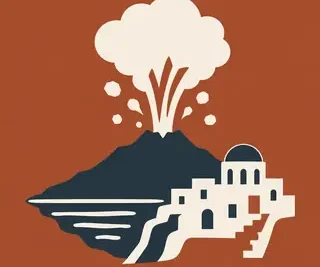 The Minoan Eruption of Thera (Santorini)
Explore the Power of Past Eruptions
Welcome to the Historical Eruptions hub on VolcanoExplorers.org, where we dig into the stories locked in ash, ice, and ancient texts. From Bronze Age cataclysms to the scientific awakening of the 19th century, we uncover how eruptions have shaped climate, societies, and trade routes. Whether you are a student, a history buff, or a budding volcanologist, these subcategories link the explosive forces of nature to the human record. Use our guides to understand cutting-edge dating methods and to question how past volcanic winters may have triggered famines or even pandemics.
🌋 The Minoan Eruption of Thera (Santorini)
This subcategory plunges into one of the most iconic Bronze Age disasters, the eruption around 1600 BCE that devastated the Aegean. Expect detailed reconstructions of the caldera collapse, tsunami generation, and the thick pyroclastic flows that buried Akrotiri. We also connect the event to the debated decline of the Minoan civilization and its possible link to the Atlantis myth.
⏳ Dating Volcanic Eruptions: Methods and Techniques
Here, we break down the scientific toolkit used to date ancient eruptions, including radiocarbon dating of charred wood, tephrochronology using unique ash layers, ice core acidity spikes, and dendrochronology (tree rings). Readers can compare the strengths and limitations of each method, and see how researchers cross-correlate records to assign precise eruption dates.
🦠 Volcanic Eruptions and Pandemics: Possible Connections
Explore the intriguing hypothesis that large eruptions, by triggering climate anomalies, may have indirectly facilitated disease outbreaks. We examine case studies such as the 536 CE dust veil and the Justinianic Plague, evaluating evidence for crop failures, malnutrition, and increased human migration. The content emphasizes correlation versus causation, helping you weigh the scientific debates without oversimplifying complex historical events.
🏰 Medieval Volcanic Eruptions and their Societal Impacts
This section focuses on eruptions like Samalas in 1257 and Kuwae in 1452, which caused global cooling and severe weather. Learn how chronicles, tithe records, and grain prices reveal famine, social unrest, and even political change. We include translated primary sources and maps to show how distant volcanoes echoed through medieval Europe, Asia, and the Americas.
🚨 Volcanic Eruptions and the Development of Disaster Response
Trace how societies moved from fatalistic acceptance to organized relief after major blasts, particularly the 79 CE Vesuvius and the 1783 Laki eruption. We highlight the first evacuation orders, international aid efforts, and early insurance schemes. This is a must-read for understanding how modern emergency management evolved, with lessons still relevant for hazard planning today.
🏛️ Volcanic Eruptions and the Fall of Civilizations
Here, we critically assess claims linking eruptions to societal collapse, such as the end of the Minoans, the Hittite crisis, and classic Maya droughts. You will find skeptical analyses that separate rapid volcanic impact from gradual decline, using archaeological layers and paleoclimate proxies. The goal is to show that eruptions are often contributing factors, not lone executioners.
🔬 Volcanic Eruptions in the 19th Century: The Rise of Volcanology
This subcategory celebrates the birth of modern volcanology, from Tambora (1815) to Krakatoa (1883). Expect biographies of pioneers like Alfred Lacroix and Thomas Jaggar, plus the first systematic classification of eruption types. We also cover the invention of the seismograph and the founding of permanent volcano observatories, which transformed eruption forecasting from guesswork into science.
❄️ The Little Ice Age and Volcanic Forcing
Dive into the complex link between historical eruptions and the cool period roughly from 1300 to 1850. We analyze ice core sulfate records and summer temperature reconstructions to identify clusters of eruptions (e.g., 1257, 1452, 1600, 1815) that may have triggered decades of cooling. The discussion separates solar and oceanic factors from volcanic ones, so you can judge the evidence for yourself.
🌾 Volcanic Eruptions and Famines in History
Focused on the human tragedy of hunger, this section pairs eruption chronologies with grain yield records and price inflation. Case studies include the 1783 Laki haze in Iceland (which killed livestock) and the 1815 Tambora eruption that caused the “Year Without a Summer.” We show how local vulnerability and trade networks turned moderate cooling into catastrophic famine in Ireland, Japan, and China.
🛶 The Impact of Volcanic Eruptions on Ancient Trade Routes
Discover how eruptions disrupted maritime and overland commerce, from the Thera blast destroying Minoan ports to the 1660s eruption of Etna blocking Meditteranean shipping. Using shipwreck layers, pottery distributions, and harbor sedimentation, we illustrate rerouted trade and economic decline. This subcategory connects geology with archaeology, showing that even small ash clouds could choke trade winds.
🦴 Prehistoric Volcanic Eruptions and their Evidence
For deeper time, we review methods to identify eruptions before writing, including tephra layers in lake beds, melt inclusions in crystals, and argon-argon dating. Featured examples include the massive Toba eruption (74,000 years ago) and the Columbia River Basalts. We stress how ancient eruptions are key to estimating recurrence intervals and hazard probabilities for modern populations.
📜 Roman Accounts of Volcanic Eruptions
Here, we gather firsthand texts from Pliny the Younger’s famous letters on Vesuvius, alongside lesser-known accounts of Etna by Virgil, Ovid, and Seneca. The content analyzes Roman interpretations (as divine punishment or natural phenomena), their practical emergency responses, and the accuracy of their observations. This is a goldmine for classicists and geologists alike.
💡 Volcanic Eruptions in the 18th Century: Enlightenment Era Perspectives
Finally, explore how the Enlightenment changed views on volcanoes, especially after the 1707 Fuji and 1755 Lisbon earthquake (not volcanic but linked in discourse). We cover the transition from myth to empirical observation, pioneer instruments like thermometers in fumaroles, and the founding of the first volcano observatories on Vesuvius. This subcategory reveals how scientists turned awe into systematic inquiry.
Frequently Asked Questions
What is the most significant historical eruption in terms of climate impact?
The 1815 Tambora eruption is widely considered the most impactful for climate, causing the “Year Without a Summer” in 1816. Volcanic sulfate aerosols lowered global temperatures by up to 1°C, leading to crop failures, famines, and even social unrest in Europe and North America. Its ash and gas emissions exceeded any modern eruption, making it a benchmark for studying volcanic forcing.
How do scientists date eruptions that occurred before written records?
Scientists use multiple methods: radiocarbon dating of organic material beneath ash layers, tephrochronology by matching unique ash chemistry, ice core acidity peaks, and dendrochronology to date tree-ring frost damage. For very old eruptions, argon-argon dating on volcanic minerals offers direct ages. Cross-checking these techniques provides reliable eruption timelines even without historical texts.
Can a single volcanic eruption really cause a pandemic?
No single eruption directly causes disease, but severe climate disruption can weaken populations and increase disease spread. For example, the 536 CE eruption (likely Ilopango) produced a dust veil that dimmed the sun, ruining harvests and causing malnutrition. That stress may have contributed to the Justinianic Plague’s severity, though microbial factors were the primary cause. The link is indirect and still debated.
Why did the Minoan eruption of Thera not automatically destroy the Minoan civilization?
While Thera was devastating, archaeological evidence suggests the Minoans recovered for several decades before final collapse. The eruption’s tsunamis and ash damaged coastal towns, but Crete’s interior remained inhabited. Political changes, Mycenaean invasions, and trade disruption played larger roles. Thus, Thera was a severe shock, not a lone killer, highlighting how resilience and adaptation matter.
What is the oldest known volcanic eruption with a precise date?
The oldest precisely dated eruption is the Toba supereruption in Indonesia, which occurred approximately 74,000 years ago, based on argon-argon dating of sanidine crystals. Its massive ash layers are found across the Indian Ocean, and its link to a genetic bottleneck in humans is debated. For historical records, the Thera eruption around 1600 BCE is among the earliest with a near-exact date from tree rings and ice cores.