Whispers of Tambora? Precursors to a MegaEruption in the Late 1700s
Uncover the chilling pre-1815 Tambora mega-eruption history! New research hints at precursor events in the late 1700s, challenging our understanding of this…
Read article
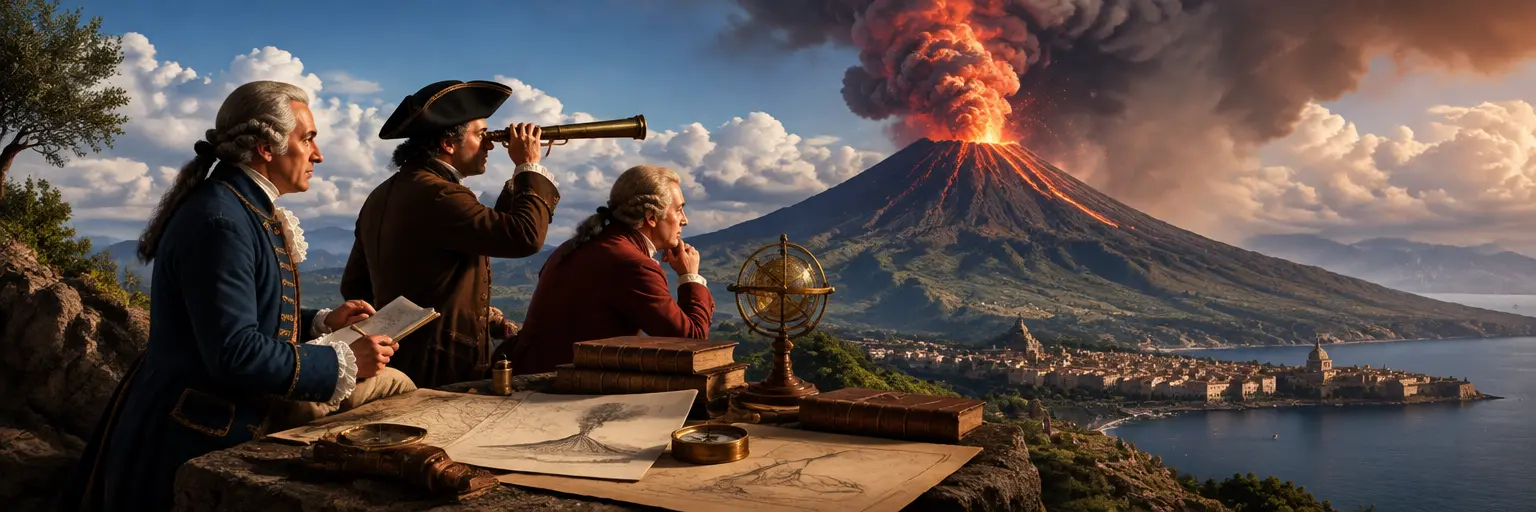
Step back in time to the 18th century, when the Age of Enlightenment collided with the raw, untamed power of the Earth. This was a transformative era for science, as curious minds began to move beyond superstition and divine wrath, seeking rational explanations for the fiery mountains that shook their world. From the devastating eruption of Mount Laki in 1783, which plunged Europe into a toxic haze, to the awe-inspiring destruction of Vesuvius in 1794 that captivated naturalists, these explosive events became natural laboratories. Witness how pioneers like William Hamilton and Benedict de Saussure risked life and limb to measure, sketch, and theorize, transforming volcanic eruptions from omens of God into geological puzzles to be solved. This period sparked the very foundations of modern volcanology, blending empirical observation with dramatic Enlightenment curiosity. Discover how these historical eruptions not only reshaped landscapes but also reshaped human thought, bridging the gap between folklore and science. 🌋✨
Uncover the chilling pre-1815 Tambora mega-eruption history! New research hints at precursor events in the late 1700s, challenging our understanding of this…
Read article
Uncover how 18th-century volcanic eruptions dramatically impacted global trade routes and economies. VolcanoExplorers.org reveals the surprising connections between geological events and historical…
Read article
Explore how 18th-century Romantic views of volcanoes, far from simply fearing their destructive power, embraced their sublime terror as a source of…
Read article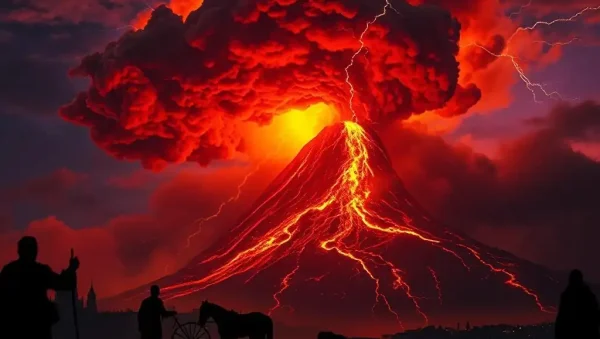
Explore Vesuvius's tumultuous 18th-century history on VolcanoExplorers.org. Uncover the science behind its eruptions and learn about the impact of this iconic volcano's…
Read article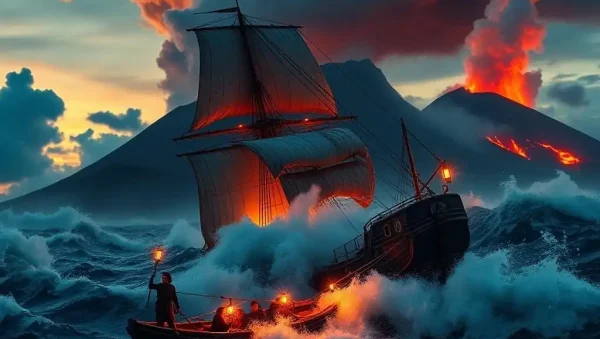
Journey back to the daring era of 18th-century volcanic exploration! VolcanoExplorers.org unveils the intrepid voyages and scientific discoveries that shaped our understanding…
Read articleStep back into the 18th century, a time when science began to challenge superstition and the Age of Enlightenment reshaped how humanity understood the natural world. This subcategory on VolcanoExplorers.org explores the pivotal volcanic eruptions of that era—such as the 1707 Mt. Fuji eruption and the devastating 1783 Laki fissure—through the lenses of early geologists, philosophers, and eyewitnesses. Discover how these events influenced nascent volcanology, inspired Romantic-era art, and prompted the first systematic attempts to document and explain catastrophic Earth processes. Here, you’ll find a unique blend of historical record, scientific evolution, and cultural commentary.
The last confirmed eruption of Mt. Fuji occurred in 1707, producing massive ashfall that darkened skies as far as Edo (modern Tokyo). This event marked a shift in how eruptions were recorded, as Japanese scholars and Dutch traders in Nagasaki began systematic notes on volcanic phenomena, moving beyond folklore to detailed chronicles of ash layers, tremors, and lahars. For visitors, this section offers a case study in pre-modern geophysical observation, complete with translated excerpts from contemporary diaries.
Enlightenment thinkers in Europe, like Gottfried Leibniz, cited Fuji’s eruption to argue that volcanoes were not random divine punishments but governed by natural laws awaiting discovery. You’ll explore maps, woodblock prints, and early seismological instruments that captured this eruption, providing a rare glimpse into cross-cultural scientific exchange. This narrative enriches your understanding of how global events fueled the intellectual fire of the 18th century, bridging Eastern and Western thought on Earth’s dynamics.
Iceland’s Laki fissure eruption, lasting eight months, released toxic gases that killed livestock, caused a famine killing 20% of Iceland’s population, and generated a volcanic haze that spread across Europe. This section examines how Enlightenment scientists, including Benjamin Franklin in Paris, connected airborne gases to the unusually cold winter of 1783–84, pioneering the concept of volcanic-induced climate change. You’ll find primary accounts from Danish administrators and British naturalists who measured atmospheric effects.
We analyze the political and social upheaval that followed, from food riots in France to altered harvests in Scandinavia, showing how one eruption reshaped economies. This era’s response—a blend of empirical measurement and still folklore-laden fear—demonstrates the tension between reason and tradition. Expect annotated timelines, gas dispersion maps, and quotes from contemporary letters that reveal how Enlightenment-era thinkers argued for government-funded disaster mitigation, a novel idea at the time.
The 18th century saw Mount Vesuvius erupt repeatedly (1707, 1737, 1766, 1779, and 1794), attracting aristocrats and savants on the Grand Tour. These eruptions, alongside the rediscovery of Herculaneum in 1738, catalyzed the first systematic efforts to classify volcanic rocks, measure lava flows, and document cone growth. This article introduces you to pioneers like Sir William Hamilton, whose 1772 book “Observations on Mount Vesuvius” used detailed watercolors and measurements, earning him the title of “father of modern volcanology.”
You’ll explore how these enthusiasts—often self-funded—established observation protocols still used today, such as routine gas sampling and temperature logging. Their writings, preserved in letters to the Royal Society, show a remarkable shift from mythological explanations to quantifiable data. This section also covers the cultural impact: Vesuvius became a symbol of sublime nature, inspiring poets like Goethe and painters like Joseph Wright of Derby, whom you’ll see in gallery-style stills.
While Europe dominated Enlightenment science, this period saw significant eruptions in the Americas and Southeast Asia, such as the 1770s Cosegüina and 1780s Taal eruptions. Spanish colonial priests and Dutch East India Company traders produced valuable records, albeit framed by imperial narratives. Here, we examine how these accounts enriched global knowledge, correcting geocentric models and prompting debates on the Earth’s internal heat, a topic hotly contested by Buffon and later Hutton.
Expect to uncover missionary journals describing ash clouds in the Philippines and ship logs from Pacific voyages, linking these events to oceanic mid-ocean ridges, though predating plate tectonics. This section offers a decolonized perspective, highlighting how indigenous knowledge about volcanic precursors (like animal behavior and water level changes) was annotated by Western observers. You’ll see early telemeteric sketches and comparative tables that helped geologists map a global “volcanic belt,” long before modern seismology validated it.
The 18th century’s volcanic eruptions profoundly influenced European aesthetics, giving rise to the “sublime” movement—art and prose that glorified nature’s terror and majesty. This section reveals how eruptions at Vesuvius, Hekla, and others were depicted in engravings, oil paintings, and travelogues, shaping public perception of volcanic danger. You’ll explore the works of artists like Pierre-Jacques Volaire and scientists who commissioned visuals to aid their research.
Beyond art, Enlightenment literature, from Erasmus Darwin’s poems to Mary Shelley’s later works, used volcanic metaphors for revolution and passion. We analyze how these cultural products, read alongside scientific reports, reveal a society wrestling with the dual power of nature and human reason. This section includes image galleries, excerpts from untranslated travel narratives, and comparative analyses of how different nations portrayed the same eruption, enriching your appreciation of the era’s worldview.
The 1783 Laki eruption in Iceland was the deadliest due to famine and toxic gases, killing roughly 20% of Iceland’s population and causing widespread crop failures in Europe. The 1707 Mt. Fuji eruption also caused significant damage, though with fewer direct deaths, while Vesuvius’s 1794 eruption destroyed nearby towns but had limited fatalities.
Enlightenment thinkers replaced supernatural explanations with empirical observation, emphasizing measurement, classification, and natural causality. This led to systematic monitoring, the first geological maps, and theories on Earth’s internal heat (e.g., Hutton’s plutonism). It also encouraged international data exchange, as scholars published in journals like the Philosophical Transactions.
Yes, the Laki eruption released sulfur dioxide causing a volcanic winter across the Northern Hemisphere, with average temperatures dropping by 1-2°C for years. Benjamin Franklin famously correlated the “dry fog” with cold, and later research confirmed aerosols reduced sunlight. Other smaller eruptions had regional effects.
Sir William Hamilton, a British diplomat in Naples, is widely considered the pioneer. His detailed observations of Vesuvius, including temperature readings and sketches, standardized field studies. His 1772 book influenced both Humboldt and Lyell, solidifying his legacy as the first true volcanologist.
See Hamilton’s letters and books, the diary of Abbot Giovanni Battista di Cosentino (Vesuvius 1794), Japanese records at the Edo Shogunate’s archives, and Danish colonial reports on Laki. Many are digitized at the Royal Society and National Archives of Iceland, offering authentic firsthand perspectives.