
The Science of Spreading: How Fissures Reveal Earth's Dynamics

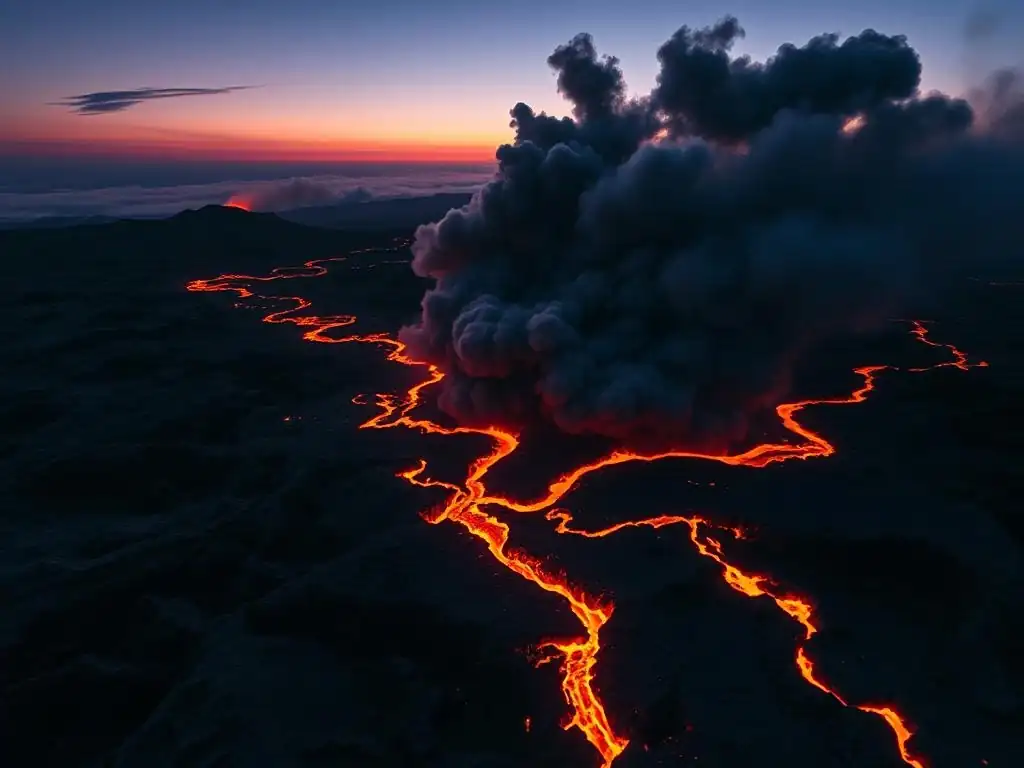
Welcome to Volcano Explorers, where the Earth's fiery secrets are revealed. Ever wondered how the ground beneath your feet can crack and bleed molten rock? Prepare to journey to the heart of volcanic activity, starting with Understanding Volcanic Fissure Formation. Uncover the hidden forces that shape these dramatic landscapes and discover why these spreading fractures are key to unlocking Earth's dynamic processes. Are you ready to explore the science of spreading? Dive in!
- Volcano Explorers: Unveiling the Secrets of Fissure Volcanoes
- The Formation of Volcanic Fissures: A Deep Dive
- The Dynamics of Fissure Eruptions: From Gentle Flows to Explosive Events
- Notable Examples of Fissure Volcanoes Around the World
- Environmental Impact of Fissure Eruptions: Shaping Landscapes and Ecosystems
- Monitoring and Predicting Fissure Eruptions: Volcanological Techniques
- The Future of Fissure Volcano Research: Advancing Our Understanding of Earth's Interior
- Conclusion: Appreciating the Power and Significance of Fissure Volcanoes
-
Frequently Asked Questions
- How does magma pressure contribute to volcanic fissure formation?
- What role do tectonic plates play in the creation of volcanic fissures?
- What are some common land features associated with volcanic fissure eruptions?
- How do volcanologists monitor and predict potential fissure eruptions?
- What are the primary hazards associated with volcanic fissure eruptions?
- Final Reflection: Unearthing Earth's Secrets
- Unearth Your Inner Geologist: Start Exploring Now!
Volcano Explorers: Unveiling the Secrets of Fissure Volcanoes
Defining Fissure Volcanoes: A Unique Type of Volcanic Activity
Fissure volcanoes, unlike their more conical counterparts, represent a distinct form of volcanic activity where lava erupts from linear cracks or fissures in the Earth's crust. These fissures can extend for kilometers, sometimes dozens of kilometers, creating dramatic landscapes and geological features. Instead of a central vent, the eruption occurs along these extended fractures, often resulting in vast outpourings of basaltic lava that can cover extensive areas. This style of eruption is fundamentally different from the explosive eruptions associated with stratovolcanoes, and it reveals different processes at play within the Earth's mantle and crust.
The term "fissure volcano" itself can be somewhat misleading as it's not a volcano in the traditional mountain-building sense. It is more accurately described as a volcanic fissure or a fissure eruption. The term "Icelandic-type eruption" is also sometimes used, highlighting Iceland's prominent role in showcasing this type of volcanism. Understanding volcanic fissure formation is crucial to comprehending the dynamic nature of our planet, as these features are direct expressions of tectonic forces and magma movement within the Earth. They offer a window into the processes that shape continents and influence global geological patterns.
The Importance of Studying Fissure Volcanoes for Understanding Earth's Dynamics
Studying fissure volcanoes is paramount for gaining insights into the fundamental processes that drive Earth's dynamic systems. These linear eruptions are often associated with divergent plate boundaries, such as mid-ocean ridges and continental rift valleys, where tectonic plates are pulling apart. By examining fissure systems, volcanologists can directly observe the mechanisms of plate tectonics in action, witnessing the creation of new crust and the spreading of continents. The geological record preserved in fissure volcanic terrains provides a long-term perspective on these processes, stretching back millions of years.
Furthermore, fissure eruptions offer valuable clues about the composition and behavior of Earth's mantle. The basaltic lavas erupted from fissures are typically derived from the upper mantle, providing samples of the Earth's interior that are otherwise inaccessible. Analyzing the geochemistry of these lavas helps scientists understand mantle melting processes, magma generation, and the evolution of the Earth's crust over geological time. Understanding volcanic fissure formation and eruption dynamics is therefore not just about volcanoes themselves but also about unraveling the broader workings of our planet.
The Formation of Volcanic Fissures: A Deep Dive
Tectonic Plate Movement and Fissure Development
The genesis of volcanic fissures is intrinsically linked to the movement of tectonic plates. In regions where plates are diverging, extensional forces stretch and thin the Earth's crust. This stretching creates fractures and faults, providing pathways for magma to ascend from the mantle. The most prominent examples of fissure volcanism are found along mid-ocean ridges, where plates are actively spreading apart, and in continental rift valleys, such as the East African Rift Valley. These areas are characterized by extensive systems of fissures and faults that facilitate magma ascent.
The orientation and distribution of fissures are often dictated by the regional stress field caused by plate tectonics. In areas of pure extension, fissures tend to form perpendicular to the direction of stretching. However, in more complex tectonic settings, fissures can be influenced by pre-existing weaknesses in the crust, such as older fault lines or geological structures. The interplay between tectonic forces and crustal structure ultimately determines the pattern and characteristics of fissure systems in a given region. Understanding volcanic fissure formation requires a thorough knowledge of the local and regional tectonic context.
Magma Pathways and the Creation of Eruptive Fissures
Once tectonic forces have created fissures in the crust, magma from the underlying mantle can utilize these pathways to reach the surface. Magma, being less dense than the surrounding solid rock, rises buoyantly. When it encounters a fissure, it can exploit this zone of weakness, further widening and propagating the crack as it ascends. The pressure exerted by the rising magma itself can contribute to the opening of the fissure and the initiation of an eruption.
The depth and extent of fissures can vary considerably. Some fissures may originate deep within the crust or even in the upper mantle, while others may be shallower, forming closer to the surface. The pathways magma takes to reach a fissure can also be complex, involving networks of interconnected fractures and conduits. Understanding volcanic fissure formation involves not only the initial tectonic fracturing but also the subsequent magma transport and the dynamics of magma-crust interaction within the fissure system.
Understanding Volcanic Fissure Formation: A Step-by-Step Process
The formation of a volcanic fissure can be conceptualized as a multi-stage process. It begins with tectonic forces causing stress and strain in the Earth's crust, leading to the development of fractures. This fracturing is often preceded by increased seismic activity as the crust adjusts to the changing stress conditions. As fissures open, magma from the mantle, driven by buoyancy and pressure, starts to ascend along these newly formed pathways. This magma ascent can further widen the fissures and trigger additional fracturing in the surrounding rock.
The process of magma ascent and fissure opening is often accompanied by ground deformation, which can be detected using sensitive instruments. As magma accumulates beneath the surface, it causes the ground to swell or bulge. This deformation is a key indicator of magma movement and potential fissure eruption. Understanding volcanic fissure formation involves integrating observations of tectonic setting, seismic activity, ground deformation, and magma geochemistry to build a comprehensive picture of the processes at play.
The Dynamics of Fissure Eruptions: From Gentle Flows to Explosive Events
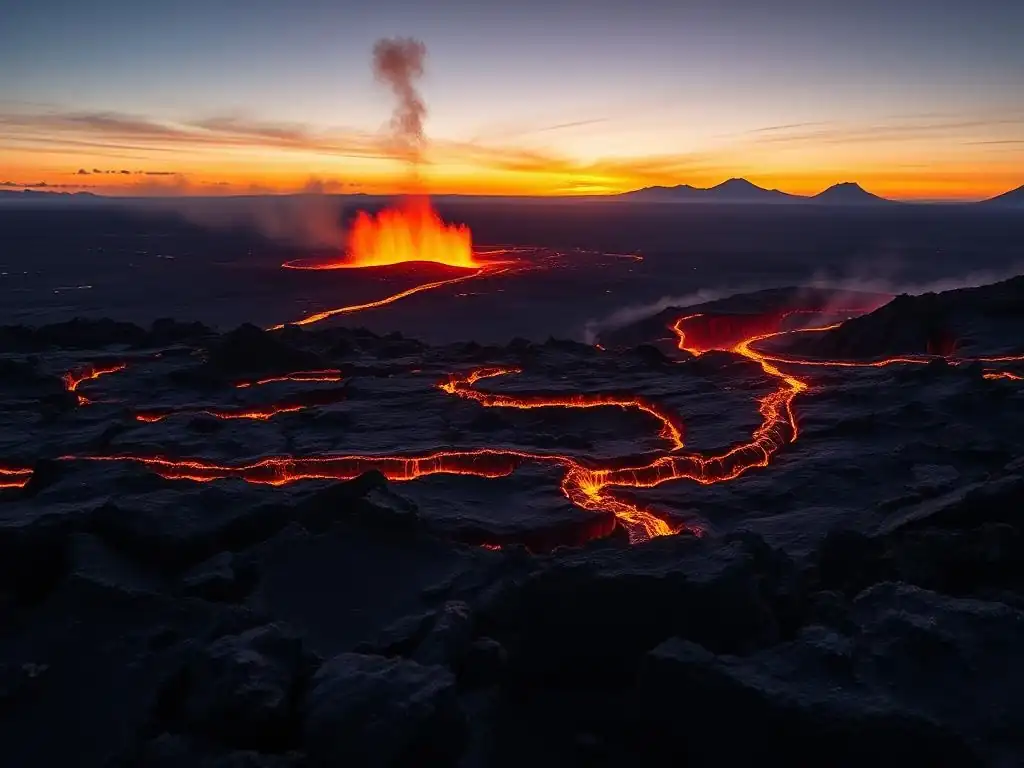
Effusive Eruptions: The Characteristic Lava Flows of Fissure Volcanoes
Effusive eruptions are the hallmark of fissure volcanoes. These eruptions are characterized by the relatively gentle outpouring of lava from fissures, creating extensive lava flows that can travel for considerable distances. The lava erupted from fissures is typically basaltic in composition, meaning it is relatively low in silica and gas content, resulting in lower viscosity and more fluid lava flows compared to the andesitic or rhyolitic lavas associated with stratovolcanoes.
The volume of lava erupted during fissure eruptions can be immense. The Laki eruption in Iceland in 1783-1784, for instance, extruded an estimated 14 cubic kilometers of lava, covering an area of approximately 565 square kilometers. These vast lava flows can reshape landscapes, burying existing terrain and creating new volcanic plains. Effusive fissure eruptions, while generally less explosive than other types of volcanic eruptions, are significant geological events capable of causing widespread environmental change.
Variations in Eruption Style: Factors Influencing Fissure Activity
While effusive eruptions are typical of fissure volcanoes, the style of activity can still exhibit variations. Factors such as magma composition, gas content, eruption rate, and the geometry of the fissure itself can influence the characteristics of a fissure eruption. For example, if the magma has a slightly higher silica content or contains more dissolved gas, the eruption might exhibit more Strombolian-style activity, with fire fountains and minor explosions along the fissure.
The eruption rate, or the volume of lava erupted per unit time, can also vary significantly during a fissure eruption. Eruptions may start with a high eruption rate and then gradually decline over time, or they may exhibit pulses of increased activity. The geometry of the fissure, including its length, width, and depth, can also influence the distribution and flow paths of lava. Understanding volcanic fissure formation and the factors controlling eruption style is crucial for assessing volcanic hazards and mitigating risks.
The Role of Gas Content in Fissure Eruption Intensity
Although basaltic magmas associated with fissure eruptions generally have lower gas content compared to magmas erupted from stratovolcanoes, gas still plays a crucial role in fissure eruption dynamics. Dissolved gases, primarily water vapor, carbon dioxide, and sulfur dioxide, drive the eruption process by providing the pressure that forces magma to the surface. As magma ascends and pressure decreases, these gases exsolve, forming bubbles within the magma.
The amount and rate of gas exsolution can influence the eruption intensity. Higher gas content or rapid gas release can lead to more vigorous eruptions, potentially including fire fountaining and minor explosive activity along the fissure. Conversely, lower gas content or slower gas release results in more passive effusive eruptions with calmer lava flows. Even in fissure eruptions dominated by effusive activity, gas release is a significant process with environmental implications, particularly concerning the release of volcanic gases into the atmosphere.
Notable Examples of Fissure Volcanoes Around the World
Iceland: A Prime Example of Fissure Volcanism
Iceland is arguably the quintessential example of fissure volcanism on Earth. Situated on the Mid-Atlantic Ridge, a divergent plate boundary, Iceland is characterized by extensive fissure systems and volcanic rift zones that dominate its landscape. The island has experienced numerous fissure eruptions throughout its history, including some of the largest and most impactful eruptions in recorded time. The landscape of Iceland is sculpted by vast lava fields, volcanic fissures, and shield volcanoes, all products of fissure-related volcanism.
The Krafla volcanic system in northern Iceland is a particularly active example of fissure volcanism. It has experienced several rifting episodes and fissure eruptions in recent decades, showcasing the ongoing tectonic activity and magma dynamics in the region. Other notable fissure systems in Iceland include the Eldgjá fissure, a massive volcanic canyon formed during a large eruption in the 10th century, and the Bárðarbunga volcanic system, which includes the Holuhraun lava field, the product of a significant fissure eruption in 2014-2015. Iceland serves as a natural laboratory for studying fissure volcanism and understanding volcanic fissure formation.
The East African Rift Valley: A Region Shaped by Fissure Eruptions
The East African Rift Valley is another globally significant region where fissure volcanism plays a dominant role. This vast continental rift system is characterized by extensive faulting, thinning of the crust, and widespread volcanic activity. Fissure eruptions have been instrumental in shaping the landscape of the East African Rift Valley, creating vast lava plains, volcanic fields, and prominent volcanic features.
Examples of fissure volcanism in the East African Rift Valley include the Natron-Engaruka volcanic area in Tanzania, where recent fissure eruptions have produced fresh lava flows, and the Afar region in Ethiopia, a triple junction where three tectonic plates are pulling apart, resulting in intense rifting and fissure volcanism. The Erta Ale volcano in the Afar region is known for its persistent lava lake and frequent fissure eruptions. Studying fissure volcanism in the East African Rift Valley provides insights into continental rifting processes and the evolution of continental crust.
Laki Fissure, Iceland: A Catastrophic Eruption
The Laki fissure eruption in Iceland, which occurred between 1783 and 1784, stands as one of the most catastrophic fissure eruptions in historical times. This eruption, also known as the Skaftáreldar (Skaftá fires), involved the opening of a 27-kilometer-long fissure and the sustained eruption of basaltic lava for eight months. The eruption produced an enormous volume of lava, estimated at 14 cubic kilometers, and released massive quantities of volcanic gases into the atmosphere.
The environmental and societal impacts of the Laki eruption were devastating. The volcanic gases, particularly sulfur dioxide, caused widespread acid rain and atmospheric haze, leading to crop failures, livestock deaths, and famine across Europe. It is estimated that the Laki eruption contributed to a significant increase in mortality rates in Europe and may have even influenced global climate patterns. The Laki eruption serves as a stark reminder of the potential hazards associated with large fissure eruptions and the importance of understanding volcanic fissure formation and their potential impacts.
Environmental Impact of Fissure Eruptions: Shaping Landscapes and Ecosystems
Lava Flows and Their Impact on Vegetation
Lava flows from fissure eruptions have a profound and immediate impact on vegetation. As molten lava spreads across the landscape, it incinerates and buries any vegetation in its path. The intense heat and weight of the lava flow completely destroy plant life, leaving behind a barren volcanic landscape. The extent of vegetation destruction depends on the size and extent of the lava flow, with larger eruptions capable of burying vast areas of forest, grasslands, or agricultural land.
However, volcanic landscapes are not permanently devoid of life. Over time, vegetation gradually recolonizes lava flows through a process called ecological succession. Pioneer species, such as mosses and lichens, are the first to establish on the barren volcanic rock, slowly breaking it down and creating soil. These pioneer species pave the way for more complex plant communities to develop over decades and centuries, eventually leading to the re-establishment of forests or other vegetation types. The long-term impact of lava flows on vegetation is a cycle of destruction and renewal, shaping the distribution and composition of ecosystems in volcanic regions.
Gas Emissions and Atmospheric Effects of Fissure Eruptions
Fissure eruptions, even those primarily effusive in nature, release significant quantities of volcanic gases into the atmosphere. The most abundant volcanic gases are water vapor, carbon dioxide, and sulfur dioxide, but trace amounts of other gases, such as hydrogen sulfide, hydrogen halides, and carbon monoxide, are also emitted. Sulfur dioxide is particularly important due to its atmospheric effects.
When sulfur dioxide reacts with water vapor in the atmosphere, it forms sulfuric acid aerosols. These aerosols can contribute to acid rain, which can damage vegetation, acidify lakes and soils, and corrode buildings. In large fissure eruptions, such as the Laki eruption, the massive release of sulfur dioxide can have global atmospheric impacts, leading to volcanic haze, reduced sunlight, and even temporary cooling of the Earth's climate. Understanding volcanic gas emissions from fissure eruptions is crucial for assessing their environmental and climatic consequences.
Long-Term Soil Enrichment from Volcanic Deposits
While the immediate impact of fissure eruptions can be destructive, in the long term, volcanic deposits can contribute to soil enrichment and enhanced soil fertility. Basaltic lava, the typical product of fissure eruptions, weathers relatively rapidly compared to other rock types, releasing essential nutrients into the soil. These nutrients, including phosphorus, potassium, calcium, and magnesium, are vital for plant growth.
Volcanic ash, another common product of volcanic eruptions (although less so in purely effusive fissure eruptions), also contributes to soil fertility. Volcanic ash is rich in minerals and has a porous texture that improves soil drainage and water retention. Over time, the weathering of lava flows and volcanic ash creates fertile volcanic soils that are highly productive for agriculture. Many regions with a history of fissure volcanism, such as parts of Iceland and the East African Rift Valley, have developed fertile soils that support agriculture and contribute to local livelihoods.
Monitoring and Predicting Fissure Eruptions: Volcanological Techniques
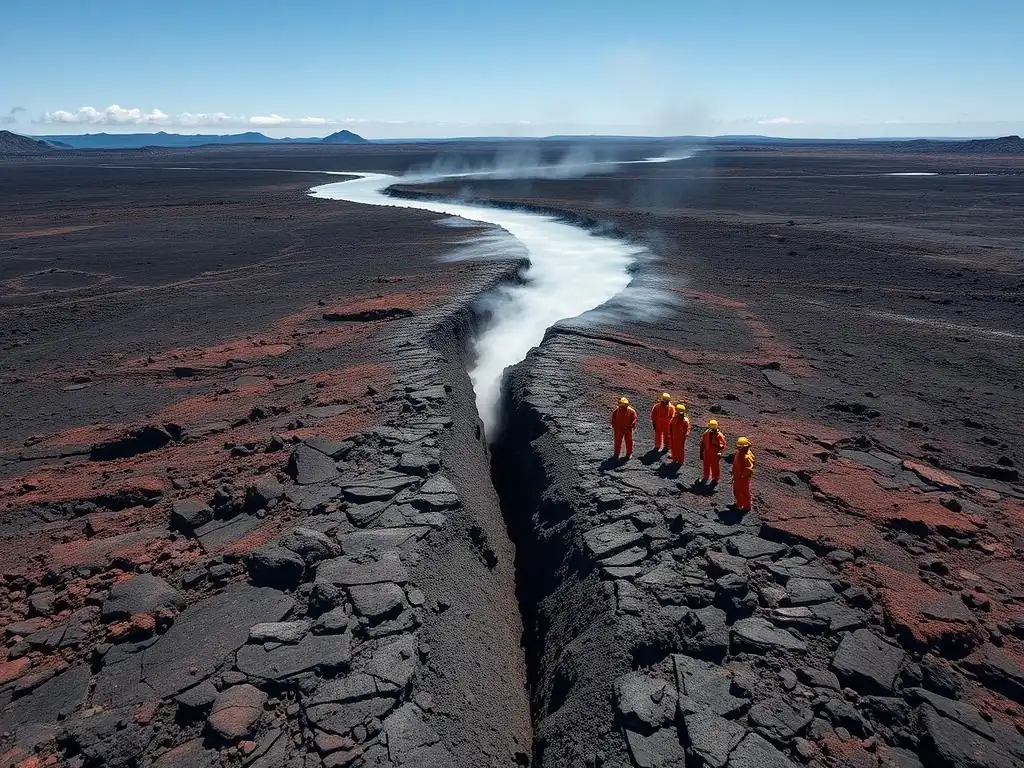
Ground Deformation Monitoring: Detecting Changes in the Earth's Surface
Ground deformation monitoring is a crucial technique in volcanology for detecting subtle changes in the Earth's surface that may indicate magma movement beneath a volcano. Fissure eruptions are often preceded by ground deformation as magma accumulates beneath the surface and exerts pressure on the surrounding rocks. Techniques such as GPS (Global Positioning System) and InSAR (Interferometric Synthetic Aperture Radar) are used to measure ground deformation with high precision.
GPS stations deployed around volcanic areas can detect minute vertical and horizontal movements of the ground surface. InSAR uses satellite radar imagery to measure ground deformation over large areas, providing a spatial view of deformation patterns. By analyzing ground deformation data, volcanologists can track magma accumulation, identify areas of potential fissure opening, and assess the likelihood of an eruption. Ground deformation monitoring is a key tool for forecasting fissure eruptions and providing early warnings to at-risk communities.
Gas Monitoring: Analyzing Volcanic Gas Emissions
Monitoring volcanic gas emissions is another important technique for assessing volcanic activity and predicting eruptions. Changes in the composition and flux of volcanic gases can indicate changes in magma supply, degassing processes, and the state of volcanic unrest. Volcanologists use various instruments to measure volcanic gas emissions, including portable gas analyzers, remote sensing techniques, and permanent gas monitoring stations.
Measurements of sulfur dioxide (SO2) flux are particularly valuable as SO2 is often a major component of volcanic gas emissions and its release rate can increase significantly prior to an eruption. Changes in the ratios of different volcanic gases, such as SO2/CO2 or H2S/SO2, can also provide insights into magma processes and eruption potential. Gas monitoring data, combined with other monitoring techniques, helps volcanologists to better understand volcanic activity and improve eruption forecasts for fissure volcanoes.
Seismic Activity: Identifying Pre-Eruption Earthquake Patterns
Seismic activity is a fundamental indicator of volcanic unrest and is routinely monitored at fissure volcanoes and other volcanic systems. Earthquakes are caused by the fracturing of rock and movement of magma beneath the surface. Changes in the frequency, magnitude, and location of earthquakes can signal magma movement and potential eruption. Volcanologists deploy networks of seismometers around volcanoes to detect and record seismic activity.
Pre-eruption earthquake patterns at fissure volcanoes often include an increase in the number of earthquakes, a shift in earthquake locations towards the area of potential eruption, and changes in earthquake characteristics, such as the type of seismic waves. Harmonic tremor, a continuous rhythmic ground vibration, is often associated with magma movement and can be a precursor to fissure eruptions. Analyzing seismic data is crucial for identifying pre-eruptive activity, assessing eruption probability, and providing timely warnings.
The Future of Fissure Volcano Research: Advancing Our Understanding of Earth's Interior
New Technologies and Research Methods in Volcanology
The field of volcanology is continuously evolving with the development of new technologies and research methods. Advanced remote sensing techniques, such as hyperspectral imaging and LiDAR (Light Detection and Ranging), provide detailed information about volcanic landscapes, lava flow characteristics, and gas plume properties. Improvements in geophysical monitoring techniques, such as distributed acoustic sensing (DAS) and fiber optic sensors, offer higher resolution and more comprehensive data on ground deformation and seismic activity.
Geochemical analysis techniques are also becoming increasingly sophisticated, allowing for more precise and detailed analysis of volcanic rocks and gases. Isotope geochemistry, for example, provides insights into magma sources and mantle processes. Computational modeling and numerical simulations are playing an increasingly important role in understanding magma dynamics, eruption processes, and the formation of volcanic features. These new technologies and research methods are enhancing our ability to study fissure volcanoes and improve our understanding of volcanic processes.
The Importance of Studying Fissure Volcanoes for Hazard Assessment
Studying fissure volcanoes is of paramount importance for volcanic hazard assessment, particularly in regions where fissure volcanism poses a significant threat to human populations and infrastructure. Understanding volcanic fissure formation, eruption dynamics, and potential impacts is crucial for developing effective hazard mitigation strategies. This includes assessing the probability of future fissure eruptions, mapping potential lava flow paths, and evaluating the risks associated with volcanic gas emissions and ashfall.
Hazard assessments for fissure volcanoes need to consider the potential for both effusive and explosive activity, as well as the long-term environmental consequences of eruptions. Volcanic hazard maps, based on geological history, monitoring data, and numerical modeling, are essential tools for land-use planning, infrastructure development, and emergency preparedness in areas prone to fissure volcanism. Continued research on fissure volcanoes is vital for improving hazard assessments and reducing volcanic risk.
Understanding Magma Dynamics Through Geochemical Analysis
Geochemical analysis of volcanic rocks and gases erupted from fissure volcanoes provides invaluable insights into magma dynamics and mantle processes. The composition of basaltic lavas erupted from fissures reflects the composition of their mantle source regions and the processes of magma generation and evolution during ascent. Analyzing major and trace element concentrations, as well as isotopic ratios, in volcanic rocks helps to constrain the origin and evolution of magmas.
Geochemical studies can reveal information about mantle melting conditions, magma differentiation processes, and the interaction of magma with the crust. By comparing the geochemistry of lavas from different fissure eruptions and volcanic regions, volcanologists can gain a better understanding of the spatial and temporal variations in mantle composition and magma dynamics. Geochemical data, combined with geophysical and geological observations, provides a comprehensive picture of the deep Earth processes that drive fissure volcanism and shape our planet.
Conclusion: Appreciating the Power and Significance of Fissure Volcanoes
Frequently Asked Questions
How does magma pressure contribute to volcanic fissure formation?
Increased magma pressure beneath the surface causes stress and cracking in the overlying rock. This then leads to the creation of fissures where magma can then erupt.
What role do tectonic plates play in the creation of volcanic fissures?
Tectonic plate movement, especially at divergent boundaries, creates zones of weakness. This allows magma to rise more easily and form fissures along these pre-existing fault lines.
What are some common land features associated with volcanic fissure eruptions?
Fissure eruptions often produce lava flows that spread out over large areas, creating lava plains or shield volcanoes. They can also form chains of cinder cones along the fissure line.
How do volcanologists monitor and predict potential fissure eruptions?
Volcanologists track ground deformation, gas emissions, and seismic activity. This provides indications of magma movement beneath the surface, which is crucial for predicting fissure eruptions.
What are the primary hazards associated with volcanic fissure eruptions?
The main hazards are lava flows that can destroy property and cover large areas, as well as volcanic gases that can be harmful to breathe. These hazards can impact the surrounding environment.
Final Reflection: Unearthing Earth's Secrets
The intricate dance of tectonic plates and the fiery release of magma, as explored throughout this article, isn't just a geological phenomenon confined to textbooks; it's a constant reshaping of our planet, influencing everything from climate patterns to the very landscapes we inhabit. Understanding volcanic fissure formation is not merely an academic exercise, but a crucial step in mitigating risks and appreciating the raw power that lies beneath our feet.
This exploration into the science of spreading has profoundly impacted my own understanding of Earth's dynamic processes. It's a humbling reminder that we are living on a planet constantly in flux, shaped by forces far greater than ourselves. The ongoing study of fissures, and the insights they provide, are vital for predicting future volcanic activity and protecting vulnerable communities. The Earth is a very small stage in a vast cosmic arena. Think of the rivers of blood spilled by all those generals and emperors so that, in glory and triumph, they could become the momentary masters of a fraction of a dot.
- Carl Sagan, reflecting on the insignificance of human conflict against the backdrop of cosmic time, a sentiment that resonates with the immense timescale of geological processes.
As you contemplate the science of spreading and the formation of volcanic fissures, consider the profound interconnectedness of our planet. Let this knowledge inspire you to look beyond the surface, to appreciate the immense forces at play, and to support the ongoing research that helps us better understand and prepare for the Earth's ever-changing nature. Let us all strive to be more informed stewards of this dynamic world we call home.
Unearth Your Inner Geologist: Start Exploring Now!
Thanks for diving into the fascinating world of fissures and Earth's dynamic processes! We hope you’ve gained a new appreciation for the powerful forces shaping our planet. Ready to put that knowledge to work?
Here's how you can continue your journey:
- Report a New Observation: Have you noticed any unusual ground cracking or subsidence in your area? Carefully and from a safe distance, document your findings and report them to your local geological survey or our community forum. This helps scientists track potential hazards and understand ongoing geological activity! (Remember safety first!)
- Delve deeper into seismic monitoring: Visit the Volcano Explorers website to learn more about the tools and techniques used to study volcanic activity.
- Spread the Knowledge: Share this article with friends, family, or classmates who are interested in Earth science or geology! You never know who you might inspire to become the next great volcanologist.
What fascinating geological feature have you observed in your local area, and how did it make you feel?