First Aid for Volcanic Ash Exposure and Respiratory Issues
When a volcano erupts, the immediate danger often extends far beyond lava flows. Volcanic ash—a gritty mixture of pulverized rock, minerals, and glass particles—can travel hundreds of miles, affecting air quality and your health. This subcategory from VolcanoExplorers.org focuses on practical, life-saving first aid for ash exposure, particularly for respiratory distress. You will learn how to recognize symptoms, administer immediate care, and protect vulnerable individuals during and after an ashfall event.
🫁 Recognizing Respiratory Distress from Ash Inhalation
Volcanic ash particles are sharp and abrasive, and inhaling them can trigger a range of symptoms from mild throat irritation to severe breathing difficulties. The first step in providing effective first aid is accurate recognition. Common signs include persistent coughing, wheezing, shortness of breath, chest tightness, and a hoarse voice. More severe indicators, such as bluish lips or confusion, signal an emergency that requires immediate medical attention. At VolcanoExplorers.org, we emphasize that early detection of these symptoms is critical, especially for children, the elderly, and individuals with pre-existing conditions like asthma or COPD.
Within this section, you will discover a symptom checklist tailored for different severity levels, enabling you to triage effectively. We explain how ash exposure differs from common dust allergies, focusing on the physical irritation caused by silica and crystalline particles. You will also learn about the delayed onset of symptoms, as respiratory distress can appear hours after initial exposure. By understanding these nuances, you can avoid underestimating the risk and be prepared to act swiftly, whether you are helping a family member in a volcanic zone or assisting a fellow traveler during an unexpected eruption.
🧴 Immediate First Aid Steps for Ash Exposure
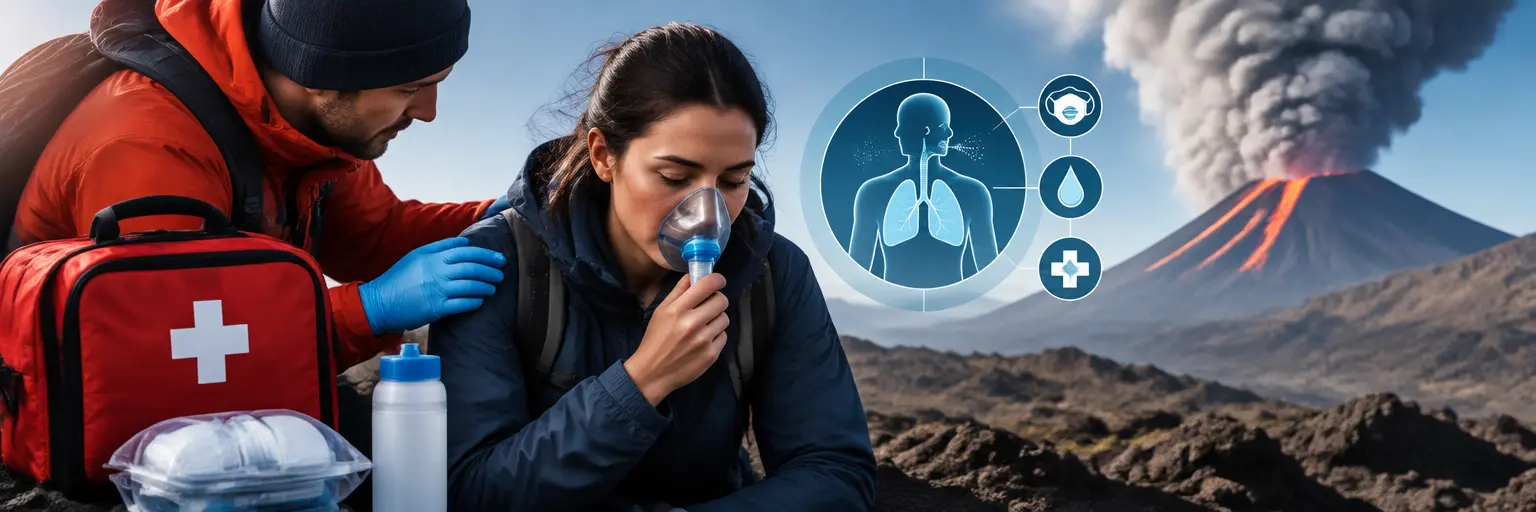
When someone has been exposed to volcanic ash, your immediate actions can significantly reduce lung irritation and prevent complications. The priority is to move the person indoors to a sealed, clean environment or a shelter with filtered air. Follow this by removing any contaminated outer clothing and gently washing exposed skin and eyes with clean water. For the respiratory tract, encourage slow, deep breathing and advise the person to rinse their mouth and gargle with water to remove ash particles. Avoid vigorous activity, as increased breathing draws ash deeper into the lungs.
Here, we provide step-by-step instructions for creating a temporary clean-air zone using damp towels under doors and using high-efficiency particulate air (HEPA) filters. Additionally, you will learn how to properly administer over-the-counter saline nasal sprays and lozenges to soothe irritated airways. We also outline when it is safe to manage symptoms at home versus when you must seek urgent hospital care, including how to recognize the signs of acute bronchitis or asphyxiation. This practical guidance transforms surviving knowledge into actionable, calm responses during a chaotic event.
🩹 Managing Breathing Difficulties with and Without Medication
For individuals with asthma or chronic lung conditions, volcanic ash poses an elevated risk of severe asthma attacks. First aid must adapt quickly, prioritizing the use of personal rescue inhalers (e.g., albuterol) as prescribed. If the person has an asthma action plan, follow it immediately. For those without medication, positioning the person upright and leaning forward slightly can help open airways, while encouraging pursed-lip breathing—inhaling through the nose and exhaling slowly through pursed lips—improves oxygen exchange. This section covers both scenarios clearly, including how to assist someone who has forgotten their inhaler during an event.
We also discuss the importance of monitoring oxygen saturation if a pulse oximeter is available, explaining normal readings and danger thresholds. For severe cases, we detail how to perform rescue breathing if the person becomes unresponsive, while emphasizing that professional emergency services must be contacted without delay. This content is written for laypeople, avoiding dense medical jargon, so that you can confidently support someone in distress. By the end, you will understand that medication is a lifesaver, but non-drug techniques are equally valuable when supplies are limited.
👶 Protecting Vulnerable Groups: Children, Elderly, and Pets
Children breathe faster than adults, taking in more ash per body weight, while older adults often have reduced lung capacity or heart conditions that amplify risks. First aid for these groups requires special attention. For children, watch for rapid breathing, flaring nostrils, or retractions in the chest, and ensure they are kept calm and distracted to avoid panic. For elderly individuals, a comfortable, relaxed environment and frequent sips of water can prevent dehydration, which worsens throat irritation. Pets, too, suffer from ash exposure, and this section offers specific tips for cleaning their paws and coating their fur to prevent ingestion during grooming.
This segment provides tailored checklists for each group, including how to create a low-stimulation space to reduce anxiety-induced shortness of breath. You will also learn about the signs of respiratory fatigue in pets, such as increased panting or lethargy, and how to perform basic first aid for animals, including nose and mouth rinsing. VolcanoExplorers.org ensures that your entire household—human and furry alike—is covered, empowering you to act sensibly rather than panicking. Preparedness here is not just about supplies; it is about knowing the unique physiological needs of those you care for.
✋ Long-Term Prevention and Hygiene After Ashfall
Even after the ash cloud passes, residual particles remain suspended in the air and on surfaces, continuing to pose a respiratory hazard. First aid extends into the recovery phase, where proper hygiene prevents secondary infections like bronchitis or conjunctivitis. Always wear an N95 or equivalent mask during cleanup, and wet down ash before sweeping to keep particles from becoming airborne. For personal care, use saline eye drops and nasal irrigation to flush trapped ash, and wash all laundry separately to avoid cross-contamination. This section clarifies that prevention is the ultimate first aid, as it stops future exposure.
We outline a comprehensive home-cleaning protocol, including how to safely dispose of contaminated clothing and filter replacements. You will also find guidance on when it is safe to resume outdoor activities, based on air quality index (AQI) readings and official health advisories. By integrating these habits, you reduce the long-term risk of chronic respiratory conditions, such as silicosis, which can develop years after heavy exposure. This knowledge transforms reactive first aid into proactive health management, ensuring that your journey through volcanic regions remains as safe as it is awe-inspiring.
Frequently Asked Questions
What should I do if I have inhaled volcanic ash and feel fine?
Even if you feel fine, you should still move indoors or into a filtered environment, as symptoms can appear hours later. Rinse your mouth, gargle with water, and shower to remove ash from skin and hair. Monitor for any coughing or wheezing over the next 24 hours. If you have a pre-existing respiratory condition, contact your doctor for preventive advice.
Can I use a regular cloth mask instead of an N95 for ash protection?
No, regular cloth or surgical masks do not effectively filter fine volcanic ash particles. An N95 respirator, or a higher-rated mask like an N100, provides the necessary seal and filtration for particles smaller than 2.5 microns. If none are available, hold a damp cloth over your nose and mouth, but this is a temporary measure with limited efficacy.
How do I help someone having a severe asthma attack due to ash?
First, help them sit upright and use their rescue inhaler with a spacer if possible. If they have no inhaler, encourage slow, pursed-lip breathing and call emergency services immediately. Do not leave them alone. If they become unconscious and stop breathing, begin CPR and continue until help arrives, as ash particles can cause rapid bronchospasm.
Is it safe to exercise outdoors after a volcanic ashfall?
No, you should avoid physical activity outdoors until authorities declare the air quality safe, which is typically when the AQI drops below 100. Ash can remain suspended in the air for days or weeks after initial fall. Even light exercise increases your breathing rate, drawing more particles into your lungs. Always check local health advisories.
Can volcanic ash cause permanent lung damage?
Yes, repeated or heavy exposure can lead to chronic conditions like silicosis or aggravate existing lung diseases. However, acute exposure in healthy individuals often results in temporary irritation that resolves without permanent damage. The key is to minimize exposure using masks and shelter, and to seek medical evaluation if symptoms persist beyond a few days.