Building Codes and Infrastructure in Volcanic Zones: Engineering for Resilience
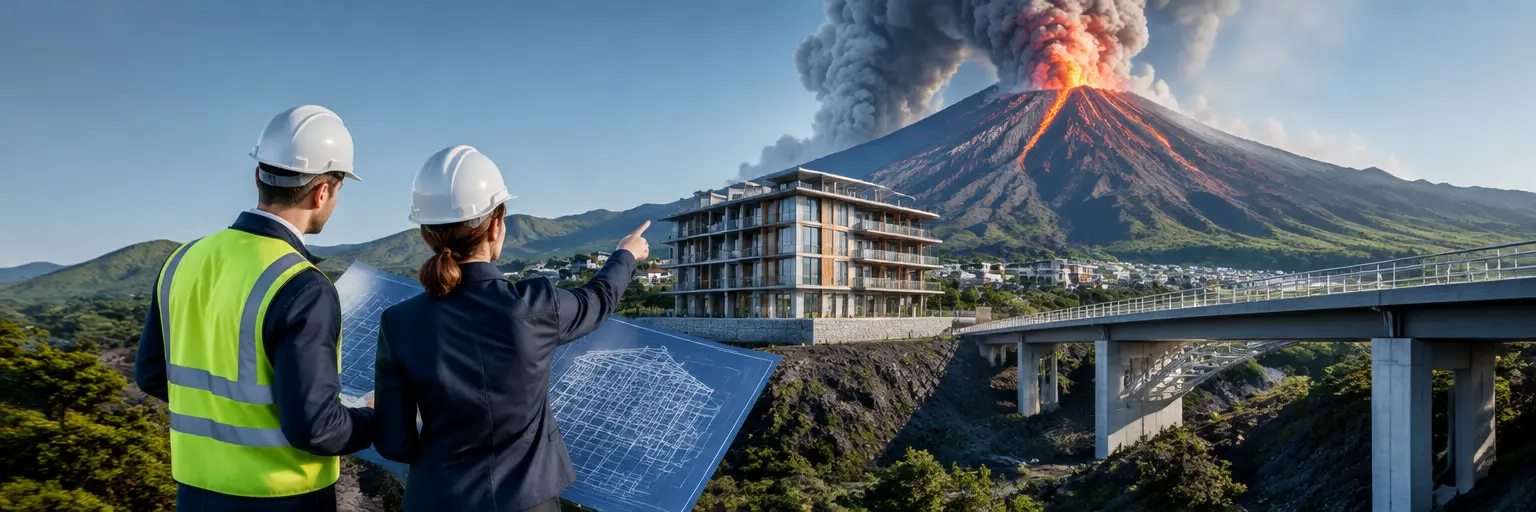
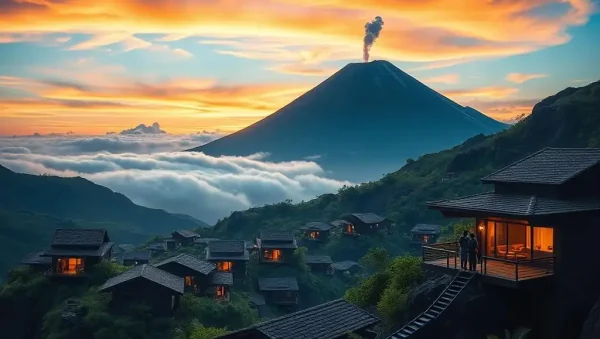
Living near a volcano demands more than just an evacuation plan—it requires structures designed to withstand ashfall, pyroclastic surges, ground deformation, and seismic shaking. This subcategory of Volcano Safety & Preparedness dives deep into the engineering standards, material choices, and urban planning strategies that make communities safer in volcanic terrains. From roof slope calculations to reinforced foundations, discover how building codes transform passive survival into active resilience.
🏗️ Key Structural Requirements for Ash and Tephra Loading
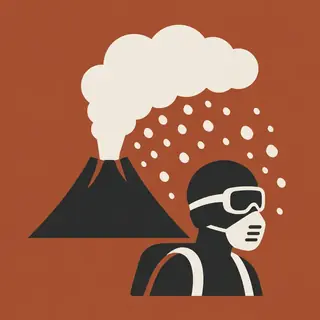
Volcanic ash can accumulate rapidly—up to 30 cm per hour during intense eruptions—and its weight can collapse flat roofs. Building codes in volcanic zones mandate minimum roof slopes of 30 degrees to encourage ash shedding, alongside load-bearing capacities that account for wet ash (which is heavier than dry). Walls must resist lateral pressure from ash piles, while ventilation systems require filtration to prevent fine particles from clogging interiors. Concrete or metal roofing is preferred over asphalt shingles, which degrade quickly under abrasive tephra.
Expect guidance on valve-type gutter systems to handle ash-laden runoff and sealed electrical conduits to prevent short circuits. Codes also address temporary storage areas for ash removal, ensuring emergency access routes remain clear. For existing structures, retrofitting options like adding central support beams or replacing flat roofs with pitched alternatives are outlined, often with financial incentives from hazard-prone region governments.
🌋 Foundation Design Against Ground Deformation and Lava Intrusion
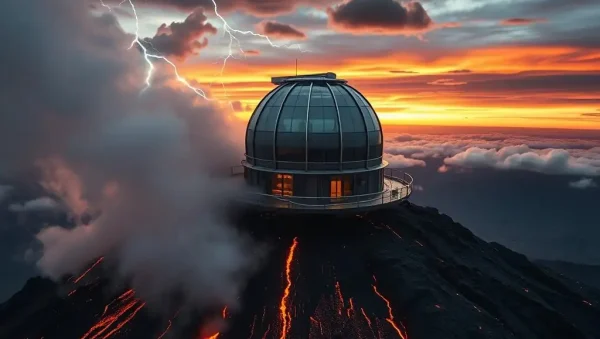
Volcanic zones experience ground swelling, cracking, and lateral spreading as magma moves beneath the surface. Modern building codes require deep pile foundations that anchor into stable bedrock, avoiding shallow footings susceptible to differential settlement. In areas with historical lava tubes, geotechnical surveys must map subsurface voids—structures are then designed with span flexibility to bridge potential collapse zones. For near-vent regions, reinforced concrete with high-temperature aggregates (like basalt) resists thermal damage from radiant heat or thin lava flows.
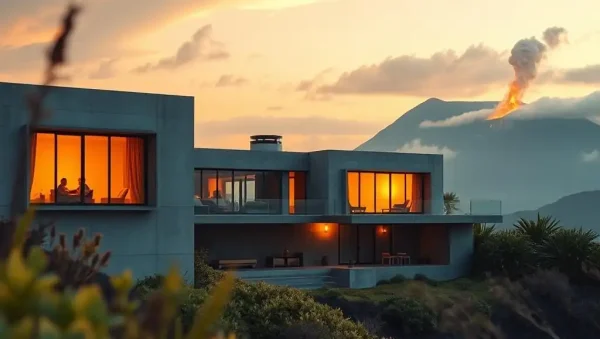
This section also covers breakaway wall panels for pyroclastic surge paths and sacrificial ground floors that allow debris to pass without compromising upper levels. Seismic joints, placed every 30 meters, absorb ground-shaking energy while permitting independent movement of structural sections. Real-world case studies from Iceland and Japan illustrate how these designs performed during recent eruptions, offering measurable performance benchmarks.
🛡️ Infrastructure Networks: Power, Water, and Communication Hardening
Volcanic crises often begin with lifeline failures—downed power lines, contaminated water, and dead cell towers. Building codes now mandate buried or elevated power cables with automatic disconnects during ashfall to prevent grid-wide fires. Water systems require sealed intakes with multi-stage filtration, since ash clogging and acid rain can render reservoirs unusable. Communications infrastructure employs redundant satellite links and hardened fiber-optic conduits that withstand corrosive volcanic gases.
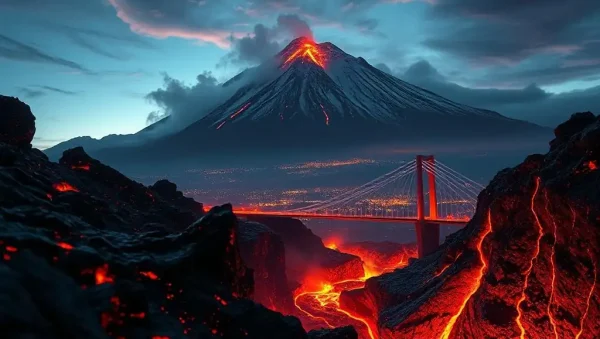
For transport, roads must have cut-and-cover tunnels or diversion routes around lahar paths, while bridges are engineered with deeper abutments to resist debris flows. Emergency generators are placed on upper floors with hurricane-grade ventilation to avoid ash ingestion. The section explains how local utilities coordinate with volcanological agencies to pre-position spare parts and mobile repair units, shortening outage durations from weeks to hours.
📜 Zoning Laws and Land-Use Planning for High-Risk Basins
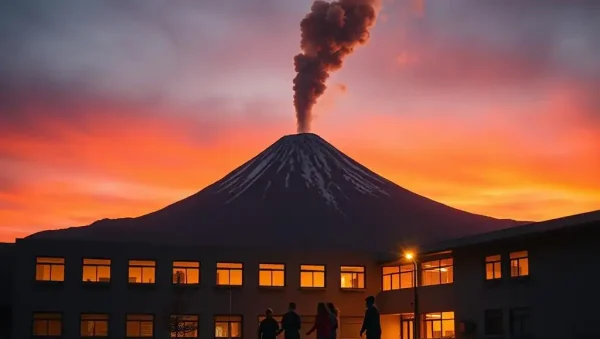
Effective legislation goes beyond individual buildings—it shapes entire communities. Zoning ordinances in volcanic zones classify risk levels: Red zones (near-vent) limit to essential services only, Orange zones allow residential but require enhanced codes, and Yellow zones permit normal construction with ash-load provisions. This section explores how transferable development rights and land-swap programs incentivize relocation from highest-risk hillsides, while setback lines from lahar channels prevent future construction in flood paths.
Also covered are critical facility placement (hospitals, fire stations must be in lowest-risk areas) and green infrastructure buffers—such as engineered levees and retention basins—that absorb lahar energy. Real-world mapping tools like hazard zonation GIS layers are discussed, showing how planners integrate volcanic simulations with demographic data to prioritize evacuation corridors and emergency shelter locations.
🔄 Retrofitting and Cost-Benefit Analysis for Existing Buildings
Not every structure can be rebuilt, but retrofit measures can significantly reduce vulnerability. This section evaluates phased upgrades: adding metal tie-downs from roof to foundation, installing ash-resistant window shutters, and replacing wooden eaves with non-combustible materials. Structural assessments use rapid visual screening matrices that score buildings based on age, material, and proximity to volcanic hazards, guiding prioritization for limited funds. Cost-benefit models weigh retrofitting expenses against potential avoided losses, often showing 4:1 returns over a 30-year horizon.
For heritage or culturally significant buildings, reversible updates (such as removable protective cladding) are highlighted. The text includes practical checklists for homeowners, landlords, and municipal planners, plus case studies from Naples, Italy, and Auckland, New Zealand, where systematic retrofits reduced projected casualties by 60% in scenario drills. Financial assistance options—from federal hazard mitigation grants to low-interest loans—are detailed to make compliance achievable.
Frequently Asked Questions
What is the minimum roof pitch required in volcanic ash zones?
Most codes mandate a minimum 30-degree slope, but steeper pitches (35–40 degrees) are recommended in areas with frequent ashfall. This prevents accumulation beyond load-bearing limits. For flat roofs, builders must add internal support columns to handle wet ash weight, which can reach 60 kg per cubic meter.
Can existing buildings be retrofitted without full demolition?
Yes, phased retrofits are common. Adding roof cross-bracing, replacing foundation anchors, and installing sealed window systems can significantly improve resilience. Structural engineers often recommend starting with critical load paths and then adding secondary measures like ash-proof vents over several years.
How do building codes account for pyroclastic surges?
Bradded zones near surge paths require reinforced concrete walls with rounded edges to deflect debris, plus breakaway ground floors. Windows must have shutters rated for 200 km/h impacts. In lower-risk areas, codes focus on preventing fire spread from radiant heat rather than direct blast resistance.
Are there insurance incentives for volcanic-safe construction?
Many insurers offer premium discounts of 10–25% for buildings that comply with volcanic codes. Some regions provide low-interest loans or grants for retrofits, while others use tax abatements. Check local hazard mitigation agencies for specific programs linked to your building’s risk score.
What happens if I build without following volcanic building codes?
Non-compliant structures may face fines, denied occupancy permits, and ineligible for disaster compensation. More critically, they pose serious life-safety risks during eruptions. Insurance claims may also be reduced or voided if code violations are discovered. Enforcement varies by jurisdiction, but liability exposure is significant.