Volcanic Bombs and Ballistics: Understanding the Projectiles of Eruption
When a volcano erupts, it doesn’t just release lava and ash—it can hurl massive rock fragments, molten blobs, and debris into the sky at supersonic speeds. These are volcanic bombs and ballistics, the most dramatic and hazardous products of explosive volcanism. On this page, you’ll learn how these projectiles form, what types exist, how far they can travel, and why they matter for hazard assessment. Whether you’re a student, a hobbyist, or a resident near an active volcano, this guide will give you the essential knowledge to appreciate and respect these fiery missiles.
🔥 What Are Volcanic Bombs and Ballistics?
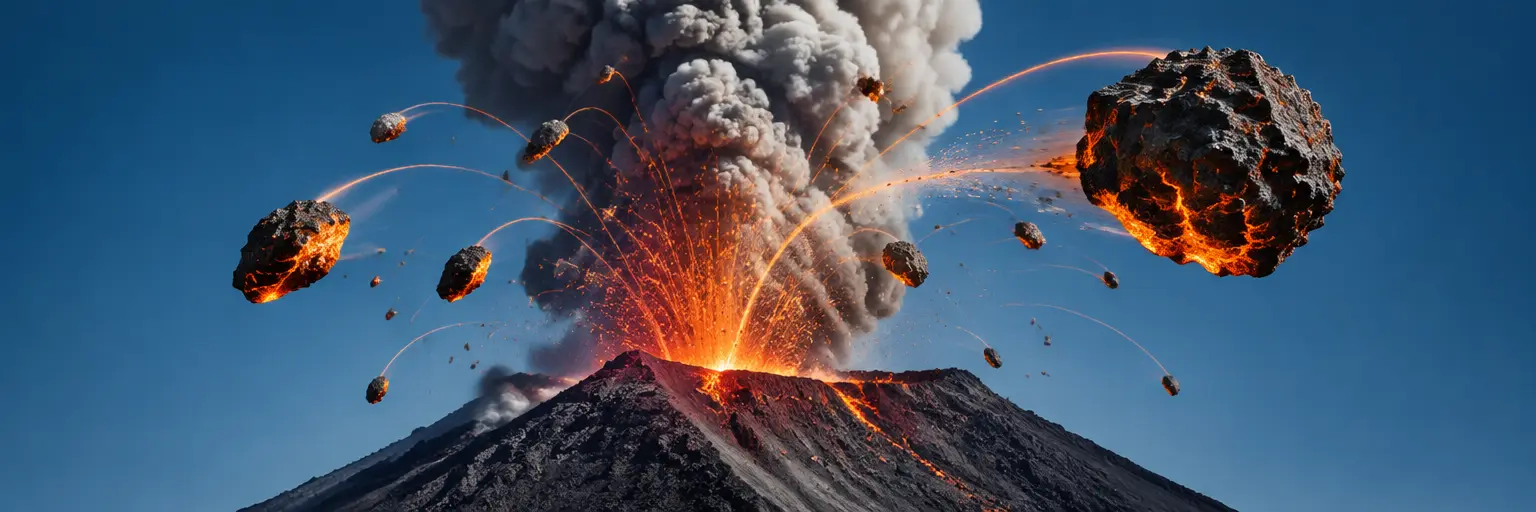
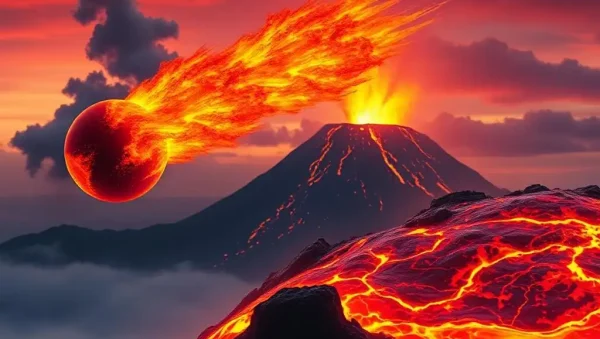
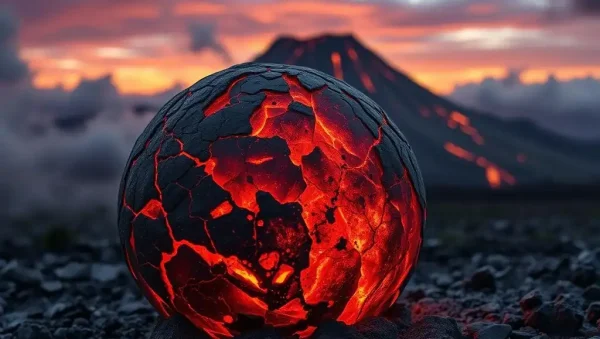
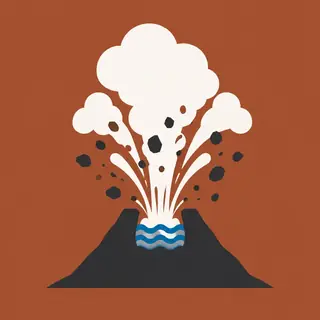
Volcanic bombs are molten or semi-molten rock fragments ejected during eruptions that cool and solidify while airborne, often taking on aerodynamic shapes. Ballistics is the broader term for any solid or liquid projectile—from pea-sized lapilli to car-sized blocks—thrown from a vent by explosive pressure or gas expansion. Unlike ash, which floats on wind currents, these projectiles follow parabolic trajectories, making their landing zones more predictable but still dangerous.
Bombs are classified by their shape and cooling history: spindle bombs twist as they fly, bread-crust bombs crack as gas escapes, and cow-dung bombs flatten on impact. The distinction between bombs (ejected as liquid) and blocks (ejected as solid) is crucial for volcanologists, as it reveals the eruption’s intensity and magma viscosity. For anyone observing an eruption, these projectiles represent the most immediate threat, often reaching speeds of hundreds of meters per second.
📏 How Far Can Volcanic Ballistics Travel?
The distance a volcanic bomb travels depends on the eruption’s explosive energy, vent geometry, and projectile size. Small lapilli may land within a few hundred meters, while large blocks can be thrown several kilometers from the vent. The record for ballistic distance is held by the 1980 Mount St. Helens eruption, where a lateral blast hurled blocks up to 24 kilometers away. More typically, sub-Plinian eruptions send bombs 1–5 kilometers, while Plinian events can exceed 10 kilometers.
Wind also plays a role: tiny ballistics (
🧪 How Do Volcanologists Study Ballistics?
Studying volcanic bombs is like reading a diary of the eruption. Scientists measure bomb sizes, masses, and impact craters to estimate ejection velocity and kinetic energy. High-speed cameras and radar systems now track ballistics in real time, providing data on initial acceleration and air drag. By sampling bomb exteriors and interiors, geochemists can infer magma composition and gas content, linking projectile shapes to eruption dynamics.
Laboratory experiments recreate volcanic fragmentation using pressurized gas and molten rock simulants. These experiments help refine models of how bombs break apart mid-flight, which affects their final size distribution. In the field, researchers use drone-based photogrammetry to map impact fields, counting blast craters and bomb densities around recent vents. This data feeds into probabilistic hazard assessments, guiding decisions on when to evacuate or close airspace during a crisis.
⚠️ Hazard Implications for People and Infrastructure
Ballistic impacts pose a serious risk to anyone near an active vent, from hikers to critical infrastructure like power lines and observatories. Even small bombs can penetrate roofs or vehicles, and larger ones can crush buildings or trigger fires. The 2019 Whakaari/White Island eruption in New Zealand killed tourists primarily through ballistic impacts and hot gas, underscoring how rapidly these projectiles arrive with little warning. Volcanic ballistic airfall is often the first hazard to affect areas within 5–10 km of a vent.
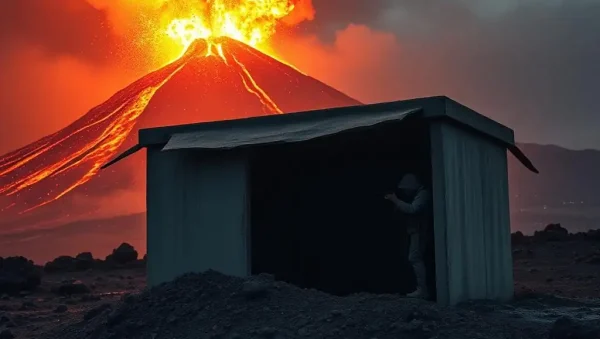
Mitigation strategies include reinforced shelters for park personnel, hard hats for visitors, and siren systems that warn of imminent eruptions. For long-term planning, hazard maps show “ballistic corridors” where repeat eruptions have deposited bombs. Communities near volcanoes like Vesuvius or Sakurajima use these maps to restrict construction in high-risk zones, while emergency drills teach residents to go indoors and away from windows when an eruption is detected.
📸 Famous Examples and Unique Bomb Types
Some volcanic bombs become legendary due to their size or shape. In 1997, Montserrat’s Soufrière Hills volcano ejected a bomb weighing over 70 tonnes, landing 50 meters from the vent. The “Pele’s tears” of Hawaiian eruptions are small, glassy droplets, while “Pele’s hair” are thin strands of volcanic glass, both named after the Hawaiian volcano goddess. In Italy, Vesuvius’ “lapilli” (small pebbles) buried Pompeii, preserving casts of victims—these are technical ballistics, though smaller than true bombs.
Photographers and volcanophiles often seek these ejecta as souvenirs, but collecting them is illegal in many national parks due to their scientific value. Museums display spindle bombs with perfectly twisted shapes, showing the fusion of art and geology. For the casual observer, seeing a live bomb ejection is rare—but time-lapse videos from Etna’s 2021 paroxysms show basketball-sized bombs arcing over tourist viewpoints, a reminder of nature’s raw power and the fine line between awe and danger.
Frequently Asked Questions
Can a volcanic bomb kill you?
Yes, volcanic bombs and ballistics can be fatal. Even a small bomb (10 cm) falling from altitude has enough kinetic energy to cause severe head injury or death. Larger bombs can crush vehicles or buildings. Most volcanic fatalities from ballistic impact occur within 5 km of the vent, but lateral blasts (like Mount St. Helens) have killed people much farther away.
How fast do volcanic bombs travel?
Volcanic bombs initially travel at 100–500 meters per second (360–1,800 km/h), depending on eruption explosivity. Larger bombs decelerate faster due to air resistance, but smaller lapilli can stay at high speeds longer. The fastest recorded ballistic velocities are around 600 m/s from Vulcanian explosions.
What is the difference between a volcanic bomb and a block?
A volcanic bomb is ejected while still molten or semi-molten and cools in flight, developing rounded or twisted shapes. A block is ejected as a solid piece of pre-existing rock, often angular and larger. Both are forms of tephra, but bomb shapes indicate fresh magma, while blocks may be fragmented from the volcanic conduit.
Are volcanic bombs hot when they land?
Yes, but they cool quickly. Large bombs retain interior heat for minutes to hours after landing, while small lapilli cool within seconds. The surface may be solid and black, but the core can still be glowing. Touching them can cause burns. This cooling affects their final shape, as some crack or shatter on impact.
Can ballistics cause secondary hazards like fires?
Absolutely. Hot bombs can ignite vegetation, buildings, or fuel storage. In the 2018 Kilauea eruption, ballistic fragments started brushfires. Even cooled bombs can smolder and start fires hours later if they contain hot gases. Therefore, firefighters and emergency responders must remain vigilant after the initial ballistic phase ends.