
Molten Missiles in Motion: The Fluid Dynamics of Volcanic Bombs in Flight

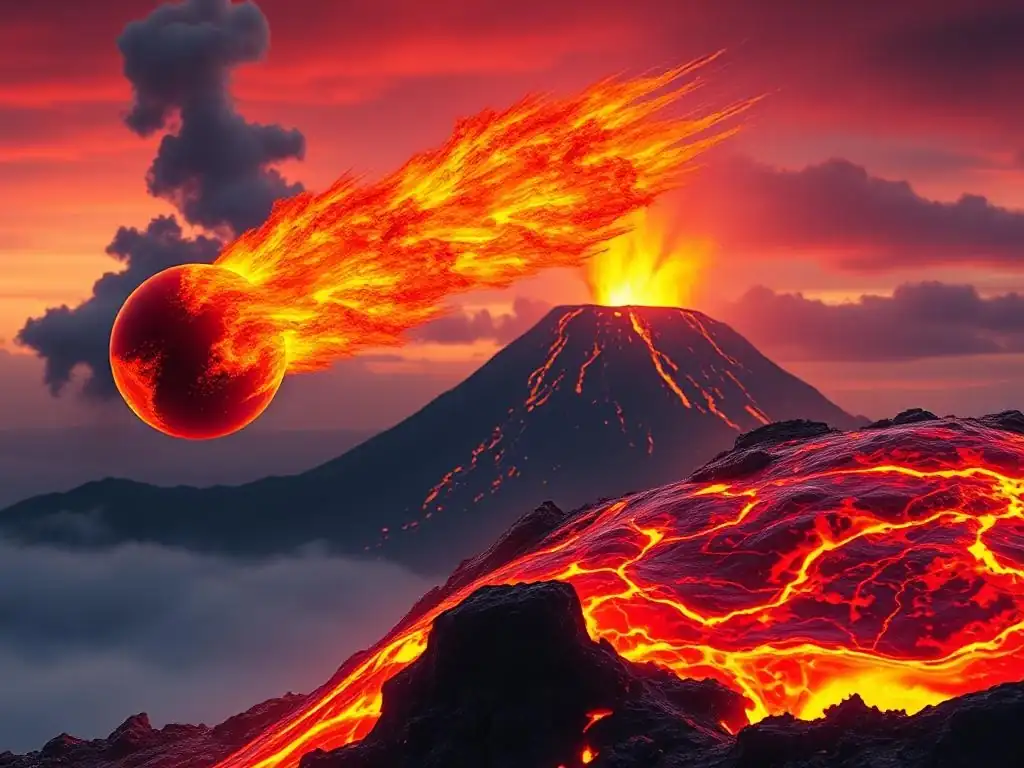
Welcome to Volcano Explorers, where the Earth's fiery heart meets cutting-edge science. Ever wondered how molten rock transforms into airborne missiles? Delve into the fascinating world of ejected lava as we dissect the fluid dynamics of volcanic bombs, and uncover the secrets behind their fiery flight. Prepare to witness the intersection of destruction and beauty as we explore the science that shapes these spectacular, yet dangerous, phenomena. Intrigued? Read on to unlock the mysteries of these molten marvels...
- Introduction to Volcanic Bombs and Their Trajectory
- The Fluid Dynamics of Volcanic Bombs: A Deep Dive
- Evolution of Volcanic Bomb Shape During Flight
- Modeling the Flight Path: Predictive Analysis of Volcanic Bomb Trajectory
- Case Studies: Analyzing Real-World Volcanic Bomb Trajectories
- Safety and Volcanic Bombs: Minimizing Risk Near Active Volcanoes
-
The Future of Volcanic Bomb Research: Advancements and Innovations
- New Technologies for Tracking and Analyzing Volcanic Bombs: Remote Sensing and Drone-Based Observations
- Improving Predictive Models for Enhanced Safety Measures: Machine Learning and Data Assimilation
- The Role of Fluid Dynamics in Understanding Volcanic Hazards: Mitigating Risks from Explosive Eruptions
-
Frequently Asked Questions
- What exactly are volcanic bombs, and how do they relate to the fluid dynamics of volcanic bombs?
- Why is understanding the fluid dynamics of volcanic bombs important?
- What factors influence the fluid dynamics of a volcanic bomb in flight?
- How do volcanologists study the fluid dynamics of volcanic bombs?
- What are some practical applications of research into the fluid dynamics of volcanic bombs?
- Final Reflection: The Dance of Destruction and Discovery
- Witness the Eruption Within!
Introduction to Volcanic Bombs and Their Trajectory
Understanding Volcanic Bombs: Types, Formation, and Hazards
Volcanic bombs are fascinating yet perilous projectiles ejected from erupting volcanoes. They are essentially globs of molten or semi-molten rock, larger than 64 mm in diameter, that are expelled into the atmosphere during explosive volcanic eruptions. These fragments solidify to varying degrees before they hit the ground.
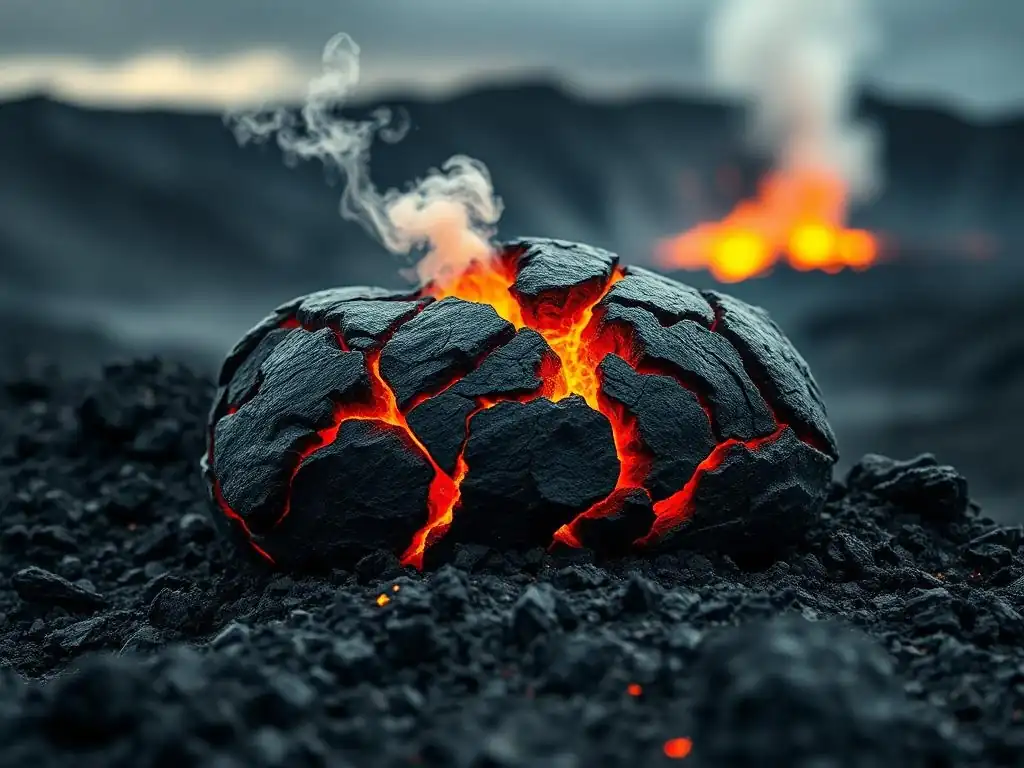
Classifications of volcanic bombs are based on their shape, which is often indicative of their fluidity at the time of ejection and their flight path. Common types include breadcrust bombs, characterized by cracked surfaces resembling bread crusts; ribbon bombs, which are elongated and twisted; spindle bombs, shaped like footballs or spindles due to rotation in flight; and cow-dung bombs, which are flattened upon impact. The formation process involves magma fragmentation within the volcanic conduit or vent, driven by gas expansion and decompression.
The hazards associated with volcanic bombs are significant and multifaceted. Due to their size, velocity, and temperature, they pose a direct threat to life and property in areas surrounding active volcanoes. Impacts from volcanic bombs can cause severe injuries, initiate fires, damage infrastructure, and disrupt essential services.
The distance these projectiles can travel varies greatly, depending on the eruption's intensity, the bomb's size and initial velocity, and atmospheric conditions like wind. For instance, during the 1980 Mount St. Helens eruption, volcanic bombs were observed as far as 10 kilometers from the crater rim. Understanding the formation, types, and hazards of volcanic bombs is crucial for effective volcanic hazard assessment and mitigation strategies.
The Force Behind the Flight: Eruption Mechanisms and Initial Velocity
The violent ejection of volcanic bombs is a direct consequence of explosive volcanic eruptions. These eruptions are driven by the rapid decompression of magma as it ascends towards the Earth's surface. Dissolved gases within the magma, primarily water vapor, carbon dioxide, and sulfur dioxide, expand dramatically as pressure decreases. This expansion leads to magma fragmentation, creating a mixture of gas and pyroclastic material, including volcanic bombs.
Several eruption mechanisms contribute to the initial velocity of these projectiles. Strombolian eruptions, characterized by discrete bursts of gas and magma, typically launch bombs at velocities ranging from tens to a few hundred meters per second. More powerful eruptions, such as Plinian eruptions, can expel bombs at supersonic speeds, exceeding several hundred meters per second.
The initial velocity of a volcanic bomb is a critical parameter influencing its trajectory and the extent of the hazard zone. Factors affecting initial velocity include the gas content and pressure within the magma, the vent geometry, and the efficiency of gas expansion. Studies of past eruptions, using techniques like video analysis and ballistic modeling, have estimated initial velocities of volcanic bombs in various eruption styles.
For example, observations at Stromboli volcano, Italy, have shown bomb ejection velocities ranging from 50 to 200 m/s. The force imparted during the eruption mechanism sets the stage for the subsequent flight path of these molten missiles, making understanding these initial conditions vital for predicting volcanic bomb trajectories.
Key Factors Influencing Volcanic Bomb Trajectory: Size, Velocity, and Angle
The trajectory of a volcanic bomb, from ejection to impact, is governed by a complex interplay of factors. Three of the most significant are the bomb's size, initial velocity, and ejection angle. Larger volcanic bombs, due to their greater mass, possess higher inertia and are less affected by air resistance compared to smaller fragments. Consequently, they tend to travel further and maintain their velocity for a longer duration.
Conversely, smaller bombs are more susceptible to deceleration due to aerodynamic drag. The initial velocity, as discussed previously, directly dictates the range of the projectile. Higher initial velocities result in longer trajectories, assuming all other factors remain constant.
The ejection angle, relative to the horizontal, also plays a crucial role in determining the flight path and maximum range. An ejection angle of approximately 45 degrees generally maximizes the horizontal distance traveled in a vacuum, neglecting air resistance. However, in reality, atmospheric drag modifies this optimal angle. Furthermore, the shape of the volcanic bomb influences its aerodynamic properties and thus its trajectory.
Irregularly shaped bombs experience more drag than streamlined, spindle-shaped bombs. Atmospheric conditions, such as wind speed and direction, and air density variations with altitude, further complicate the trajectory. Accurate prediction of volcanic bomb trajectories requires considering these multiple interacting factors, highlighting the complexity inherent in volcanic hazard assessments.
The Fluid Dynamics of Volcanic Bombs: A Deep Dive
Viscosity and Volcanic Bomb Shape: Effects of Magma Composition
The fluid dynamics of volcanic bombs are profoundly influenced by the viscosity of the magma from which they originate. Viscosity, a measure of a fluid's resistance to flow, is primarily controlled by the silica content and temperature of the magma. Magmas with high silica content, such as rhyolites and andesites, are highly viscous, flowing sluggishly like thick honey. In contrast, basaltic magmas, with lower silica content, are less viscous, resembling motor oil in their flow behavior.
The viscosity at the point of ejection dictates the initial shape of the volcanic bomb. Highly viscous magmas tend to form more angular, blocky bombs, as they resist deformation during flight. These bombs may retain a more solidified appearance even upon ejection.
Conversely, less viscous magmas, like those producing Strombolian eruptions, readily deform and stretch during ejection and flight, resulting in more fluid shapes like spindle bombs or ribbon bombs. The lower viscosity allows the molten material to be drawn out into elongated forms under the influence of gas expansion and aerodynamic forces.
The temperature of the magma also plays a critical role; hotter magmas are generally less viscous than cooler magmas of the same composition. Therefore, the interplay between magma composition, temperature, and the eruption mechanism determines the initial viscosity of the volcanic bomb, which, in turn, significantly shapes its morphology and subsequent fluid dynamics in flight.
Aerodynamic Drag on Molten Rock: Reynolds Number and Drag Coefficient
As volcanic bombs traverse the atmosphere, they experience aerodynamic drag, a force that opposes their motion. Understanding fluid dynamics of volcanic bombs necessitates considering aerodynamic drag, which is quantified by the drag coefficient and is influenced by the Reynolds number. The Reynolds number (Re) is a dimensionless quantity that characterizes the flow regime around a moving object. It is defined as Re = (ρVL)/μ, where ρ is the air density, V is the bomb's velocity, L is a characteristic length (e.g., diameter), and μ is the air viscosity.
At low Reynolds numbers (Re < 1), viscous forces dominate, and the flow is laminar. At high Reynolds numbers (Re > 1000), inertial forces dominate, and the flow becomes turbulent. For volcanic bombs in flight, Reynolds numbers typically range from 10^4 to 10^6, indicating turbulent flow conditions.
The drag coefficient (Cd) is another dimensionless quantity that represents the object's resistance to motion in a fluid. It depends on the shape of the bomb and the Reynolds number. For spherical objects at high Reynolds numbers, the drag coefficient is approximately 0.47. However, the irregular shapes of volcanic bombs can significantly alter their drag coefficients.
Rough surfaces and non-spherical shapes increase drag. As a volcanic bomb travels through the air, aerodynamic drag acts to decelerate it, reducing its velocity and range. The magnitude of the drag force is proportional to the square of the velocity, meaning drag becomes increasingly significant at higher speeds. Therefore, aerodynamic drag is a crucial aspect of the fluid dynamics of volcanic bombs, influencing their trajectory and the extent of the hazard zone.
Surface Tension Effects on Cooling Lava Bombs: Crust Formation and Fragmentation
Surface tension, a property of liquids that causes them to minimize their surface area, also plays a role in the fluid dynamics of volcanic bombs, particularly in the early stages of cooling and crust formation. Molten rock, like any liquid, exhibits surface tension. This force tends to pull the molten material into a spherical shape to minimize surface energy.
However, the rapid cooling experienced by volcanic bombs in flight leads to the formation of a solidified crust on their outer surface. This crust formation is a complex process involving radiative heat transfer and phase change, which will be further explored later.
The development of a crust is significantly influenced by surface tension. As the outer layer cools and solidifies, surface tension forces can induce stresses within the bomb. If cooling is rapid and uneven, these stresses can exceed the tensile strength of the solidifying crust, leading to fragmentation. This fragmentation process can result in the characteristic "breadcrust" texture observed on some volcanic bombs.
Furthermore, surface tension can influence the shape of the cooling bomb. In the absence of external forces, surface tension would ideally lead to a spherical shape. However, aerodynamic forces and rotation during flight can deform the bomb, and the interplay between these forces and surface tension dictates the final shape. Thus, surface tension, although often less dominant than viscosity and aerodynamic drag, contributes to the complex fluid dynamics governing the evolution of volcanic bombs.
Evolution of Volcanic Bomb Shape During Flight
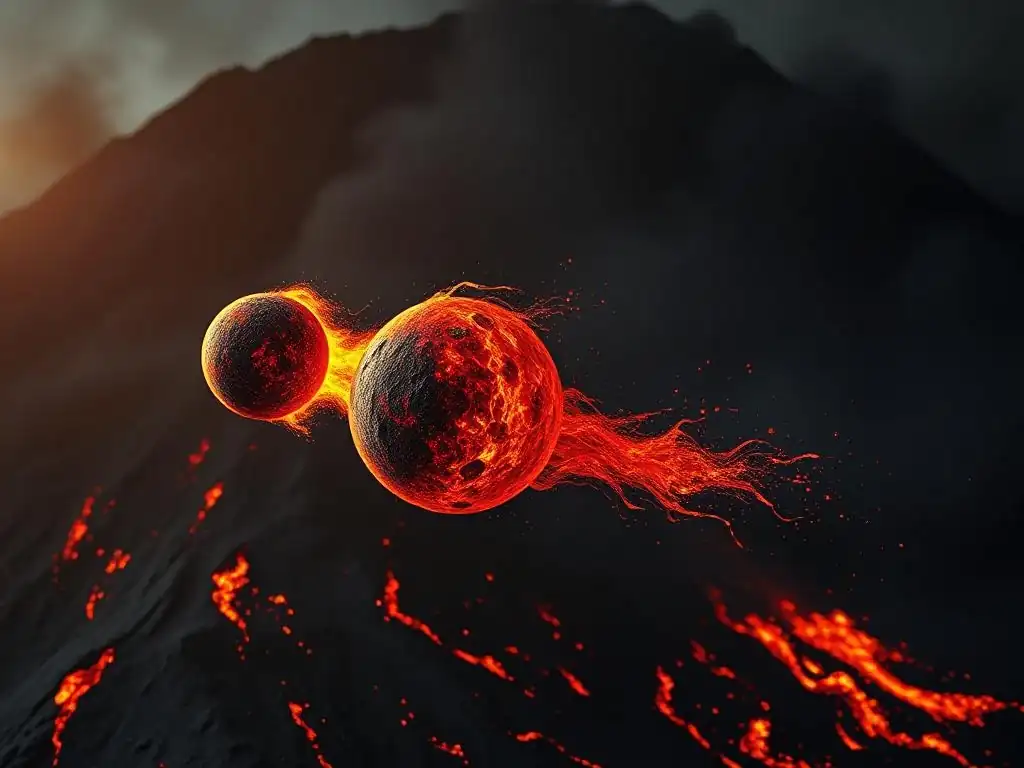
The Influence of Rotation on Volcanic Bomb Aerodynamics: Magnus Effect
Rotation, often imparted to volcanic bombs during the eruption process, significantly influences their aerodynamics and trajectory through the Magnus effect. The Magnus effect is a phenomenon where a spinning object moving through a fluid experiences a force perpendicular to both the direction of motion and the axis of rotation. In the context of fluid dynamics of volcanic bombs, rotation can arise from the turbulent ejection process or from aerodynamic torques acting on irregularly shaped bombs during flight. If a volcanic bomb is spinning, the Magnus effect can induce a curved trajectory, deviating from a purely ballistic path.
The direction of curvature depends on the direction of rotation. For example, a bomb spinning in a clockwise direction (when viewed from the front) will experience a force pushing it to the side, perpendicular to its flight path. The magnitude of the Magnus force is proportional to the rotation rate and the velocity of the bomb.
While the Magnus effect is often smaller than aerodynamic drag and gravity, it can still contribute to the dispersion of volcanic bombs and influence impact locations, especially for bombs with high rotation rates and longer flight times. Understanding the influence of rotation and the Magnus effect is crucial for refining models that predict the fluid dynamics of volcanic bombs and their hazard zones.
Cooling and Solidification: Radiative Heat Transfer and Phase Change
The journey of a volcanic bomb through the air is accompanied by rapid cooling and solidification, processes governed by radiative heat transfer and phase change. Initially ejected at temperatures ranging from 700°C to over 1200°C, depending on magma composition, volcanic bombs lose heat primarily through radiation. Radiative heat transfer is the emission of electromagnetic waves, and its rate is proportional to the fourth power of the object's absolute temperature (Stefan-Boltzmann law).
This means that hotter bombs radiate heat much more intensely. As the bomb flies, it radiates heat to the cooler surrounding atmosphere, causing its surface temperature to drop rapidly.
This cooling leads to a phase change, as the molten rock transitions from a liquid to a solid state. Solidification typically starts at the surface, forming a crust that thickens over time. The rate of cooling and solidification is influenced by factors such as bomb size, initial temperature, air temperature, and wind speed.
Larger bombs cool more slowly due to their smaller surface area to volume ratio. The process of cooling and solidification is complex and involves heat conduction within the bomb, convection at the surface (though often less significant than radiation in volcanic bomb flight), and the release of latent heat during crystallization. These thermal processes are integral to the fluid dynamics of volcanic bombs, affecting their viscosity, shape evolution, and fragmentation.
Shape Changes Due to Airflow: Deformation and Fragmentation Processes
The shape of a volcanic bomb is not static during flight; it evolves due to the interplay of aerodynamic forces, internal stresses, and the ongoing solidification process. Airflow around the bomb exerts pressure forces that can deform the molten or semi-molten material. For instance, at high speeds, aerodynamic pressure can flatten the leading surface of the bomb, especially if it is still relatively fluid. Conversely, low pressure on the trailing surface can cause expansion. These deformation processes are more pronounced in initially less viscous bombs.
Furthermore, as discussed earlier, rapid cooling and crust formation can induce internal stresses within the bomb. Differential cooling rates between the surface and the interior can lead to tensile stresses in the crust. If these stresses exceed the crust's strength, fragmentation can occur.
Fragmentation can result in the characteristic breadcrust texture, or even the complete breakup of the bomb into smaller pieces. The fluid dynamics of volcanic bombs thus encompass not only their motion through the air but also the dynamic changes in their shape due to aerodynamic forces, cooling, solidification, and fragmentation. These shape changes, in turn, further influence their aerodynamic properties and trajectory, creating a complex feedback loop.
Modeling the Flight Path: Predictive Analysis of Volcanic Bomb Trajectory
Computational Fluid Dynamics (CFD) and Volcanic Bomb Simulations: Lagrangian Tracking
Predicting the trajectory of volcanic bombs requires sophisticated modeling techniques, and Computational Fluid Dynamics (CFD) offers a powerful tool for simulating the complex fluid dynamics of volcanic bombs. CFD methods solve the Navier-Stokes equations, which govern fluid flow, numerically. In the context of volcanic bombs, CFD simulations can model the airflow around the bomb, accounting for turbulence, drag, and lift forces. A common approach is Lagrangian tracking, where individual volcanic bombs are treated as particles moving through the simulated airflow field.
Lagrangian tracking involves calculating the forces acting on each bomb – gravity, aerodynamic drag, Magnus force if rotation is considered – and integrating Newton's second law of motion to determine the bomb's position and velocity at each time step. CFD simulations can incorporate complex bomb shapes, varying initial conditions (velocity, angle, temperature), and atmospheric conditions (wind, air density).
These simulations provide detailed insights into the fluid dynamics of volcanic bombs, allowing researchers to visualize flow patterns, pressure distributions, and temperature changes around the projectiles. CFD simulations are increasingly used to improve volcanic hazard assessments by providing more accurate predictions of volcanic bomb trajectories and impact zones.
Using Ballistic Equations to Predict Impact Zones: Accounting for Wind and Atmospheric Conditions
While CFD offers detailed simulations, simpler ballistic equations are also employed to predict volcanic bomb trajectories and estimate impact zones, particularly for hazard assessments. Ballistic equations are mathematical formulas that describe the motion of projectiles under gravity and aerodynamic drag. Basic ballistic models often assume a spherical bomb shape and a constant drag coefficient. However, more advanced models can incorporate non-spherical shapes, variable drag coefficients based on Reynolds number, and the Magnus effect if rotation is considered.
To account for wind and atmospheric conditions, ballistic models can include wind velocity vectors and variations in air density with altitude. Wind can significantly alter volcanic bomb trajectories, especially for smaller bombs with longer flight times. Atmospheric density decreases with altitude, which affects aerodynamic drag.
By incorporating these factors into ballistic equations, researchers can generate probabilistic hazard maps that delineate areas at risk from volcanic bomb impacts. These maps typically show the probability of bomb impacts within different zones around the volcano, aiding in risk assessment and mitigation planning. While less computationally intensive than CFD, ballistic models provide valuable tools for understanding the fluid dynamics of volcanic bombs and assessing volcanic hazards.
Limitations of Current Models and Future Research Directions: Incorporating Complex Fluid Dynamics
Current models for predicting volcanic bomb trajectories, both CFD and ballistic, have limitations that future research aims to address. One significant limitation is the simplification of bomb shapes and their evolution during flight. Most models assume a fixed shape, often spherical or ellipsoidal, neglecting the dynamic shape changes due to deformation and fragmentation. Incorporating these complex fluid dynamics processes is a major challenge. Future research will focus on developing more sophisticated models that account for shape evolution, perhaps by coupling CFD simulations with models of material deformation and fracture.
Another limitation is the uncertainty in initial conditions, such as ejection velocity and angle, and magma properties like viscosity and temperature. Improving the accuracy of these input parameters is crucial for model validation and predictive capability. Future research directions include integrating real-time monitoring data, such as radar and thermal imaging, into predictive models to refine initial conditions and track bomb trajectories more accurately.
Machine learning techniques may also play a role in improving model accuracy and efficiency. Ultimately, advancing our understanding of the complex fluid dynamics of volcanic bombs is essential for enhancing volcanic hazard assessments and mitigating risks from explosive eruptions.
Case Studies: Analyzing Real-World Volcanic Bomb Trajectories
Mount Etna Eruption (2021): A Case Study in Strombolian Activity and Ballistics
The 2021 eruption of Mount Etna, Italy, provides a compelling case study for analyzing volcanic bomb trajectories in Strombolian activity. Etna, one of the world's most active volcanoes, frequently exhibits Strombolian eruptions, characterized by intermittent bursts of gas and lava fragments. During the 2021 eruptive episodes, particularly those at the Southeast Crater, copious volcanic bombs were ejected, offering valuable data for studying volcanic ballistics. Observations from the ground and drone footage captured the ejection of bombs of varying sizes and shapes, some reaching distances of several hundred meters from the vent.
Analysis of video recordings and deposit distributions from the 2021 Etna eruption has allowed volcanologists to estimate initial velocities and ejection angles of volcanic bombs. Studies suggest ejection velocities ranging from 50 to 150 m/s, typical for Strombolian eruptions. The ballistic trajectories observed were influenced by both gravity and aerodynamic drag, with larger bombs traveling further and exhibiting more ballistic-like paths, while smaller bombs were more affected by air resistance.
This event underscores the hazards associated with even moderate Strombolian activity, as volcanic bombs pose a significant risk to areas close to the vent. The fluid dynamics of volcanic bombs in this case study highlight the importance of understanding ballistic processes in Strombolian eruptions for hazard assessment at frequently active volcanoes like Etna.
Kilauea Eruption (2018): Analyzing Volcanic Bomb Size and Distribution in Fissure Eruptions
The 2018 Kilauea eruption in Hawaii, particularly the activity at Fissure 8, presented a different context for volcanic bomb analysis: fissure eruptions. Unlike central vent eruptions, fissure eruptions occur along linear cracks in the Earth's surface. Fissure 8 was characterized by intense lava fountaining, generating a significant volume of volcanic bombs and spatter. The eruption produced a wide range of bomb sizes, from small pebble-sized fragments to large meter-sized blocks. The distribution of volcanic bombs around Fissure 8 was not radially symmetrical, as would be expected from a point source vent, but rather elongated along the fissure line.
Analysis of the 2018 Kilauea eruption revealed that volcanic bomb distribution was strongly influenced by the geometry of the fissure and the dynamics of the lava fountain. Larger bombs tended to fall closer to the fissure, while smaller fragments were dispersed further downwind. The fluid dynamics of volcanic bombs in this fissure eruption scenario are influenced by the complex interaction of multiple eruptive jets along the fissure, leading to a more complex ballistic dispersal pattern than in typical Strombolian eruptions.
This case study emphasizes the need to consider eruption type and vent geometry when assessing volcanic bomb hazards and interpreting ballistic deposits. The Kilauea 2018 event provided valuable data for improving models of volcanic bomb dispersal from fissure eruptions.
Lessons Learned from Past Eruptions: Improving Hazard Assessments and Mitigation Strategies
Analyzing past volcanic eruptions and the trajectories of volcanic bombs ejected during these events provides invaluable lessons for improving hazard assessments and mitigation strategies. Studies of eruptions like Mount St. Helens (1980), Pinatubo (1991), and numerous Strombolian eruptions worldwide have contributed to our understanding of volcanic bomb ballistics and their associated hazards. One key lesson is the importance of considering a range of volcanic bomb sizes and initial velocities in hazard assessments. Past eruptions have shown that even relatively small bombs can cause significant damage at close range, while larger bombs can travel considerable distances.
Another crucial lesson is the need for probabilistic hazard mapping. Volcanic bomb trajectories are inherently stochastic due to variations in eruption dynamics and atmospheric conditions. Probabilistic hazard maps, which show the likelihood of bomb impacts in different areas, are more informative for risk management than deterministic models that predict a single trajectory.
Furthermore, lessons from past eruptions have highlighted the effectiveness of mitigation measures such as constructing bunkers and barriers in areas prone to volcanic bomb impacts. Real-time monitoring and early warning systems are also essential for minimizing risk, allowing for timely evacuations when explosive eruptions are imminent. The cumulative knowledge gained from analyzing past eruptions and the fluid dynamics of volcanic bombs is continuously refining volcanic hazard assessments and improving strategies for protecting communities living near active volcanoes.
Safety and Volcanic Bombs: Minimizing Risk Near Active Volcanoes
Understanding the Danger Zone: Probabilistic Hazard Mapping
Minimizing the risk associated with volcanic bombs starts with understanding the danger zone. Due to the unpredictable nature of explosive eruptions and the variable trajectories of volcanic bombs, defining a fixed danger zone is challenging. Probabilistic hazard mapping is a crucial tool for delineating areas at risk. These maps are generated using ballistic models, informed by past eruption data and volcanic vent locations. They depict the probability of volcanic bomb impacts within different zones around a volcano, typically expressed as contours of equal probability.
Probabilistic hazard maps consider a range of eruption scenarios, including variations in eruption intensity, ejection angles, and atmospheric conditions. They provide a more realistic assessment of risk compared to simple radial distance-based danger zones. For example, a hazard map might indicate a 10% probability of bomb impact within a certain radius during a specific eruption type. These maps are essential for land-use planning around volcanoes, guiding development restrictions, and informing evacuation strategies. Understanding the probabilistic nature of volcanic bomb hazards and utilizing hazard maps are fundamental steps in minimizing risk to communities living near active volcanoes.
Protective Measures: Bunkers, Barriers, and Personal Protective Equipment
When living or working in areas potentially affected by volcanic bombs, implementing protective measures is crucial. Physical protection, in the form of bunkers and barriers, can significantly reduce the risk of injury or damage from bomb impacts. Bunkers, often constructed from reinforced concrete or earth, provide shelters capable of withstanding bomb impacts. They are particularly important in areas with high bomb impact probability, such as research stations or critical infrastructure near active vents. Barriers, such as earthen walls or reinforced fences, can be erected to deflect or stop smaller volcanic bombs, protecting buildings and infrastructure.
Personal Protective Equipment (PPE) is also vital for individuals working in potentially hazardous areas. This includes hard hats, eye protection (goggles or face shields), and protective clothing made from heat-resistant materials. While PPE cannot completely eliminate risk from large bomb impacts, it can significantly reduce the severity of injuries from smaller fragments and thermal exposure. Combining physical protection with appropriate PPE and awareness of hazard zones is essential for minimizing risk in areas susceptible to volcanic bomb hazards.
Real-Time Monitoring and Early Warning Systems for Volcanic Eruptions: Acoustic and Seismic Data
Real-time monitoring and early warning systems are critical components of volcanic bomb risk mitigation. These systems rely on a network of instruments to detect precursory signs of volcanic eruptions and to track eruptive activity as it unfolds. Seismic monitoring is fundamental, as changes in seismicity often precede explosive eruptions. Volcano-tectonic earthquakes, changes in tremor amplitude, and long-period events can signal magma movement and increasing eruption potential. Acoustic monitoring, using microphones and infrasound sensors, can detect explosions at the vent and track the intensity of Strombolian or explosive activity.
Data from seismic and acoustic networks are analyzed in real-time to detect eruption onset and assess eruption intensity. When an eruption is detected, early warning systems can issue alerts to communities at risk, providing valuable time for evacuation or seeking shelter. These systems often integrate with hazard maps to target warnings to specific areas based on predicted bomb trajectories and probabilities.
The effectiveness of early warning systems depends on the speed and accuracy of monitoring data processing and alert dissemination. Continued advancements in monitoring technologies and communication infrastructure are crucial for improving the reliability and effectiveness of volcanic bomb early warning systems and further minimizing risks.
The Future of Volcanic Bomb Research: Advancements and Innovations
New Technologies for Tracking and Analyzing Volcanic Bombs: Remote Sensing and Drone-Based Observations
The future of volcanic bomb research is being shaped by exciting new technologies for tracking and analyzing these projectiles. Remote sensing techniques, using satellites and ground-based radar, offer the potential to monitor volcanic bomb trajectories and dispersal patterns over large areas and in remote locations. Thermal infrared sensors can detect the heat signatures of volcanic bombs, allowing for tracking even in low-visibility conditions. Radar systems can measure the velocity and trajectory of bombs, providing valuable data for model validation and hazard assessment.
Drone-based observations are revolutionizing volcanic bomb research. Unmanned Aerial Vehicles (UAVs) equipped with high-resolution cameras and thermal sensors can be deployed rapidly to eruption sites, capturing detailed imagery and video of volcanic bomb ejection and deposition. Drones can access areas that are too dangerous for ground-based observers, providing unprecedented views of eruptive processes. 3D photogrammetry using drone imagery can be used to map volcanic bomb deposits and analyze their size distribution and spatial extent. These remote sensing and drone-based technologies are enhancing our ability to study the fluid dynamics of volcanic bombs and improve volcanic hazard assessments.
Improving Predictive Models for Enhanced Safety Measures: Machine Learning and Data Assimilation
Advancements in predictive modeling are crucial for enhancing safety measures related to volcanic bombs. Future models will likely incorporate more sophisticated representations of the fluid dynamics of volcanic bombs, including dynamic shape changes, fragmentation processes, and more accurate aerodynamic drag calculations. Machine learning (ML) techniques are emerging as powerful tools for improving model accuracy and efficiency. ML algorithms can be trained on large datasets of volcanic bomb trajectories and eruption parameters to identify patterns and improve predictions.
Data assimilation techniques, which combine model predictions with real-time monitoring data, offer another avenue for model improvement. By continuously updating model parameters based on seismic, acoustic, and remote sensing observations, data assimilation can enhance the accuracy and timeliness of volcanic bomb trajectory predictions. Integrating ML and data assimilation into volcanic bomb models will lead to more robust and reliable hazard assessments, enabling more effective early warning systems and mitigation strategies. The future of volcanic bomb hazard management will increasingly rely on these advanced predictive modeling approaches.
The Role of Fluid Dynamics in Understanding Volcanic Hazards: Mitigating Risks from Explosive Eruptions
The study of fluid dynamics of volcanic bombs plays a central role in understanding and mitigating volcanic hazards associated with explosive eruptions. By unraveling the complex interplay of forces governing the motion of these molten projectiles, we can improve our ability to predict their trajectories, assess hazard zones, and develop effective safety measures. Continued research in this field is essential for reducing the risks posed by volcanic bombs to communities living near active volcanoes.
A deeper understanding of the fluid dynamics of volcanic bombs informs the development of more accurate probabilistic hazard maps, enabling better land-use planning and evacuation strategies. Improved predictive models, incorporating advanced CFD simulations and machine learning techniques, will enhance the reliability of early warning systems, providing more timely alerts to at-risk populations. Innovations in remote sensing and drone-based observations are providing new data streams for model validation and refinement. Ultimately, the ongoing pursuit of knowledge in the fluid dynamics of volcanic bombs is directly contributing to safer and more resilient communities in volcanically active regions around the globe.
Frequently Asked Questions
What exactly are volcanic bombs, and how do they relate to the fluid dynamics of volcanic bombs?
Volcanic bombs are ejected molten rock masses larger than 64 mm in diameter. The fluid dynamics studies how these bombs move through the air, considering factors like shape, viscosity, and air resistance.
Why is understanding the fluid dynamics of volcanic bombs important?
Understanding their flight paths and impact zones is crucial for hazard assessment. This knowledge helps in predicting areas at risk during volcanic eruptions and developing effective evacuation strategies.
What factors influence the fluid dynamics of a volcanic bomb in flight?
Several factors are at play, including the bomb's initial velocity, its shape, its size, and the ambient atmospheric conditions. The viscosity of the molten rock also plays a significant role.
How do volcanologists study the fluid dynamics of volcanic bombs?
Volcanologists use a variety of methods, including high-speed photography to track bomb trajectories. They also employ computer modeling to simulate the complex interactions between the bomb and the air.
What are some practical applications of research into the fluid dynamics of volcanic bombs?
This research directly informs hazard maps and risk assessments for communities near active volcanoes. It also leads to better warning systems and improved building codes to withstand potential impacts.
Final Reflection: The Dance of Destruction and Discovery
The study of volcanic bombs, seemingly a niche corner of volcanology, is surprisingly relevant today. Understanding the fluid dynamics of these molten projectiles allows us to better predict volcanic hazards and mitigate their devastating impact on communities living near active volcanoes. This knowledge isn't just academic; it's a crucial tool for saving lives and protecting infrastructure in volcanically active regions around the world.
The sheer power and unpredictability of volcanic eruptions have always captivated and terrified humanity. Witnessing the fiery ballet of a volcanic bomb, a dance of destruction and creation, underscores the raw, untamed forces that shape our planet. The earth laughs in flowers,
wrote Ralph Waldo Emerson, and yet, it also weeps in fire. Understanding the physics behind these events allows us to move beyond fear and towards a deeper appreciation of the complex and often violent processes that define our world.
Now, consider the implications of this knowledge. How can you, as a reader, apply the principles of observation, analysis, and prediction to other areas of your life? Just as scientists meticulously study the flight of volcanic bombs, we can all strive to better understand the forces at play in our own environments, anticipate potential challenges, and navigate the complexities of life with greater awareness and resilience. Let the fiery lessons learned from these molten missiles inspire you to embrace curiosity, seek knowledge, and contribute to a safer and more informed future for all.
Witness the Eruption Within!
Thank you for joining us on this fiery journey into the fluid dynamics of volcanic bombs. We hope you've gained a newfound appreciation for the powerful forces shaping our planet. Now, let's take that knowledge and ignite some action!
Here are a few ways you can continue exploring the fascinating world of volcanology:
- Simulate your own volcanic eruption! Use readily available materials like baking soda, vinegar, and food coloring to create a scaled-down model and observe the principles of fluid dynamics in action. Record your experiment and share your findings!
- Delve deeper into the scientific literature. Search academic databases for research papers on volcanology and fluid dynamics to uncover even more insights into these complex processes. Start with search terms like "volcanic bomb trajectories" or "lava viscosity."
- Become a Volcano Explorer! Share this article with friends and family interested in Earth science, and encourage them to join our community to discover and discuss the amazing world of volcanoes.
What fascinated you most about this article, and what volcanic phenomenon are you now most curious to explore? Share your thoughts in the comments below!