Understanding the Spectrum of Volcanic Eruptions: Effusive vs. Explosive
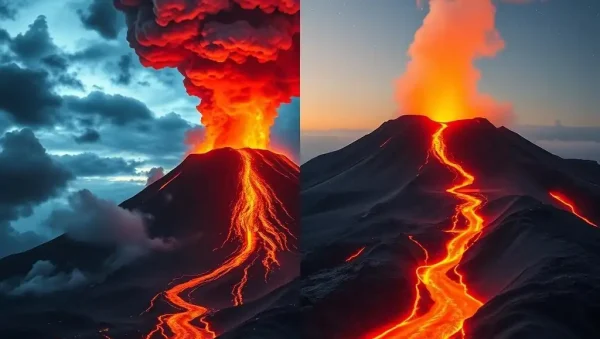
Volcanic eruptions are not a single, uniform event; they exist on a dramatic spectrum defined by magma chemistry, gas content, and the Earth's crustal architecture. At VolcanoExplorers.org, our "Types of Volcanic Eruptions (Effusive vs. Explosive)" subcategory demystifies this powerful dichotomy, helping you distinguish between the gentle, flowing lava of Hawaii and the catastrophic, ash-laden plumes of Vesuvius. This guide is your academic and practical gateway to understanding why some volcanoes ooze while others detonate.
🌋 The Mechanics of Effusive Eruptions: Gentle Giants
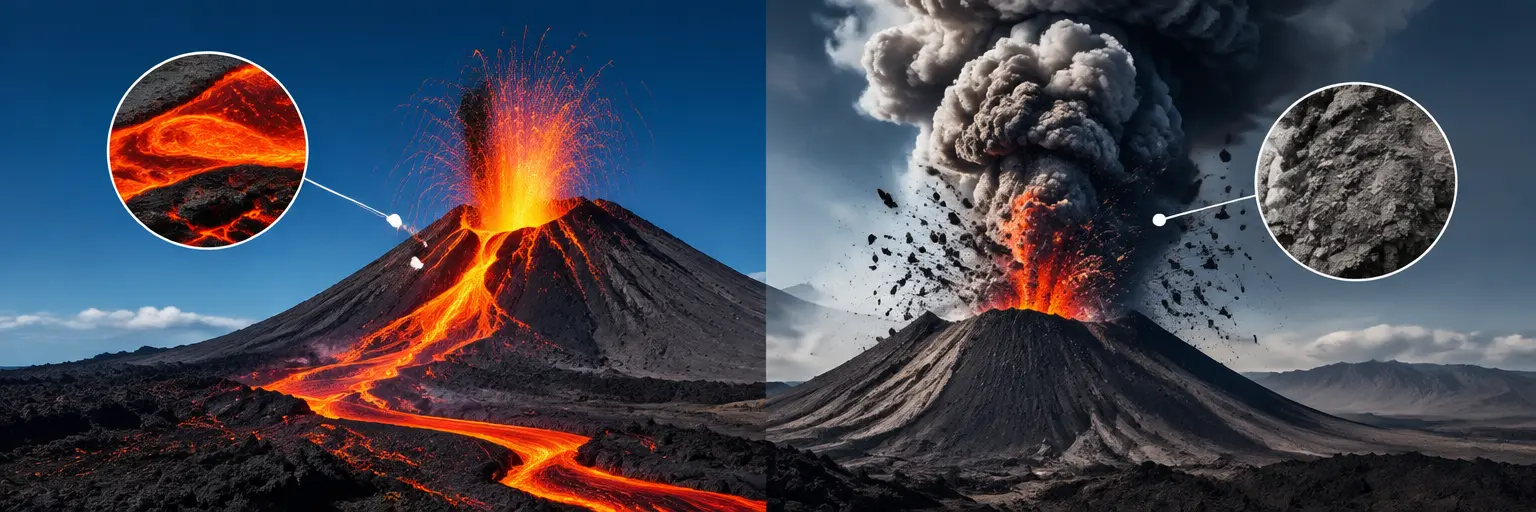
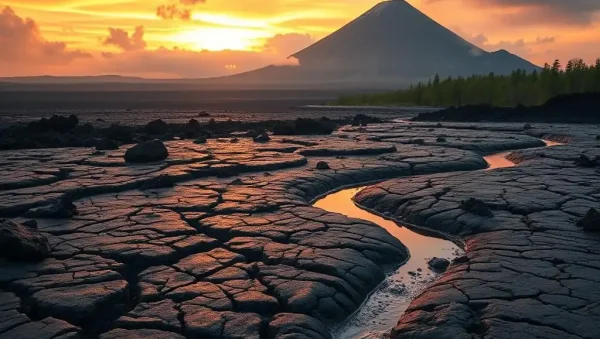
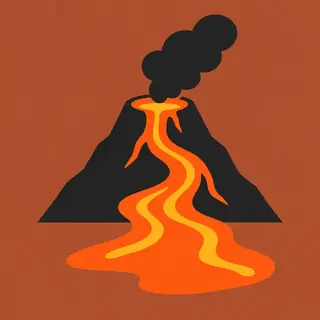
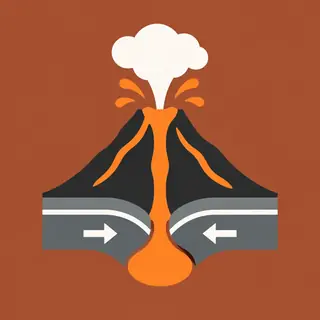
Effusive eruptions are characterized by the steady, non-violent outpouring of basaltic lava with low viscosity and low gas content. When magma rises to the surface, dissolved gases escape easily, allowing molten rock to flow as rivers or fountains rather than exploding. This process creates vast shield volcanoes like Mauna Loa and the Icelandic fissure eruptions that produce expansive lava fields. The primary driver is the chemical composition—low silica (around 50%) means less polymerization, enabling fluid movement.
For enthusiasts, effusive eruptions represent nature's creative force, building new land over months or years. They are generally less hazardous to human life than explosive events, though they can destroy infrastructure and agricultural land through slow inundation. Our detailed guides cover how lava tubes form, the difference between `a`ā and pāhoehoe textures, and the monitoring techniques (like gas flux and ground deformation) that predict these flows. Expect visual comparisons, eruption timelines, and case studies from Hawaii, Iceland, and the Galápagos.
💥 Explosive Eruptions: The Destructive Powerhouse
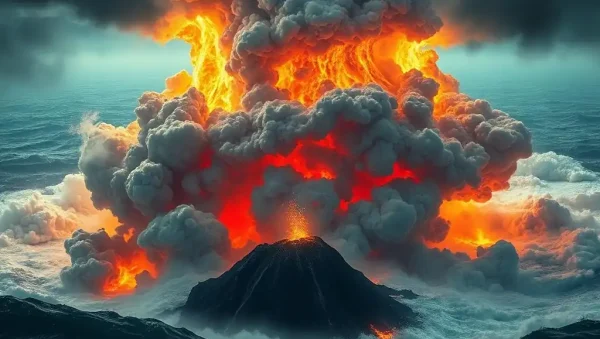
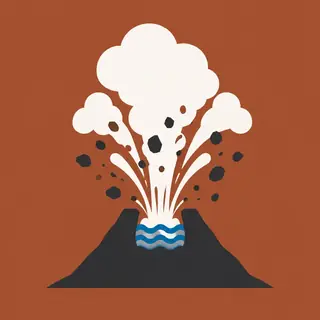
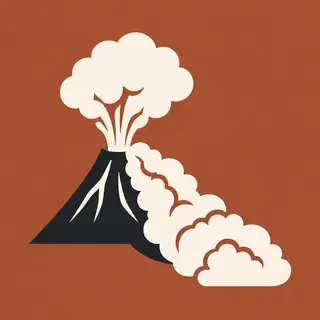
Explosive eruptions are the opposite extreme, driven by highly viscous, silica-rich magma (up to 75% SiO2) that traps volcanic gases. As pressure builds, these gases expand violently, shattering the magma into ash, pumice, and pyroclastic fragments. These eruptions produce towering eruption columns reaching 50 kilometers, lateral blasts, and deadly pyroclastic flows that can travel at hundreds of kilometers per hour. Examples include Mount St. Helens (1980), Krakatoa (1883), and Mount Pinatubo (1991).
Understanding explosive eruptions is critical for hazard assessment. Our content explains the Volcanic Explosivity Index (VEI), which ranks eruptions from 0 to 8 based on volume and column height. You'll learn about specific phenomena like Plinian, Vulcanian, and Phreatomagmatic eruptions, each with distinct triggers. We also dissect the warning signs—seismic swarms, ground swelling, and increased fumarole activity—that allow volcanologists to issue life-saving evacuation orders before catastrophe unfolds.
🔬 Magma Chemistry: The Root of All Behavior
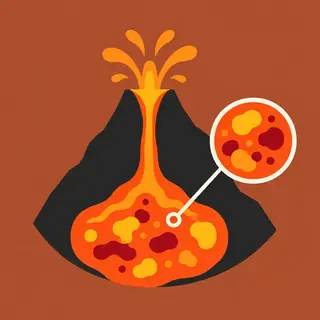
Why do some volcanoes flow while others explode? The answer lies in magma composition. Mafic magma (low silica, high iron/magnesium) is runny and hot (1,000–1,200°C), favoring effusive behavior. In contrast, felsic magma (high silica, high water content) is cooler (650–800°C) and viscous, trapping gas bubbles that coalesce into explosive pressure. Intermediate compositions (andesitic) often produce mixed or alternating eruption styles, as seen at Japan's Mount Unzen.
This section provides a chemical atlas of eruption types, including how volatiles like water and CO₂ dissolve and exsolve during ascent. We explore how fractional crystallization and crustal contamination alter magma over time, turning a peaceful stratovolcano into a ticking time bomb. By the end, you'll be able to read a rock's silica content and predict its eruption style with confidence—a foundational skill for any aspiring volcanologist.
🗺️ Global Case Studies: Real-World Comparison
This subcategory brings eruption types to life through detailed case studies of famous volcanoes. Compare the effusive, decades-long eruption of Kīlauea (Hawaii) with the explosive, 41-year average repose of Mount Fuji. We analyze the 2014–2015 Holuhraun eruption in Iceland (effusive fissure) versus the 2022 Hunga Tonga–Hunga Ha'apai blast (ultra-Plinian submarine explosion). Each study includes eruption chronology, damage assessment, and how scientists used historical data to interpret real-time signals.
These narratives help visitors understand that eruption style is not static—a single volcano can switch between effusive and explosive phases based on magma supply and hydrothermal interactions. For instance, Mount Etna exhibits both lava fountains (effusive) and occasional vulcanian explosions. We also examine hazard maps and evacuation zones from each event, providing practical lessons for residents and emergency managers in volcanic regions worldwide.
🛡️ Hazard Mitigation: Living with Both Faces of Fire
From a safety perspective, knowing whether a volcano is prone to effusive or explosive eruptions dictates preparedness strategies. For effusive hazards, primary risks are lava flow pathing, lava tube collapse, and gas emissions (SO₂, CO₂). Mitigation includes diversions (like the 1983 lava barrier on Etna), early warning systems for flow direction, and respiratory protection. For explosive hazards, threats include ashfall, pyroclastic density currents, lahars, and tsunamis—requiring robust evacuation plans, ash removal protocols, and hardened shelters.
This section synthesizes global best practices from USGS, INGV, and PHIVOLCS. You'll learn how authorities use hazard zonation maps to restrict development near likely explosive vents while permitting agriculture on effusive flanks. We also address psychological preparedness: communities near explosive volcanoes need drills and public education, while effusive areas focus on agile response. This knowledge empowers both residents and travelers to make informed decisions under volcanic threat.
🛰️ Monitoring Techniques: Predicting the Next Style
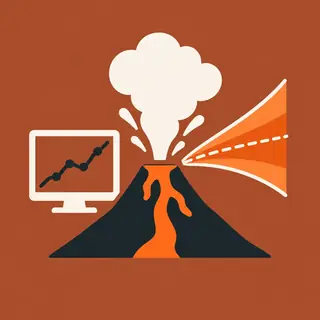
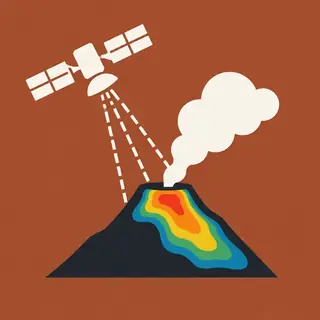
Modern volcanology uses an array of instruments to forecast eruption type before it occurs. Seismic monitoring detects harmonic tremors (continuous effusion) versus long-period events (gas pressurization). Gas geochemistry measures SO₂/H₂S ratios; high SO₂ suggests shallow magma, while high CO₂ indicates deep ascent. Satellite InSAR tracks ground deformation with millimeter precision, revealing whether magma is inflating a reservoir (explosive potential) or escaping through dikes (effusive outpour).
We also cover real-time data portals like VolcanoExplorers.org's live dashboard, where you can see seismic spectrograms, tiltmeter graphs, and webcam feeds. Educational tutorials explain how to interpret RSAM (Real-time Seismic Amplitude Measurement) spikes. By understanding these signals, you can appreciate why scientists successfully predicted the 1991 Pinatubo eruption's explosive climax after months of effusive dome growth—saving thousands of lives. This actionable knowledge bridges citizen science and professional forecast.
Frequently Asked Questions
Can a volcano switch from effusive to explosive in one eruption?
Yes, this is called a "bimodal" eruption. It happens when magma composition changes or when groundwater flashes to steam (phreatomagmatic events). The 2010 Eyjafjallajökull eruption in Iceland started effusive then turned explosive under an ice cap, causing widespread ash disruption.
Which eruption type is more dangerous to humans?
Explosive eruptions are far more lethal. Pyroclastic flows, ashfalls, and lahars can kill thousands within minutes. Effusive eruptions are usually survivable but can destroy property. Historically, explosive events like Tambora (1815) caused global climate impact, making them the greater threat.
Do all shield volcanoes produce only effusive eruptions?
Mostly, but exceptions exist. Hawaii's Kīlauea has had rare explosive periods, like 1790, when mixing with water and gas caused steam blasts. However, typical shield volcanism is persistently effusive due to low silica magma from mantle plumes.
What is the Volcanic Explosivity Index (VEI) cutoff for explosive?
Effusive eruptions are VEI 0–1, small lava flows without columns. Explosive starts at VEI 2, producing ash columns over 1 km. VEI 8 (supervolcanoes like Yellowstone) can eject over 1,000 cubic km of material, equal to no historical human witness.
How do volcanologists know when an explosive eruption will occur?
They monitor precursory earthquakes, rapid ground uplift (centimeters per day), and increased gas emissions, especially SO₂. A sudden drop in seismic activity with persistent tremor often signals an imminent vent opening, prompting final evacuation warnings before the blast.