
The Slow Burn: How Effusive Eruptions Reshape Landscapes

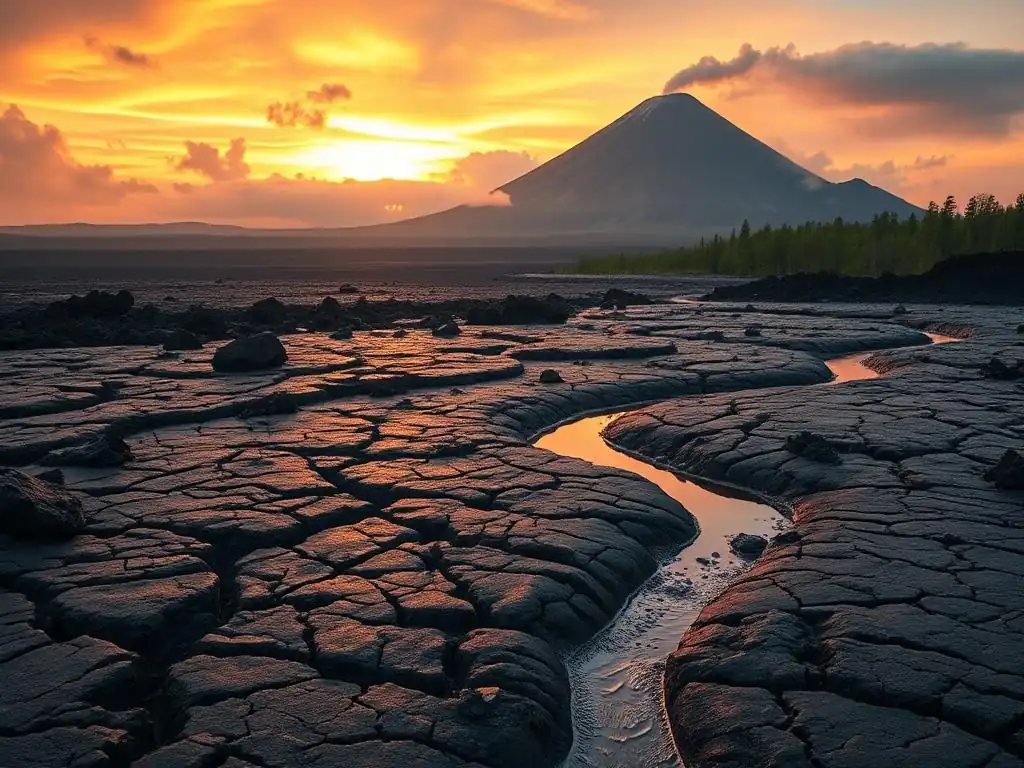
Welcome to Volcano Explorers, where the Earth breathes fire! Prepare to be captivated by the raw power and stunning beauty of volcanoes. This isn't just about fiery explosions; today, we unravel the secrets of effusive eruptions. Discover how these seemingly "gentle" lava flows, inch by inch, can orchestrate a profound and lasting landscape transformation. Intrigued? Let's dive into the science behind this slow-motion spectacle of nature...
- Understanding Effusive Eruptions and Landscape Evolution
- The Landscape Transformation Power of Effusive Eruptions
- Case Studies: Effusive Eruptions and Their Impact on Specific Landscapes
- The Geological Processes Behind Effusive Eruption Landscape Transformation
- The Long-Term Effects of Effusive Eruptions on Ecosystems
- Monitoring Effusive Eruptions: Predicting Landscape Changes
- Living with Effusive Eruptions: Challenges and Opportunities
- The Future of Effusive Eruption Landscape Research
-
Frequently Asked Questions
- What are effusive eruptions, and how do they differ from explosive eruptions?
- How do effusive eruptions contribute to landscape transformation?
- What types of volcanoes are typically associated with effusive eruptions?
- What are some examples of landscapes significantly altered by effusive eruptions?
- How can volcanologists monitor effusive eruptions and predict their impact on the surrounding area?
- Final Reflection: The Enduring Power of Slow Change
- Ignite Your Inner Geologist: Take Action Now!
Understanding Effusive Eruptions and Landscape Evolution
What are Effusive Volcanic Eruptions? A Gentle Overview
Effusive volcanic eruptions are characterized by the relatively slow and steady outpouring of lava onto the Earth's surface. Unlike their explosive counterparts, effusive eruptions are less violent and are defined by the lava's fluid nature. Think of honey slowly pouring from a jar – this is a simplified analogy for how lava behaves in an effusive eruption.
The magma, originating from deep within the Earth, rises to the surface and erupts, not as a violent explosion of ash and rock, but as a flow of molten rock. This type of eruption is predominantly associated with basaltic magmas, which are lower in silica content and therefore less viscous than magmas involved in explosive eruptions.
These eruptions are not without their dangers, however. While they may lack the immediate destructive force of explosive eruptions, effusive eruptions can still cause significant landscape changes and pose threats to infrastructure and ecosystems. The relentless advance of lava flows can engulf everything in their path, and the sheer volume of lava erupted can create entirely new landforms over time. The duration of effusive eruptions can vary greatly, from a few hours or days to months or even years, constantly reshaping the surrounding environment.
Effusive Eruptions vs. Explosive Eruptions: Key Differences
The distinction between effusive and explosive eruptions hinges primarily on the magma's properties, particularly its viscosity and gas content. Effusive eruptions, as discussed, involve low-viscosity magma with relatively low gas content. This allows the gases to escape more easily, preventing pressure buildup and leading to a gentle outflow of lava.
In contrast, explosive eruptions are fueled by highly viscous magma rich in dissolved gases. The high viscosity traps the gases, causing pressure to build up immensely within the magma chamber. When this pressure exceeds the strength of the surrounding rocks, a violent explosion occurs, ejecting ash, gas, and pyroclastic material into the atmosphere.
Another key difference lies in the speed and scale of landscape alteration. Explosive eruptions can cause rapid and dramatic changes, such as the formation of calderas, the deposition of thick ash layers, and the generation of pyroclastic flows that can devastate vast areas in minutes. Effusive eruptions, on the other hand, are associated with slower, more gradual landscape modification.
They build up landforms incrementally through the accumulation of lava flows over time, creating features like lava plains, shield volcanoes, and lava tubes. While explosive eruptions are often associated with immediate destruction, effusive eruptions are more about gradual construction and reshaping of the landscape over extended periods.
The Role of Lava Viscosity in Determining Eruption Style
Lava viscosity, or its resistance to flow, is the paramount factor dictating whether an eruption will be effusive or explosive. Viscosity is primarily controlled by the silica content and temperature of the magma. Magmas high in silica, like rhyolite, are highly viscous, meaning they are thick and sticky. This high viscosity hinders gas escape, leading to pressure buildup and explosive eruptions. Conversely, magmas low in silica, such as basalt, are low in viscosity, making them fluid and allowing gases to escape relatively easily. This results in the gentle outpouring of lava characteristic of effusive eruptions.
Temperature also plays a role; hotter magmas tend to be less viscous. However, the silica content is the dominant control. Think of different types of honey: a runny, light honey represents low-silica basaltic magma, while a thick, dark honey is analogous to high-silica rhyolitic magma. The ease with which you can pour each type of honey reflects their viscosity and how gases might escape. In effusive eruptions, the low viscosity basaltic lava flows readily, spreading across the landscape and solidifying to create new volcanic terrain.
The Landscape Transformation Power of Effusive Eruptions
Gradual Landscape Changes: Effusive Eruptions at Work
Effusive eruptions are masters of gradual landscape transformation. Unlike the sudden, catastrophic changes wrought by explosive eruptions, effusive events slowly and steadily reshape the terrain over time. Imagine a sculptor working with molten rock instead of clay, patiently layering and molding the landscape. This is essentially what effusive eruptions do. Lava flows, spreading out from vents and fissures, solidify and accumulate, gradually raising the ground level and altering drainage patterns.
These changes are not always immediately apparent. A single lava flow might seem like a relatively minor event in the short term. However, over decades, centuries, and millennia, the cumulative effect of repeated effusive eruptions becomes profoundly significant. Entire volcanic fields and plateaus are built layer by layer, each flow contributing to the overall landscape evolution. For example, the Columbia River Basalt Group in the northwestern United States is a vast plateau formed by immense effusive eruptions millions of years ago, a testament to the long-term landscape-altering power of this type of volcanism.
Creating New Land: How Lava Flows Extend Coastlines
One of the most dramatic examples of landscape transformation by effusive eruptions is the creation of new land at coastlines. When lava flows reach the ocean, they interact dynamically with the water, often resulting in spectacular steam plumes and littoral explosions as the molten rock meets the cold seawater. However, as the lava cools and solidifies, it adds new territory to the coastline, effectively extending the landmass outwards. This process has been particularly evident in volcanic islands like Hawaii and Iceland.
In Hawaii, Kilauea volcano has been continuously erupting effusively for decades, with lava flows frequently reaching the ocean. These flows have added hundreds of acres of new land to the Big Island, demonstrating the ongoing process of land creation. Similarly, in Iceland, the volcanic island of Surtsey was entirely born from effusive submarine eruptions in the 1960s. These examples underscore the potent ability of effusive volcanism to not just reshape existing landscapes, but to literally create new land where none existed before, constantly redrawing coastlines and expanding islands.
Effusive Eruptions and the Formation of Shield Volcanoes
Shield volcanoes, characterized by their broad, gently sloping profiles resembling ancient warrior shields, are the quintessential landforms created by effusive eruptions. These volcanoes are built almost entirely from layers of fluid basaltic lava flows. The low viscosity of basaltic lava allows it to flow over long distances, spreading out thinly and covering vast areas. Over countless eruptions, these lava flows accumulate, layer upon layer, gradually constructing the broad, shield-like shape.
Mauna Loa and Mauna Kea in Hawaii are classic examples of shield volcanoes, towering thousands of meters above the ocean floor. Their immense size and gentle slopes are direct results of the effusive eruption style that dominates Hawaiian volcanism. The relatively non-explosive nature of these eruptions allows lava to flow freely and build up the volcano's structure incrementally over hundreds of thousands to millions of years. Shield volcanoes are thus monuments to the slow and persistent landscape-building power of effusive volcanic activity.
Case Studies: Effusive Eruptions and Their Impact on Specific Landscapes
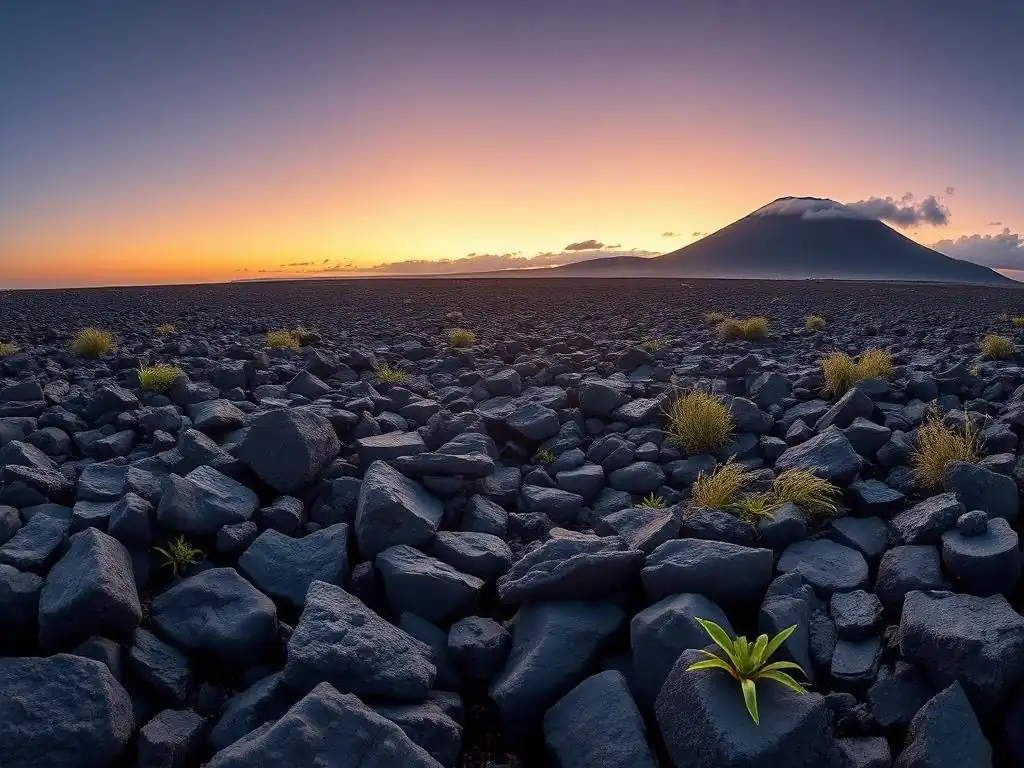
The Hawaiian Islands: A Prime Example of Effusive Volcanism
The Hawaiian Islands are perhaps the world's most iconic example of a landscape sculpted by effusive volcanism. Formed by a hotspot beneath the Pacific Plate, the islands are almost entirely composed of basaltic lava flows erupted effusively over millions of years. Kilauea, one of the most active volcanoes on Earth, exemplifies this process.
Its continuous effusive eruptions have been ongoing for decades, consistently adding new land to the island of Hawaii and reshaping its coastline. The Puʻuʻōʻō eruption, which began in 1983 and lasted until 2018, is a prime illustration of a long-lived effusive event that significantly altered the landscape, creating new lava fields and modifying drainage systems.
The gentle slopes of the Hawaiian shield volcanoes, like Mauna Loa and Mauna Kea, are a direct result of the fluid nature of basaltic lava. These lavas flow easily, spreading out to create broad, gently inclined volcanic edifices. The ongoing volcanic activity in Hawaii not only shapes the physical landscape but also profoundly influences the ecology and culture of the islands. New lava flows create barren landscapes that are gradually colonized by vegetation, showcasing ecological succession in action. The volcanic soils, weathered from basaltic lava, are fertile and support diverse ecosystems.
Iceland's Volcanic Landscapes: Shaped by Effusive Activity
Iceland, situated on the Mid-Atlantic Ridge, is another region where effusive volcanism has played a dominant role in shaping the landscape. The island is characterized by vast lava fields, shield volcanoes, and fissure swarms, all products of predominantly basaltic effusive eruptions. The Holuhraun eruption in 2014-2015, a recent example, produced one of the largest lava flows in Iceland's recorded history, covering an area of approximately 85 square kilometers. This eruption, though not explosive, dramatically altered the landscape, creating a new lava field in the highlands of Iceland.
Iceland's volcanic activity is not only characterized by shield volcanoes but also by extensive fissure eruptions, where lava erupts from long cracks in the Earth's crust. These fissure eruptions can produce voluminous lava flows that spread across large areas, forming lava plains and plateaus. The Icelandic landscape is a mosaic of lava flows of different ages, each eruption contributing to the island's unique geological character. The interplay between volcanism and glacial activity in Iceland has further sculpted the landscape, creating distinctive features like table mountains (Tuyas) and glacial valleys carved through volcanic terrain.
La Palma Eruption (2021): A Recent Example of Landscape Modification
The 2021 eruption on La Palma, in the Canary Islands, provides a recent and compelling example of how effusive eruptions can rapidly modify landscapes and impact human populations. This eruption, which lasted for over three months, was primarily effusive, characterized by the continuous outpouring of lava from a newly formed volcanic cone named Cumbre Vieja. The lava flows from this eruption covered over 1200 hectares of land, destroying homes, infrastructure, and agricultural land.
The La Palma eruption demonstrated the destructive potential of even effusive eruptions. While not explosive in nature, the relentless advance of lava flows caused significant damage and displacement. The lava flows altered the topography of the island, creating new lava deltas where the flows entered the sea, effectively extending the coastline.
This eruption served as a stark reminder of the ongoing geological processes shaping our planet and the challenges of living in volcanically active regions. The long-term effects of this eruption on the La Palma landscape and ecosystem are still being studied, but it is clear that it has left a lasting imprint on the island's geography.
The Geological Processes Behind Effusive Eruption Landscape Transformation
Lava Flow Dynamics: Understanding How Lava Spreads and Solidifies
Understanding lava flow dynamics is crucial to comprehending how effusive eruptions reshape landscapes. Lava flow behavior is influenced by several factors, including lava viscosity, eruption rate, slope of the terrain, and cooling rate. Low-viscosity basaltic lavas, typical of effusive eruptions, tend to flow more readily and over greater distances than viscous lavas. The eruption rate, or the volume of lava erupted per unit time, also significantly affects flow extent. Higher eruption rates lead to larger and longer lava flows.
As lava flows, it cools and solidifies, initially forming a solid crust on the surface while the interior remains molten. This crust insulates the lava beneath, allowing it to travel further before completely solidifying. The solidification process is complex and depends on the lava's composition and cooling conditions.
Different types of lava flows, such as pahoehoe (smooth, ropy) and ʻaʻā (rough, blocky), reflect variations in lava viscosity and flow dynamics. Pahoehoe flows typically form from hotter, more fluid lava, while ʻaʻā flows are associated with slightly cooler, more viscous lava. The way lava spreads and solidifies dictates the final shape and texture of the volcanic landscape.
The Formation of Lava Tubes and Their Impact on Landscape
Lava tubes are fascinating geological features formed during effusive eruptions that significantly impact landscape evolution. These are natural conduits formed within lava flows, typically in pahoehoe flows. As the surface of a lava flow cools and solidifies, forming a crust, the molten lava beneath continues to flow, eventually draining out and leaving behind a hollow tube. Lava tubes act as insulated channels, allowing lava to flow much further and faster than surface flows because they minimize heat loss.
Lava tubes play a critical role in extending the reach of lava flows and contributing to the formation of extensive lava fields. They also influence drainage patterns by providing underground pathways for water flow. After an eruption, lava tubes can remain as significant landscape features, sometimes collapsing to form trenches or skylights, providing access to the interior of the tubes. These tubes can be remarkably long, extending for tens of kilometers, and represent a highly efficient way for lava to be transported across the landscape, contributing to the widespread distribution of volcanic material during effusive eruptions.
Volcanic Gases and Their Influence on Effusive Eruption Landforms
While effusive eruptions are characterized by the gentle outpouring of lava, volcanic gases still play a role in shaping the resulting landforms. Gases dissolved in magma, such as water vapor, carbon dioxide, and sulfur dioxide, are released as the magma rises to the surface and erupts. In effusive eruptions, these gases escape more readily than in explosive eruptions, but they still influence lava flow behavior and the formation of specific volcanic features.
Gas bubbles within lava flows can affect their viscosity and flow rate. As lava cools and solidifies, trapped gas bubbles can create vesicular textures in the rock, resulting in features like scoria cones and pumice deposits, especially at the edges of lava flows or around vents.
The degassing process can also influence the morphology of lava flows, contributing to the formation of features like lava levees along flow margins. Furthermore, volcanic gases released during effusive eruptions can interact with the atmosphere and surrounding environment, contributing to acid rain and influencing weathering processes that further shape the volcanic landscape over time.
The Long-Term Effects of Effusive Eruptions on Ecosystems
Colonization of Lava Flows: How Life Returns to Newly Formed Land
Effusive eruptions, while initially destructive, ultimately pave the way for new ecosystems to develop. Newly formed lava flows are initially barren landscapes, devoid of soil and vegetation. However, over time, a process of ecological succession begins as life gradually colonizes these volcanic terrains. Pioneer species, such as lichens and mosses, are often the first to establish themselves on lava flows. These organisms can break down the volcanic rock, initiating soil formation and creating conditions suitable for other plants to take root.
The colonization process is slow and can take decades or even centuries, depending on factors like climate, elevation, and proximity to seed sources. Ferns and grasses are often among the early colonizers, followed by shrubs and eventually trees, leading to the development of more complex plant communities. The type of vegetation that establishes itself depends on the specific environmental conditions and the type of lava flow.
For instance, pahoehoe flows, with their smoother surfaces, may be colonized differently than rough ʻaʻā flows. The return of life to lava flows is a testament to the resilience of ecosystems and the gradual recovery of nature after volcanic disturbances.
Adapting to Volcanic Landscapes: Flora and Fauna in Effusive Eruption Zones
Ecosystems in regions frequently affected by effusive eruptions exhibit remarkable adaptations to these dynamic environments. Plants and animals in these areas have evolved strategies to survive and thrive in volcanic landscapes characterized by newly formed lava flows, volcanic soils, and potential for future eruptions. Plants in these zones often display adaptations to nutrient-poor volcanic soils, such as symbiotic relationships with nitrogen-fixing bacteria. They may also be adapted to drought conditions, as lava flows can be porous and drain water quickly.
Animals in effusive eruption zones also exhibit adaptations. Some animals may be mobile enough to evacuate areas threatened by lava flows, while others may utilize lava tubes as shelters. Certain species might even specialize in feeding on early colonizer plants or insects that inhabit lava flows. The biodiversity in volcanic regions is often shaped by the disturbance regime of effusive eruptions, with a mix of pioneer species adapted to newly formed landscapes and more established communities in older volcanic areas. This creates a dynamic mosaic of habitats, contributing to the unique ecological character of effusive volcanic regions.
Soil Formation on Lava Flows: A Slow and Steady Process
Soil formation on lava flows is a slow and steady process, transforming barren volcanic rock into fertile ground capable of supporting diverse ecosystems. The weathering of lava rock, both physical and chemical, is the primary driver of soil development. Physical weathering, including freeze-thaw cycles and abrasion by wind and water, breaks down the rock into smaller fragments. Chemical weathering involves the alteration of volcanic minerals through reactions with water, air, and organic acids produced by pioneer organisms.
Over time, organic matter accumulates from decaying plant material and animal remains, enriching the developing soil. Volcanic ash, if present from previous explosive eruptions, can also contribute to soil fertility by adding essential nutrients. The type of soil that forms depends on factors like climate, vegetation, and the composition of the lava flow.
Volcanic soils, known as Andisols, are often rich in minerals and can be very fertile, particularly in humid climates. However, soil formation on lava flows is a lengthy process that can take centuries or even millennia to reach maturity, highlighting the long-term landscape and ecosystem changes associated with effusive volcanism.
Monitoring Effusive Eruptions: Predicting Landscape Changes
Volcanological Monitoring Techniques for Effusive Eruptions
Monitoring effusive eruptions is crucial for understanding their behavior, predicting lava flow paths, and mitigating potential hazards. Volcanologists employ a range of sophisticated techniques to monitor effusive activity. Ground deformation measurements, using instruments like tiltmeters and GPS stations, detect subtle changes in the volcano's shape, which can indicate magma movement beneath the surface and potential eruption onset or changes in eruption rate. Seismic monitoring is also essential, as earthquakes often precede or accompany volcanic eruptions. Analyzing the type, location, and frequency of earthquakes can provide insights into magma ascent and eruption dynamics.
Gas monitoring is another key technique. Changes in the composition and flux of volcanic gases, such as sulfur dioxide and carbon dioxide, can signal changes in magma degassing and eruption intensity. Thermal monitoring, using infrared cameras and satellite imagery, allows scientists to track temperature variations on the volcano's surface, which can indicate the location and extent of lava flows.
Visual observations from ground and aerial surveys are also critical for directly observing eruption activity, mapping lava flows, and assessing potential hazards. Combining these diverse monitoring techniques provides a comprehensive picture of effusive eruption dynamics and helps in forecasting landscape changes.
Using Remote Sensing to Track Lava Flow Extent
Remote sensing technologies, particularly satellite imagery and aerial surveys, are invaluable tools for tracking the extent and evolution of lava flows during effusive eruptions. Satellite-based sensors can provide continuous, synoptic views of volcanic areas, even in remote or inaccessible locations. Different types of satellite imagery, including visible, infrared, and radar, offer complementary information about lava flows. Visible imagery captures the surface extent of flows, while infrared imagery detects thermal anomalies, allowing scientists to map active lava flows even at night or through clouds. Radar imagery can penetrate clouds and vegetation, providing information on ground deformation and lava flow thickness.
Time-series satellite imagery allows for the dynamic monitoring of lava flow advancement over time, enabling the tracking of flow paths, effusion rates, and overall eruption progress. This information is crucial for hazard assessment and for understanding the landscape transformation caused by effusive eruptions. Unmanned Aerial Vehicles (UAVs) or drones are also increasingly used for high-resolution mapping of lava flows, providing detailed information on flow morphology and volume. Remote sensing data, combined with ground-based observations, significantly enhances our ability to monitor and understand effusive eruptions and their impact on landscapes.
Geological Mapping and Understanding Eruption History
Geological mapping plays a fundamental role in understanding the long-term landscape evolution driven by effusive eruptions. By mapping the distribution and characteristics of lava flows of different ages, geologists can reconstruct the eruptive history of a volcanic area and gain insights into past eruption patterns and landscape changes. Detailed geological maps show the spatial extent, thickness, and composition of individual lava flows, allowing for the identification of eruption sources, flow pathways, and the overall volcanic stratigraphy.
Radiometric dating techniques are used to determine the ages of lava flows, establishing a chronological framework for volcanic activity and landscape development. By analyzing the age and distribution of lava flows, geologists can estimate eruption frequencies, identify periods of increased or decreased volcanic activity, and assess the long-term landscape evolution trends. Geological mapping also helps in understanding the structural controls on effusive eruptions, such as faults and fissures, which can influence lava flow pathways and the location of future eruptions. This historical perspective is crucial for assessing volcanic hazards and predicting future landscape changes in effusive volcanic regions.
Living with Effusive Eruptions: Challenges and Opportunities
Adapting Infrastructure to Slow-Moving Lava Flows
Living in regions prone to effusive eruptions presents unique challenges, particularly in adapting infrastructure to the threat of slow-moving lava flows. Unlike explosive eruptions which can cause immediate widespread destruction, effusive eruptions pose a more gradual but persistent threat as lava flows slowly advance, potentially engulfing buildings, roads, and other infrastructure. Mitigation strategies focus on diverting or slowing down lava flows to protect populated areas and critical infrastructure.
Lava diversion barriers, such as earthen walls or rock berms, can be constructed to redirect lava flows away from vulnerable areas. These barriers are designed to channel lava into less populated zones or natural depressions. However, the effectiveness of diversion barriers depends on the volume and flow rate of lava, as well as the topography of the terrain.
In some cases, water spraying has been used to cool and solidify lava flows, slowing their advance and potentially diverting them. Land-use planning and building codes in effusive eruption zones also play a crucial role, with restrictions on construction in high-hazard areas and building designs that minimize lava flow damage. Adapting infrastructure to the realities of effusive eruptions requires a combination of engineering solutions, land-use management, and community preparedness.
Geothermal Energy: Harnessing the Power of Effusive Volcanism
While effusive eruptions can pose hazards, they also offer significant opportunities, particularly in harnessing geothermal energy. Volcanic regions, especially those characterized by effusive volcanism, are often associated with high geothermal gradients, meaning that temperatures increase rapidly with depth. This geothermal heat, a result of magma bodies and hot rocks beneath the surface, can be tapped as a sustainable energy source. Geothermal power plants utilize steam or hot water from underground reservoirs, heated by volcanic activity, to generate electricity.
Iceland, heavily reliant on effusive volcanism, is a global leader in geothermal energy production. The island nation generates a significant portion of its electricity and heating from geothermal resources. Effusive volcanic regions, with their persistent heat flow, provide a reliable and renewable source of energy. Geothermal energy is a clean energy source, producing minimal greenhouse gas emissions compared to fossil fuels. Harnessing geothermal energy in effusive volcanic regions not only provides a sustainable energy alternative but also contributes to economic development and energy independence for these areas.
Volcanic Tourism and Its Impact on Eruption Regions
Volcanic regions, including those shaped by effusive eruptions, often attract significant tourism. The dramatic landscapes, active volcanoes, and unique geological features associated with effusive volcanism can be major tourist attractions. Volcanic tourism, or geotourism, can bring economic benefits to eruption regions, creating jobs and supporting local businesses. Tourists are drawn to witness the power and beauty of volcanic landscapes, visit lava fields, explore lava tubes, and potentially even observe active effusive eruptions from a safe distance.
However, volcanic tourism also presents challenges. It is crucial to manage tourism sustainably to minimize environmental impacts and ensure visitor safety, especially in active volcanic areas. Infrastructure development for tourism, such as roads and trails, needs to be carefully planned to avoid disrupting fragile volcanic ecosystems. Visitor safety is paramount, requiring clear guidelines, monitoring of volcanic activity, and emergency preparedness plans. While volcanic tourism can be a valuable economic driver for effusive eruption regions, it must be managed responsibly to balance economic benefits with environmental protection and public safety.
The Future of Effusive Eruption Landscape Research
Emerging Technologies for Studying Lava Flow Dynamics
The study of effusive eruption landscape transformation is continually advancing with the development and application of new technologies. High-resolution satellite imagery, including hyperspectral and thermal infrared sensors, provides increasingly detailed data on lava flow characteristics and surface processes. Advanced GPS and LiDAR (Light Detection and Ranging) techniques allow for precise measurements of ground deformation and topographic changes, capturing the subtle landscape modifications caused by effusive eruptions.
Unmanned Aerial Vehicles (UAVs) or drones are revolutionizing lava flow research, enabling scientists to collect high-resolution data in hazardous or inaccessible areas. Drones equipped with thermal cameras, multispectral sensors, and LiDAR can create detailed 3D models of lava flows, map temperature distributions, and monitor gas emissions at unprecedented spatial resolution.
Laboratory experiments and numerical modeling are also becoming increasingly sophisticated, allowing researchers to simulate lava flow behavior under different conditions and to better understand the complex processes that govern lava flow dynamics and landscape evolution. These emerging technologies are enhancing our ability to study effusive eruptions and their landscape impacts in greater detail than ever before.
Climate Change and Its Potential Impact on Eruption Frequency
The potential impact of climate change on volcanic activity, including effusive eruptions, is an area of ongoing research and growing concern. Climate change is altering various environmental factors, such as ice melt, sea level, and precipitation patterns, which could potentially influence volcanic processes. Melting glaciers and ice sheets in volcanic regions like Iceland and Patagonia could reduce the pressure on the Earth's crust, potentially affecting magma generation and eruption frequency. Some studies suggest that deglaciation could lead to an increase in volcanic activity in certain regions.
Changes in sea level and precipitation patterns could also influence volcanic processes and the style of eruptions. While the precise impacts of climate change on effusive eruption frequency and intensity are still uncertain, the potential for climate-volcano interactions to alter volcanic landscapes and hazards is a significant area of future research. Understanding these complex interactions is crucial for assessing future volcanic risks and for adapting to the changing dynamics of volcanic regions in a warming world.
Long-Term Ecological Effects of Effusive Eruptions
The long-term ecological effects of effusive eruptions are a critical area of ongoing research. While the immediate impacts of lava flows can be destructive, the long-term consequences for ecosystems are complex and multifaceted. Studies are investigating the long-term patterns of ecological succession on lava flows, examining how plant and animal communities develop and change over decades and centuries. Research is also focusing on the influence of volcanic eruptions on soil development, nutrient cycling, and biodiversity in volcanic regions.
Understanding how ecosystems adapt to and recover from effusive eruption disturbances is crucial for conservation efforts in volcanic landscapes. The long-term ecological effects of effusive eruptions are not just about recovery; they also involve the creation of new habitats and the shaping of unique ecosystems adapted to volcanic environments. Future research will continue to explore the intricate interplay between effusive volcanism and ecological processes, providing valuable insights into the resilience of nature and the long-term evolution of volcanic landscapes.
Frequently Asked Questions
What are effusive eruptions, and how do they differ from explosive eruptions?
Effusive eruptions involve the relatively slow and steady outflow of lava, unlike explosive eruptions, which are characterized by violent explosions of gas and ash. Lava flow is the key feature.
How do effusive eruptions contribute to landscape transformation?
Effusive eruptions reshape landscapes primarily through the accumulation of lava flows, which can cover existing terrain and create new landforms like shield volcanoes and lava plains. This is a gradual and continuous process.
What types of volcanoes are typically associated with effusive eruptions?
Shield volcanoes are most commonly associated with effusive eruptions, due to their gentle slopes and the low viscosity of the lava they erupt. Lava domes can also be formed.
What are some examples of landscapes significantly altered by effusive eruptions?
Hawaii's volcanic islands are a prime example, with their landscape shaped by countless effusive eruptions. The Snake River Plain in Idaho is another large area that has been transformed by effusive eruptions.
How can volcanologists monitor effusive eruptions and predict their impact on the surrounding area?
Volcanologists use techniques like satellite imagery, thermal monitoring, and ground deformation measurements to track lava flow rates and directions. This data helps in predicting the extent of lava flow and potential impact on nearby communities and infrastructure.
Final Reflection: The Enduring Power of Slow Change
The preceding exploration of effusive eruptions and their transformative impact on landscapes underscores a profound truth: even the most gradual processes possess the power to reshape our world in dramatic and lasting ways. While explosive eruptions capture our immediate attention with their fiery displays, the slow, persistent flow of lava silently sculpts the earth, leaving an indelible mark on the environment and, ultimately, on us.
The subtle yet undeniable influence of effusive eruptions serves as a powerful metaphor for the forces that shape our lives and societies. Just as lava patiently carves new paths across the land, incremental changes, often unnoticed in the moment, accumulate over time to create profound transformations. The only constant is change.
This ancient adage resonates deeply when we consider the enduring legacy of these slow-burning geological events, reminding us that even the smallest actions can have monumental consequences.
As we conclude this journey through the world of effusive eruptions, I invite you to reflect on the power of slow, deliberate action in your own life. Consider the landscapes you wish to reshape, the goals you aspire to achieve, and the impact you hope to leave on the world. Embrace the slow burn, cultivate patience, and trust in the transformative power of consistent effort. For just as lava patiently reshapes the earth, you too can mold your future, one deliberate step at a time.
Ignite Your Inner Geologist: Take Action Now!
Thank you for diving deep into the fascinating world of effusive eruptions and their dramatic impact on our planet. Now that you understand the slow, yet powerful, forces at play, it’s time to channel that knowledge into action.
Here’s how you can further explore this captivating topic:
- Chart your own volcanic journey! Identify three shield volcanoes around the world (Hawaii, Iceland, Galapagos...) using satellite imagery and track their recent activity. Document your findings, noting any changes in landscape over time.
- Become a citizen scientist! Contribute to global volcanic monitoring efforts by reporting unusual seismic activity or thermal anomalies you observe through established channels like the USGS. (Remember: Never approach an active volcano!)
- Start a conversation! Share this article with friends and family, and discuss the implications of effusive eruptions on local ecosystems and human settlements.
What surprising landscape changes did you discover in your virtual exploration of shield volcanoes? Share your findings in the comments below!