
Earth's Molten Rivers: The Allure and Danger of Effusive Eruptions

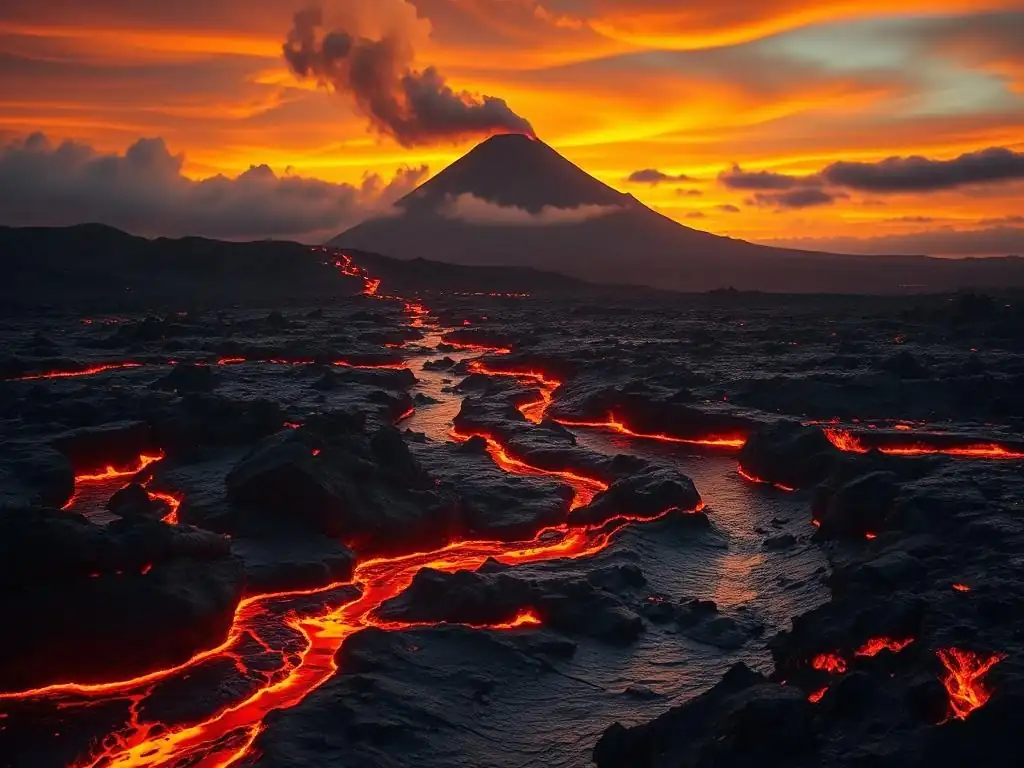
Welcome to Volcano Explorers!
Prepare to be mesmerized by the raw power and beauty of Earth's fiery heart. Ever wondered how molten rock flows like rivers, shaping landscapes in dramatic displays of geological artistry? Dive in as we unravel the secrets behind effusive volcanic eruptions, exploring the science, the spectacle, and the inherent dangers they present. What forces drive these molten rivers, and what can they tell us about our planet's inner workings? The answers await – begin your exploration now!
- Understanding Effusive Volcanic Eruptions: An Introduction
- The Science Behind Effusive Eruptions
- Characteristics of Effusive Lava Flows
- The Allure of Effusive Eruptions: Witnessing Earth's Power
- The Dangers of Effusive Eruptions: Risks and Mitigation
- Effusive Eruptions and Volcanic Tourism: A Delicate Balance
- Effusive Eruptions: A Continuous Shaping of Our Planet
- Frequently Asked Questions
- Final Reflection: Embracing the Flow of Change
- Unearth Your Inner Volcanologist!
Understanding Effusive Volcanic Eruptions: An Introduction
What are Effusive Eruptions? A Gentle Giant's Flow
Effusive eruptions are a type of volcanic eruption characterized by the outpouring of lava onto the Earth's surface. Unlike their explosive counterparts, effusive eruptions are generally less violent, featuring a steady and often mesmerizing flow of molten rock. These eruptions are driven by magma that is relatively low in viscosity and gas content, allowing lava to flow smoothly and predictably from volcanic vents or fissures.
Think of effusive eruptions as the "gentle giants" of the volcanic world, slowly but surely reshaping landscapes with rivers of fire. While they may lack the dramatic explosions of other eruption types, effusive eruptions are powerful forces of nature, capable of creating vast lava fields and adding new land to coastlines over time.
The visual spectacle of an effusive eruption is truly captivating. Imagine witnessing molten rock, heated to temperatures between 1,000 to 1,200 degrees Celsius (1,832 to 2,192 degrees Fahrenheit), flowing like a viscous liquid across the terrain. This slow, creeping advance of lava, sometimes just inches per hour, other times several miles per hour, is a testament to the immense energy contained within the Earth.
Effusive eruptions are not just geological events; they are natural phenomena that highlight the dynamic and ever-changing nature of our planet. Understanding these eruptions is crucial for comprehending volcanic processes and mitigating potential hazards in volcanic regions.
Effusive vs. Explosive Eruptions: Key Differences Explained
The fundamental difference between effusive and explosive eruptions lies in the magma's properties and how gas escapes from it. Effusive eruptions are associated with magma that has lower silica content, making it less viscous or "runny". This low viscosity allows gases to escape relatively easily, preventing pressure from building up within the volcano. In contrast, explosive eruptions involve highly viscous magma, rich in silica. This sticky magma traps volcanic gases, leading to a significant pressure increase that eventually culminates in violent explosions of ash, gas, and rock fragments.
Consider the analogy of opening a soda bottle. A gently opened bottle represents an effusive eruption – the gas escapes slowly, and the liquid flows smoothly. However, shaking the bottle vigorously before opening simulates an explosive eruption – the built-up pressure results in a sudden, forceful release.
Effusive eruptions typically produce lava flows, lava fountains (though less forceful than in explosive eruptions), and lava lakes. Explosive eruptions, on the other hand, generate pyroclastic flows (fast-moving currents of hot gas and volcanic matter), ash clouds, and volcanic bombs. The type of eruption dictates the shape of the volcano formed; effusive eruptions often create broad, gently sloping shield volcanoes, while explosive eruptions tend to build steep-sided stratovolcanoes or composite volcanoes.
The USGS Volcano Hazards Program: Monitoring Volcanic Activity
The United States Geological Survey (USGS) Volcano Hazards Program plays a critical role in monitoring and studying volcanic activity across the United States and its territories, including both effusive and explosive eruptions. This program operates volcano observatories in regions with active volcanism, such as Hawaii, Alaska, California, and the Pacific Northwest.
These observatories utilize a range of sophisticated instruments to detect subtle changes in volcanic behavior that may precede an eruption. For effusive eruptions, monitoring efforts focus on detecting ground deformation (swelling of the volcano), changes in gas emissions (like sulfur dioxide), and increases in seismic activity, all of which can indicate magma movement and potential lava outflow.
Data collected by the USGS is crucial for providing timely warnings and assessments of volcanic hazards to communities living near active volcanoes. For example, during the 2018 Kilauea eruption in Hawaii, the USGS Hawaiian Volcano Observatory provided continuous updates on lava flow paths, allowing civil defense agencies to effectively manage evacuations and minimize risks to populated areas.
The USGS also conducts research to better understand volcanic processes, including the dynamics of effusive eruptions, which helps to improve forecasting capabilities and enhance public safety. Their work is essential for mitigating the risks associated with both the allure and the danger of volcanic activity.
The Science Behind Effusive Eruptions
Magma Composition and Viscosity: The Driving Force
The composition of magma is the primary factor determining whether a volcanic eruption will be effusive or explosive, with silica (silicon dioxide) content being particularly significant. Magma rich in silica, such as rhyolitic magma, is highly viscous. Viscosity is a measure of a fluid's resistance to flow; high viscosity liquids are thick and sticky, like honey, while low viscosity liquids are thin and runny, like water. High-silica magma's viscosity is due to the complex chains of silica molecules that resist movement. This viscous magma traps gases, leading to pressure buildup and explosive eruptions.
Conversely, basaltic magma, which is commonly associated with effusive eruptions, has a low silica content. This lower silica content results in significantly lower viscosity, allowing basaltic magma to flow much more easily. Imagine pouring honey versus pouring water – basaltic magma is more akin to water in its flow properties compared to high-silica magma. This lower viscosity also facilitates the escape of dissolved gases from the magma.
Because gases can readily escape, pressure does not build up to the point of causing violent explosions. Instead, the magma gently rises to the surface and flows out as lava, creating the characteristic rivers of molten rock seen in effusive eruptions. The difference in silica content, and thus viscosity, is a fundamental control on the style and intensity of volcanic eruptions.
Low Gas Content: A Characteristic of Effusive Lava
While gas content plays a crucial role in all volcanic eruptions, effusive eruptions are typically associated with magma that has a relatively lower gas content compared to magma that drives explosive eruptions. Although all magma contains dissolved gases like water vapor, carbon dioxide, and sulfur dioxide, the quantity and how readily these gases can escape dramatically influence eruption style.
In magma destined for effusive eruptions, a lower initial gas content means there is less potential for pressure buildup. Furthermore, the low viscosity of the magma, as discussed earlier, allows the gases that are present to escape more easily as the magma ascends to the surface.
Think of it as opening a slightly fizzy drink versus a highly carbonated one. The slightly fizzy drink represents magma with low gas content – when opened, there is a gentle release of gas, but no forceful spray. In effusive eruptions, the gases gradually exsolve (separate out of solution) from the magma as it nears the surface, often manifesting as bubbling at the lava surface or gentle fountaining.
This gradual degassing prevents the explosive fragmentation of magma that characterizes violent eruptions. While volcanic gases are still released during effusive eruptions and pose hazards, the lower gas content and ease of escape are key factors in the gentler nature of these eruptions.
Shield Volcanoes and Fissure Vents: Common Effusive Eruption Sites
Effusive eruptions are predominantly associated with two main types of volcanic landforms: shield volcanoes and fissure vents. Shield volcanoes are characterized by their broad, gently sloping, shield-like shape, resembling a warrior's shield laid flat on the ground. These volcanoes are built almost entirely from layers of fluid basaltic lava flows accumulated over numerous effusive eruptions.
The low viscosity of basaltic lava allows it to flow for long distances, spreading out and creating the characteristic wide and low profile of shield volcanoes. Examples include Mauna Loa and Kilauea in Hawaii, which are among the largest volcanoes on Earth and are prime examples of shield volcanoes formed by effusive volcanism.
Fissure vents, on the other hand, are linear fractures or cracks in the Earth's crust from which lava erupts. Effusive eruptions from fissures can produce extensive lava flows that cover vast areas, sometimes forming lava plains or flood basalts. These eruptions occur where the crust is being pulled apart, allowing magma to rise along the fractures.
Iceland, situated on the Mid-Atlantic Ridge, is a region with numerous fissure vents and is known for its frequent effusive eruptions and the formation of lava fields. Both shield volcanoes and fissure vents are testament to the constructive power of effusive volcanism in shaping the Earth's surface.
Characteristics of Effusive Lava Flows
Pahoehoe Lava: Smooth and Ropy Textures
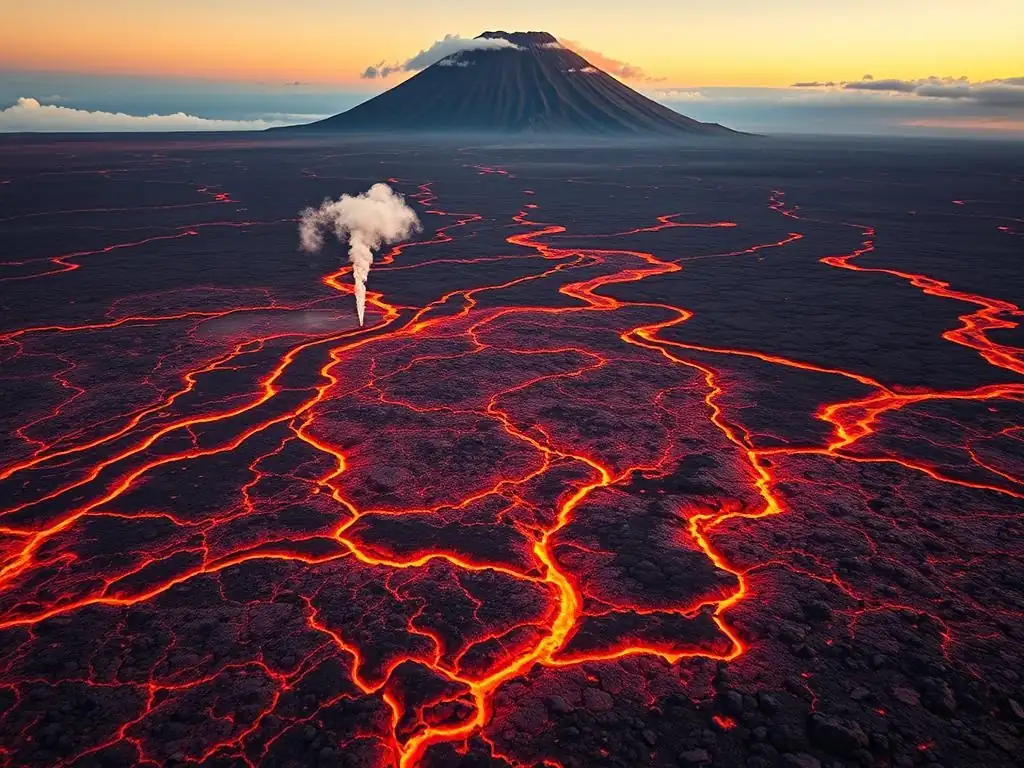
Pahoehoe lava is one of the two primary types of basaltic lava flows, distinguished by its smooth, undulating, and often ropy surface texture. The Hawaiian term "pahoehoe" (pronounced pah-hoy-hoy) aptly describes this lava, meaning "smooth, unbroken lava." Pahoehoe forms from very hot, fluid lava that flows easily and cools relatively slowly. As the molten rock flows, its surface skin cools and wrinkles, creating the characteristic smooth, billowy, or ropy appearance. Beneath this solidified skin, the lava continues to flow, stretching and folding the surface into intricate patterns.
Imagine pouring thick syrup onto a surface – as it spreads, it forms smooth, flowing shapes. Pahoehoe lava flows can advance as lobes or toes, often inflating with molten lava from beneath the surface. They can also form lava tubes, which are tunnels within the flow where lava is insulated and can travel for considerable distances.
Pahoehoe flows are generally hotter and more fluid than a'a lava flows, and they often transition into a'a lava as they cool and lose gas. The smooth texture of pahoehoe makes it relatively easy to walk on once cooled, although caution is still advised as the underlying rock can be unstable and sharp.
A'a Lava: Jagged and Blocky Surfaces
A'a lava (pronounced ah-ah) is the second main type of basaltic lava flow, characterized by its rough, jagged, and blocky surface. The Hawaiian term "a'a" refers to the sound one makes when walking barefoot across this type of lava – an exclamation of pain! A'a lava is typically cooler, more viscous, and degassed compared to pahoehoe lava. As a'a lava flows, the surface cools and solidifies, breaking into sharp, angular fragments or clinker due to the movement of the molten lava beneath. This creates a chaotic and rubbly surface that is extremely difficult to traverse.
Think of breaking up a pile of hardened clinkers or cinder blocks – this roughly approximates the texture of an a'a lava flow. A'a flows advance as a tumbling mass of lava fragments, often with a molten interior that is carried along by the movement of the clinker. They tend to be thicker and slower-moving than pahoehoe flows.
While pahoehoe can sometimes transform into a'a as it cools and loses gas, the reverse transition rarely occurs. The rugged and fragmented nature of a'a lava flows makes them significantly more hazardous to cross than pahoehoe flows, even after they have solidified.
Lava Channels and Tubes: Efficient Lava Transport
Lava channels and lava tubes are crucial features in effusive eruptions that facilitate the efficient transport of molten lava over long distances. Lava channels are open pathways formed by lava flows, often developing when lava becomes confined to a topographic low or carves its own channel through the landscape. The channelized flow helps to insulate the lava and maintain its temperature, allowing it to flow further than if it were spreading out over a broad area. These channels can be quite dynamic, widening, deepening, or changing course as the eruption progresses.
Lava tubes are even more efficient conduits for lava transport. They form when the surface of a lava flow cools and solidifies, creating a roof over the still-molten lava flowing beneath. This roof insulates the lava within the tube, minimizing heat loss and allowing it to remain hot and fluid for extended distances – sometimes tens of kilometers.
Lava tubes act like underground pipelines for molten rock, enabling lava to travel far from the vent and contributing to the formation of extensive lava fields. The efficient transport provided by lava channels and tubes is a key factor in the ability of effusive eruptions to reshape vast areas of the Earth's surface.
The Allure of Effusive Eruptions: Witnessing Earth's Power
Observing Lava Flows: A Spectacular Sight
Witnessing an effusive eruption, particularly a flowing lava flow, is an awe-inspiring and unforgettable experience. The sight of molten rock, glowing bright orange to incandescent yellow, moving across the landscape is a direct encounter with the raw power and heat of the Earth's interior. The visual spectacle is enhanced by the contrast between the fiery lava and the surrounding cooler, darker landscape.
At night, the glow of lava flows can illuminate the sky, creating a dramatic and ethereal scene. During daylight, the heat shimmer rising from the lava surface and the smoke plumes where lava interacts with vegetation or water add to the sensory experience.
Beyond the visual aspect, there are other sensory elements that contribute to the allure of effusive eruptions. The sounds of flowing lava, ranging from gentle hissing and crackling to louder roaring and gurgling as gases escape, create an auditory backdrop. The intense heat radiating from active lava flows can be felt even at a distance, a tangible reminder of the extreme temperatures involved.
The smell of volcanic gases, often sulfurous, is also part of the experience, although it is important to be mindful of potential health hazards associated with these gases. Observing lava flows is a unique opportunity to witness a fundamental geological process in action, a powerful reminder of the dynamic forces shaping our planet.
Volcanic Landscapes Shaped by Effusive Activity
Effusive volcanic eruptions are responsible for creating some of the most dramatic and extensive volcanic landscapes on Earth. Over time, repeated effusive eruptions build up shield volcanoes, like those in Hawaii and Iceland, which are characterized by their broad, gentle slopes and vast calderas. The long, fluid lava flows from effusive eruptions spread across the terrain, solidifying to form layers upon layers of basalt rock. These layers accumulate over millennia, constructing massive volcanic edifices. Lava flows also create distinctive features like lava tubes, lava channels, and pressure ridges, adding to the complexity and visual interest of volcanic landscapes.
Beyond shield volcanoes, effusive eruptions from fissure vents can create vast lava plains and flood basalts, covering immense areas with thick layers of basalt. The Columbia River Basalt Group in the northwestern United States and the Deccan Traps in India are examples of massive flood basalt provinces formed by extensive effusive eruptions millions of years ago. These eruptions reshaped entire continents and had significant impacts on global climate and ecosystems.
Even smaller-scale effusive eruptions contribute to the formation of unique volcanic landforms, adding to the diversity and beauty of our planet's surface. From the towering shield volcanoes to the expansive lava plains, effusive volcanism is a major sculptor of Earth's landscapes.
Kilauea, Hawaii: A Case Study of Effusive Eruptions
Kilauea volcano on the Big Island of Hawaii is one of the most active volcanoes in the world and serves as a prime example of effusive volcanism. For decades, Kilauea has been in a state of nearly continuous eruption, primarily characterized by effusive lava flows.
Its eruptions typically involve the outpouring of basaltic lava from vents on its summit caldera and along its rift zones, creating spectacular lava flows that have repeatedly reshaped the surrounding landscape and coastline. The Puʻuʻōʻō eruption, which began in 1983 and lasted for 35 years, was a particularly long-lived effusive event at Kilauea, producing vast lava fields and adding hundreds of acres of new land to the island.
The 2018 lower East Rift Zone eruption of Kilauea was another significant effusive event, although it also included some explosive phases. This eruption produced highly fluid lava flows that inundated residential areas, destroying hundreds of homes and altering the coastline dramatically. Despite the destructive impacts, the 2018 eruption also showcased the awe-inspiring power of effusive volcanism, with lava fountains reaching hundreds of feet high and rivers of lava flowing across the land.
Kilauea's ongoing activity provides volcanologists with invaluable opportunities to study effusive eruption processes and learn more about the behavior of basaltic volcanoes. It also serves as a constant reminder of the dynamic and ever-changing nature of volcanic landscapes.
The Dangers of Effusive Eruptions: Risks and Mitigation
Lava Flow Hazards: Destruction of Infrastructure and Land
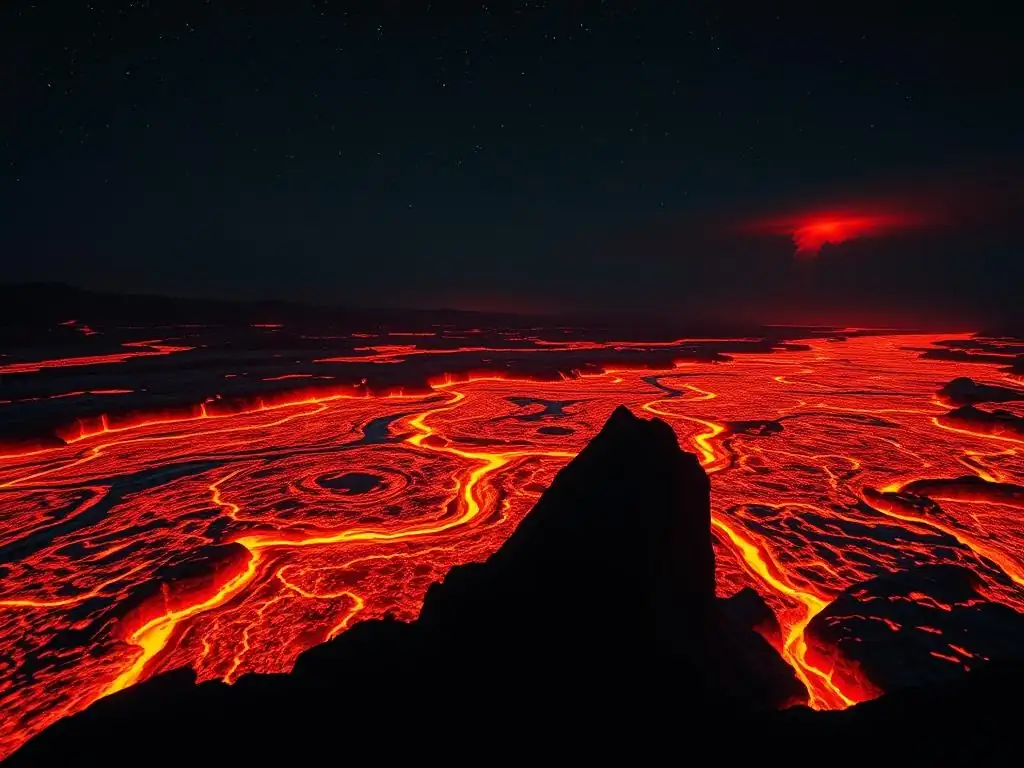
While effusive eruptions are generally less violent than explosive eruptions, they still pose significant hazards, primarily from lava flows. Lava flows, despite their relatively slow pace, are incredibly destructive due to their immense heat and mass. Temperatures of basaltic lava flows can reach over 1,000 degrees Celsius (1,832 degrees Fahrenheit), hot enough to ignite and incinerate vegetation, buildings, and infrastructure in their path.
Lava flows can bury roads, cut off access, and destroy essential services like power lines and water supplies. The sheer weight of solidified lava can also cause structural damage to buildings, even if they are not directly burned.
The path of lava flows is often dictated by topography, generally following downhill slopes and valleys. However, lava flows can also spread out over relatively flat terrain, inundating large areas. While it is generally not possible to stop a lava flow, efforts can be made to divert or redirect flows using barriers or channels in certain situations, although these methods are often challenging and not always successful.
The primary mitigation strategy for lava flow hazards is land-use planning and evacuation. Identifying areas at risk from lava flows and restricting development in these zones can minimize potential losses. Developing effective evacuation plans and early warning systems are crucial for protecting lives and property in areas threatened by effusive eruptions.
Volcanic Gases: Health Risks and Environmental Impact
Effusive eruptions, while characterized by lava flows, also release significant amounts of volcanic gases into the atmosphere. These gases, including sulfur dioxide (SO2), carbon dioxide (CO2), hydrogen sulfide (H2S), and hydrogen halides, can pose both health risks and environmental impacts. Sulfur dioxide is a particularly concerning gas, as it can react with moisture in the air to form sulfuric acid, contributing to acid rain and respiratory problems.
In high concentrations, SO2 can irritate the eyes, nose, throat, and lungs. Volcanic smog, or "vog," a hazy mixture of SO2 and other volcanic gases and particles, can also form downwind of erupting volcanoes, affecting air quality and visibility.
Carbon dioxide, while not directly toxic in the same way as SO2, is a greenhouse gas and can contribute to climate change over the long term. In localized areas near volcanic vents, CO2 can accumulate in low-lying areas, displacing oxygen and creating a suffocation hazard. Hydrogen sulfide has a characteristic rotten egg smell and is toxic in high concentrations.
Volcanic gases can also impact vegetation, causing damage to crops and forests. Monitoring volcanic gas emissions is an important aspect of volcanic hazard assessment, as changes in gas composition or flux can indicate changes in volcanic activity and potential eruption precursors. Public health advisories and protective measures, such as wearing respirators in areas affected by volcanic gases, are crucial during effusive eruptions.
Monitoring Effusive Eruptions: Early Warning Systems and Evacuation Strategies
Effective monitoring of volcanoes is essential for providing early warnings of effusive eruptions and mitigating their associated hazards. Volcano observatories utilize a suite of instruments to track various parameters that can indicate magma movement and potential eruption onset. Seismometers detect earthquakes, which often increase in frequency and intensity as magma rises beneath the surface.
Ground deformation instruments, such as GPS and tiltmeters, measure changes in the shape of the volcano, indicating magma accumulation and inflation. Gas sensors monitor the composition and flux of volcanic gases, providing insights into magma degassing processes. Thermal cameras can detect changes in surface temperatures, which may indicate lava accumulation or vent opening.
Data from these monitoring networks are analyzed in real-time to detect anomalies and assess the likelihood of an eruption. When monitoring data suggests an impending effusive eruption, volcano observatories issue alerts and warnings to civil defense agencies and the public. These warnings provide crucial time for communities at risk to prepare for evacuation and take protective measures.
Evacuation strategies are developed based on lava flow hazard assessments, considering potential flow paths and areas likely to be affected. Public education and outreach programs play a vital role in ensuring that communities living near volcanoes are aware of volcanic hazards, understand warning signals, and know what to do in the event of an eruption. Effective monitoring and early warning systems are critical components of reducing the risks associated with effusive volcanic eruptions.
Effusive Eruptions and Volcanic Tourism: A Delicate Balance
Responsible Volcano Tourism: Safety and Conservation
Volcanoes, particularly those exhibiting effusive eruptions, are increasingly popular tourist destinations, drawing visitors eager to witness the raw power and beauty of volcanic activity. However, volcano tourism requires a delicate balance between providing access for visitors and ensuring both their safety and the conservation of the volcanic environment.
Responsible volcano tourism prioritizes visitor safety through measures such as clearly marked trails, designated viewing areas located at safe distances from active vents and lava flows, and readily available information on volcanic hazards and safety guidelines. Tour operators and guides play a crucial role in educating visitors about volcanic risks and enforcing safety regulations.
Conservation is another key aspect of responsible volcano tourism. Volcanic landscapes are fragile ecosystems and geological treasures that need to be protected from damage and degradation. Responsible tourism practices include minimizing environmental impact by staying on marked trails, avoiding disturbance of volcanic features and vegetation, and properly disposing of waste. Sustainable tourism initiatives also aim to benefit local communities living near volcanoes, providing economic opportunities while promoting cultural preservation and environmental stewardship. Balancing the allure of witnessing volcanic activity with the imperative of safety and conservation is essential for ensuring the long-term viability of volcano tourism.
Volcanoes National Park, Hawaii: Experiencing Effusive Volcanism
Hawaii Volcanoes National Park on the Big Island of Hawaii offers unparalleled opportunities to experience effusive volcanism in a safe and managed environment. The park encompasses two active volcanoes, Kilauea and Mauna Loa, and provides visitors with various ways to witness volcanic activity and learn about volcanic processes. During periods of effusive eruptions, the park often offers designated viewing areas where visitors can safely observe lava flows from a distance. Ranger-led programs and interpretive exhibits provide educational information about volcanism, Hawaiian volcanic landscapes, and the cultural significance of volcanoes in Hawaiian traditions.
The park has a network of trails that traverse volcanic landscapes, allowing visitors to explore solidified lava flows, lava tubes, and volcanic craters. However, access to certain areas may be restricted during times of heightened volcanic activity for safety reasons. Hawaii Volcanoes National Park exemplifies responsible volcano tourism, prioritizing visitor safety and environmental protection while providing access to the wonders of effusive volcanism. The park serves as a model for how to manage volcanic tourism in a sustainable and educational manner, allowing visitors to appreciate the allure and understand the dynamics of effusive eruptions.
Effusive Eruptions: A Continuous Shaping of Our Planet
The Long-Term Impact of Effusive Volcanism on Landscapes
Effusive volcanism is a fundamental geological process that has profoundly shaped the Earth's surface over billions of years. The long-term impact of effusive eruptions is evident in the vast volcanic landscapes that cover significant portions of our planet, both on land and beneath the oceans. Shield volcanoes, built by countless effusive eruptions, are among the largest mountains on Earth. Lava plains and flood basalt provinces, formed by massive fissure eruptions, have reshaped continents and altered drainage patterns. The continuous outpouring of lava from effusive eruptions adds new layers to the Earth's crust, constantly renewing and modifying the landscape.
Beyond the visible landforms, effusive volcanism also plays a crucial role in the cycling of elements and the evolution of the Earth's atmosphere and oceans. Volcanic gases released during effusive eruptions have contributed to the composition of the atmosphere and influenced climate over geological timescales. The weathering of volcanic rocks, particularly basalt, releases essential minerals and nutrients into soils, supporting ecosystems and influencing biogeochemical cycles. Effusive volcanism is not just a destructive force; it is a constructive process that has been integral to the Earth's development and continues to shape our planet today.
Effusive Eruptions and the Creation of New Land
One of the most remarkable aspects of effusive volcanism is its ability to create new land. When lava flows from effusive eruptions reach the coastline and flow into the ocean, they solidify and add to the landmass.
This process of land creation is particularly evident in volcanic island chains like Hawaii, where ongoing effusive eruptions have continuously expanded the islands over millions of years. The Big Island of Hawaii is the youngest and most volcanically active island in the Hawaiian chain, and it is still growing as Kilauea volcano adds new land to its southeastern coast through persistent lava flows.
The creation of new land by effusive eruptions is a dramatic demonstration of the Earth's dynamic nature. It highlights the constructive power of volcanism, offsetting the forces of erosion and land loss. In some areas, lava flows have extended coastlines by kilometers, creating new habitats for marine and terrestrial life. This process of land creation is not only geologically significant but also has implications for ecosystems, human settlement, and resource availability in volcanic regions. Effusive eruptions, therefore, are not just events of destruction; they are also agents of creation, continuously reshaping and renewing the Earth's surface.
Further Exploration of Effusive Volcanic Processes on the USGS Website
For those seeking to delve deeper into the fascinating world of effusive volcanic eruptions and learn more about ongoing research and monitoring efforts, the United States Geological Survey (USGS) website ( www.usgs.gov ) is an invaluable resource. The USGS Volcano Hazards Program section provides a wealth of information on all aspects of volcanism, including detailed explanations of effusive eruption processes, real-time monitoring data from volcano observatories, and educational materials for the public. The website features articles, reports, maps, and multimedia resources that cover various topics related to effusive eruptions, from magma generation and lava flow dynamics to volcanic hazards and mitigation strategies.
The USGS website also offers access to data from past and present volcanic eruptions, including detailed accounts of effusive events at volcanoes like Kilauea and Mauna Loa in Hawaii. Visitors can explore interactive maps showing lava flow paths, track current volcanic activity through webcams and monitoring data, and learn about the science behind volcanic phenomena. For anyone interested in expanding their knowledge of effusive volcanic eruptions and staying informed about the latest volcanic news and research, the USGS website is an essential and authoritative source of information.
Frequently Asked Questions
What exactly is an effusive volcanic eruption?
An effusive eruption is characterized by the relatively slow and steady outflow of lava onto the Earth's surface. Unlike explosive eruptions, they involve less violent gas expulsion and are primarily defined by lava flows.
How do effusive eruptions differ from explosive eruptions?
Effusive eruptions primarily involve the quiet outflow of lava, while explosive eruptions involve the violent ejection of ash, gas, and rock. The difference is largely due to the viscosity and gas content of the magma.
What type of lava is typically associated with effusive eruptions?
Effusive eruptions are commonly associated with basaltic lava, which is relatively low in viscosity and allows for easier flow. This contrasts with the more viscous lavas found in explosive eruptions.
Are effusive eruptions less dangerous than explosive eruptions?
While generally less immediately dangerous than explosive eruptions, effusive eruptions still pose significant risks. Lava flows can destroy property and alter landscapes, and gases released can be harmful.
Where are effusive eruptions most likely to occur?
Effusive eruptions are common at shield volcanoes and rift zones, where the magma is more likely to be basaltic and less prone to explosive activity. Examples include Hawaii and Iceland.
Final Reflection: Embracing the Flow of Change
The exploration of effusive volcanic eruptions, as detailed in this article, highlights more than just geological processes; it underscores the dynamic and ever-changing nature of our planet. Understanding these molten rivers, their allure, and their inherent dangers is not merely academic; it's crucial for communities living near active volcanoes and for comprehending the fundamental forces shaping our world.
The continuous flow of lava, both mesmerizing and destructive, serves as a potent reminder of the Earth's raw power. This understanding fosters a deeper respect for the natural world and the delicate balance we must strive to maintain. As the Roman philosopher Seneca wisely stated: Every new beginning comes from some other beginning's end.
This quote encapsulates the cyclical nature of volcanic activity, where destruction paves the way for new landscapes and ecosystems.
Let us, therefore, carry this understanding forward, not just as knowledge gained, but as a call to action. Consider the lessons learned from the study of effusive eruptions: the importance of preparedness, the power of observation, and the resilience of life. How can you apply these principles to navigate the "molten rivers" in your own life – the challenges, the changes, and the opportunities that flow your way? Embrace the flow, learn from the heat, and build upon the fertile ground that remains.
Okay, I'm ready to craft a Call to Action for the end of that article. Here's my attempt:
Unearth Your Inner Volcanologist!
Thanks for diving into the fascinating world of effusive eruptions and discovering the secrets of Earth's molten rivers! Now that you've explored the allure and danger, it's time to take action and deepen your connection with volcanology.
Here are a few ways to further your journey:
- Commit to researching a specific effusive eruption from history (e.g., the 1783 Laki eruption in Iceland) and present your findings to a friend or family member.
- Share this article with another volcano enthusiast! Help spread the knowledge and spark their curiosity.
- Visit the "Volcano Explorers" forum on volcanoexplorers.org and share your thoughts about your favorite volcano and what makes it captivating.
What's one surprising thing you learned about effusive eruptions that will change the way you view volcanic landscapes forever?