
When Explosive Eruptions Become Effusive: A Change in Volcanic Behavior?

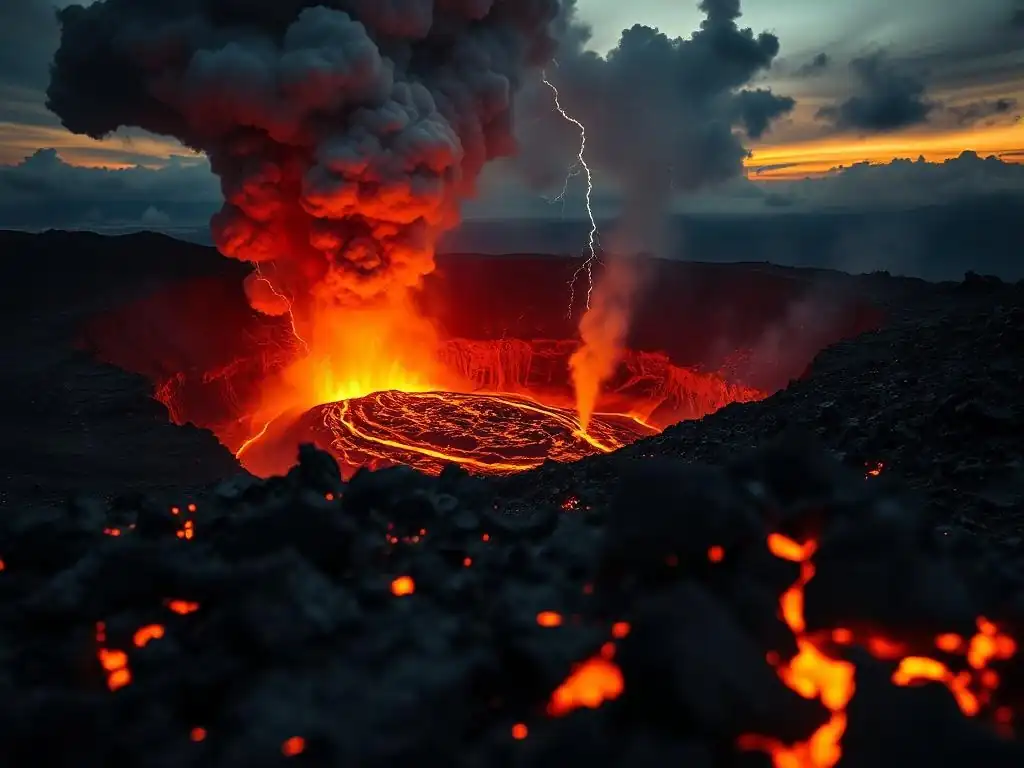
Welcome to Volcano Explorers, where we unravel the Earth's fiery secrets! Have you ever wondered why some volcanoes explode with devastating force while others gently weep lava? In this article, we delve into Understanding Volcanic Eruption Types and explore the fascinating shift from explosive to effusive behavior. Prepare to journey deep into the science behind these dramatic transformations and discover what triggers these changes. Are you ready to uncover the mysteries beneath our feet?
- Introduction: Decoding Shifts in Volcanic Activity
- Understanding Volcanic Eruption Types: Explosive vs. Effusive
- The Transition: From Explosive to Effusive
- Monitoring and Predicting Changes in Volcanic Activity
- The Impact of Changing Eruption Styles
- Conclusion: The Dynamic Nature of Volcanic Eruptions
-
Frequently Asked Questions
- What are the main differences between explosive and effusive volcanic eruptions?
- What factors can cause a volcano to shift from explosive to effusive behavior?
- How do volcanologists monitor volcanoes to predict changes in eruption style?
- What are the potential hazards associated with both explosive and effusive eruptions?
- Why is understanding eruption types important for communities living near volcanoes?
- Final Reflection: Unveiling the Shifting Faces of Fire
- Unveil the Secrets Volcanoes Hold!
Introduction: Decoding Shifts in Volcanic Activity
Volcanoes, Earth's geological powerhouses, are renowned for their dramatic displays of eruptive activity. While often perceived as consistently explosive or effusive, volcanoes are far more dynamic. A fascinating aspect of volcanology is the potential for a volcano to shift its eruptive style, transitioning from violent, explosive events to gentler, lava-flowing effusive eruptions, or even vice versa.
Understanding these transitions is crucial not only for deepening our knowledge of Earth's internal processes but also for improving volcanic hazard assessment and mitigation strategies in volcanically active regions. This article will delve into the complexities of volcanic eruptions, exploring the factors that govern whether an eruption is explosive or effusive, and examining real-world cases where volcanoes have exhibited significant changes in their eruptive behavior. By understanding volcanic eruption types and the potential for shifts, we can better appreciate the dynamic nature of these geological phenomena and their impact on our planet.
Understanding Volcanic Eruption Types: Explosive vs. Effusive
Volcanic eruptions are broadly categorized into two main types: explosive and effusive. These classifications are based on the style of eruption, which is primarily determined by the magma's properties, particularly its viscosity and gas content. Understanding volcanic eruption types is fundamental to comprehending volcanic activity. Explosive eruptions are characterized by the violent ejection of fragmented magma, volcanic ash, and gases into the atmosphere.
Effusive eruptions, on the other hand, are marked by the outpouring of lava flows onto the Earth's surface. These two types represent extremes in volcanic behavior, each posing distinct hazards and shaping landscapes in different ways. The transition between these styles is a complex process influenced by a multitude of factors, making the study of volcanic dynamics a constantly evolving field.
Explosive Eruptions: Power and Pyroclastics
Explosive eruptions are driven by the rapid decompression of gas within viscous magma. Imagine shaking a bottle of soda and then quickly opening it – the sudden release of pressure causes a violent expulsion of liquid and gas. Similarly, in explosive volcanic eruptions, high-viscosity magmas, often rich in silica (like rhyolite or andesite), trap dissolved gases under immense pressure.
As magma ascends towards the surface, the pressure decreases, and these gases expand rapidly, fragmenting the magma into pyroclasts – hot fragments of rock and volcanic glass. These eruptions can range in scale from relatively small Vulcanian explosions to colossal Plinian eruptions, such as the eruption of Mount Vesuvius in 79 AD, which buried Pompeii and Herculaneum under meters of ash and pumice.
A Plinian eruption column can reach heights of tens of kilometers into the stratosphere, injecting vast quantities of ash and gas into the atmosphere, impacting global climate and air travel. Pyroclastic flows, superheated avalanches of gas and rock fragments traveling at hurricane speeds, are among the most hazardous volcanic phenomena associated with explosive eruptions, capable of devastating areas tens of kilometers from the volcano.
The force of explosive eruptions is measured using the Volcanic Explosivity Index (VEI), a scale ranging from 0 to 8. Eruptions with a VEI of 4 or higher are considered explosive. For example, the 1980 eruption of Mount St. Helens in Washington State, USA, was a VEI 5 eruption.
This eruption dramatically altered the landscape, triggering a massive landslide and lateral blast that flattened forests for miles. The eruption column reached over 24 kilometers (15 miles) high, and pyroclastic flows and surges devastated the surrounding area. Another example is the 1815 eruption of Mount Tambora in Indonesia, a VEI 7 event.
This eruption, the largest in recorded history, ejected an estimated 160 cubic kilometers of material, causing a "year without a summer" in 1816 due to the global veil of volcanic ash and aerosols, leading to widespread crop failures and famine. These examples highlight the immense power and far-reaching consequences of explosive volcanic eruptions, driven by gas-rich, viscous magma.
Effusive Eruptions: Lava Flows and Gentle Activity
In contrast to the dramatic violence of explosive eruptions, effusive eruptions are characterized by the relatively gentle outpouring of lava. These eruptions are typically associated with less viscous, basaltic magmas, which have lower silica content and allow gases to escape more readily. Effusive eruptions are often characterized by lava flows, which can range from slow-moving, thick flows like ʻaʻā (blocky lava) to faster-moving, smoother flows called pāhoehoe (ropy lava).
The Hawaiian Islands are prime examples of effusive volcanism, where shield volcanoes like Kilauea and Mauna Loa are built up over time by countless lava flows. These eruptions, while less immediately dangerous than explosive ones, can still cause significant property damage and landscape alteration as lava flows inundate areas, destroying infrastructure and reshaping the terrain.
Effusive eruptions can last for days, weeks, months, or even years. The ongoing eruption of Kilauea volcano in Hawaii, particularly the Puʻuʻōʻō eruption which lasted from 1983 to 2018, is a testament to the prolonged nature of effusive activity.
During this period, Kilauea continuously erupted basaltic lava, adding new land to the island of Hawaii and periodically inundating communities. Another example is the eruption of Fagradalsfjall volcano in Iceland in 2021, which drew global attention due to its accessibility and spectacular lava fountains and flows.
This eruption, though relatively small in volume compared to Kilauea's long-term output, showcased the typical characteristics of an effusive eruption: lava flows advancing across the landscape, building up lava fields, and releasing volcanic gases into the atmosphere, but without the violent explosions and widespread ash dispersal associated with explosive eruptions. Understanding effusive eruptions is vital for communities living near volcanoes that primarily exhibit this type of activity, as the hazards are more related to lava inundation and gas emissions than to explosive blasts.
The Transition: From Explosive to Effusive
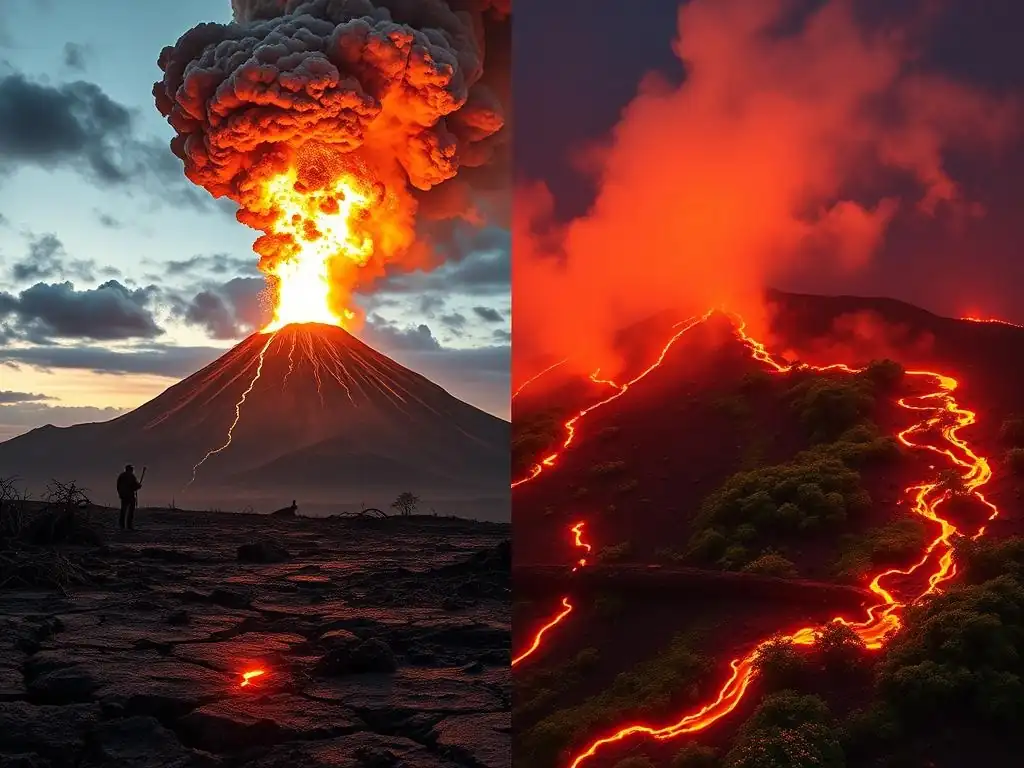
The fascinating aspect of volcanic behavior lies in the potential for shifts in eruption style. A volcano that has historically been known for explosive eruptions can, under certain circumstances, transition to a more effusive style, and vice versa, although the latter is less commonly observed in short timescales relevant to human observation. This transition is not abrupt but rather a gradual process driven by changes in the magma system beneath the volcano.
Understanding these shifts is a key area of research in volcanology, as it has significant implications for hazard assessment and forecasting. The conditions that dictate whether a volcano erupts explosively or effusively are complex and interconnected, involving changes in magma composition, gas content, ascent rate, and the surrounding geological environment.
Factors Influencing the Shift in Eruption Style
Several key factors can influence a volcano's shift from explosive to effusive behavior. One primary factor is the magma composition. A decrease in the silica content of the magma over time can lead to a reduction in viscosity. Less viscous magma allows gases to escape more easily, reducing the pressure buildup that drives explosive eruptions.
Conversely, an increase in silica content can lead to more viscous magma, trapping gases and potentially shifting towards explosive behavior, although this is less likely to be a short-term transition. Another critical factor is the degassing efficiency of the magma system. If the magma chamber becomes more open or pathways for gas release develop, even relatively viscous magma might erupt effusively as the gas pressure is relieved before fragmentation can occur violently. Changes in the supply rate of magma from deeper sources can also play a role.
A decrease in magma supply might lead to a more degassed magma reservoir, potentially favoring effusive eruptions. Furthermore, tectonic stresses and changes in the surrounding crustal environment can alter conduit pathways and magma ascent rates, influencing the overall eruption style. These factors are interconnected and can operate over various timescales, making the prediction of eruption style transitions a complex challenge.
Case Studies: Volcanic Transformations in Action
Volcanoes around the world have exhibited shifts in eruption styles, providing valuable insights into the processes driving these changes. Let's examine two notable case studies: Mount St. Helens in the USA and Piton de la Fournaise on Réunion Island.
- Mount St. Helens, USA
- Initial Explosive Phase: The 1980 eruption of Mount St. Helens began with a massive explosive phase, triggered by a large earthquake-induced landslide that depressurized the magma system. This led to a catastrophic lateral blast and a vertical Plinian eruption, ejecting vast quantities of ash and pumice. The initial eruption was highly explosive, devastating the surrounding landscape and causing significant loss of life.
- Observed Transition to Effusive Behavior: Following the initial explosive eruption, Mount St. Helens entered a period of dome-building effusive activity. Starting in late 1980, a lava dome began to grow within the newly formed crater. This dome growth continued intermittently for several years, characterized by the slow extrusion of viscous lava, a stark contrast to the earlier explosive phase. This effusive activity built a substantial lava dome within the crater, demonstrating a clear transition in eruptive style.
- Scientific Explanations for the Change: The shift from explosive to effusive behavior at Mount St. Helens is attributed to the degassing of the remaining magma in the conduit system after the initial violent eruption. The explosive phase effectively removed a significant portion of the gas-rich magma. Subsequent magma batches ascending into the conduit were likely relatively degassed, or were able to degas more effectively at shallower depths, leading to the effusive dome-building phase. The change in stress regime after the landslide might also have influenced magma ascent and degassing pathways.
- Piton de la Fournaise, Réunion Island
- Initial Explosive Phase: While Piton de la Fournaise is primarily known for its frequent effusive eruptions, historical records and geological evidence indicate past explosive phases. Early eruptions, particularly those associated with the formation of the Enclos Fouqué caldera, likely involved significant explosive activity, producing pyroclastic deposits and caldera collapse features. While less frequent in recent centuries, explosive eruptions have occurred at Piton de la Fournaise, although they are less well-documented than its effusive events.
- Observed Transition to Effusive Behavior: Over the past few centuries, Piton de la Fournaise has predominantly exhibited effusive eruptions. These eruptions are characterized by lava flows emanating from summit craters and flank fissures, building up the shield volcano. The vast majority of eruptions in the 20th and 21st centuries have been effusive, with frequent lava flows and lava fountains, but lacking the large-scale explosive blasts seen at volcanoes like Mount St. Helens. The volcano has become renowned for its predictable and relatively accessible effusive eruptions.
- Scientific Explanations for the Change: The shift towards predominantly effusive behavior at Piton de la Fournaise is likely related to the basaltic composition of its magma, which is inherently less viscous and allows for easier gas escape. The volcano's tectonic setting, associated with a hotspot and rift zone, promotes efficient magma supply and relatively open conduit systems. Over time, the volcano may have evolved towards a system where degassing is more efficient, favoring effusive eruptions. However, it's important to note that the potential for future explosive eruptions at Piton de la Fournaise cannot be entirely ruled out, especially in the context of caldera-forming events.
Monitoring and Predicting Changes in Volcanic Activity
Monitoring volcanoes is crucial for detecting early warning signs of potential eruptions and for understanding changes in volcanic activity, including shifts in eruption style. A comprehensive suite of monitoring techniques is employed to track various parameters related to volcanic unrest. However, predicting eruption style transitions remains a significant challenge in volcanology due to the complex interplay of factors controlling volcanic behavior.
Volcanic Monitoring Techniques: Detecting Early Warning Signs
Volcanologists utilize a range of sophisticated techniques to monitor volcanoes. Seismic monitoring is a cornerstone, as changes in earthquake activity often precede eruptions. Increased frequency, intensity, or changes in the type of earthquakes (e.g., from tectonic to volcanic tremors) can indicate magma movement and pressurization within the volcanic system.
Ground deformation monitoring using techniques like GPS and InSAR (Interferometric Synthetic Aperture Radar) detects subtle changes in the shape of the volcano, which can be caused by magma accumulation or deflation. Gas monitoring involves measuring the composition and flux of volcanic gases, such as sulfur dioxide (SO2), carbon dioxide (CO2), and water vapor. Changes in gas emission rates or ratios can signal changes in magma degassing and eruption potential.
Thermal monitoring using satellite-based infrared sensors and ground-based thermal cameras detects changes in surface temperature, which can indicate increased volcanic activity or lava effusion. Hydrological monitoring measures changes in groundwater levels and hydrothermal activity, which can be affected by magma intrusion and volcanic unrest. Real-time data from these monitoring networks are crucial for volcano observatories to assess volcanic activity levels and issue timely warnings.
Challenges in Predicting Eruption Style Transitions
Despite advancements in volcanic monitoring, predicting eruption style transitions remains a major challenge. The subsurface processes governing eruption style are complex and not fully understood. Magma chamber dynamics, including magma mixing, crystallization, and degassing processes, are difficult to directly observe and model.
Conduit geometry and permeability, which influence magma ascent and degassing, are also poorly constrained. External factors, such as tectonic stresses and interactions with hydrothermal systems, can also play a role and are challenging to predict. Furthermore, eruption style transitions can occur rapidly, sometimes within hours or days, making short-term forecasting difficult.
Current monitoring techniques primarily detect pre-eruptive unrest, but they do not always provide clear signals about whether an eruption will be explosive or effusive, or if a transition will occur. Developing better models of magma ascent, degassing, and fragmentation, and integrating diverse monitoring data streams, are crucial steps towards improving our ability to predict eruption style transitions and enhance volcanic hazard assessments.
The Impact of Changing Eruption Styles
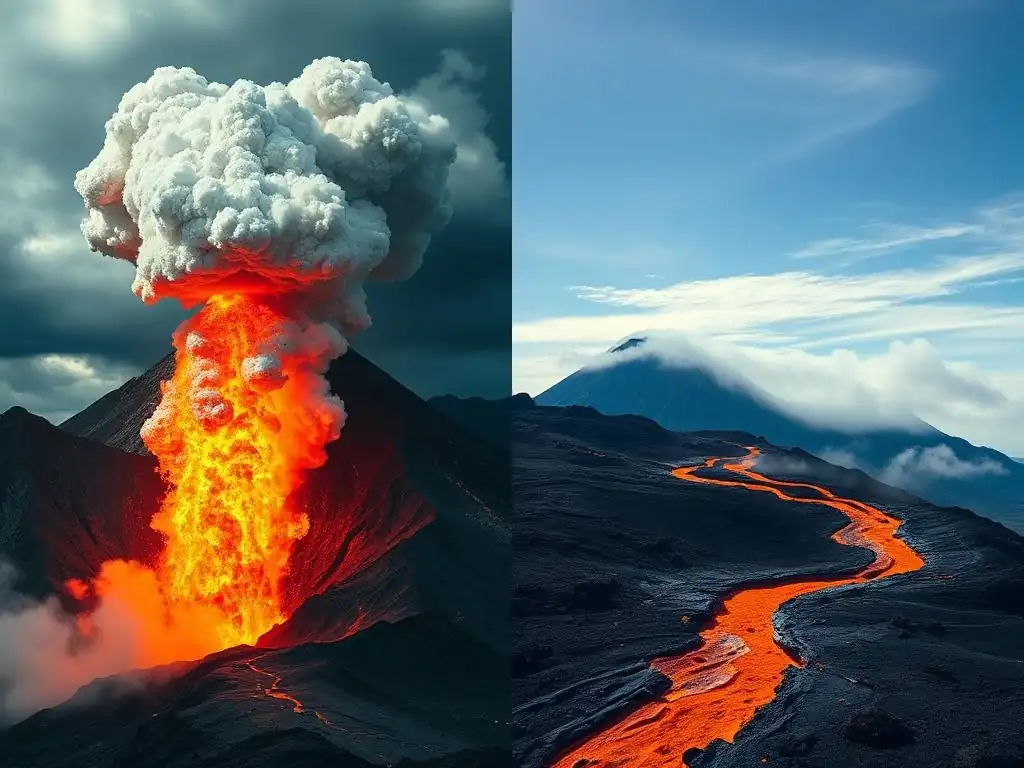
Changes in volcanic eruption styles have significant impacts, both geologically and societally. From reshaping landscapes over geological timescales to posing evolving hazards to human populations, understanding these impacts is vital for managing volcanic risks and appreciating the dynamic nature of our planet.
Geological Impacts: Landscape Evolution
Volcanic eruptions, whether explosive or effusive, are fundamental drivers of landscape evolution. Explosive eruptions are particularly effective at rapidly altering landscapes. Caldera formation, for instance, is a dramatic geological impact of large explosive eruptions. The collapse of the magma chamber roof following a massive eruption creates vast depressions, like the caldera at Yellowstone National Park or Crater Lake in Oregon. Pyroclastic flows and surges can deposit thick layers of ash and pumice, burying existing landscapes and creating new volcanic plains. Tephra fall, the dispersal of volcanic ash over wide areas, can blanket landscapes, impacting soil fertility and drainage patterns.
Effusive eruptions, while less immediately destructive, also play a crucial role in shaping landscapes over time. Lava flows construct volcanic edifices, building shield volcanoes like those in Hawaii and Iceland. Lava flows can also fill valleys, create new coastlines, and alter river courses. The continuous accumulation of lava flows over millennia builds up vast volcanic terrains.
When a volcano transitions from predominantly explosive to effusive behavior, the geological impacts shift accordingly. A landscape initially shaped by explosive deposits and caldera formation may be subsequently modified by lava flows filling the caldera or building new volcanic cones within it. Conversely, a volcano transitioning from effusive to explosive could dramatically alter a landscape previously dominated by lava flow features, burying them under pyroclastic deposits and reshaping the topography through explosive cratering and caldera collapse.
Societal Impacts: Risk Assessment and Mitigation
Changes in volcanic eruption styles have direct and significant societal impacts, particularly in volcanically active regions. Risk assessment must be dynamic and adaptable to account for potential shifts in eruption behavior. Communities living near volcanoes need to be aware that a volcano historically known for effusive eruptions could potentially transition to explosive activity, and vice versa. Hazard maps and evacuation plans should be regularly reviewed and updated to reflect the current understanding of a volcano's potential eruption styles and the potential for transitions.
Mitigation strategies also need to be tailored to the specific hazards associated with different eruption styles. For explosive eruptions, mitigation efforts focus on preparing for ashfall, pyroclastic flows, and lahars (volcanic mudflows), which often involves evacuation planning, infrastructure reinforcement, and public awareness campaigns.
For effusive eruptions, mitigation strategies may focus on managing lava flow paths, protecting critical infrastructure, and dealing with volcanic gas hazards. The transition from one eruption style to another can necessitate a shift in mitigation priorities and emergency response plans.
For example, if a volcano historically known for effusive eruptions shows signs of transitioning to explosive behavior, communities need to prepare for the more widespread and rapid impacts of explosive hazards, requiring adjustments to monitoring systems, warning protocols, and emergency preparedness measures. Public education plays a crucial role in ensuring communities are informed about the potential for changing eruption styles and are prepared to respond effectively to evolving volcanic hazards.
Conclusion: The Dynamic Nature of Volcanic Eruptions
Volcanic eruptions are not static events but rather dynamic processes that can change over time. Understanding volcanic eruption types, especially the potential for transitions between explosive and effusive styles, is fundamental to volcanology and volcanic hazard management. These transitions are governed by a complex interplay of factors related to magma properties, degassing processes, and the surrounding geological environment. Case studies like Mount St. Helens and Piton de la Fournaise illustrate real-world examples of volcanoes exhibiting significant shifts in eruption behavior.
Continued advancements in volcanic monitoring techniques are crucial for detecting early warning signs of potential eruptions and for improving our understanding of the processes driving eruption style transitions. However, predicting these transitions remains a significant scientific challenge. The impacts of changing eruption styles are far-reaching, shaping landscapes and influencing the lives of communities living near volcanoes.
By recognizing the dynamic nature of volcanic eruptions and continuously refining our understanding of these powerful geological phenomena, we can better mitigate volcanic risks and appreciate the ever-changing face of our planet. Understanding volcanic eruption types and their potential shifts is not just an academic pursuit; it is a vital endeavor for ensuring the safety and resilience of communities in volcanically active regions around the world.
Frequently Asked Questions
What are the main differences between explosive and effusive volcanic eruptions?
Explosive eruptions are characterized by violent ejection of ash and gas, while effusive eruptions involve the slow and steady flow of lava. The key difference lies in the magma's gas content and viscosity.
What factors can cause a volcano to shift from explosive to effusive behavior?
Changes in magma composition (becoming less silica-rich), reduced gas pressure, and increased magma temperature can all lead to a shift from explosive to effusive eruption styles. These factors affect the magma's ability to hold gas.
How do volcanologists monitor volcanoes to predict changes in eruption style?
Volcanologists use various tools, including seismometers to detect ground movement, gas sensors to measure emissions, and satellite imagery to monitor surface deformation. These methods help track changes in magma activity beneath the volcano.
What are the potential hazards associated with both explosive and effusive eruptions?
Explosive eruptions pose threats like pyroclastic flows, ashfall, and volcanic bombs. Effusive eruptions can cause lava flows that destroy property and release harmful gases into the atmosphere.
Why is understanding eruption types important for communities living near volcanoes?
Knowing the potential eruption style helps communities prepare for specific hazards. This knowledge allows for effective evacuation planning, construction of protective infrastructure, and informed risk assessment to minimize potential damage.
Final Reflection: Unveiling the Shifting Faces of Fire
The journey through understanding volcanic eruption types, as we've explored, is not merely an academic exercise; it's a vital key to safeguarding communities and predicting the unpredictable. The dynamic shift from explosive to effusive eruptions, as we've discussed, highlights the Earth's volatile nature and the constant need for vigilance and advanced monitoring. This understanding is more crucial than ever in a world increasingly vulnerable to the impacts of climate change and geological instability.
The study of these volcanic shifts profoundly impacts how we perceive our relationship with the natural world. It reminds us that even seemingly stable landscapes are subject to dramatic transformations, and that our understanding must evolve alongside the planet itself. This ongoing learning process is essential for effective disaster preparedness and mitigation. The only constant is change,
as Heraclitus famously stated, and this holds especially true when considering the ever-evolving behavior of volcanoes.
Now, as you reflect on the diverse eruption types and the potential for dramatic shifts in volcanic behavior, consider your own role in fostering a more informed and resilient society. How can you contribute to spreading awareness, supporting scientific research, or advocating for better disaster preparedness in your community? The Earth speaks to us through its volcanoes; are you listening? Let the lessons learned here inspire you to become an active participant in understanding and mitigating the risks posed by these powerful forces of nature.
Unveil the Secrets Volcanoes Hold!
Thanks for exploring the fascinating world of volcanic transitions with us! We hope you've gained a new appreciation for the dynamic nature of volcanoes. Let's build on this knowledge and delve even deeper.
Here are a few ways to continue your exploration:
- Document and share your observations: If you live near a volcano, report any unusual changes in its activity—increased steam, unusual odors, or ground deformation—to Volcano Explorers at volcanoexplorers.org. Your contributions are invaluable!
- Explore our archives: Dive into our extensive database of past eruptions and volcanic activity to uncover patterns and learn from history.
- Join the conversation: Share this article with fellow volcano enthusiasts or leave your thoughts in the comments below. Let's discuss!
What subtle volcanic clues might help us predict the next change in eruption style? Share your insights!