
The Eruption That Stopped Time: Roman Perspectives on the Suddenness of Vesuvius' Fury

Welcome to Volcano Explorers!
Imagine a world frozen in time, captured in ash and pumice... Delve into the heart of ancient Rome as we uncover the chilling Roman Views on Vesuvius Eruption. What did the citizens of Pompeii truly experience in those final, terrifying moments? Prepare to journey back to 79 AD and explore the sudden, devastating fury of Vesuvius, a cataclysm that continues to fascinate and horrify us centuries later. Intrigued? Scroll down to uncover the echoes of the past.
- Introduction: Unveiling Roman Views on Vesuvius' Catastrophic Eruption
- The Fateful Day: Roman Narratives of the 79 AD Vesuvius Eruption
- Pompeii and Herculaneum: Roman Cities Frozen in Time by Vesuvius
- Beyond Pliny: Other Roman Voices on the Vesuvius Eruption
- The Aftermath: Roman Society's Response to the Vesuvius Disaster
- Conclusion: Reflecting on Roman Views on the Vesuvius Eruption's Suddenness
-
Frequently Asked Questions
- What was the primary Roman perspective on the suddenness of Vesuvius' eruption?
- How did the eruption of Vesuvius impact Roman society and culture?
- What sources do we have to understand Roman views on the Vesuvius eruption?
- Did the Romans have any understanding of the science behind volcanic eruptions?
- What safety measures did the Romans take, or fail to take, during and after the eruption?
- Final Reflection: Echoes of Pompeii's Sudden End
- Unearth Your Inner Explorer: Connect with Vesuvius' Legacy!
Introduction: Unveiling Roman Views on Vesuvius' Catastrophic Eruption
Setting the Stage: Vesuvius Before the Disaster Through Roman Eyes
Before the cataclysmic eruption of 79 AD, Mount Vesuvius was not perceived as a menacing volcano by the Roman inhabitants of Campania. For generations, it had been a verdant mountain, its slopes covered in vineyards and settlements, a picturesque backdrop to the bustling Roman cities of Pompeii and Herculaneum. Roman writers like Strabo, in his Geographica, described Vesuvius as having a barren, ash-covered summit, hinting at past volcanic activity, but this was largely considered a phenomenon of a distant past, unconnected to the present tranquility.
The land around Vesuvius was fertile and prosperous, known for its rich agricultural output, particularly its wine and olive oil, contributing significantly to the Roman economy. This perceived dormancy fostered a sense of security and normalcy among the Roman populace, making the sudden and violent eruption all the more shocking and incomprehensible.
The Roman perception of Vesuvius was deeply intertwined with their understanding of the natural world, which was often imbued with mythology and religious interpretations. While they possessed a degree of empirical knowledge, they lacked the modern scientific framework to understand volcanism as a geological process. To the Romans living in the shadow of Vesuvius, the mountain was likely seen as a benign feature of the landscape, perhaps even sacred, given the fertile lands it supported.
Their daily lives revolved around agriculture, trade, and civic activities, with little to no anticipation of the volcanic fury that lay dormant beneath their feet. This pre-eruption complacency highlights the dramatic contrast with the devastation that ensued, shaping the Roman narratives of the event as a sudden and unforeseen catastrophe.
The Significance of Understanding Roman Accounts
Understanding Roman accounts of the Vesuvius eruption is crucial for several reasons. Firstly, they offer invaluable first-hand perspectives on a natural disaster that profoundly impacted Roman society and culture. These accounts, primarily from Pliny the Younger, provide vivid descriptions of the eruption's progression, the terror and reactions of the people, and the immediate aftermath.
Unlike purely archaeological records, Roman writings inject a human element into the narrative, allowing us to understand not just the physical devastation but also the emotional and psychological impact on those who experienced it. These personal narratives are essential for reconstructing the events of 79 AD and appreciating the human cost of the eruption.
Secondly, Roman accounts shed light on the historical context and societal implications of the disaster. They reveal how Romans interpreted the eruption within their existing worldview, which included elements of mythology, philosophy, and nascent scientific observation. Analyzing their descriptions helps us understand the limitations of Roman scientific knowledge regarding volcanology, and how they grappled with an event that defied their understanding of the natural order.
Furthermore, these accounts illuminate the Roman response to the crisis, their efforts at rescue, recovery, and the long-term consequences for the region. By studying these historical narratives, we gain a deeper appreciation for the eruption's significance as a turning point in the lives of individuals and the history of Campania.
The Fateful Day: Roman Narratives of the 79 AD Vesuvius Eruption
Pliny the Younger's Account: A First-Hand Witness to Vesuvius' Power
The most famous and detailed Roman account of the 79 AD Vesuvius eruption comes from Pliny the Younger, who witnessed the event from Misenum, across the Bay of Naples. His letters to the historian Tacitus provide an invaluable first-hand narrative, capturing the progression of the eruption and its impact.
Pliny’s uncle, Pliny the Elder, a renowned naturalist and commander of the Roman fleet at Misenum, was also a key figure in this account. Driven by scientific curiosity and a desire to help those closer to the volcano, Pliny the Elder sailed towards Vesuvius, ultimately losing his life in the process, a testament to the unexpected danger and scale of the eruption.
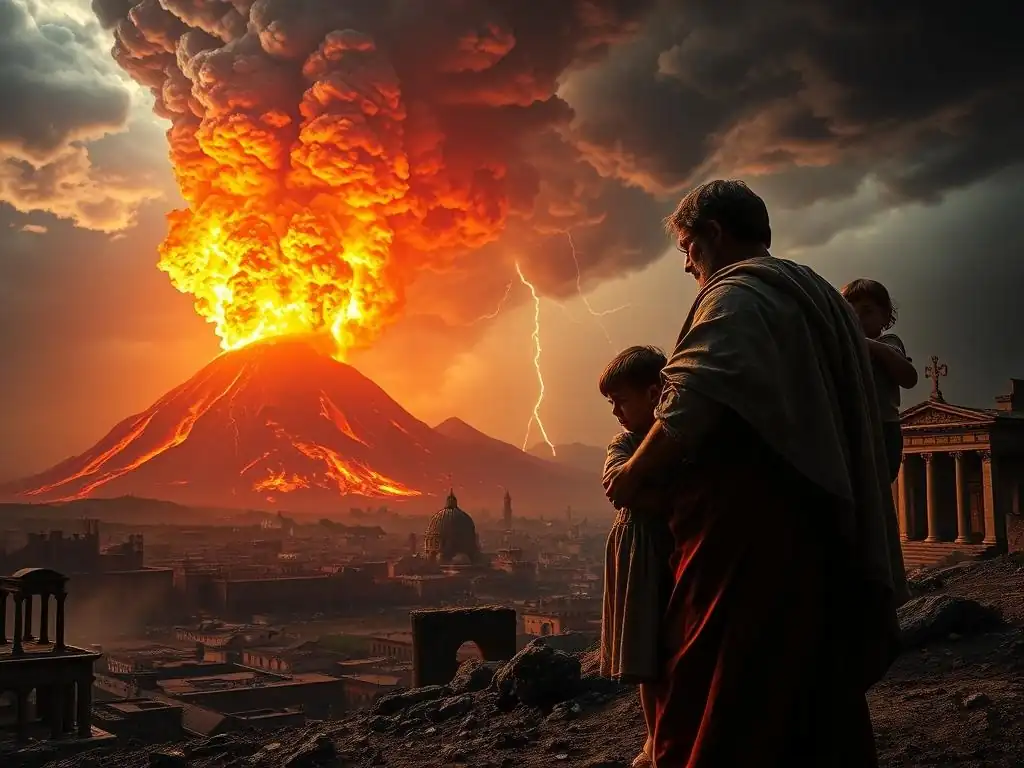
Pliny the Younger's letters meticulously describe the initial signs of the eruption, starting with the appearance of an unusual cloud "not unlike a pine tree," rising rapidly from Vesuvius. He details the pumice fall, the earthquakes, and the eventual pyroclastic flows that engulfed Pompeii and Herculaneum. His account is not only a factual record but also conveys the growing sense of alarm and terror as the eruption intensified.
Pliny's observations are remarkably detailed, considering the circumstances, and his writings have become a cornerstone for understanding the events of 79 AD. His narrative is a blend of personal experience, eyewitness testimony gathered from refugees, and reflections on the unfolding catastrophe, making it a uniquely powerful and historically significant document.
The Shock and Awe: Roman Reactions to the Initial Eruption
Roman reactions to the initial stages of the Vesuvius eruption were characterized by a mixture of shock, confusion, and disbelief. Accustomed to the tranquil presence of Vesuvius, the sudden appearance of a massive, erupting cloud was entirely unexpected. Pliny the Younger's description of the cloud resembling a pine tree suggests an initial attempt to rationalize the phenomenon within familiar terms, before the full scale of the disaster became apparent. The earthquakes that accompanied the eruption further contributed to the growing unease, shaking the foundations of Roman cities and disrupting daily life.
As pumice began to rain down, the initial curiosity likely gave way to alarm and then panic. For the inhabitants of Pompeii and Herculaneum, the sky darkening and the accumulation of volcanic debris would have been terrifying and disorienting.
Roman society was not unfamiliar with natural disasters like earthquakes, but a volcanic eruption of this magnitude was likely beyond their collective experience and understanding. The sudden shift from normalcy to chaos, from a familiar landscape to a scene of ash and fire, must have been profoundly shocking, contributing to the widespread panic and desperate attempts to escape the unfolding catastrophe, as vividly depicted in archaeological remains and Pliny's account.
The Suddenness of Destruction: How Romans Perceived the Speed of Vesuvius' Wrath
A key aspect of the Roman perception of the Vesuvius eruption was its perceived suddenness. While geological evidence suggests that there might have been some precursory seismic activity, to the Romans, the eruption seemed to erupt with little warning, unleashing its destructive power with astonishing speed. Pliny the Younger emphasizes the rapid escalation of the eruption, from the initial cloud to the pumice fall and then the devastating pyroclastic flows. This sense of suddenness is crucial to understanding the Roman experience of the disaster. They were caught largely unprepared, with little time to react effectively to the escalating threat.
The speed of the pyroclastic flows, which archaeological evidence indicates traveled at tremendous velocities, further reinforced the perception of sudden destruction. These flows, composed of hot gas and volcanic debris, were capable of engulfing entire cities in minutes, leaving little chance of escape for those in their path.
Roman accounts, combined with the archaeological record of Pompeii and Herculaneum, paint a picture of a swift and overwhelming catastrophe. The suddenness of Vesuvius' wrath was a defining characteristic of the eruption in Roman eyes, contributing to the enduring legacy of the event as a moment when time itself seemed to stop, freezing Roman life in its tracks.
Pompeii and Herculaneum: Roman Cities Frozen in Time by Vesuvius
The Impact on Daily Life: Roman Society Interrupted
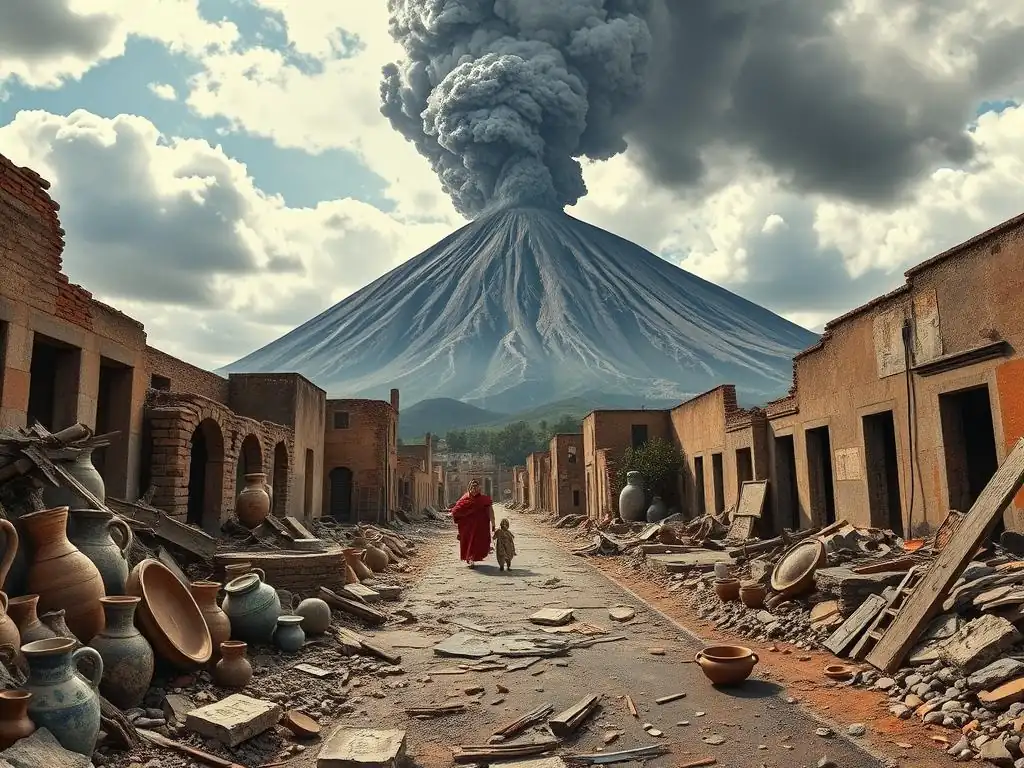
The Vesuvius eruption abruptly and devastatingly interrupted daily life in the Roman cities of Pompeii and Herculaneum. These were thriving urban centers, integral parts of the Roman Empire, with bustling markets, active harbors, and vibrant social lives. Archaeological excavations reveal detailed insights into the routines of Roman citizens, from their homes and businesses to their public spaces and leisure activities. The eruption froze these cities in a moment of time, preserving not only buildings and infrastructure but also the remnants of everyday life, from loaves of bread in ovens to personal belongings left behind in homes.
The sudden onset of the eruption meant that daily activities were brought to a standstill. Shops were abandoned mid-transaction, meals were interrupted, and public gatherings were thrown into chaos.
The preserved bodies of Pompeii and Herculaneum, often found in poses indicative of their final moments, underscore the suddenness and finality of the disaster. The eruption was not a gradual event that allowed for orderly evacuation; instead, it was a rapid and overwhelming catastrophe that shattered the fabric of Roman society in these cities, leaving behind a haunting tableau of interrupted lives and a stark reminder of the fragility of human existence in the face of nature's power.
Understanding the Pyroclastic Flows: A Perspective on the Cause of Sudden Death
Modern volcanology has revealed that the primary cause of death in Pompeii and Herculaneum was not lava, as commonly imagined, but pyroclastic flows and surges. These are fast-moving, extremely hot mixtures of volcanic gas, ash, and rock fragments that descend from the volcano at speeds exceeding highway speeds and temperatures reaching hundreds of degrees Celsius. While Pompeii was initially buried under pumice and ash fall, it was the later pyroclastic surges that ultimately proved fatal to many inhabitants who remained. Herculaneum, being closer to Vesuvius, was largely destroyed and buried by pyroclastic flows.
The suddenness of death in Pompeii and Herculaneum, as evidenced by the preserved bodies, is directly attributable to the effects of these pyroclastic flows and surges. The intense heat and toxic gases would have caused immediate suffocation and thermal shock, leading to rapid death. The "plaster casts" of victims in Pompeii vividly illustrate the instantaneous nature of their demise, capturing their final moments in striking detail. This scientific understanding of pyroclastic flows provides a crucial perspective on the Roman accounts of the eruption's swiftness and devastation, confirming the accuracy of their perception of a sudden and overwhelming catastrophe.
Archaeological Evidence Supporting Roman Accounts of Vesuvius' Swiftness
Archaeological evidence from Pompeii and Herculaneum strongly corroborates Roman accounts of the Vesuvius eruption's suddenness. The state of preservation of the cities, with buildings, artifacts, and even organic materials like food and wood remarkably intact, indicates a rapid burial process. The layers of pumice, ash, and pyroclastic deposits that entombed the cities sealed and preserved them, preventing the usual processes of decay and decomposition. This exceptional preservation provides a snapshot of Roman life in 79 AD, frozen in time by the volcanic eruption.
Furthermore, the positions and conditions of the human remains found in Pompeii and Herculaneum provide compelling evidence for the swiftness of the disaster. Skeletal remains found huddled in buildings, clutching possessions, or in the act of fleeing, all suggest that death came quickly and unexpectedly.
The lack of widespread signs of organized evacuation further supports the idea that the eruption overwhelmed the cities with little warning, leaving inhabitants with insufficient time to escape. The archaeological record, therefore, serves as a powerful testament to the accuracy of Roman perceptions of the eruption as a sudden and catastrophic event that abruptly ended life in Pompeii and Herculaneum.
Beyond Pliny: Other Roman Voices on the Vesuvius Eruption
Statius and Martial: Poetic Reflections on the Disaster
While Pliny the Younger provides the most detailed prose account, other Roman writers, particularly poets Statius and Martial, offer poetic reflections on the Vesuvius eruption, providing additional Roman views. Statius, who was roughly contemporary to the event, wrote about the destruction of Vesuvius in his Silvae. He vividly describes the altered landscape, mourning the loss of the once-fertile region and the devastation wrought by the volcano.
His poetry captures the emotional impact of the disaster, expressing grief and awe at the destructive power of nature. Statius's verses highlight the profound sense of loss and the lasting scar left on the Campanian landscape.
Martial, known for his epigrams, also touched upon the Vesuvius eruption in his writings. He focused on the transformation of Vesuvius from a lush mountain covered in vineyards to a desolate wasteland of ash and fire. Martial’s poems often emphasize the sudden and complete nature of the destruction, contrasting the pre-eruption beauty with the post-eruption desolation.
His epigrams, though brief, contribute to the broader Roman literary response to the disaster, offering a more emotional and reflective perspective compared to Pliny's more descriptive account. These poetic voices enrich our understanding of how Romans grappled with the enormity and suddenness of the Vesuvius eruption.
Reconstructing Roman Understanding of Volcanic Activity
Reconstructing Roman understanding of volcanic activity reveals a blend of nascent empirical observation and mythological interpretations. While they lacked modern scientific concepts of plate tectonics and magma chambers, Romans were not entirely ignorant of volcanic phenomena. They observed volcanic activity in other regions of the Roman Empire, such as Sicily and the Aeolian Islands, and were aware of the connection between mountains and fire. However, their understanding was often interwoven with mythological explanations, attributing volcanic eruptions to divine wrath or subterranean forces.
Pliny the Elder’s attempt to approach Vesuvius out of scientific curiosity, as described by his nephew, suggests a degree of empirical inquiry. However, even Pliny the Elder, a renowned naturalist, underestimated the scale and danger of the eruption, highlighting the limitations of Roman scientific knowledge in this area.
Roman writings reveal a struggle to comprehend the forces at play during the Vesuvius eruption, oscillating between attempts at rational explanation and reliance on traditional mythological frameworks. Their understanding was evolving, but the suddenness and scale of the Vesuvius eruption likely challenged their existing frameworks and underscored the limits of their scientific comprehension.
Comparing and Contrasting Different Roman Perspectives
Comparing and contrasting different Roman perspectives on the Vesuvius eruption reveals a range of responses, from detailed eyewitness accounts to poetic reflections. Pliny the Younger’s letters provide a factual, chronological narrative, emphasizing observation and detail. His focus is on documenting the events as they unfolded, providing a valuable historical record. In contrast, the poetic accounts of Statius and Martial offer more emotional and reflective responses, focusing on the aftermath and the sense of loss. These poetic perspectives highlight the cultural and emotional impact of the disaster, complementing Pliny's more factual approach.
While Pliny’s account is characterized by a relatively detached, observational tone, the poets express a more personal and emotional engagement with the tragedy. They lament the destruction of a beloved landscape and mourn the loss of life, reflecting the broader societal impact of the eruption. Taken together, these different Roman voices – the detailed observer and the reflective poet – provide a multifaceted understanding of how the Vesuvius eruption was perceived and interpreted by Roman society. They underscore the event's significance not just as a natural catastrophe, but as a profound cultural and emotional trauma.
The Aftermath: Roman Society's Response to the Vesuvius Disaster
Roman Efforts to Rebuild and Recover After the Eruption
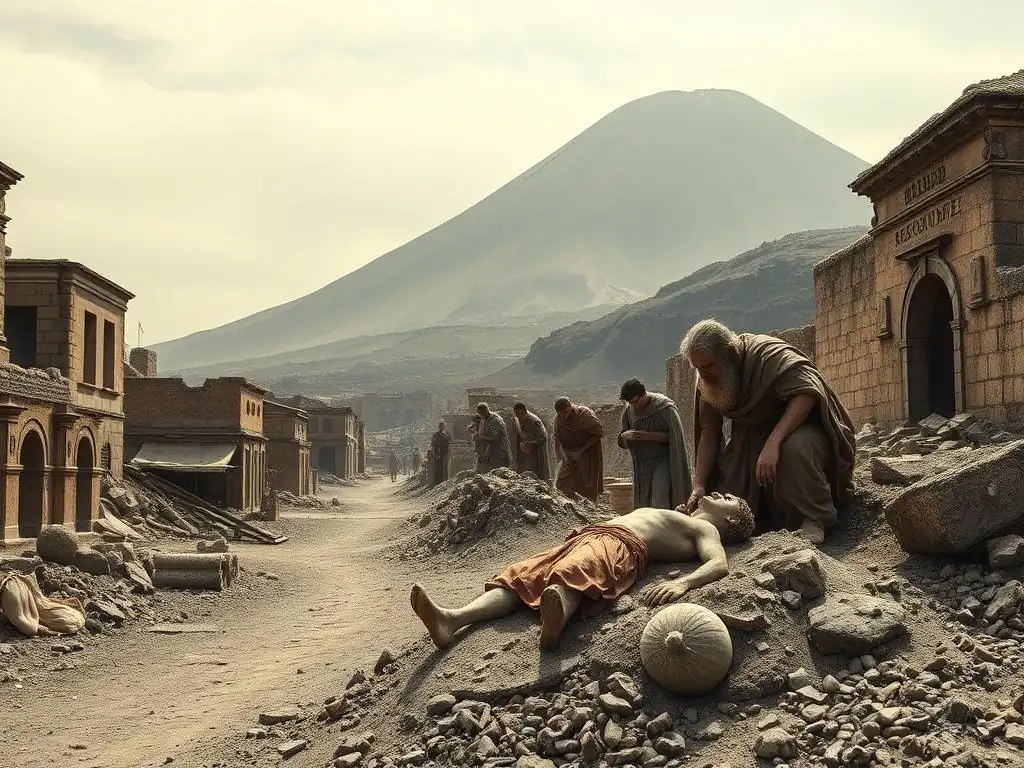
The Roman response to the Vesuvius disaster involved immediate rescue efforts and long-term strategies for rebuilding and recovery, though the fate of Pompeii and Herculaneum differed significantly. Pliny the Elder's ill-fated voyage was initially motivated by a desire to assist those closer to the eruption, demonstrating an immediate Roman impulse to help. However, the scale of the devastation, particularly in Pompeii and Herculaneum, was immense, making complete reconstruction impractical in the short term. While efforts were likely made to rescue survivors and salvage valuables, the cities themselves were largely abandoned and gradually buried under volcanic debris over time.
For the wider region of Campania, the Roman government likely implemented measures to assist affected populations and rebuild infrastructure. Roman engineering prowess was renowned, and efforts would have been made to restore roads, aqueducts, and agricultural lands damaged by the eruption. However, the long-term impact on the region's economy and demographics would have been substantial. While Pompeii and Herculaneum were not rebuilt in antiquity, nearby settlements would have received support to recover and adapt to the changed landscape. The Roman response reflects both the immediate humanitarian concern and the pragmatic challenges of dealing with a disaster of such magnitude.
The Lasting Impact on Roman Culture and Memory in Campania
The Vesuvius eruption had a lasting impact on Roman culture and memory in Campania, shaping the region's identity and historical narrative. The destruction of Pompeii and Herculaneum became a powerful symbol of nature's destructive force and the fragility of human civilization. The event was recorded in historical accounts, literary works, and likely oral traditions, ensuring its remembrance across generations. The eerie silence and desolation of the buried cities would have served as a constant reminder of the catastrophe, influencing the cultural landscape of Campania for centuries to come.
The eruption also likely contributed to a heightened awareness of volcanic risks and natural disasters within Roman society, at least in the affected region. While Pompeii and Herculaneum were not rebuilt, other towns and settlements in Campania continued to thrive, albeit with the knowledge of the volcanic threat looming nearby. The memory of the eruption served as a cautionary tale, shaping local folklore and potentially influencing urban planning and disaster preparedness strategies in the region, even if formalized volcanology was still centuries away.
The Vesuvius Eruption as a Turning Point in Campanian History
The Vesuvius eruption of 79 AD can be seen as a turning point in Campanian history, marking a dramatic shift in the region's trajectory. The destruction of Pompeii and Herculaneum, two significant Roman cities, represented a profound loss, both in terms of human life and economic infrastructure. The eruption altered the landscape, burying fertile agricultural land under volcanic deposits and reshaping the coastline. While the region eventually recovered and continued to be inhabited, the pre-eruption era of Pompeii and Herculaneum represented a golden age that was abruptly and irrevocably ended.
The eruption also served as a stark reminder of the power of nature and the limits of human control. For Roman society, accustomed to its engineering achievements and imperial dominance, the Vesuvius disaster was a humbling event. It underscored the vulnerability of even the most advanced civilizations to natural catastrophes.
In this sense, the eruption can be seen as a pivotal moment, prompting reflection on human resilience, the forces of nature, and the impermanence of human endeavors. The "time capsule" of Pompeii and Herculaneum, preserved by the eruption, ironically became a powerful testament to a lost Roman world, forever changed by Vesuvius' sudden fury.
Conclusion: Reflecting on Roman Views on the Vesuvius Eruption's Suddenness
The Enduring Legacy of the Eruption Through Roman Eyes
The enduring legacy of the Vesuvius eruption, as seen through Roman eyes, is one of sudden and overwhelming destruction. Roman accounts, particularly Pliny the Younger's letters, vividly convey the shock, terror, and disbelief that accompanied the eruption. Their narratives emphasize the unexpected and rapid nature of the disaster, highlighting the contrast between the tranquil pre-eruption landscape and the sudden unleashing of Vesuvius' volcanic power. This perception of suddenness has become a defining characteristic of the Vesuvius eruption in historical memory.
The preservation of Pompeii and Herculaneum, inadvertently achieved by the eruption itself, has further amplified this legacy of suddenness. These cities, frozen in time, offer a tangible and compelling illustration of Roman life abruptly interrupted. The archaeological evidence, combined with the Roman literary accounts, paints a picture of a catastrophe that struck with little warning, leaving an indelible mark on Roman history and culture. The Roman perspective, emphasizing the suddenness of Vesuvius' fury, continues to resonate today, shaping our understanding of this iconic volcanic eruption.
Why Roman Accounts Still Matter Today for Understanding Vesuvius
Roman accounts of the Vesuvius eruption remain profoundly relevant for understanding this historical event in the 21st century. They provide invaluable first-hand perspectives that complement and enrich modern scientific and archaeological research. Pliny the Younger's detailed observations, for example, offer crucial insights into the eruption's progression and its impact on the environment and human populations. These accounts humanize the disaster, allowing us to connect with the experiences of individuals who lived through this catastrophic event.
Furthermore, Roman accounts highlight the long-term cultural and societal impact of the Vesuvius eruption. They reveal how Romans interpreted and responded to the disaster within their historical and cultural context. By studying these narratives, we gain a deeper appreciation for the human dimensions of volcanic eruptions, beyond the purely scientific or geological aspects. Roman perspectives remind us that volcanic events are not just geological phenomena but also profoundly human experiences, shaping societies, cultures, and collective memories across millennia.
Further Research and Exploration of Roman Perspectives on Vesuvius
Further research and exploration of Roman perspectives on Vesuvius are crucial for a more comprehensive understanding of the eruption and its historical significance. This includes continued analysis of Roman literary sources, archaeological findings, and epigraphic evidence. In-depth studies of Roman perceptions of natural disasters, their scientific knowledge, and their cultural responses to crises can provide valuable context for interpreting their accounts of the Vesuvius eruption. Examining less well-known Roman sources and perspectives beyond Pliny could also yield new insights.
Moreover, interdisciplinary approaches that combine historical analysis with volcanology, archaeology, and social sciences can further enrich our understanding. By integrating Roman perspectives with modern scientific knowledge, we can develop a more nuanced and holistic appreciation of the Vesuvius eruption, its suddenness, its impact, and its enduring legacy. Continued research in this area will not only deepen our historical knowledge but also enhance our understanding of human-volcano interactions throughout history and into the present day.
Frequently Asked Questions
What was the primary Roman perspective on the suddenness of Vesuvius' eruption?
The Romans generally viewed the eruption as a sudden and unexpected catastrophe, despite Vesuvius showing earlier signs of activity. They were unprepared for the sheer speed and scale of the devastation.
How did the eruption of Vesuvius impact Roman society and culture?
The eruption had a devastating impact on Roman society, leading to significant loss of life and the destruction of prosperous cities like Pompeii and Herculaneum. It also sparked a period of intense reflection on mortality and the power of nature.
What sources do we have to understand Roman views on the Vesuvius eruption?
Our understanding comes primarily from the letters of Pliny the Younger, who witnessed the eruption firsthand. Archaeological evidence from Pompeii and Herculaneum also provides valuable insights into the event.
Did the Romans have any understanding of the science behind volcanic eruptions?
The Romans had limited scientific understanding of the geological processes behind volcanic eruptions. They often attributed such events to the wrath of the gods or other supernatural forces.
What safety measures did the Romans take, or fail to take, during and after the eruption?
Unfortunately, there were few effective safety measures in place. The suddenness of the eruption and lack of scientific understanding meant that many were caught unprepared, leading to high casualty rates.
Final Reflection: Echoes of Pompeii's Sudden End
The chilling narrative of Vesuvius' eruption, as seen through the eyes of the Romans, remains profoundly relevant today, serving as a stark reminder of nature's unpredictable power. The suddenness of the disaster, the abrupt cessation of life, continues to resonate across millennia, urging us to contemplate our own fragile existence in the face of overwhelming forces. We are left grappling with the same questions that plagued those who witnessed the devastation firsthand: how do we reconcile the beauty of the world with its capacity for destruction?
The eruption of Vesuvius has indelibly shaped our understanding of Roman life and death, offering a poignant glimpse into a world frozen in time. The enduring fascination with Pompeii and Herculaneum speaks volumes about our human need to connect with the past and to learn from the experiences of those who came before us. The preserved remains serve as a constant reminder of the impermanence of life and the importance of cherishing each moment. As Pliny the Younger eloquently described the unfolding catastrophe: For now, it was not clear, but only a long, continuous flame, which was followed by a dense smoke, and then by a shower of ashes.
This vivid account, and countless others, continue to fuel our imaginations and inspire reflection.
Let the stories of Pompeii and Herculaneum serve as a catalyst for introspection. Consider the legacy you wish to leave behind, and how you can live each day with a greater appreciation for the present. Embrace the beauty that surrounds you, acknowledge the fragility of life, and strive to create a world where compassion and understanding prevail. The eruption that stopped time offers a timeless lesson: live fully, love deeply, and never take a single moment for granted.
Unearth Your Inner Explorer: Connect with Vesuvius' Legacy!
Thanks for exploring the heart of Vesuvius and the stories of those who witnessed its fury. Now that you've journeyed through Roman perspectives on this catastrophic event, it's time to delve deeper into this pivotal moment in history.
Ready to take the next step?
- Visit a local museum featuring Roman artifacts from Pompeii or Herculaneum to experience the past firsthand.
- Share this article with friends or family who share your passion for history or volcanology. Spark a conversation about this incredible event!
- Let the eruption ignite your imagination! Create a piece of art, write a short story, or even develop a theatrical scene inspired by the Roman accounts of Vesuvius.
What single image or account from the article resonated most with you, and how will you explore this further?