
Beyond the Elite: Voices of Ordinary Romans Caught in Volcanic Eruptions

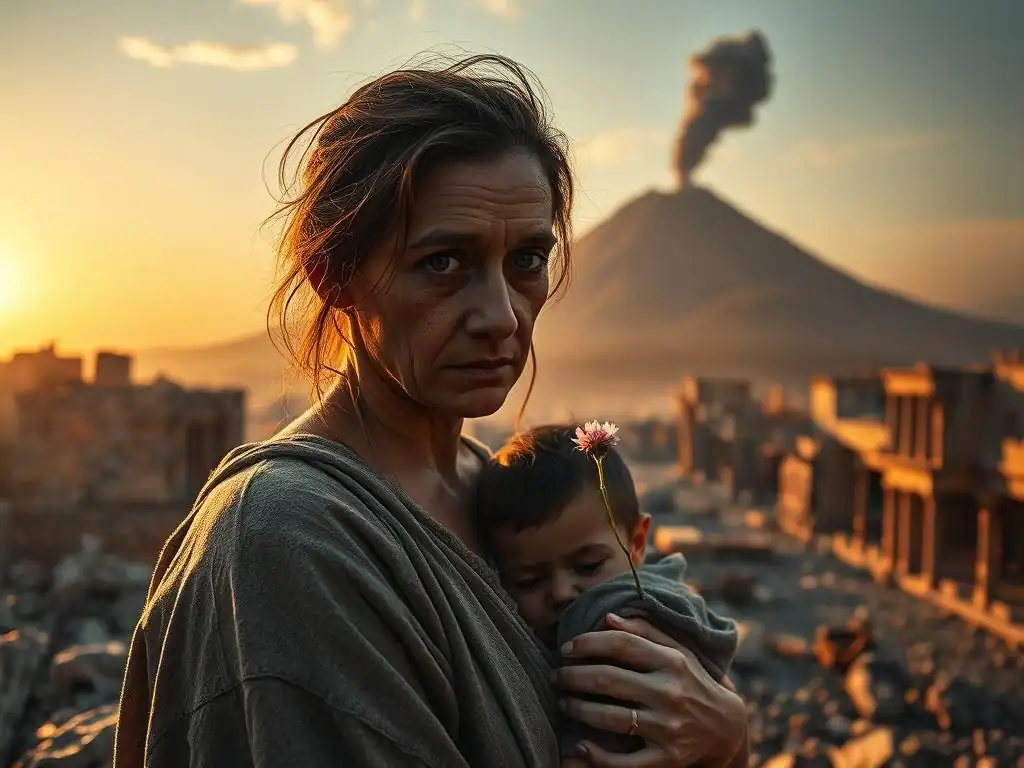
Welcome to Volcano Explorers.
Imagine the terror... Pompeii isn't just about emperors and senators. What happened to the ordinary Romans when Vesuvius unleashed its fury? Delve into our latest exploration of "Beyond the Elite: Voices of Ordinary Romans Caught in Volcanic Eruptions" and uncover the untold stories buried beneath the ash. Prepare to be captivated by a perspective you've never considered. What did survival really look like for the common person in the face of unimaginable destruction?
- Introduction: Unveiling the Untold Stories of Roman Volcano Victims
- Roman Society and the Shadow of Vesuvius: A Precarious Existence
- First-Hand Accounts: Piecing Together the Experiences of Ordinary Romans
- The Eruption of Vesuvius in 79 AD: A Catastrophe for All
- Life After the Eruption: Rebuilding and Remembering
- Lessons Learned: Understanding Volcanic Risk Through the Eyes of Ordinary Romans
- Conclusion: Giving Voice to the Silenced Stories of Roman Volcano Victims
-
Frequently Asked Questions
- How did volcanic eruptions impact the daily lives of ordinary Romans?
- What evidence do we have about the experiences of non-elite Romans during these events?
- How did ordinary Romans perceive and understand volcanic activity?
- What safety measures, if any, were available to ordinary Romans during eruptions?
- Did volcanic eruptions lead to social changes within Roman society?
- Final Reflection: Echoes of Pompeii, Lessons for Today
- Unearth Your Own Roman Story!
Introduction: Unveiling the Untold Stories of Roman Volcano Victims
Shifting the Focus: From Emperors to Everyday Lives During Volcanic Events
History often remembers the grand narratives: the emperors, senators, and generals who shaped the Roman world. However, volcanic eruptions, particularly the cataclysmic event of Mount Vesuvius in 79 AD, impacted all levels of Roman society.
While the accounts of figures like Pliny the Younger offer invaluable insights into the disaster, they represent the perspective of the elite. To truly understand the devastation and human cost of such events, we must shift our focus to the experiences of ordinary Romans, the bakers, artisans, merchants, and farmers who constituted the vast majority of the population and whose lives were irrevocably altered by volcanic fury.
By examining the lives of ordinary Romans during volcanic eruptions, we move beyond the traditional focus on political and military history to explore the social and human dimensions of natural disasters in antiquity. This shift in perspective allows us to appreciate the widespread impact of these events, revealing how they disrupted daily routines, challenged social structures, and tested the resilience of entire communities. It is in these everyday lives, abruptly halted or dramatically changed, that we find the true scale of the tragedy and the remarkable human stories often overlooked by history's grand narratives.
The Importance of Understanding the Impact on Ordinary Romans
Understanding the impact of volcanic eruptions on ordinary Romans is crucial for several reasons. Firstly, it provides a more complete and nuanced picture of Roman history. The eruption of Vesuvius was not merely a backdrop to the lives of emperors; it was a pivotal event that reshaped entire regions and profoundly affected thousands of individuals. By focusing on ordinary Romans, we gain a deeper appreciation for the social fabric of Roman society and how it was tested and transformed by natural disasters.
Secondly, studying the experiences of ordinary Romans offers valuable lessons for contemporary societies living in volcanically active regions. The challenges faced by the inhabitants of Pompeii and Herculaneum – from understanding warning signs to navigating chaotic evacuations and rebuilding shattered lives – resonate with modern communities facing similar threats.
By learning from the past, we can better prepare for and mitigate the impact of future volcanic events, ensuring that the lessons learned from the victims of Vesuvius are not forgotten. The experiences of ordinary Romans during volcanic eruptions are not just historical anecdotes; they are timeless lessons in resilience, vulnerability, and the enduring power of nature.
Roman Society and the Shadow of Vesuvius: A Precarious Existence
Daily Life in Pompeii and Herculaneum Before the Disaster
Pompeii and Herculaneum, vibrant Roman towns nestled in the Bay of Naples, bustled with the rhythms of daily life in the decades leading up to 79 AD. Pompeii, a thriving commercial center, was home to an estimated 11,000 to 20,000 inhabitants. Its streets teemed with merchants selling wares from across the Roman Empire, artisans crafting goods in workshops, and citizens engaging in everyday activities.
Herculaneum, smaller and wealthier, with a population around 4,000 to 5,000, was a popular resort town favored by affluent Romans, known for its elegant villas and tranquil atmosphere. Both cities thrived on agriculture, trade, and fishing, enjoying the fertile volcanic soil and proximity to the sea.
Daily life for ordinary Romans in these towns was a mix of work, leisure, and social interaction. Markets were central to daily routines, providing food, goods, and opportunities for social exchange. Public baths offered spaces for hygiene, relaxation, and social gatherings.
Theaters and amphitheaters hosted performances and spectacles, providing entertainment for all social classes. While life was generally prosperous and comfortable for many, it was also lived under the ever-present shadow of Mount Vesuvius. Though dormant for centuries, the volcano loomed large on the horizon, a silent reminder of the powerful natural forces at play beneath their feet, a reality perhaps easily dismissed in the routines of daily Roman life until the fateful eruption.
Roman society was rigidly stratified, with significant disparities in wealth, power, and social status. This hierarchy profoundly impacted vulnerability to volcanic hazards. The elite, residing in spacious villas with multiple exits and resources, possessed a greater capacity to evacuate and recover from disasters. Their wealth allowed them access to transportation, supplies, and alternative housing, offering a buffer against the immediate and long-term consequences of an eruption. They also had networks of influence and support that could aid in their escape and resettlement.
Ordinary Romans, however, faced starkly different realities. Living in densely populated neighborhoods, often in multi-story insulae (apartment buildings) with limited escape routes, their options during a volcanic emergency were significantly constrained. Many worked in shops and workshops, tied to their livelihoods and possessions within the city.
Their limited resources meant they were more dependent on public infrastructure and community support, which could easily collapse during a major disaster. Slaves and the urban poor, at the bottom of the social ladder, were the most vulnerable.
Lacking any personal resources or social standing, they were entirely dependent on their masters or public relief, and often faced the harshest consequences of the eruption with the fewest options for survival or recovery. Thus, the rigid social hierarchy of Roman society amplified the differential impact of the volcanic eruption, with ordinary Romans, especially those at the lower end of the social spectrum, bearing the brunt of the catastrophe.
First-Hand Accounts: Piecing Together the Experiences of Ordinary Romans
Analyzing Archaeological Evidence: What Remains Tell Us
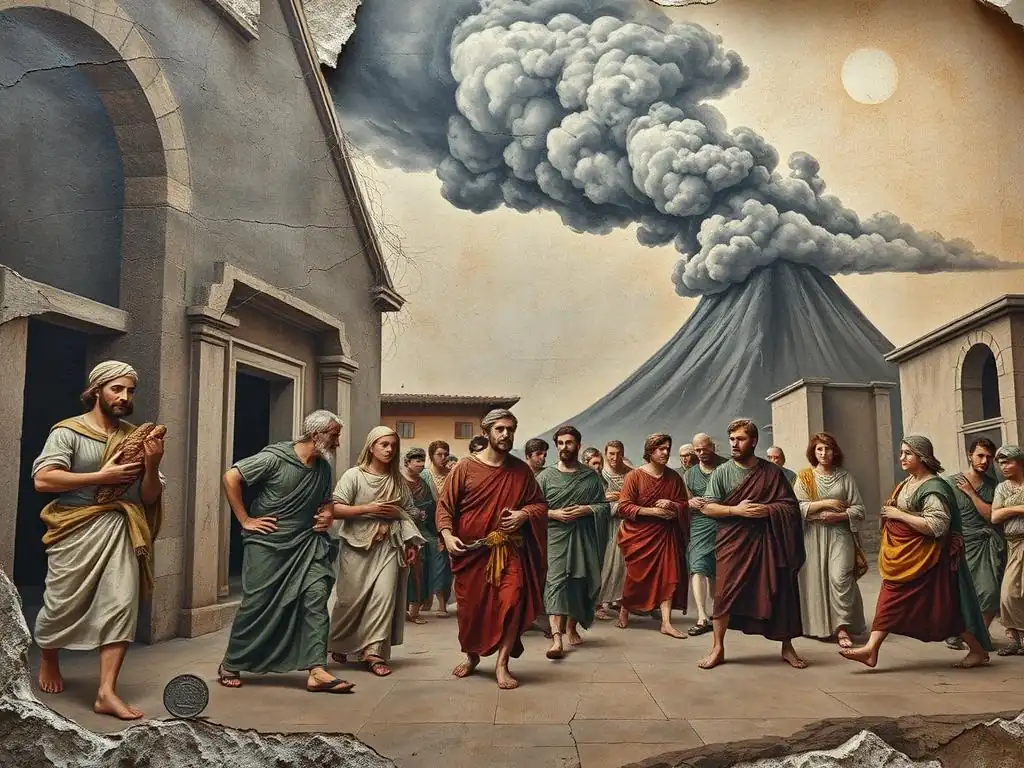
Archaeological excavations at Pompeii and Herculaneum provide a wealth of evidence about the lives and deaths of ordinary Romans caught in the eruption of Vesuvius. The remarkably preserved ruins of these cities offer a snapshot of daily life frozen in time. Houses, workshops, shops, and public buildings, buried under layers of ash and pumice, reveal details about domestic arrangements, economic activities, and social interactions. The positions of bodies, often preserved in plaster casts, offer poignant glimpses into the final moments of individuals from all walks of life.
Analysis of skeletal remains reveals demographic information, health conditions, and even the diets of ordinary Romans. Objects found alongside the bodies – tools, jewelry, household items, and even loaves of bread – provide intimate details about their lives and what they attempted to carry with them during the chaotic escape. The location of these remains within houses, streets, or public spaces helps reconstruct the sequence of events and the patterns of movement during the eruption.
For example, the discovery of multiple skeletons in a baker's oven in Pompeii suggests a desperate attempt to seek shelter, highlighting the terror and confusion that gripped ordinary Romans as the eruption unfolded. Archaeological evidence, therefore, serves as a silent yet powerful testament to the experiences of ordinary Romans caught in the volcanic disaster.
Epigraphic Insights: Inscriptions and Graffiti as Voices from the Past
Beyond the grand monuments and formal inscriptions, the walls of Pompeii and Herculaneum are covered in graffiti – informal writings scratched or painted by ordinary Romans. These epigraphic fragments, often overlooked in traditional historical accounts, offer invaluable insights into the everyday thoughts, concerns, and experiences of the populace. Love notes, business transactions, political slogans, and even mundane announcements provide a direct connection to the voices of ordinary people.
Graffiti reveals aspects of Roman life not typically found in official records. They provide glimpses into popular culture, social interactions, and the concerns of everyday citizens. While no graffiti directly describes the eruption itself (as it occurred so rapidly), the sheer volume of these informal writings underscores the vibrant and communicative culture of these Roman towns just before their destruction.
The very act of writing graffiti suggests a level of literacy and social engagement among ordinary Romans, challenging simplistic notions of a purely illiterate populace. These epigraphic whispers from the past, though fragmented and often fleeting, offer a unique and intimate perspective on the lives of ordinary Romans and their world abruptly ended by the volcanic eruption.
The Baker's Shop at Pompeii: Evidence of Daily Life Interrupted
The baker's shop in Pompeii, unearthed during excavations, stands as a compelling example of how archaeological evidence illuminates the interrupted lives of ordinary Romans. This modest establishment, typical of many found in Pompeii, reveals the routines of daily commerce and the sudden disruption caused by the eruption. Inside, archaeologists discovered carbonized loaves of bread still in the oven, a poignant reminder of the baker's daily work abruptly halted. Grinding stones, ovens, and storage jars offer a detailed picture of the baking process and the scale of the operation.
More tragically, the remains of several individuals were found within the shop, including skeletons of adults and children. Their location suggests they were seeking refuge in what they might have perceived as a sturdy structure, perhaps unaware of the true danger. The presence of coins and personal belongings alongside the skeletons hints at their hurried flight and the possessions they attempted to salvage.
The baker's shop, therefore, is more than just a commercial space; it is a microcosm of Pompeian society, encapsulating the daily rhythms of ordinary Romans and the devastating impact of the eruption that transformed a place of work and sustenance into a tomb. This single location poignantly illustrates the disruption of ordinary Roman lives by the volcanic catastrophe.
The Eruption of Vesuvius in 79 AD: A Catastrophe for All
The Initial Signs: Omens and Warnings Ignored by Ordinary Romans?
In the days and months leading up to the eruption of Vesuvius in 79 AD, there might have been subtle signs that something was amiss, although these were likely misinterpreted or ignored by ordinary Romans. Minor earthquakes, common in the seismically active Bay of Naples region, may have increased in frequency or intensity. Springs and wells could have dried up or changed in taste, potentially linked to subterranean volcanic activity. However, without a scientific understanding of volcanology, these phenomena would not have been recognized as precursors to a major eruption.
Roman society was deeply steeped in superstition and the interpretation of omens. It is plausible that some unusual natural events were interpreted as signs of divine displeasure or impending disaster. However, lacking a clear understanding of the volcanic threat, ordinary Romans would have likely attributed these signs to broader religious or cosmological forces, rather than a specific volcanic eruption.
Even if warnings were perceived, the long period of Vesuvius's dormancy likely bred a sense of complacency. Generations had lived without witnessing an eruption, making it difficult to imagine the possibility of such a cataclysmic event. Thus, the initial signs, if noticed at all, were likely dismissed, misinterpreted, or simply not understood as direct warnings of the imminent volcanic eruption, leaving ordinary Romans unprepared for the disaster that was about to unfold.
The Chaotic Escape: Accounts of Flight and Desperation From Regular People
While we lack direct written accounts from ordinary Romans detailing their escape from Pompeii and Herculaneum, the archaeological record vividly paints a picture of chaotic flight and desperation. The plaster casts of victims reveal individuals caught in various stages of attempted escape – some carrying possessions, others shielding children, many contorted in agony. The sheer number of bodies found along roads leading out of the cities, and even within the city gates, testifies to the panicked exodus and the overwhelming speed and force of the pyroclastic flows.
The narrow streets of Pompeii and Herculaneum, designed for daily commerce, would have become choked with fleeing crowds, hindering escape. The falling pumice and ash would have darkened the sky, creating confusion and disorientation. The heat and noxious fumes would have added to the terror and made breathing difficult.
The archaeological evidence suggests that many ordinary Romans were caught in the open, overtaken by the eruption's relentless advance. The skeletal remains found in boatsheds at Herculaneum, for example, indicate a desperate attempt to flee by sea that ultimately failed for many. The scene of the escape was undoubtedly one of pandemonium, fear, and unimaginable suffering for ordinary Romans as they desperately tried to outrun the volcanic onslaught.
While the eruption of Vesuvius was a catastrophe that affected all inhabitants of Pompeii and Herculaneum, the impact differed significantly across social classes. As previously discussed, the elite possessed resources and mobility that offered them a greater chance of survival. Some wealthy families, like that of Pliny the Younger, were able to evacuate early and from a safer distance, witnessing the eruption but escaping its direct devastation. Their villas, often located on the outskirts of the cities or in the surrounding countryside, were less vulnerable to the initial stages of the eruption.
Ordinary Romans, particularly those from the lower social classes, faced far greater risks. Living in densely packed urban areas, with limited means of escape, they were disproportionately affected by the eruption. The poor, slaves, and those dependent on daily labor were likely the least mobile and the most vulnerable to the pyroclastic flows and ashfall.
The archaeological record supports this, with a higher proportion of victims found in densely populated residential areas and commercial districts, suggesting that those who were less privileged and less able to flee suffered the highest mortality rates. While the eruption was a tragedy for all, it exacerbated existing social inequalities, with ordinary Romans from lower social strata bearing the heaviest burden of death and destruction.
Life After the Eruption: Rebuilding and Remembering
The Long-Term Consequences for Roman Communities
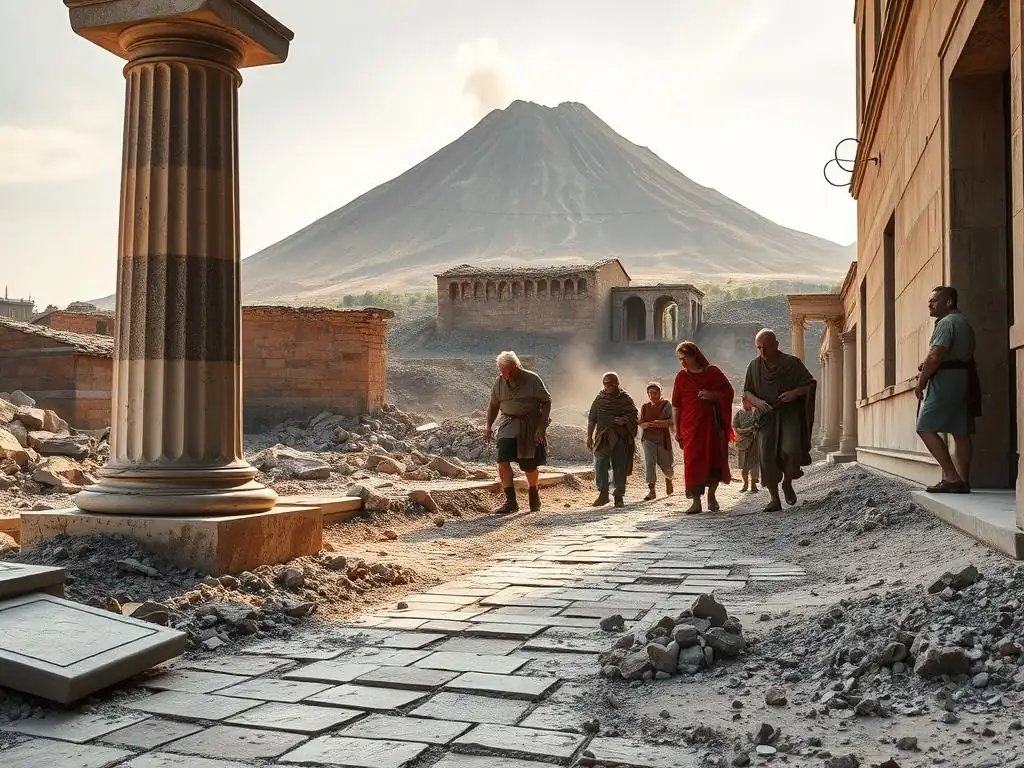
The eruption of Vesuvius had profound and long-lasting consequences for the Roman communities in the Bay of Naples and beyond. Pompeii and Herculaneum were effectively wiped off the map, buried under meters of volcanic debris. The immediate aftermath involved immense human suffering, with thousands dead and countless survivors displaced and traumatized. The fertile volcanic landscape, once the source of prosperity, was buried, disrupting agriculture and trade for years to come.
Beyond the immediate devastation, the eruption had significant economic and social repercussions. The loss of two thriving cities impacted regional trade networks and agricultural production. Survivors faced the immense challenge of rebuilding their lives, often in new settlements.
The Roman administration provided some relief and support, but the scale of the disaster strained resources and infrastructure. The psychological impact on survivors was likely profound, with the trauma of witnessing such destruction and loss shaping individual and collective memories for generations. The eruption served as a stark reminder of the unpredictable power of nature and the fragility of human existence, leaving an indelible mark on the Roman psyche and the landscape of the Bay of Naples.
How the Eruption Shaped Roman Culture and Beliefs
The eruption of Vesuvius, being such a cataclysmic and unforgettable event, undoubtedly shaped Roman culture and beliefs. It served as a powerful illustration of the unpredictable and destructive forces of nature, reinforcing Roman respect for the power of the gods and the importance of maintaining pax deorum (peace with the gods). The scale of the disaster might have been interpreted by some as divine punishment or a sign of cosmic imbalance, prompting reflection on Roman morality and societal values.
The eruption also contributed to the development of Roman disaster narratives and collective memory. Pliny the Younger's letters, widely circulated in the Roman world, became a defining account of the eruption, shaping perceptions of the event for posterity. The rediscovery of Pompeii and Herculaneum centuries later further cemented the eruption's place in cultural memory, inspiring art, literature, and historical inquiry. The event served as a cautionary tale, reminding Romans and subsequent generations of the potential for sudden and catastrophic natural disasters, and prompting reflection on human vulnerability in the face of overwhelming natural forces.
Increased Veneration of Vulcan: A Response to Volcanic Fury
Vulcan, the Roman god of fire, metalworking, and volcanoes, likely experienced increased veneration in the aftermath of the Vesuvius eruption. As the deity associated with volcanic forces, Vulcan would have been seen as the embodiment of the power that had unleashed such devastation. In times of crisis, it was common in Roman religion to seek appeasement and favor from the gods perceived to be responsible for the disaster. Increased offerings, temples, or festivals dedicated to Vulcan could have emerged as a direct response to the eruption.
While direct archaeological evidence of a surge in Vulcan worship specifically linked to the 79 AD eruption is limited (as the region was largely abandoned after), the general Roman religious practice of seeking divine intervention in times of trouble suggests this is a plausible outcome. The sheer scale of the volcanic event would have amplified awareness of Vulcan's power and influence, making him a figure of both awe and fear.
Increased veneration of Vulcan in the wake of the eruption would represent a natural human response to comprehend and cope with a terrifying and seemingly inexplicable natural catastrophe, seeking to re-establish balance and protection through religious devotion.
Lessons Learned: Understanding Volcanic Risk Through the Eyes of Ordinary Romans
Parallels Between Ancient Rome and Modern Volcanic Communities
Despite the vast temporal gap, striking parallels exist between the experiences of ordinary Romans during the Vesuvius eruption and those of modern communities living in volcanically active regions. Both ancient and modern populations face the challenge of coexisting with volcanic hazards, balancing the risks with the benefits of living in fertile volcanic landscapes. The eruption of Vesuvius, like contemporary volcanic events, highlights the sudden and unpredictable nature of volcanic activity and the potential for rapid and devastating consequences.
The vulnerability of ordinary Romans, particularly the poor and marginalized, mirrors the disproportionate impact of volcanic disasters on vulnerable populations in modern societies. Limited resources, inadequate infrastructure, and lack of access to information exacerbate risk and hinder effective evacuation and recovery efforts in both ancient and modern contexts. The lessons learned from the Roman experience underscore the enduring challenges of living with volcanic risk and the importance of preparedness, early warning systems, and community resilience, themes that resonate powerfully with contemporary volcanic communities worldwide.
The Importance of Preparedness and Early Warning Systems
The fate of Pompeii and Herculaneum serves as a stark and enduring lesson in the critical importance of volcanic preparedness and early warning systems. While ordinary Romans lacked the scientific understanding and technological capabilities of modern volcanology, their experience underscores the devastating consequences of inadequate preparation for volcanic emergencies. The rapid and overwhelming nature of the eruption demonstrated the need for timely warnings and effective evacuation strategies.
Modern volcanology has made significant strides in understanding volcanic processes and developing monitoring technologies to detect precursory signs of eruptions. Early warning systems, coupled with community education and preparedness plans, are crucial for mitigating volcanic risk and saving lives. The Roman tragedy highlights that ignoring or underestimating volcanic hazards can lead to catastrophic outcomes.
Investing in scientific monitoring, public awareness campaigns, and robust emergency response infrastructure are essential steps for modern volcanic communities to learn from the past and avoid repeating the devastating fate of Pompeii and Herculaneum. Preparedness and early warning systems are not merely technical measures; they are fundamental safeguards for protecting ordinary people living under the shadow of volcanoes.
Honoring the Memory of Those Lost: Remembering Ordinary People Caught in the Volcanic Eruption
Remembering the victims of the Vesuvius eruption, especially the ordinary Romans whose stories often go untold, is a crucial act of historical and human empathy. Pompeii and Herculaneum are not just archaeological sites; they are vast cemeteries, holding the remains of thousands of individuals whose lives were abruptly ended by a natural disaster. Honoring their memory means moving beyond the grand narratives of emperors and empires to acknowledge the individual human tragedies embedded within the ruins.
By focusing on the lives and experiences of ordinary Romans, we give voice to the silenced victims of the eruption. Their stories, pieced together from archaeological evidence and epigraphic fragments, remind us of the human cost of volcanic disasters and the importance of compassion and remembrance.
Visiting Pompeii and Herculaneum should be more than just a tourist experience; it should be an opportunity to reflect on the lives lost, to learn from the past, and to reaffirm our commitment to protecting vulnerable communities in volcanically active regions today. Remembering ordinary people caught in the volcanic eruption is not just about preserving history; it is about honoring human dignity and ensuring that the lessons of the past inform a safer future.
Conclusion: Giving Voice to the Silenced Stories of Roman Volcano Victims
The Enduring Power of Human Resilience in the Face of Volcanic Disaster
Despite the overwhelming devastation wrought by the eruption of Vesuvius, the story of Pompeii and Herculaneum is not solely one of tragedy; it is also a testament to the enduring power of human resilience. Even in the face of unimaginable loss and destruction, the survivors of the eruption and subsequent generations demonstrated remarkable adaptability and determination. Roman communities in the Bay of Naples eventually recovered, albeit transformed, from the catastrophe.
The rediscovery of Pompeii and Herculaneum centuries later, and the ongoing archaeological exploration of these sites, has further amplified the narrative of resilience. The preserved ruins stand as a powerful reminder of both human vulnerability and human ingenuity.
The ability of archaeologists to reconstruct aspects of daily Roman life from the ashes of disaster speaks to the enduring human drive to understand the past and learn from it. The story of ordinary Romans caught in the volcanic eruption, though tragic, ultimately underscores the enduring capacity of humanity to persevere, adapt, and rebuild in the face of even the most catastrophic natural events.
Further Research: Exploring Unexplored Aspects of the Roman Experience
While archaeological research has revealed a vast amount about Pompeii and Herculaneum, many aspects of the Roman experience during the Vesuvius eruption remain unexplored, particularly concerning ordinary Romans. Further research could focus on the long-term psychological impact of the eruption on survivors and their descendants. Oral histories, if they existed in later Roman accounts, could be re-examined for insights into collective trauma and memory. Detailed studies of burial sites and skeletal remains could reveal more about the demographics of the victims and the differential impact on various social groups.
Investigating the economic and social recovery of the region after the eruption, and the role of Roman administration in relief efforts, would further illuminate the long-term consequences of the disaster. Comparative studies with other volcanic eruptions in antiquity and in modern times could provide broader perspectives on human responses to volcanic crises. By continuing to explore these unexplored aspects, we can deepen our understanding of the Roman experience and gain even more valuable lessons from the silenced stories of ordinary Romans caught in the volcanic eruption of Vesuvius.
Frequently Asked Questions
How did volcanic eruptions impact the daily lives of ordinary Romans?
Volcanic eruptions significantly disrupted daily routines, affecting agriculture, trade, and access to resources like water. Ashfall could contaminate crops and damage infrastructure, leading to food shortages and economic hardship.
What evidence do we have about the experiences of non-elite Romans during these events?
Evidence comes from archaeological finds like Pompeii and Herculaneum, revealing preserved homes and artifacts. Personal letters and graffiti also offer glimpses into the everyday concerns of the common people.
How did ordinary Romans perceive and understand volcanic activity?
Many Romans likely attributed eruptions to the wrath of the gods, lacking scientific understanding. They relied on religious rituals and omens to try and appease the deities and prevent further disasters.
What safety measures, if any, were available to ordinary Romans during eruptions?
Formal safety measures were limited. Romans relied on early warning signs like earthquakes or unusual animal behavior, and often sought refuge in stronger buildings or attempted to flee.
Yes, eruptions could exacerbate existing social inequalities. The disproportionate impact on the poor could lead to unrest, while wealthy elites might have the means to escape or rebuild more easily.
Final Reflection: Echoes of Pompeii, Lessons for Today
The story of Pompeii and Herculaneum, once relegated to tales of emperors and gladiators, finds its true power in the untold narratives of ordinary Romans. Their lives, frozen in time by Vesuvius, offer a stark reminder of the fragility of existence and the enduring human spirit that persists even in the face of unimaginable catastrophe. These weren't senators or generals; they were bakers, merchants, families – people just like us, caught in the crosshairs of a natural disaster.
The eruption of Vesuvius serves not only as a historical event but also as a powerful metaphor for the unexpected disruptions that can shatter our own lives. Understanding the experiences of these ordinary Romans allows us to connect with the past in a deeply personal way, prompting us to consider our own preparedness and resilience in the face of adversity. History is not the past but a map of the past drawn from a particular point of view, to be useful to the modern traveler.
- Henry Glassie. This quote perfectly encapsulates why studying the lives of these ordinary Romans is so vital: it provides a map, drawn from their experiences, to navigate our own uncertain future.
Let the echoes of Pompeii resonate within you. Consider the lives of those ordinary Romans, their hopes, their fears, and their ultimate fate. What lessons can you draw from their story? How can you better prepare yourself and your community for the unexpected challenges that life may bring? Embrace the spirit of resilience and remember that even in the face of overwhelming odds, the human spirit can endure. Let their story inspire you to live each day with purpose and gratitude, cherishing the preciousness of life and the connections that bind us together.
Unearth Your Own Roman Story!
Thanks for delving into the lives of ordinary Romans facing extraordinary circumstances! We hope you've gained a new appreciation for the human stories buried beneath the ash. Now, it's time to bring that history to life.
Here are a few ways to connect with these incredible narratives:
- Become a virtual citizen of Pompeii! Imagine yourself living in their world, and write a short fictional journal entry from the perspective of someone experiencing the eruption.
- Share this article with friends and family and discuss which character's story resonated with you most. Let's keep these voices alive!
- Discover a modern-day Pompeii near you. Research any local archaeological sites and plan a visit to learn about the history beneath your feet.
What everyday object from Roman life do you think would be most surprising to find in a modern home? Share your thoughts in the comments below!