
Tropical Volcanoes' Gift: The Unique Biodiversity of Rainforests on Volcanic Slopes


Welcome to Volcano Explorers!
Prepare to be amazed. Ever wondered how fiery giants could be the architects of thriving ecosystems? Our journey begins with an exploration into the surprising secret of tropical volcanoes: their profound influence on rainforest biodiversity. Discover how these dramatic landscapes, seemingly destructive, actually nurture some of the most unique and vibrant life on Earth. What secrets lie hidden in the volcanic soil, and how do they fuel such incredible growth? Dive in and uncover the unexpected connection!
- VolcanoExplorers.org: Exploring the Interplay of Volcanoes and Rainforests
- How Tropical Volcanoes Shape Rainforest Ecosystems
- The Unique Biodiversity Hotspots on Tropical Volcanic Slopes
- The Influence of Volcanic Soil on Rainforest Plant Life
- Case Studies: Rainforests Thriving on Volcanic Activity
- Threats to Rainforest Biodiversity on Volcanic Slopes
- Conservation Efforts: Protecting Volcanic Rainforest Biodiversity
- Conclusion: The Enduring Legacy of Tropical Volcanoes on Rainforest Biodiversity
-
Frequently Asked Questions
- What makes rainforests on tropical volcanoes so biodiverse?
- How does volcanic activity contribute to the richness of these ecosystems?
- What are some of the specific challenges facing rainforests on tropical volcanoes?
- Are there any unique species that are only found on tropical volcanic rainforests?
- How can we protect the biodiversity of these unique environments?
- Final Reflection: Embracing Volcanic Life
- Ignite Your Inner Explorer: Fuel Biodiversity's Future!
VolcanoExplorers.org: Exploring the Interplay of Volcanoes and Rainforests
VolcanoExplorers.org is dedicated to unveiling the fascinating connections between geological forces and ecological wonders. Here, we delve into the dynamic relationship between tropical volcanoes and rainforests, exploring how these seemingly contrasting elements intertwine to create some of the planet's most biodiverse ecosystems. Our platform serves as a portal to understand the science behind this interplay, offering insights into the unique environments forged where fire meets foliage.
Through detailed explorations and accessible information, VolcanoExplorers.org aims to educate and inspire. We invite you to discover the intricate mechanisms by which volcanic activity enriches rainforests, fostering extraordinary biodiversity. From the fertile soils born from ash to the creation of novel habitats, we illuminate the profound and often overlooked positive impacts of volcanoes on these vital ecosystems. Join us as we uncover the secrets of these vibrant landscapes, where geological dynamism and biological richness converge.
Introduction: The Unexpected Connection Between Tropical Volcanoes and Rainforest Biodiversity
The image of a volcano often conjures scenes of destruction and desolation – fiery eruptions and barren landscapes. However, in tropical regions, this powerful geological force plays a surprisingly constructive role in shaping some of the most vibrant and biodiverse ecosystems on Earth: rainforests. The connection between tropical volcanoes and rainforest biodiversity is a testament to nature's resilience and its capacity to transform seemingly destructive events into opportunities for ecological flourishing. This intricate relationship reveals how volcanic activity, far from being solely detrimental, can be a crucial catalyst for life in tropical environments.
While volcanic eruptions can initially cause devastation, the long-term effects are remarkably beneficial for rainforest ecosystems. Volcanic ash, ejected during eruptions, is rich in essential minerals and nutrients that act as a natural fertilizer for the often nutrient-poor soils of tropical rainforests. Furthermore, volcanic landscapes create a mosaic of habitats, promoting ecological succession and leading to increased plant and animal diversity.
This unexpected synergy between geological upheaval and biological richness makes rainforests on tropical volcanic slopes unique biodiversity hotspots, harboring a wealth of species found nowhere else on the planet. The interplay between fire and foliage, destruction and renewal, forms the foundation of these extraordinary ecosystems.
Understanding Volcanic Impact on Forests and Vegetation: A Deep Dive
Volcanic eruptions exert a multifaceted influence on forests and vegetation, ranging from immediate destruction to long-term enrichment. The initial impact of an eruption can be catastrophic, with pyroclastic flows, lava flows, and ashfall directly destroying vegetation and altering landscapes. For example, the 1980 eruption of Mount St. Helens in Washington State, though not in a tropical rainforest, demonstrated the immediate destructive power of volcanic events, flattening forests and leaving behind a seemingly barren landscape. However, this initial devastation is only one part of the story.
Following the immediate aftermath, volcanic deposits, particularly ash, begin to transform the environment in beneficial ways. Volcanic ash is composed of finely ground rock particles and volcanic glass, rich in minerals like phosphorus, potassium, calcium, and magnesium – essential nutrients for plant growth. In tropical regions, where soils are often heavily weathered and leached of nutrients due to high rainfall, this influx of minerals from volcanic ash is particularly significant.
Over time, the ash weathers and breaks down, releasing these nutrients into the soil, effectively fertilizing the land and providing a foundation for renewed plant growth and ecological succession. This process is crucial in understanding the long-term positive impact of tropical volcanoes on rainforest ecosystems.
How Tropical Volcanoes Shape Rainforest Ecosystems
Tropical volcanoes are not merely geological features; they are dynamic forces that actively sculpt and enrich rainforest ecosystems in profound ways. Their influence extends beyond the immediate vicinity of eruptions, shaping soil composition, creating diverse habitats, and ultimately driving the extraordinary biodiversity found in these regions. Understanding how tropical volcanoes shape rainforest ecosystems requires examining the specific mechanisms through which volcanic activity interacts with the environment and promotes ecological development.
The key mechanisms include the deposition of volcanic ash, the creation of new landforms through lava flows and pyroclastic deposits, and the release of geothermal energy and gases. Each of these factors contributes to the unique characteristics of rainforests on volcanic slopes. Volcanic ash acts as a natural fertilizer, enriching soils that are often nutrient-poor in tropical climates.
Lava flows and pyroclastic deposits create varied topography, leading to a mosaic of microclimates and habitats. Geothermal activity can influence soil temperature and chemistry, further diversifying the environmental conditions. These combined effects result in rainforest ecosystems that are not only resilient but also exceptionally diverse and productive.
Volcanic Ash: A Nutrient-Rich Fertilizer for Rainforest Soil
Volcanic ash is far more than just a nuisance; it is a potent natural fertilizer that revitalizes rainforest soils. Unlike the often nutrient-depleted soils found in many tropical rainforest regions, volcanic ash is packed with essential minerals crucial for plant growth. Analysis of volcanic ash from eruptions around the world consistently reveals high concentrations of elements like phosphorus, potassium, calcium, magnesium, iron, and micronutrients such as zinc and copper. These are all vital for plant development, playing key roles in photosynthesis, enzyme function, and overall plant health.
The impact of volcanic ash on soil fertility is particularly significant in tropical rainforests, where weathering and leaching processes can deplete soils of nutrients over time. For instance, studies conducted after eruptions in Costa Rica have shown a marked increase in soil fertility and plant growth in areas covered by volcanic ash. The ash not only provides a direct input of nutrients but also improves soil structure, enhancing water retention and drainage.
This combination of nutrient enrichment and improved soil properties creates an ideal environment for plant growth, leading to increased biomass production and supporting a greater diversity of plant species within the rainforest ecosystem. The fertilizing effect of volcanic ash is a cornerstone of the positive impact of tropical volcanoes on rainforest biodiversity.
Creating New Habitats: Volcanic Landscapes and Ecological Succession
Volcanic eruptions, while initially destructive, are also powerful agents of habitat creation, setting the stage for ecological succession and the development of diverse ecosystems. Lava flows and pyroclastic deposits reshape the landscape, creating new land surfaces that are initially barren but gradually become colonized by plants and animals. This process of ecological succession, the sequential development of plant and animal communities in an area, is accelerated and diversified by the unique conditions created by volcanic activity.
The varied topography created by volcanic eruptions, including lava fields, cinder cones, and volcanic slopes, results in a mosaic of microclimates and habitats. These diverse environments offer different conditions of sunlight, moisture, and soil type, supporting a wider range of plant and animal species than would be found in a uniform landscape.
For example, lava flows can create rocky outcrops that provide habitat for specialized plant species adapted to harsh conditions, while ash-covered slopes can support fast-growing pioneer species that initiate the process of forest regeneration. The dynamic nature of volcanic landscapes, constantly being reshaped by eruptions and subsequent ecological succession, contributes significantly to the high biodiversity of rainforests on tropical volcanic slopes.
The Role of Volcanic Activity in Shaping Plant Diversity
Volcanic activity plays a pivotal role in shaping plant diversity within tropical rainforests, acting as a powerful driver of speciation and adaptation. The environmental heterogeneity created by volcanic landscapes, combined with the selective pressures imposed by volcanic disturbances, promotes the evolution of new plant species and the diversification of existing ones. This influence is evident in the high levels of endemism observed in rainforests on volcanic slopes, where many plant species are found nowhere else in the world.
Volcanic eruptions create ecological niches that favor species with specific adaptations. For instance, plants that can tolerate nutrient-poor soils or rapidly colonize disturbed areas have a competitive advantage in volcanic environments. The repeated cycles of disturbance and recovery associated with volcanic activity also create opportunities for genetic divergence and adaptation. Over time, populations of plants in volcanic regions can evolve unique traits that allow them to thrive in these dynamic and often challenging environments. This evolutionary pressure, driven by volcanic activity, contributes significantly to the extraordinary plant diversity characteristic of rainforests on tropical volcanic slopes.
The Unique Biodiversity Hotspots on Tropical Volcanic Slopes
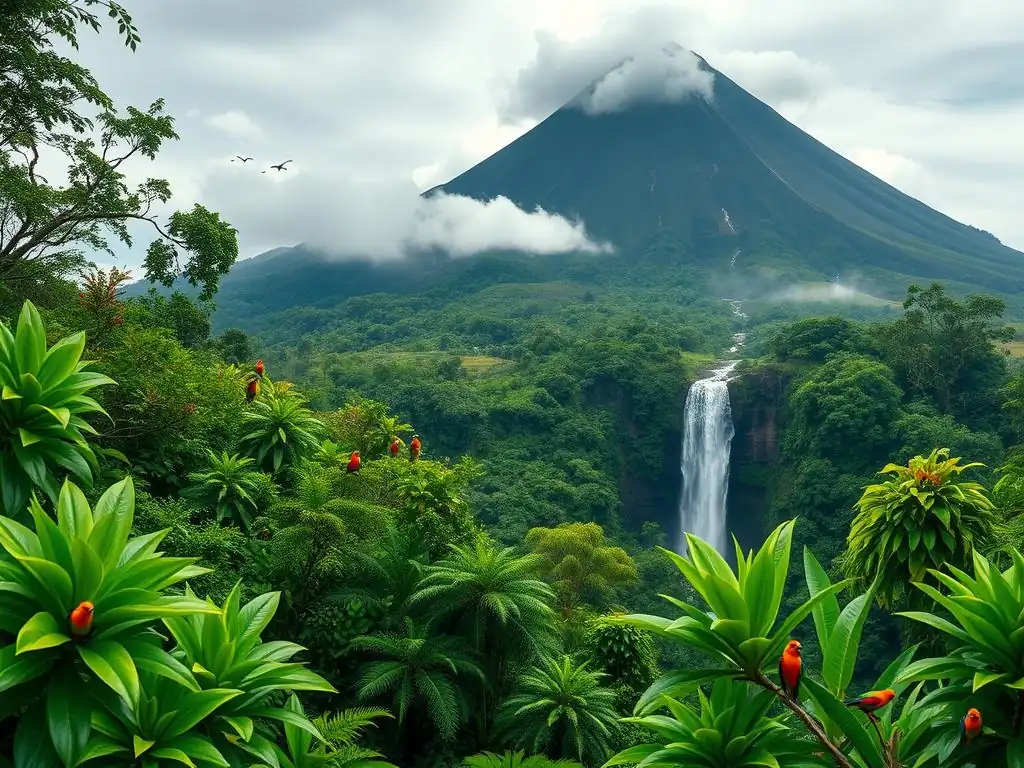
Rainforests situated on tropical volcanic slopes are recognized as exceptional biodiversity hotspots, harboring an unusually high concentration of plant and animal species, many of which are endemic. The combination of fertile volcanic soils, diverse habitats created by volcanic landscapes, and the evolutionary pressures exerted by volcanic activity, contributes to this remarkable biodiversity. These regions serve as natural laboratories for studying ecological adaptation and speciation, offering invaluable insights into the processes that generate and maintain biological diversity.
The unique biodiversity of these hotspots is not just about the sheer number of species; it is also about the uniqueness and ecological significance of these species. Many plants and animals found in volcanic rainforests have evolved specialized adaptations to their environment, making them particularly vulnerable to habitat loss and other threats.
Protecting these biodiversity hotspots is therefore crucial for conserving not only a large number of species but also a significant portion of the planet's unique evolutionary heritage. Understanding and appreciating the ecological value of rainforests on tropical volcanic slopes is essential for effective conservation efforts in these critical regions.
Endemic Species: Specialized Adaptations to Volcanic Environments
One of the most striking features of rainforests on tropical volcanic slopes is the high proportion of endemic species – plants and animals found exclusively in these specific locations. Endemism is a direct consequence of the unique environmental conditions and evolutionary pressures characteristic of volcanic regions. Over time, isolation and adaptation to these specific environments have led to the evolution of distinct species that are highly specialized to their volcanic habitats.
These endemic species often exhibit remarkable adaptations to volcanic soils, climate conditions, or specific ecological niches within the volcanic landscape. For example, some plants may have evolved to thrive in soils with high mineral content, while others may be adapted to colonize newly formed lava flows. The isolation of volcanic peaks and slopes further contributes to endemism, as populations become geographically separated and evolve along distinct evolutionary pathways. Studying endemic species in volcanic rainforests provides valuable insights into the processes of adaptation, speciation, and the intricate relationships between organisms and their environment.
Mount Cameroon: A Case Study in Volcanic Rainforest Ecology
Mount Cameroon, an active volcano in West Africa, provides a compelling case study of volcanic rainforest ecology. Rising from the coast of the Gulf of Guinea, Mount Cameroon's slopes are cloaked in a rich gradient of rainforest ecosystems, influenced by elevation, rainfall, and volcanic activity. The volcano's fertile volcanic soils, enriched by ash from past eruptions, support exceptionally lush and diverse rainforest vegetation.
The biodiversity of Mount Cameroon is remarkable, with high levels of endemism, particularly among plants, amphibians, and reptiles. The mountain's varied habitats, ranging from lowland rainforest to montane forest and afro-alpine vegetation, contribute to this diversity. Studies on Mount Cameroon have revealed the significant role of volcanic soils in supporting the rainforest's productivity and species richness.
The ongoing volcanic activity, while posing potential hazards, also ensures the continued renewal of soil nutrients, maintaining the long-term health and biodiversity of this exceptional volcanic rainforest ecosystem. Mount Cameroon serves as a living example of the dynamic interplay between volcanic forces and rainforest development.
Mount Kinabalu: High-Altitude Biodiversity on a Volcanic Peak
Mount Kinabalu, located in Sabah, Malaysian Borneo, stands as another remarkable example of a volcanic peak fostering exceptional rainforest biodiversity. While Mount Kinabalu is not currently volcanically active, its geological history as a volcanic intrusion has profoundly shaped its environment and biodiversity. The mountain's granitic bedrock, formed from ancient volcanic activity, weathers to produce soils that, while not as directly enriched by recent ashfall as active volcanoes, still possess unique mineral compositions that influence plant life.
Mount Kinabalu is renowned for its extraordinary plant diversity, particularly its orchid and Nepenthes pitcher plant species. The mountain's altitudinal gradient, from lowland rainforest to high-altitude cloud forest and alpine meadows, creates a wide range of habitats, each supporting distinct plant communities.
The unique geological substrate, combined with the diverse climate zones, has fostered the evolution of numerous endemic species, making Mount Kinabalu a global biodiversity hotspot. The case of Mount Kinabalu demonstrates that even in the absence of recent volcanic eruptions, the legacy of volcanic activity can continue to shape and enrich rainforest ecosystems, contributing to exceptional biodiversity at high altitudes.
The Influence of Volcanic Soil on Rainforest Plant Life
Volcanic soils are a critical factor underpinning the lushness and biodiversity of rainforests on tropical volcanic slopes. These soils, particularly Andisols, possess unique properties that make them exceptionally fertile and supportive of vigorous plant growth. Understanding the influence of volcanic soil on rainforest plant life requires delving into the specific characteristics of these soils and how they interact with plant physiology and ecosystem processes.
The key to the fertility of volcanic soils lies in their mineral composition, physical structure, and water-holding capacity. Volcanic ash, the parent material of many volcanic soils, is rich in essential plant nutrients. The weathering processes that transform volcanic ash into soil create Andisols with distinctive properties, including high porosity, excellent drainage, and a remarkable ability to retain both water and nutrients. These characteristics provide an optimal environment for plant roots to thrive, facilitating efficient nutrient uptake and supporting high rates of plant growth and productivity in rainforest ecosystems.
Andisols: The Key to Rainforest Fertility in Volcanic Regions
Andisols, derived from volcanic ash, are recognized as the key to the exceptional fertility of rainforests in volcanic regions. These soils are classified as a distinct soil order due to their unique properties, which are directly linked to their volcanic origin. Andisols are characterized by a high content of volcanic glass and short-range order minerals, such as allophane and imogolite. These components give Andisols their distinctive physical and chemical properties, setting them apart from other soil types found in tropical rainforests.
The presence of allophane and imogolite is particularly significant, as these minerals have a large surface area and a high capacity to retain water and nutrients, particularly phosphorus. Phosphorus is often a limiting nutrient in tropical soils, and Andisols' ability to effectively hold and release phosphorus makes them exceptionally fertile. This enhanced nutrient availability, combined with other favorable properties, makes Andisols ideal for supporting the dense and diverse plant life characteristic of rainforests on volcanic slopes. The prevalence of Andisols in volcanic regions is a primary reason why these areas are often biodiversity hotspots.
Andisol Formation and Properties: Weathering, Mineral Composition, and Water Retention
The formation of Andisols is a fascinating process driven by the weathering of volcanic ash under specific environmental conditions. Fresh volcanic ash, deposited during eruptions, undergoes rapid weathering due to high rainfall and warm temperatures typical of tropical regions. This weathering process leads to the breakdown of volcanic glass and the formation of secondary minerals, primarily allophane and imogolite. These minerals are crucial in defining the unique properties of Andisols.
The mineral composition of Andisols is characterized by a dominance of these short-range order minerals, along with primary minerals from the volcanic ash. This composition contributes to the soil's high porosity and low bulk density, resulting in excellent drainage and aeration.
Furthermore, allophane and imogolite have a large surface area and a net negative charge, giving Andisols an exceptional capacity to retain water and nutrients through mechanisms like anion and cation exchange. This combination of properties – weathering processes, mineral composition, and water retention – makes Andisols highly fertile and well-suited for supporting the lush vegetation of rainforests on tropical volcanic slopes.
The Impact of Soil Composition on Plant Growth and Nutrient Uptake
The unique composition of volcanic soils, particularly Andisols, has a profound impact on plant growth and nutrient uptake in rainforest ecosystems. The high nutrient content, especially phosphorus availability, in Andisols directly enhances plant productivity, leading to increased biomass production and faster growth rates compared to plants growing in less fertile soils. The balanced supply of essential nutrients in volcanic soils supports a wider range of plant species, contributing to higher plant diversity.
Furthermore, the physical properties of Andisols, such as their excellent drainage and water retention, create an optimal root environment. The porous structure of Andisols allows for good aeration, preventing waterlogging and promoting healthy root development. The high water-holding capacity ensures that plants have access to sufficient moisture, even during periods of slightly reduced rainfall. These combined effects of nutrient availability and favorable soil physical properties contribute to the vigorous plant growth and high biodiversity observed in rainforests thriving on volcanic soils. The soil composition is therefore a fundamental factor driving the ecological richness of these volcanic landscapes.
Case Studies: Rainforests Thriving on Volcanic Activity
To further illustrate the positive impact of volcanic activity on rainforest ecosystems, examining specific case studies is invaluable. Several regions around the world showcase thriving rainforests directly influenced by volcanic processes. These case studies highlight the resilience of rainforests in volcanic environments and demonstrate the long-term benefits of volcanic activity for biodiversity and ecosystem health. Focusing on regions like Costa Rica and Indonesia, both located in active volcanic zones, provides compelling examples of rainforests flourishing on volcanic slopes.
These case studies demonstrate the diverse ways in which volcanic activity shapes rainforest ecosystems, from the direct fertilization by volcanic ash in Costa Rica to the resilience of rainforests in Indonesia's Ring of Fire, which are adapted to frequent volcanic disturbances. By examining these real-world examples, we gain a deeper appreciation for the intricate and often beneficial relationship between tropical volcanoes and rainforest biodiversity. These regions serve as natural laboratories for understanding ecological adaptation and the long-term dynamics of volcanic rainforest ecosystems.
Costa Rica's Volcanic Rainforests: Biodiversity and Geothermal Activity
Costa Rica, situated within the Central American Volcanic Arc, is renowned for its exceptional biodiversity, a significant portion of which is directly linked to its volcanic activity. The country's volcanic rainforests, particularly those surrounding volcanoes like Poás, Irazú, and Arenal, are prime examples of ecosystems thriving on volcanic influence. The frequent deposition of volcanic ash from these active volcanoes has enriched the soils, creating highly fertile conditions for plant growth.
The rainforests of Costa Rica exhibit remarkable plant diversity, with a profusion of epiphytes, orchids, and bromeliads, often attributed to the nutrient-rich volcanic soils. Furthermore, geothermal activity associated with these volcanoes contributes to unique microclimates and habitats within the rainforest, further enhancing biodiversity. Hot springs and fumaroles, common in volcanic regions, create localized areas with distinct temperature and humidity regimes, supporting specialized plant and animal communities. Costa Rica's volcanic rainforests serve as a clear example of how volcanic activity, coupled with a tropical climate, can foster exceptional biodiversity and create unique ecological niches.
The Resilience of Rainforests on Indonesia's Ring of Fire
Indonesia, located within the Pacific Ring of Fire, is a nation characterized by intense volcanic activity. Despite the frequent volcanic eruptions, Indonesian rainforests demonstrate remarkable resilience and have adapted to these dynamic conditions. The volcanic soils of Indonesia, derived from the weathering of ash and lava, are highly fertile, supporting some of the most biodiverse rainforests in Asia. Regions like Sumatra, Java, and Sulawesi, all within the Ring of Fire, are home to vast tracts of rainforest teeming with unique plant and animal life.
The rainforests of Indonesia have evolved strategies to cope with volcanic disturbances, such as rapid regeneration after ashfall and adaptations to nutrient-rich soils. While volcanic eruptions can cause localized damage, the long-term effect is often beneficial, as the volcanic ash replenishes soil nutrients, sustaining the rainforest's productivity and biodiversity. The Indonesian archipelago showcases the remarkable resilience of rainforest ecosystems in the face of frequent volcanic activity and highlights the crucial role of volcanic processes in maintaining the long-term health and biodiversity of these vital tropical forests.
Threats to Rainforest Biodiversity on Volcanic Slopes

Despite their resilience and ecological richness, rainforests on tropical volcanic slopes face increasing threats that jeopardize their unique biodiversity. These threats, largely stemming from human activities and global environmental changes, pose significant challenges to the long-term survival of these valuable ecosystems. Understanding these threats is crucial for developing effective conservation strategies and ensuring the preservation of volcanic rainforest biodiversity.
The primary threats include deforestation and habitat loss, driven by agriculture, logging, and urbanization; climate change, which is altering temperature and rainfall patterns, impacting species distributions and ecosystem functioning; and invasive species, which can outcompete native flora and fauna, disrupting the delicate ecological balance. Addressing these threats requires a multi-faceted approach, involving sustainable land management practices, climate change mitigation and adaptation strategies, and effective control of invasive species. The future of rainforest biodiversity on volcanic slopes depends on our collective efforts to mitigate these threats and prioritize conservation.
Deforestation and Habitat Loss: A Major Concern
Deforestation and habitat loss represent a major and immediate threat to rainforest biodiversity on volcanic slopes. As human populations grow and demand for land increases, rainforests are increasingly cleared for agriculture, particularly for crops like palm oil, rubber, and coffee. Logging activities, both legal and illegal, further contribute to forest degradation and fragmentation. Urbanization and infrastructure development also encroach upon rainforest habitats, reducing the extent and connectivity of these ecosystems.
The consequences of deforestation are severe, leading to direct loss of habitat for countless species, fragmentation of remaining forests, and disruption of ecological processes. Habitat fragmentation isolates populations, reducing genetic diversity and making species more vulnerable to extinction. Deforestation also exacerbates soil erosion, nutrient loss, and alters local climate patterns, further degrading rainforest ecosystems. Addressing deforestation requires concerted efforts to promote sustainable land use practices, strengthen protected area management, and empower local communities to conserve rainforests.
Climate Change: Impacts on Volcanic Rainforest Ecosystems
Climate change poses a significant and long-term threat to rainforest biodiversity on volcanic slopes. Changes in temperature and rainfall patterns, driven by global warming, are already impacting rainforest ecosystems and are projected to intensify in the future. Increased temperatures can stress species adapted to cooler montane environments, potentially leading to range shifts and extinctions. Altered rainfall regimes can disrupt hydrological cycles, affecting water availability and increasing the frequency and intensity of droughts and floods.
Climate change can also exacerbate other threats, such as deforestation and invasive species. Drier conditions can increase the risk of forest fires, further degrading rainforest habitats. Changes in temperature and rainfall can also create more favorable conditions for invasive species to establish and spread, outcompeting native species. Mitigating climate change through global efforts to reduce greenhouse gas emissions is crucial for protecting rainforest biodiversity. Adaptation strategies, such as enhancing habitat connectivity and promoting climate-resilient species, are also essential for managing the impacts of climate change on volcanic rainforest ecosystems.
Invasive Species: Disrupting the Delicate Balance
Invasive species represent a subtle but insidious threat to the delicate ecological balance of rainforests on volcanic slopes. Introduced species, whether plants, animals, or pathogens, can outcompete native species for resources, alter habitat structure, and disrupt ecosystem processes. Volcanic rainforests, like other ecosystems, are vulnerable to invasion, particularly in areas that have been disturbed or fragmented by human activities.
Invasive plants can aggressively colonize disturbed areas, preventing the regeneration of native rainforest trees and altering forest composition. Invasive animals can prey on native fauna, compete for food and habitat, and spread diseases. For example, introduced rats and cats can have devastating impacts on native bird and reptile populations in island rainforests. Controlling and eradicating invasive species is challenging and costly, but essential for maintaining the integrity of rainforest ecosystems and protecting native biodiversity. Preventing new introductions through biosecurity measures and early detection and rapid response to new invasions are crucial components of invasive species management in volcanic rainforests.
Conservation Efforts: Protecting Volcanic Rainforest Biodiversity
Protecting the unique biodiversity of rainforests on tropical volcanic slopes requires concerted and comprehensive conservation efforts. Given the multiple threats facing these ecosystems, a multi-faceted approach is essential, encompassing sustainable practices, reforestation initiatives, and a strong commitment to preserving these natural wonders. Effective conservation strategies must address both the immediate threats and the underlying drivers of biodiversity loss, involving collaboration among governments, local communities, conservation organizations, and the private sector.
Key conservation efforts include establishing and effectively managing protected areas, promoting sustainable land use practices in surrounding landscapes, implementing reforestation and habitat restoration projects, and engaging local communities in conservation initiatives. Raising awareness about the ecological value of volcanic rainforests and the threats they face is also crucial for garnering public support and political will for conservation action. The long-term success of conservation efforts depends on a holistic approach that integrates ecological, social, and economic considerations.
Sustainable Practices: Balancing Development and Conservation
Achieving long-term conservation of rainforest biodiversity on volcanic slopes requires integrating sustainable practices into development activities. Balancing human needs with environmental protection is crucial for ensuring the long-term viability of these ecosystems. Sustainable agriculture practices, such as agroforestry and reduced-impact logging, can minimize the negative impacts of land use on rainforest habitats. Promoting ecotourism can provide economic incentives for conservation, generating revenue for local communities and supporting protected area management.
Sustainable development also involves responsible land-use planning, minimizing habitat fragmentation and maintaining connectivity between forest patches. Strengthening environmental regulations and enforcement is essential for preventing illegal deforestation and unsustainable resource extraction. Engaging local communities in conservation planning and implementation is critical for ensuring that conservation efforts are effective and equitable. Sustainable practices offer a pathway to reconcile development with conservation, ensuring that rainforests on volcanic slopes can continue to provide ecological and economic benefits for future generations.
Reforestation Initiatives: Restoring Degraded Volcanic Landscapes
Reforestation initiatives play a vital role in restoring degraded volcanic landscapes and enhancing rainforest biodiversity. In areas that have been deforested or degraded, active reforestation can accelerate the process of ecological recovery, restoring forest cover and habitat for wildlife. Reforestation efforts should focus on planting native tree species that are adapted to volcanic soils and local climate conditions. Using a diverse mix of species can enhance biodiversity and ecosystem resilience.
Reforestation projects can also contribute to carbon sequestration, helping to mitigate climate change. Involving local communities in reforestation efforts can provide employment opportunities and foster a sense of ownership and stewardship of the restored landscapes. Reforestation is not a quick fix, and it takes time for restored forests to mature and fully recover their biodiversity. However, well-planned and implemented reforestation initiatives are a crucial tool for reversing deforestation and restoring the ecological integrity of volcanic rainforest landscapes.
The Importance of Protecting these Unique Ecosystems
Protecting rainforests on tropical volcanic slopes is of paramount importance, not only for conserving their unique biodiversity but also for the broader ecological and societal benefits they provide. These ecosystems are hotspots of endemism, harboring species found nowhere else on Earth. They play a crucial role in regulating water cycles, preventing soil erosion, and sequestering carbon, contributing to climate change mitigation. Rainforests also provide essential ecosystem services, such as clean water, timber, and non-timber forest products, supporting local livelihoods and economies.
Furthermore, rainforests on volcanic slopes hold immense scientific and educational value, serving as natural laboratories for studying ecological processes, adaptation, and evolution. They are also places of great natural beauty, offering opportunities for ecotourism and recreation. The loss of these unique ecosystems would represent a significant loss of biodiversity, ecological function, and natural heritage. Protecting rainforests on tropical volcanic slopes is therefore a global responsibility, requiring urgent and sustained conservation action to ensure their long-term survival.
Conclusion: The Enduring Legacy of Tropical Volcanoes on Rainforest Biodiversity
The relationship between tropical volcanoes and rainforest biodiversity is a testament to the dynamic and interconnected nature of Earth's systems. Volcanoes, often perceived as forces of destruction, play a surprisingly constructive role in shaping and enriching rainforest ecosystems. The fertile volcanic soils, created from ash deposits, provide the foundation for lush vegetation and high plant productivity. Volcanic landscapes create diverse habitats, promoting ecological succession and fostering exceptional biodiversity. The enduring legacy of tropical volcanoes is therefore intricately woven into the fabric of rainforest ecosystems, contributing to their unique character and ecological significance.
Understanding this interplay between geological forces and biological richness is crucial for appreciating the complexity and resilience of nature. Rainforests on tropical volcanic slopes are not only biodiversity hotspots but also dynamic systems that have evolved in response to volcanic activity. Their continued health and survival depend on our ability to recognize their ecological value and take effective action to protect them from the growing threats they face. The enduring legacy of tropical volcanoes serves as a reminder of the profound and often unexpected ways in which geological processes shape life on Earth.
A Call to Action: Preserving the Natural Wonders of Volcanic Rainforests
Preserving the natural wonders of volcanic rainforests is a call to action that requires global awareness and concerted efforts. These unique ecosystems are facing unprecedented threats from deforestation, climate change, and invasive species. Protecting them is not just an environmental imperative; it is also a moral responsibility to safeguard the planet's biodiversity and ensure the long-term sustainability of our natural resources. We must act now to conserve these irreplaceable ecosystems for future generations.
This call to action extends to individuals, communities, governments, and organizations worldwide. Individuals can make a difference by supporting sustainable products, reducing their carbon footprint, and advocating for conservation policies. Communities can play a vital role in managing and protecting local rainforest resources. Governments must strengthen environmental regulations, invest in protected area management, and promote sustainable development. Conservation organizations can contribute through research, education, and on-the-ground conservation projects. Together, we can make a difference in preserving the natural wonders of volcanic rainforests and ensuring their enduring legacy.
Further Exploration: Resources for Learning More about Volcanic Ecology
For those eager to delve deeper into the fascinating world of volcanic ecology and the interplay between volcanoes and rainforests, numerous resources are available for further exploration. Academic journals such as "Journal of Volcanology and Geothermal Research," "Ecology," and "Biotropica" publish cutting-edge research on volcanic processes, soil science, and rainforest ecology. Organizations like the Smithsonian Institution's Global Volcanism Program and the International Union for Conservation of Nature (IUCN) offer valuable information and resources on volcanoes and biodiversity conservation.
Websites such as VolcanoExplorers.org provide accessible information and educational materials on volcanic phenomena and their ecological impacts. Books and documentaries on volcanoes and rainforests offer engaging and informative perspectives on these topics. Exploring these resources will deepen your understanding of the intricate relationships between geological forces and biological diversity, inspiring further appreciation for the natural wonders of volcanic rainforests and the importance of their conservation.
Frequently Asked Questions
What makes rainforests on tropical volcanoes so biodiverse?
The unique biodiversity stems from the combination of fertile volcanic soils and the consistent rainfall typical of rainforest environments, creating ideal conditions for plant growth and diversification. This also leads to specialized niches for animal life.
How does volcanic activity contribute to the richness of these ecosystems?
Volcanic eruptions deposit nutrient-rich ash that fertilizes the soil, promoting rapid plant growth. This constant renewal allows different species to colonize and adapt, boosting biodiversity.
What are some of the specific challenges facing rainforests on tropical volcanoes?
These ecosystems are vulnerable to deforestation, climate change, and invasive species, which can disrupt the delicate balance of the rainforest and lead to biodiversity loss. Volcanic eruptions themselves can also pose immediate threats.
Are there any unique species that are only found on tropical volcanic rainforests?
Yes, the isolation of these rainforests on volcanic slopes can lead to the evolution of endemic species, meaning they are found nowhere else on Earth. Examples include specific types of orchids, insects, and amphibians.
How can we protect the biodiversity of these unique environments?
Conservation efforts include establishing protected areas, promoting sustainable tourism, and supporting research to understand the complex interactions within these ecosystems and mitigate threats.
Final Reflection: Embracing Volcanic Life
The exploration of tropical volcanoes and their surprising role in fostering rainforest biodiversity reveals a profound truth: destruction can be a catalyst for creation. What might seem like barren landscapes, scarred by eruptions, are in reality cradles of unique life, showcasing nature's resilience and adaptability in the face of adversity. This understanding is more relevant than ever as we grapple with the impacts of climate change and habitat loss, highlighting the importance of protecting these dynamic ecosystems.
The influence of volcanic activity on rainforest biodiversity extends far beyond mere survival; it shapes the very fabric of these environments, driving evolution and fostering specialized adaptations. Witnessing this intricate dance between destruction and renewal has profoundly shifted my perspective on the power of nature's regenerative capacity. In the midst of winter, I found there was, within me, an invincible summer.
- Albert Camus. This quote encapsulates the spirit of these volcanic rainforests, where life finds a way to flourish even in the face of seemingly insurmountable challenges.
As we conclude this journey into the heart of tropical volcanoes and their rainforests, I invite you to reflect on the lessons learned. Consider how the principles of resilience, adaptation, and the unexpected beauty born from adversity can be applied to your own life. Embrace the potential for growth and renewal, even in the face of challenges, and remember that even from the ashes, new life can emerge, richer and more vibrant than before.
Ignite Your Inner Explorer: Fuel Biodiversity's Future!
Thank you for joining us on this fascinating journey into the vibrant rainforests nurtured by tropical volcanoes. We hope you've discovered a newfound appreciation for the unique biodiversity flourishing on these volcanic slopes. Now, it's time to turn that appreciation into action!
Here are a few ways you can contribute to understanding and protecting these incredible ecosystems:
- Become a Citizen Scientist: Contribute to vital research by submitting your own observations of flora and fauna on volcanic landscapes. Share your photos, videos, and notes through our designated submission portal on volcanoexplorers.org!
- Dive deeper into the science: Explore our recommended reading list of scientific papers and documentaries on volcanic rainforests, available on our website.
- Spread the word! Share this article with three friends or family members who are passionate about nature or volcanology. Let's spark a conversation!
What small change will you make today to support the preservation of these unique volcanic rainforests? Share your ideas in the comments below!