
The Year the Sun Dimmed: Witnessing the Immediate Climate Impact of a Major Eruption

Welcome to Volcano Explorers, where the Earth's fiery heart is revealed! Ever wondered how a single volcanic blast can send ripples across the globe, altering our climate in ways we're only beginning to understand? Prepare to uncover the surprising and sometimes devastating climate impact of volcanic eruptions and discover how these natural events have shaped our world's past, present, and potentially, its future. Dive in... if you dare!
- The Year Without a Summer: Witnessing the Immediate Climate Impact of a Major Eruption
- Introduction: Understanding the Climate Impact of Volcanic Eruptions
- Case Study: The 1815 Mount Tambora Eruption - A Prime Example of Volcanic Climate Forcing
- Short-Term Climate Effects: The Year Without a Summer
- Regional Variations in Climate Impact: A Global Perspective
- Beyond Temperature: Other Environmental Impacts of the Eruption
- Distinguishing Volcanic Climate Forcing from Other Climate Drivers
- Long-Term Implications and Lessons Learned
- Conclusion: The Enduring Legacy of Volcanic Eruptions on Earth's Climate
-
Frequently Asked Questions
- What is the immediate climate impact of a major volcanic eruption, as discussed in "The Year the Sun Dimmed"?
- How does the size and type of volcanic eruption influence its climate impact?
- What are sulfate aerosols, and why are they important in understanding the climate impact of volcanic eruptions?
- Besides temperature changes, what other climate-related effects can result from a major volcanic eruption?
- How long does the climate impact of a major volcanic eruption typically last?
- Final Reflection: Echoes of Ash, Seeds of Change
- Ignite Your Curiosity: Become a Climate Witness!
The Year Without a Summer: Witnessing the Immediate Climate Impact of a Major Eruption
Introduction: Understanding the Climate Impact of Volcanic Eruptions
Volcanoes and Climate: An Interconnected System
Volcanoes, often perceived as purely destructive forces, play a significant role in shaping Earth's climate system. While their immediate impacts, such as lava flows and ashfalls, are localized and dramatic, the less visible influence of volcanic emissions on the atmosphere has far-reaching consequences for global climate patterns. These natural events release massive quantities of gases and particles into the stratosphere, the layer of the atmosphere above the troposphere, where weather occurs.
Unlike tropospheric aerosols that are quickly washed out by rain, stratospheric aerosols can persist for months or even years, interacting with incoming solar radiation and altering the Earth's energy balance. This interaction is the key to understanding the profound and sometimes long-lasting climate impact of volcanic eruptions.
The relationship between volcanoes and climate is a complex interplay of cause and effect. Volcanic eruptions are not just passive responders to climate changes; they are active agents capable of triggering significant shifts in global temperatures, precipitation patterns, and atmospheric circulation. Studying past eruptions, particularly those with documented climate impacts, provides invaluable insights into the Earth's climate system's sensitivity and resilience.
By analyzing historical records and paleoclimate data, scientists can reconstruct past volcanic events and their associated climate responses, helping to refine climate models and improve predictions of future climate scenarios, both natural and anthropogenic. Understanding this interconnected system is crucial for comprehending the full spectrum of factors that govern our planet's climate.
The Immediate Aftermath: Volcanic Ash and Gases in the Atmosphere
The immediate aftermath of a major volcanic eruption is characterized by a dramatic injection of volcanic materials into the atmosphere. The most visually striking component is volcanic ash, composed of tiny fragments of pulverized rock, minerals, and volcanic glass, blasted skyward by the force of the eruption. While ash can cause immediate disruptions like air travel cancellations and reduced visibility, its direct climate impact is relatively short-lived.
Larger ash particles tend to fall out of the atmosphere within days or weeks, primarily affecting regions downwind of the volcano. However, finer ash particles, reaching the stratosphere, can contribute to a temporary cooling effect by reflecting sunlight back into space.
More significant for long-term climate impact are volcanic gases, particularly sulfur dioxide (SO₂). Once in the stratosphere, sulfur dioxide undergoes chemical reactions to form sulfate aerosols, microscopic droplets of sulfuric acid. These aerosols are highly effective at scattering incoming solar radiation, reducing the amount of sunlight reaching the Earth's surface.
Unlike ash, sulfate aerosols can persist in the stratosphere for one to three years, spreading globally due to stratospheric winds and causing a more prolonged cooling effect on a planetary scale. Other volcanic gases, such as carbon dioxide (CO₂) and water vapor (H₂O), are also released, but their immediate climate impact is less pronounced compared to sulfur dioxide, especially in the short term. While volcanic CO₂ emissions are substantial over geological timescales, they are dwarfed by present-day anthropogenic CO₂ emissions.
Case Study: The 1815 Mount Tambora Eruption - A Prime Example of Volcanic Climate Forcing
Pre-Eruption Conditions: Setting the Stage for Climate Disruption in 1815
The year 1815 began under seemingly normal climatic conditions, at least on a global scale. While regional weather variations always exist, there were no pre-existing major climate anomalies that would have inherently predisposed the world to the extreme weather events that followed. The early 19th century was already experiencing the tail end of the Little Ice Age, a period of generally cooler global temperatures that had lasted for several centuries.
However, the climate system was considered to be in a relatively stable state prior to the Tambora eruption. Agricultural practices and societal structures were adapted to the prevailing climate norms of the time.
However, subtle background conditions might have amplified the impact of the eruption. For example, the oceans, acting as massive heat reservoirs, could have been in a phase that was less resilient to external forcing. Furthermore, regional climate patterns, such as the North Atlantic Oscillation, could have been in a state that made certain areas more vulnerable to temperature drops and altered precipitation. While not directly causing the climate disruption, these pre-existing conditions could have influenced the severity and distribution of the impacts following the Tambora eruption, highlighting the complexity of climate system responses to volcanic forcing.
The Eruption's Magnitude: VEI 7 and Massive Sulfur Dioxide Release
The eruption of Mount Tambora in April 1815 was one of the most powerful volcanic events in recorded history. It is classified as a Volcanic Explosivity Index (VEI) 7 eruption, the second-highest level on the scale, indicating an exceptionally large and explosive event. Estimates suggest that the eruption ejected approximately 150 cubic kilometers of volcanic material, including ash, pumice, and gases, into the atmosphere. This colossal eruption dwarfed other volcanic events of the preceding centuries and released an unprecedented amount of volcanic gases.
Crucially, the Tambora eruption was exceptionally rich in sulfur dioxide. Scientists estimate that around 60 million tons of sulfur dioxide were injected into the stratosphere. This massive sulfur dioxide release was significantly larger than that of other notable eruptions, such as Krakatoa in 1883 or Pinatubo in 1991. The sheer quantity of sulfur dioxide was the primary driver behind the eruption's profound and widespread climate impact. The subsequent formation of sulfate aerosols from this sulfur dioxide created a global veil that significantly reduced incoming solar radiation, leading to the phenomenon known as the "Year Without a Summer."
Short-Term Climate Effects: The Year Without a Summer
Global Temperature Drop: Measuring the Cooling Effect After the 1815 Eruption
The most immediate and widely recognized climate effect of the Tambora eruption was a significant global temperature drop. Historical weather records from around the world, including temperature measurements, harvest dates, and anecdotal accounts, all point to a remarkably cold year in 1816. Global average temperatures are estimated to have decreased by approximately 0.4 to 0.7 °C (0.7 to 1.3 °F) in the year following the eruption. While this might seem like a small number, it represents a substantial shift in global climate on an annual timescale, especially considering the pre-industrial climate context.
In certain regions, particularly in the Northern Hemisphere, the temperature drop was even more pronounced. Parts of Europe and North America experienced temperature decreases exceeding 1 to 2 °C (1.8 to 3.6 °F) during the summer months of 1816. This resulted in widespread frost and snow in June, July, and August in areas that normally experience warm summers.
The unusual cold persisted throughout the year, leading to a drastically shortened growing season and devastating consequences for agriculture. The "Year Without a Summer" became a stark reminder of the power of volcanic eruptions to alter global climate and disrupt human societies.
Sulfate Aerosols: Blocking Sunlight After the Tambora Eruption
The primary mechanism behind the global cooling after the Tambora eruption was the formation of sulfate aerosols in the stratosphere. As mentioned earlier, the massive release of sulfur dioxide from the volcano led to the creation of a vast cloud of these microscopic particles high in the atmosphere. These sulfate aerosols acted as a reflective layer, scattering a portion of incoming solar radiation back into space before it could reach the Earth's surface. This process is known as "solar radiation scattering" or "backscattering."
The effectiveness of sulfate aerosols in blocking sunlight is directly related to their concentration and size distribution in the stratosphere. The Tambora eruption produced a particularly dense and widespread aerosol cloud, maximizing its sunlight-blocking effect. Scientists have used climate models and ice core records to reconstruct the stratospheric aerosol optical depth (a measure of aerosol concentration) following the Tambora eruption. These reconstructions confirm a substantial increase in aerosol optical depth, indicating a significant reduction in solar radiation reaching the Earth's surface, thus driving the global cooling observed in 1816.
Impact on Precipitation Patterns: Extensive Flooding and Crop Failures
Beyond the dramatic temperature drop, the Tambora eruption also significantly altered global precipitation patterns. The changes in atmospheric circulation and temperature gradients caused by the sulfate aerosols disrupted established weather systems. In many regions, this resulted in increased rainfall and widespread flooding. For example, parts of Europe experienced unusually heavy and persistent rainfall throughout the summer of 1816, exacerbating the agricultural crisis caused by the cold temperatures.
Conversely, other regions experienced drought conditions. The altered monsoon patterns in Asia, potentially linked to the volcanic aerosols, led to reduced rainfall in some areas, contributing to crop failures and food shortages. The disruption of precipitation patterns was not uniform globally, but rather characterized by regional variations, with some areas experiencing excessive rainfall and flooding, while others suffered from drought. These altered precipitation patterns, combined with the cooling temperatures, had a devastating impact on agriculture worldwide, leading to widespread crop failures and famine in many regions.
Regional Variations in Climate Impact: A Global Perspective
Northern Hemisphere Effects: Widespread Crop Failures and Famine
The Northern Hemisphere bore the brunt of the climate impacts from the Tambora eruption, particularly in Europe and North America. The unusually cold summer of 1816 led to widespread crop failures across these regions. In Europe, grain harvests were disastrously low, with some areas experiencing near-total crop losses. The price of grain soared, leading to widespread famine and social unrest. Ireland, already facing poverty and food insecurity, was particularly hard hit, experiencing severe famine conditions.
In North America, the "Year Without a Summer" also caused significant agricultural distress. New England experienced repeated frosts throughout the summer months, destroying crops of corn, wheat, and other staples. Canada also suffered from severe cold and crop failures. The economic consequences of these agricultural losses were profound, contributing to economic hardship and migration in some areas. The Northern Hemisphere, with its large landmass and dense population, was especially vulnerable to the disruption of agricultural cycles caused by the volcanic climate forcing.
Southern Hemisphere Effects: Disrupted Weather Patterns and Agricultural Impacts
While the Northern Hemisphere experienced the most pronounced temperature drops, the Southern Hemisphere was not immune to the climate impacts of the Tambora eruption. Although temperature records are less comprehensive for the Southern Hemisphere in the early 19th century, available data and anecdotal evidence suggest that weather patterns were also significantly disrupted. Changes in atmospheric circulation and ocean temperatures, driven by the volcanic aerosols, likely affected weather systems across the Southern Hemisphere.
Reports from regions like India and parts of South America indicate unusual weather conditions in the years following the eruption. Altered monsoon patterns in Asia, possibly linked to the eruption, impacted agricultural yields in some areas. While the cooling effect might have been less severe compared to the Northern Hemisphere, the disruption of established weather patterns still had noticeable impacts on agriculture and local climates in various parts of the Southern Hemisphere. Further research and analysis of historical records are needed to fully understand the extent and nature of the Tambora eruption's climate impacts in the Southern Hemisphere.
Tropical Regions: Altered Monsoon Patterns
Tropical regions, while generally less susceptible to temperature drops from volcanic eruptions due to their equatorial location and consistent solar radiation, can experience significant climate impacts through alterations in monsoon patterns. Monsoon systems are highly sensitive to changes in atmospheric circulation and temperature gradients, both of which can be influenced by volcanic aerosols. The Tambora eruption likely disrupted monsoon patterns in various tropical regions, particularly in Asia and Africa.
Historical records and climate reconstructions suggest that the eruption may have weakened or shifted the timing of monsoon rains in some areas. This could have resulted in reduced rainfall in some regions and increased rainfall in others, leading to both drought and flooding depending on the specific location.
The alteration of monsoon patterns can have profound consequences for agriculture in tropical regions, where rainfall is often the primary source of water for crops. Understanding the complex interplay between volcanic aerosols and monsoon dynamics is crucial for assessing the full spectrum of climate impacts from major volcanic eruptions in the tropics.
Beyond Temperature: Other Environmental Impacts of the Eruption
Ozone Depletion: Potential Impact of Volcanic Halogens (Less Significant in this Case)
While sulfur dioxide is the primary volcanic gas responsible for climate cooling, volcanic eruptions also release other gases, including halogens like chlorine and bromine. These halogens, particularly when they reach the stratosphere, can contribute to ozone depletion. Ozone in the stratosphere is crucial for absorbing harmful ultraviolet (UV) radiation from the sun, protecting life on Earth. Volcanic halogens can catalytically destroy ozone molecules, potentially leading to increased UV radiation reaching the surface.
However, in the case of the Tambora eruption, the impact on ozone depletion is considered to be less significant compared to the cooling effect from sulfate aerosols. While Tambora did release halogens, the amount was likely smaller compared to the massive sulfur dioxide emission. Furthermore, the chemical processes leading to ozone depletion are complex and depend on various factors, including stratospheric temperatures and the presence of other chemicals. While volcanic halogens can contribute to ozone depletion, the primary climate impact of the Tambora eruption was undoubtedly driven by sulfate aerosol-induced cooling.
Acid Rain: Effects on Ecosystems and Infrastructure
Volcanic eruptions, particularly those rich in sulfur dioxide, can lead to acid rain. When sulfur dioxide reacts with water and oxygen in the atmosphere, it forms sulfuric acid. This sulfuric acid can then fall back to Earth as acid rain, snow, or fog. Acid rain can have detrimental effects on ecosystems, infrastructure, and human health. It can acidify lakes and soils, damaging forests and aquatic life. Acid rain can also corrode buildings, monuments, and metal structures.
Following the Tambora eruption, increased acidity in precipitation was likely observed in regions downwind of the volcano and potentially more broadly due to the global spread of sulfate aerosols. While direct records of acid rain measurements from 1816 are limited, the potential for increased acidity and its associated environmental impacts would have been present. The extent of acid rain damage would have depended on factors such as the buffering capacity of soils and water bodies in different regions.
Ocean Acidification: Limited Direct Impact Documented
Ocean acidification is the ongoing decrease in the pH of the Earth's oceans, primarily caused by the absorption of carbon dioxide (CO₂) from the atmosphere. While volcanic eruptions do release CO₂, their contribution to long-term ocean acidification is generally considered to be minor compared to anthropogenic CO₂ emissions from burning fossil fuels. The CO₂ released by volcanoes is part of the natural carbon cycle, and the oceans have a large capacity to absorb and buffer changes in atmospheric CO₂ concentrations over long timescales.
In the case of the Tambora eruption, the direct impact on ocean acidification is likely to have been limited and short-lived. While the eruption released a substantial amount of CO₂, the overall increase in atmospheric CO₂ concentration was relatively small compared to the massive sulfur dioxide release. The cooling effect of sulfate aerosols would have also partially offset any potential warming or acidification effect from the volcanic CO₂. Therefore, ocean acidification is not considered to be a major environmental impact directly associated with the Tambora eruption or similar volcanic events, especially in the short term.
Distinguishing Volcanic Climate Forcing from Other Climate Drivers
Natural Variability vs. Volcanic Influence in the Early 19th Century
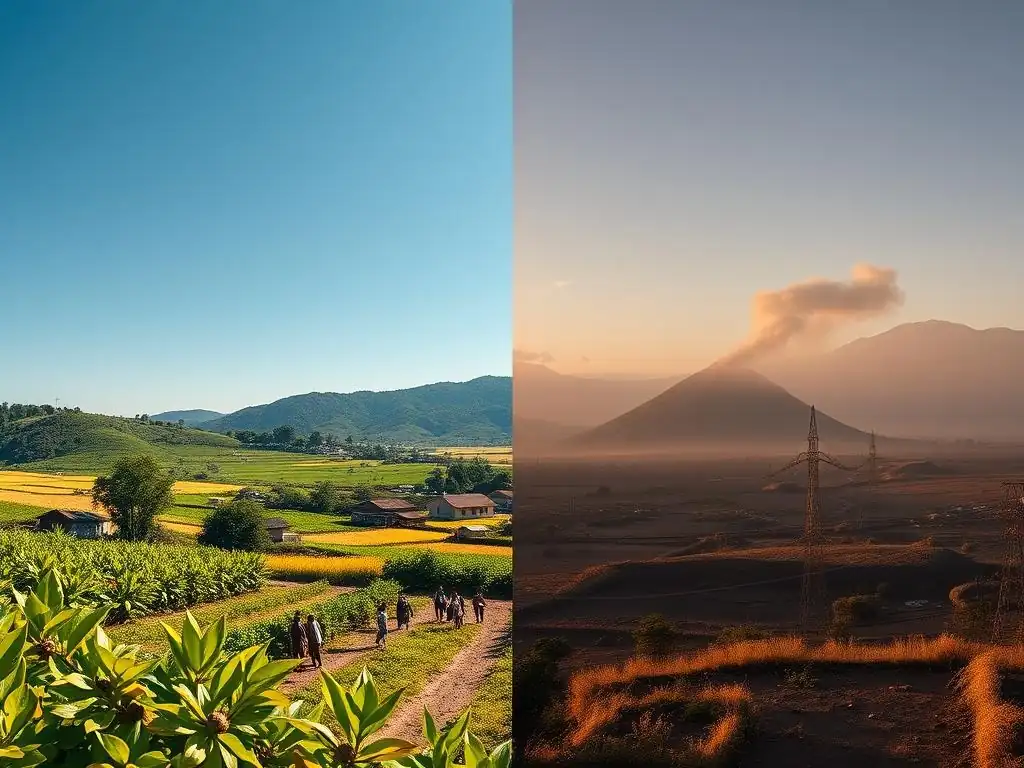
The early 19th century was a period of natural climate variability, with fluctuations in temperature and weather patterns already occurring. Distinguishing the specific influence of the Tambora eruption from this background climate variability is crucial for understanding its true climate impact. Without the eruption, the climate system would still have exhibited natural fluctuations, driven by factors like solar variations, ocean-atmosphere interactions (e.g., El Niño-Southern Oscillation), and internal climate system dynamics.
Scientists use climate models and statistical techniques to separate the volcanic signal from natural climate noise. By comparing climate reconstructions and model simulations with and without volcanic forcing, they can isolate the specific contribution of the Tambora eruption to the observed climate anomalies in 1816 and subsequent years. These studies consistently show that the Tambora eruption exerted a significant and detectable cooling influence that went beyond the range of natural climate variability of that period. The magnitude and global extent of the cooling observed in 1816 strongly suggest a dominant volcanic forcing.
Volcanic Cooling vs. Long-Term Warming Trends
It is important to differentiate the short-term cooling effect of volcanic eruptions from long-term global warming trends, particularly in the context of current anthropogenic climate change. Volcanic eruptions, like Tambora, cause temporary cooling by injecting sulfate aerosols into the stratosphere, which reflects sunlight. This cooling effect typically lasts for a few years until the aerosols are removed from the stratosphere. In contrast, long-term warming is driven by the accumulation of greenhouse gases in the troposphere, primarily from human activities, which traps heat and leads to a sustained increase in global temperatures.
While volcanic eruptions can temporarily mask or offset some of the warming trend, they do not reverse or counteract long-term global warming. Furthermore, the cooling effect of volcanic eruptions is a natural phenomenon with its own set of environmental and societal consequences, as exemplified by the "Year Without a Summer." Understanding the distinct mechanisms and timescales of volcanic cooling and anthropogenic warming is crucial for developing comprehensive climate strategies that address both natural climate variability and human-induced climate change.
Long-Term Implications and Lessons Learned
Recovery of the Climate System: The Return to Normal Temperatures
Following the "Year Without a Summer," the climate system gradually recovered from the perturbation caused by the Tambora eruption. The sulfate aerosols in the stratosphere slowly settled out over a period of one to three years. As the aerosol veil thinned, solar radiation reaching the Earth's surface gradually returned to normal levels. Global temperatures slowly rebounded, and by the late 1810s and early 1820s, climate conditions had largely returned to pre-eruption norms.
The recovery timescale highlights the transient nature of volcanic climate forcing. Unlike long-lived greenhouse gases, sulfate aerosols are relatively short-lived in the stratosphere. This means that the climate impact of volcanic eruptions, while significant in the short term, is not permanent. The Earth's climate system has a natural capacity to recover from these volcanic perturbations, demonstrating its resilience over decadal timescales. However, the "Year Without a Summer" serves as a reminder of the potential for even short-term climate shocks to have profound and lasting societal impacts.
Predicting Future Volcanic Climate Impacts: The Importance of Monitoring Sulfur Dioxide
Predicting the climate impact of future volcanic eruptions is crucial for disaster preparedness and climate risk assessment. The key factor determining the magnitude of volcanic climate forcing is the amount of sulfur dioxide injected into the stratosphere. Monitoring sulfur dioxide emissions from volcanoes is therefore essential for anticipating potential climate disruptions. Space-based instruments and ground-based networks are used to track volcanic gas plumes and measure sulfur dioxide concentrations.
Real-time monitoring of volcanic activity allows scientists to assess the potential for significant sulfur dioxide release and to issue alerts if a major eruption with climate implications is likely. Climate models are used to simulate the dispersion of volcanic aerosols and project the potential cooling effect based on the estimated sulfur dioxide emission. Improved monitoring capabilities and advanced climate models are continuously enhancing our ability to predict and prepare for the climate impacts of future volcanic eruptions.
Mitigation Strategies: Emergency Food Supplies and Disaster Preparedness
While we cannot prevent volcanic eruptions, understanding their climate impacts allows us to develop mitigation strategies to lessen their societal consequences. The "Year Without a Summer" demonstrated the vulnerability of agricultural systems to volcanic climate shocks, leading to widespread famine. A key mitigation strategy is to establish and maintain emergency food supplies to buffer against potential crop failures following a major eruption. International cooperation and food aid programs can play a crucial role in distributing resources to affected regions.
Disaster preparedness plans should also incorporate the potential for volcanic climate impacts. This includes developing early warning systems, strengthening infrastructure resilience to extreme weather events (such as floods and droughts), and promoting diversified agricultural practices that are less vulnerable to climate shocks. Learning from historical events like the "Year Without a Summer" is essential for building more resilient societies that can better withstand the challenges posed by natural climate variability, including volcanic eruptions.
Conclusion: The Enduring Legacy of Volcanic Eruptions on Earth's Climate
Understanding Volcanic Eruptions and their Climate Impact for a Sustainable Future
The "Year Without a Summer," triggered by the 1815 Tambora eruption, stands as a stark historical example of the profound and immediate climate impact of volcanic eruptions. This event vividly illustrates the interconnectedness of the Earth system, where geological processes deep within the planet can directly influence global climate patterns and human societies on the surface. The eruption's legacy extends beyond the immediate cooling and societal disruptions; it provides invaluable lessons for understanding Earth's climate sensitivity, natural climate variability, and the potential for abrupt climate change.
By studying past volcanic eruptions and their climate consequences, we gain a deeper appreciation for the complex interplay of factors that shape our planet's climate. This knowledge is crucial for building a more sustainable future in the face of both natural and anthropogenic climate challenges.
Understanding volcanic climate forcing helps refine climate models, improve predictions of future climate scenarios, and inform strategies for disaster preparedness and climate resilience. As we navigate the complexities of a changing climate, the lessons learned from the "Year Without a Summer" remain profoundly relevant, reminding us of the power of natural events to reshape our world and the importance of preparedness and understanding in mitigating their impacts.
Frequently Asked Questions
What is the immediate climate impact of a major volcanic eruption, as discussed in "The Year the Sun Dimmed"?
The immediate impact is primarily a cooling effect caused by the release of sulfur dioxide gas into the stratosphere. This gas forms sulfate aerosols that reflect sunlight back into space, reducing the amount of solar radiation reaching the Earth's surface.
How does the size and type of volcanic eruption influence its climate impact?
Larger eruptions that inject significant amounts of sulfur dioxide into the stratosphere have a greater climate impact. The type of eruption also matters; explosive eruptions are more effective at sending aerosols high into the atmosphere.
What are sulfate aerosols, and why are they important in understanding the climate impact of volcanic eruptions?
Sulfate aerosols are tiny particles formed from sulfur dioxide gas in the stratosphere. They're crucial because they reflect incoming solar radiation, leading to a temporary global cooling effect. The longevity of these aerosols in the stratosphere determines the duration of the climate impact.
Besides cooling, eruptions can affect precipitation patterns, causing drought in some areas and increased rainfall in others. They can also influence atmospheric circulation and even impact ocean currents, leading to complex regional climate changes.
How long does the climate impact of a major volcanic eruption typically last?
The most significant climate impact usually lasts for one to three years. After that, the sulfate aerosols gradually fall out of the stratosphere, and the climate returns to its pre-eruption state. However, some long-term effects on ocean temperatures can be observed.
Final Reflection: Echoes of Ash, Seeds of Change
The evidence presented throughout this article underscores a vital truth: the climate impact of volcanic eruptions is not a distant, theoretical concern, but a tangible force shaping our present reality. The year the sun dimmed serves as a stark reminder of the immediate and profound consequences that these natural events can unleash upon our planet, influencing weather patterns, agricultural yields, and even global health.
The chilling effect of volcanic ash, both literally and figuratively, continues to resonate in our understanding of Earth's delicate balance. This historical event, and others like it, compels us to acknowledge the interconnectedness of natural processes and human well-being. The Earth does not belong to us: we belong to the Earth.
- Chief Seattle. This sentiment encapsulates the responsibility we bear to comprehend and mitigate the risks posed by such events, not just for ourselves, but for generations to come.
As we reflect on the year the sun dimmed, let us not simply dwell on the darkness, but rather, find inspiration in the resilience of life and the power of human ingenuity. Consider how you can contribute to a more sustainable future, one where we are better prepared for the inevitable challenges that nature presents. Let the lessons learned from past eruptions fuel our commitment to understanding and addressing the broader climate crisis, ensuring that the sun continues to shine brightly for all.
Ignite Your Curiosity: Become a Climate Witness!
Thanks for exploring the fascinating, and sometimes alarming, world of volcanic eruptions and their immediate impact on our climate. Now that you understand the power of these events, it's time to take action.
Here's how you can continue to learn and contribute:
- Become a Citizen Scientist: Report unusual weather patterns or changes in atmospheric conditions following major volcanic activity using our specialized reporting form. Every observation helps!
- Explore detailed case studies of past eruptions and their societal impacts using our interactive map. Understand the long-term effects and the lessons we can learn from history.
- Share this article and spark conversations about the connection between volcanic activity and our global climate. You might be surprised by how many people haven't considered this vital link!
What small, daily action will you take to protect our climate and honor the lessons learned from volcanic eruptions? Share your thoughts in the comments below!