
Fuji's Majesty: How a Volcano Became Japan's Iconic Symbol and Tourist Magnet

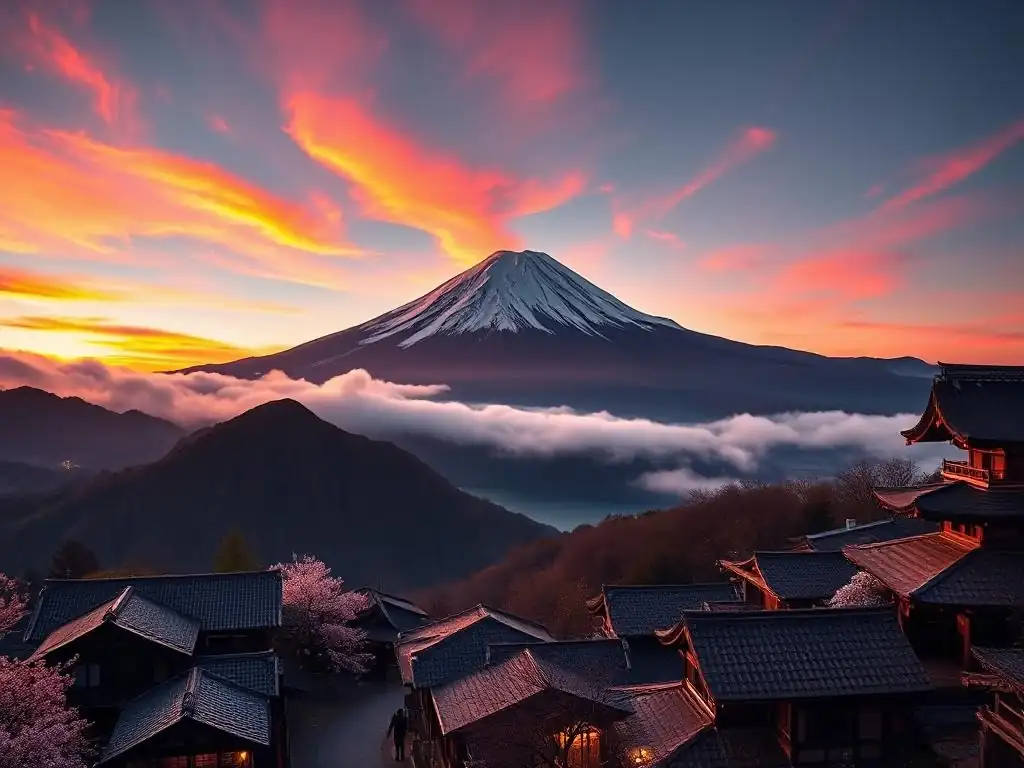
Welcome to Volcano Explorers!
Prepare to be captivated. What secrets lie hidden beneath the snow-capped peak of Mount Fuji? More than just a breathtaking view, Fuji's Majesty unveils the rich history and cultural significance that transformed this powerful volcano into Japan's iconic symbol and a global tourist magnet. Discover the story behind the mountain and find out why it continues to hold a special place in the hearts of millions. Intrigued? Keep reading to explore the fascinating connection between a natural wonder and a nation's soul.
- Introduction: Mount Fuji - A Volcano's Rise to Iconic Status
- The Geological Origins of Mount Fuji: A Volcanic History
- Mount Fuji in Japanese Culture and Art: A Symbol Emerges
- Mount Fuji Tourism: A History of Pilgrimage and Recreation
- Mount Fuji as a Tourist Destination: Modern Day Attractions
- The Economic Impact of Mount Fuji Tourism
- Preserving Mount Fuji's Cultural Heritage: A UNESCO World Heritage Site
- The Future of Mount Fuji Tourism: Balancing Preservation and Accessibility
- Conclusion: Mount Fuji - A Timeless Symbol of Japan
-
Frequently Asked Questions
- How did Mount Fuji become such an iconic symbol of Japan?
- What are some popular tourist activities on or around Mount Fuji?
- What are some of the historical aspects of Mount Fuji that VolcanoExplorers.org covers?
- What safety precautions should tourists take when visiting Mount Fuji?
- How does VolcanoExplorers.org provide real-time updates on volcanic activity related to Mount Fuji?
- Final Reflection: Echoes of Fuji's Enduring Spirit
- Ignite Your Wanderlust: Plan Your Fuji Adventure!
Introduction: Mount Fuji - A Volcano's Rise to Iconic Status
The Allure of Mount Fuji: More Than Just a Volcano
Mount Fuji, or Fuji-san as it’s respectfully called in Japanese, is far more than just Japan's highest peak; it is a cultural touchstone, a symbol of national identity, and a breathtaking natural wonder. Standing at 3,776 meters (12,389 feet), its perfectly symmetrical cone has captivated hearts and minds for centuries.
For many, the mere sight of Fuji-san evokes a sense of awe and tranquility, its snow-capped peak often appearing to float ethereally above the clouds. This majestic volcano is not only a geological marvel but also a deeply ingrained part of Japan's spiritual and artistic heritage, drawing millions of visitors annually who seek to experience its unique charm.
The allure of Mount Fuji extends beyond its physical beauty. It is a place where the natural world and human culture intertwine, creating a rich tapestry of experiences. From ancient pilgrims seeking spiritual enlightenment on its slopes to modern-day tourists eager to capture the perfect photograph, Fuji-san has been a magnet for human activity for millennia. Its presence has shaped the landscape, inspired countless works of art, and played a significant role in the development of Japanese culture. Understanding Mount Fuji means understanding not just a volcano, but a symbol that embodies the spirit of Japan itself.
Defining "Iconic": Understanding Mount Fuji's Cultural Significance
To call Mount Fuji "iconic" is not hyperbole; it is a recognition of its profound and multifaceted significance. An icon transcends mere recognition; it represents a complex set of values, ideas, and emotions that resonate deeply within a culture. Mount Fuji’s iconic status stems from its unique combination of aesthetic perfection, spiritual importance, and historical presence in Japanese life. Its symmetrical form is aesthetically pleasing, conforming to classical ideals of beauty found in nature. This visual appeal is universally recognized, contributing to its global image as a symbol of Japan.
Culturally, Mount Fuji's significance is deeply rooted in Shinto and Buddhist traditions, where it is revered as sacred and a dwelling place of deities. This spiritual dimension elevates it beyond a mere geographical feature, imbuing it with a sense of reverence and power. Furthermore, Mount Fuji's image has been consistently reproduced and reinterpreted in Japanese art, literature, and popular culture for centuries, solidifying its place in the national consciousness. From the woodblock prints of Hokusai to contemporary advertising, the image of Mount Fuji is instantly recognizable and evokes a strong sense of "Japaneseness," making it a truly iconic symbol.
The Geological Origins of Mount Fuji: A Volcanic History
Formation of Mount Fuji: Plate Tectonics and Volcanic Activity
Mount Fuji's majestic presence is a direct result of the powerful forces of plate tectonics that shape the Earth’s crust. Japan itself is situated in a geologically dynamic zone where several tectonic plates converge, including the Pacific Plate, the Philippine Sea Plate, and the Eurasian Plate. The immense pressure and friction generated by these plates colliding and subducting beneath each other are the primary drivers of volcanic activity in the region. Mount Fuji is specifically located at a triple junction point, where these three plates meet, making it a highly volcanically active area.
The formation of Mount Fuji began approximately 100,000 years ago during the Pleistocene epoch. It is classified as a stratovolcano, also known as a composite volcano, which is characterized by its conical shape built up by many layers of hardened lava, tephra, pumice, and volcanic ash.
Mount Fuji is actually composed of three separate volcanoes layered on top of each other: Komitake volcano at the base, Ko-Fuji (Old Fuji) in the middle, and Shin-Fuji (New Fuji) at the top. The current form we recognize today is primarily Shin-Fuji, which began erupting around 10,000 years ago and has sculpted the iconic silhouette we admire.
Eruptive History: From Ancient Explosions to Dormant Giant
Mount Fuji’s eruptive history is long and punctuated by periods of intense activity and dormancy. Geological records indicate that Mount Fuji has experienced numerous eruptions throughout its lifespan, with evidence of explosive eruptions dating back tens of thousands of years. These eruptions have ranged in intensity, from relatively minor lava flows to large-scale explosive events that ejected vast quantities of ash and pyroclastic flows across the surrounding landscape. Studying the layers of volcanic deposits around Fuji provides valuable insights into its past behavior and helps volcanologists understand its potential for future activity.
The most recent confirmed eruption of Mount Fuji occurred in 1707, during the Edo period. Known as the Hoei eruption, it was a significant event, although it was not a typical summit eruption. Instead, it produced a large flank eruption on the southeastern side of the volcano, forming three new volcanic vents known as Hoei craters.
This eruption, while not producing lava flows that reached populated areas, ejected an estimated 800 million cubic meters of volcanic ash, which blanketed Edo (present-day Tokyo), located over 100 kilometers away. While Mount Fuji is currently considered dormant, volcanologists continuously monitor it for any signs of renewed activity, recognizing its potential to erupt again in the future.
The Unique Shape of Mount Fuji: A Stratovolcano's Beauty
The almost perfect conical shape of Mount Fuji is a defining characteristic that contributes significantly to its aesthetic appeal and iconic status. This symmetrical beauty is a direct outcome of its formation as a stratovolcano. The layered structure of stratovolcanoes, built from viscous lava flows and pyroclastic materials, tends to create steep slopes that gradually taper towards a central summit. In Mount Fuji's case, the consistent eruptions over millennia, depositing materials relatively evenly around the vent, have resulted in its remarkably symmetrical form.
Furthermore, the relatively low viscosity of Mount Fuji's lava compared to some other stratovolcanoes has allowed it to flow further and spread out more evenly, contributing to its gently sloping lower flanks and the overall smooth, graceful curve of its silhouette. The visual perfection of Mount Fuji is often cited as a key reason for its widespread admiration and its frequent depiction in art and photography. Its shape is not only geologically interesting but also aesthetically captivating, making it a natural masterpiece and a symbol of natural harmony and beauty.
Mount Fuji in Japanese Culture and Art: A Symbol Emerges
Mount Fuji in Shinto and Buddhism: Sacred Mountain Traditions
Mount Fuji has been revered as a sacred mountain in Japan for centuries, deeply intertwined with both Shinto and Buddhist religious traditions. In Shinto, the indigenous religion of Japan, mountains are often considered sacred dwelling places of kami, or spirits. Mount Fuji, with its imposing height and majestic presence, is believed to be inhabited by the Shinto goddess Konohanasakuya-hime, the princess of blossoming trees and symbol of delicate earthly life. Shrines dedicated to her, such as Fujisan Hongū Sengen Taisha at the base of the mountain, have been pilgrimage destinations for centuries.
Buddhism, which arrived in Japan in the 6th century, also incorporated Mount Fuji into its spiritual landscape. Buddhist temples were established around the mountain, and it became associated with Buddhist deities and concepts. The climb to the summit was seen as a spiritual journey, a metaphor for the path to enlightenment.
The mountain's pure white snow cap, often visible against the blue sky, resonated with Buddhist notions of purity and transcendence. The syncretism of Shinto and Buddhism in Japan further solidified Mount Fuji's sacred status, making it a central point of spiritual reverence and pilgrimage for people of both faiths.
Ukiyo-e and Mount Fuji: Hokusai's Influence on its Image
The art of ukiyo-e, Japanese woodblock prints, played a pivotal role in popularizing the image of Mount Fuji and cementing its iconic status in the broader culture and even globally. During the Edo period (1603-1868), ukiyo-e flourished, depicting scenes of everyday life, landscapes, and famous places. Among the many artists who captured Mount Fuji, Katsushika Hokusai stands out as the most influential. His series "Thirty-six Views of Mount Fuji," created in the early 19th century, is arguably the most famous and impactful artistic representation of the mountain.
Hokusai's prints, particularly "The Great Wave off Kanagawa" and "Red Fuji," are instantly recognizable and have become synonymous with both Mount Fuji and Japanese art itself. He depicted Fuji from various vantage points, in different seasons, and under diverse weather conditions, showcasing its multifaceted beauty and omnipresence in the Japanese landscape.
The widespread circulation of Hokusai's prints, both within Japan and later internationally, helped to disseminate and solidify the image of Mount Fuji as a symbol of Japan, contributing significantly to its enduring iconic status and attracting early forms of Mount Fuji tourism as people sought to see the landscapes depicted in the famous prints for themselves.
Mount Fuji in Literature and Poetry: Inspiring Generations of Artists
Beyond visual arts, Mount Fuji has been a profound source of inspiration for Japanese literature and poetry throughout history. From ancient Man'yōshū poetry anthologies to modern novels, Fuji-san appears as a recurring motif, symbolizing various themes from natural beauty and spiritual transcendence to national identity and personal reflection. Its majestic presence and changing moods have provided a rich canvas for writers to explore human emotions and the relationship between humanity and nature.
Classical Japanese poetry forms like waka and haiku frequently feature Mount Fuji, often using it as a kigo, or seasonal word, associated with winter due to its snow-capped peak. Poets have used Fuji to evoke feelings of awe, serenity, and the sublime, capturing its grandeur in concise and evocative verses.
In literature, Mount Fuji often serves as a backdrop for narratives, adding depth and symbolism to stories. Its enduring presence in Japanese literary tradition reinforces its cultural significance and ensures that each new generation is exposed to its symbolic weight and inspiring power, further contributing to Mount Fuji tourism driven by cultural appreciation.
Mount Fuji Tourism: A History of Pilgrimage and Recreation
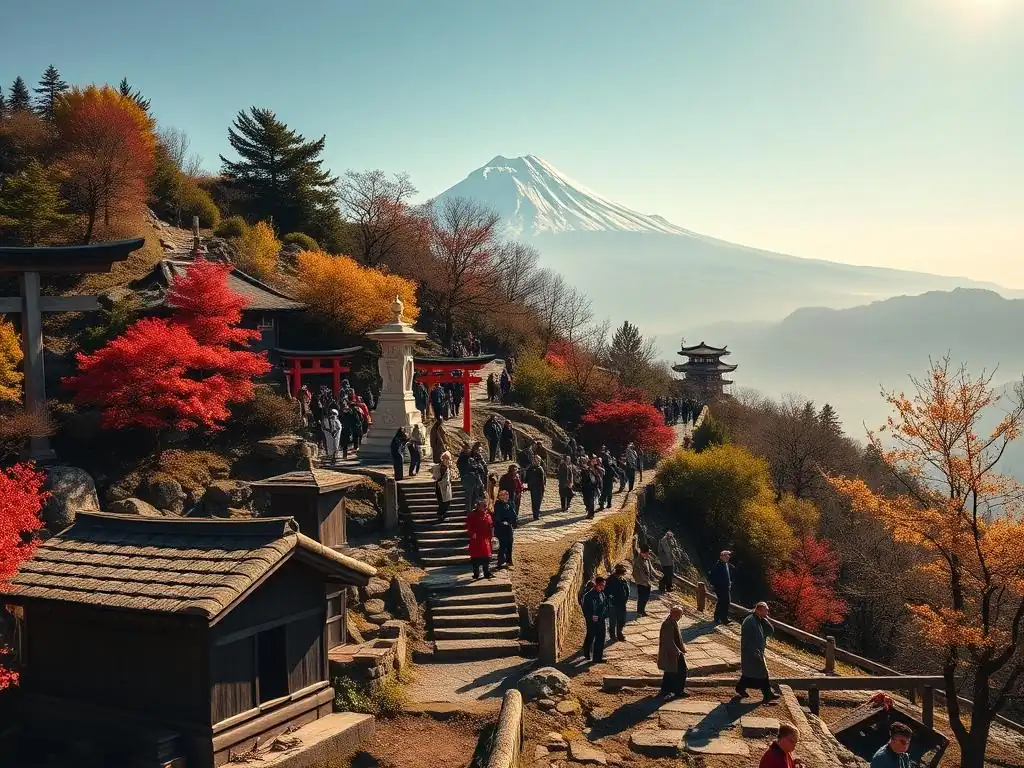
Ancient Pilgrimages to Mount Fuji: Ascending for Spiritual Enlightenment
The history of Mount Fuji tourism is deeply rooted in religious pilgrimage. For centuries, ascents to the summit were primarily motivated by spiritual quests rather than recreational hiking. Shinto and Buddhist practitioners alike considered climbing Mount Fuji an act of devotion, a way to purify oneself and draw closer to the sacred. Pilgrims would embark on arduous journeys, often wearing traditional white robes and carrying wooden staffs, to reach the summit and pay homage at the shrines located there.
These ancient pilgrimages were not merely individual spiritual journeys; they were also communal events that fostered social cohesion. Pilgrim groups, known as Fuji-ko, were organized throughout the Edo period, facilitating travel and providing mutual support for those undertaking the challenging climb. These groups often performed rituals and chanted prayers along the way, transforming the ascent into a collective spiritual experience. The tradition of pilgrimage to Mount Fuji laid the foundation for its later development as a tourist destination, establishing routes, infrastructure, and a cultural framework for appreciating the mountain.
The Development of Mount Fuji Tourism: From Edo Period to Modern Day
While pilgrimage remained a central aspect, Mount Fuji tourism gradually evolved to encompass recreational and scenic appreciation, particularly from the Edo period onwards. As peace and prosperity prevailed, and transportation improved, more people from different social classes gained the opportunity to visit Mount Fuji, not just for religious reasons but also for leisure and enjoyment of its natural beauty. The popularity of ukiyo-e prints depicting Mount Fuji further fueled interest in visiting the actual locations depicted in the art.
The Meiji Restoration in the late 19th century marked a turning point, as Japan opened up to the West and modernized rapidly. Railways and roads were developed, making Mount Fuji more accessible to a wider population, including foreign visitors. The concept of "tourism" as a leisure activity became more established, and Mount Fuji was increasingly promoted as a national symbol and a must-see destination. This transition from primarily religious pilgrimage to broader tourism laid the groundwork for the large-scale Mount Fuji tourism industry we see today.
Engelbert Kaempfer's Account: Early Western Observations of Fuji
Among the earliest detailed Western accounts of Mount Fuji is that of Engelbert Kaempfer, a German physician and traveler who visited Japan in the late 17th century during the Edo period while working for the Dutch East India Company. Kaempfer's writings, published posthumously in his "History of Japan," provide valuable insights into the early Western perception of Mount Fuji. He described the mountain's majestic appearance, its snow-capped peak, and its revered status in Japanese culture.
Kaempfer noted the pilgrimages to the summit and the spiritual significance attributed to Mount Fuji. He also attempted to climb the mountain himself, though he did not reach the summit. His detailed descriptions and illustrations of Mount Fuji in his book were among the first to introduce the mountain to a European audience, sparking curiosity and contributing to its growing international recognition. Kaempfer's observations serve as a historical marker, documenting the early stages of Western awareness and appreciation of Mount Fuji, long before it became a global Mount Fuji tourism hotspot.
Mount Fuji as a Tourist Destination: Modern Day Attractions
Climbing Mount Fuji: A Guide to the Hiking Season and Routes
Today, climbing Mount Fuji remains a quintessential experience for both domestic and international tourists. The official climbing season typically runs from early July to mid-September, coinciding with the summer months when the snow has melted and weather conditions are generally more favorable. During this period, mountain huts along the trails open to provide accommodation and services for climbers. It is estimated that over 300,000 people attempt to climb Mount Fuji each year, making it a very popular, and sometimes crowded, activity.
There are four main official trails to the summit: Yoshida, Fujinomiya, Subashiri, and Gotemba. The Yoshida trail is the most popular and well-equipped, starting from Fuji Subaru Line 5th Station and offering numerous mountain huts. The Fujinomiya trail is the shortest but also the steepest.
The Subashiri trail is known for its forested sections at lower altitudes, while the Gotemba trail is the longest and least crowded, starting from a lower 5th station. Climbing Mount Fuji is a challenging but rewarding experience, offering stunning sunrise views from the summit and a sense of accomplishment upon reaching the top of this iconic volcano.
The Fuji Five Lakes Region: Scenic Views and Outdoor Activities
The Fuji Five Lakes region ( Fuji Goko) located at the northern base of Mount Fuji, is a prime destination for tourists seeking breathtaking views of the mountain and a variety of outdoor activities. The five lakes – Kawaguchiko, Yamanakako, Saiko, Shojiko, and Motosuko – each offer unique perspectives of Mount Fuji, often reflected beautifully in their tranquil waters, creating picture-postcard scenery. Lake Kawaguchiko is the most developed and easily accessible, offering numerous hotels, restaurants, and sightseeing cruises.
Beyond scenic viewing, the Fuji Five Lakes region provides a diverse range of activities. Lake Yamanakako is popular for water sports, including boating and windsurfing. Lake Saiko and Shojiko offer more secluded and natural settings, ideal for camping and fishing. Motosuko is famous for being depicted on the 1,000 yen banknote, showcasing a particularly iconic view of Fuji. The region also boasts hiking trails, museums, hot springs, and amusement parks, making it a versatile destination for Mount Fuji tourism catering to various interests and preferences.
Hakone: Volcanic Hot Springs and Panoramic Views of Mount Fuji
Hakone, a mountain resort town located west of Mount Fuji, is another popular destination for experiencing the volcanic landscape and enjoying panoramic views of Fuji-san. Hakone is part of the Fuji-Hakone-Izu National Park and is renowned for its natural beauty, hot springs ( onsen), and art museums. The area is geothermally active, offering numerous onsen resorts where visitors can relax in mineral-rich hot spring waters, a direct benefit of the volcanic activity beneath the surface.
One of Hakone's main attractions is Lake Ashi, a caldera lake formed by volcanic activity, offering stunning views of Mount Fuji across the water, especially on clear days. Visitors can enjoy boat cruises on the lake, ride the Hakone Ropeway which passes over volcanic hot springs and offers views of active fumaroles, and explore various art museums and gardens in the area. Hakone provides a different perspective on Mount Fuji tourism, combining natural beauty, volcanic landscapes, cultural experiences, and relaxation, making it a complementary destination to the Fuji Five Lakes region for those exploring the area around Mount Fuji.
The Economic Impact of Mount Fuji Tourism
Revenue Generated by Mount Fuji Tourism: Supporting Local Communities
Mount Fuji tourism generates significant revenue that plays a crucial role in supporting local economies in the surrounding regions. Millions of visitors annually contribute to various sectors, including accommodation, transportation, dining, retail, and recreational activities. Precise figures vary year to year, but estimates suggest that the economic impact of Mount Fuji tourism is in the billions of yen annually, providing livelihoods for many residents in Yamanashi and Shizuoka prefectures.
The peak climbing season and holidays are particularly lucrative periods, with hotels, ryokans (traditional Japanese inns), and guesthouses often fully booked and local businesses experiencing a surge in sales. Souvenir shops selling Fuji-themed merchandise, restaurants serving local specialties, and transportation services catering to tourists all benefit directly from the influx of visitors. This revenue stream is vital for maintaining local infrastructure, supporting community services, and preserving the cultural and natural heritage associated with Mount Fuji.
Challenges of Sustainable Tourism: Preserving the Environment
While Mount Fuji tourism brings economic benefits, it also presents significant challenges in terms of environmental sustainability. The sheer volume of visitors, particularly during peak season, puts immense pressure on the natural environment, including hiking trails, mountain huts, and surrounding ecosystems. Issues such as trail erosion, waste management, and pollution are ongoing concerns that require careful management and mitigation strategies. Over-tourism can also detract from the visitor experience and impact the tranquility of the natural setting.
Sustainable tourism practices are crucial for preserving Mount Fuji's environment for future generations. This involves implementing measures such as trail maintenance, waste reduction and recycling programs, promoting responsible hiking etiquette, and managing visitor numbers to minimize environmental impact. Balancing the economic benefits of tourism with the imperative of environmental preservation is a key challenge for stakeholders involved in Mount Fuji tourism management.
Accommodation and Souvenir Sales: Economic Drivers in the Region
Accommodation and souvenir sales are significant economic drivers within the Mount Fuji tourism industry. A wide range of accommodation options caters to different budgets and preferences, from luxury hotels with panoramic Fuji views to budget-friendly guesthouses and mountain huts. The demand for accommodation is particularly high during peak seasons, generating substantial revenue for the hospitality sector in the Fuji region.
Souvenir sales are another important economic contributor. Visitors often purchase Fuji-themed merchandise as mementos of their trip, ranging from small trinkets and local crafts to specialty food products and artwork. These souvenir sales support local artisans, businesses, and contribute to the overall economic vitality of the region. Both accommodation and souvenir industries are integral parts of the Mount Fuji tourism ecosystem, providing employment opportunities and generating revenue that sustains local communities.
Preserving Mount Fuji's Cultural Heritage: A UNESCO World Heritage Site
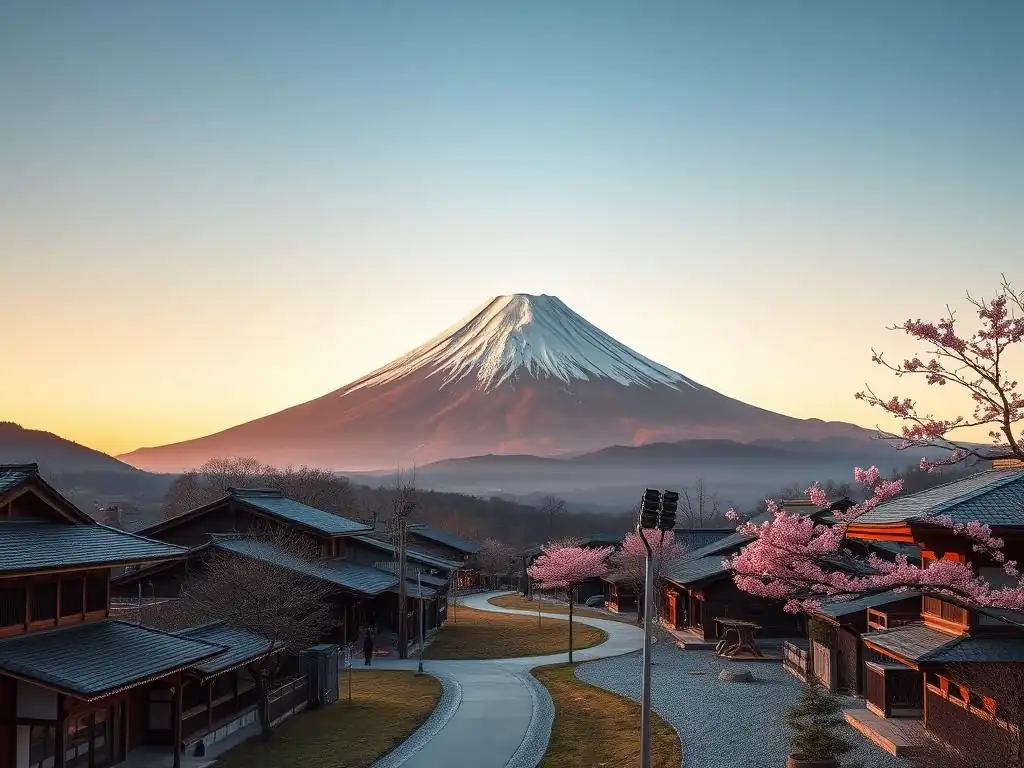
Achieving UNESCO World Heritage Status: Recognizing its Cultural Significance
In 2013, Mount Fuji was inscribed as a UNESCO World Heritage Site under the cultural criteria, officially recognized as "Fujisan, sacred place and source of artistic inspiration." This prestigious designation acknowledged Mount Fuji's profound cultural and spiritual significance, rather than solely its natural beauty. UNESCO recognized the ensemble of 25 component sites that constitute the cultural landscape of Fujisan, including shrines, lodging houses, and natural elements like springs and trees, which are integral to the mountain's cultural and religious importance.
The UNESCO designation highlighted the enduring influence of Mount Fuji on Japanese art and culture, particularly its role as a source of inspiration for artists and pilgrims for centuries. It underscored the mountain's unique combination of natural beauty and cultural meaning, emphasizing its importance as a sacred site and a symbol of national identity. Achieving UNESCO World Heritage status brought international recognition to Mount Fuji's cultural value and provided a framework for enhanced conservation and preservation efforts.
Conservation Efforts: Protecting the Environment and Cultural Sites
The UNESCO World Heritage status has spurred increased conservation efforts aimed at protecting both the natural environment and the cultural sites associated with Mount Fuji. Various organizations and government agencies are involved in these initiatives, focusing on preserving the mountain's ecosystem, managing visitor impact, and maintaining the integrity of cultural heritage sites. These efforts include trail maintenance, reforestation projects, waste management programs, and the preservation of historical buildings and shrines.
Specific conservation projects are implemented regularly, such as erosion control measures on hiking trails, restoration of mountain huts to meet environmental standards, and educational campaigns to promote responsible tourism practices among visitors. Collaboration between local communities, government bodies, and conservation organizations is essential for the long-term success of these preservation efforts, ensuring that Mount Fuji's natural and cultural heritage is protected for future generations.
Forest Conservation Initiatives: Mitigating Erosion and Preserving Biodiversity
Forest conservation is a crucial aspect of preserving Mount Fuji's environment. The forests surrounding the mountain play a vital role in preventing soil erosion, maintaining water quality, and supporting biodiversity. Deforestation and habitat degradation, partly due to past logging and development, have posed challenges to the mountain's ecosystem. Therefore, reforestation and forest management initiatives are essential for mitigating erosion and preserving the natural landscape.
Various forest conservation projects are underway, including planting native tree species, removing invasive plants, and implementing sustainable forestry practices. These initiatives aim to restore and enhance the health of Mount Fuji's forests, which in turn contributes to the overall ecological integrity of the region and helps to maintain its scenic beauty. Preserving the forests is not only crucial for environmental reasons but also for maintaining the aesthetic appeal that is integral to Mount Fuji's cultural significance and Mount Fuji tourism appeal.
The Future of Mount Fuji Tourism: Balancing Preservation and Accessibility
Addressing Over-Tourism: Strategies for Sustainable Growth
Over-tourism is an increasing concern for Mount Fuji, particularly during peak climbing season. The large number of visitors can lead to overcrowding on trails, strain on infrastructure, and negative impacts on the environment and visitor experience. Addressing over-tourism requires implementing strategies for sustainable growth that balance accessibility with preservation. This includes considering measures such as visitor quotas, timed entry systems, and promoting off-season tourism to distribute visitor numbers more evenly throughout the year.
Another approach is to enhance infrastructure and services to better accommodate visitor flows, such as improving trail capacity, expanding waste management facilities, and providing better public transportation options. Education and awareness campaigns are also crucial to encourage responsible tourism behavior and promote respect for the environment and local culture. Finding effective solutions to manage over-tourism is essential for ensuring the long-term sustainability of Mount Fuji tourism.
Promoting Off-Season Tourism: Diversifying Visitor Experiences
Diversifying visitor experiences and promoting off-season tourism are key strategies for mitigating over-tourism and creating a more sustainable Mount Fuji tourism model. Currently, the vast majority of visitors come during the summer climbing season. Encouraging tourism during other seasons can help distribute visitor numbers and showcase different aspects of Mount Fuji's appeal. Spring offers cherry blossoms and pleasant hiking weather at lower altitudes, autumn brings vibrant fall foliage, and winter provides stunning snowscapes and opportunities for winter sports in surrounding areas.
Promoting activities beyond climbing, such as cultural tours, nature walks, and visits to museums and art galleries in the Fuji region, can also attract a wider range of visitors and reduce pressure on the summit trails. Developing and marketing these diverse experiences can help create a more balanced and sustainable tourism industry that benefits both visitors and local communities throughout the year.
Ensuring Mount Fuji Remains an Icon: A Legacy for Future Generations
Ensuring that Mount Fuji remains an icon for future generations requires a holistic approach that integrates conservation, sustainable tourism practices, and cultural preservation. It is essential to protect the mountain's natural environment, maintain its cultural heritage sites, and manage tourism in a responsible and sustainable manner. This involves ongoing collaboration between government agencies, local communities, tourism operators, and conservation organizations.
Education plays a crucial role in fostering a sense of stewardship and appreciation for Mount Fuji's significance. Raising awareness among visitors and local residents about the importance of preserving Mount Fuji's natural and cultural heritage is vital for its long-term protection. By working together to balance preservation and accessibility, we can ensure that Mount Fuji continues to inspire awe and wonder for generations to come, remaining a timeless symbol of Japan and a cherished global icon.
Conclusion: Mount Fuji - A Timeless Symbol of Japan
Mount Fuji stands as a testament to the powerful interplay between nature and culture. Born from volcanic forces, it has risen to become not just a geographical landmark, but a profound symbol of Japan. Its majestic silhouette has graced countless works of art, inspired spiritual devotion, and drawn millions of visitors from around the world. From its geological origins to its enduring presence in Japanese culture and its role as a modern tourist magnet, Mount Fuji's story is one of continuous evolution and enduring significance.
As we look to the future of Mount Fuji tourism, the imperative is clear: to balance the desire for accessibility with the necessity of preservation. By embracing sustainable practices, promoting diverse experiences, and fostering a sense of responsibility, we can ensure that Fuji-san continues to inspire and captivate, remaining a timeless icon of Japan and a treasured World Heritage Site for generations to come. Its majesty endures, a silent yet powerful volcano, forever intertwined with the heart and soul of Japan.
Frequently Asked Questions
How did Mount Fuji become such an iconic symbol of Japan?
Mount Fuji's perfect conical shape and its role in Japanese art and religion have cemented its status. It's also been a source of inspiration for centuries, deeply embedded in the nation's identity.
What are some popular tourist activities on or around Mount Fuji?
Hiking to the summit is a popular challenge, but many also visit the Five Fuji Lakes for stunning views. Other options include exploring nearby hot springs and visiting cultural sites around the mountain's base.
What are some of the historical aspects of Mount Fuji that VolcanoExplorers.org covers?
We delve into Mount Fuji's volcanic history, including its eruption patterns and its formation over thousands of years. We also explore its significance in Shinto and Buddhist beliefs, as well as its portrayal in historical art.
What safety precautions should tourists take when visiting Mount Fuji?
Be aware of altitude sickness and prepare appropriately for the climb. Check weather conditions before you go and be prepared for sudden changes. Always follow official guidelines and warnings.
We monitor geological data from various sources, including seismic activity and gas emissions. We provide alerts and updates if there are any signs of increased volcanic activity that could affect the region. Our goal is to promote safe Mount Fuji tourism.
Final Reflection: Echoes of Fuji's Enduring Spirit
The journey through Mount Fuji's history and its profound impact on Japanese culture and tourism reveals more than just geographical significance; it underscores the power of symbolism to shape national identity and drive economic prosperity. From its volcanic origins to its present-day status as a global icon, Fuji's story is a testament to the enduring allure of natural beauty and the human capacity to imbue landscapes with meaning.
The influence of Mount Fuji extends far beyond the realm of tourism; it permeates Japanese art, literature, and spiritual beliefs. This enduring presence reminds us that our connection to the natural world is deeply intertwined with our cultural narratives and personal identities. The mountains are fountains of men as well as of rivers, of glaciers as well as of fertile soil. The great poets, philosophers, prophets, able men whose thoughts and deeds have moved the world, have all come from the mountains.
- John Muir. This quote encapsulates the profound inspiration that landscapes like Fuji can offer, shaping not only individual lives but also the course of history.
As we conclude this exploration of Mount Fuji, let us carry with us a renewed appreciation for the power of nature to inspire, to heal, and to connect us to something larger than ourselves. Take a moment to consider the symbols that resonate within your own life, the landscapes that stir your soul, and the stories that shape your understanding of the world. Embrace the spirit of Fuji – its resilience, its beauty, and its enduring presence – and allow it to guide you on your own journey of discovery and reflection.
Ignite Your Wanderlust: Plan Your Fuji Adventure!
Thank you for exploring the fascinating story of Mount Fuji with us! We hope you've gained a deeper appreciation for its cultural significance and breathtaking beauty. Now, it's time to take that inspiration and turn it into action:
- Book your unforgettable Mount Fuji experience! Whether it's a challenging climb to the summit or a serene lakeside view, make it a reality.
- Explore the charming towns surrounding Mount Fuji – discover local crafts and cuisine for a richer cultural immersion.
- Share your favorite Fuji photo or memory with the Volcano Explorers community using #FujiAdventures – inspire others to experience its majesty!
What aspect of Mount Fuji's allure will you explore first? Share your plans in the comments below!