
The Ghost Forests of Volcanoes: Remnants of Past Eruptions and Wildlife

Welcome to Volcano Explorers.
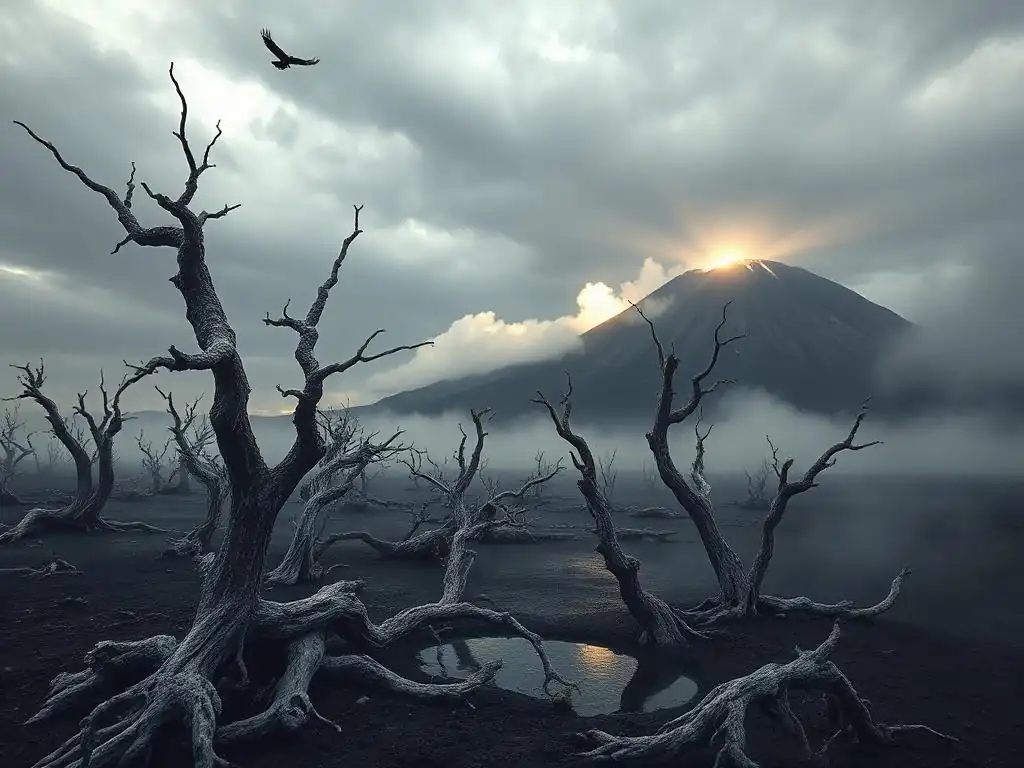
Imagine a landscape eerily silent, marked by skeletal trees reaching skyward – a ghost forest. What untold stories do these spectral woodlands whisper of past volcanic fury? Delve into the haunting relationship between these ghost forests and volcanic eruptions, and uncover the secrets they hold about the powerful impact of volcanoes on the environment. Are you ready to explore the remnants of past eruptions and the wildlife that bravely navigates this dramatic landscape?
- Understanding Ghost Forests: A Haunting Reminder of Volcanic Power
- The Impact of Volcanic Eruptions on Forest Ecosystems
- Wildlife in Ghost Forests: Adapting to a Changed Landscape
- Specific Examples of Ghost Forests Around the World
- The Role of Ghost Forests in Volcanic Ecosystem Recovery
- Ghost Forests as a Window into Past Volcanic Events
- The Future of Ghost Forests in a Changing Climate
- Observing and Understanding Ghost Forests Responsibly
- Frequently Asked Questions
- Final Reflection: Echoes of Resilience in Volcanic Landscapes
- Unearth Your Own Volcanic Adventure!
Understanding Ghost Forests: A Haunting Reminder of Volcanic Power
What are Ghost Forests? Defining the Term
Ghost forests are stark and eerie landscapes characterized by stands of dead trees that remain standing long after a catastrophic event has killed them. The term vividly captures the spectral appearance of these woodlands, where the trees, stripped of their foliage and often bleached by the elements, resemble ghostly figures against the backdrop of a recovering or altered environment.
These forests are not simply areas of dead trees due to disease or logging; they are specifically linked to sudden, large-scale disturbances that cause widespread tree mortality while leaving the skeletal structures intact for a considerable period. Ghost forests serve as poignant reminders of nature's raw power and the dramatic shifts ecosystems can undergo in response to sudden, often violent, events.
The formation of a ghost forest is usually associated with natural disasters that inflict rapid and widespread damage to forests, leading to mass tree death. While various events can create these eerie landscapes, such as insect infestations, diseases, saltwater intrusion, or even severe droughts, volcanic eruptions are a particularly dramatic and well-documented cause. In the context of volcanoes, ghost forests are often created by the lethal effects of ashfall, pyroclastic flows, lahars, or volcanic gases.
These volcanic forces can quickly overwhelm and kill entire forests, leaving behind a landscape transformed and marked by the silent sentinels of dead trees. The specific characteristics of a volcanic ghost forest will vary depending on the type of eruption, the proximity to the volcanic vent, and the pre-existing forest ecosystem.
The Formation of Ghost Forests Following Volcanic Eruptions
Volcanic eruptions are powerful geological events that can trigger the rapid formation of ghost forests through several mechanisms. One of the most common causes is heavy ashfall, where thick blankets of volcanic ash bury the forest floor and coat tree canopies. This ash can physically smother vegetation, blocking sunlight necessary for photosynthesis and disrupting gas exchange through leaves.
Furthermore, the weight of the ash can cause branches to break and trees to topple, especially after rainfall when the ash becomes heavier. The chemical composition of the ash can also be detrimental, leaching toxic elements into the soil and directly damaging plant tissues.
Pyroclastic flows, superheated currents of gas and volcanic debris, are another devastating force that creates ghost forests. These flows move at incredibly high speeds, incinerating everything in their path with temperatures reaching hundreds of degrees Celsius. Forests engulfed by pyroclastic flows are instantly carbonized, leaving behind standing skeletons of trees that are often charred and brittle. Lahars, volcanic mudflows composed of water, ash, and rock debris, are also capable of creating ghost forests.
Lahars can inundate forests, burying trees in thick layers of sediment and physically uprooting and transporting vegetation downstream. Even volcanic gases, such as sulfur dioxide, can contribute to forest die-off by causing acid rain and directly damaging tree foliage. The combined or singular impact of these volcanic hazards can result in the rapid and widespread creation of ghost forests, marking the landscape with the stark evidence of volcanic power.
Short-Term and Long-Term Ecological Impacts of Volcanic Activity
The ecological impacts of volcanic activity, particularly those leading to ghost forest formation, are profound and multifaceted, spanning both short-term devastation and long-term ecosystem recovery. In the immediate aftermath of a volcanic eruption, the landscape experiences a dramatic shift. Forest ecosystems are often completely obliterated or severely damaged. Vegetation is killed, soil structure is disrupted, and wildlife populations are decimated or displaced.
Nutrient cycles are thrown into disarray as organic matter is either destroyed or buried under volcanic deposits. Water quality can be significantly affected by ash and volcanic debris runoff, impacting aquatic ecosystems downstream. The immediate post-eruption environment is often characterized by a barren landscape, devoid of the complex biological interactions that defined the pre-eruption ecosystem.
However, volcanic disturbances, while initially destructive, also play a crucial role in long-term ecological dynamics. Volcanic ash, over time, weathers and releases essential minerals and nutrients that can enrich soils, leading to increased soil fertility in the long run. The disturbance itself creates opportunities for ecological succession, where pioneer species begin to colonize the newly available habitat.
As vegetation re-establishes, it stabilizes soils, facilitates nutrient cycling, and provides habitat for wildlife. Ghost forests, while representing initial devastation, become integral parts of this recovery process. The deadwood provides habitat for certain organisms, and the decaying trees gradually contribute to soil organic matter.
The long-term trajectory of ecosystem recovery after volcanic eruptions is a complex process influenced by factors such as the severity of the eruption, the type of volcanic deposits, climate, and the resilience of the pre-eruption ecosystem. Ghost forests, therefore, are not just symbols of destruction but also markers of ecological transition and renewal in volcanic landscapes.
The Impact of Volcanic Eruptions on Forest Ecosystems
Ashfall and its Effects on Trees and Vegetation
Ashfall, a common consequence of explosive volcanic eruptions, exerts a wide range of effects on forest ecosystems, significantly impacting trees and vegetation. The immediate physical effects of ashfall are often the most visible. Thick ash deposits can blanket leaves, reducing or completely blocking sunlight crucial for photosynthesis. This can lead to a rapid decline in plant productivity and, if prolonged or severe, tree mortality.
The weight of the ash itself is also a significant factor. Accumulated ash, especially when wet, can place immense stress on tree branches, leading to breakage and crown damage. Younger trees and saplings are particularly vulnerable to being buried or crushed under the weight of ashfall. The abrasive nature of volcanic ash can also damage leaf surfaces, further hindering photosynthetic efficiency and increasing water loss.
Beyond the physical impacts, volcanic ash also has chemical effects on vegetation. Fresh volcanic ash can be acidic and contain soluble salts and trace elements, which can leach into the soil and be taken up by plants. While some elements can be beneficial in small quantities, high concentrations of certain elements, such as aluminum or heavy metals, can be toxic to plants, disrupting physiological processes and causing leaf damage or even death.
Furthermore, ashfall can alter soil pH and nutrient availability, impacting plant nutrient uptake and overall health. The long-term effects of ashfall on forest ecosystems depend on factors like ash thickness, composition, rainfall patterns, and the resilience of the affected vegetation. In some cases, forests can recover relatively quickly from light ashfall, while heavy ashfall events can lead to prolonged periods of stress and mortality, contributing to the formation of ghost forests.
Pyroclastic Flows and the Complete Devastation of Forests
Pyroclastic flows represent one of the most destructive forces associated with volcanic eruptions, capable of causing near-complete devastation to forest ecosystems in their path. These flows are superheated mixtures of gas, ash, and rock fragments that surge down volcanic slopes at high speeds, often exceeding hundreds of kilometers per hour. The temperatures within pyroclastic flows can range from 200°C to over 700°C, hot enough to incinerate organic matter instantaneously.
When a pyroclastic flow engulfs a forest, the impact is catastrophic. Trees are not only killed but often completely carbonized or vaporized, leaving behind a barren landscape stripped of vegetation and topsoil.
The intense heat and kinetic energy of pyroclastic flows result in the immediate destruction of forest structure and biomass. Even large, mature trees are no match for these flows, being snapped, uprooted, or reduced to ash.
The soil itself is often sterilized by the extreme heat, killing soil microorganisms and destroying seed banks. The resulting landscape is typically characterized by a layer of pyroclastic deposits, consisting of ash, pumice, and rock fragments, overlying the remnants of the pre-eruption forest.
Pyroclastic flows are a primary cause of ghost forest formation because they create environments where tree mortality is near-universal and the regeneration process is significantly delayed due to the complete removal or sterilization of the forest floor and the surrounding environment. Areas affected by pyroclastic flows often require decades or even centuries to fully recover, depending on the severity of the flow and the availability of colonizing species from surrounding unaffected areas.
Lahars: Mudflows and Their Destructive Path Through Woodlands
Lahars, volcanic mudflows or debris flows, are another significant volcanic hazard that can carve destructive paths through woodlands, creating ghost forests along their routes. Lahars are mixtures of water, volcanic ash, pumice, rock fragments, and other debris that flow down volcanic slopes, often following river valleys and drainage channels. They can be triggered by various events, including heavy rainfall eroding loose volcanic deposits, melting snow and ice during eruptions, or the breaching of crater lakes. Lahars are characterized by their high density, viscosity, and speed, allowing them to transport massive amounts of debris and exert immense force.
When a lahar flows through a forest, its impact is multifaceted and highly destructive. The sheer force of the mudflow can uproot and transport even large trees, effectively scouring away entire sections of forest. Trees that remain standing are often buried to varying depths in the lahar deposits, which can suffocate roots and prevent gas exchange.
The abrasive nature of the sediment-laden flow can also strip bark and damage tree trunks, weakening or killing trees that are not directly uprooted. Furthermore, lahar deposits can alter drainage patterns, bury fertile topsoil under layers of sediment, and create unstable ground conditions, hindering forest regeneration.
The path of a lahar through a woodland typically leaves behind a zone of devastation characterized by buried or uprooted trees, sediment-choked channels, and a landscape significantly altered from its pre-eruption state. The resulting ghost forest along a lahar path is a testament to the erosive and burying power of these volcanic mudflows.
Wildlife in Ghost Forests: Adapting to a Changed Landscape
Initial Loss of Habitat and Displacement of Animal Populations
Volcanic eruptions that create ghost forests invariably lead to an initial and often dramatic loss of habitat and displacement of animal populations. The sudden and widespread destruction of forests by ashfall, pyroclastic flows, or lahars eliminates the immediate resources that wildlife depends on for survival. Habitats are fragmented or completely destroyed, removing food sources, shelter, nesting sites, and breeding grounds.
For animals directly in the path of the volcanic event, mortality rates can be very high. Fast-moving pyroclastic flows and lahars are particularly lethal, offering little chance of escape for most wildlife. Even ashfall, while less immediately lethal, can cause respiratory problems, eye irritation, and starvation in animals due to the burial of food sources and contamination of water.
The immediate aftermath of a volcanic eruption often sees a significant exodus of wildlife from the affected area. Mobile animals, such as birds and larger mammals, may be able to flee to safer areas, but this displacement can lead to overcrowding and increased competition for resources in surrounding unaffected habitats. Less mobile animals, such as amphibians, reptiles, and small mammals, are often unable to escape the immediate impact and suffer high mortality rates.
The loss of vegetation cover also exposes remaining wildlife to increased predation risk and harsher environmental conditions. The ecological vacuum created by the eruption disrupts established food webs and ecological interactions, leading to a period of instability and adjustment for animal communities in and around the newly formed ghost forest.
The Return of Wildlife: Pioneer Species and Colonization
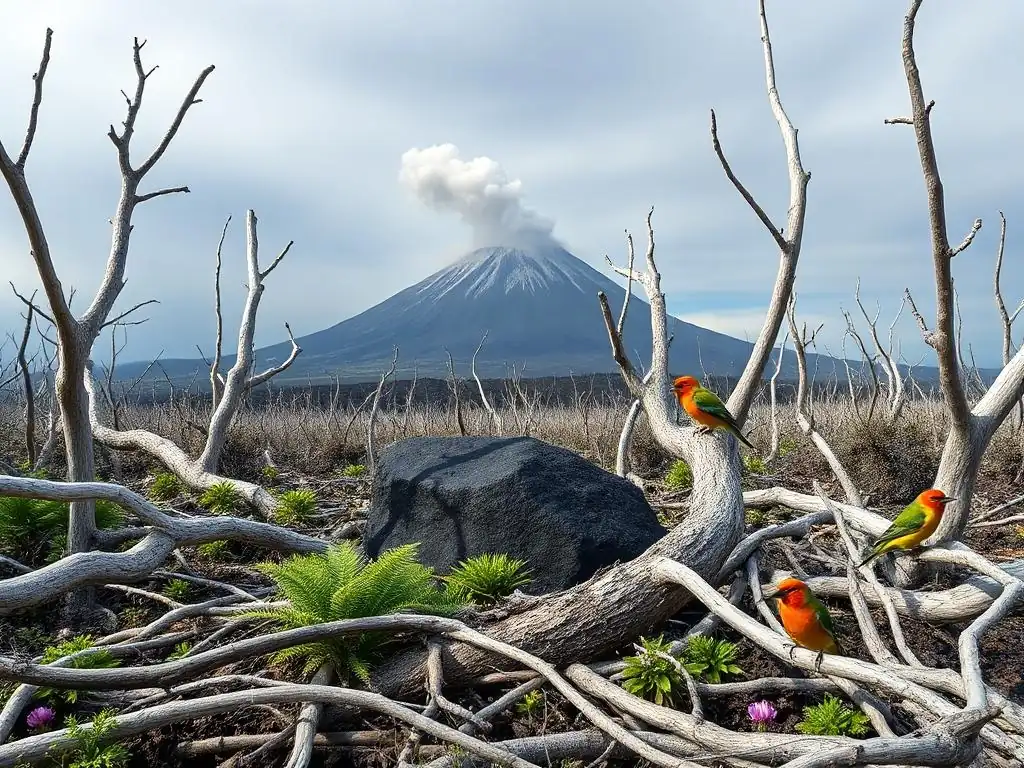
Despite the initial devastation, ghost forests are not permanently devoid of life. Over time, they become sites of ecological recovery, witnessing the gradual return of wildlife through colonization by pioneer species and subsequent ecological succession. Pioneer species are organisms that are adapted to colonize disturbed or barren environments. In volcanic ghost forests, these are often plants that can tolerate harsh conditions, such as nutrient-poor soils, high sunlight exposure, and temperature extremes. Examples include certain grasses, herbs, and fast-growing shrubs. These plants begin to re-establish vegetation cover, stabilizing soils and initiating the process of soil development.
As vegetation recovers, it creates habitat and food resources that attract pioneer animal species. Insects are often among the first animals to return, followed by small mammals, birds, and eventually larger animals. Pioneer animal species are typically generalists, meaning they are not highly specialized and can utilize a wide range of resources.
They play a crucial role in nutrient cycling, seed dispersal, and pollination, further facilitating ecosystem recovery. The process of wildlife return to ghost forests is a gradual one, influenced by factors such as the size and severity of the volcanic disturbance, the availability of colonizing species from surrounding areas, and the rate of habitat regeneration. Ghost forests, therefore, are not only remnants of destruction but also dynamic landscapes where ecological recovery and wildlife re-establishment are ongoing processes.
Case Studies: Wildlife Recovery in Specific Volcanic Ghost Forests [e.g., Mount St. Helens, Montserrat]
The recovery of wildlife in volcanic ghost forests is well-documented in several case studies around the world, illustrating the resilience of ecosystems and the adaptive capacity of animal communities. Mount St. Helens in Washington State, USA, provides a classic example. The 1980 eruption created a vast ghost forest and devastated surrounding habitats. However, within years, pioneer plants and animals began to recolonize the area.
Pocket gophers, which survived underground, played a crucial role in soil turnover and seed dispersal. Elk and deer gradually returned, followed by predators like coyotes and bears. Birds, including woodpeckers and cavity nesters, utilized the standing dead trees of the ghost forest for foraging and nesting. Studies have shown a remarkable recovery of biodiversity in the Mount St. Helens blast zone, demonstrating the long-term ecological resilience after a major volcanic eruption.
Montserrat, in the Caribbean, offers a more recent example of wildlife recovery in a volcanic ghost forest. The Soufrière Hills volcano has been erupting since 1995, creating extensive pyroclastic flow and ashfall zones. Areas devastated by pyroclastic flows are characterized by ghost forests. While initial impacts were severe, monitoring has shown gradual signs of recovery.
Lizard populations have been observed to recolonize pyroclastic flow deposits, utilizing crevices in the volcanic rocks for shelter. Birds are returning to areas with regenerating vegetation, and insect life is gradually increasing. The recovery process in Montserrat is ongoing, but it highlights the ability of wildlife to adapt and recolonize even in environments significantly altered by volcanic activity. These case studies demonstrate that ghost forests, while initially appearing barren, are dynamic ecosystems that can support a surprising degree of wildlife recovery over time.
Specific Examples of Ghost Forests Around the World
Mount St. Helens: A Classic Example of Volcanic Impact and Forest Regeneration
Mount St. Helens, in Washington State, USA, is arguably the most studied and iconic example of a volcanic ghost forest, providing invaluable insights into volcanic impacts and forest regeneration. The catastrophic eruption of Mount St. Helens on May 18, 1980, unleashed a lateral blast and pyroclastic flows that flattened forests over a vast area, creating a stark ghost forest landscape. The eruption killed an estimated 1.5 billion trees within a 600 square kilometer zone.
The landscape was initially perceived as utterly devastated, a moonscape devoid of life. However, even within the immediate aftermath, signs of resilience and recovery began to emerge.
The ghost forest at Mount St. Helens became a natural laboratory for ecological research. Scientists meticulously documented the processes of plant and animal recolonization, soil development, and ecosystem recovery. They observed that pockets of surviving vegetation and organisms within the blast zone acted as refugia, providing sources for recolonization.
Wind-dispersed seeds, animals carrying seeds, and resprouting from surviving root systems all contributed to plant re-establishment. The ghost forest itself played a crucial role in providing habitat structure for wildlife, with standing dead trees serving as perches for birds, foraging sites for woodpeckers, and nesting cavities for various species. The long-term study of Mount St. Helens' ghost forest has become a cornerstone of ecological understanding of disturbance and recovery, demonstrating the remarkable capacity of ecosystems to regenerate even after catastrophic volcanic events.
Montserrat: A Modern Example of Pyroclastic Flow Devastation
Montserrat, a Caribbean island, offers a contemporary and ongoing example of ghost forest formation due to pyroclastic flow devastation from the Soufrière Hills volcano. Since 1995, persistent volcanic activity, including dome growth and collapse, has generated numerous pyroclastic flows that have repeatedly swept down the volcano's flanks, impacting forested areas.
The pyroclastic flows in Montserrat are particularly destructive due to their high temperatures and the steep terrain, leading to widespread forest mortality and the creation of extensive ghost forests. Areas like the Belham Valley and surrounding regions have been repeatedly impacted, resulting in landscapes dominated by standing dead trees amidst volcanic deposits.
The ghost forests of Montserrat are a stark reminder of the ongoing volcanic threat and its impact on ecosystems. Unlike Mount St. Helens, where the eruption was a single, albeit massive, event, Montserrat is experiencing prolonged and recurrent volcanic disturbances. This ongoing activity presents unique challenges for ecosystem recovery, as newly established vegetation can be destroyed by subsequent pyroclastic flows.
Despite these challenges, studies in Montserrat have shown that even in frequently disturbed areas, ecological recovery is possible, albeit slower and more fragmented. The ghost forests of Montserrat provide a valuable opportunity to study ecosystem responses to chronic volcanic disturbance and the long-term dynamics of volcanic landscapes in a tropical island setting.
Augustine Volcano, Alaska: Forest Response to Tephra Deposition
Augustine Volcano, located in Cook Inlet, Alaska, provides a different perspective on ghost forest formation, primarily driven by tephra (volcanic ash and pumice) deposition rather than pyroclastic flows. Augustine has a history of explosive eruptions that have blanketed surrounding areas, including forests on the island and the Alaskan mainland, with layers of volcanic tephra.
While pyroclastic flows have also occurred at Augustine, tephra fall is a more widespread and recurrent impact, shaping the forest ecosystems around the volcano. The 1883 eruption of Augustine is particularly notable for its extensive tephra fall, which significantly impacted forests on Augustine Island and nearby areas.
Forests affected by heavy tephra deposition from Augustine Volcano exhibit characteristics of ghost forests, although the mechanisms of tree mortality differ somewhat from those caused by pyroclastic flows. Thick tephra layers can smother roots, disrupt soil aeration, and physically stress trees due to the added weight on branches and trunks. The chemical composition of Augustine tephra, while varying between eruptions, can also contribute to tree stress through acidity and the release of certain elements.
While the trees in tephra-fall ghost forests may not be charred or incinerated as in pyroclastic flow areas, they are nonetheless killed by the combined effects of physical burial, root stress, and potentially chemical toxicity. Studies of forest response to tephra deposition at Augustine Volcano provide insights into the long-term impacts of ashfall on boreal forest ecosystems and the processes of forest recovery in these environments.
The Role of Ghost Forests in Volcanic Ecosystem Recovery
Soil Regeneration and Nutrient Cycling in Volcanic Soils
Ghost forests, despite representing initial ecological devastation, play a crucial role in the long-term process of soil regeneration and nutrient cycling in volcanic ecosystems. Volcanic eruptions often deposit fresh volcanic materials, such as ash and pumice, which are initially poor in organic matter and nutrients. However, these volcanic deposits are also rich in minerals that, over time, weather and release essential nutrients for plant growth. The dead trees of ghost forests contribute significantly to this process. As the deadwood decomposes, it releases carbon and nutrients back into the soil, enriching the volcanic substrate and improving soil fertility.
The decomposition of deadwood in ghost forests is a slow but continuous process, driven by fungi, bacteria, and invertebrates. This decomposition releases essential nutrients like nitrogen, phosphorus, potassium, and micronutrients that are vital for plant growth. The deadwood also improves soil structure by increasing water retention and aeration.
Furthermore, the presence of dead trees provides habitat for a diverse community of decomposer organisms that further accelerate nutrient cycling. The gradual incorporation of organic matter from the ghost forest into the volcanic soil is a critical step in transforming barren volcanic deposits into fertile ground capable of supporting a thriving forest ecosystem. Ghost forests, therefore, are not simply wastelands but rather nutrient reservoirs and incubators for soil development in volcanic landscapes.
The Importance of Deadwood in Supporting New Life
Deadwood, the standing and fallen trees that characterize ghost forests, is not just a remnant of past destruction but an essential ecological component that supports new life and facilitates ecosystem recovery. In many ecosystems, including volcanic landscapes, deadwood is a critical habitat resource and plays a vital role in nutrient cycling and biodiversity. Standing dead trees in ghost forests provide perching and nesting sites for birds, particularly woodpeckers and cavity-nesting species.
These birds, in turn, can help control insect populations and contribute to seed dispersal. Fallen logs and branches create microhabitats on the forest floor, providing shelter and moisture retention for invertebrates, amphibians, reptiles, and small mammals.
Deadwood is also a major food source for a wide range of organisms, from fungi and bacteria that decompose the wood to insects and other invertebrates that feed on the decaying wood or the fungi growing on it. These decomposer organisms are crucial for nutrient cycling, breaking down complex organic matter and releasing nutrients back into the soil for plant uptake. The presence of deadwood in ghost forests enhances biodiversity by creating a variety of habitat niches and supporting complex food webs.
It also contributes to soil health by improving soil structure, water retention, and nutrient availability. Therefore, ghost forests, with their abundance of deadwood, are not ecologically sterile but rather dynamic ecosystems where deadwood plays a vital role in supporting new life and driving ecosystem recovery.
The Long-Term Ecological Succession in Volcanic Ghost Forests
Ghost forests are not static landscapes of death but rather dynamic ecosystems undergoing long-term ecological succession. Ecological succession is the process of gradual and predictable changes in plant and animal communities over time following a disturbance. In volcanic ghost forests, succession begins with the colonization of pioneer species in the initially barren environment. These pioneer species, often hardy grasses, herbs, and shrubs, are adapted to harsh conditions and play a crucial role in modifying the environment, making it more suitable for later successional species.
As pioneer vegetation establishes, it stabilizes soils, accumulates organic matter, and begins to cycle nutrients. This creates conditions that allow for the establishment of intermediate successional species, such as fast-growing trees like alder or birch in some regions. These trees provide shade, further modify soil conditions, and create more complex habitat structure.
Over time, in the absence of further major disturbances, the ecosystem may progress towards a climax community, which is a relatively stable and self-sustaining ecosystem adapted to the local climate and environmental conditions. In many volcanic regions, the climax community would be a mature forest ecosystem.
The timescale of ecological succession in volcanic ghost forests can vary depending on factors such as the severity of the initial disturbance, climate, soil type, and the availability of colonizing species. However, the general pattern is a gradual progression from barrenness to increasing complexity and biodiversity, with ghost forests representing an early, but crucial, stage in this long-term ecological recovery process.
Ghost Forests as a Window into Past Volcanic Events
Dendrochronology: Studying Tree Rings to Understand Eruption History
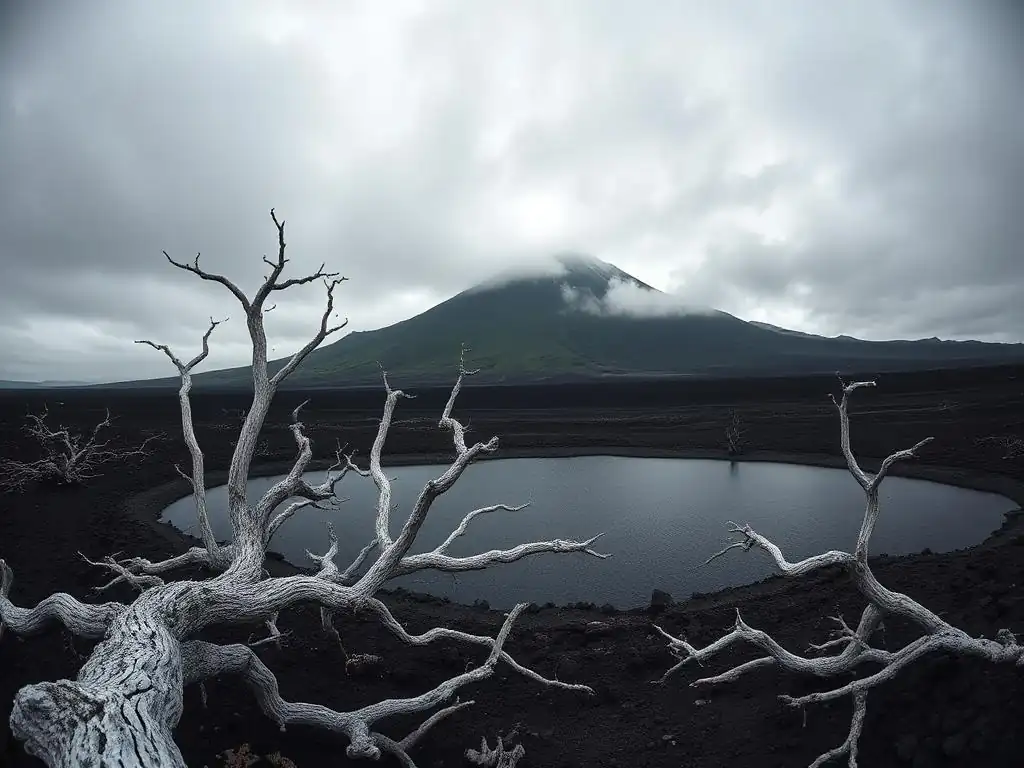
Ghost forests, particularly the standing dead trees, offer a unique archive of past volcanic events, allowing scientists to reconstruct eruption histories through dendrochronology, the science of studying tree rings. Trees in temperate and boreal regions form annual growth rings that reflect environmental conditions during each growing season.
By analyzing the patterns of tree rings in dead trees from ghost forests, particularly in trees killed by past volcanic eruptions, dendrochronologists can determine the year of tree death with remarkable precision. If tree death is linked to a volcanic eruption (e.g., through evidence of charring, burial by volcanic deposits, or regional die-off events), the tree rings provide a precise date for that eruption.
Dendrochronology can also provide information about the frequency and intensity of past volcanic eruptions. By cross-dating tree ring patterns from multiple trees in a ghost forest, scientists can construct long chronologies that extend back centuries or even millennia. Gaps or abrupt changes in these chronologies can indicate periods of volcanic activity that killed trees and disrupted forest growth.
Furthermore, the width of tree rings can reflect environmental stress, including volcanic impacts like ashfall or gas emissions. Narrower rings in certain years might correlate with known volcanic events or indicate periods of increased volcanic activity. Ghost forests, therefore, serve as valuable natural archives that allow dendrochronologists to reconstruct past volcanic eruption histories, improving our understanding of volcanic hazards and long-term volcanic activity patterns.
Using Ghost Forest Remains to Assess Volcanic Hazards
The remnants of ghost forests, beyond providing dates for past eruptions, can also be used to assess the spatial extent and intensity of past volcanic hazards, helping to refine volcanic hazard assessments for the future. The distribution and orientation of fallen trees in a ghost forest can provide clues about the direction and force of volcanic blasts or pyroclastic flows.
For example, trees flattened in a consistent direction may indicate the path of a lateral blast or the flow direction of a pyroclastic surge. The degree of tree damage, such as charring intensity or the height of trim lines on standing trees, can provide information about the temperature and depth of pyroclastic flows or lahar inundation.
By mapping the extent of ghost forests and analyzing the characteristics of the dead trees, volcanologists can reconstruct the spatial footprint of past volcanic hazards. This information is crucial for delineating hazard zones around volcanoes and assessing the potential risk to communities and infrastructure.
For instance, if a ghost forest indicates that pyroclastic flows have reached a certain distance from the volcano in the past, it suggests that similar areas are at risk in future eruptions. The analysis of ghost forest remains, combined with other geological and geophysical data, contributes to more accurate and comprehensive volcanic hazard assessments, which are essential for effective volcanic risk mitigation and land-use planning in volcanic regions.
The Importance of Preserving Ghost Forests for Scientific Study
Preserving ghost forests is not only important for their aesthetic and ecological value but also for their immense scientific value as natural archives of volcanic history and ecological processes. Ghost forests are living laboratories that provide unique opportunities to study long-term ecological recovery after catastrophic disturbances, the role of deadwood in ecosystem functioning, and the dynamics of volcanic landscapes. The standing dead trees in ghost forests contain a wealth of information about past volcanic eruptions, including eruption dates, intensities, and hazard extents, as revealed through dendrochronology and other paleoecological techniques.
Ghost forests also serve as important sites for long-term ecological monitoring and research. By studying the changes in vegetation, wildlife, and soil development over time in ghost forests, scientists can gain a better understanding of ecosystem resilience, successional processes, and the long-term impacts of volcanic disturbances. This knowledge is crucial for predicting ecosystem responses to future volcanic eruptions and other environmental changes. Preserving ghost forests, therefore, ensures that these valuable scientific resources are available for current and future generations of researchers, contributing to our understanding of volcanic hazards, ecological dynamics, and the resilience of natural systems.
The Future of Ghost Forests in a Changing Climate
Climate Change and Increased Volcanic Activity: A Potential Threat
Climate change presents a complex and potentially concerning scenario for the future of ghost forests and volcanic ecosystems. While the direct link between climate change and volcanic activity is still being researched, there are potential indirect connections that could influence volcanic eruption frequency and intensity. For example, melting glaciers and ice sheets due to climate warming can reduce the pressure on the Earth's crust in volcanic regions, potentially leading to increased magma production and volcanic eruptions in some areas. Changes in precipitation patterns and sea level rise could also influence volcanic hazards, such as lahars and coastal volcanic eruptions.
Furthermore, climate change is already altering forest ecosystems globally, making them more vulnerable to various stresses, including volcanic disturbances. Increased frequency and intensity of droughts, heatwaves, and insect outbreaks can weaken trees and reduce forest resilience. Forests already stressed by climate change may be less able to withstand volcanic impacts and recover from ghost forest formation.
The combined effects of climate change and volcanic activity could lead to more frequent and extensive ghost forests, potentially slowing down or altering ecological recovery processes in volcanic landscapes. Understanding the complex interactions between climate change and volcanic activity is crucial for predicting the future trajectory of ghost forests and volcanic ecosystems.
Conservation Efforts and Protecting Volcanic Ecosystems
Conservation efforts are essential for protecting volcanic ecosystems, including ghost forests, and ensuring their long-term ecological integrity and scientific value. Volcanic landscapes are often unique and biodiversity-rich environments, supporting specialized plant and animal communities adapted to volcanic conditions. Ghost forests, as integral parts of these ecosystems, deserve conservation attention for their ecological role in recovery and succession, their scientific importance as natural archives, and their aesthetic and cultural value.
Conservation strategies for volcanic ecosystems and ghost forests can include establishing protected areas, such as national parks or reserves, that encompass representative examples of volcanic landscapes and ghost forests. These protected areas can provide habitat for wildlife, safeguard ecological processes, and facilitate scientific research and monitoring. Managing human activities in and around volcanic areas is also crucial, including regulating tourism, development, and resource extraction to minimize impacts on volcanic ecosystems.
Raising public awareness about the ecological and scientific value of ghost forests and volcanic landscapes is also important for fostering stewardship and support for conservation efforts. Effective conservation of volcanic ecosystems requires a holistic approach that integrates scientific understanding, management strategies, and community engagement to ensure the long-term protection of these dynamic and fascinating landscapes.
The Ongoing Research and Monitoring of Ghost Forests
Ongoing research and monitoring are crucial for understanding the long-term dynamics of ghost forests and volcanic ecosystems, informing conservation efforts, and improving volcanic hazard assessments. Scientists continue to study ghost forests around the world to unravel the complexities of ecological recovery, nutrient cycling, and the role of deadwood in ecosystem functioning. Long-term monitoring programs track vegetation recovery, wildlife populations, soil development, and other ecological indicators in ghost forests, providing valuable data on ecosystem change over time.
Research also focuses on refining our understanding of volcanic hazards and their impacts on forests. Studies using dendrochronology, remote sensing, and field surveys are used to reconstruct past volcanic eruptions and hazard extents, improving volcanic hazard assessments and informing land-use planning in volcanic regions. Monitoring volcanic activity and ground deformation around volcanoes is essential for predicting future eruptions and mitigating volcanic risks. The ongoing research and monitoring of ghost forests and volcanic ecosystems are vital for ensuring the safety of communities living near volcanoes, protecting biodiversity, and understanding the dynamic interactions between volcanic processes and the environment.
Observing and Understanding Ghost Forests Responsibly
Ethical Considerations When Visiting Volcanic Ghost Forests
Visiting volcanic ghost forests can be a powerful and educational experience, offering a firsthand glimpse into the dramatic forces of nature and the processes of ecological recovery. However, it is crucial to approach these landscapes with ethical considerations, respecting their ecological fragility and scientific value. Ghost forests are not just scenic destinations but also sensitive ecosystems and important research sites. Visitors should be mindful of minimizing their impact and avoiding any activities that could disturb the environment or compromise scientific studies.
Ethical visitation of ghost forests includes staying on marked trails to avoid trampling vegetation and disturbing wildlife habitats. It is important to refrain from collecting souvenirs, such as wood samples or volcanic rocks, as these materials may be important for scientific research or ecosystem functioning. Respecting signage and regulations in protected areas is crucial for ensuring the conservation of ghost forests.
Visitors should also be aware of potential hazards in volcanic areas, such as unstable ground, volcanic gases, or the risk of renewed volcanic activity. Responsible visitation of ghost forests involves a mindful and respectful approach that prioritizes environmental protection and scientific integrity.
Minimizing Impact and Respecting the Environment
Minimizing impact is paramount when visiting volcanic ghost forests to ensure the long-term preservation of these sensitive environments. Practicing Leave No Trace principles is essential, including packing out all trash, staying on trails, and avoiding disturbance to vegetation and wildlife. Walking or hiking in small groups can reduce overall impact compared to large groups. Avoiding off-trail exploration and disturbing soil or vegetation is crucial, especially in areas undergoing ecological recovery.
Respecting wildlife means observing animals from a distance, avoiding feeding or approaching them, and minimizing noise levels that could disturb wildlife behavior. Being mindful of fire risks is also important, especially in dry ghost forest environments. Campfires should be avoided or built only in designated areas, and cigarettes should be properly extinguished.
Minimizing impact also extends to avoiding the introduction of invasive species. Cleaning hiking boots and gear before and after visiting ghost forests can help prevent the spread of non-native plants or seeds. By adopting these practices, visitors can minimize their footprint and contribute to the long-term health and preservation of ghost forest ecosystems.
Supporting Research and Conservation Efforts for Volcanic Ecosystems
Supporting research and conservation efforts is a vital way to contribute to the understanding and protection of volcanic ecosystems, including ghost forests. Individuals can support these efforts in various ways, such as volunteering for conservation organizations working in volcanic areas, donating to research institutions or conservation groups, or participating in citizen science projects that monitor volcanic ecosystems. Educating oneself and others about the ecological and scientific value of ghost forests and volcanic landscapes can also raise awareness and promote conservation action.
Supporting policies and regulations that protect volcanic ecosystems and ghost forests is another important avenue for conservation. Advocating for the establishment or expansion of protected areas in volcanic regions, supporting responsible land-use planning, and promoting sustainable tourism practices can contribute to the long-term conservation of these valuable environments. Engaging with local communities and stakeholders in volcanic areas is also crucial for ensuring that conservation efforts are effective and address local needs and concerns. By actively supporting research and conservation, individuals can play a meaningful role in safeguarding the future of ghost forests and the unique ecosystems they represent.
Frequently Asked Questions
Ghost forests are areas of dead or dying trees, often characterized by their bare, skeletal appearance. They are frequently a result of volcanic activity, such as pyroclastic flows, ashfall, or lahars, which can destroy vegetation.
How do volcanic eruptions create ghost forests?
Volcanic eruptions create ghost forests through various mechanisms. Pyroclastic flows can incinerate entire forests. Ashfall can smother trees, blocking sunlight and hindering photosynthesis. Lahars can bury or uproot trees, leading to their demise.
Can ghost forests recover after a volcanic eruption?
Recovery is possible, but it can take a considerable amount of time, ranging from decades to centuries. The severity of the eruption and the type of vegetation present will influence the recovery process.
What can ghost forests tell us about past volcanic eruptions?
Ghost forests provide valuable insights into the intensity and extent of past eruptions. The age of the dead trees and the patterns of damage can help volcanologists reconstruct eruption history.
Are ghost forests only found near active volcanoes?
While commonly associated with active volcanoes, ghost forests can also be found near dormant or extinct volcanoes. Past eruptions may have created conditions that still prevent forest regeneration in these areas.
Final Reflection: Echoes of Resilience in Volcanic Landscapes
The stark beauty of ghost forests, especially those born from volcanic eruptions, serves as a potent reminder of nature's destructive power and its remarkable capacity for renewal. These skeletal woodlands, standing as silent witnesses to past cataclysms, are not just ecological curiosities; they are living testaments to the cyclical dance of destruction and rebirth that shapes our planet. Understanding their formation and the wildlife that adapts to these challenging environments offers invaluable insights into ecological resilience and the long-term impact of volcanic activity, knowledge crucial in an era increasingly impacted by climate change and natural disasters.
The image of these spectral trees, bleached white against the backdrop of volcanic landscapes, has profoundly influenced our understanding of ecological succession and adaptation. Personally, witnessing a ghost forest evokes a sense of both loss and profound hope, a recognition that even in the face of devastation, life finds a way. This enduring spirit is captured beautifully in the words of Rachel Carson: The more clearly we can focus our attention on the wonders and realities of the universe about us, the less taste we shall have for destruction.
Let the haunting beauty of the ghost forests inspire you to look beyond the immediate devastation of natural events and recognize the underlying strength and resilience of the natural world. Consider how you can contribute to understanding and protecting these unique ecosystems, and how you can apply the lessons of adaptation and renewal to your own life. Embrace the challenge of finding beauty and hope even in the face of adversity, and become an advocate for the preservation of these vital, albeit ghostly, landscapes.
Unearth Your Own Volcanic Adventure!
Thanks for exploring the fascinating world of volcanic ghost forests! We hope you enjoyed learning about nature's resilience in the face of volcanic eruptions. Now, let's turn that knowledge into action and continue exploring!
Here are a few ways to deepen your connection with these incredible environments:
- Support a local conservation effort dedicated to preserving volcanic landscapes. Even a small contribution can significantly protect these unique ecosystems.
- Learn more by researching ecological succession after volcanic eruptions around the world. Compare and contrast different regions and their wildlife.
- Share this article with fellow nature enthusiasts and spark a conversation about the delicate balance between destruction and renewal.
What will you do today to champion the preservation of our volcanic wonderlands? Let us know in the comments!