
Geoengineering's Inspiration? Can We Mimic Volcanoes to Cool a Warming Planet?

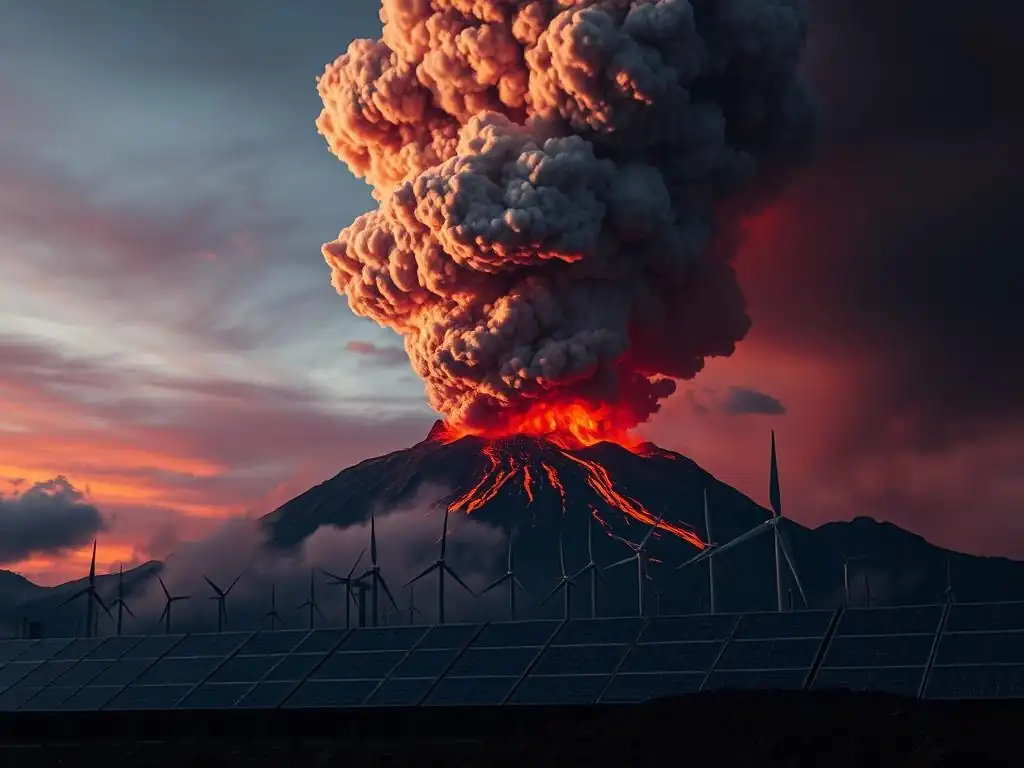
Welcome to Volcano Explorers, where the Earth's fiery heart meets cutting-edge science. Dare to question if we can harness the immense power of volcanic eruptions for good? Today, we delve into a fascinating proposition: mimicking volcanoes for climate cooling. Could this controversial geoengineering approach be our planet's last hope, or a dangerous gamble? Prepare to explore the potential, the pitfalls, and the profound implications of this bold idea.
- Volcanic Eruptions and Climate Cooling: A Geoengineering Blueprint?
- Mimicking Volcanoes: Stratospheric Aerosol Injection (SAI) as a Geoengineering Technique
- The Science of SAI: Releasing Reflective Particles into the Stratosphere
- Potential Benefits of Volcano-Inspired Geoengineering for Climate Change Mitigation
- The Risks and Challenges of Mimicking Volcanic Eruptions for Climate Control
- Ethical Considerations and Governance of Stratospheric Aerosol Injection
- Comparing Natural Volcanic Cooling to Artificial SAI: Key Differences
- The Future of Climate Engineering: Is Mimicking Volcanoes a Viable Solution?
- Conclusion: Balancing Potential and Peril in the Quest for Climate Solutions Through Volcanic Inspiration
-
Frequently Asked Questions
- How does mimicking volcanoes help cool the planet?
- What are the potential risks of mimicking volcanoes for climate cooling?
- What is the main substance being considered for release in mimicking volcanic eruptions?
- How long does the cooling effect of a volcanic eruption typically last?
- How does mimicking volcanoes compare to other geoengineering methods?
- Final Reflection: Echoes of Eruption, Hopes for Cooling
- Unleash Earth's Cooling Power: Your Next Steps
Volcanic Eruptions and Climate Cooling: A Geoengineering Blueprint?
Understanding the Link Between Volcanoes and Global Temperatures
Volcanic eruptions, particularly large explosive ones, have long been recognized for their ability to influence global climate patterns. Throughout history, major volcanic events have coincided with periods of noticeable cooling. For instance, the eruption of Mount Tambora in 1815, one of the largest in recorded history, led to the infamous "Year Without a Summer" in 1816. This event caused widespread crop failures, famine, and social unrest across the globe. Historical records from Europe and North America detail unusually cold temperatures, frosts in summer months, and persistent snowfalls, directly linking the eruption to significant climatic disruption.
The mechanism behind this cooling effect is primarily the injection of sulfur dioxide gas into the stratosphere during these massive eruptions. Unlike volcanic ash, which falls out of the atmosphere relatively quickly, sulfur dioxide reacts with water vapor in the stratosphere to form sulfate aerosols.
These tiny particles can linger in the stratosphere for one to two years, or even longer for exceptionally large eruptions. These aerosols act like a global sunscreen, reflecting a portion of incoming solar radiation back into space, thereby reducing the amount of sunlight reaching the Earth's surface and leading to a measurable decrease in global temperatures.
The Natural Experiment: How Volcanic Aerosols Affect Solar Radiation
Volcanic eruptions provide a natural laboratory for understanding how aerosols in the stratosphere can influence Earth's radiative balance. Scientists have studied the climatic effects of past eruptions by examining ice core records, tree rings, and historical documents. Ice cores, in particular, are invaluable archives, trapping layers of volcanic sulfate aerosols deposited from past eruptions. By analyzing these layers, researchers can reconstruct the timing and magnitude of past volcanic events and correlate them with temperature proxies, such as oxygen isotopes in ice and tree ring width variations.
Data from recent eruptions, like Mount Pinatubo in 1991, further validate the cooling effect. Pinatubo injected approximately 20 million tons of sulfur dioxide into the stratosphere. In the following months, global average temperatures decreased by about 0.5°C (0.9°F).
This cooling effect persisted for a few years before the aerosols naturally settled out of the stratosphere. Satellite measurements and ground-based observations during and after the Pinatubo eruption provided detailed insights into the formation, distribution, and radiative properties of volcanic aerosols, strengthening our understanding of how these natural events can temporarily offset global warming. This natural experiment has become a crucial reference point for considering and evaluating geoengineering proposals that aim to mimic these volcanic effects to counteract human-caused climate change.
Mimicking Volcanoes: Stratospheric Aerosol Injection (SAI) as a Geoengineering Technique
What is Stratospheric Aerosol Injection (SAI)?
Stratospheric Aerosol Injection (SAI) is a proposed geoengineering technique that draws direct inspiration from the cooling effects observed after large volcanic eruptions. It involves intentionally introducing aerosols into the stratosphere to reflect sunlight back into space, thereby reducing the amount of solar radiation absorbed by the Earth's climate system. SAI is considered a form of solar radiation management (SRM), aiming to address global warming by directly modifying the Earth's energy budget.
Unlike carbon dioxide removal (CDR) techniques, which aim to tackle the root cause of climate change by removing greenhouse gases from the atmosphere, SAI is primarily focused on alleviating the symptoms of warming. It is proposed as a relatively rapid and potentially cost-effective way to counteract rising global temperatures. However, it's crucial to understand that SAI does not address the underlying issue of increased greenhouse gas concentrations and would need to be sustained as long as greenhouse gas levels remain elevated to maintain a cooling effect.
How SAI Aims to Replicate Volcanic Climate Effects
The core principle of SAI is to replicate the natural cooling mechanism observed after volcanic eruptions, specifically the role of sulfate aerosols in reflecting sunlight. Volcanic eruptions serve as a real-world demonstration of the potential for stratospheric aerosols to influence global temperatures. By studying the characteristics of volcanic aerosols, their dispersion patterns, and their radiative properties, scientists can gain valuable insights into how to effectively implement SAI.
SAI aims to create a similar, albeit artificially maintained, layer of reflective aerosols in the stratosphere. The goal is not to exactly mimic the sudden and potentially disruptive nature of volcanic eruptions but rather to create a more controlled and gradual cooling effect. Researchers are investigating various types of aerosols and delivery methods to optimize the effectiveness and minimize potential side effects of SAI, drawing heavily on the scientific understanding gained from studying volcanic eruptions and their climatic impacts.
The Science of SAI: Releasing Reflective Particles into the Stratosphere
Choosing the Right Aerosols: Sulfur Dioxide vs. Other Options
While sulfur dioxide (SO2) is the primary aerosol precursor released by volcanoes and the basis for initial SAI concepts, research is exploring other substances that might be more suitable for long-term deployment. Sulfur dioxide, when converted to sulfate aerosols in the stratosphere, is effective at reflecting sunlight but also carries potential risks. One concern is its contribution to acid rain in the troposphere, although the quantities used in SAI are projected to be much smaller than industrial emissions. Another concern is the potential for ozone depletion, as sulfate aerosols can enhance ozone-depleting chemical reactions, particularly in polar regions.
Therefore, scientists are investigating alternative aerosol materials that might offer better performance and fewer side effects. These alternatives include engineered particles like aluminum oxide, titanium dioxide, or diamond dust. These materials are being evaluated for their reflectivity, atmospheric lifetime, and potential environmental impacts. The ideal aerosol for SAI would be highly reflective, have a long residence time in the stratosphere, be non-toxic, and have minimal impact on stratospheric ozone chemistry and tropospheric processes.
Deployment Methods: How to Distribute Aerosols Effectively
Effective deployment of aerosols into the stratosphere is crucial for SAI's success. Several methods are being considered to deliver the chosen aerosol precursor material to the stratosphere, which begins around 10-15 kilometers (6-9 miles) above the Earth's surface and extends upwards. One proposed method involves using specialized high-altitude aircraft, capable of reaching the stratosphere and releasing the aerosol precursor material, such as sulfur dioxide gas, at appropriate altitudes and latitudes.
Another concept involves using balloons to lift aerosol dispensers into the stratosphere. These balloons could be designed for long-duration flights and equipped with mechanisms to release aerosols over time. Additionally, artillery or rockets have been suggested as potential deployment methods, although these may be less efficient for continuous and widespread aerosol distribution compared to aircraft or balloons.
The choice of deployment method will depend on factors such as cost, scalability, precision of aerosol delivery, and environmental impact of the deployment process itself. Research is ongoing to determine the most feasible and effective ways to distribute aerosols to achieve the desired radiative forcing and climate cooling effects.
Potential Benefits of Volcano-Inspired Geoengineering for Climate Change Mitigation

Reducing Global Warming: Quantifying the Potential Temperature Decrease
Stratospheric Aerosol Injection (SAI), inspired by the cooling effects of volcanic eruptions, holds the potential to significantly reduce global warming. Climate models suggest that SAI could offset a substantial portion of the warming projected under various greenhouse gas emission scenarios. Studies using climate models indicate that injecting a few million tons of sulfur dioxide per year into the stratosphere could cool the planet by several degrees Celsius, potentially counteracting the warming effects of doubled or even quadrupled pre-industrial CO2 concentrations.
For example, some modeling studies suggest that maintaining a stratospheric aerosol layer sufficient to offset the warming from a doubling of CO2 might require injecting approximately 1-2 million tons of sulfur dioxide annually. This is comparable to, or even less than, the sulfur dioxide released by the 1991 Mount Pinatubo eruption, which caused a global cooling of about 0.5°C. While the exact amount of aerosol needed and the resulting temperature decrease would depend on various factors, including the specific aerosols used and deployment strategies, SAI offers a potentially powerful tool to rapidly reduce global temperatures.
Protecting Vulnerable Ecosystems: Arctic Sea Ice and SAI
One of the most compelling potential benefits of SAI is its ability to protect vulnerable ecosystems that are particularly threatened by rapid climate change. The Arctic region, for example, is warming at a rate two to three times faster than the global average, leading to dramatic declines in sea ice extent and thickness. Melting sea ice has profound consequences for Arctic ecosystems, wildlife, and global sea level rise.
Climate models suggest that SAI could be effective in slowing or even reversing Arctic warming and sea ice loss. By reducing global temperatures, SAI could help to stabilize Arctic sea ice, providing critical habitat for polar bears, seals, and other Arctic species. Furthermore, preserving Arctic sea ice would help maintain the Earth's albedo – its reflectivity – as ice reflects significantly more sunlight than open ocean water. This positive feedback loop could further enhance the cooling effects of SAI and contribute to a more stable global climate system, safeguarding vulnerable ecosystems from the most severe impacts of warming.
The Risks and Challenges of Mimicking Volcanic Eruptions for Climate Control
Unintended Consequences: Potential Impacts on Precipitation Patterns
While SAI offers the potential to reduce global temperatures, it is not without risks and potential unintended consequences. One significant concern is the potential impact on global precipitation patterns. Climate models suggest that SAI could lead to a decrease in global average precipitation. This is because reducing solar radiation also reduces evaporation, which in turn can affect rainfall patterns. Some regions might experience more significant drying than others, potentially leading to droughts and water stress in already arid or semi-arid areas.
For example, studies have indicated that SAI could weaken the Asian monsoon, which provides crucial rainfall for agriculture in densely populated regions of South and East Asia. Changes in precipitation patterns could also affect river flows, agriculture in other regions, and the availability of freshwater resources. The regional variability and uncertainty surrounding precipitation impacts are major challenges in assessing the overall risks of SAI. More research is needed to better understand and predict the potential effects on regional and global hydrological cycles.
Ozone Depletion: A Threat from Sulfur-Based Aerosols
Another significant risk associated with sulfur-based aerosols, like those considered for early SAI proposals mimicking volcanic eruptions, is the potential for ozone depletion. While the ozone layer naturally recovers after volcanic eruptions as the aerosols dissipate, continuous or repeated deployment of sulfur aerosols could pose a more persistent threat. Sulfate aerosols can enhance chemical reactions that destroy ozone in the stratosphere, particularly in polar regions and during winter.
Ozone depletion is concerning because the ozone layer protects life on Earth by absorbing harmful ultraviolet (UV) radiation from the sun. Increased UV radiation at the surface can lead to higher rates of skin cancer, cataracts, and damage to ecosystems. Although the magnitude of ozone depletion from SAI is still uncertain and depends on the amount and type of aerosols deployed, it remains a significant potential risk, especially if sulfur dioxide is used as the primary aerosol precursor. The development of alternative, non-ozone-depleting aerosols is a crucial area of research for mitigating this risk.
Regional Climate Variations: Uneven Cooling Effects
SAI is expected to produce a global average cooling, but this cooling is unlikely to be uniform across the planet. Climate models indicate that SAI might lead to uneven cooling, with some regions experiencing more cooling than others, and potentially even some localized warming in certain areas. This uneven cooling can create regional climate variations and alter temperature gradients, potentially affecting weather patterns and atmospheric circulation.
For instance, some models suggest that SAI could lead to greater cooling at the poles compared to the tropics. This differential cooling could have complex effects on atmospheric and oceanic circulation patterns, potentially altering storm tracks, ocean currents, and regional weather systems. Uneven cooling could also lead to shifts in agricultural zones and impact regional ecosystems differently. Understanding and predicting these regional climate variations is crucial for assessing the potential impacts of SAI and for developing strategies to mitigate any negative consequences.
Ethical Considerations and Governance of Stratospheric Aerosol Injection
The Moral Hazard of Geoengineering: Distracting from Emission Reduction
One of the most significant ethical concerns surrounding SAI and other geoengineering technologies is the "moral hazard" argument. This argument suggests that the prospect of having a seemingly quick technological fix for climate change, like mimicking volcanoes, could reduce the urgency and political will to address the root cause of the problem: greenhouse gas emissions. If policymakers and the public believe that geoengineering can easily solve climate change, they might be less inclined to support and implement the necessary deep cuts in emissions and transitions to clean energy.
This could lead to a reliance on geoengineering as a substitute for emission reduction, rather than as a complementary measure. However, SAI only addresses the symptoms of climate change (warming) and does not address the underlying problems caused by increased CO2 concentrations, such as ocean acidification.
Furthermore, if SAI were to be abruptly terminated for any reason, the masking effect would disappear rapidly, potentially leading to a rapid and severe temperature rebound, a phenomenon known as "termination shock." Therefore, it is crucial to emphasize that geoengineering should not be seen as a replacement for, but rather as a potential supplement to, aggressive and sustained emission reductions.
Global Cooperation and Decision-Making: Who Decides on SAI Deployment?
The deployment of SAI raises complex governance challenges and necessitates international cooperation. Climate change is a global problem, and geoengineering interventions, by their very nature, would have global consequences. However, there is currently no international framework or institution in place to govern the research, development, and potential deployment of SAI. Decisions about whether, when, and how to deploy SAI would have to be made collectively by the international community.
This raises questions about who should have the authority to decide on SAI deployment, how to ensure equitable decision-making processes, and how to manage potential disputes and disagreements among nations regarding its use. The potential for unilateral deployment by a single nation or a small group of nations is a major concern, as it could lead to international tensions and conflicts. Establishing robust international governance mechanisms, involving broad participation and ensuring transparency and accountability, is essential for responsible and ethical consideration of SAI and to prevent potential negative geopolitical consequences.
Comparing Natural Volcanic Cooling to Artificial SAI: Key Differences
Scale and Duration: Natural Eruptions vs. Continuous Injection
While Stratospheric Aerosol Injection (SAI) draws inspiration from the cooling effects of volcanic eruptions, there are crucial differences in scale and duration between natural volcanic events and proposed artificial SAI. Volcanic eruptions are episodic and relatively short-lived events. Even large eruptions, like Mount Pinatubo, inject aerosols into the stratosphere over a period of days or weeks, and the cooling effect typically lasts for one to two years as the aerosols gradually settle out.
In contrast, SAI, as currently envisioned, would likely involve continuous or repeated injections of aerosols over extended periods, potentially decades or even centuries, to counteract ongoing greenhouse gas forcing. This fundamental difference in duration has significant implications. The Earth system has time to adjust to the temporary cooling from volcanic eruptions, but continuous SAI could lead to different and potentially less predictable responses from the climate system over longer timescales. Furthermore, the long-term governance and maintenance of a continuous SAI system pose unique challenges that are not present with natural, short-lived volcanic events.
Control and Precision: The Ability to Adjust SAI Parameters
One potential advantage of artificial SAI over natural volcanic eruptions is the possibility of greater control and precision. Volcanic eruptions are uncontrolled natural events; the amount of sulfur dioxide injected, the altitude of injection, and the geographical distribution of aerosols are determined by the eruption dynamics and atmospheric conditions. In contrast, SAI offers the potential to carefully control the type of aerosols, the amount injected, the altitude and latitude of release, and the timing of injections.
This control could allow for a more targeted and potentially less disruptive approach to climate cooling compared to the abrupt and widespread effects of a large volcanic eruption. For example, SAI could potentially be adjusted to target specific regions or seasons, or to fine-tune the amount of cooling to minimize side effects. However, realizing this level of control in practice is a significant scientific and technological challenge. Precise monitoring and feedback mechanisms would be needed to adjust SAI parameters in response to observed climate changes and to minimize unintended consequences.
The Future of Climate Engineering: Is Mimicking Volcanoes a Viable Solution?
Research and Development: Ongoing Studies and Future Directions
Research into Stratospheric Aerosol Injection (SAI) and other geoengineering techniques is ongoing and actively developing. Scientists are working to improve our understanding of the potential benefits, risks, and uncertainties associated with SAI. Current research focuses on several key areas, including: developing and testing alternative aerosol materials with improved reflectivity and reduced side effects; refining climate models to better predict the regional and global impacts of SAI on temperature, precipitation, and other climate variables; and investigating deployment methods and technologies for effective and safe aerosol delivery.
Field experiments, albeit on a small scale and without actual aerosol release in the stratosphere, are also being conducted to test deployment technologies and to improve our understanding of aerosol dispersion and atmospheric chemistry. Ethical, social, and governance aspects of geoengineering are also receiving increasing attention, with researchers exploring public perceptions, ethical frameworks for decision-making, and potential international governance mechanisms. This ongoing research is crucial for informing future decisions about the potential role of SAI in addressing climate change.
The Role of Geoengineering in a Comprehensive Climate Strategy
The question of whether mimicking volcanoes through SAI is a viable solution to climate change is complex and multifaceted. Most scientists and policymakers agree that SAI, even if proven to be technically feasible and relatively safe, should not be considered a standalone solution to climate change. It is crucial to emphasize that the primary and most sustainable approach to addressing climate change is through deep and rapid reductions in greenhouse gas emissions.
Geoengineering, including SAI, should only be considered as a potential complementary measure, perhaps as a temporary "emergency brake" to reduce near-term climate risks while the world transitions to a low-carbon economy. SAI could potentially play a role in limiting the most dangerous impacts of climate change, such as extreme heat events, sea level rise, and ecosystem collapse, while emission reduction efforts take effect. However, it is essential to proceed with caution, to thoroughly assess the risks and uncertainties, and to ensure robust governance and international cooperation if SAI is ever to be considered for deployment.
Conclusion: Balancing Potential and Peril in the Quest for Climate Solutions Through Volcanic Inspiration
Mimicking volcanoes to cool a warming planet through Stratospheric Aerosol Injection (SAI) presents a compelling, yet complex and potentially risky, approach to geoengineering. Inspired by the natural cooling effects of volcanic eruptions, SAI offers the theoretical possibility of rapidly reducing global temperatures and mitigating some of the most severe impacts of climate change. However, it is not a silver bullet solution and comes with significant uncertainties, potential side effects, and ethical dilemmas.
While SAI research continues to advance our understanding of its potential and perils, it is crucial to remember that it is not a substitute for aggressive and sustained greenhouse gas emission reductions. The long-term solution to climate change lies in transitioning to a sustainable, low-carbon future.
If SAI is ever to be considered as part of a comprehensive climate strategy, it must be approached with utmost caution, guided by robust scientific evidence, ethical considerations, and international cooperation, always recognizing its limitations and potential risks alongside its potential benefits. The quest for climate solutions demands a balanced approach, carefully weighing the potential of volcanic inspiration with the imperative of responsible stewardship of our planet.
Frequently Asked Questions
How does mimicking volcanoes help cool the planet?
Volcanoes release sulfur dioxide into the stratosphere, which forms sulfate aerosols. These aerosols reflect sunlight back into space, resulting in a temporary cooling effect on the Earth's surface.
What are the potential risks of mimicking volcanoes for climate cooling?
One significant risk is unpredictable climate impacts, such as altered precipitation patterns and ozone depletion. There are also concerns about the ethical implications of intentionally modifying the climate.
What is the main substance being considered for release in mimicking volcanic eruptions?
The primary substance being considered is sulfur dioxide (SO2), similar to what volcanoes naturally emit. Researchers are also exploring alternatives with potentially fewer negative side effects.
How long does the cooling effect of a volcanic eruption typically last?
The cooling effect from a volcanic eruption is usually temporary, lasting for a few years at most. This is because the sulfate aerosols eventually fall back to Earth due to gravity and atmospheric processes.
How does mimicking volcanoes compare to other geoengineering methods?
Mimicking volcanoes, specifically stratospheric aerosol injection (SAI), is often seen as a more cost-effective option compared to some other geoengineering methods. However, it also carries significant environmental and social risks that must be carefully considered.
Final Reflection: Echoes of Eruption, Hopes for Cooling
The exploration of geoengineering, specifically mimicking volcanic eruptions for climate cooling, is no longer a fringe scientific concept. It has moved into the realm of serious discussion, driven by the urgency of our climate crisis. The potential benefits, as well as the inherent risks, demand careful consideration as we grapple with the escalating effects of global warming.
The idea of artificially inducing a volcanic winter, while seemingly radical, underscores the profound impact of natural events on our planet's climate. This exploration forces us to confront our relationship with nature, acknowledging both its power to disrupt and its potential to inspire solutions. We are now faced with the fact that tomorrow is today. We are confronted with the fierce urgency of now.
- Martin Luther King Jr. This urgency compels us to investigate all possible avenues, even those that seem audacious, to mitigate the climate crisis.
As we stand at this critical juncture, let us not shy away from difficult conversations about geoengineering. Instead, let us approach these discussions with open minds, guided by scientific rigor and a deep commitment to safeguarding our planet. Consider the lessons learned from nature's own experiments, and ask yourself: What role can we, as individuals and as a society, play in shaping a future where innovation and responsibility walk hand in hand?
Unleash Earth's Cooling Power: Your Next Steps
Thank you for exploring the fascinating possibilities of geoengineering inspired by volcanic activity! We hope you've gained a new perspective on how we might address climate change. Now, let's translate that knowledge into action.
Here's how you can contribute to the conversation and potentially impact the future:
- Dive Deeper: Research the various geoengineering projects underway worldwide. Understanding the complexities of each approach is vital.
- Share your insights: Discuss the potential benefits and risks of solar geoengineering with your friends, family, and colleagues. Open conversations are crucial for responsible innovation.
- Explore Unconventional Solutions: Learn more about innovative climate change solutions, such as algae-based carbon capture or ocean fertilization, and consider their complexities.
What innovative idea could realistically help mitigate climate change, and why? Let's discuss in the comments below!