
Lost Worlds: Volcanic Eruptions and the Mysteries of Vanished Cultures

Welcome to Volcano Explorers!
Imagine a world swallowed by fire and ash, a civilization erased in a single, earth-shattering moment. Our journey begins here, exploring the chilling intersection where volcanic eruptions met – and often decimated – ancient cultures. But did these cataclysmic events only bring destruction, or did they also inadvertently preserve secrets, waiting to be unearthed? Prepare to delve into the fascinating relationship between fiery forces and lost civilizations as we uncover the mysteries surrounding volcanic eruptions and ancient cultures. What hidden truths lie buried beneath the ash?
- Introduction: When Volcanoes Erase Civilizations
- Historical Eruptions: A Catalyst for Cultural Collapse
- Case Studies: Volcanic Eruptions and the Fall of Civilizations
- Volcanic Eruptions and Cultural Adaptation: Resilience in the Face of Disaster
- The Intersection of Volcanic Activity, Archaeology, and Historical Reconstruction
- Conclusion: Remembering Lost Worlds and Preparing for the Future
-
Frequently Asked Questions
- What is the main focus of VolcanoExplorers.org?
- How does VolcanoExplorers.org relate to "volcanic eruptions and ancient cultures"?
- What kind of educational content can I find on VolcanoExplorers.org?
- Does VolcanoExplorers.org provide any practical information for people living near volcanoes?
- What is "Lost Worlds: Volcanic Eruptions and the Mysteries of Vanished Cultures" about?
- Final Reflection: Echoes of Fire, Whispers of the Past
- Rediscover the Past: Ignite Your Volcanic Curiosity!
Introduction: When Volcanoes Erase Civilizations
Throughout history, the Earth's fiery breath, manifested in volcanic eruptions, has dramatically reshaped not only landscapes but also the course of human civilizations. These powerful natural events, far exceeding human scales of destruction, have acted as agents of abrupt and often catastrophic change, abruptly ending eras and burying entire cultures under layers of ash and pyroclastic debris.
The study of volcanic eruptions and ancient cultures reveals a compelling narrative of human vulnerability in the face of nature's raw power, prompting us to consider the profound and lasting impact these geological events have had on the trajectory of human history. From the sudden annihilation of Roman cities to the potential disruption of Bronze Age societies, volcanic events have left indelible marks on the archaeological record, offering grim yet fascinating insights into the fragility of human endeavors when confronted with the planet's dynamic forces.
Historical Eruptions: A Catalyst for Cultural Collapse
Volcanic eruptions are not merely geological phenomena; they are potent forces of environmental and societal upheaval. Their impact extends far beyond the immediate vicinity of the volcano, triggering a cascade of effects that can destabilize and even dismantle entire civilizations. Understanding how historical eruptions acted as catalysts for cultural collapse requires examining the diverse and devastating mechanisms through which volcanoes exert their power.
These mechanisms range from the immediate and brutal force of pyroclastic flows to the insidious, long-term consequences of climate alteration caused by massive eruptions. By dissecting these various facets, we can begin to comprehend the profound role volcanic activity has played in shaping the destinies of ancient societies.
The Power of Pyroclastic Flows and Cultural Destruction
Pyroclastic flows represent one of the most terrifying and destructive aspects of volcanic eruptions. These are superheated avalanches of gas, ash, and rock fragments that can travel at speeds exceeding hundreds of kilometers per hour, incinerating everything in their path. Temperatures within pyroclastic flows can reach upwards of 700 degrees Celsius (1300 degrees Fahrenheit), hot enough to instantly carbonize organic matter and vaporize water. The sheer force and heat of these flows leave virtually no chance of survival for any living being caught in their trajectory, and they are capable of obliterating entire settlements within minutes.
The archaeological record provides stark evidence of pyroclastic flow devastation. The Roman city of Herculaneum, destroyed by the 79 AD eruption of Mount Vesuvius, stands as a chilling testament. Unlike Pompeii, which was primarily buried under ash and pumice, Herculaneum was engulfed by successive pyroclastic surges.
These surges carbonized wood, preserved organic materials in a state of near-perfect preservation, but also instantly killed all inhabitants. Excavations at Herculaneum have revealed skeletons frozen in their final moments, offering a poignant and horrifying glimpse into the instantaneous destruction wrought by pyroclastic flows and their capacity to erase entire communities from the face of the Earth.
Ashfall and Its Devastating Impact on Ancient Societies
While pyroclastic flows are localized zones of extreme destruction, ashfall from volcanic eruptions presents a geographically widespread threat that can cripple ancient societies over longer periods. Volcanic ash, composed of fine particles of pulverized rock and volcanic glass, can blanket vast areas downwind from an erupting volcano. Even relatively thin layers of ash can have catastrophic consequences for agriculture, infrastructure, and human health, disrupting the very foundations of ancient economies and social structures.
The immediate effects of ashfall include the contamination of water sources, crop failures due to ash smothering plants and blocking sunlight, and the collapse of buildings under the weight of accumulated ash. Furthermore, inhaling volcanic ash can cause respiratory problems, and its abrasive nature can damage machinery and tools. For agrarian societies heavily reliant on predictable harvests, prolonged periods of ashfall can lead to famine, social unrest, and ultimately, societal collapse.
The eruption of Mount Etna in 1669, while not leading to the collapse of a civilization, caused significant agricultural disruption across Sicily due to extensive ashfall, highlighting the vulnerability of even relatively advanced societies to this volcanic hazard. The long-term effects of repeated ashfalls can render land infertile for extended periods, forcing populations to migrate and abandon their ancestral territories.
Climate Change Induced by Volcanic Activity: A Silent Killer of Civilizations
Beyond the immediate devastation, large volcanic eruptions can trigger significant global climate change, acting as a "silent killer" of civilizations over years and even decades. Massive eruptions inject vast quantities of sulfur dioxide gas into the stratosphere, where it reacts with water vapor to form sulfate aerosols. These aerosols reflect incoming solar radiation back into space, leading to a decrease in global average temperatures, a phenomenon known as volcanic winter. This cooling effect can disrupt global weather patterns, shorten growing seasons, and lead to widespread agricultural failures.
The eruption of Mount Tambora in 1815, one of the largest volcanic eruptions in recorded history, serves as a stark example. The eruption caused the infamous "Year Without a Summer" in 1816, with widespread crop failures, famine, and disease outbreaks across Europe and North America.
While Tambora did not cause the complete collapse of civilizations, it triggered significant social and economic hardship, demonstrating the potential for volcanic-induced climate change to destabilize even relatively resilient societies. For ancient civilizations already operating at the margins of survival, reliant on predictable climates and harvests, such volcanic cooling events could have been catastrophic, contributing to societal decline and migrations, even if the link wasn't immediately understood by those experiencing the hardship.
Case Studies: Volcanic Eruptions and the Fall of Civilizations
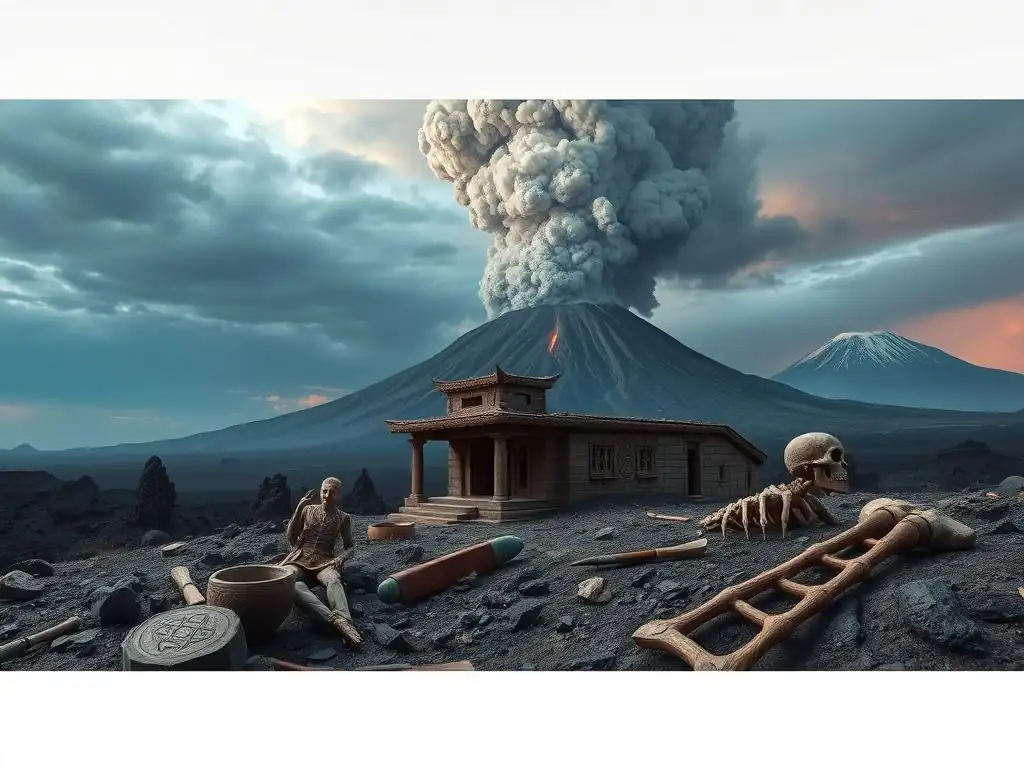
The interplay between volcanic eruptions and the decline of ancient civilizations is best illuminated through specific case studies. Examining individual eruptions and their potential connections to cultural shifts allows us to move beyond general principles and delve into the nuanced and complex realities of how these natural disasters intersected with human societies. From the Bronze Age Mediterranean to Imperial Rome and beyond, volcanic events have been implicated in major turning points in human history, prompting ongoing scholarly debate and archaeological investigation.
Thera (Santorini): The Minoan Civilization's Demise?
The eruption of Thera (modern Santorini) in the Aegean Sea is one of the most debated and intriguing examples of a potential volcanic catalyst for civilizational collapse. This colossal Bronze Age eruption, estimated to have occurred in the 17th or 16th century BC, has been linked to the decline of the Minoan civilization, a sophisticated Bronze Age culture that flourished on the island of Crete and surrounding islands.
While the exact nature and extent of the eruption's impact remain subjects of ongoing research, the Thera event serves as a compelling case study for understanding the potential long-term consequences of major volcanic events on complex societies.
The Minoan Civilization: A Flourishing Bronze Age Culture
The Minoan civilization, centered on the island of Crete, was a vibrant and advanced Bronze Age society that thrived from around 2700 to 1450 BC. Known for their impressive palaces, elaborate frescoes, sophisticated writing system (Linear A), and maritime trade networks, the Minoans dominated the Aegean region for centuries. Their palaces, such as Knossos, were not only centers of political and economic power but also hubs of artistic and cultural innovation.
Minoan society was characterized by its relative peace, prosperity, and a unique artistic style that celebrated nature and maritime life. Their influence extended throughout the Aegean, and they are considered a precursor to later Mycenaean and Classical Greek civilizations.
The Cataclysmic Eruption of Thera: A Timeline of Events
The eruption of Thera was a VEI-7 (Volcanic Explosivity Index 7) event, ranking among the largest volcanic eruptions of the Holocene epoch. The eruption unfolded in several phases, beginning with phreatic explosions caused by magma interacting with seawater. This was followed by a Plinian phase, characterized by a towering column of ash and pumice that reached tens of kilometers into the stratosphere.
The climax of the eruption involved caldera collapse, where the magma chamber beneath the island emptied, causing the center of the island to sink and creating the Santorini caldera we see today. This caldera collapse generated massive tsunamis that radiated outwards across the Aegean and potentially beyond, devastating coastal settlements. The eruption ejected an estimated 30 to 60 cubic kilometers of dense rock equivalent, blanketing the region in ash and pumice.
Evidence Linking the Thera Eruption to the Decline of the Minoans
The precise role of the Thera eruption in the decline of the Minoan civilization remains a subject of scholarly debate. While the eruption undoubtedly caused widespread devastation in the Aegean, particularly on the islands closest to Santorini, the extent of its impact on Minoan Crete is less clear-cut.
Archaeological evidence from Crete shows evidence of destruction and disruption around the time of the Thera eruption, including ash layers and tsunami deposits. However, the destruction layer on Crete is not uniformly dated to the immediate aftermath of the Thera eruption, and some scholars argue that the Minoan civilization continued to flourish for some time after the event, albeit in a modified form.
Alternative theories for the Minoan decline include Mycenaean invasion and internal societal factors. Nevertheless, the Thera eruption remains a strong contender as a significant contributing factor, potentially weakening Minoan society and making it more vulnerable to subsequent challenges, whether environmental, political, or military.
Mount Vesuvius: Pompeii and Herculaneum - A Moment Frozen in Time
The eruption of Mount Vesuvius in 79 AD is arguably the most famous volcanic eruption in history, primarily due to its catastrophic impact on the Roman cities of Pompeii and Herculaneum. This eruption provides an unparalleled snapshot of Roman life in the 1st century AD, as the rapid burial of these cities by volcanic materials preserved buildings, artifacts, and even human remains in remarkable detail. Pompeii and Herculaneum offer a chilling yet invaluable window into the destructive power of volcanoes and their capacity to freeze moments in time, allowing us to study the past with extraordinary clarity.
Life in Pompeii and Herculaneum Before the Eruption
Pompeii and Herculaneum were thriving Roman towns located in the Bay of Naples, south of Vesuvius. Pompeii was a bustling commercial center with a population of around 11,000, known for its vineyards, olive groves, and garum (fish sauce) production. Herculaneum, smaller and wealthier, was a popular resort town with a population of approximately 5,000, attracting wealthy Romans seeking leisure and relaxation.
Both cities were integral parts of the Roman Empire, enjoying the benefits of Roman infrastructure, culture, and trade. Life in these cities was characterized by a vibrant urban environment, with public baths, theaters, temples, and bustling marketplaces. Houses ranged from modest dwellings to opulent villas, reflecting the social stratification of Roman society.
The Eruption of Mount Vesuvius in 79 AD: Eyewitness Accounts and Archaeological Findings
The eruption of Vesuvius in 79 AD was a Plinian eruption that unfolded over approximately 24 hours. The eruption began in the early afternoon of August 24th, with a Plinian phase that sent a towering column of ash and pumice high into the atmosphere. Pumice and ash began to rain down on Pompeii, gradually burying the city.
Later that night and into the next morning, pyroclastic surges, faster and more lethal than the initial ashfall, swept down the flanks of Vesuvius, engulfing Herculaneum and then Pompeii. The eruption was famously described in letters by Pliny the Younger, who witnessed the event from across the Bay of Naples.
Archaeological excavations at Pompeii and Herculaneum have revealed the devastating impact of the eruption, uncovering streets, buildings, artifacts, and thousands of human remains preserved in volcanic ash and pyroclastic deposits. The preservation is so detailed that it even captures the final moments of the victims.
Lessons Learned from Pompeii: Understanding Volcanic Hazards
Pompeii and Herculaneum serve as stark reminders of the destructive power of volcanic eruptions and the importance of understanding and preparing for volcanic hazards. The eruption of Vesuvius highlighted the speed and lethality of pyroclastic flows and surges, which were responsible for the majority of fatalities. The archaeological record from Pompeii and Herculaneum provides valuable insights into the impact of ashfall, building collapse, and the diverse hazards associated with explosive eruptions.
The story of Pompeii and Herculaneum has become a cautionary tale, emphasizing the need for volcanic monitoring, hazard assessments, and effective evacuation plans in areas at risk from volcanic activity. Modern volcanology and disaster preparedness owe a significant debt to the lessons learned from the tragic fate of these ancient Roman cities.
Mount Tambora: The Year Without a Summer and Its Global Consequences
The eruption of Mount Tambora in 1815, located on the island of Sumbawa in present-day Indonesia, was one of the largest volcanic eruptions in recorded history. This VEI-7 super-eruption had profound global consequences, triggering a period of significant climate disruption known as the "Year Without a Summer" in 1816. Tambora's eruption serves as a powerful example of how volcanic activity can have far-reaching impacts on global climate, agriculture, and human societies, even across vast distances.
The Eruption of Mount Tambora in 1815: A Volcanic Super-Eruption
The eruption of Tambora began in April 1815 and reached its climax between April 10th and 11th. The eruption was characterized by massive explosions and pyroclastic flows that devastated the surrounding region. An estimated 150-180 cubic kilometers of dense rock equivalent was ejected, making it significantly larger than the eruptions of Vesuvius or Thera.
The eruption column is estimated to have reached over 40 kilometers into the atmosphere, injecting vast quantities of volcanic ash and sulfur dioxide into the stratosphere. The island of Sumbawa experienced widespread devastation, with entire villages buried under pyroclastic deposits and tsunamis generated by the eruption impacting surrounding coastlines. The immediate death toll from the eruption and its immediate aftermath is estimated to be in the tens of thousands.
"The Year Without a Summer": Global Climate Anomalies and Societal Impacts
The immense amount of sulfur dioxide injected into the stratosphere by the Tambora eruption led to a significant global cooling effect. Sulfate aerosols formed in the stratosphere reflected sunlight back into space, reducing the amount of solar radiation reaching the Earth's surface. This resulted in a global average temperature decrease of approximately 0.4-0.7 degrees Celsius (0.7-1.3 degrees Fahrenheit) in 1816.
While seemingly small, this temperature drop had dramatic consequences, particularly in higher latitudes of the Northern Hemisphere. Europe and North America experienced unusually cold temperatures throughout the spring and summer of 1816, with widespread frosts, snowfalls in June and July, and shortened growing seasons. This period became known as the "Year Without a Summer."
Tambora's Impact on Agriculture, Famine, and Disease
The "Year Without a Summer" had devastating impacts on agriculture, leading to widespread crop failures across Europe and North America. The shortened growing season, combined with cold temperatures and excessive rainfall, resulted in poor harvests of staple crops such as wheat, rye, and oats. These crop failures led to widespread famine and food shortages, particularly in regions already struggling with poverty and food insecurity.
The famine, in turn, contributed to outbreaks of disease, including typhus and cholera, as weakened populations became more susceptible to illness. The societal impacts of Tambora were far-reaching, contributing to social unrest, economic hardship, and migration. While not directly causing the collapse of civilizations, Tambora's eruption highlighted the vulnerability of societies to climate shocks and the interconnectedness of global systems, demonstrating how a volcanic eruption in one part of the world could have profound consequences on distant populations.
Changbaishan: Potential Impact on the Balhae Kingdom
The Changbaishan volcano, located on the border between North Korea and China, is a massive stratovolcano with a history of large explosive eruptions. While the exact timing and magnitude are still debated, a major eruption, sometimes referred to as the "Millennium Eruption," is believed to have occurred around 946 AD.
This eruption has been hypothesized as a potential contributing factor to the decline of the Balhae Kingdom, a Korean kingdom that flourished in Manchuria and the northern Korean peninsula from the 7th to 10th centuries AD. While the evidence is less direct than for other case studies, the Changbaishan eruption offers a compelling example of how large volcanic events could have played a role in the political and societal shifts of East Asia.
Volcanic Eruptions and Cultural Adaptation: Resilience in the Face of Disaster
While volcanic eruptions are undeniably destructive forces, human societies are not simply passive victims. Throughout history, communities living in volcanically active regions have demonstrated remarkable resilience and adaptation strategies. Examining how ancient societies adapted to volcanic landscapes reveals the ingenuity and resourcefulness of human populations in the face of environmental challenges. These adaptations range from practical measures to mitigate volcanic hazards to the development of cultural and religious frameworks for understanding and coping with these powerful natural phenomena.
How Ancient Societies Adapted to Volcanic Landscapes
Ancient societies living near volcanoes developed a variety of practical strategies to adapt to their environment. In some cases, this involved avoidance, with settlements located away from the most hazardous zones, such as pyroclastic flow paths and lahar valleys. However, volcanic soils are often fertile due to the mineral-rich ash, attracting agricultural communities. In these areas, adaptation strategies focused on mitigating the risks.
Terracing and irrigation systems could help protect crops from ashfall and erosion. Building materials, such as volcanic tuff and basalt, were often locally sourced and resistant to earthquakes and some volcanic hazards. Traditional building techniques may have also incorporated design elements to withstand ash accumulation. Furthermore, societies developed knowledge systems about volcanic activity, recognizing precursors to eruptions and understanding the patterns of volcanic hazards based on past events, passed down through oral traditions and accumulated experience.
The Role of Mythology and Religion in Understanding Volcanic Phenomena
In the absence of modern scientific understanding, ancient societies often interpreted volcanic eruptions through the lens of mythology and religion. Volcanoes were frequently seen as sacred mountains, dwelling places of gods or spirits, and eruptions were interpreted as expressions of divine wrath or power. Myths and legends developed around volcanoes, providing explanations for their behavior and offering frameworks for coping with the fear and uncertainty associated with volcanic activity.
Rituals and offerings were sometimes performed to appease volcanic deities and seek protection from eruptions. These mythological and religious interpretations played a crucial role in shaping cultural responses to volcanoes, providing a sense of meaning and order in the face of seemingly chaotic natural forces, and fostering community cohesion in times of crisis.
Iceland: Adapting to Life in a Volcanically Active Region
Iceland, a nation built on volcanic activity, provides a modern example of societal adaptation to a volcanically active environment. Icelandic society has learned to live with volcanoes, embracing both the challenges and opportunities they present. Geothermal energy, a direct product of volcanic activity, is a major source of power and heating in Iceland, contributing to the nation's energy independence and sustainable development.
Iceland has developed sophisticated volcanic monitoring systems and emergency preparedness plans, drawing on centuries of experience living with eruptions. Icelandic culture is deeply intertwined with volcanic landscapes, with volcanoes featuring prominently in folklore, literature, and art. Iceland's successful adaptation demonstrates that it is possible for societies to thrive in volcanically active regions through a combination of technological innovation, effective governance, and a resilient cultural mindset.
The Intersection of Volcanic Activity, Archaeology, and Historical Reconstruction
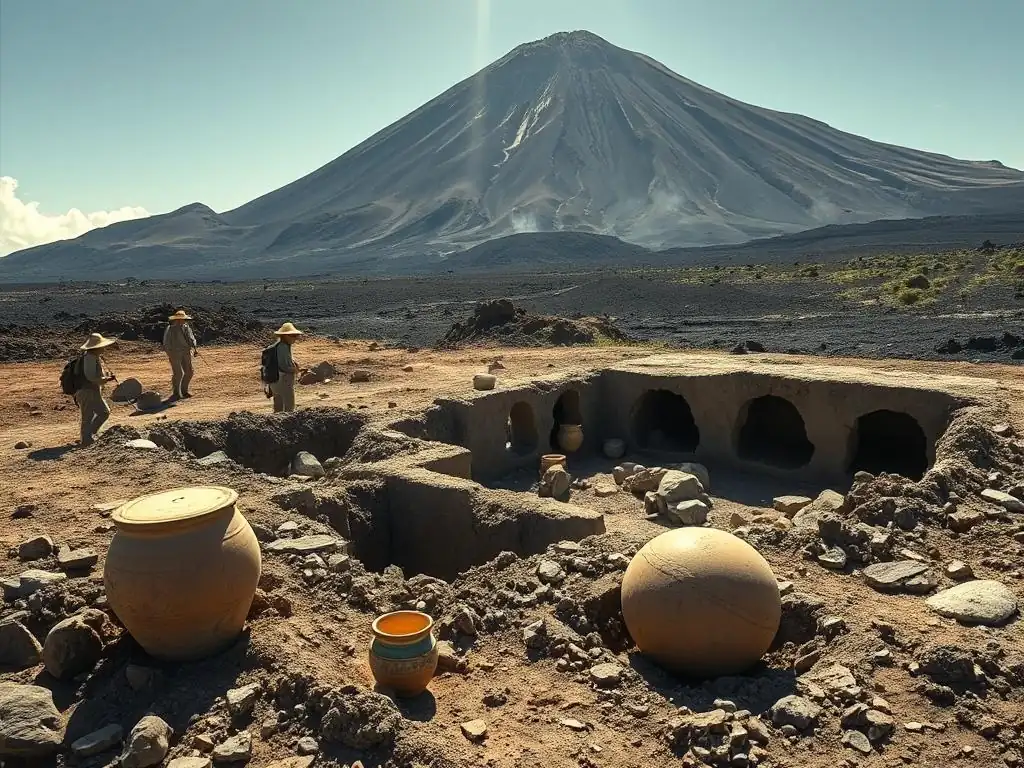
The study of volcanic eruptions and ancient cultures is inherently interdisciplinary, drawing upon the expertise of volcanologists, archaeologists, and historians. The intersection of these fields has led to significant advances in our understanding of past eruptions and their impact on human societies. Volcanic ash layers, or tephra, preserved in archaeological sites and geological records, provide invaluable archives of past volcanic activity and offer powerful tools for dating archaeological contexts and reconstructing past environments.
Using Volcanic Ash as a Dating Tool in Archaeological Studies (Tephrochronology)
Tephrochronology is a dating method that utilizes volcanic ash layers as time markers in geological and archaeological sequences. Each volcanic eruption produces ash with a unique geochemical fingerprint, allowing scientists to identify and correlate ash layers from the same eruption across wide geographical areas. When a volcanic ash layer is found within an archaeological site, it can provide a precise date for the layer and the archaeological materials found above and below it.
Tephrochronology has become an indispensable tool in archaeology, particularly in regions with frequent volcanic activity, such as Iceland, Italy, and the Pacific Northwest of North America. It has been used to refine chronologies for numerous archaeological sites and to link archaeological sequences to specific volcanic events, providing a more precise understanding of the temporal relationships between human activities and volcanic eruptions.
Reconstructing Past Environments Through Volcanic Deposits
Volcanic deposits, including ash, pumice, and lava flows, provide valuable information for reconstructing past environments. The composition and distribution of volcanic ash can indicate wind patterns and eruption dynamics. Lava flows and pyroclastic deposits can reshape landscapes, altering drainage patterns and creating new land surfaces.
The study of paleosols (ancient soils) buried beneath volcanic deposits can reveal information about past vegetation, climate, and land use prior to volcanic events. By analyzing volcanic deposits in conjunction with other paleoenvironmental proxies, such as pollen and sediment records, researchers can reconstruct detailed pictures of past environments and how volcanic eruptions altered landscapes and ecosystems, impacting human societies in the process.
Analyzing Strata: Uncovering the Layers of Volcanic Destruction and Cultural Response
The stratigraphic record in archaeological sites located in volcanically active regions often preserves layers of volcanic destruction interspersed with layers of human occupation. Analyzing these strata allows archaeologists to reconstruct the sequence of volcanic events and the ways in which ancient societies responded to them. Destruction layers, characterized by ash, pumice, or pyroclastic deposits, can indicate periods of volcanic activity and their immediate impact.
Layers of human occupation above and below these destruction layers reveal how societies were affected by eruptions, whether they abandoned settlements, adapted to the changed environment, or rebuilt after volcanic events. By carefully excavating and analyzing these stratigraphic sequences, archaeologists can piece together narratives of volcanic destruction and cultural resilience, gaining insights into the long-term interactions between humans and volcanoes.
Conclusion: Remembering Lost Worlds and Preparing for the Future
The study of volcanic eruptions and ancient cultures offers profound lessons for understanding the Earth's dynamic forces and humanity's place within them. Volcanic eruptions have acted as agents of both destruction and creation throughout history, shaping landscapes, influencing climates, and impacting the destinies of civilizations. By examining the past, we can gain valuable insights into the enduring legacy of volcanic eruptions and apply these lessons to prepare for the challenges of living in a volcanically active world today.
The Enduring Legacy of Volcanic Eruptions on Human History
The legacy of volcanic eruptions on human history is multifaceted and profound. Volcanic events have directly caused the destruction of settlements and the loss of life, leaving indelible marks on the archaeological record. They have also triggered broader societal shifts, contributing to migrations, political instability, and cultural transformations.
However, volcanic eruptions have also played a constructive role, creating fertile soils that have supported agriculture for millennia and providing valuable resources such as geothermal energy and mineral deposits. The ongoing interaction between humans and volcanoes has shaped cultural landscapes, mythologies, and religious beliefs, demonstrating the deep and enduring relationship between human societies and these powerful natural forces.
Understanding Volcanic Risks: Lessons from the Past for Modern Societies
The study of past volcanic eruptions provides crucial lessons for understanding and mitigating volcanic risks in modern societies. The examples of Pompeii, Herculaneum, and Tambora highlight the diverse hazards associated with volcanic eruptions, including pyroclastic flows, ashfall, tsunamis, and climate change. By analyzing past eruptions, volcanologists can better assess the potential hazards posed by active volcanoes and develop more accurate hazard assessments and risk maps. Archaeological and historical records provide valuable data on the frequency and impact of past eruptions, informing long-term volcanic hazard assessments and helping to improve preparedness strategies for communities living near active volcanoes.
Promoting Volcanic Hazard Awareness and Mitigation Strategies
Promoting volcanic hazard awareness and implementing effective mitigation strategies are crucial for reducing the risks posed by volcanic eruptions in the 21st century. Education and public awareness campaigns can help communities understand volcanic hazards and prepare for potential eruptions. Volcanic monitoring systems, including seismometers, gas sensors, and deformation measurements, are essential for detecting signs of volcanic unrest and providing early warnings of impending eruptions.
Land-use planning and building codes can be implemented to reduce vulnerability to volcanic hazards. Developing and practicing effective evacuation plans are critical for ensuring the safety of populations at risk. By learning from the past and embracing a proactive approach to volcanic hazard management, we can strive to build more resilient communities and minimize the devastating impacts of future volcanic eruptions.
Frequently Asked Questions
What is the main focus of VolcanoExplorers.org?
The site primarily focuses on exploring the science of volcanoes, including their formation, eruption types, and the work of volcanologists. It also provides safety information and celebrates the cultural significance of volcanoes.
How does VolcanoExplorers.org relate to "volcanic eruptions and ancient cultures"?
VolcanoExplorers.org explores the connection between volcanic eruptions and their impact on ancient cultures, documenting how these events have shaped civilizations and landscapes.
What kind of educational content can I find on VolcanoExplorers.org?
The site offers a wide range of educational content, including information on different types of volcanoes, explanations of magma formation, and details about famous eruptions throughout history.
Does VolcanoExplorers.org provide any practical information for people living near volcanoes?
Yes, the site provides crucial safety guides and evacuation tips for individuals living near active volcanoes, along with real-time updates on volcanic activity worldwide.
What is "Lost Worlds: Volcanic Eruptions and the Mysteries of Vanished Cultures" about?
"Lost Worlds" likely explores how volcanic eruptions may have contributed to the disappearance of certain cultures, investigating the archaeological evidence and historical accounts related to these events.
Final Reflection: Echoes of Fire, Whispers of the Past
The stories we've explored, of civilizations swallowed by ash and reshaped by fire, are not merely historical curiosities. They are stark reminders of the power of nature and the fragility of human endeavor. The lessons etched in volcanic rock and buried beneath layers of pumice resonate deeply today, as we grapple with our own environmental challenges and the enduring quest to understand our place in the grand tapestry of time.
The impact of these ancient eruptions extends far beyond the archaeological record. They serve as potent symbols of resilience, adaptation, and the cyclical nature of rise and fall. The echoes of these vanished cultures whisper to us across millennia, urging us to learn from their triumphs and their tragedies. The past is never dead. It's not even past.
- William Faulkner. This quote encapsulates the enduring relevance of these lost worlds, reminding us that the choices of those who came before continue to shape our present and future.
Let us not simply marvel at the destructive force of volcanic eruptions, but rather, let us contemplate the ingenuity and spirit of the ancient cultures that faced them. Consider how their stories can inform our own responses to the challenges of a changing world. What lessons can we glean from their resilience, their adaptation, and their ultimate fate? The answers lie not just in the ashes of the past, but in the choices we make today.
Okay, here's a CTA for the end of a web article titled "Lost Worlds: Volcanic Eruptions and the Mysteries of Vanished Cultures" for the website "Volcano Explorers" (volcanoexplorers.org):
Rediscover the Past: Ignite Your Volcanic Curiosity!
Thank you for delving into the fascinating connection between volcanic eruptions and vanished cultures. We hope this journey into the past has sparked your imagination and provided valuable insights. Now, it’s time to take action and further explore these captivating stories!
Here are some ways to continue your exploration:
- Embark on your own research journey! Investigate a specific volcanic eruption that impacted a culture, focusing on archaeological findings and historical records. This is your chance to become a volcano detective!
- Share this article with fellow history buffs and volcano enthusiasts to fuel the conversation. Let's unravel these mysteries together!
- Imagine the daily life of people who lived near these volcanoes. What strategies could they have employed to mitigate disaster?
What other lost cultures do you think volcanic activity might have played a pivotal role in their demise? Share your thoughts in the comments below!