
Medieval Migrations: Were Volcanoes the Unseen Force Behind Population Shifts?

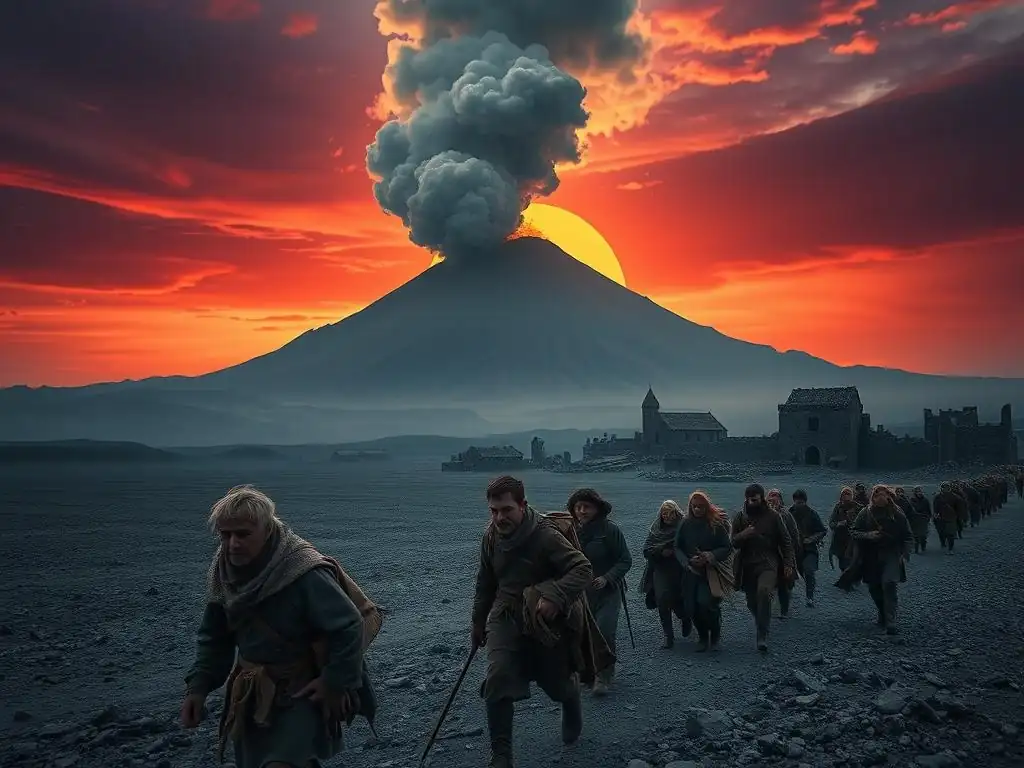
Welcome to Volcano Explorers, where we unearth the raw power and hidden secrets of Earth's fiery giants. Ever wonder what truly drives the ebb and flow of human history? In this article, we ignite a fascinating question: could volcanoes have been the unseen force behind medieval migrations? Prepare to have your understanding of historical events reshaped as we delve into the explosive evidence.
- Introduction: Unveiling the Connection Between Volcanoes and Medieval Population Movements
- Historical Context: Understanding Medieval Migration Patterns
- The Role of Volcanoes: Examining Volcanic Eruptions During the Medieval Period
- Volcanoes Impact on Human Migration: Evidence and Analysis
- Scientific Evidence: Linking Volcanic Activity to Climate Anomalies
- Challenging the Volcano Hypothesis: Alternative Explanations for Medieval Migrations
- Reconciling the Evidence: Volcanoes as a Contributing Factor, Not Sole Cause
- Volcanoes and Long-Term Societal Changes: The Legacy of Eruptions on Medieval Settlements
- Future Research: Areas for Further Investigation of volcanoes impact on human migration
- Conclusion: Acknowledging the Potential Influence of Volcanoes on Medieval Migrations
-
Frequently Asked Questions
- Did volcanic eruptions actually trigger medieval migrations?
- What kind of evidence links volcanoes to migrations?
- How did volcanic eruptions impact medieval agriculture?
- Which medieval migrations might have been influenced by volcanoes?
- Where can I find more information about the impact of volcanoes?
- Final Reflection: The Unseen Hand of Ash
- Unearth Your Own Medieval Mystery!
Introduction: Unveiling the Connection Between Volcanoes and Medieval Population Movements
The Medieval period, spanning roughly from the 5th to the 15th century, was a time of significant upheaval and transformation across the globe. While often characterized by tales of knights, castles, and religious fervor, this era also witnessed substantial shifts in population distribution. Mass migrations, both large and small, reshaped societies, influenced political landscapes, and left indelible marks on the genetic and cultural makeup of Europe and beyond.
Traditionally, historians have attributed these movements to factors such as warfare, political instability, famine, and the allure of new lands. However, a growing body of evidence suggests that a less obvious, yet potentially powerful force, may have also played a crucial role in driving medieval migrations: volcanic eruptions.
This article delves into the intriguing hypothesis that volcanic activity, often overlooked in historical narratives, served as a significant catalyst for population movements during the medieval period. By examining historical records, scientific data, and case studies, we aim to explore the potential connections between major volcanic eruptions and documented migration events.
We will investigate how these natural disasters could have triggered environmental changes, such as climate cooling and crop failures, thereby compelling communities to seek refuge and sustenance elsewhere. Ultimately, we seek to understand whether volcanoes were indeed an unseen force shaping the demographic map of the medieval world, and to what extent their impact contributed to the complex tapestry of human migration during this fascinating period.
Historical Context: Understanding Medieval Migration Patterns
Major Migration Events in Medieval Europe
The Medieval period was far from static; it was punctuated by several significant migration events that drastically altered the demographic and political landscape of Europe. The Early Middle Ages, for instance, witnessed the tail end of the Germanic migrations, often termed the "Migration Period" or "Völkerwanderung." Tribes like the Goths, Vandals, Franks, and Lombards moved across the continent, contributing to the fall of the Western Roman Empire and the formation of new kingdoms.
Later, the Viking Age (roughly 8th to 11th centuries) saw Norse seafarers expanding from Scandinavia, raiding, trading, and settling across Europe, from the British Isles to Russia, and even reaching North America. These were not simply raids; they often involved the establishment of permanent settlements and the integration of Viking populations into existing societies.
Furthermore, the later medieval period saw migrations associated with the Crusades (11th to 13th centuries). While primarily military expeditions to the Holy Land, these campaigns involved the movement of large numbers of people from Western Europe towards the East, leading to both temporary and, in some cases, permanent settlements in the Levant. Internal migrations also occurred, driven by factors such as land availability, economic opportunities, and religious or political persecution.
For example, the eastward expansion of German settlers into Slavic territories in Eastern Europe, known as the Ostsiedlung, began in the 12th century and continued for several centuries, significantly altering the ethnic and cultural makeup of regions in modern-day Poland, Czech Republic, and beyond. Understanding these diverse patterns of migration is crucial to appreciating the potential influence of environmental shocks like volcanic eruptions.
Factors Influencing Medieval Migrations: War, Famine, and Disease
Medieval migrations were complex phenomena driven by a confluence of factors. Warfare and political instability were undoubtedly major catalysts. Constant conflicts between kingdoms, feudal lords, and invading forces created insecurity and displacement. The collapse of the Western Roman Empire, for instance, led to centuries of warfare and population movements as various groups vied for power and territory. Similarly, the Viking raids and later Mongol invasions caused widespread disruption and forced populations to flee their homes seeking safety. Beyond large-scale wars, localized conflicts and raids also contributed to a constant background level of displacement and migration.
Famine and disease were equally potent drivers of migration. Medieval agriculture was often precarious, reliant on favorable weather conditions and vulnerable to crop failures. Prolonged periods of drought, excessive rainfall, or unusually cold temperatures could lead to widespread famine. The Great Famine of 1315-1317, for example, devastated Europe, causing mass starvation and prompting desperate searches for food and arable land.
Disease outbreaks, such as the Justinian Plague in the 6th century and the Black Death in the 14th century, also had profound demographic impacts. While primarily causing mortality, these pandemics could also trigger migrations as people fled infected areas or sought out less densely populated regions in the aftermath. These factors, intertwined and often exacerbating each other, created a volatile environment where migration was a common survival strategy, setting the stage for the potential impact of volcanic eruptions.
The Role of Volcanoes: Examining Volcanic Eruptions During the Medieval Period
Notable Medieval Volcanic Eruptions: A Timeline
The Medieval period was marked by several significant volcanic eruptions, some of which were among the largest in the Holocene epoch. One of the most impactful was the eruption of Samalas volcano in Indonesia in 1257. This colossal eruption, with a Volcanic Explosivity Index (VEI) of 7, injected massive amounts of sulfur dioxide into the stratosphere, leading to global cooling.
While geographically distant from Europe, its climatic effects were felt worldwide. Another major eruption occurred in Iceland, the Eldgjá eruption, estimated to have taken place between 934 and 940 AD. This fissure eruption, one of the largest basaltic fissure eruptions in historical times, released vast quantities of lava and volcanic gases, potentially influencing weather patterns in the North Atlantic region and beyond.
Other notable medieval eruptions include the Kuwae eruption in Vanuatu around 1452-1453, another VEI 6 event with global climatic consequences, and several eruptions of Icelandic volcanoes like Hekla and Katla throughout the period. Hekla, for instance, erupted multiple times, including significant events in 1104 and 1300.
Katla, known for its powerful eruptions, also erupted during the medieval period, although precise dating can be challenging for some older events. These eruptions, varying in magnitude and location, collectively represent a significant period of volcanic activity that coincided with the major social and demographic shifts of the medieval era, warranting a closer examination of their potential societal impacts.
Documented Effects of Volcanic Eruptions on Medieval Society
Historical records, though often fragmented and lacking precise scientific measurements, offer glimpses into the societal effects of medieval volcanic eruptions. Contemporaneous chronicles and annals from across Europe and Asia mention unusual weather phenomena following certain eruptions, such as "dry fogs," dimmed sunlight, and unusually cold winters and summers. For example, after the 1257 Samalas eruption, European chronicles describe a "year without a summer" in 1258, with widespread crop failures and famine reported across England, France, and Italy. Matthew Paris, an English chronicler, vividly described the dismal summer of 1258, noting the scarcity of food and the resulting hardship.
Similarly, accounts from Iceland and Scandinavia around the time of the Eldgjá eruption mention harsh winters and agricultural difficulties. While direct links are not always explicitly stated in medieval texts, the temporal proximity of these unusual weather events to known volcanic eruptions, combined with scientific evidence from ice cores and tree rings, strengthens the case for a causal relationship.
Furthermore, some historical accounts suggest social unrest and migrations following these periods of environmental stress. While attributing migrations solely to volcanic eruptions is an oversimplification, these documented effects highlight the potential for volcanic activity to disrupt medieval societies and contribute to the complex web of factors influencing population movements.
Volcanoes Impact on Human Migration: Evidence and Analysis
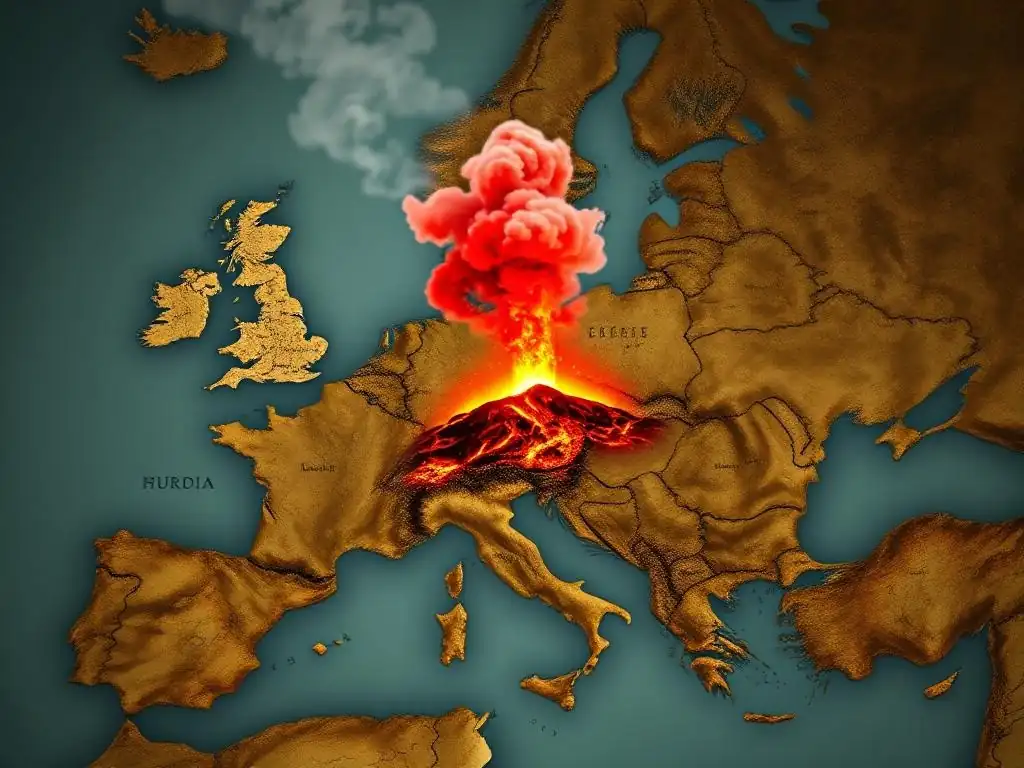
Direct Impacts: Volcanic Ashfall and Displacement
The most immediate and direct impact of a volcanic eruption on human populations is the threat posed by volcanic hazards. Pyroclastic flows, lahars (volcanic mudflows), lava flows, and tephra (volcanic ash and rock fragments) can directly destroy settlements and infrastructure, forcing immediate displacement. While large-scale pyroclastic flows and lava flows are typically localized around the volcano itself, volcanic ashfall can affect much wider areas, depending on the eruption's magnitude and wind patterns. Heavy ashfall can collapse roofs, contaminate water supplies, disrupt transportation, and render agricultural land unusable in the short term.
For instance, the 79 AD eruption of Mount Vesuvius, though slightly preceding the medieval period, provides a stark example of direct volcanic impact. The cities of Pompeii and Herculaneum were buried under ash and pyroclastic flows, resulting in catastrophic loss of life and complete displacement of the surviving population.
While medieval eruptions may not have always resulted in such complete annihilation of settlements, significant ashfalls from eruptions like Hekla in Iceland or potentially even distal ash from Samalas could have rendered agricultural lands unproductive for a season or more, prompting localized or regional displacement as communities sought unaffected areas for farming and survival. The immediate threat of volcanic hazards, particularly ashfall, could thus act as a direct push factor for migration in affected regions.
Indirect Impacts: Climate Change, Crop Failures, and Famine
Beyond the immediate hazards, volcanic eruptions can have profound indirect impacts on human populations, particularly through their influence on climate. Large volcanic eruptions inject sulfur dioxide gas into the stratosphere, where it reacts with water vapor to form sulfate aerosols. These aerosols reflect incoming solar radiation back into space, leading to a temporary cooling of the Earth's surface.
The magnitude and duration of this cooling depend on the size of the eruption and the amount of sulfur dioxide released. Major eruptions like Samalas (1257) and Kuwae (1452-1453) are estimated to have caused global average temperature drops of around 0.5 to 1 degree Celsius for several years.
This cooling can have significant consequences for agriculture, especially in regions already close to the margins of cultivability, such as Northern Europe during the Medieval period. Shorter growing seasons, reduced sunlight, and increased frost risk can lead to widespread crop failures. Successive years of poor harvests can deplete food reserves and trigger famine.
Famine, in turn, is a well-documented driver of migration throughout history. Desperate populations facing starvation may be forced to migrate in search of food, relief, or better agricultural conditions elsewhere. Therefore, the indirect climatic effects of volcanic eruptions, leading to crop failures and famine, represent a potentially powerful, albeit less direct, mechanism through which volcanoes could have influenced medieval migration patterns, creating a cascade of environmental and societal consequences.
Case Study 1: The 1257 Samalas Eruption and its Impact on Europe
The 1257 eruption of Samalas volcano in Indonesia stands out as a pivotal event in understanding the potential impact of volcanoes on medieval societies. This colossal eruption, one of the largest of the last millennium, injected an estimated 158 ± 12 teragrams of sulfur into the stratosphere, leading to a significant global cooling event.
Ice core records from Greenland and Antarctica show a clear sulfate spike dating to 1258, confirming the eruption's magnitude and global reach. Historical chronicles from Europe, as mentioned earlier, vividly describe the year 1258 as a "year without a summer," characterized by unusually cold temperatures, excessive rainfall, and widespread crop failures.
In England, the Annals of Burton record torrential rains and flooding throughout the summer of 1258, leading to ruined harvests and widespread famine in the following years. French chronicles also document severe weather and food shortages. While direct evidence linking the Samalas eruption definitively to large-scale migrations in Europe is still being researched, the documented environmental and societal stresses following 1258 likely contributed to increased social instability and potentially localized or regional population movements.
The widespread famine and hardship could have exacerbated existing social tensions and prompted some communities to seek better conditions elsewhere, although further research is needed to quantify the migration impact specifically. This case study highlights the potential for a distant, but globally impactful, volcanic eruption to trigger significant environmental and societal disruptions in medieval Europe.
Case Study 2: The Eldgjá Eruption (934-940 AD) and its Potential Role in Viking Expansion
The Eldgjá eruption in Iceland, occurring between 934 and 940 AD, presents a compelling case study for examining the potential link between volcanic activity and Viking expansion. This massive fissure eruption, one of the largest basaltic fissure eruptions in the Holocene, released enormous quantities of lava and volcanic gases, potentially impacting the North Atlantic climate.
The eruption coincided temporally with a period of intensified Viking activity and settlement in Iceland, Greenland, and potentially even North America. While the exact relationship is complex and debated, some researchers propose that the Eldgjá eruption and its climatic consequences might have played a role in driving Viking expansion.
The eruption could have led to environmental stress in Scandinavia, potentially impacting agricultural productivity and resource availability. Harsh winters and poor harvests in Scandinavia might have incentivized Viking voyages in search of new lands and resources. Furthermore, the eruption might have influenced weather patterns and sea ice extent in the North Atlantic, potentially facilitating or altering Viking sailing routes.
While the Viking expansion was undoubtedly driven by a multitude of factors, including political ambition, trade opportunities, and population growth, the Eldgjá eruption and its potential environmental consequences could have acted as a contributing factor, particularly in the context of resource scarcity and the search for new territories. Further interdisciplinary research, combining archaeological, historical, and paleoclimatic data, is needed to fully explore this intriguing potential link between a massive volcanic eruption and a significant period of human migration and expansion.
Scientific Evidence: Linking Volcanic Activity to Climate Anomalies
Ice Core Data: Tracing Volcanic Signals in the Medieval Era
Ice cores, drilled from glaciers and ice sheets in Greenland and Antarctica, provide invaluable archives of past atmospheric composition and climate. Volcanic eruptions deposit sulfate aerosols and volcanic ash onto the ice sheets, which are then preserved in layers representing different years. By analyzing these layers, scientists can identify past volcanic eruptions, estimate their magnitude, and date them with remarkable precision.
Ice core records have been instrumental in identifying and dating major medieval eruptions, including Samalas (1257), Kuwae (1452-1453), and Eldgjá (934-940 AD). The sulfate spikes in ice cores serve as clear fingerprints of these eruptions, allowing researchers to establish a robust timeline of volcanic activity during the medieval period.
Furthermore, ice cores can also provide information about the climatic impact of these eruptions. By analyzing isotopes of oxygen and hydrogen in the ice, scientists can reconstruct past temperature variations. Studies of ice cores have shown a clear correlation between major volcanic eruptions and periods of cooling, confirming the climate-forcing effect of volcanic aerosols.
For example, the ice core record clearly shows a cooling signal following the 1257 Samalas eruption, supporting the historical accounts of a "year without a summer." Ice core data thus provides critical scientific evidence linking medieval volcanic eruptions to global climate anomalies, strengthening the basis for investigating their potential influence on human societies and migrations.
Tree Ring Analysis: Reconstructing Past Climatic Conditions
Tree ring analysis, or dendrochronology, offers another powerful tool for reconstructing past climatic conditions and dating environmental events. Tree growth is sensitive to climate, and the width of tree rings reflects variations in temperature and precipitation. By analyzing the ring patterns of long-lived trees, scientists can reconstruct past climate fluctuations on annual timescales, extending back centuries or even millennia.
Tree ring chronologies from Europe have revealed evidence of climate anomalies coinciding with known medieval volcanic eruptions. For instance, tree ring data from various regions in Europe show evidence of suppressed tree growth in the years following the 1257 Samalas eruption, consistent with the cooling effect documented in ice cores and historical records.
Furthermore, tree ring analysis can provide information about regional climate variations, complementing the global perspective offered by ice cores. By comparing tree ring chronologies from different regions, researchers can assess the spatial extent and intensity of climate anomalies associated with volcanic eruptions. Studies combining tree ring data with historical records have further strengthened the evidence for volcanic forcing of medieval climate variability. Tree ring analysis, therefore, provides an independent line of scientific evidence supporting the link between volcanic activity and climate anomalies during the medieval period, enhancing our understanding of the potential environmental context for medieval migrations.
The Volcanic Explosivity Index (VEI) and its Correlation with Migration Events
The Volcanic Explosivity Index (VEI) is a scale used to measure the explosivity of volcanic eruptions, ranging from 0 (non-explosive) to 8 (extremely explosive). The VEI is based on factors such as the volume of erupted material, the height of the eruption column, and the duration of the eruption. Higher VEI values indicate larger and more impactful eruptions.
While directly correlating VEI with migration events is complex, the VEI provides a useful metric for assessing the potential societal impact of medieval eruptions. Eruptions with VEI 6 or higher, such as Samalas and Kuwae, are known to have significant global climatic effects, and are more likely to have triggered widespread environmental and societal disruptions.
By examining the VEI of known medieval eruptions and comparing them to documented migration events, researchers can explore potential correlations. Periods with clusters of high-VEI eruptions might be expected to coincide with periods of increased migration, although other factors would also be at play. Furthermore, the location of eruptions relative to population centers is also crucial.
Eruptions in Iceland, while potentially having global climatic impacts, might have had more direct and immediate effects on Scandinavian and North Atlantic populations, potentially influencing Viking migrations. While VEI alone cannot definitively prove a causal link between volcanoes and migration, it provides a valuable tool for assessing the potential scale and impact of medieval eruptions and for guiding further research into their societal consequences.
Challenging the Volcano Hypothesis: Alternative Explanations for Medieval Migrations
The Role of Political Instability and Warfare
While the evidence for volcanic influence on medieval climate and potentially migration is growing, it's crucial to acknowledge and consider alternative explanations for population movements during this period. Political instability and warfare were pervasive features of the medieval world, and undoubtedly played a major role in driving migrations.
The collapse of the Carolingian Empire in the 9th century, for instance, led to fragmentation and conflict across Europe, prompting population shifts as people sought safety or new allegiances. The constant warfare between feudal lords and kingdoms, as well as invasions by groups like the Vikings, Magyars, and Mongols, created a climate of insecurity and displacement.
The Crusades, while religiously motivated, also involved significant military campaigns and population movements, both towards and away from the Holy Land. Internal conflicts, peasant revolts, and dynastic struggles further contributed to political instability and displacement within medieval societies. These political and military factors are well-documented and undeniable drivers of migration. Therefore, any assessment of the "volcano hypothesis" must carefully consider and weigh the relative contributions of these established socio-political factors alongside the potential influence of volcanic eruptions. Attributing medieval migrations solely to volcanic activity would be a gross oversimplification, neglecting the complex interplay of political, military, and environmental forces.
The Impact of Economic Factors and Trade Routes
Economic factors and the development of trade routes also significantly influenced medieval migrations. The growth of towns and cities in the High Middle Ages created economic opportunities and attracted rural populations seeking better livelihoods. The expansion of trade networks, both within Europe and across continents, facilitated the movement of goods and people.
The Hanseatic League, for example, a powerful trading confederation in Northern Europe, fostered migration and settlement in port cities and trading centers. The development of new agricultural techniques and technologies, such as the heavy plow and three-field system, led to increased agricultural productivity in some regions, potentially attracting migrants seeking fertile land.
Conversely, economic downturns, famines unrelated to volcanic eruptions, and changes in trade patterns could also trigger migrations. Overpopulation in certain areas, combined with limited resources or economic opportunities, could push people to seek better prospects elsewhere. The search for new lands, resources, and markets was a driving force behind Viking expansion and later colonial ventures. Therefore, economic "push" and "pull" factors were powerful motivators for medieval migrations, and must be considered alongside environmental factors like volcanic eruptions when seeking a comprehensive understanding of population movements during this period.
The Influence of Religious Persecution
Religious persecution and intolerance also played a role in medieval migrations. Religious minorities, such as Jews and heretics, faced persecution and expulsion in various parts of Europe throughout the medieval period. The First Crusade, while aimed at the Holy Land, also saw attacks on Jewish communities in Europe. Later, periods of heightened religious fervor and intolerance led to expulsions of Jewish populations from England, France, and Spain. These expulsions forced large-scale migrations of religious minorities seeking refuge and tolerance in other regions.
Religious conflicts, such as the Hussite Wars in Bohemia in the 15th century, also caused displacement and migration. The spread of new religious ideas and movements, sometimes deemed heretical by the Church, could lead to persecution and forced migration of adherents. Religious factors, therefore, should not be overlooked when examining medieval migrations. While volcanic eruptions might have created environmental stresses that exacerbated existing social tensions, religious persecution provided a distinct and significant motivation for migration for certain groups within medieval society, highlighting the multifaceted nature of population movements during this era.
Reconciling the Evidence: Volcanoes as a Contributing Factor, Not Sole Cause
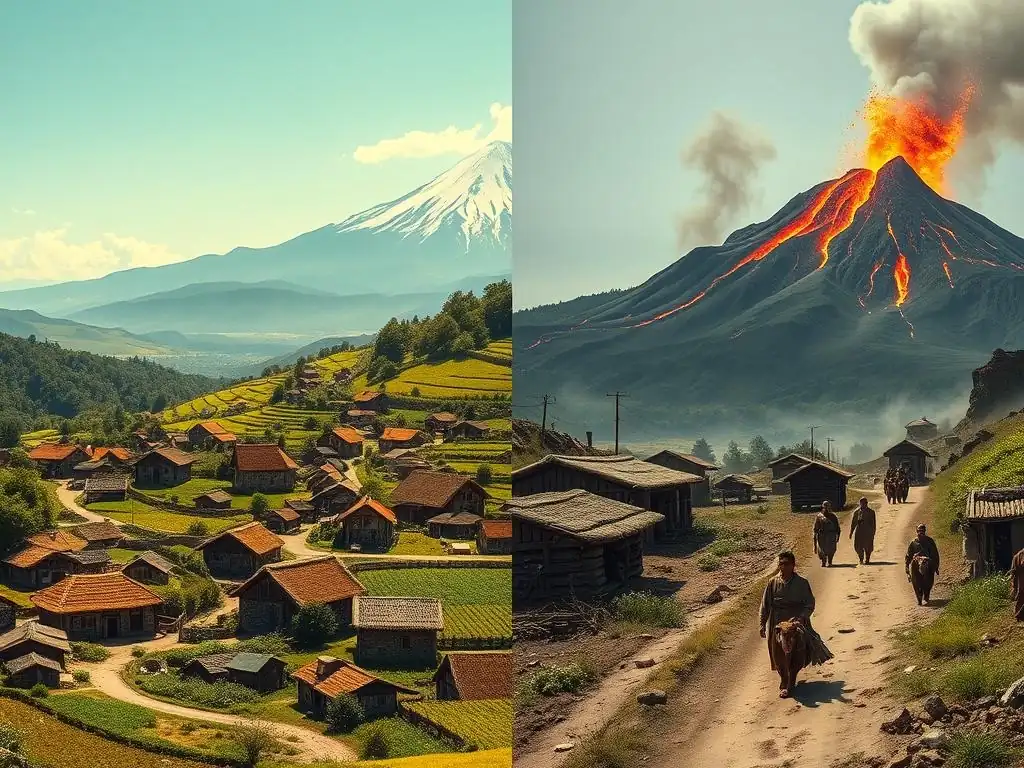
The Interplay of Environmental and Socio-Political Factors
Reconciling the evidence suggests that volcanic eruptions were likely a contributing factor to medieval migrations, but not the sole cause. Medieval migrations were complex events driven by an interplay of environmental, socio-political, and economic factors. Volcanic eruptions should be viewed as one element within this intricate web of influences. While major eruptions could trigger significant climate anomalies, crop failures, and famine, these environmental stresses often interacted with existing socio-political and economic vulnerabilities to exacerbate migration pressures.
For example, a volcanic eruption-induced famine in a region already experiencing political instability or economic hardship could amplify migration flows beyond what might be expected from famine alone. Conversely, in regions with strong social safety nets, stable political systems, or diverse economies, the impact of volcanic eruptions on migration might have been less pronounced. The vulnerability and resilience of medieval societies to environmental shocks like volcanic eruptions varied considerably depending on their pre-existing social, political, and economic conditions. Therefore, a nuanced understanding of medieval migrations requires considering the interplay of volcanic impacts with these broader contextual factors.
A Multifaceted Approach to Understanding Medieval Population Shifts
A multifaceted approach is essential for understanding the complex relationship between volcanoes and medieval population shifts. Historical analysis, paleoclimatology, archaeology, and potentially even genetics need to be integrated to gain a comprehensive picture. Historical records provide accounts of migration events and societal disruptions, while paleoclimatic data from ice cores, tree rings, and other archives reveal the timing and magnitude of volcanic eruptions and their climatic consequences.
Archaeological evidence can shed light on settlement patterns, agricultural practices, and dietary changes that might reflect responses to environmental stress and migration. Genetic studies could potentially trace population movements and admixture patterns that might correlate with periods of volcanic activity and climate change.
By combining these diverse lines of evidence, researchers can move beyond simple correlations and towards a more nuanced understanding of the causal pathways linking volcanoes to medieval migrations. For instance, future research could focus on specific regions and time periods where both volcanic eruptions and migration events are well-documented, using interdisciplinary methods to investigate the potential causal links in detail. A multifaceted approach, embracing the complexity of medieval history and the power of scientific data, is crucial for unraveling the true extent of volcanoes' influence on medieval population dynamics.
Volcanoes and Long-Term Societal Changes: The Legacy of Eruptions on Medieval Settlements
The Reshaping of Landscapes and Agricultural Practices
Beyond immediate migration, volcanic eruptions could have had long-term effects on medieval settlements and societal development. Large eruptions can reshape landscapes, burying fertile land under ash or lava, or creating new landforms. The eruption of Vesuvius, again pre-medieval but illustrative, permanently altered the landscape of the Bay of Naples. In Iceland, volcanic eruptions have repeatedly reshaped the landscape, influencing settlement patterns and agricultural possibilities. While some volcanic deposits can eventually weather into fertile soils, the initial impact can be disruptive to agricultural practices.
Medieval societies in volcanically active regions would have had to adapt their agricultural practices and settlement strategies to cope with the recurring threat of eruptions. This might have involved developing more resilient crops, diversifying agricultural systems, or relocating settlements to safer areas. The long-term legacy of volcanic eruptions on medieval settlements could include changes in land use, agricultural techniques, and even social organization, as communities adapted to living in dynamic and sometimes hazardous volcanic environments. Further archaeological and historical research in volcanically active regions could reveal more about these long-term societal adaptations.
The Impact on Trade and Resource Availability
Volcanic eruptions could also have impacted medieval trade and resource availability. Large eruptions can disrupt transportation routes, both land and sea, due to ashfall, volcanic hazards, and altered weather patterns. Disruption of trade routes could lead to economic downturns and resource scarcity, potentially influencing migration patterns indirectly. For example, if volcanic eruptions disrupted grain trade, regions reliant on imports might experience food shortages, prompting migration in search of food. Volcanic eruptions can also affect the availability of specific resources, such as timber, water, or minerals, depending on the eruption's location and type.
In Iceland, for instance, volcanic eruptions have periodically impacted grazing lands and timber resources, potentially influencing Viking-era resource management and trade. The long-term impact of volcanic eruptions on medieval trade and resource availability is a complex area requiring further investigation. Understanding how volcanic activity might have shaped medieval economies and trade networks can provide a more complete picture of their broader societal influence, including potential indirect effects on migration.
Future Research: Areas for Further Investigation of volcanoes impact on human migration
Investigating the Impact of Specific Eruptions using Interdisciplinary Methods
Future research should focus on in-depth investigations of specific medieval eruptions and their potential impact on human migration, using interdisciplinary methods. For example, a focused study of the 1257 Samalas eruption could integrate historical chronicles from various European regions with high-resolution paleoclimatic data (ice cores, tree rings) and archaeological evidence to assess the environmental and societal consequences in detail. This could involve analyzing settlement patterns, agricultural changes, and dietary shifts in specific regions to look for evidence of migration or adaptation following the eruption.
Similarly, the Eldgjá eruption and its potential link to Viking expansion warrant further interdisciplinary investigation, combining archaeological evidence of Viking settlements with paleoclimatic reconstructions and historical sources. By focusing on specific case studies and integrating multiple lines of evidence, researchers can move beyond broad correlations and towards a more nuanced understanding of the causal pathways linking volcanic eruptions to medieval migrations. This approach requires collaboration between historians, paleoclimatologists, archaeologists, and potentially other specialists like geneticists and social scientists.
Developing Climate Models to Simulate Volcanic Effects on Medieval Europe
Developing and utilizing climate models to simulate the effects of medieval volcanic eruptions on European climate is another crucial area for future research. Climate models can be used to simulate the atmospheric dispersion of volcanic aerosols, the resulting radiative forcing, and the impact on temperature, precipitation, and atmospheric circulation patterns in Europe. By simulating the climatic effects of eruptions like Samalas and Eldgjá, researchers can gain a more quantitative understanding of the potential magnitude and spatial extent of volcanic-induced climate anomalies in medieval Europe.
These climate model simulations can then be compared with paleoclimatic reconstructions from ice cores and tree rings to validate the model outputs and refine our understanding of volcanic climate forcing. Furthermore, climate models can be used to explore the potential impact of volcanic eruptions on agricultural productivity in medieval Europe, by simulating the effects of cooling and altered precipitation patterns on crop yields. This information can then be linked to historical records of famine and migration to assess the potential contribution of volcanic climate forcing to medieval population movements.
Examining the Genetic Evidence of Population Movements Following Major Eruptions
Examining genetic evidence of population movements following major medieval eruptions represents a relatively new and promising avenue for future research. Advances in ancient DNA analysis now allow researchers to trace population movements and genetic admixture patterns over time. By analyzing ancient DNA from skeletal remains dating to periods before and after major volcanic eruptions, researchers could potentially identify genetic signatures of migration events that might be correlated with volcanic activity.
For example, a genetic study focusing on regions in Europe that were likely affected by the climatic consequences of the 1257 Samalas eruption could look for evidence of increased gene flow or population admixture in the decades or centuries following the eruption. This approach is still in its early stages, and faces challenges related to data availability and interpretation. However, genetic evidence could potentially provide an independent line of evidence supporting or refuting the hypothesis that volcanic eruptions played a role in medieval migrations, offering a valuable complement to historical, paleoclimatic, and archaeological data.
Conclusion: Acknowledging the Potential Influence of Volcanoes on Medieval Migrations
The Importance of Considering Environmental Factors in Historical Analysis
The evidence suggests that volcanoes likely played a more significant role in shaping medieval migrations than traditionally acknowledged. While warfare, political instability, economic factors, and religious persecution undoubtedly drove many population movements, the potential influence of volcanic eruptions, through their impact on climate and environment, cannot be dismissed. Major medieval eruptions, such as Samalas and Eldgjá, had global and regional climatic consequences that could have triggered crop failures, famine, and societal stress, potentially contributing to migration pressures.
Therefore, it is crucial for historical analysis to incorporate environmental factors, including volcanic activity, into our understanding of medieval population dynamics. A purely socio-political or economic perspective risks overlooking the important role that environmental shocks could have played in shaping human history. By acknowledging the potential influence of volcanoes, and other environmental factors, we gain a richer and more nuanced understanding of the complex forces that shaped the medieval world and the patterns of human migration during this transformative period.
The Ongoing Relevance of Understanding Volcanoes and their Impact on Human Societies
Understanding the impact of volcanoes on past societies is not just an academic exercise; it has ongoing relevance for contemporary societies facing similar environmental challenges. Volcanic eruptions continue to pose a significant hazard to populations around the world, and the potential for large, climate-forcing eruptions remains a real threat. Studying how medieval societies responded to volcanic eruptions, including their migration patterns and adaptation strategies, can provide valuable lessons for modern disaster preparedness and resilience planning.
Furthermore, the medieval period offers a historical case study of how environmental change can interact with socio-political and economic systems to influence human societies. In an era of accelerating climate change, understanding these past interactions is increasingly important. By learning from the past, including the "unseen force" of volcanoes, we can better prepare for and mitigate the potential impacts of future environmental challenges on human populations and societies, ensuring greater resilience and sustainability in the face of natural hazards.
Frequently Asked Questions
Did volcanic eruptions actually trigger medieval migrations?
It's difficult to definitively prove that volcanoes directly caused migrations. However, evidence suggests that large eruptions led to crop failures and climate shifts, potentially influencing population movements.
What kind of evidence links volcanoes to migrations?
Scientists use ice core data to identify past eruptions and correlate them with historical records of famine, disease, and population changes. This helps to establish a possible connection between volcanic events and migrations.
How did volcanic eruptions impact medieval agriculture?
Volcanic eruptions release sulfur dioxide into the atmosphere, forming aerosols that block sunlight and cool the Earth. This can lead to shorter growing seasons and reduced crop yields, impacting food supplies.
Which medieval migrations might have been influenced by volcanoes?
Some researchers suggest that the decline of Norse settlements in Greenland and certain eastward migrations in Europe may have been partially influenced by volcanic activity impacting food production.
Where can I find more information about the impact of volcanoes?
VolcanoExplorers.org offers a wealth of information about volcanic activity, including its effects on climate, agriculture, and human societies. You can also find real-time updates and safety guidelines on the site.
Final Reflection: The Unseen Hand of Ash
The evidence presented throughout this exploration of medieval migrations paints a compelling picture: volcanic eruptions, often unseen and unacknowledged, likely exerted a profound influence on human movement and societal restructuring. While historical narratives often focus on wars, politics, and economic factors, the subtle yet devastating impact of volcanic activity offers a crucial, and often overlooked, layer of understanding to the complex tapestry of the past.
The enduring legacy of these events continues to resonate, reminding us of the fragility of human existence in the face of natural forces. The article serves as a stark reminder that our environment is not a passive backdrop, but an active participant in shaping our history and future. The past is never dead. It's not even past.
- William Faulkner. This quote perfectly encapsulates the idea that the volcanic events of the medieval period, though seemingly distant, continue to inform our understanding of human resilience, adaptation, and the interconnectedness of humanity and the natural world.
Now, consider the implications of this knowledge. How might a deeper understanding of past environmental crises inform our response to the challenges of climate change today? Let us not forget the lessons learned from the ashes of the past, but instead, use them to build a more resilient and sustainable future, one where we are more attuned to the delicate balance between humanity and the forces of nature.
Unearth Your Own Medieval Mystery!
Thank you for exploring the fascinating connection between medieval migrations and volcanic activity. Now that you've learned about the potential impact of these powerful natural events, it's time to delve even deeper.
Here's how you can continue your journey:
- Investigate local historical records: Research local archives and weather patterns from the periods discussed in the article to see if you can find evidence of climate shifts or population movements.
- Share this article and join the conversation: If you found this article insightful, share it with your network and engage in a discussion. Knowledge expands through collaboration and shared exploration.
- Visit a volcano and connect with history firsthand: Explore historically significant eruption sites—many offer research opportunities or guided tours. Witnessing these sites firsthand will enrich your understanding of the forces that shaped history.
What undiscovered evidence might revolutionize our understanding of this volcanic and historical connection? Share your theories and findings in the comments below!