
From Mythology to Measurement: Volcanoes in the 19thCentury Mind

Welcome to Volcano Explorers!
Prepare to journey back in time and uncover the fascinating intersection of science, superstition, and sheer awe that defined humanity's relationship with fiery mountains. What secrets do the volcanic eruptions of the 19th century hold? Our featured article, "From Mythology to Measurement: Volcanoes in the 19th Century Mind," delves into the profound impact of these events, exploring how they shaped scientific understanding, ignited artistic inspiration, and even influenced the course of history. Dare to discover how the 19th Century Volcanoes Impact resonated across the globe – and left an enduring legacy we still feel today. Let the exploration begin...
- 19th Century Volcanoes Impact: An Introduction
- The Romantic Era and Volcanic Reverence
- The Rise of Volcanology: A Scientific Revolution
- Documenting Eruptions: Case Studies of the 19th Century
- Advances in Volcanic Monitoring and Prediction
- The Societal Impact of 19th Century Volcanic Events
- 19th Century Volcanoes Impact on Scientific Thought: A Legacy
- Conclusion: 19th Century Volcanoes and Modern Volcanology
-
Frequently Asked Questions
- What was a common misconception about volcanoes in the 19th century?
- How did scientific understanding of volcanoes evolve during the 19th century?
- What impact did 19th-century volcanic eruptions have on society and culture?
- What were some of the key technological advancements that aided in the study of volcanoes during the 19th century?
- How did people living near volcanoes in the 19th century cope with the risks?
- Final Reflection: Echoes of Eruption
- Unearth Your Inner Volcanologist!
19th Century Volcanoes Impact: An Introduction
VolcanoExplorers.org: Exploring 19th Century Volcanic Eruptions
Welcome to VolcanoExplorers.org, your portal to the fascinating and often formidable world of volcanoes. In this exploration, we turn our gaze to the 19th century, a period of profound transformation in humanity's understanding of these geological titans. The 1800s witnessed a pivotal shift from mythological interpretations and awe-inspired reverence towards a systematic, scientific approach to studying volcanoes. This era, marked by both devastating eruptions and groundbreaking discoveries, fundamentally shaped the field of volcanology and left an indelible 19th century volcanoes impact on our comprehension of Earth's dynamic processes.
The 19th century was not merely a period of observation; it was an age of intellectual ferment where the seeds of modern volcanology were sown. As we delve into the volcanic events of this century, we will uncover how major eruptions, such as Tambora in 1815 and Krakatoa in 1883, acted as catalysts for scientific inquiry. These cataclysmic events, with their far-reaching global consequences, spurred scientists to move beyond descriptive accounts and towards quantitative analysis and predictive models. Join us as we navigate the dramatic landscape of 19th-century volcanism, charting its impact on science, society, and the human imagination.
The Romantic Era and Volcanic Reverence
Volcanoes as Sublime Spectacles in the Early 1800s
The early 19th century, deeply entrenched in the Romantic era, viewed volcanoes through a lens of sublime grandeur and terrifying beauty. For artists and poets of the time, volcanoes were not just geological formations but powerful symbols of nature's untamed force, capable of eliciting both awe and terror. Think of the paintings of J.M.W.
Turner, whose fiery landscapes often captured the dramatic skies and tumultuous energy reminiscent of volcanic eruptions, even if not explicitly depicting them. Volcanoes embodied the Romantic ideal of the sublime – experiences that overwhelmed the senses and evoked a sense of insignificance in the face of nature's immensity. This perspective permeated popular culture, shaping how people perceived and reacted to volcanic phenomena.
Travelogues and early scientific accounts from this period often blended empirical observations with romantic descriptions. Ascents to volcanic craters, like those of Mount Vesuvius, became popular, not only for scientific curiosity but also for the sheer spectacle of witnessing the Earth's raw power.
These early explorations were imbued with a sense of adventure and a quest for the sublime, reflecting the dominant aesthetic sensibilities of the time. While lacking the rigorous methodologies of later volcanology, these accounts are invaluable for understanding the initial human response to volcanic activity in the 19th century, a response deeply colored by artistic and philosophical ideals.
Mythological Interpretations of Volcanic Activity Before Scientific Understanding
Before the advent of modern science, societies worldwide interpreted volcanic eruptions through the framework of mythology and folklore. Volcanoes were frequently perceived as the abodes of gods or demons, their fiery outbursts expressions of divine wrath, power, or even creation. In Roman mythology, Vulcan, the god of fire and forge, resided beneath volcanoes, his hammering believed to cause eruptions – hence the very name "volcano." Similarly, many indigenous cultures around volcanic regions developed intricate mythologies to explain these powerful natural events, often attributing them to supernatural beings or ancestral spirits.
These mythological interpretations were not merely fanciful stories; they were integral to understanding the world and coping with the unpredictable nature of volcanic activity. Rituals, sacrifices, and prayers were often employed to appease the perceived volcanic deities, hoping to avert eruptions or mitigate their destructive impact.
While these explanations now seem archaic in the light of scientific knowledge, they represent humanity's earliest attempts to make sense of a phenomenon that profoundly shaped their lives and landscapes. Understanding these pre-scientific interpretations is crucial to appreciating the significant intellectual shift that occurred in the 19th century as volcanology began to emerge as a distinct scientific discipline, moving away from myth and towards empirical observation.
The Rise of Volcanology: A Scientific Revolution
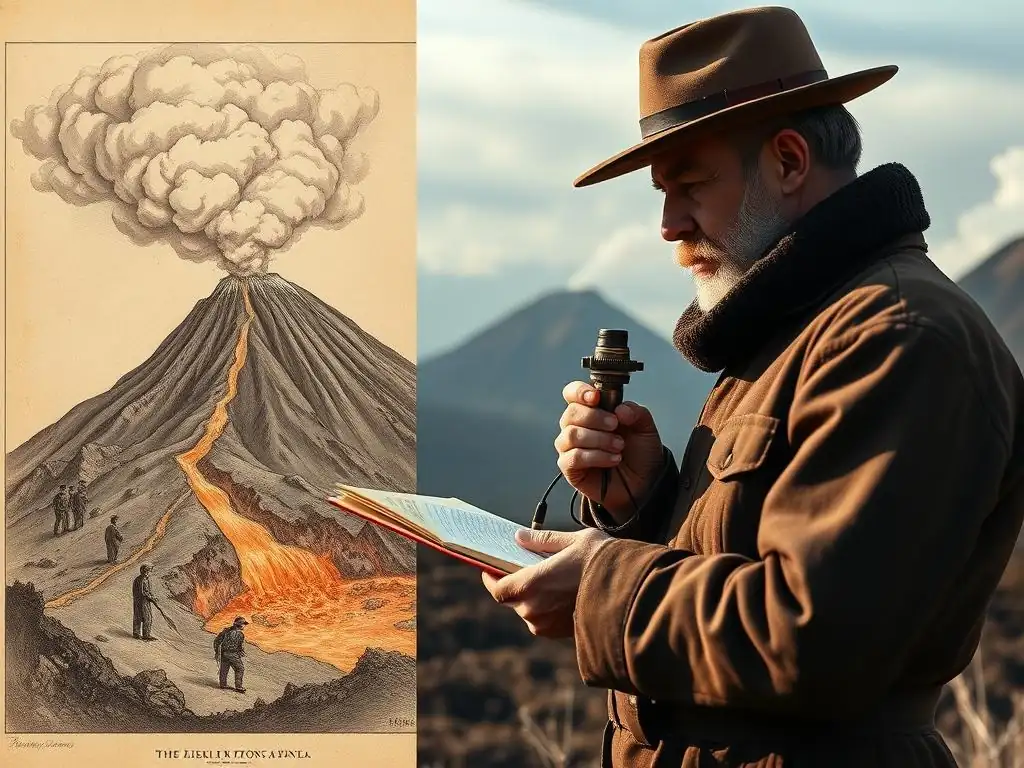
From Myth to Method: The Shift Towards Empirical Observation
The 19th century marked a decisive turning point in the study of volcanoes, transitioning from mythological explanations and romantic awe to a more systematic and empirical approach. This shift was part of a broader scientific revolution, emphasizing observation, data collection, and the formulation of testable hypotheses.
Early volcanologists began to meticulously document volcanic phenomena, moving beyond mere descriptions of eruptions to analyze volcanic products like lava and ash, and to study the geological structures of volcanoes themselves. This period saw the nascent stages of what would become modern volcanology, characterized by a commitment to scientific method and a departure from purely speculative or religiously-based interpretations.
The influence of disciplines like geology and chemistry became increasingly important in understanding volcanic processes. Geologists began to map volcanic regions, studying the layers of volcanic rocks to reconstruct past eruptions and understand the formation of volcanic landscapes. Chemists analyzed the composition of volcanic gases and minerals, seeking to understand the underlying chemical processes driving volcanic activity. This interdisciplinary approach, combining field observations with laboratory analysis, was instrumental in building a more robust and scientifically grounded understanding of volcanoes. The 19th century thus witnessed the crucial initial steps in establishing volcanology as a legitimate and increasingly sophisticated scientific field.
Key Figures in 19th Century Volcanology: Laying the Foundation
The 19th century was populated by pioneering individuals who laid the groundwork for modern volcanology. One prominent figure was Scipione Breislak (1748-1826), an Italian geologist whose meticulous studies of the Roman volcanic region, particularly his work Istituzioni Geologiche (1811-1812), challenged Neptunian theories and promoted Plutonism, the idea that volcanic rocks originated from molten magma deep within the Earth. His detailed descriptions of volcanic rocks and their formation were crucial in moving away from purely descriptive volcanology.
Another key figure was George Julius Poulett Scrope (1797-1876), a British geologist whose work Considerations on Volcanos (1825) and Geology and Extinct Volcanos of Central France (1827) were highly influential. Scrope emphasized the dynamic nature of volcanic landscapes and advocated for uniformitarianism – the principle that the same geological processes operating today also operated in the past. His detailed studies of volcanic regions in France and Italy provided valuable insights into volcanic processes and the formation of volcanic landforms.
Furthermore, scientists like Robert Mallet (1810-1881), an Irish geophysicist, pioneered the use of seismology to study earthquakes and volcanic tremors, contributing to early methods of volcanic monitoring. These individuals, among others, through their dedicated observations, analyses, and publications, established a firm scientific foundation for the future development of volcanology.
Documenting Eruptions: Case Studies of the 19th Century
The 1815 Tambora Eruption: A Global Climate Catastrophe
The eruption of Mount Tambora in Sumbawa, Indonesia, in April 1815, stands as one of the most significant volcanic events in recorded history, and a stark example of 19th century volcanoes impact. Rated a 7 on the Volcanic Explosivity Index (VEI), it was the largest eruption in at least 1,300 years, ejecting an estimated 160 cubic kilometers of tephra into the atmosphere. The immediate consequences were devastating: pyroclastic flows and tsunamis ravaged the surrounding islands, causing tens of thousands of deaths. However, the eruption's most far-reaching impact was its global climatic effects.
The massive injection of sulfur dioxide into the stratosphere formed sulfate aerosols that reflected sunlight back into space, causing a significant global cooling. The year 1816 became known as the "Year Without a Summer," particularly in North America and Europe. Temperatures plummeted, leading to widespread crop failures, famine, and disease outbreaks.
In New England, snow fell in June, and killing frosts occurred throughout the summer. Grain prices soared in Europe, contributing to social unrest and hardship. Tambora's eruption demonstrated the profound interconnectedness of the Earth system and the capacity of volcanic eruptions to trigger global environmental and societal crises, highlighting the far-reaching 19th century volcanoes impact.
Tambora's Impact on Art, Literature, and Scientific Inquiry
The Tambora eruption's global climate anomalies had a discernible impact on art, literature, and scientific inquiry. The unusually vibrant sunsets and hazy atmospheres caused by stratospheric aerosols are believed to have influenced the paintings of J.M.W. Turner, whose later works often depict intensely colored skies. In literature, the gloomy and oppressive atmosphere of the "Year Without a Summer" is considered by some scholars to have contributed to the dark and brooding tone of Mary Shelley's Frankenstein, conceived in 1816, and Lord Byron's poem "Darkness," also written that year.
Scientifically, Tambora spurred early investigations into the relationship between volcanic eruptions and climate. While the precise mechanisms were not fully understood at the time, some scientists recognized the connection between the eruption's atmospheric effects and the unusual weather patterns. Benjamin Franklin, though predating the eruption, had already speculated on the potential climatic effects of volcanic ash based on observations of the 1783 Laki eruption in Iceland.
Tambora provided a dramatic and undeniable real-world example of this phenomenon, prompting further scientific inquiry into atmospheric chemistry, climate dynamics, and the global consequences of volcanic eruptions. The eruption thus served as a crucial impetus for the development of Earth system science and the study of volcanic forcing on climate.
Krakatoa 1883: A Defining Moment in Volcanic History
The eruption of Krakatoa (Krakatau) in the Sunda Strait, Indonesia, in August 1883, marked another watershed moment in volcanology and public awareness of volcanic power. Though slightly smaller than Tambora (estimated VEI 6), Krakatoa's eruption was immensely powerful and had significant global repercussions.
A series of massive explosions culminated in a cataclysmic eruption on August 27th, which generated one of the loudest sounds ever recorded in human history, heard thousands of kilometers away. The eruption destroyed most of the island of Krakatoa and triggered a devastating tsunami that claimed an estimated 36,000 lives along the coasts of Java and Sumatra.
Krakatoa's eruption was meticulously documented by scientists and observers, providing an unprecedented dataset for studying a major volcanic event. The eruption's global effects, particularly the atmospheric phenomena and the worldwide propagation of pressure waves, captivated scientific and public attention. The event spurred advancements in seismology, atmospheric science, and the study of tsunamis. Krakatoa became a defining event in volcanic history, illustrating the immense destructive potential of volcanoes and prompting a surge of scientific interest in understanding and monitoring these natural hazards, solidifying the 19th century volcanoes impact on scientific development.
The Global Reach of Krakatoa's Ash Cloud
One of the most striking global consequences of the Krakatoa eruption was the dispersal of its ash cloud around the world. The eruption injected vast quantities of volcanic ash and gases into the stratosphere, creating a spectacular stratospheric veil that circled the globe for several years. This ash cloud caused vivid sunsets and sunrises worldwide, often described as intensely red, orange, and purple hues, which were widely reported in newspapers and depicted in artwork of the time. These "Krakatoa sunsets" became a global phenomenon, captivating public imagination and serving as a visible reminder of the eruption's far-reaching impact.
The ash cloud also had subtle but measurable effects on global temperatures, contributing to a slight cooling in the years following the eruption, although less pronounced than the cooling after Tambora. Furthermore, the dispersal of the ash cloud provided early insights into atmospheric circulation patterns and the transport of aerosols in the stratosphere.
Scientists tracked the movement of the ash cloud across the globe, using observations from various locations to understand atmospheric dynamics and the global reach of volcanic plumes. The Krakatoa ash cloud thus became a natural experiment in atmospheric science, furthering our understanding of global atmospheric processes and the interconnectedness of the Earth's systems.
Measuring the Power of the Krakatoa Explosion
The Krakatoa eruption provided an early opportunity to quantify the power of a volcanic explosion. The shockwave from the main eruption on August 27th was recorded by barographs around the world, some as far away as Washington D.C. Scientists analyzed these barograph readings to estimate the energy released by the eruption. It was calculated that the atmospheric pressure wave circled the Earth multiple times, providing a unique dataset for studying atmospheric wave propagation and the scale of the eruption's energy release.
Furthermore, the loudness of the eruption was reported from locations thousands of kilometers away, providing another measure of its immense power. Eyewitness accounts and instrumental recordings were combined to estimate the intensity of the explosion, which was later compared to other major eruptions and even to the energy released by nuclear weapons.
While the Volcanic Explosivity Index (VEI) was not formally developed until the 20th century, the Krakatoa eruption spurred early attempts to quantify volcanic explosivity and to develop scales for comparing the magnitudes of different eruptions. The efforts to measure and understand the power of the Krakatoa explosion marked a significant step towards a more quantitative approach in volcanology.
Mount Pelée 1902: The Destruction of Saint-Pierre
While slightly outside the 19th century, the 1902 eruption of Mount Pelée on the Caribbean island of Martinique serves as a crucial example of the devastating power of pyroclastic flows and significantly influenced volcanological understanding at the turn of the 20th century, building upon the 19th century volcanoes impact. On May 8, 1902, a massive pyroclastic flow, a superheated avalanche of gas, ash, and rock fragments, swept down the volcano's flank and completely destroyed the city of Saint-Pierre, then known as the "Paris of the Caribbean."
In a matter of minutes, an estimated 30,000 people perished, making it one of the deadliest volcanic disasters of the 20th century.
The Mount Pelée eruption was particularly significant because it highlighted the extreme danger of pyroclastic flows, a volcanic hazard that was not fully understood at the time. Prior to 1902, volcanic eruptions were often primarily associated with lava flows and ashfall. The Saint-Pierre disaster brought the terrifying reality of pyroclastic flows into sharp focus, prompting intense scientific investigation into their formation, behavior, and destructive potential. The eruption led to a paradigm shift in volcanology, emphasizing the importance of understanding and mitigating the risks associated with these fast-moving, highly lethal volcanic phenomena.
Mount Tarawera 1886: The Destruction of the Pink and White Terraces
In New Zealand, the 1886 eruption of Mount Tarawera dramatically reshaped the landscape and serves as another significant case study from the 19th century. On June 10, 1886, a series of violent explosions ripped open a 17-kilometer-long rift through the volcanic mountain, devastating the surrounding area. The eruption destroyed several Maori villages and tragically claimed over 100 lives. Perhaps the most culturally and geologically significant loss was the destruction of the Pink and White Terraces, natural geothermal wonders often hailed as the "eighth wonder of the world."
The Pink and White Terraces were silica sinter terraces formed by geothermal springs, cascading down hillsides in breathtaking formations of pink and white hues. They were a major tourist attraction and held deep cultural significance for the local Maori population. The Tarawera eruption obliterated these natural wonders, burying them under volcanic debris and forever altering the geothermal landscape of the region.
The eruption served as a stark reminder of the destructive power of volcanic activity in geothermally active regions and the potential for volcanic eruptions to erase even the most magnificent natural features. The event also spurred further geological investigation into the Taupo Volcanic Zone in New Zealand, a region of intense geothermal and volcanic activity.
Advances in Volcanic Monitoring and Prediction
Early Seismographs and Their Role in Volcano Study
The 19th century witnessed the development and initial application of seismographs, instruments designed to detect and record ground motion, which proved to be invaluable in the nascent field of volcanic monitoring. Early seismographs, such as those developed by Luigi Palmieri at the Vesuvius Observatory in Italy, were relatively simple pendulum-based devices.
While not as sophisticated as modern seismographs, they were capable of detecting volcanic tremors and earthquakes associated with volcanic activity. Palmieri's Vesuvius Observatory, established in 1841, became one of the first permanent volcano observatories in the world, demonstrating the growing recognition of the need for continuous monitoring of active volcanoes.
The use of seismographs in volcanology during the 19th century was rudimentary but pioneering. Scientists began to recognize that changes in seismic activity, such as increases in the frequency or intensity of earthquakes, could be precursors to volcanic eruptions. By monitoring seismic activity, early volcanologists hoped to gain insights into the internal processes of volcanoes and potentially develop methods for eruption forecasting. These early efforts, though limited by the technology of the time, laid the foundation for modern seismic monitoring networks, which are now a cornerstone of volcano observatories worldwide and crucial for mitigating volcanic risk.
The Development of Volcanic Gas Analysis Techniques
Understanding the composition of volcanic gases became increasingly important in 19th-century volcanology as scientists sought to decipher the processes occurring beneath the Earth's surface. Early techniques for collecting and analyzing volcanic gases were developed during this period. Scientists would venture close to volcanic vents and fumaroles to collect gas samples, often using glass tubes and basic chemical reagents to analyze their composition. These analyses, while challenging and sometimes dangerous, provided valuable information about the magmatic processes driving volcanic activity.
The analysis of volcanic gases revealed the presence of water vapor, carbon dioxide, sulfur dioxide, and other volatile compounds. Changes in the composition and flux of volcanic gases were recognized as potential indicators of changes in volcanic activity. For instance, increases in sulfur dioxide emissions could suggest an increase in magma degassing and a heightened risk of eruption.
The development of early gas analysis techniques, though primitive by modern standards, marked an important step towards using geochemical monitoring as a tool for understanding and potentially forecasting volcanic eruptions. This laid the groundwork for the sophisticated gas monitoring systems used by volcano observatories today.
Mapping Volcanic Regions: Early Geological Surveys
The 19th century saw a significant expansion of geological surveys and mapping efforts around the world, including in volcanically active regions. Geological surveys aimed to systematically document the geological features of a region, including rock types, geological structures, and volcanic landforms. These surveys were crucial for understanding the geological context of volcanoes, identifying volcanic hazards, and assessing volcanic risk. Early geological maps of volcanic regions provided valuable information about the distribution of volcanoes, the types of volcanic rocks present, and the geological history of volcanic areas.
These geological surveys were often conducted by government agencies or scientific institutions and involved extensive fieldwork, mapping, and rock sample collection. The resulting geological maps and reports became essential resources for scientific research, resource exploration, and land-use planning in volcanic regions. Furthermore, these surveys contributed to a broader understanding of global volcanism and the distribution of volcanic activity across different tectonic settings. The 19th century efforts in geological mapping of volcanic regions were fundamental to the development of volcanology as a spatially-oriented science and provided the necessary geological framework for subsequent volcanic studies.
The Societal Impact of 19th Century Volcanic Events
Economic Consequences of Major Eruptions
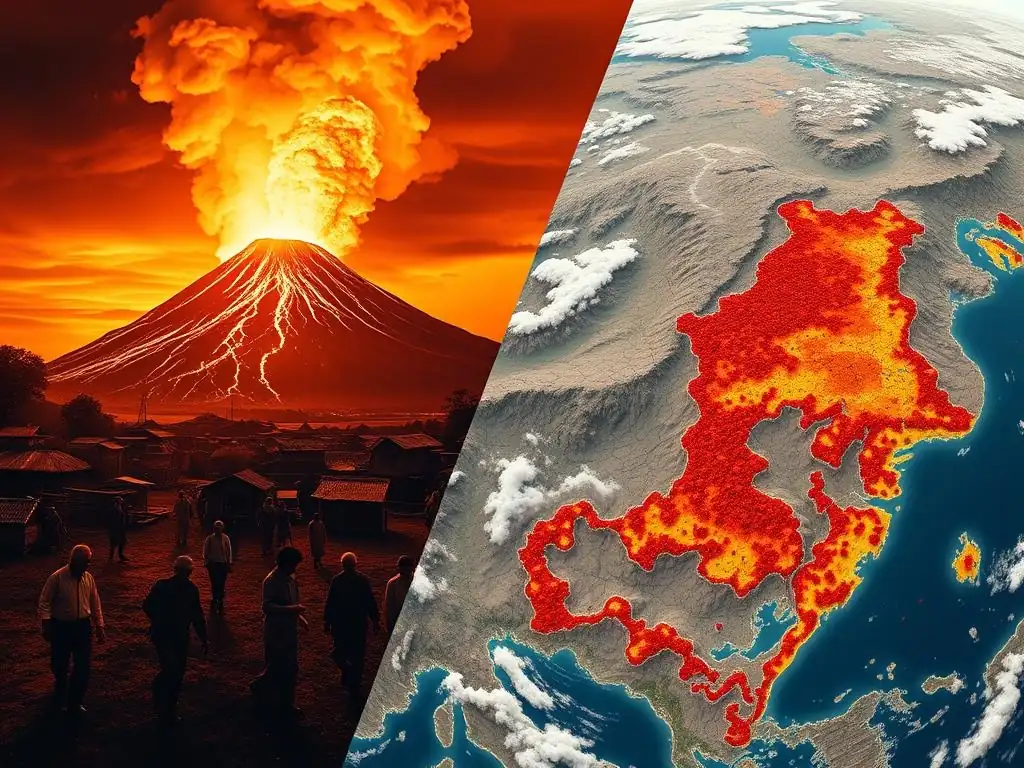
Major volcanic eruptions in the 19th century had profound and wide-ranging economic consequences, impacting local, regional, and even global economies. The 1815 Tambora eruption, with its global climate anomalies, caused widespread crop failures and famines, leading to food shortages and soaring grain prices in Europe and North America. This economic disruption contributed to social unrest and hardship, demonstrating the potential for volcanic eruptions to trigger significant economic crises. Similarly, the 1883 Krakatoa eruption, while not causing global climate cooling of the same magnitude, still had significant regional economic impacts.
The tsunamis generated by Krakatoa devastated coastal communities and infrastructure in Java and Sumatra, disrupting trade and fishing activities. Volcanic ashfall could also damage crops, disrupt transportation, and contaminate water supplies, leading to economic losses in affected areas. Beyond the immediate disaster zone, volcanic eruptions could also impact global trade routes and commodity prices. The 19th century witnessed the growing interconnectedness of global economies, and volcanic eruptions, with their potential to disrupt agriculture, trade, and infrastructure, highlighted the vulnerability of human societies to these natural hazards and the significant 19th century volcanoes impact on economic systems.
Public Health Challenges Following Volcanic Disasters
Volcanic eruptions in the 19th century posed significant public health challenges, both in the immediate aftermath of eruptions and in the longer term. Immediate hazards included direct impacts from pyroclastic flows, lava flows, and tsunamis, causing injuries and fatalities. Volcanic ashfall could cause respiratory problems, eye irritation, and skin irritation. Contamination of water supplies by volcanic ash and debris could lead to waterborne diseases. In the longer term, volcanic eruptions could contribute to famine and malnutrition due to crop failures, making populations more susceptible to infectious diseases.
The "Year Without a Summer" following the Tambora eruption led to widespread famine and disease outbreaks in many parts of the world. Cold temperatures and crop failures resulted in food shortages, weakening immune systems and increasing vulnerability to diseases like typhus and cholera. Public health infrastructure in the 19th century was often limited, making it challenging to effectively respond to these health crises. Volcanic eruptions thus presented a complex array of public health challenges, requiring both immediate disaster relief and longer-term public health interventions to mitigate the health consequences of these natural disasters.
The Evolution of Disaster Relief Efforts
The 19th century witnessed the gradual evolution of disaster relief efforts in response to major volcanic eruptions and other natural disasters. Early responses were often localized and relied on community-based aid and charitable organizations. However, as the scale and impact of disasters like Tambora and Krakatoa became evident, there was a growing recognition of the need for more organized and coordinated relief efforts. Governments and international organizations began to play a more active role in providing disaster assistance, including financial aid, food supplies, and medical assistance.
The Krakatoa eruption, in particular, spurred international relief efforts, with aid coming from various countries to assist the affected populations in Indonesia. The 19th century also saw the development of organizations like the Red Cross, founded in 1863, which played an increasingly important role in disaster relief and humanitarian aid. While disaster relief in the 19th century was still far from the sophisticated systems in place today, the major volcanic eruptions of this period contributed to a growing awareness of the need for effective disaster preparedness, response, and mitigation, shaping the evolution of humanitarian aid and disaster management.
19th Century Volcanoes Impact on Scientific Thought: A Legacy
The Development of Plate Tectonics Theory: Volcanic Evidence
The 19th century, while predating the full formulation of plate tectonics theory in the 20th century, provided crucial observations and geological insights that laid the groundwork for this revolutionary paradigm shift in Earth science. The distribution of volcanoes around the world, particularly along the "Ring of Fire" surrounding the Pacific Ocean, became increasingly apparent through geological surveys and explorations. The spatial correlation between volcanoes and earthquake zones also began to be recognized. These observations hinted at a deeper, underlying geological mechanism controlling the distribution of volcanic and seismic activity.
Studies of volcanic rocks and their composition provided further clues. Scientists noted that volcanic rocks from different regions exhibited distinct chemical characteristics, suggesting different magma sources and geological processes.
The concept of island arcs and volcanic chains, often associated with deep ocean trenches, began to emerge, although the driving forces behind these features were not yet fully understood. While plate tectonics was not explicitly articulated in the 19th century, the detailed observations of volcanic phenomena, their global distribution, and the characteristics of volcanic rocks provided essential empirical evidence that would later be integrated into the plate tectonic framework, demonstrating the 19th century volcanoes impact on the development of fundamental earth science theories.
Understanding Magma Formation and Composition
The 19th century saw significant advancements in understanding magma formation and composition, driven by both field observations of volcanic rocks and laboratory experiments. Geologists and petrologists meticulously studied volcanic rocks, classifying them based on their mineral composition and texture. Chemical analyses of volcanic rocks became increasingly sophisticated, allowing scientists to determine the elemental and isotopic composition of magmas. These analyses revealed the diversity of magma types and the complex processes involved in magma generation and differentiation.
Experimental petrology, the study of rocks and minerals under controlled laboratory conditions, began to emerge in the late 19th century. Scientists conducted experiments to simulate the conditions under which magmas form deep within the Earth, exploring the effects of pressure, temperature, and water content on rock melting and magma composition.
These early experimental studies provided valuable insights into the physical and chemical processes that govern magma formation and evolution. The 19th century efforts in petrology and experimental petrology laid the foundation for our modern understanding of magma genesis, magma chambers, and the diverse range of volcanic eruptions resulting from different magma types.
The Refinement of Volcanic Explosivity Index (VEI)
While the Volcanic Explosivity Index (VEI) itself was not formally developed until the 20th century by Chris Newhall and Stephen Self, the 19th century witnessed the accumulation of knowledge and observations that paved the way for its creation. The experience of documenting and comparing major eruptions like Tambora and Krakatoa highlighted the need for a standardized scale to quantify the magnitude and intensity of volcanic eruptions. Early attempts were made to classify eruptions based on descriptive terms, such as "Plinian" or "Strombolian," but these classifications lacked a quantitative basis.
The detailed studies of 19th-century eruptions, particularly the estimations of erupted volume, eruption column height, and the intensity of explosive activity, provided the data necessary to develop a more objective and quantitative scale. The concept of eruption magnitude, based on erupted volume, and eruption intensity, related to the rate of magma discharge and the height of the eruption column, began to take shape.
The VEI, when it was eventually developed, drew heavily upon the wealth of data and observations accumulated during the 19th century, particularly from the study of large explosive eruptions, solidifying the legacy of 19th century volcanoes impact on volcanological tools and methodologies.
Conclusion: 19th Century Volcanoes and Modern Volcanology
The Enduring Fascination with Volcanoes: From Spectacle to Science
The 19th century stands as a pivotal era in the history of volcanology, marking a profound transition in human understanding of volcanoes. Moving away from mythological interpretations and purely aesthetic appreciation, the 1800s witnessed the rise of a scientific approach to studying these powerful geological phenomena. Major eruptions, such as Tambora and Krakatoa, served as both devastating natural disasters and crucial catalysts for scientific inquiry. These events spurred advancements in observation, data collection, and the development of early monitoring techniques. Key figures in 19th-century volcanology laid the foundations for modern research, emphasizing empirical observation and quantitative analysis.
The 19th century volcanoes impact on our understanding is undeniable. The legacy of this era continues to shape modern volcanology. The data and insights gleaned from studying 19th-century eruptions remain invaluable for understanding volcanic processes, assessing volcanic hazards, and mitigating volcanic risk. While our scientific tools and knowledge have advanced significantly since the 1800s, the enduring fascination with volcanoes persists. From awe-inspiring spectacles to subjects of rigorous scientific investigation, volcanoes continue to captivate human imagination and drive our quest to understand the dynamic Earth we inhabit.
Frequently Asked Questions
What was a common misconception about volcanoes in the 19th century?
Many in the 19th century attributed volcanic eruptions primarily to supernatural forces or divine wrath, rather than understanding the underlying geological processes. This was often intertwined with mythological explanations passed down through generations.
How did scientific understanding of volcanoes evolve during the 19th century?
The 19th century saw a shift towards more empirical observation and measurement of volcanic phenomena. Scientists began to study lava composition and eruption patterns, moving away from purely theoretical explanations.
What impact did 19th-century volcanic eruptions have on society and culture?
Large-scale eruptions, like Tambora in 1815, led to widespread climate anomalies and famine, which significantly impacted society. They also inspired art, literature, and scientific inquiry, reflecting the power and terror of nature.
What were some of the key technological advancements that aided in the study of volcanoes during the 19th century?
The development of improved thermometers, barometers, and surveying equipment allowed for more precise data collection. This allowed scientists to better understand volcanic processes and map volcanic landscapes.
How did people living near volcanoes in the 19th century cope with the risks?
Communities developed traditional warning systems and evacuation strategies based on local knowledge of volcanic behavior. However, the lack of modern scientific forecasting often left them vulnerable to unexpected eruptions.
Final Reflection: Echoes of Eruption
The journey from mythical interpretations to scientific measurement of volcanoes in the 19th century reveals a profound shift in human understanding, a shift whose impact resonates even now in our approach to natural disasters. We see echoes of this transition in modern volcanology, where sophisticated technology builds upon the foundational work of those early observers and experimenters, reminding us that progress is a continuous dialogue between past and present.
The 19th century's fascination with volcanoes not only reshaped scientific disciplines but also profoundly influenced the cultural landscape, inspiring art, literature, and a renewed sense of humanity's place within the powerful forces of nature. This period underscores the enduring human need to understand and contextualize the world around us, even when faced with seemingly insurmountable challenges. The earth is not a mere fragment of dead history, stratum upon stratum like the leaves of a book, to be studied by geologists and antiquaries chiefly, but living poetry like the leaves of a tree, which precede flowers and fruit - not a fossil earth, but a living earth.
- Henry David Thoreau, reflecting the era's growing appreciation for the dynamic nature of our planet.
As we reflect on the 19th century's volcanic awakening, let us consider how we, too, can embrace a spirit of inquiry and resilience in the face of contemporary challenges. Let us learn from the past, not only to predict and mitigate future volcanic hazards, but also to cultivate a deeper appreciation for the power and fragility of our planet. Embrace the spirit of those early scientists and artists; observe, question, and create, and contribute to a future where knowledge and understanding empower us to live in harmony with the natural world.
Unearth Your Inner Volcanologist!
Thank you for exploring the fascinating intersection of mythology and scientific understanding of volcanoes in the 19th century. We hope you gained a new appreciation for the evolution of volcanology!
Now, it's time to ignite your own volcanic exploration:
- Research a 19th-century volcanologist whose work intrigued you and share their story.
- Explore modern volcano monitoring: Visit your local science museum's geology section or explore online resources to learn about current eruption prediction methods. Consider how these methods compare to the anecdotal evidence and mythological interpretations of the past.
- Research a specific volcano significant in the 19th century and discover its mythological origins. Present your findings creatively, perhaps through a comic book or infographic.
What surprising connections between myth and measurement will you uncover? Share your discoveries in the comments below!