
Volcanoes in Religious Texts: Fiery References in Sacred Writings

Welcome to Volcano Explorers!
Prepare to be captivated. Did you know that the raw power of volcanoes has resonated throughout human history, even finding its way into the very fabric of our beliefs? This isn't just about molten rock and ash; it's about the stories we tell ourselves to understand the world.
In this article, we ignite your curiosity with a journey into the fiery references of volcanoes in religious scriptures, exploring how these awe-inspiring forces have been interpreted in sacred writings across cultures. What secrets do these ancient texts hold about our enduring fascination with these powerful giants? Discover more and delve into the cultural significance of volcanoes!
- Introduction: Volcanoes, Religion, and Ancient Beliefs
- Volcanoes in Religious Scriptures: Examining Key Texts
- Volcanoes in the Old Testament: Divine Wrath and Destruction
- Volcanoes in the New Testament: Apocalyptic Visions and Judgement
- Volcanoes in Other Religious Traditions: Comparative Analysis
- Interpreting Volcanic References: Symbolism and Meaning
- The Enduring Legacy of Volcanoes in Religious Thought
- Conclusion: Appreciating the Intertwined History of Volcanoes and Religion
-
Frequently Asked Questions
- How are volcanoes typically portrayed in religious scriptures?
- What specific examples of volcanic imagery can be found in religious texts?
- Do any religions directly worship volcanoes or volcanic deities?
- Besides destruction, what other symbolic meanings are associated with volcanoes in religious contexts?
- How does understanding the cultural significance of volcanoes help us appreciate religious texts?
- Final Reflection: Echoes of Fire and Faith
- Unearth Hidden Wisdom: Embark on Your Volcano Journey!
Introduction: Volcanoes, Religion, and Ancient Beliefs
The Intersection of Volcanic Activity and Spiritual Interpretation
For millennia, volcanoes have punctuated the human experience with displays of raw power, creation, and destruction. In ancient times, before the advent of modern geological understanding, these dramatic natural events were often interpreted through a spiritual lens. Societies living in proximity to active volcanoes witnessed firsthand the earth trembling, the sky darkening with ash, and rivers of fire flowing from mountain peaks.
These awe-inspiring and terrifying phenomena naturally led to questions about their origins and meaning. Unable to explain volcanic activity through scientific principles, early civilizations frequently attributed eruptions to supernatural forces, divine beings, or expressions of cosmic will. This intersection of volcanic activity and spiritual interpretation forms a rich tapestry of beliefs that have shaped religious and mythological narratives across the globe.
The sheer scale and intensity of volcanic eruptions made them potent symbols in early religious thought. Imagine a community witnessing a violent eruption for the first time. The earth shakes, the roar is deafening, and molten rock illuminates the night sky. Such an event would be profoundly impactful, fostering a sense of both fear and reverence.
It is no surprise, then, that volcanoes became associated with powerful deities, spirits of the underworld, or manifestations of divine anger. Understanding this historical context is crucial for interpreting references to volcanoes in religious scriptures and appreciating their deep cultural significance. These fiery mountains were not merely geological features; they were perceived as gateways to the unknown, places of immense power, and potent symbols within the spiritual landscapes of ancient cultures.
Volcanoes in Mythology and Folklore: A Global Perspective
Before delving specifically into volcanoes in religious scriptures, it's important to briefly acknowledge the broader context of volcanoes in mythology and folklore worldwide. Across diverse cultures, from the Americas to Asia, and from Europe to Oceania, volcanic landscapes have given rise to rich oral traditions, myths, and legends. These narratives often personify volcanoes as living entities, attributing human-like emotions and motivations to their eruptions.
For example, in Hawaiian mythology, Pele, the volatile goddess of fire and volcanoes, embodies the dynamic and unpredictable nature of volcanic activity. Her stories explain the formation of the islands and the cycles of creation and destruction associated with eruptions.
Similarly, in Roman mythology, Vulcan, the god of fire and blacksmithing, was believed to have his forge beneath Mount Etna in Sicily, explaining the volcano's fiery emissions as sparks and smoke from his divine workshop. In Japanese Shinto, Mount Fuji and Mount Asama are considered sacred mountains, dwelling places of Kami, or spirits. These examples illustrate a global pattern: societies living near volcanoes developed intricate systems of beliefs and stories to understand and appease these powerful natural forces.
These myths and folklore often predate written religious scriptures, providing a foundational layer of understanding about the spiritual significance of volcanoes that later influenced religious texts. Exploring these diverse mythological interpretations highlights the universal human fascination and awe inspired by volcanoes, setting the stage for examining their specific roles within religious scriptures.
Volcanoes in Religious Scriptures: Examining Key Texts
Understanding the Significance of Fire and Brimstone in Religious Contexts
The terms "fire" and "brimstone," frequently found in religious scriptures, particularly within Abrahamic traditions, hold significant symbolic weight that is often linked to volcanic phenomena. Brimstone, an archaic term for sulfur, is closely associated with volcanic activity. Sulfur is a common volcanic gas, and sulfurous fumes are a characteristic feature of volcanic landscapes.
The burning of sulfur produces a pungent, acrid smell and can be associated with intense heat and destruction. In ancient times, before modern chemistry, the readily observable presence of sulfur in volcanic areas, coupled with the fiery eruptions themselves, would have naturally linked fire and brimstone to these geological events.
Therefore, when religious texts, such as the Old Testament and the New Testament, employ the imagery of fire and brimstone, particularly in contexts of divine judgment, punishment, or apocalyptic destruction, it is plausible to interpret these descriptions through a volcanic lens. For instance, the destruction of Sodom and Gomorrah is described with "brimstone and fire" raining down from heaven. Similarly, descriptions of hell and divine wrath often utilize fiery imagery, evoking the terrifying and destructive power of volcanoes.
Understanding the literal and symbolic connection between fire, brimstone, and volcanoes is crucial for deciphering the deeper meaning embedded within these religious scriptures. This connection suggests that the authors and early audiences of these texts may have drawn upon their direct or indirect experiences with volcanic landscapes to articulate profound theological concepts.
The Role of Volcanic Imagery in Ancient Religions
Volcanic imagery plays a multifaceted role in ancient religions, extending beyond simple descriptions of natural disasters. Volcanoes, with their capacity for both creation and destruction, became potent symbols representing a range of concepts, from divine power and wrath to purification and transformation.
The fiery and transformative nature of volcanic eruptions resonated deeply with ancient societies, who often saw these events as manifestations of the gods' will or interventions in the human world. The very process of volcanic eruption, where molten rock bursts forth from the earth, could be interpreted as a form of cosmic birth or renewal, even amidst the destruction.
In many ancient religions, mountains themselves were considered sacred, often seen as dwelling places of deities or points of connection between the earthly and divine realms. Volcanic mountains, with their added element of fiery activity, amplified this sacredness. The smoke plumes rising from volcanoes could be interpreted as prayers ascending to the heavens, or as the breath of powerful earth spirits.
Furthermore, the fertile volcanic soil that often results from weathered volcanic rock contributed to the association of volcanoes with both destruction and renewal. After an eruption, while devastation might initially prevail, volcanic ash enriches the soil, leading to renewed plant growth and agricultural abundance over time. This cycle of destruction and rebirth further solidified the complex and symbolic role of volcanic imagery in ancient religious thought, representing not just fear and destruction, but also the cyclical nature of life, death, and regeneration.
Volcanoes in the Old Testament: Divine Wrath and Destruction
Mount Sinai and the Theophany: A Volcanic Interpretation?
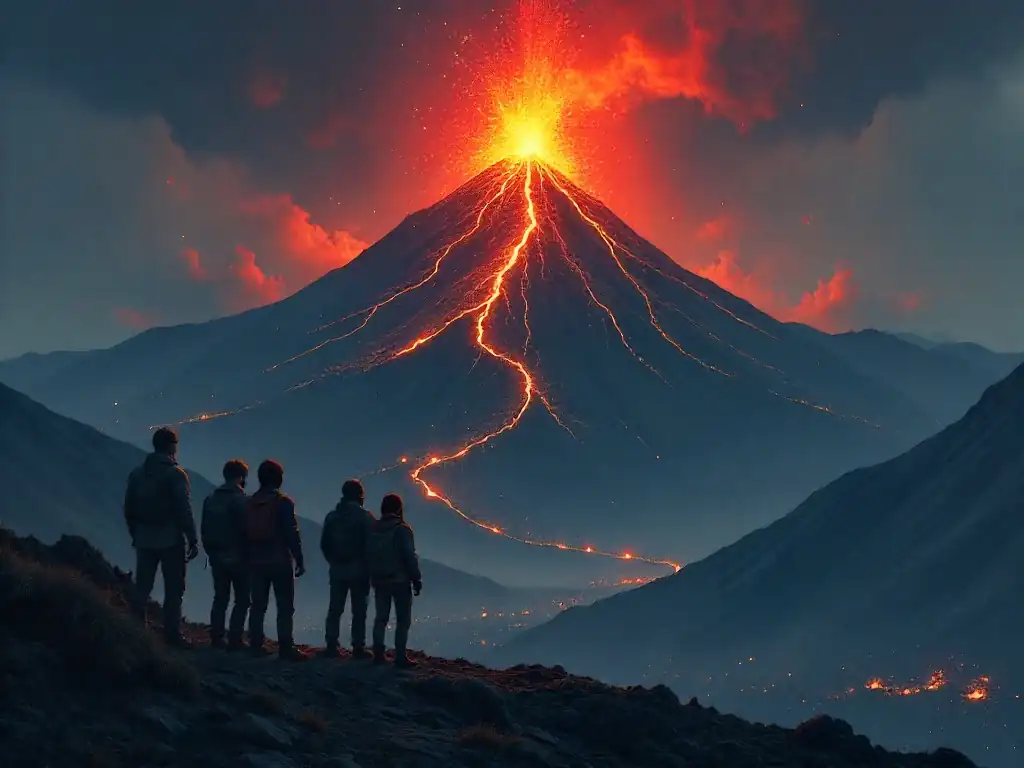
The theophany at Mount Sinai, described in the Book of Exodus, is a pivotal event in the Old Testament, marking the revelation of God's law to Moses. The biblical account details dramatic and awe-inspiring phenomena accompanying God's presence on the mountain: "Mount Sinai was completely enveloped in smoke, because the Lord descended upon it in fire. Its smoke ascended like the smoke of a furnace, and the whole mountain trembled violently" (Exodus 19:18). This description, with its elements of smoke, fire, trembling, and a furnace-like atmosphere, bears striking resemblance to volcanic activity.
Some scholars propose a volcanic interpretation of the Sinai theophany, suggesting that the biblical account may describe a real or perceived volcanic event. The "smoke of a furnace" could refer to a volcanic plume, the "fire" to lava or glowing volcanic gases, and the "trembling" to seismic activity associated with eruptions. While the text attributes these phenomena to divine manifestation, it is conceivable that the ancient Israelites, familiar with volcanic activity in the region or through oral traditions, interpreted God's presence through the lens of these powerful natural events.
This interpretation doesn't negate the religious significance of the theophany, but rather suggests that the biblical narrative may have employed familiar, awe-inspiring natural imagery to convey the overwhelming power and majesty of God's revelation. The volcanic interpretation adds a layer of tangible, earthly understanding to a profoundly spiritual event, grounding the divine encounter in a landscape shaped by natural forces.
Sodom and Gomorrah: Volcanic Cataclysm or Divine Punishment?
The biblical account of the destruction of Sodom and Gomorrah, cities infamous for their wickedness, is another passage that invites volcanic interpretation. Genesis 19:24 describes the destruction: "Then the Lord rained down burning sulfur on Sodom and Gomorrah—from the Lord out of the heavens." The phrase "burning sulfur," or brimstone, is particularly suggestive of volcanic activity, as discussed earlier. The narrative depicts a catastrophic event involving fire and sulfur raining down from the sky, leading to the complete annihilation of the cities and their inhabitants.
While traditionally interpreted as a direct act of divine punishment, some researchers and biblical scholars have proposed that the destruction of Sodom and Gomorrah may have been inspired by, or even based on, a real volcanic event or a related geological catastrophe in the region of the Dead Sea. The Dead Sea area is geologically active and has experienced earthquakes and volcanic activity in its history.
The presence of bitumen and sulfurous deposits around the Dead Sea further lends credence to this theory. It is possible that a volcanic eruption, earthquake, or even a natural gas explosion in the area, resulting in fire, sulfurous fumes, and widespread destruction, could have been interpreted by ancient observers as divine retribution and incorporated into the biblical narrative.
Regardless of the precise historical event, the language used to describe the destruction strongly evokes volcanic imagery, highlighting the powerful association between volcanic phenomena and divine wrath in the Old Testament.
The Use of Volcanic Language to Describe Divine Power
Beyond specific events, the Old Testament frequently employs volcanic language and imagery to describe God's power, majesty, and wrath. Metaphors drawn from volcanoes and related phenomena are used to convey the awesome and sometimes terrifying nature of the divine. For example, descriptions of God's anger often utilize fiery language, evoking the destructive force of volcanic eruptions.
Passages describing God's judgment might speak of "fire consuming" or "mountains melting like wax," imagery directly related to volcanic processes. Psalm 97:5 states, "The mountains melt like wax before the Lord, before the Lord of all the earth," vividly portraying God's power over even the most formidable natural structures through a volcanic metaphor.
This consistent use of volcanic imagery underscores the cultural impact of volcanoes and related phenomena on the worldview of the ancient Israelites and the authors of the Old Testament. Volcanoes, or the memory and understanding of their power, provided a potent vocabulary for expressing the ineffable nature of divine power and judgment.
The use of such imagery was likely not merely metaphorical, but resonated deeply with the lived experiences and cultural understanding of the intended audience. By employing volcanic language, the Old Testament effectively communicated the immense power and awe-inspiring nature of God, utilizing a natural phenomenon readily understood as both terrifying and transformative.
Volcanoes in the New Testament: Apocalyptic Visions and Judgement
Revelation and the Lake of Fire: Volcanic Symbolism in Christian Eschatology
The Book of Revelation, the final book of the New Testament, is replete with apocalyptic visions and symbolic language, and volcanic imagery plays a significant role in portraying the end times and divine judgment. The "lake of fire," a central image in Christian eschatology representing eternal punishment for the wicked, is often interpreted through a volcanic lens. Revelation 20:14-15 describes it: "Then death and Hades were thrown into the lake of fire.
The lake of fire is the second death. Anyone whose name was not found written in the book of life was thrown into the lake of fire." This "lake of fire" is depicted as a place of ultimate and eternal torment.
The symbolism of a "lake of fire" strongly evokes volcanic landscapes, particularly lava lakes, which are pools of molten rock found in some volcanic craters. These lava lakes are intensely hot, perpetually burning, and represent a landscape of ongoing fiery destruction. The use of this imagery in Revelation suggests that the concept of eternal punishment was, in part, shaped by the terrifying and awe-inspiring spectacle of volcanic activity.
The "lake of fire" serves as a powerful metaphor for the finality and severity of divine judgment, drawing upon the readily understandable image of a perpetually burning and inescapable volcanic inferno. This volcanic symbolism underscores the apocalyptic tone of Revelation and its emphasis on the consequences of sin and the ultimate triumph of good over evil.
The Fiery Imagery of Hell: Connections to Volcanic Activity
The traditional Christian concept of Hell, as a place of eternal torment and punishment for the damned, is often characterized by fiery imagery that bears striking resemblance to volcanic environments. Descriptions of Hell frequently include fire, brimstone, smoke, and darkness, all elements associated with volcanic eruptions and their aftermath. The idea of an underworld, a subterranean realm of fire and torment, may have been influenced by the perception of volcanoes as gateways to the earth's interior, places where fiery forces resided beneath the surface.
The imagery of flames consuming the wicked, the "furnace of fire" mentioned in Matthew 13:42, and the "eternal fire" of Jude 1:7 all contribute to a consistent picture of Hell as a fiery inferno. This imagery resonates strongly with volcanic landscapes, where fire, heat, and noxious fumes are prominent features. While theological interpretations of Hell vary, the persistent use of volcanic-like imagery suggests a cultural connection between the fear and awe inspired by volcanic activity and the development of the concept of eternal punishment.
The terrifying power of volcanoes provided a readily available and potent visual vocabulary for expressing the horrors of Hell and the consequences of divine judgment. This connection highlights how natural phenomena could shape and inform religious concepts, using familiar and impactful imagery to convey complex theological ideas.
Volcanoes in Other Religious Traditions: Comparative Analysis
Volcanic Deities in Hawaiian Mythology: Pele, the Volcano Goddess
Hawaiian mythology offers a particularly vivid example of volcanic deities in the form of Pele, the goddess of fire, lightning, wind, and volcanoes. Pele is a central figure in Hawaiian traditions, embodying the dynamic and powerful forces of volcanic activity. She is believed to reside in the Kīlauea volcano on the Big Island of Hawai'i, considered her sacred dwelling place. Pele's stories explain the creation of the Hawaiian Islands, the cycles of volcanic eruptions, and the ever-changing landscape of these volcanic islands. Her temperament is described as fiery and unpredictable, mirroring the nature of volcanoes themselves.
Pele is not simply a personification of volcanic eruptions; she is a complex deity with a rich mythology. Stories about her travels between islands, her conflicts with other gods and goddesses, and her interactions with humans are central to Hawaiian culture. Offerings and rituals were traditionally performed to appease Pele and seek her favor, reflecting the deep respect and sometimes fear that volcanoes inspired.
The active volcanoes of Hawai'i are not merely geological features to Hawaiians; they are living manifestations of Pele's power and presence. This direct connection between a deity and a specific volcanic landscape is a powerful example of how volcanoes are not just incorporated into religious narratives, but can become central figures in entire belief systems.
Mount Asama in Japanese Shinto: A Kami's Dwelling
In Japanese Shinto, certain mountains, particularly volcanoes, are considered sacred and are often regarded as dwelling places of Kami, or spirits/gods. Mount Asama, an active volcano in central Honshu, is a prime example of a sacred volcanic mountain in Shinto. While not personified as a single deity like Pele, Mount Asama is revered as a Kami itself, or a dwelling place of powerful Kami. The mountain's volcanic activity is seen as a manifestation of the Kami's power and presence.
Historically, Mount Asama has been the subject of rituals and prayers intended to appease the Kami and ensure protection from volcanic eruptions. Shrines are often located on or near sacred mountains, including Mount Asama, serving as places of worship and connection with the Kami. The volcanic nature of Mount Asama adds a layer of awe and reverence to its sacred status.
The smoke plumes, steam vents, and occasional eruptions are interpreted as signs from the Kami, reinforcing the mountain's spiritual significance. This example illustrates how volcanoes can be integrated into animistic religious systems, where natural features are imbued with spiritual significance and become focal points of worship and ritual.
Mount Etna in Greco-Roman Mythology: The Forge of Vulcan
In Greco-Roman mythology, Mount Etna, a prominent volcano in Sicily, was believed to be the forge of Vulcan (Roman) or Hephaestus (Greek), the god of fire, metalworking, and blacksmiths. Vulcan was the divine blacksmith of the gods, crafting weapons, armor, and other magnificent objects in his fiery workshop beneath Mount Etna. The volcano's eruptions were explained as the sparks, smoke, and flames emanating from Vulcan's forge as he worked. This mythological association provided a narrative explanation for the volcanic activity of Mount Etna, linking it to a powerful and important deity.
The forge of Vulcan beneath Mount Etna is a recurring motif in Greco-Roman literature and art. The image of the god hammering away at his anvil in the heart of the volcano captured the imagination of the ancient world. This mythological connection elevated Mount Etna beyond a mere geographical feature, transforming it into a sacred and mythical landscape.
While not a deity itself, Mount Etna gained religious significance as the dwelling place and workshop of a major god. This example demonstrates how volcanoes could be integrated into polytheistic religious systems by associating them with specific deities and incorporating them into mythological narratives that explained natural phenomena and reinforced religious beliefs.
Interpreting Volcanic References: Symbolism and Meaning
The Volcano as a Symbol of Power, Destruction, and Renewal
Across various cultures and religious traditions, the volcano emerges as a potent and multifaceted symbol embodying power, destruction, and renewal. Its capacity for both catastrophic devastation and the creation of fertile land makes it a deeply complex and symbolically rich natural phenomenon.
The destructive power of volcanic eruptions is undeniable, capable of reshaping landscapes, destroying settlements, and causing immense loss of life. This aspect of the volcano naturally led to its association with divine wrath, punishment, and apocalyptic destruction in many religious contexts, as seen in the Old Testament's descriptions of Sodom and Gomorrah and the New Testament's imagery of the lake of fire.
However, volcanoes are not solely symbols of destruction. Volcanic eruptions also bring about renewal. Volcanic ash, while initially disruptive, eventually weathers into incredibly fertile soil, enriching the land and supporting new plant life.
This cycle of destruction followed by regeneration contributes to the volcano's symbolic representation of renewal and rebirth. Furthermore, the raw power and geological forces unleashed during an eruption inspire awe and reverence, leading to the volcano's association with divine power and creative energy. The volcano, therefore, is not a simple symbol of destruction, but rather a dynamic and complex symbol encompassing the cyclical nature of creation and destruction, power and vulnerability, and the enduring forces of nature that shape both the physical and spiritual landscape.
Beyond their literal and symbolic religious significance, volcanic eruptions can also be interpreted as metaphors for social and political upheaval. The sudden and violent nature of eruptions, their capacity to disrupt established order and reshape the environment, can resonate with periods of societal turmoil, revolution, or radical change. Just as a volcanic eruption can shatter the existing landscape, social and political upheavals can shatter existing social structures and power dynamics. The fiery and transformative nature of eruptions can be seen as analogous to the passionate and transformative forces that drive social and political change.
Throughout history, periods of revolution and social unrest have often been described using fiery and explosive language, evoking the imagery of volcanic eruptions. The "eruption" of popular discontent, the "molten anger" of the masses, and the "ashes" of the old order are all examples of how volcanic metaphors can be used to understand and describe social and political transformations.
This metaphorical application of volcanic imagery extends beyond religious contexts, demonstrating the enduring power of volcanoes as symbols of dramatic change and upheaval in human societies. The inherent drama and force of volcanic eruptions provide a compelling and readily understandable metaphor for periods of intense social and political transformation, highlighting the deep-seated human understanding of volcanoes as forces of profound change.
The Psychological Impact of Volcanoes on Religious Beliefs
Living in proximity to active volcanoes undoubtedly has a significant psychological impact on individuals and communities, which in turn can influence religious beliefs and practices. The constant awareness of the potential for catastrophic eruptions can foster a sense of both awe and fear, shaping worldviews and spiritual perspectives.
The unpredictable nature of volcanic activity can reinforce beliefs in powerful, capricious deities or supernatural forces that control these events. The experience of witnessing or living through volcanic eruptions can be profoundly traumatic, potentially leading to heightened religiosity, increased reliance on faith, and a desire to understand and appease the forces believed to be responsible for these events.
Conversely, the awe-inspiring beauty and dramatic displays of volcanic activity can also inspire a sense of wonder and reverence, reinforcing beliefs in the power and majesty of the divine. The fertile volcanic landscapes that often follow eruptions can be seen as evidence of divine blessing or renewal, further shaping religious interpretations of volcanoes.
The psychological impact of living in volcanic regions is complex and multifaceted, ranging from fear and anxiety to awe and reverence. This psychological dimension contributes significantly to the development and perpetuation of religious beliefs and practices related to volcanoes, demonstrating how environmental factors can deeply influence spiritual and cultural landscapes.
The Enduring Legacy of Volcanoes in Religious Thought
How Volcanoes Have Shaped Religious Practices and Rituals
The profound influence of volcanoes extends beyond religious texts and symbolism, shaping religious practices and rituals in communities living in volcanic regions. Across cultures, societies have developed specific rituals and practices intended to appease volcanic deities, seek protection from eruptions, and ensure good fortune in volcanic landscapes. These rituals can range from offerings and sacrifices to dances, prayers, and communal ceremonies. In Hawai'i, traditional hula dances and offerings of food and flowers are still sometimes performed to honor Pele. In other volcanic regions, similar practices, often rooted in ancient traditions, persist to this day.
The presence of active volcanoes has also influenced the location and design of religious sites. Sacred mountains, including volcanoes, often become pilgrimage destinations, attracting worshippers seeking spiritual connection and blessings. Shrines and temples are frequently built on or near volcanic mountains, reflecting the perceived sacredness of these locations.
The timing of religious festivals and ceremonies may also be influenced by volcanic cycles or historical eruptions, further demonstrating the deep integration of volcanic activity into religious life. These enduring religious practices and rituals highlight the ongoing impact of volcanoes on shaping human interaction with the spiritual world, demonstrating how natural phenomena can become deeply embedded in religious traditions.
The Continued Relevance of Volcanic Imagery in Contemporary Spirituality
Even in contemporary secular societies, volcanic imagery continues to resonate and maintain relevance in various forms of spirituality and cultural expression. While literal beliefs in volcanic deities may have diminished in many parts of the world, the symbolic power of volcanoes remains potent. Volcanic metaphors continue to be used in literature, art, and popular culture to represent powerful emotions, transformative change, and both destructive and creative forces. The imagery of fire, lava, and volcanic landscapes continues to evoke a sense of awe, danger, and primal energy.
In some contemporary spiritual movements, particularly those focused on nature spirituality or earth-based religions, volcanoes are still revered as sacred sites or powerful natural forces. The raw energy and geological dynamism of volcanoes align with spiritual concepts of transformation, power, and connection to the earth.
The enduring appeal of volcanic imagery suggests that the profound psychological and symbolic impact of volcanoes transcends specific religious doctrines and continues to resonate with fundamental human experiences and perceptions of the natural world. The volcano, as a symbol, remains a powerful reminder of the forces of creation and destruction that shape our planet and our inner landscapes.
Conclusion: Appreciating the Intertwined History of Volcanoes and Religion
A Call to Explore the Cultural Significance of Volcanoes
The history of volcanoes and religion is deeply intertwined, revealing a long and complex relationship between humanity and these awe-inspiring natural phenomena. From ancient myths and folklore to religious scriptures and contemporary spirituality, volcanoes have consistently served as powerful symbols, shaping beliefs, practices, and cultural narratives across diverse societies. Exploring the cultural significance of volcanoes offers a unique window into the human experience, highlighting our enduring fascination with the forces of nature and our attempts to understand and interpret the world around us through spiritual and mythological frameworks.
By examining volcanic references in religious scriptures and considering the broader cultural context of volcanoes in mythology and folklore, we gain a deeper appreciation for the profound impact of these geological wonders on human thought and spirituality. The volcano is not merely a geological feature; it is a cultural icon, a symbol laden with meaning, and a testament to the enduring power of nature to shape human beliefs and imaginations.
Further exploration into the cultural significance of volcanoes promises to enrich our understanding of both religious history and the complex relationship between humanity and the natural world, inviting us to contemplate the fiery heart of our planet and its enduring influence on the human spirit.
Frequently Asked Questions
How are volcanoes typically portrayed in religious scriptures?
Volcanoes are often depicted as symbols of divine power and wrath, representing forces of destruction and purification. They can also symbolize transformative change or the presence of a deity.
What specific examples of volcanic imagery can be found in religious texts?
Many scriptures contain references to fire and brimstone, earthquakes, and mountains that erupt, alluding to volcanic phenomena. These can be found in descriptions of divine judgment or apocalyptic events.
Do any religions directly worship volcanoes or volcanic deities?
While direct volcano worship is rare, some cultures historically revered volcanoes as sacred sites or homes of spirits. Some deities are associated with fire and the underworld, reflecting volcanic associations.
Besides destruction, what other symbolic meanings are associated with volcanoes in religious contexts?
Volcanoes can also symbolize rebirth and renewal, as new land is created from destruction. The fertile volcanic soil can also represent fertility and abundance, offering a positive counterpoint to the destructive power.
How does understanding the cultural significance of volcanoes help us appreciate religious texts?
Recognizing volcanic imagery enhances our understanding of the symbolic language used in religious texts. It provides context for interpreting themes of divine power, destruction, and the relationship between humanity and nature.
Final Reflection: Echoes of Fire and Faith
The exploration of volcanoes within religious texts reveals more than just geological phenomena; it unveils a profound connection between humanity's spiritual understanding and the raw power of the natural world. The recurring motif of volcanic eruptions across diverse scriptures underscores a universal fascination with creation, destruction, and the divine forces that shape our existence.
The enduring presence of volcanic imagery in religious narratives highlights its significant influence on shaping cultural perceptions of power, judgment, and transformation. This exploration has deepened my understanding of how ancient societies interpreted the world around them, weaving natural events into their spiritual narratives. The mountains quake before him, and the hills melt, and the earth is burned at his presence, yea, the world, and all that dwell therein.
- Nahum 1:5. This verse, and others like it, demonstrate the awe and fear volcanoes inspired, solidifying their place in the symbolic language of faith.
As we conclude this journey through fiery scriptures, let us reflect on the enduring power of these ancient narratives. Consider how the themes of destruction and renewal, so vividly portrayed in volcanic imagery, resonate within your own life. Embrace the opportunity to find meaning in the face of chaos, and to recognize the potential for transformation that lies within every moment of upheaval.
Thank you for delving into the fascinating connection between volcanoes and religious texts! We hope you've gained a new appreciation for how these powerful forces of nature have shaped human belief and storytelling. Now, let's ignite your curiosity further:
- Delve deeper into your own cultural and religious texts, looking for fiery metaphors and volcanic imagery. What new interpretations can you uncover? This is your chance to become a Volcano Explorer in your own right!
- Share this article with fellow history buffs and volcano enthusiasts to spark a fascinating discussion about the influence of nature on spirituality.
- Visit our website, VolcanoExplorers.org, to discover more articles and resources about the world of volcanoes.
What striking parallels between volcanic activity and divine power have you encountered in your readings? Share your insights in the comments below!