
Volcanic Time Capsules: Preserved Cultures in AshBuried Cities

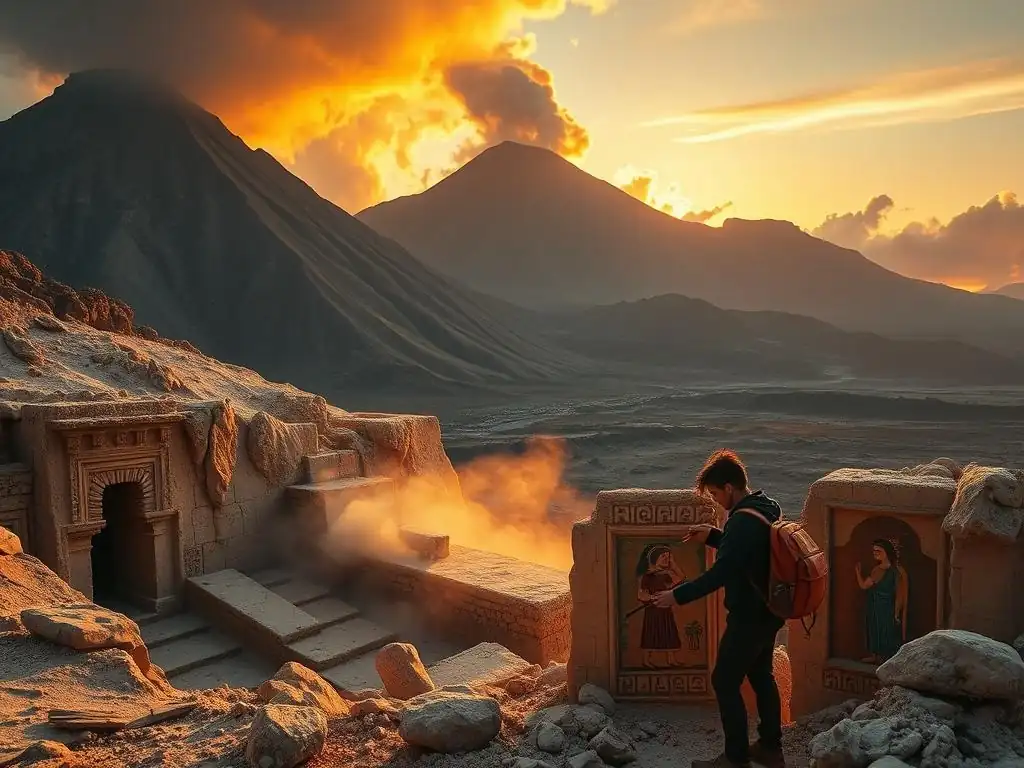
Welcome to Volcano Explorers!
Dare to peer into the heart of fiery landscapes and unearthed secrets. Beyond the roiling magma and explosive power, volcanoes have acted as silent guardians of history. This isn't just about geology; it's about humanity. Prepare to be amazed as we journey into the past, exploring the remarkable phenomenon of ancient cultures preserved by volcanoes. What stories lie buried beneath the ash, waiting to be rediscovered? Uncover the past, one eruption at a time...
- Introduction: Unearthing Ancient Civilizations Through Volcanic Ash
- Pompeii and Herculaneum: Iconic Examples of Volcanic Preservation
- Other Ash-Buried Cities: Beyond Pompeii
- How Volcanic Ash Preserves Ancient Cultures
- What We Learn From Ancient Cultures Preserved by Volcanoes
- The Challenges of Excavating and Studying Volcanically Preserved Sites
- The Future of Research on Ancient Cultures Preserved by Volcanoes
- Conclusion: The Enduring Legacy of Volcanic Time Capsules
-
Frequently Asked Questions
- What types of cultural artifacts are commonly found in cities buried by volcanic ash?
- How does volcanic ash contribute to the preservation of ancient cities?
- Which ancient cultures have been significantly impacted and preserved by volcanic eruptions?
- How do volcanologists and archaeologists work together to study these preserved sites?
- What can we learn about daily life in ancient cultures from these ash-buried cities?
- Final Reflection: Echoes of Pompeii, Lessons for Tomorrow
- Rediscover the Echoes of Lost Civilizations!
Introduction: Unearthing Ancient Civilizations Through Volcanic Ash
The Power of Volcanic Eruptions to Preserve History
Volcanic eruptions are often perceived as purely destructive forces of nature, capable of obliterating landscapes and ending lives in moments of fiery fury. However, paradoxically, these very cataclysmic events can also act as extraordinary preservers of history.
The thick blankets of volcanic ash, pumice, and pyroclastic flows that engulf settlements during eruptions can, under certain conditions, create time capsules, freezing moments in history and preserving entire cities and cultures for millennia. This preservation is not about gentle protection; it’s about a violent entombment that, through a unique set of geological and chemical processes, halts the usual decay and disintegration that time inflicts on the remnants of past civilizations.
The key to this preservation lies in the rapid burial of settlements under layers of volcanic material. This sudden encapsulation effectively shields organic materials and artifacts from many of the agents of decomposition. Exposure to air, moisture, and microbial activity – the typical culprits behind the breakdown of organic matter – is drastically reduced or eliminated.
Furthermore, the fine-grained nature of volcanic ash can infiltrate spaces and crevices, creating molds of perishable items that would otherwise vanish completely. In essence, a volcanic eruption, while a disaster for those living through it, can become an unparalleled archaeological gift for future generations, offering a unique window into the daily lives of ancient cultures preserved by volcanoes.
Exploring the Intersection of Volcanology and Archaeology
The study of ancient cultures preserved by volcanoes is a fascinating intersection of volcanology and archaeology. Volcanologists provide crucial insights into the eruption dynamics, the type of volcanic materials deposited, and the processes that occurred during and after the event. This geological context is essential for archaeologists to understand the conditions under which the preservation took place and to interpret the archaeological record accurately. For instance, understanding the temperature and composition of pyroclastic flows is vital for explaining the state of preservation of organic materials found in sites like Pompeii and Herculaneum.
Archaeologists, on the other hand, bring the methodologies and expertise needed to excavate, analyze, and interpret the buried remains. They meticulously uncover the layers of ash and pumice, carefully extracting artifacts, architectural remains, and even human remains, piecing together the story of the people who lived in these now-silent cities. The collaboration between these two disciplines is paramount.
Volcanologists help to reconstruct the catastrophic event itself, providing a timeline and understanding of the destructive forces at play, while archaeologists use this information to contextualize their findings and reconstruct the lives and societies that were so abruptly entombed. This interdisciplinary approach allows for a more complete and nuanced understanding of ancient cultures impacted and, remarkably, preserved by volcanic eruptions.
Pompeii and Herculaneum: Iconic Examples of Volcanic Preservation
The Eruption of Mount Vesuvius in 79 AD: A Catastrophic Event
The eruption of Mount Vesuvius in 79 AD stands as one of the most infamous and devastating volcanic events in recorded history. Pliny the Younger's detailed letters provide a contemporary account of the eruption, describing the towering ash cloud, pyroclastic flows, and the widespread devastation.
Beginning on August 24th, the eruption unleashed a Plinian phase, characterized by a massive column of ash and pumice that rained down on the surrounding region, including Pompeii. This initial phase was followed by more lethal pyroclastic surges and flows – fast-moving currents of hot gas and volcanic debris – that engulfed Herculaneum and then reached Pompeii, ultimately burying both cities under meters of volcanic material.
Estimates suggest that the eruption released thermal energy equivalent to multiple atomic bombs, and the total volume of erupted material was several cubic kilometers. The eruption was not a single event but a sequence of phases, each contributing to the destruction and preservation of the Roman towns. The initial pumice fall provided a warning and allowed some inhabitants to escape, particularly from Pompeii.
However, the subsequent pyroclastic flows, reaching temperatures of up to 500 degrees Celsius (932 degrees Fahrenheit), were inescapable and instantly lethal for those who remained in Herculaneum and those who could not flee Pompeii in time. This catastrophic event, while causing immense loss of life, inadvertently created the conditions for the extraordinary preservation that makes Pompeii and Herculaneum globally significant archaeological sites.
Pompeii: A Snapshot of Roman Life Frozen in Time
Pompeii, buried under approximately 4 to 6 meters (13 to 20 feet) of ash and pumice, offers an unparalleled snapshot of daily Roman life in the 1st century AD. The city's rapid burial under lapilli (small stones of pumice) and ash effectively sealed it off, preserving buildings, streets, and countless artifacts in remarkable condition.
Excavations, which began in the 18th century and continue to this day, have revealed entire houses with their frescoes, mosaics, furniture, and even food remains intact. This level of preservation allows archaeologists to reconstruct the layout of a Roman city, understand domestic architecture, and gain insights into the economic and social activities of its inhabitants.
One of the most poignant aspects of Pompeii is the preservation of plaster casts of the eruption's victims. As the bodies decomposed within the hardened ash, they left cavities. By pouring plaster into these voids, archaeologist Giuseppe Fiorelli in the 19th century created casts that captured the final moments of the Pompeiians – their postures, clothing, and even facial expressions.
These casts serve as powerful reminders of the human tragedy and provide invaluable information about the population of Pompeii, including their age, sex, and even their health. Pompeii is not just a collection of ruins; it is a city frozen in time, offering a deeply moving and detailed glimpse into Roman society.
Herculaneum: Preserving Organic Materials Under Volcanic Debris
While Pompeii was buried primarily by ash and pumice, Herculaneum experienced a different fate. It was engulfed by pyroclastic flows, which consisted of hot gas and volcanic debris that solidified into a dense, hardened layer up to 20 meters (65 feet) thick. This difference in burial material resulted in a different type of preservation.
The intense heat of the pyroclastic flows initially carbonized organic materials, but the rapid and airtight seal created by the solidified flow prevented further decomposition. This unique process led to the exceptional preservation of organic materials in Herculaneum that are rarely found in Pompeii or other archaeological sites.
Excavations at Herculaneum have unearthed wooden structures, including roofs, doors, and furniture, as well as textiles, ropes, food, and even papyri scrolls. The Villa of the Papyri, for instance, yielded a vast library of carbonized scrolls, offering a treasure trove of classical literature and philosophical texts. Furthermore, human remains in Herculaneum show a different type of preservation compared to Pompeii.
The intense heat caused instant vaporization of soft tissues, but the skeletons were remarkably preserved, and in some cases, even brain tissue was vitrified, essentially turned into glass. Herculaneum, therefore, complements Pompeii by offering a unique window into the past, showcasing the preservation of organic materials under extreme volcanic conditions and enriching our understanding of Roman life and the impact of the Vesuvius eruption.
Other Ash-Buried Cities: Beyond Pompeii
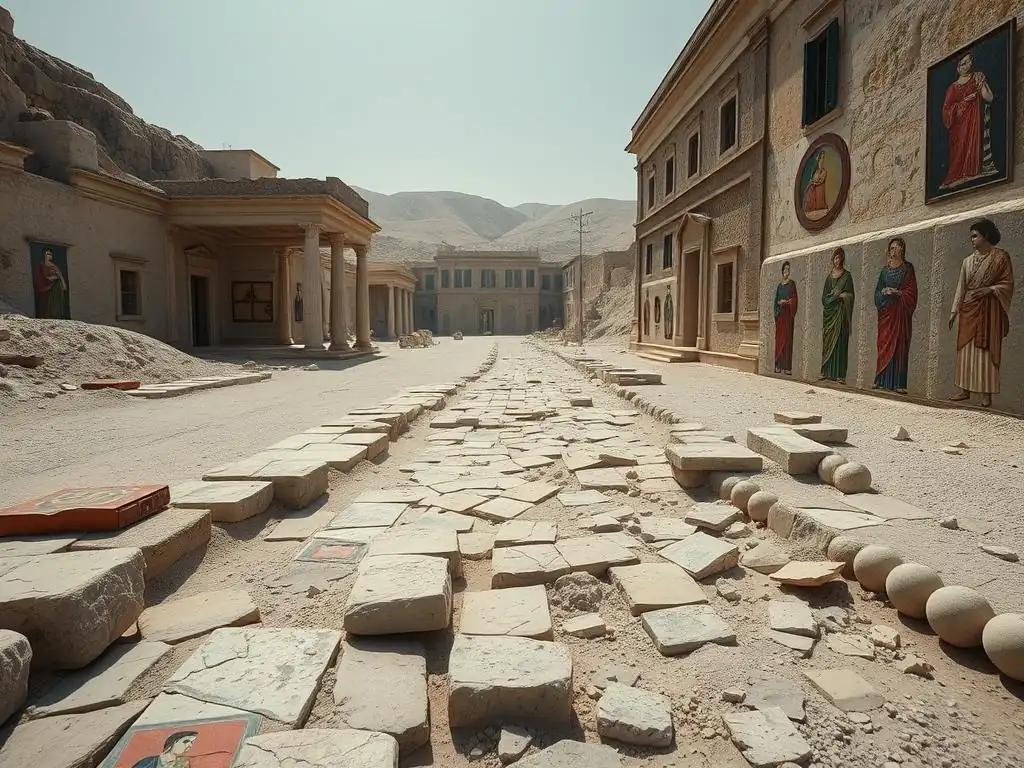
Akrotiri: A Minoan City Entombed by the Thera Eruption
Long before Vesuvius, another volcanic eruption on the island of Thera (modern Santorini) around 1627 BC, now known as the Minoan eruption, buried the Minoan city of Akrotiri. This eruption, one of the largest volcanic events in human history, devastated the Aegean region and is believed by some to have contributed to the decline of the Minoan civilization.
Akrotiri, like Pompeii, was covered in thick layers of volcanic ash and pumice, preserving the city in a state of suspended animation for over 3,600 years. Excavations at Akrotiri have revealed a sophisticated Minoan settlement, providing invaluable insights into this Bronze Age culture.
Akrotiri's preservation is remarkable for its stunning frescoes that adorned the walls of buildings. These vibrant and remarkably well-preserved frescoes depict scenes of daily life, nature, religious ceremonies, and even naval battles, offering unparalleled glimpses into Minoan society, beliefs, and artistic traditions. Unlike Pompeii, no human remains have been found in Akrotiri, suggesting that the inhabitants may have had time to evacuate before the city was completely buried.
The lack of looting also points to a swift and perhaps organized evacuation. Akrotiri serves as a testament to the advanced Minoan civilization and the power of volcanic eruptions to preserve entire cities, offering a window into a pre-classical Aegean world.
Cerén: The "Pompeii of the Americas" Preserved by Ilopango Volcano
Often referred to as the "Pompeii of the Americas," Cerén is a pre-Columbian Maya farming village in El Salvador that was buried by a volcanic eruption around 660 AD. The eruption of Loma Caldera, part of the Ilopango volcanic complex, blanketed Cerén under approximately 5 meters (16 feet) of volcanic ash. This rapid burial preserved not only buildings but also the daily lives of the Maya villagers in extraordinary detail. Excavations at Cerén, started in 1976, have revealed the only known undisturbed pre-Hispanic Maya village, offering a unique perspective on everyday Maya life outside of the major ceremonial centers.
Cerén stands out for its preservation of ordinary household items and agricultural tools. Excavators have found thatched roofs still in place, pottery vessels filled with beans, and even footprints preserved in the ash. Cornfields, gardens, and fruit trees were also preserved, providing insights into Maya agricultural practices and diet. Unlike the grand monuments of other Maya sites, Cerén reveals the lives of common Maya farmers, their homes, their work, and their community. The site provides a rare and intimate glimpse into the daily realities of ancient Mesoamerican society, preserved by a relatively small, but locally devastating, volcanic eruption.
Joya de Cerén: Insights into Mesoamerican Agriculture and Society
While often used interchangeably with Cerén, Joya de Cerén technically refers to a larger area encompassing several related sites buried by the Loma Caldera eruption. This broader archaeological zone includes not only the village of Cerén but also other settlements and agricultural fields affected by the eruption. The ongoing research at Joya de Cerén continues to expand our understanding of the impact of the volcanic event and the extent of preservation across the landscape. The area provides a broader context for understanding Mesoamerican agriculture and society beyond just the village itself.
The preservation at Joya de Cerén extends beyond the immediate village, offering insights into the wider agricultural landscape and resource management practices of the ancient Maya. Studies of the preserved fields and crops provide valuable data on Maya farming techniques, crop diversification, and land use.
The eruption effectively froze a moment in time, capturing the agricultural practices and social organization of a rural Maya community in the 7th century AD. Joya de Cerén, therefore, is not just a single site but a landscape of preservation, offering a more comprehensive picture of ancient Mesoamerican rural life and the impact of volcanic events on human settlements and agricultural systems.
How Volcanic Ash Preserves Ancient Cultures
The Chemical Composition of Volcanic Ash and its Preservation Qualities
Volcanic ash, the fine particulate matter ejected during explosive volcanic eruptions, possesses a unique chemical composition that contributes significantly to the preservation of buried materials. Primarily composed of pulverized rock, minerals, and volcanic glass shards, volcanic ash is often rich in silica, alumina, and various trace elements. This composition, coupled with the physical properties of ash, creates an environment that inhibits decay and promotes preservation. The fine-grained nature of ash allows it to permeate and encase objects effectively, while its chemical properties contribute to the long-term stability of buried artifacts.
One key aspect of volcanic ash's preservation quality is its relatively low organic content and often slightly acidic pH. This environment discourages microbial activity, a primary driver of decomposition. Furthermore, certain components of volcanic ash, such as silica and alumina, can act as desiccants, drawing moisture away from buried materials. This dehydration process further inhibits microbial growth and slows down the rate of decay, particularly for organic materials. The combination of chemical inertness, desiccation properties, and the creation of an airtight seal makes volcanic ash a remarkably effective natural preservative, contributing to the exceptional preservation observed in ash-buried cities.
Rapid Burial and the Prevention of Decay
The speed of burial is a critical factor in the preservation of ancient cultures by volcanic eruptions. In events like the Vesuvius eruption or the Loma Caldera eruption, settlements were rapidly engulfed by volcanic materials, sometimes within hours or even minutes. This rapid burial is crucial because it drastically reduces the time available for the natural processes of decay and decomposition to take hold. Before organic materials can fully degrade or artifacts can be scattered and damaged by the elements, they are sealed off from the surface environment by a protective layer of volcanic ash.
Rapid burial under volcanic ash effectively creates an anaerobic environment, limiting oxygen availability. Oxygen is essential for many decomposition processes, including aerobic microbial activity and oxidation. By reducing or eliminating oxygen exposure, rapid burial significantly slows down the rate of decay. Moreover, the weight and compactness of the overlying volcanic layers further contribute to preservation by preventing disturbance from scavengers, erosion, and other natural processes. The swiftness and completeness of burial are therefore paramount in transforming a destructive volcanic event into a powerful agent of archaeological preservation.
The Role of Ash in Protecting Artifacts from the Elements
Beyond its chemical composition and the benefits of rapid burial, volcanic ash acts as a physical barrier, protecting buried artifacts from the destructive forces of the elements over long periods. Once solidified, layers of volcanic ash and pumice create a relatively stable and impermeable covering that shields underlying materials from moisture, sunlight, temperature fluctuations, and wind erosion. This protective layer is crucial for preventing the long-term deterioration of both organic and inorganic artifacts.
The solidified ash layer effectively minimizes weathering processes that would otherwise degrade exposed artifacts over centuries or millennia. Rainwater, which can leach away soluble components and contribute to erosion, is largely diverted by the ash layer. Sunlight, particularly ultraviolet radiation, which can damage organic materials and fade pigments, is blocked.
Temperature fluctuations, which can cause expansion and contraction leading to cracking and fragmentation, are moderated by the insulating properties of the ash layer. In essence, volcanic ash not only entombs and preserves ancient cultures but also provides a long-lasting protective shield, ensuring their survival for archaeologists to uncover and study in the future.
What We Learn From Ancient Cultures Preserved by Volcanoes
Ancient cultures preserved by volcanoes offer unparalleled insights into the daily lives, architecture, and social structures of past societies. Unlike many archaeological sites that are fragmented or disturbed, ash-buried cities often present a remarkably complete picture of urban and domestic life at a specific moment in time. Pompeii, Herculaneum, Akrotiri, and Cerén, for example, have revealed detailed layouts of houses, workshops, public buildings, and streets, allowing archaeologists to reconstruct the physical environment in which these ancient people lived.
The artifacts found within these sites, from cooking utensils and furniture to tools and personal ornaments, provide tangible evidence of daily routines, economic activities, and social customs. Frescoes and mosaics in Pompeii and Akrotiri depict scenes of everyday life, religious rituals, and artistic expressions, offering visual narratives of these cultures.
The preservation of food remains, agricultural tools, and even footprints in Cerén provides direct evidence of subsistence strategies and agricultural practices. By studying these remarkably preserved sites, we gain a much more intimate and detailed understanding of how ancient societies were organized, how people lived, worked, and interacted with each other, and the material culture that shaped their lives.
Understanding Ancient Technologies and Craftsmanship
Volcanically preserved sites are also invaluable for understanding ancient technologies and craftsmanship. The preservation of workshops, tools, and unfinished products provides direct evidence of ancient manufacturing processes and technological skills. In Pompeii, for instance, bakeries with ovens and grinding stones, fulleries for cleaning cloth, and workshops for various crafts have been unearthed, revealing the scale and organization of Roman industries. Herculaneum’s preservation of wooden furniture and even textiles showcases Roman woodworking and textile production techniques.
Akrotiri's frescoes demonstrate sophisticated Minoan painting techniques and pigment use. Cerén’s preservation of agricultural tools and pottery reveals Maya technological adaptations for farming and ceramic production. By studying these artifacts and structures, archaeologists can reconstruct ancient technologies, understand the level of craftsmanship achieved by these societies, and trace the evolution of technological innovation over time. These sites act as time capsules of ancient technology, offering insights that are often missing from other archaeological contexts where materials have decayed or been lost.
Reconstructing Past Environments and Climates
The study of ancient cultures preserved by volcanoes extends beyond human societies to provide valuable data for reconstructing past environments and climates. Volcanic ash layers themselves can be analyzed to understand past volcanic activity, eruption patterns, and the dispersal of volcanic materials. Furthermore, the preserved organic remains, such as plants, pollen, and wood, offer insights into the vegetation, fauna, and climate conditions prevailing at the time of the eruption.
Pollen analysis from volcanic ash deposits can reveal the types of plants growing in the region, providing information about past vegetation and climate zones. Preserved wood and plant remains can be used for dendrochronology and radiocarbon dating, helping to establish precise timelines for volcanic eruptions and associated environmental changes.
The study of ancient soils buried under volcanic ash can also provide information about past land use and agricultural practices, as well as soil conditions before the eruption. By integrating archaeological and environmental data from volcanically preserved sites, we can reconstruct past landscapes, climates, and ecosystems, gaining a broader understanding of the relationship between human societies and their environment in the past.
The Challenges of Excavating and Studying Volcanically Preserved Sites
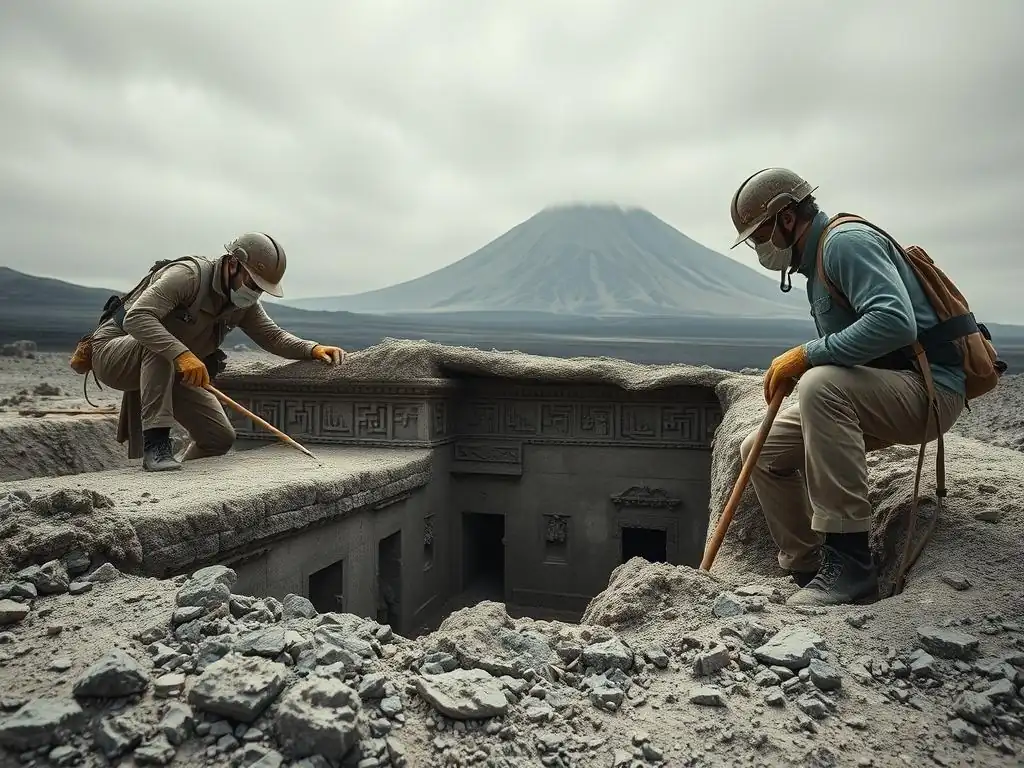
The Fragility of Artifacts and the Need for Careful Excavation Techniques
Excavating volcanically preserved sites presents unique challenges due to the fragility of artifacts and the solidified nature of the volcanic deposits. While volcanic ash provides excellent long-term preservation, the process of excavation itself can pose risks to delicate artifacts. Organic materials, such as wood, textiles, and papyri, although remarkably preserved, can be extremely fragile after centuries or millennia underground. Excavating these materials requires meticulous techniques and specialized conservation skills to prevent damage or disintegration.
The solidified volcanic matrix, especially pyroclastic flows in sites like Herculaneum, can be very hard and difficult to remove without damaging underlying artifacts. Archaeologists must employ careful excavation strategies, often using small tools, brushes, and even dental picks to painstakingly remove the volcanic material layer by layer. The process is slow, labor-intensive, and requires constant vigilance to avoid damaging the fragile archaeological record. Conservation efforts often begin in situ, with immediate stabilization and consolidation of artifacts as they are unearthed, before they are transported to laboratories for further analysis and preservation.
Ethical Considerations in Archaeological Research
Ethical considerations are paramount in the archaeological research of volcanically preserved sites, particularly those involving human remains. The excavation and study of human remains from sites like Pompeii and Herculaneum raise ethical questions about the treatment of the deceased and the respect for cultural heritage. While the study of these remains provides invaluable information about past populations, their health, and their final moments, it is crucial to approach this research with sensitivity and respect for human dignity.
Decisions about the display and public exhibition of human remains must be carefully considered, taking into account ethical guidelines and cultural sensitivities. The ownership and repatriation of artifacts, particularly in cases where source countries or descendant communities have claims, are also important ethical considerations. Archaeological research should be conducted in collaboration with local communities and stakeholders, ensuring that the benefits of research are shared and that the cultural heritage is managed responsibly and sustainably. Ethical frameworks guide archaeological practice to ensure that research is conducted in a way that respects both the past and the present.
The Impact of Tourism on Site Preservation
The immense popularity of volcanically preserved sites, particularly Pompeii and Herculaneum, as tourist destinations presents a significant challenge to their long-term preservation. Mass tourism can exert considerable pressure on archaeological sites, leading to physical damage from foot traffic, erosion, and vandalism. The sheer number of visitors can compact soils, damage fragile structures, and accelerate the deterioration of exposed artifacts. Managing tourism sustainably is crucial for balancing public access with the need to protect these irreplaceable cultural heritage sites.
Strategies for mitigating the impact of tourism include implementing controlled access, establishing designated walkways and viewing platforms, and limiting visitor numbers. Investing in site maintenance and conservation is essential to repair damage and prevent further deterioration. Educating tourists about responsible site visitation and the importance of preservation is also crucial. Sustainable tourism management aims to ensure that these remarkable sites can continue to be enjoyed and studied by future generations without compromising their integrity and archaeological value.
The Future of Research on Ancient Cultures Preserved by Volcanoes
Advancements in Archaeological Technology and Analysis
The future of research on ancient cultures preserved by volcanoes is bright, driven by advancements in archaeological technology and analytical methods. Non-invasive techniques, such as ground-penetrating radar, LiDAR (Light Detection and Ranging), and geophysical surveys, are increasingly used to explore buried sites without extensive excavation. These technologies allow archaeologists to map subsurface features, identify potential areas of interest, and plan excavations more efficiently and with less disturbance to the site.
Advances in dating techniques, such as high-precision radiocarbon dating and tephrochronology (dating using volcanic ash layers), provide more accurate chronologies for volcanic eruptions and associated archaeological contexts. Improved methods for analyzing ancient DNA, isotopes, and trace elements in artifacts and human remains offer new insights into population movements, diet, health, and trade networks. Digital technologies, including 3D modeling, virtual reality, and geographic information systems (GIS), are transforming the way archaeological data is recorded, analyzed, and presented, allowing for more comprehensive and accessible research outcomes.
The Potential for New Discoveries in Unexcavated Sites
Despite decades of research, the potential for new discoveries in volcanically preserved sites remains vast. Many areas within Pompeii and Herculaneum are still unexcavated, holding the promise of further insights into Roman urban life. Akrotiri's excavation is ongoing, and the full extent of the Minoan city and its surrounding landscape is yet to be revealed. Joya de Cerén and other sites in volcanic regions around the world offer opportunities for discovering new ash-buried settlements and expanding our understanding of ancient cultures impacted by volcanic events.
The application of new technologies and research methodologies to previously excavated sites can also yield fresh discoveries and reinterpretations of existing data. Re-examination of artifact collections using advanced analytical techniques can uncover previously undetected information. The integration of multidisciplinary approaches, combining archaeology with volcanology, geology, environmental science, and other fields, will continue to enrich our understanding of these unique archaeological sites and the cultures they preserve. The exploration of volcanically active regions globally may also reveal previously unknown ash-buried cities, expanding the corpus of volcanically preserved archaeological sites.
Preserving Volcanic Sites for Future Generations
Preserving volcanically preserved sites for future generations is a critical responsibility. These sites are irreplaceable archives of human history and offer unique opportunities to learn about the past. Effective preservation requires a multi-faceted approach that combines site management, conservation, research, education, and sustainable tourism practices. Long-term conservation plans are essential to address the ongoing threats of erosion, weathering, and tourism impact.
Investing in site maintenance, infrastructure improvements, and visitor management systems is crucial for ensuring the physical protection of these sites. Promoting public awareness and appreciation of volcanic heritage through education and outreach programs can foster a sense of stewardship and responsibility. International collaborations and knowledge sharing are vital for exchanging best practices in site preservation and management. By prioritizing preservation efforts, we can ensure that these remarkable volcanic time capsules continue to provide insights into ancient cultures and inspire future generations of researchers and visitors.
Conclusion: The Enduring Legacy of Volcanic Time Capsules
Celebrating the Resilience of Ancient Cultures
The enduring legacy of volcanic time capsules lies not only in the remarkable preservation of ancient cities but also in the stories of the people who lived in them. Pompeii, Herculaneum, Akrotiri, Cerén, and other ash-buried sites are testaments to the resilience of ancient cultures in the face of natural disasters. Despite the catastrophic volcanic eruptions that entombed their cities, these societies left behind a rich archaeological record that reveals their ingenuity, adaptability, and cultural achievements.
The preserved remains of these cities offer a powerful connection to the past, allowing us to glimpse the lives of individuals who lived centuries ago. The artifacts, buildings, and even human remains tell stories of daily routines, social interactions, artistic expressions, and technological innovations. By studying these volcanic time capsules, we celebrate the enduring legacy of ancient cultures and their contributions to human history, recognizing their resilience in the face of adversity and the enduring power of the human spirit.
The Importance of Studying Volcanic History to Understand Our Past
Studying volcanic history, particularly through the lens of ash-buried cities, is of paramount importance for understanding our past and informing our present and future. Volcanic eruptions have played a significant role in shaping human history, influencing settlement patterns, technological development, and even societal change. The archaeological record from volcanically preserved sites provides a unique perspective on the long-term interactions between humans and volcanic environments.
Understanding past volcanic events and their impacts on ancient societies can offer valuable lessons for contemporary societies living in volcanically active regions. Studying the preservation processes in ash-buried cities can inform conservation strategies for other archaeological sites.
Furthermore, the interdisciplinary research on volcanically preserved sites highlights the importance of integrating scientific and humanistic approaches to understanding the complex interplay between natural forces and human cultures throughout history. By studying volcanic history, we gain a deeper appreciation of the dynamic relationship between humanity and the Earth, and the enduring legacy of ancient cultures preserved by the very forces that sought to erase them.
Frequently Asked Questions
What types of cultural artifacts are commonly found in cities buried by volcanic ash?
Volcanic ash can preserve a wide range of artifacts, including organic materials like food remnants and textiles, as well as buildings and tools, providing a snapshot of daily life. These finds help us understand ancient cultures.
How does volcanic ash contribute to the preservation of ancient cities?
Volcanic ash acts as a protective barrier, shielding buried cities from erosion, scavengers, and other destructive forces. The rapid burial process also prevents decomposition, preserving delicate items.
Which ancient cultures have been significantly impacted and preserved by volcanic eruptions?
Examples include the Roman city of Pompeii, preserved by the eruption of Mount Vesuvius. Similarly, locations in Central and South America show evidence of cultures affected and preserved by volcanic activity.
How do volcanologists and archaeologists work together to study these preserved sites?
Collaboration is crucial. Volcanologists provide expertise on the eruption dynamics and ash deposition, while archaeologists excavate and interpret the cultural significance of the findings.
What can we learn about daily life in ancient cultures from these ash-buried cities?
These sites offer unparalleled insights into daily routines, social structures, and even the personal lives of people in ancient times, providing a detailed look into long-lost civilizations.
Final Reflection: Echoes of Pompeii, Lessons for Tomorrow
The stories unearthed from ash-buried cities, as we've explored, are not just relics of the past; they are vibrant echoes resonating in the present. The preservation of ancient cultures by volcanic eruptions offers an unparalleled window into human history, reminding us of our shared ancestry and the fragility of civilization. These "volcanic time capsules" provide invaluable insights into daily life, societal structures, and artistic expressions of people who lived centuries ago, enriching our understanding of what it means to be human.
The enduring fascination with sites like Pompeii and Herculaneum stems from their ability to connect us viscerally with the past. This connection transcends mere historical curiosity; it fosters empathy and a deeper appreciation for the resilience and vulnerability of human societies. History is who we are and why we are the way we are.
- David McCullough. This quote encapsulates the profound impact these preserved cultures have on our understanding of ourselves and the world around us, urging us to learn from the past to navigate the challenges of the future.
As we close this exploration of ancient cultures preserved by volcanoes, let us carry forward the lessons learned from these extraordinary sites. Consider how the sudden and devastating events that entombed these cities can inform our own preparedness for natural disasters and our commitment to preserving cultural heritage. Let the stories of Pompeii and Herculaneum inspire you to appreciate the present, safeguard the past, and build a more resilient future for generations to come.
Rediscover the Echoes of Lost Civilizations!
Thanks for exploring the fascinating world of ash-buried cities with us! We hope you've gained a new appreciation for how volcanic eruptions, while devastating, can also uniquely preserve history. Ready to delve deeper into these ancient stories?
Here are a few ways to continue your exploration:
- Conduct your own research: Explore the eruption that most captivated you, comparing historical accounts with modern archaeological findings. You might surprise yourself with what you discover!
- Share this article with a friend who loves history, archaeology, or volcanoes. They'll thank you for introducing them to this unique intersection of history and geology.
- Create a project inspired by the lives preserved in these volcanic time capsules— perhaps a short story, artwork, or even a historical game. What stories will you unearth?
What's one surprising detail you learned about these ash-buried cities, and how has it changed your perspective on volcanoes? Share your thoughts below!