
The Dance of Fire and Ice: Volcanoes in Polar and Glacial Myths

Welcome to Volcano Explorers!
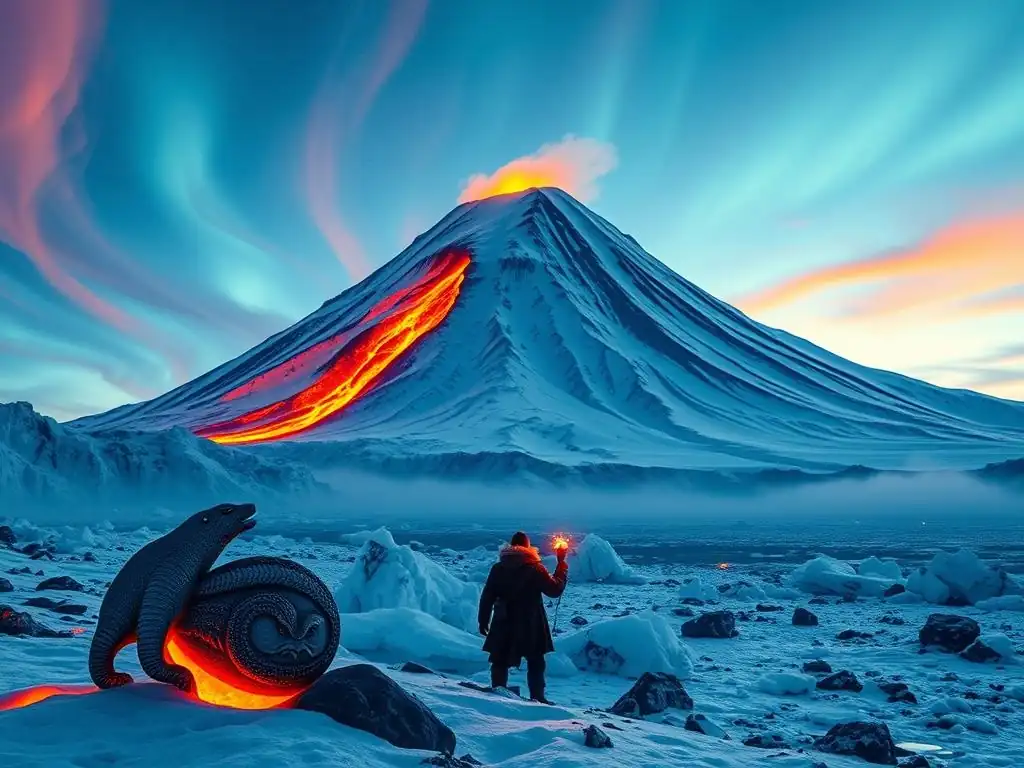
Dare to venture into the heart of Earth's fiery soul? Prepare to be captivated as we unveil the untold stories simmering beneath the icy landscapes. This month, we ignite your imagination with an exploration into the fascinating world of " Volcanoes in Polar Myths." Discover how ancient cultures wove tales of fire and fury into the very fabric of their glacial existence. What secrets do these frozen legends hold, and what can they tell us about the enduring power of volcanoes? The answers await... delve deeper now!
- Introduction: Volcanoes in Polar Myths - A Clash of Elements
- Volcanic Activity in Polar Regions: Setting the Stage
- Mythological Interpretations of Volcanoes in Polar Regions
- Norse Mythology: The Land of Fire and Ice - A Volcanic Narrative
- Inuit Legends: Volcanoes as Portals to the Spirit World
- Other Polar Cultures: Volcanic Themes in Storytelling
- The Enduring Allure of Volcanoes in Polar Myths
- Conclusion: The Legacy of Volcanoes in Polar Storytelling
-
Frequently Asked Questions
- What role do volcanoes play in polar and glacial myths?
- How do polar myths explain volcanic eruptions?
- Are there specific volcanoes featured prominently in polar myths?
- How do these myths reflect the experiences of people living near volcanoes in polar regions?
- What can we learn about ancient cultures from their volcanic myths?
- Final Reflection: Echoes of Creation and Destruction
Introduction: Volcanoes in Polar Myths - A Clash of Elements
Exploring the Intersection of Volcanic Activity and Arctic Folklore
The very notion of volcanoes erupting in the icy expanses of the Arctic and Antarctic regions might seem paradoxical. We often associate volcanoes with tropical islands, lush jungles, or arid deserts – landscapes seemingly at odds with the frozen poles. However, the reality is that volcanoes are not strangers to these frigid environments.
In fact, the dynamic interplay between fire and ice has profoundly shaped both the physical landscapes and the cultural narratives of polar regions for millennia. This article delves into the fascinating intersection of volcanic activity and Arctic folklore, exploring how ancient cultures interpreted these fiery phenomena amidst their icy surroundings. We will uncover how the dramatic contrast of erupting volcanoes against glacial backdrops has sparked unique myths and legends, weaving together the raw power of nature with the human quest for understanding the world around them.
The presence of volcanoes in polar regions offers a compelling study in contrasts – the searing heat of molten rock against the unyielding cold of ice and snow. This dramatic juxtaposition is not merely a geological curiosity; it's a powerful visual and sensory experience that would have deeply impacted early inhabitants of these regions. Imagine witnessing a volcanic eruption under the ethereal glow of the aurora borealis, or feeling the ground tremble beneath a glacier as magma forces its way to the surface.
Such events are not easily forgotten; they become woven into the fabric of cultural memory, shaping stories, beliefs, and even spiritual practices. Understanding these "volcanoes in polar myths" requires us to consider both the geological realities of polar volcanism and the rich tapestry of human imagination that seeks to make sense of these powerful natural forces.
The Unexpected Presence of Volcanoes in Glacial Landscapes
While images of tropical volcanoes might dominate popular imagination, the Earth's polar regions are surprisingly active volcanic zones. Iceland, a prime example, sits squarely on the Mid-Atlantic Ridge, a major plate boundary where volcanic activity is rife. Its landscape is famously defined by glaciers and volcanoes existing side-by-side, a testament to the potent geological forces at play in high latitudes.
Beyond Iceland, volcanic activity extends across other parts of the Arctic and even Antarctica. For instance, the volcanic islands of the South Sandwich Archipelago in the Southern Ocean are almost entirely glaciated, and Mount Erebus, an active volcano on Ross Island, Antarctica, is perpetually shrouded in ice and snow.
The existence of volcanoes in these glacial landscapes is not merely a geographical quirk; it's a crucial element in understanding the geological history and current dynamics of polar regions. Subglacial volcanoes, those hidden beneath thick ice sheets, play a significant role in ice sheet stability and meltwater production. Eruptions can melt vast quantities of ice from below, contributing to glacial melt and potentially influencing global sea levels.
Moreover, the ash and tephra from volcanic eruptions, when deposited on ice and snow, can alter albedo (reflectivity), affecting regional and global climate patterns. Therefore, the "unexpected presence of volcanoes in glacial landscapes" is not just a fascinating detail in polar geography, but a key factor in understanding the complex interplay between Earth's geological and cryospheric systems.
Volcanic Activity in Polar Regions: Setting the Stage
Active Volcanoes Beneath the Ice: A Geological Overview
Active volcanoes in polar regions present a unique geological scenario, often hidden beneath layers of ice and snow, yet profoundly impacting the landscapes above and below. These volcanoes are not randomly scattered; they are typically associated with tectonic plate boundaries or mantle plumes, areas where magma from the Earth's interior can readily ascend to the surface.
The Arctic, particularly Iceland and parts of Siberia and Alaska, lies along the seismically and volcanically active Arctic Ring of Fire. Antarctica, too, despite its seemingly quiescent ice sheets, hosts numerous active and dormant volcanoes, mainly concentrated in West Antarctica and along the Antarctic Peninsula.
The geology of these polar volcanoes is diverse, ranging from stratovolcanoes, like Mount Erebus, known for its persistent lava lake, to subglacial volcanoes, which may only reveal themselves through meltwater plumes or subtle changes in the ice surface. Iceland, as a volcanic island formed by the Mid-Atlantic Ridge, showcases a wide array of volcanic features, including fissure vents, shield volcanoes, and caldera systems.
The geological processes shaping these volcanoes are fundamentally the same as those elsewhere on Earth – plate tectonics, mantle convection, and magma generation – but their interaction with the cryosphere adds a layer of complexity and unique environmental consequences. Understanding the geological underpinnings of these "active volcanoes beneath the ice" is crucial for appreciating their role in shaping polar landscapes and influencing global systems.
Glacial Volcanoes: Types and Characteristics
Glacial volcanoes, or glaciovolcanoes, are a distinct category of volcanoes whose eruptions interact directly with ice. These interactions lead to the formation of unique volcanic landforms and have significant implications for glacial dynamics. There are several types of glacial volcanoes, each characterized by the nature of the ice interaction during eruption.
"Subglacial volcanoes" erupt beneath an ice sheet or glacier, often leading to the formation of flat-topped mountains called "tuyas" or table mountains, formed as lava erupts and ponds against the overlying ice. "Ice-contact volcanoes" are formed at the margin of an ice sheet or glacier, where eruptions can produce a mix of subglacial and subaerial (above ice) features.
The characteristics of glacial volcanoes are largely dictated by the interaction between molten rock and ice. Subglacial eruptions often result in rapid melting of ice, producing large volumes of meltwater that can lead to glacial outburst floods (jökulhlaups). These floods can be incredibly powerful and destructive, reshaping landscapes and transporting vast amounts of sediment.
The rapid cooling of lava by ice can also lead to the formation of hyaloclastite, a type of volcanic glass formed when lava fragments rapidly upon contact with water or ice. "Glacial volcanoes: types and characteristics" are thus defined by this dynamic interplay between fire and ice, leading to distinctive geological formations and hazardous phenomena.
The Impact of Subglacial Eruptions on Glacial Environments
Subglacial volcanic eruptions have a profound and multifaceted impact on glacial environments. The most immediate and dramatic effect is the melting of ice. The heat from an eruption can melt significant volumes of ice, creating meltwater lakes beneath the ice sheet or glacier. If these lakes breach their ice dams, they can unleash catastrophic glacial outburst floods, or jökulhlaups, as witnessed in Iceland and other glaciated volcanic regions. These floods can carry enormous volumes of water, ice, and debris, causing significant erosion and deposition downstream.
Beyond the immediate impact of meltwater, subglacial eruptions also influence glacial dynamics in other ways. The introduction of meltwater at the base of a glacier can lubricate the ice-bedrock interface, potentially increasing glacier flow velocity and contributing to ice sheet instability. Volcanic ash and tephra deposited on the ice surface can darken the ice, reducing its albedo and increasing solar absorption, which in turn accelerates melting.
Furthermore, the geothermal heat from subglacial volcanoes can maintain liquid water at the base of ice sheets even during periods of extreme cold, influencing basal melting rates and potentially affecting subglacial ecosystems. Therefore, "the impact of subglacial eruptions on glacial environments" is a complex and significant factor in understanding polar environmental change.
Mythological Interpretations of Volcanoes in Polar Regions
Ancient Beliefs Surrounding Fire and Ice Deities
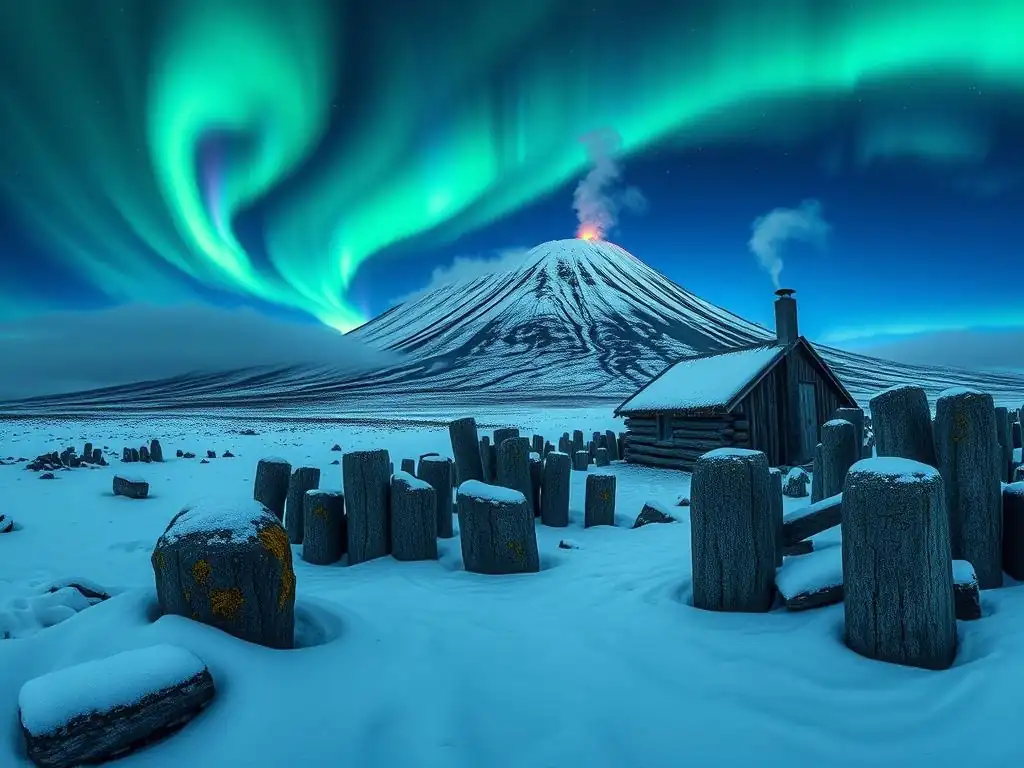
In cultures inhabiting or bordering polar regions, the forces of fire and ice were often personified as powerful deities, reflecting the dramatic environmental realities they faced. These ancient beliefs surrounding "fire and ice deities" were not merely abstract concepts; they were deeply embedded in daily life, influencing rituals, social structures, and interpretations of natural phenomena. In many northern traditions, fire was associated with warmth, light, and transformative power, often embodied by sun gods or fire spirits. Ice, conversely, represented cold, darkness, and the harshness of winter, often personified by ice giants or winter goddesses.
The contrasting nature of these deities mirrored the duality of the polar environment itself – periods of long daylight and relative warmth juxtaposed with extended darkness and extreme cold. Volcanoes, as manifestations of subterranean fire erupting in icy landscapes, presented a particularly potent symbol in this context. They could be seen as battlegrounds or meeting points of these opposing forces, where the raw power of fire challenged the dominion of ice. Myths often depicted struggles between fire and ice deities, mirroring the natural cycles of seasons and the dramatic events of volcanic eruptions in these regions.
The Role of Volcanoes in Shaping Polar Creation Myths
Volcanoes, with their dramatic and transformative power, frequently feature in polar creation myths, often as agents of creation or destruction that shape the world. "The role of volcanoes in shaping polar creation myths" is significant because these geological forces are not just background scenery but active participants in the cosmic drama of world-making.
In some myths, volcanic eruptions are depicted as the primordial act of creation, with fire emerging from the depths to forge land out of water or ice. The heat and energy of volcanoes could be seen as the spark of life, bringing forth new landscapes and even giving birth to the first beings.
Conversely, volcanoes also embody destructive forces in creation myths. Eruptions could be interpreted as acts of divine wrath or cosmic upheaval, capable of destroying existing worlds and ushering in periods of chaos or renewal. The ash and darkness associated with volcanic eruptions could be linked to myths of primordial darkness or the end of the world. In essence, volcanoes in polar creation myths are not simply geological phenomena; they are powerful symbols of creation, destruction, and the ongoing cycle of transformation that shapes the world and human existence within it.
Connecting Polar Lights (Aurora Borealis) with Volcanic Activity in Legends
The ethereal dance of the aurora borealis, or Northern Lights, is a quintessential feature of polar skies. Interestingly, in some polar cultures, there's a fascinating connection drawn between these mesmerizing light displays and volcanic activity in legends. "Connecting polar lights (aurora borealis) with volcanic activity in legends" highlights a unique cultural interpretation of these seemingly disparate phenomena. For some indigenous groups, the aurora was not just a beautiful atmospheric phenomenon; it was seen as a reflection of subterranean fires or volcanic spirits dancing in the sky.
The flickering, shifting lights of the aurora, with their fiery hues of red and orange, could be interpreted as the glow of volcanic eruptions or the flames of underworld fires visible in the heavens. Legends might describe the aurora as the spirits of fire gods or volcanic deities manifesting in the sky, their celestial dance mirroring the eruptions happening beneath the Earth's surface. This connection between aurora and volcanoes in folklore reveals a deep and intuitive understanding of the Earth's interconnected systems, where celestial phenomena are linked to terrestrial forces, reflecting a holistic worldview prevalent in many indigenous cultures.
Norse Mythology: The Land of Fire and Ice - A Volcanic Narrative
Muspelheim: The Realm of Fire and Its Volcanic Echoes
Norse mythology, originating from Scandinavia, a region intimately acquainted with both ice and volcanic fire, presents a compelling "volcanic narrative" in its cosmology. "Muspelheim," one of the nine realms in Norse cosmology, is explicitly described as the primordial land of fire, heat, and lava. It is located to the south of the world and is the antithesis of Niflheim, the realm of ice and cold to the north. Muspelheim is not merely a place of fire; it's the source of all heat and light in the cosmos, a fundamental force in the Norse creation myth.
The descriptions of Muspelheim resonate strongly with volcanic landscapes. Imagine a land of molten rock, rivers of lava, and perpetual flames – a vivid depiction of volcanic terrain. The giants and fire demons who inhabit Muspelheim, such as Surtur, are embodiments of volcanic power and destructive fire.
Muspelheim's existence as a primordial fire realm in Norse cosmology underscores the cultural significance of volcanic forces in shaping the worldview of these northern people. It suggests that the dramatic volcanic landscapes of Iceland and Scandinavia, with their fiery eruptions amidst icy environments, profoundly influenced the development of Norse mythology and its cosmology.
The Giant Surtur and His Fiery Sword: A Symbol of Volcanic Power
Within Norse mythology, "the giant Surtur and his fiery sword" stand as potent symbols of volcanic power. Surtur, whose name means "black" or "swarthy," is the ruler of Muspelheim and a formidable fire giant. He is depicted as wielding a blazing sword, brighter than the sun, which he will use to set the world ablaze during Ragnarok, the Norse apocalypse. Surtur is not just a destructive figure; he embodies the raw, untamed power of fire, a force capable of both creation and destruction.
His fiery sword can be interpreted as a metaphor for volcanic eruptions, the molten rock and flames bursting forth from the Earth with immense power. The description of the sword being brighter than the sun further emphasizes the intensity and overwhelming nature of volcanic fire. Surtur's role in Ragnarok, unleashing his fiery sword to engulf the world, reinforces the association of volcanic events with cataclysmic destruction and cosmic upheaval in Norse mythology. He serves as a powerful personification of the awe-inspiring and sometimes terrifying force of volcanoes.
Ragnarok: Volcanic Cataclysm and the End of the World
"Ragnarok," the prophesied twilight of the gods in Norse mythology, bears striking resemblances to a "volcanic cataclysm" and the end of the world as known in Norse cosmology. The events leading up to and during Ragnarok are filled with imagery that evokes volcanic eruptions, earthquakes, and widespread fire. The sky turns black, the sun and moon are swallowed, stars fall from the heavens, and the earth trembles violently – all phenomena that can be associated with major volcanic events, particularly large explosive eruptions that can inject ash and gases into the atmosphere, causing darkness and atmospheric disturbances.
The climax of Ragnarok involves Surtur unleashing his fiery sword to engulf the world in flames. This final conflagration can be interpreted as a metaphor for widespread volcanic activity, with fire consuming the earth and bringing about the destruction of the old world.
Even the subsequent emergence of a new, reborn world from the ashes can be seen as mirroring the geological cycle of destruction and creation associated with volcanic landscapes. Ragnarok, therefore, within the context of "volcanoes in polar myths," can be understood as a mythological encoding of the profound and transformative power of volcanic forces, particularly in a region like Scandinavia where volcanic eruptions have historically shaped the landscape and human experience.
Inuit Legends: Volcanoes as Portals to the Spirit World
Volcanoes as Pathways to the Underworld in Inuit Beliefs
For Inuit cultures inhabiting the Arctic regions of North America and Greenland, volcanoes, though less geographically prominent than in Iceland, still held significant cultural and spiritual meaning. Inuit legends often portray "volcanoes as pathways to the underworld," serving as portals to the realm of spirits and ancestors. This interpretation stems from the dramatic and otherworldly nature of volcanic phenomena, with their fiery eruptions and subterranean rumblings suggesting a connection to hidden, unseen realms beneath the Earth's surface.
The smoke and steam rising from volcanic vents could be seen as the breath of spirits or the gateway to their domain. The heat and fire associated with volcanoes, in contrast to the icy surface world, further reinforced this association with the underworld, a realm often conceived as warm or fiery in various mythologies.
Inuit shamans, or spiritual leaders, might have been believed to journey to the underworld through these volcanic portals, communicating with spirits and seeking guidance or healing. This concept of volcanoes as spiritual gateways highlights the Inuit understanding of the Earth as a living entity, interconnected between the visible world and the unseen realms beneath.
Stories of Ice Giants and Volcanic Spirits in Inuit Folklore
Inuit folklore is rich with stories of mythical beings, including "ice giants and volcanic spirits," who embody the forces of nature and populate the landscape. These stories often reflect the harsh realities of the Arctic environment and the Inuit people's relationship with it. Ice giants, massive and powerful beings associated with cold, ice, and winter, represent the formidable forces of the Arctic climate. Conversely, volcanic spirits, though perhaps less frequently depicted than ice giants in Inuit folklore due to the less prevalent volcanic landscape in some Inuit territories, embody the fiery, subterranean power of the Earth.
These volcanic spirits might be associated with specific volcanic features, such as hot springs or fumaroles, seen as dwelling places of these entities. Stories might describe encounters between humans and these spirits, often involving tests of courage, respect, or understanding of the natural world. The interplay between ice giants and volcanic spirits in Inuit folklore could also reflect the contrasting forces of ice and fire in the Arctic environment, with volcanoes representing pockets of geothermal heat and volcanic activity amidst vast icy expanses.
The Legend of Qiqirn and the Volcanic Birth of Land
"The legend of Qiqirn and the volcanic birth of land" is a fascinating example of how volcanic activity is incorporated into Inuit creation narratives. Qiqirn is a large, dog-like spirit in Inuit mythology, often associated with chaos, disorder, and the unpredictable forces of nature. In some versions of the legend, Qiqirn is credited with creating land through volcanic eruptions. It is said that Qiqirn stomped its feet, causing the Earth to shake and volcanoes to erupt, spewing forth lava and ash that eventually cooled and solidified to form landmasses.
This legend not only provides a mythological explanation for the origin of land but also links it directly to volcanic activity and the chaotic energy of Qiqirn. The volcanic birth of land, in this context, is not a gentle or orderly process but rather a dramatic and transformative event brought about by a powerful and somewhat unpredictable spirit. This highlights the Inuit understanding of creation as often arising from chaos and powerful natural forces, with volcanoes playing a key role in shaping the landscape and bringing land into existence.
Other Polar Cultures: Volcanic Themes in Storytelling
Siberian Legends: Volcanic Mountains as Sacred Sites
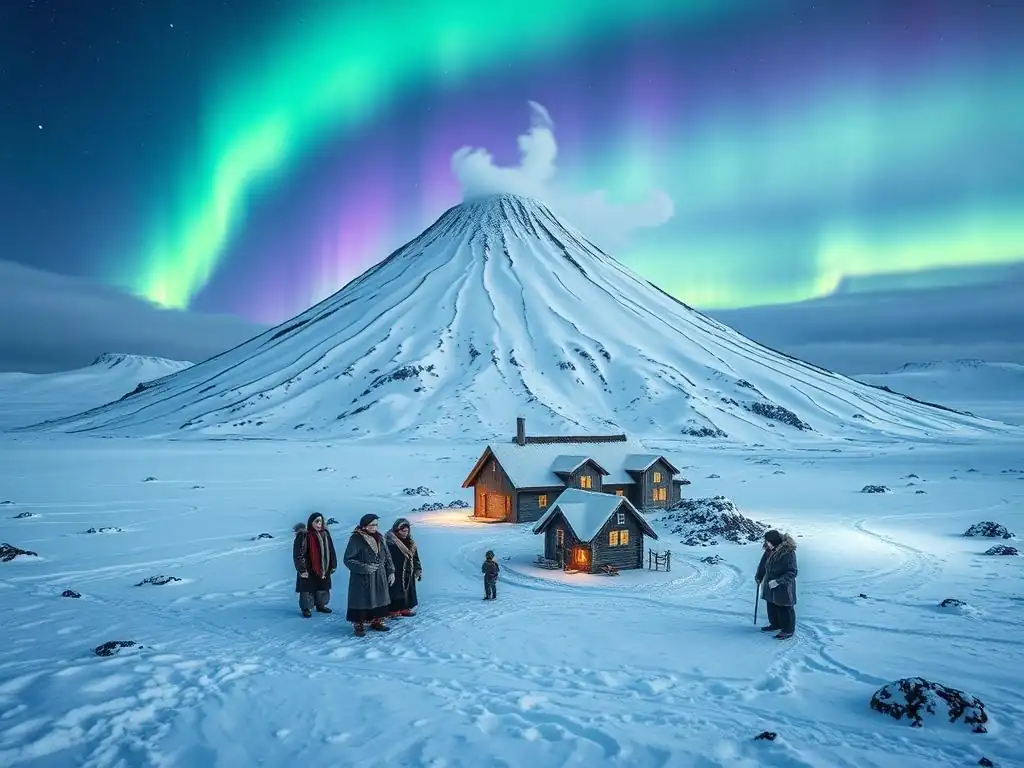
Across the vast expanse of Siberia, various indigenous cultures have inhabited volcanic regions for millennia. In Siberian legends, "volcanic mountains" are often revered as "sacred sites," imbued with spiritual significance and connected to deities or ancestral spirits. The imposing presence of volcanic peaks, towering over the landscape and sometimes emitting smoke or steam, naturally lends itself to interpretations as places of power and mystery. These mountains might be considered dwelling places of gods or spirits, or gateways to other realms.
Rituals and ceremonies might be performed at these sacred volcanic sites, seeking blessings, communicating with spirits, or honoring the forces of nature. The geothermal activity associated with volcanoes, such as hot springs and fumaroles, could also be seen as sacred, believed to possess healing properties or spiritual energy. Siberian legends, therefore, often integrate volcanic mountains into their spiritual and cosmological frameworks, recognizing their power and significance in the landscape and the lives of the people.
Icelandic Sagas: Documenting Volcanic Eruptions and Their Impact
Icelandic sagas, medieval prose narratives chronicling the history and mythology of Iceland, provide invaluable insights into how volcanic eruptions were understood and documented in a historical context. "Icelandic sagas," unlike purely mythological tales, often blend historical accounts with folklore and legend, offering a unique perspective on "documenting volcanic eruptions and their impact" on Icelandic society. Sagas frequently describe volcanic eruptions, earthquakes, and other natural disasters, recording the events, their consequences, and the human responses to them.
These accounts are not just dry historical records; they often weave in elements of folklore and supernatural interpretations. Eruptions might be attributed to divine wrath, the actions of giants or trolls, or omens of future events. However, the sagas also demonstrate a keen observation of natural phenomena and a practical understanding of the dangers posed by volcanic activity. They document the ashfall, lava flows, floods, and social disruption caused by eruptions, providing a rich historical record of the interplay between volcanic forces and human society in Iceland.
Sami Folklore: The Stalo and Volcanic Mountain Dwellings
Sami folklore, originating from the indigenous people of northern Scandinavia, also incorporates volcanic themes, though perhaps less explicitly than Norse mythology due to the less intensely volcanic landscape of some Sami territories. However, "Sami folklore" features mythical beings like the "Stalo," often depicted as giants or trolls associated with wild nature and remote places, including mountains. While not always directly linked to volcanoes, the Stalo and other mountain-dwelling beings in Sami folklore might be seen as inhabiting rugged, mountainous landscapes that could include volcanic features.
These mountain dwellings of mythical beings could be interpreted as metaphorical representations of volcanic areas, places of untamed power and potential danger. Stories of encounters with Stalo often involve themes of cunning, survival, and respect for the natural world. While not explicitly focusing on volcanic eruptions, Sami folklore's emphasis on mountain landscapes and powerful mythical beings dwelling in remote and wild places resonates with the awe and respect that volcanic regions can inspire, suggesting a subtle integration of volcanic themes into their storytelling traditions.
The Enduring Allure of Volcanoes in Polar Myths
Why Volcanoes Captivate the Imagination in Extreme Environments
"Why volcanoes captivate the imagination in extreme environments" like polar regions is multifaceted. Firstly, the sheer contrast of fire and ice is inherently dramatic and visually striking. In landscapes dominated by white and blue hues of ice and snow, the sudden eruption of fiery lava and plumes of dark ash creates a powerful spectacle that is hard to ignore. This visual impact alone is enough to capture the human imagination and inspire awe and wonder.
Secondly, volcanoes represent a potent force of nature, a reminder of the Earth's internal energy and its capacity for both creation and destruction. In polar environments, where life can be challenging and survival often depends on respecting the forces of nature, volcanoes serve as a particularly compelling symbol of this power. They are a tangible manifestation of the Earth's raw energy breaking through the icy surface, a reminder of the dynamic and sometimes unpredictable nature of the planet. This inherent power and drama contribute significantly to the enduring allure of volcanoes, especially in extreme environments.
The Symbolism of Creation and Destruction in Polar Volcanic Myths
"The symbolism of creation and destruction in polar volcanic myths" is a recurring theme. Volcanoes are inherently dualistic, capable of both creating new land through lava flows and destroying existing landscapes through eruptions and associated hazards. This duality is particularly potent in polar regions, where the environment is already characterized by cycles of freezing and thawing, darkness and light, and periods of abundance and scarcity. Volcanoes, in this context, amplify these themes of cyclical change and transformation.
In polar myths, volcanoes can symbolize both the forces of chaos and destruction, as seen in Ragnarok or the Qiqirn legend, and the potential for renewal and creation. New land can be formed from volcanic eruptions, providing new habitats and resources. The heat from geothermal areas can offer refuge from the extreme cold. This duality of creation and destruction, inherent in volcanic processes, makes volcanoes powerful symbols in polar myths, reflecting the cyclical nature of life and the constant interplay between opposing forces in the natural world.
The Modern Fascination with Volcanoes in Glacial and Polar Regions
"The modern fascination with volcanoes in glacial and polar regions" continues to grow, fueled by both scientific curiosity and the allure of these dramatic landscapes. Scientifically, these regions offer unique opportunities to study the interaction between volcanism and the cryosphere, with implications for understanding climate change, glacial dynamics, and the potential hazards associated with subglacial eruptions. The study of "volcanoes in polar myths" also contributes to our understanding of how cultures interpret and adapt to extreme environments and natural phenomena.
Beyond scientific interest, the visual drama and remoteness of polar volcanic landscapes hold a strong appeal for adventurers, photographers, and nature enthusiasts. Witnessing a volcanic eruption in Iceland, Antarctica, or other polar regions is considered a rare and awe-inspiring experience. The contrast of fire and ice, the otherworldly landscapes, and the sense of being at the edge of the world all contribute to the enduring and perhaps even growing fascination with volcanoes in glacial and polar regions in the modern era.
Conclusion: The Legacy of Volcanoes in Polar Storytelling
Preserving and Sharing the Cultural Significance of Volcanoes
"Preserving and sharing the cultural significance of volcanoes," particularly in polar regions, is crucial for understanding the rich tapestry of human-environment interactions. These myths and legends are not just quaint stories from the past; they represent valuable insights into how different cultures have made sense of powerful natural phenomena and integrated them into their worldviews. By preserving and sharing these narratives, we can gain a deeper appreciation for the diverse ways humans relate to the Earth and its dynamic processes.
Museums, cultural centers, educational institutions, and online platforms play a vital role in disseminating these stories and ensuring they are not lost to time. Supporting indigenous communities in maintaining their cultural heritage, including oral traditions and storytelling practices, is also essential. Recognizing the cultural significance of volcanoes enriches our understanding of both human history and the Earth's geological processes, fostering a more holistic and interconnected perspective.
Further Exploration of Volcanic Myths and Scientific Discoveries
"Further exploration of volcanic myths and scientific discoveries" is encouraged to deepen our understanding of volcanoes in polar regions. Mythological studies can delve deeper into the symbolic meanings, cultural contexts, and historical evolution of volcanic narratives across different polar cultures. Comparative mythology can reveal common themes and unique interpretations of volcanic phenomena. Scientific research continues to uncover new insights into the geology, geophysics, and environmental impacts of polar volcanoes.
Interdisciplinary approaches, combining mythological analysis with scientific data, can offer a more complete picture of volcanoes in polar regions, bridging the gap between cultural understanding and scientific knowledge. Studying the intersection of "volcanic myths and scientific discoveries" can lead to a richer and more nuanced appreciation of these fascinating and dynamic environments.
Delving Deeper: Resources for Volcano Enthusiasts and Mythologists
For those eager to "delve deeper" into the world of volcanoes in polar myths, several resources are available for both "volcano enthusiasts and mythologists."
- Volcanology Websites and Organizations: Websites like the Smithsonian National Museum of Natural History's Global Volcanism Program (volcano.si.edu) and the USGS Volcano Hazards Program (volcanoes.usgs.gov) offer comprehensive information on volcanoes worldwide, including those in polar regions. Organizations like the International Association of Volcanology and Chemistry of the Earth's Interior (IAVCEI) provide resources for scientific research and education.
- Mythology and Folklore Databases: Websites like the Folklore Society (folklore-society.com) and online databases of mythology and folklore can provide access to collections of myths and legends from various cultures, including polar regions. University libraries and archives are also valuable resources for accessing scholarly works on mythology and folklore.
- Books and Academic Journals: Numerous books and academic journals are dedicated to volcanology, mythology, and cultural studies. Searching online databases and library catalogs using keywords like "polar volcanoes," "volcanic myths," "Norse mythology," "Inuit legends," "Sami folklore," and "Siberian mythology" can lead to valuable resources.
- Museums and Cultural Centers: Museums with exhibits on volcanology, polar regions, or specific cultures mentioned in this article (e.g., Icelandic sagas, Inuit culture) can offer engaging and informative experiences. Cultural centers in polar regions themselves can also provide valuable insights and resources.
By utilizing these resources and continuing to explore both the scientific and mythological dimensions of volcanoes in polar regions, we can deepen our appreciation for the "dance of fire and ice" and its enduring legacy in human storytelling.
Frequently Asked Questions
What role do volcanoes play in polar and glacial myths?
Volcanoes are often portrayed as gateways to the underworld or the homes of powerful, fiery spirits in polar myths. They symbolize the conflict between fire and ice, a recurring theme in these narratives. These myths frequently use volcanoes to explain unusual geological features or natural disasters.
How do polar myths explain volcanic eruptions?
Polar myths often attribute volcanic eruptions to the anger or displeasure of deities residing within the volcano. These eruptions can be seen as punishments or warnings to humanity. Some myths describe eruptions as a battle between the forces of good and evil.
Are there specific volcanoes featured prominently in polar myths?
While specific volcanoes might not always be named, prominent volcanic features like craters and geothermal areas are often central to the stories. Myths may focus on volcanic landscapes as places of power and mystery. Often the nearest active volcano to a community is the most featured.
How do these myths reflect the experiences of people living near volcanoes in polar regions?
These myths reflect the real dangers and awe that people experience living near active volcanoes. They offer a way to understand and cope with the unpredictable nature of volcanic activity. The myths also highlight the importance of respecting the natural world.
What can we learn about ancient cultures from their volcanic myths?
Studying volcanic myths provides insights into the beliefs, values, and fears of ancient cultures. These stories reveal how people interpreted and explained natural phenomena like volcanic eruptions. They also show the importance of the environment in shaping cultural narratives.
Final Reflection: Echoes of Creation and Destruction
The exploration of volcanoes within polar and glacial myths, as we've seen, isn't just an academic exercise in comparative mythology; it's a potent reminder of the raw, untamed power of nature that continues to shape our planet and our imaginations. The fiery heart beneath the frozen landscapes speaks to a fundamental duality – creation and destruction, warmth and cold – that resonates deeply within the human psyche.
This interplay of fire and ice has profoundly influenced, and continues to influence, how we perceive our relationship with the natural world. It's a humbling realization that even in the seemingly barren and immutable polar regions, the earth is alive and dynamic, capable of both breathtaking beauty and catastrophic force. We are all children of the volcano, born of fire and ice, destined to both create and destroy.
This quote, though fictional, encapsulates the enduring power of these myths to remind us of our own inherent contradictions and our place within the grand cosmic dance.
Now, as you reflect on the stories and landscapes we've explored, consider how these ancient narratives might inform your own understanding of the world. How can the dance of fire and ice, of creation and destruction, inspire you to embrace the complexities of life, to find beauty in the unexpected, and to approach the future with both awe and respect for the forces that shape our existence? Let the echoes of volcanoes in polar myths resonate within you, reminding you of the enduring power of nature and the stories we tell to make sense of it all.
Uncover the hidden stories where fire meets ice. From ancient Norse sagas to Inuit legends, volcanoes have long captivated those who live in the shadow of glaciers and polar landscapes. Delve deeper into the fascinating intersection of these powerful forces – and the myths they inspired – at Volcano Explorers. Explore our articles, stunning photography, and expert analysis to ignite your own adventure. Visit volcanoexplorers.org today and begin your journey into the heart of our planet’s most dramatic landscapes.