
VolcanoProofing Schools and Hospitals: Protecting Vulnerable Populations

Welcome to Volcano Explorers!
Prepare to be captivated. The earth breathes fire, and beneath our feet lies a power that can both create and destroy. Are your local schools and hospitals ready? Dive in to uncover crucial strategies for volcano safety for schools hospitals, ensuring the safety of our most vulnerable populations in the shadow of these magnificent, yet volatile, giants. The secrets to preparedness await... dare to explore?
- Volcano Safety for Schools and Hospitals: A Critical Need
- Assessing Volcanic Hazards and Risks to Schools and Hospitals
- Implementing Volcano-Resistant Building Codes and Design
- Emergency Preparedness and Evacuation Planning for Schools and Hospitals
- Community Engagement and Education for Volcano Safety
- Case Studies: Successfully Volcano-Proofed Schools and Hospitals
- Long-Term Monitoring and Maintenance of Volcano Safety Infrastructure
- Funding and Resources for Volcano Safety in Schools and Hospitals
-
Frequently Asked Questions
- What are the primary considerations for volcano safety in schools and hospitals?
- How can schools and hospitals assess their vulnerability to volcanic hazards?
- What are some essential components of an evacuation plan for a school or hospital near a volcano?
- What role does communication play in volcano safety for schools and hospitals?
- What are some resources available to help schools and hospitals develop volcano safety plans?
- Final Reflection: Embracing Resilience in the Shadow of the Volcano
- Shield Our Future: Become a Volcano Safety Champion!
Volcano Safety for Schools and Hospitals: A Critical Need
Understanding the Unique Vulnerabilities of Schools and Hospitals Near Volcanoes
Schools and hospitals, as cornerstones of any community, face unique vulnerabilities when located near active or potentially active volcanoes. Schools house large concentrations of children, who are inherently more dependent on adults for safety and evacuation. Their physical and cognitive development stages mean they may be less able to understand risks, react quickly, or follow complex instructions during a volcanic event.
Hospitals, on the other hand, are responsible for the continuous care of patients, many of whom are critically ill or immobile. Evacuating a hospital is a complex logistical undertaking, requiring specialized equipment, trained personnel, and robust contingency plans to maintain patient safety and essential medical services during and after a volcanic crisis. The incapacitation of either a school or a hospital due to volcanic activity can have devastating cascading effects on the community's well-being and recovery.
Furthermore, both schools and hospitals often serve as critical community hubs. Schools are not just places of education but also centers for social interaction, community events, and in many cases, emergency shelters. Hospitals are vital for public health, providing essential medical care not only during normal times but especially during emergencies. Damage or disruption to these facilities can severely undermine community resilience, hindering recovery efforts and exacerbating the overall impact of a volcanic eruption. Therefore, understanding and addressing the specific vulnerabilities of schools and hospitals is paramount for effective volcano safety strategies in at-risk regions.
Prioritizing Safety: Why Schools and Hospitals Require Special Attention
The prioritization of volcano safety for schools and hospitals stems from both ethical and practical considerations. Ethically, there is a profound moral obligation to protect children and the sick or injured, who represent the most vulnerable segments of the population. Schools and hospitals are entrusted with their care and well-being, making it imperative to ensure these institutions are as safe as possible from volcanic hazards. Failure to adequately protect these populations can lead to preventable casualties and long-term trauma, undermining the social fabric of the community.
From a practical standpoint, ensuring the operational continuity of schools and hospitals is crucial for community resilience and recovery after a volcanic event. Schools are essential for resuming normalcy and providing a sense of stability for children and families in the aftermath of a disaster. Hospitals are indispensable for treating injuries, managing public health crises, and supporting long-term recovery.
Investing in volcano safety for schools and hospitals is not just about protecting buildings; it is about safeguarding the future of the community, ensuring its ability to recover and thrive in the face of volcanic threats. Moreover, proactive safety measures are often more cost-effective in the long run compared to the immense financial and social costs associated with damage, disruption, and loss of life caused by volcanic eruptions.
Assessing Volcanic Hazards and Risks to Schools and Hospitals
Identifying Potential Volcanic Threats: Mount Rainier Case Study
Assessing volcanic hazards is the foundational step in ensuring volcano safety for schools and hospitals. This process involves identifying the specific volcanic threats that a particular institution might face based on its proximity to a volcano and the volcano's history and potential eruption scenarios. For example, consider Mount Rainier in Washington State, USA. This stratovolcano is considered one of the most dangerous in the Cascade Range due to its proximity to densely populated areas, including cities like Tacoma and Seattle. Volcanic hazards from Mount Rainier include ashfall, pyroclastic flows, and lahars (volcanic mudflows).
For schools and hospitals located in the Puyallup River valley, which drains Mount Rainier, lahars pose a significant and rapid threat. Lahars are fast-moving flows of water and volcanic debris that can travel tens of kilometers downstream, devastating everything in their path. A hypothetical eruption of Mount Rainier could generate lahars that reach populated areas within minutes to hours, leaving little time for evacuation.
Schools and hospitals in these lahar pathways would require specific risk assessments focusing on lahar inundation zones, evacuation routes to higher ground, and structural vulnerabilities to lahar impacts. Therefore, understanding the specific volcanic hazards, such as ashfall, lahars, pyroclastic flows, and their potential reach, is crucial for tailored volcano safety planning for each school and hospital.
Evaluating Infrastructure Vulnerability: Structural Assessments for Volcanic Impacts
Once potential volcanic threats are identified, the next crucial step is to evaluate the vulnerability of school and hospital infrastructure to these hazards. This involves conducting comprehensive structural assessments to determine how buildings and essential infrastructure would withstand various volcanic impacts. These assessments go beyond standard building codes and consider the unique stresses imposed by volcanic events, particularly volcanic ashfall. For instance, heavy ash accumulation on roofs can lead to structural collapse, especially for buildings not designed to withstand such loads.
Structural engineers specializing in volcanic hazard mitigation can assess roof load-bearing capacity, building material resilience to ash corrosion, and the vulnerability of critical systems like power, water, and ventilation. For example, older school buildings or hospitals might have flat or low-slope roofs, which are more susceptible to ash accumulation and collapse compared to steeply pitched roofs.
Assessments may reveal weaknesses in building design or construction that need to be addressed through retrofitting or reinforcement. Furthermore, the vulnerability assessment should extend beyond buildings to include essential infrastructure like access roads, power lines, water pipelines, and communication networks, as disruption to these services can severely impact the functionality of schools and hospitals during and after a volcanic eruption.
Understanding Volcanic Ashfall Risks to School and Hospital Buildings
Volcanic ashfall, even from eruptions that are not explosively violent, poses a widespread and significant risk to school and hospital buildings. Volcanic ash is not like typical household ash; it is composed of fine particles of rock and glass that are abrasive, corrosive, and electrically conductive when wet.
The primary structural risk from ashfall is roof collapse due to the added weight of accumulated ash. Dry volcanic ash can weigh between 800 to 1000 kg per cubic meter (50 to 60 pounds per cubic foot), and even a relatively thin layer of a few inches can impose a significant load on roofs, exceeding design limits, particularly if the ash becomes wet from rain, increasing its weight considerably.
Beyond structural collapse, volcanic ash can infiltrate buildings through ventilation systems, windows, and doors, causing respiratory problems and damaging sensitive equipment within hospitals and schools. The fine particles can irritate the eyes, nose, and throat, exacerbate asthma and other respiratory conditions, and pose particular risks to children, the elderly, and patients with pre-existing respiratory illnesses. In hospitals, ash infiltration can contaminate sterile environments, damage medical equipment, and disrupt ventilation systems, potentially compromising patient care.
Schools may need to close due to poor air quality and the logistical challenges of cleaning up ash. Therefore, understanding the specific risks of volcanic ashfall, including structural loading, air quality impacts, and equipment damage, is crucial for designing effective mitigation measures for schools and hospitals in volcanic areas.
Implementing Volcano-Resistant Building Codes and Design
Designing for Volcanic Ash Load: Reinforcing Roof Structures
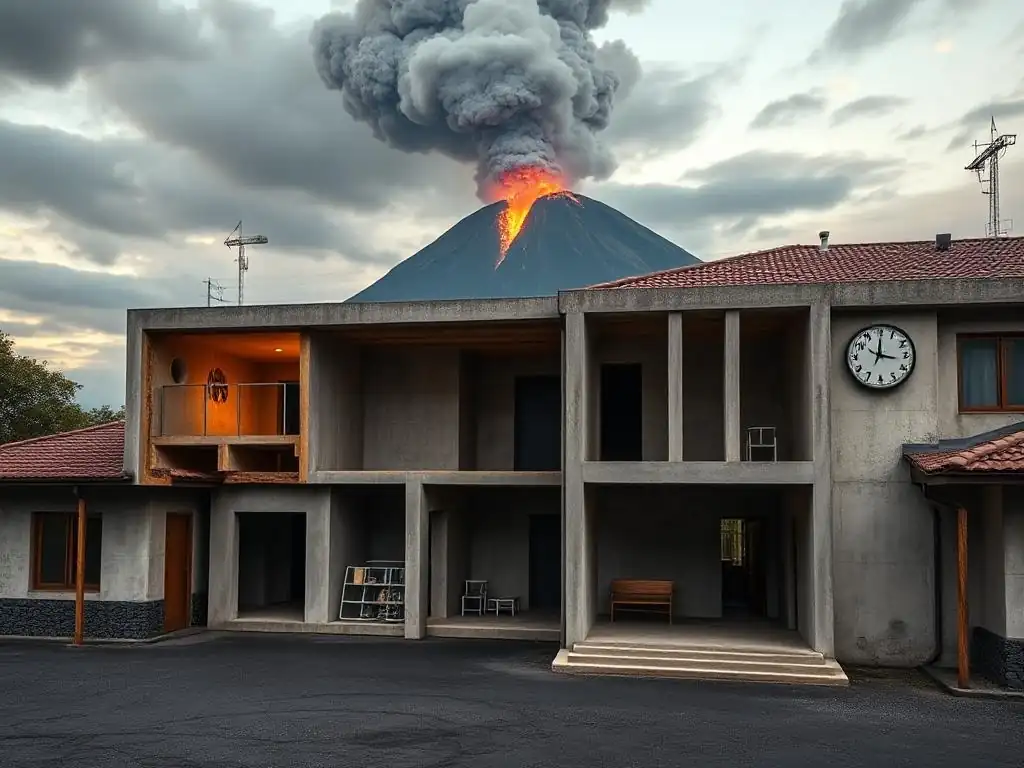
Implementing volcano-resistant building codes and design principles is crucial for mitigating the structural risks posed by volcanic ashfall, particularly for schools and hospitals. A primary focus is designing roofs to withstand the anticipated loads from volcanic ash accumulation. This involves reinforcing roof structures to exceed standard building code requirements in areas prone to significant ashfall. Design considerations include increasing the roof slope to facilitate ash shedding, using stronger roofing materials, and reinforcing the supporting structure with additional beams and columns.
For example, in regions with a high risk of heavy ashfall, building codes might specify minimum roof slopes of 30 degrees or more to reduce ash accumulation. Engineers may also specify the use of steel or reinforced concrete roofs instead of lighter materials like wood or corrugated metal, especially for critical facilities like hospitals.
Retrofitting existing school and hospital buildings may involve adding internal support columns, strengthening roof trusses, or even replacing entire roof structures to enhance their ash load capacity. Calculations for ash load should consider not only the weight of dry ash but also the increased weight when ash becomes saturated with rainwater, as this can significantly increase the load on roofs and exacerbate the risk of collapse.
Protecting Air Quality: Ventilation Systems and Filtration in Volcanic Zones
Protecting indoor air quality during volcanic ashfall events is paramount for maintaining the health and safety of occupants in schools and hospitals. Volcanic ash is a respiratory irritant, and minimizing its infiltration into buildings is crucial. This requires implementing specialized ventilation systems and filtration strategies. Modern HVAC (Heating, Ventilation, and Air Conditioning) systems in schools and hospitals located in volcanic zones should be designed to recirculate indoor air and minimize the intake of outside air during ashfall events. High-efficiency particulate air (HEPA) filters should be incorporated into ventilation systems to remove fine ash particles from the recirculated air.
In addition to advanced filtration, buildings can be designed with tighter seals around windows and doors to reduce ash infiltration. Positive pressurization systems can also be employed to maintain a slightly higher air pressure inside the building compared to the outside, further preventing ash from entering.
For older buildings, retrofitting may involve sealing windows and doors, upgrading ventilation systems with HEPA filters, and creating designated "clean air" shelters within the building where air quality can be carefully controlled and maintained during ashfall events. Regular maintenance and testing of ventilation and filtration systems are essential to ensure their effectiveness in protecting indoor air quality during volcanic eruptions.
Building Materials and Techniques for Enhanced Volcano Resilience
Selecting appropriate building materials and construction techniques is essential for enhancing the overall volcano resilience of schools and hospitals. Materials should be chosen not only for their structural strength but also for their resistance to the corrosive and abrasive properties of volcanic ash. Concrete and steel are generally preferred over wood in volcanic zones due to their greater strength and durability. Concrete should be dense and properly cured to minimize porosity and reduce susceptibility to chemical attack from volcanic gases and ash leachate. Steel structures should be protected with corrosion-resistant coatings.
Building techniques should also prioritize structural integrity and minimize vulnerabilities to volcanic hazards. For example, foundation designs should consider potential ground deformation from volcanic activity and be robust enough to withstand seismic shaking often associated with eruptions. Buildings can be oriented to minimize exposure to prevailing wind directions during ashfall events.
Landscaping around buildings can also be designed to divert lahars or debris flows away from critical structures. Furthermore, ensuring proper drainage around buildings is crucial to prevent water from pooling and saturating ash accumulation, which, as mentioned earlier, significantly increases the load on roofs and can exacerbate structural damage. Adopting these enhanced building materials and techniques contributes significantly to creating safer and more resilient schools and hospitals in volcanic regions.
Emergency Preparedness and Evacuation Planning for Schools and Hospitals
Developing Comprehensive Volcano Emergency Plans for Schools
Developing comprehensive volcano emergency plans is paramount for ensuring the safety of students and staff in schools located near volcanoes. These plans must be tailored to the specific volcanic hazards and vulnerabilities of each school and should be regularly reviewed and updated. Key components of a school volcano emergency plan include clear communication protocols, designated evacuation routes and assembly areas, procedures for sheltering-in-place if evacuation is not immediately possible, and provisions for essential supplies like water, food, first-aid kits, and respiratory protection (dust masks).
Communication protocols should outline how the school will receive warnings from volcano monitoring agencies, how this information will be disseminated to staff, students, and parents, and how communication will be maintained during an eruption event. Evacuation routes should be clearly marked, practiced regularly through drills, and lead to pre-determined safe assembly areas located outside of potential hazard zones (lahar pathways, pyroclastic flow zones).
Shelter-in-place procedures should detail how to seal classrooms to minimize ash infiltration and maintain a safe indoor environment if immediate evacuation is not feasible. Regular drills, at least twice a year, are crucial to ensure that students and staff are familiar with emergency procedures and can respond effectively in a real volcanic event.
Hospital Evacuation Strategies in Volcanic Eruption Scenarios
Hospital evacuation in volcanic eruption scenarios is a complex and resource-intensive undertaking that requires meticulously planned strategies. Unlike schools, hospitals house patients with varying degrees of mobility and medical needs, many of whom require continuous care and specialized equipment. Hospital evacuation plans must address the logistical challenges of safely transporting patients, including those in intensive care, newborns, and patients on life support, while maintaining continuity of care. These plans should designate evacuation routes, receiving hospitals in safer locations, transportation resources (ambulances, buses, helicopters), and procedures for transferring patient records and essential medical supplies.
Staged evacuation may be necessary, prioritizing the most vulnerable patients first. Clear protocols must be in place for communicating evacuation orders to staff, patients, and families, as well as coordinating with emergency services and other hospitals. Backup power systems, such as generators, are critical to maintain essential hospital functions during evacuation and in the event of power outages.
Drills and simulations, although challenging to conduct in a fully operational hospital, are vital for testing evacuation procedures, identifying potential bottlenecks, and ensuring that staff are trained and prepared to execute the plan effectively under pressure. Hospital evacuation plans should also consider the possibility of prolonged evacuation periods and include provisions for temporary hospital facilities or arrangements for long-term patient care in receiving hospitals.
Staff Training and Drills: Ensuring Effective Response to Volcanic Events
Effective response to volcanic events in schools and hospitals hinges on well-trained staff who are knowledgeable about volcano hazards and proficient in emergency procedures. Comprehensive training programs should be implemented for all staff members, including teachers, nurses, doctors, administrators, and support personnel. Training should cover volcano hazards specific to the region, early warning systems, evacuation procedures, shelter-in-place protocols, first aid relevant to volcanic events (e.g., respiratory issues from ash inhalation), and communication protocols during emergencies.
Regular drills and simulations are essential to reinforce training and ensure that staff can effectively implement emergency plans. Drills should simulate various volcanic eruption scenarios, including different types of hazards (ashfall, lahars, pyroclastic flows) and varying levels of warning time. After each drill, debriefing sessions should be conducted to identify areas for improvement and refine emergency procedures.
Training should be ongoing and updated regularly to reflect new scientific understanding of volcanic hazards, changes in emergency protocols, and lessons learned from drills and real volcanic events elsewhere. Investing in comprehensive staff training and regular drills is crucial for building a culture of preparedness and ensuring a coordinated and effective response to volcanic emergencies in schools and hospitals.
Community Engagement and Education for Volcano Safety
Educating Students and Staff About Volcano Hazards and Safety Procedures
Community engagement and education are vital components of a comprehensive volcano safety strategy. Within schools and hospitals, targeted educational programs are essential to raise awareness about volcano hazards and equip students and staff with the knowledge and skills to protect themselves. For students, age-appropriate educational materials and activities should be integrated into the curriculum, covering topics such as the science of volcanoes, local volcanic hazards, early warning systems, evacuation procedures, and personal safety measures during volcanic events. Interactive exercises, games, and field trips to volcano observatories or safe volcanic areas can enhance learning and engagement.
For staff, educational programs should be more in-depth and comprehensive, covering not only the science of volcanoes and local hazards but also their roles and responsibilities in emergency response, first aid training, and communication protocols. Workshops, seminars, and online training modules can be utilized to deliver this information effectively. Educational efforts should be ongoing and reinforced regularly through refresher courses, drills, and the dissemination of updated information. By fostering a culture of volcano awareness and preparedness within schools and hospitals, communities can significantly enhance their resilience to volcanic threats.
Involving Local Communities in Volcano Preparedness Initiatives
Volcano safety is not solely the responsibility of schools and hospitals; it requires a collaborative effort involving the entire local community. Schools and hospitals can serve as important hubs for community-wide volcano preparedness initiatives. They can host community meetings and workshops on volcano hazards and safety, share educational resources, and participate in community-wide emergency planning exercises.
Schools can involve parents and families in volcano safety education through workshops, newsletters, and family emergency preparedness events. Hospitals can play a leading role in public health preparedness for volcanic events, providing information on ashfall health risks, distributing respiratory protection, and coordinating community-wide health responses.
Establishing partnerships between schools, hospitals, local government agencies, volcano observatories, and community organizations is crucial for effective volcano preparedness. These partnerships can facilitate information sharing, resource mobilization, and coordinated emergency response efforts. Community involvement fosters a sense of shared responsibility and empowers individuals to take proactive steps to protect themselves and their families from volcanic hazards, creating a more resilient and safer community overall.
Public Awareness Campaigns: Promoting Volcano Safety Best Practices
Public awareness campaigns are essential for disseminating volcano safety information to the broader community and promoting best practices for preparedness and response. These campaigns should utilize various communication channels to reach diverse audiences, including websites, social media, local radio and television, newspapers, and community events. Campaigns should focus on clear and concise messaging about volcano hazards, early warning systems, evacuation routes, shelter-in-place procedures, ashfall health risks, and emergency supply kits.
Visual aids, such as maps of hazard zones and evacuation routes, infographics on ashfall safety, and videos demonstrating emergency procedures, can enhance public understanding and retention of information. Community events, such as volcano preparedness fairs, open houses at volcano observatories, and emergency preparedness workshops, can provide opportunities for direct engagement and information sharing. Public awareness campaigns should be ongoing and adaptable, utilizing timely information from volcano observatories and incorporating lessons learned from past volcanic events to continuously improve public understanding and preparedness for volcano hazards.
Case Studies: Successfully Volcano-Proofed Schools and Hospitals
Harry Truman Elementary School Case Study: Implementing Volcano Safety Measures
While "volcano-proofed" might be an aspirational term, the hypothetical case study of Harry Truman Elementary School, located near a potentially active volcano, illustrates practical and effective volcano safety measures. Recognizing its location in a potential lahar pathway and ashfall zone, the school administration, with community support, undertook a comprehensive volcano safety upgrade.
The school building's roof was reinforced with steel beams to withstand heavy ash loads, and a steeper roof pitch was implemented during renovations to encourage ash shedding. A state-of-the-art HVAC system with HEPA filters was installed to protect indoor air quality during ashfall events, and windows and doors were sealed to minimize ash infiltration.
Emergency preparedness was also prioritized. The school developed a detailed volcano emergency plan, including clearly marked lahar evacuation routes to a designated hilltop assembly area. Regular lahar evacuation drills were conducted twice a year, involving students, staff, and even parent volunteers. The school also established a robust communication system, including a direct link to the local volcano observatory for real-time alerts and a school-wide public address system for emergency announcements. Harry Truman Elementary became a model for volcano safety in schools, demonstrating the effectiveness of proactive structural upgrades and comprehensive emergency preparedness planning.
St. Helens Hospital Case Study: Enhancing Resilience to Volcanic Activity
Similarly, the fictional St. Helens Hospital, situated in a volcanic region prone to ashfall and potential pyroclastic flows (though outside direct flow paths), exemplifies enhanced resilience to volcanic activity. The hospital invested in significant infrastructure upgrades to ensure operational continuity during and after a volcanic eruption. The hospital building was structurally reinforced to withstand ash loads and potential seismic activity associated with eruptions.
Backup generators were installed to provide uninterrupted power supply in case of grid failure, crucial for maintaining life support systems and critical medical equipment. The hospital also stockpiled emergency medical supplies, including respiratory masks, medications, and water, to ensure self-sufficiency during potential supply chain disruptions after an eruption.
Evacuation planning was a key focus. St. Helens Hospital developed a phased evacuation plan, prioritizing the evacuation of non-critical patients first, followed by more complex cases, with designated receiving hospitals in safer zones. Ambulance and helicopter evacuation protocols were established. Hospital staff underwent rigorous training in volcano emergency response, including evacuation procedures, ashfall health management, and disaster triage. St. Helens Hospital's proactive approach to infrastructure resilience and emergency planning made it a regional leader in volcano preparedness for healthcare facilities.
Lessons Learned: Best Practices for Protecting Vulnerable Populations
From these case studies and real-world examples, several best practices emerge for protecting vulnerable populations in schools and hospitals from volcanic hazards. Proactive structural reinforcement of buildings, particularly roofs, is critical to withstand ash loads. Investing in advanced ventilation systems with HEPA filters and sealing buildings to minimize ash infiltration is essential for protecting indoor air quality. Developing comprehensive and regularly practiced emergency plans, including evacuation and shelter-in-place procedures, is paramount for effective response. Robust communication systems for early warning and emergency announcements are vital.
Regular staff training and drills are crucial to ensure preparedness. Community engagement and education are essential for fostering a culture of volcano awareness and shared responsibility. Collaboration between schools, hospitals, government agencies, and volcano observatories is key for coordinated preparedness and response efforts. Finally, sustainable investment in volcano safety infrastructure and preparedness measures is not a one-time expense but an ongoing commitment to protecting vulnerable populations and building community resilience in volcanic regions.
Long-Term Monitoring and Maintenance of Volcano Safety Infrastructure
Regular Inspections and Maintenance of Volcano-Resistant Structures
Volcano safety infrastructure in schools and hospitals requires ongoing attention and maintenance to ensure its continued effectiveness. Regular inspections of volcano-resistant structures, such as reinforced roofs and sealed buildings, are essential to identify any signs of wear, damage, or deterioration. Inspections should be conducted at least annually and after any significant volcanic activity or seismic events.
Roof structures should be checked for cracks, corrosion, or signs of overloading. Seals around windows and doors should be inspected for leaks or damage. Ventilation and filtration systems should be regularly maintained, with filters replaced according to manufacturer recommendations and system performance tested periodically.
Maintenance schedules should be established for all volcano safety infrastructure components, including routine cleaning, lubrication, and repairs. Any identified deficiencies or damages should be addressed promptly to maintain the integrity and effectiveness of the safety measures. Proper documentation of inspections and maintenance activities is crucial for tracking the condition of infrastructure and ensuring accountability. Neglecting regular inspections and maintenance can compromise the effectiveness of volcano safety measures over time, increasing the vulnerability of schools and hospitals to volcanic hazards.
Adapting to Changing Volcanic Activity and Eruption Patterns
Volcanic activity is dynamic, and eruption patterns can change over time. Volcano safety plans and infrastructure need to be adaptable and responsive to evolving volcanic threats. Close monitoring of volcanic activity by volcano observatories is essential to detect any changes in volcanic behavior that may indicate increased eruption risk or shifts in hazard zones. Schools and hospitals should maintain close communication with volcano observatories and local emergency management agencies to receive timely updates and warnings.
Emergency plans should be reviewed and updated regularly to reflect the latest scientific understanding of volcanic hazards and any changes in volcanic activity patterns. Drills and training exercises should incorporate scenarios that reflect potential changes in eruption styles or hazard zones. Infrastructure upgrades may be necessary to address new or evolving volcanic threats.
For example, if a volcano exhibits signs of increased explosivity, schools and hospitals may need to further enhance roof reinforcement or upgrade ventilation systems to handle heavier ashfall or potential volcanic gas emissions. Adaptability and continuous improvement are crucial for maintaining effective volcano safety in the face of dynamic volcanic environments.
Investing in Ongoing Volcano Safety Training and Resources
Volcano safety is not a static state but an ongoing process that requires sustained investment in training and resources. Initial training programs for staff are essential, but ongoing refresher courses, drills, and exercises are equally important to maintain preparedness and ensure that staff skills and knowledge remain current. New staff members must receive comprehensive volcano safety training as part of their onboarding process. Resources, such as emergency supplies, communication equipment, and maintenance funds for volcano-resistant infrastructure, need to be replenished and updated regularly.
Budget allocations for volcano safety should be prioritized and sustained over the long term, recognizing that volcano preparedness is an ongoing investment in community safety and resilience. Seeking external funding opportunities, such as grants from government agencies or non-profit organizations, can supplement local resources for volcano safety initiatives. Continuous investment in training and resources demonstrates a commitment to prioritizing volcano safety and ensures that schools and hospitals remain prepared to protect vulnerable populations in the face of volcanic threats.
Funding and Resources for Volcano Safety in Schools and Hospitals
Identifying Funding Opportunities for Volcano Preparedness Projects
Securing adequate funding is a critical challenge for implementing volcano safety measures in schools and hospitals. Identifying diverse funding opportunities is essential to support volcano preparedness projects. Government agencies at the local, regional, and national levels often offer grants and funding programs specifically for disaster preparedness and mitigation, including volcanic hazards. These programs may provide funding for infrastructure upgrades, emergency planning, training, and public education initiatives. Schools and hospitals should actively research and apply for relevant government funding opportunities.
Non-profit organizations and philanthropic foundations focused on disaster relief, community resilience, and public safety also represent potential funding sources. These organizations may offer grants for volcano preparedness projects that align with their mission and priorities. Private sector partnerships can also be explored, with local businesses and corporations potentially willing to contribute to volcano safety initiatives as part of their corporate social responsibility programs. Fundraising events and community campaigns can also generate local support and resources for volcano preparedness projects in schools and hospitals.
Collaborating with Government Agencies and Non-Profit Organizations
Collaboration with government agencies and non-profit organizations is crucial for maximizing resources and expertise for volcano safety initiatives. Volcano observatories, geological surveys, and emergency management agencies possess valuable scientific data, technical expertise, and resources related to volcano hazards and preparedness. Establishing partnerships with these agencies can provide schools and hospitals with access to hazard assessments, early warning systems, technical guidance, and training programs. Non-profit organizations specializing in disaster preparedness, community resilience, and public health can offer valuable support in areas such as emergency planning, community education, and resource mobilization.
Collaborative partnerships can leverage the strengths and resources of different organizations to achieve greater collective impact in volcano safety. Joint projects and initiatives can be developed to address specific needs, such as developing community-wide evacuation plans, conducting joint training exercises, or implementing public awareness campaigns. Formal agreements and memoranda of understanding can solidify partnerships and ensure effective coordination and resource sharing.
Ensuring Sustainable Investment in Volcano Safety Infrastructure
Ensuring sustainable investment in volcano safety infrastructure is crucial for long-term protection of schools and hospitals. Volcano safety should not be viewed as a one-time project but as an ongoing commitment that requires sustained financial and resource allocation. Long-term financial planning should incorporate regular maintenance and upgrades of volcano-resistant infrastructure, ongoing staff training, and periodic reviews and updates of emergency plans. Establishing dedicated budget lines for volcano safety within school and hospital budgets can ensure consistent funding availability.
Advocating for policy changes at the local and regional levels to prioritize volcano safety in building codes and infrastructure development can help ensure long-term investment. Public awareness campaigns can highlight the importance of volcano safety and garner community support for sustained funding and resource allocation. Exploring innovative financing mechanisms, such as disaster resilience bonds or insurance schemes, can help secure long-term funding for volcano preparedness infrastructure and programs, ensuring the continued safety and resilience of schools and hospitals in volcanic regions.
Frequently Asked Questions
What are the primary considerations for volcano safety in schools and hospitals?
The primary considerations are evacuation planning, building vulnerability assessments, and establishing communication protocols with local authorities and emergency services.
How can schools and hospitals assess their vulnerability to volcanic hazards?
They can assess vulnerability by evaluating their proximity to active volcanoes, the structural integrity of their buildings, and the availability of resources for emergency response.
What are some essential components of an evacuation plan for a school or hospital near a volcano?
Essential components include clearly defined evacuation routes, designated assembly points, and regular drills to ensure everyone knows what to do in an emergency.
What role does communication play in volcano safety for schools and hospitals?
Effective communication is crucial for receiving early warnings, disseminating critical information to staff and students/patients, and coordinating evacuation efforts with emergency responders.
What are some resources available to help schools and hospitals develop volcano safety plans?
Resources include volcano monitoring agencies, local emergency management offices, and online guides providing best practices for preparedness and response.
Final Reflection: Embracing Resilience in the Shadow of the Volcano
The preceding analysis underscores the critical need for proactive volcano safety for schools and hospitals, a necessity that resonates even more powerfully in our increasingly unpredictable world. Ignoring the potential devastation of volcanic activity is no longer an option; safeguarding our most vulnerable populations requires a commitment to preparedness and resilience that transcends geographical boundaries.
This commitment extends beyond mere structural reinforcement; it demands a fundamental shift in how we perceive and interact with our environment. The ongoing threat of volcanic eruptions serves as a stark reminder of nature's power and our responsibility to mitigate its potential impact. The best preparation for tomorrow is doing your best today.
- H. Jackson Brown, Jr. This quote perfectly encapsulates the proactive approach needed to ensure the safety and well-being of communities living near active volcanoes.
Now, more than ever, we must embrace a future where volcano safety is not just a contingency plan, but an integral part of our community's fabric. Consider the lessons learned, the strategies outlined, and the lives that can be protected. Let us all commit to advocating for and implementing these measures, ensuring that our schools and hospitals stand as beacons of safety and resilience in the face of nature's fury.
Okay, here's a CTA crafted for the end of a web article titled "VolcanoProofing Schools and Hospitals: Protecting Vulnerable Populations" for the website "Volcano Explorers" (volcanoexplorers.org):
Shield Our Future: Become a Volcano Safety Champion!
Thank you for taking the time to learn about protecting our most vulnerable communities from volcanic hazards. By understanding the risks and implementing preparedness measures, we can significantly improve the safety of schools and hospitals in volcano-prone areas. Now, let's put that knowledge into action!
Here's how you can contribute to building safer communities:
- Become a Local Advocate: Contact your local government officials and school boards to inquire about their volcano preparedness plans and advocate for increased funding and resources for safety measures. This is the single most impactful step you can take.
- Share this article with your friends and family to raise awareness about the importance of volcanoproofing schools and hospitals.
- Explore the resources available on our website, VolcanoExplorers.org, to deepen your understanding of volcano hazards and preparedness strategies.
What specific volcano safety measure will you advocate for in your community this week?