Explore the Anatomy of Volcanoes: Calderas, Craters, and Vents
Welcome to the core of volcanic architecture! Understanding calderas, craters, and vents is essential for anyone fascinated by how volcanoes work. These features are not just holes in the ground; they are dynamic systems that dictate eruption styles, lava flow paths, and the very shape of a volcano. At VolcanoExplorers.org, we break down the complex geology into digestible insights, helping you identify these structures in photos, understand their formation, and appreciate the immense forces that create them. Dive in to master the physical vocabulary of our planet’s most powerful geological features.
🌋 What Exactly Is a Volcanic Vent?
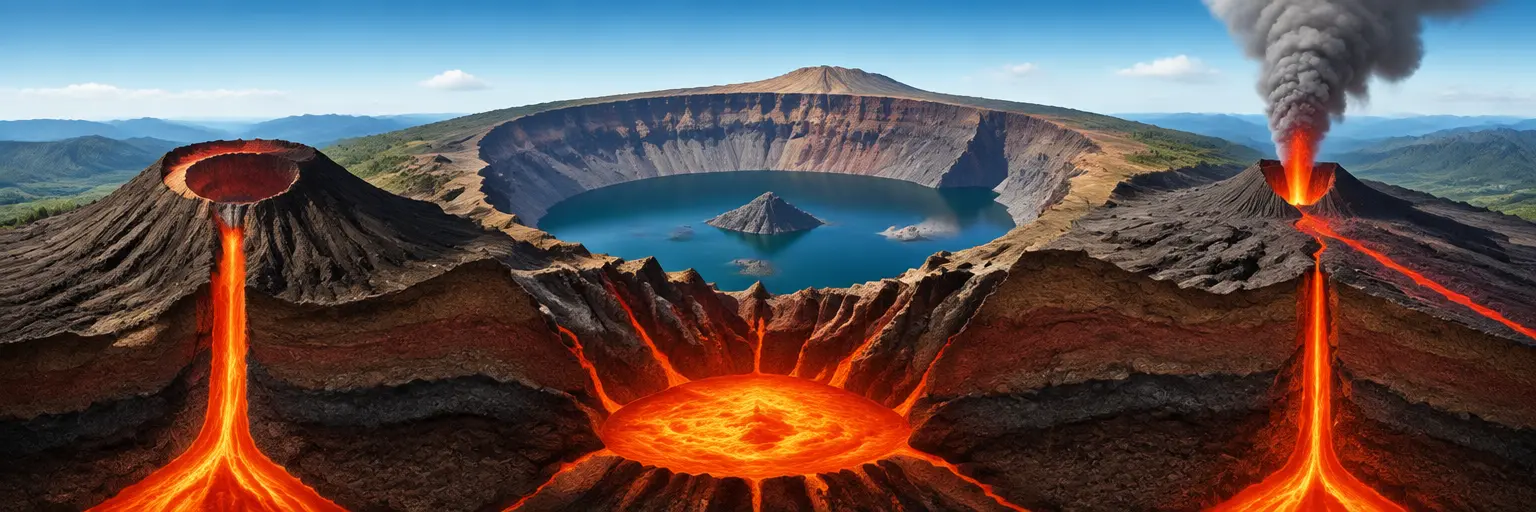
A volcanic vent is the surface opening through which volcanic material—magma, gases, and ash—escapes from the Earth’s crust. Think of it as the “exhaust pipe” of a volcano. Vents can be a single, central pipe (a conduit) or a series of fissures—long, linear cracks that allow lava to ooze out along a fracture zone. Understanding vents is crucial because their location and shape directly influence the type of eruption, from gentle Hawaiian-style flows to violent, explosive blasts.
At VolcanoExplorers.org, we explain how vents are not static. They can be born on the flanks of a larger volcano (flank vents), creating parasitic cones, or they can be buried and re-opened over time. Key takeaway: the vent is the most direct connection to the magma chamber below. By studying vent morphology, geologists can predict eruption intensity and lava flow direction, vital information for hazard mapping and keeping nearby communities safe.
🏞️ Calderas: Giant Collapses, Not Just Craters
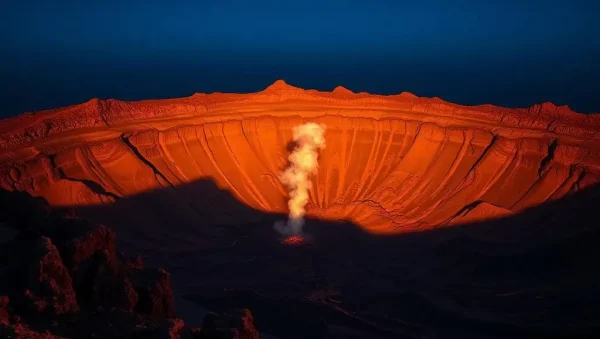
Calderas are the giants of volcanic depressions, often exceeding one mile in diameter. They form not from the top of a cone being blasted off, but from the ground collapsing into a now-emptied magma chamber beneath the surface. This happens after a massive, catastrophic eruption evacuates vast quantities of magma, leaving a void that the overlying rock can no longer support. The resulting collapse creates a flat-bottomed, steep-walled basin that can be spectacularly large, like Yellowstone’s caldera which spans 30 by 45 miles.
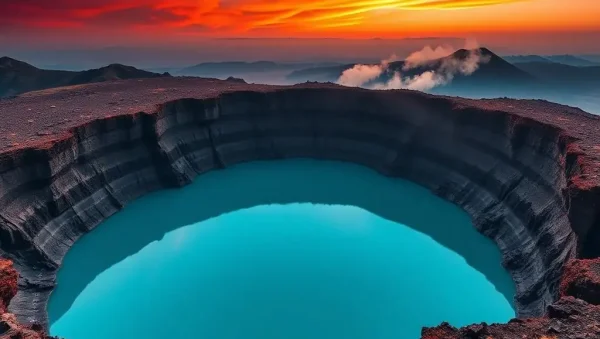
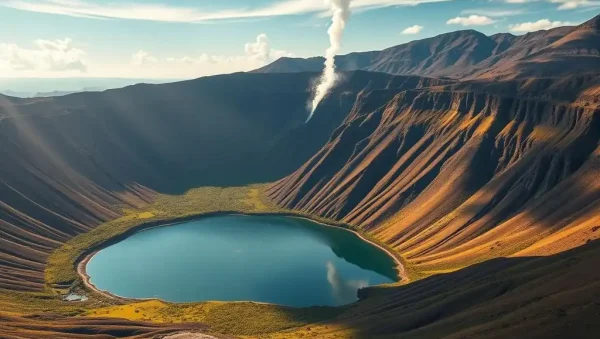
For the enthusiast, calderas are a testament to the sheer scale of Earth’s power. They are often misidentified as simple craters, but their formation mechanism is entirely different. Over time, these basins frequently fill with water, forming serene lakes that mask their violent birth. In this section, we explore famous examples like Crater Lake in Oregon and Indonesia’s Toba, helping you visualize the post-eruptive landscape and understand why calderas are often the sites of abundant geothermal activity and renewed volcanic hazard.
🕳️ Crater vs. Caldera: The Essential Differences
While casual observers use the terms interchangeably, geologists distinguish them primarily by size and formation. A crater is a smaller, bowl-shaped depression, usually less than a mile across, that forms at the summit of a volcano from explosive excavation or the collapse of a volcanic cone’s top. In contrast, a caldera is vastly larger and results from the collapse of the entire volcanic edifice into an emptied magma chamber. Critical distinction: a crater is a feature of a volcano’s summit, while a caldera essentially becomes a new, larger volcano structure itself.
Understanding this difference is key to interpreting volcanic history. For example, when you see a classic steep-sided stratovolcano like Fuji, the small dip at the top is a crater. When you see a wide, flat expanse with hills around the edge, you are looking at a caldera. Our guides at VolcanoExplorers.org will train your eye to spot these features instantly, whether you are looking at a geological map, a satellite image, or standing on the rim itself, making your volcanic adventures far more rewarding.
🔥 How These Structures Influence Eruption Styles
The geometry of vents, craters, and calderas directly controls the behavior of an eruption. A narrow, central vent with a high gas pressure leads to violent, columnar eruptions that send ash high into the stratosphere. Conversely, a wide fissure vent releases lava in a less explosive, more fluid manner, creating vast lava fields. When a caldera has already formed, subsequent eruptions often occur inside it along ring fractures, creating newer craters and cinder cones within the vast depression—a process called resurgent doming.
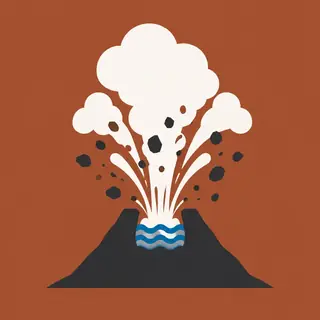
Heat and water interaction also play a role. If a crater sits atop a hydrothermal system, you get phreatic explosions—steam-driven blasts that can occur even without fresh magma. By studying these structural controls, volcanologists can better forecast not just the likelihood of an eruption, but its *style*. For residents and travelers, knowing whether they are near a vent, a scoria cone, or an active caldera floor changes the risk assessment dramatically. This knowledge is the foundation of modern volcanic hazard mitigation.
🌍 Famous Examples: From Vesuvius to Santorini
Nothing cements knowledge like real-world cases. We take a virtual tour of iconic structures: Vesuvius in Italy, a classic stratovolcano with a summit crater that has filled and degassed over centuries; Santorini (Thera) in Greece, a stunning caldera that obliterated a Minoan civilization in the Bronze Age; and Mauna Loa in Hawaii, which boasts both a summit caldera and radial rift-zone vents. These examples showcase the variety of volcanic architecture on our planet.
Each location offers a unique lesson in geology and human resilience. At Santorini, the caldera walls expose ancient layers, letting you walk through 100,000 years of eruption history. At Nyiragongo in the DRC, you can peer into the world’s largest active lava lake, visible from the crater rim. These stories are not just about rocks; they are about the interplay between human civilization and volatile landscapes. VolcanoExplorers.org connects the solid science with the breathtaking visual splendor, preparing you for virtual or physical explorations.
🔍 How to Identify These Features in the Field & From Photos
Becoming a skilled observer starts with knowing what to look for. In the field, check for steep, concave walls (crater) versus a broad, gentle slope interrupted by a flat floor (caldera). Look for linear cracks in the ground that suggest fissure vents, and look for spatter cones—small mounds built by ejected blobs of lava around a vent. On a topographic map, calderas appear as large, oval depressions with multiple high points on the rim, while craters are small, circular contour islands near the peak.
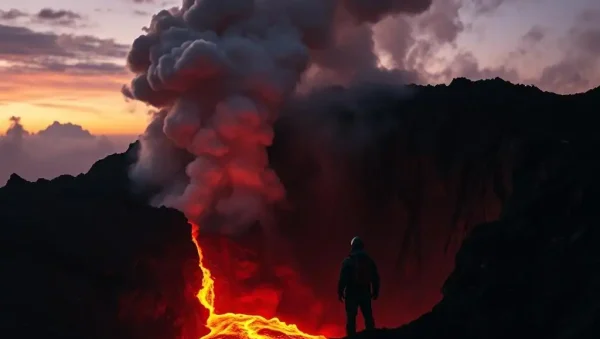
From photographs, pay attention to scale. If you see people in a photo, their size relative to the depression tells you instantly if it’s a crater or a caldera. Pro tip: the presence of a lake in the depression usually points to a caldera, as they are large and deep enough to accumulate groundwater. Our downloadable checklists and photo galleries teach this skill efficiently. By the end of your session, you will be able to confidently classify any volcanic structure, impressing friends at your next geology gathering or simply deepening your personal appreciation for Earth’s dynamic surface.
Frequently Asked Questions
Can a crater become a caldera over time?
Yes, but through significant events. A normal summit crater cannot simply grow into a caldera by erosion alone. It requires a massive eruption that empties the underlying magma chamber, causing the entire volcanic edifice or a large block of it to collapse downward, eclipsing the original crater in size and depth.
What is the difference between a fissure vent and a central vent?
A central vent is a single pipe-like conduit at the volcano’s summit, usually producing a conical mountain. A fissure vent is a linear, crack-like fracture in the ground that can be miles long, often found on a volcano’s flanks or in volcanic plains, releasing lava along the entire crack rather than one point.
Are all calderas dangerous to visit?
Not inherently, but they do carry unique risks. The flat floors of calderas may be stable, but gas emissions, sudden steam explosions, and unstable steep walls are hazard. However, popular destinations like Crater Lake or Santorini are intensely monitored and generally safe if visitors stick to designated trails and respect closures.
What is a tuff ring, and how does it relate to craters?
A tuff ring is a low, broad crater rim formed when magma erupts explosively through groundwater or shallow surface water, creating a wide, shallow crater surrounded by layered rock called tuff. It’s a type of maar crater, not a caldera, and indicates a wet, phreatomagmatic eruption.
Why do some craters have a lake inside, and others are dry?
Crater lakes form when precipitation accumulates faster than water can drain or evaporate, and when the crater floor is impermeable enough to hold water. Active volcanic heat can also keep some craters dry by boiling water away or keeping the ground too hot for condensation to pool.