
The Mystery of Maar Craters: Explosions Without Mountains

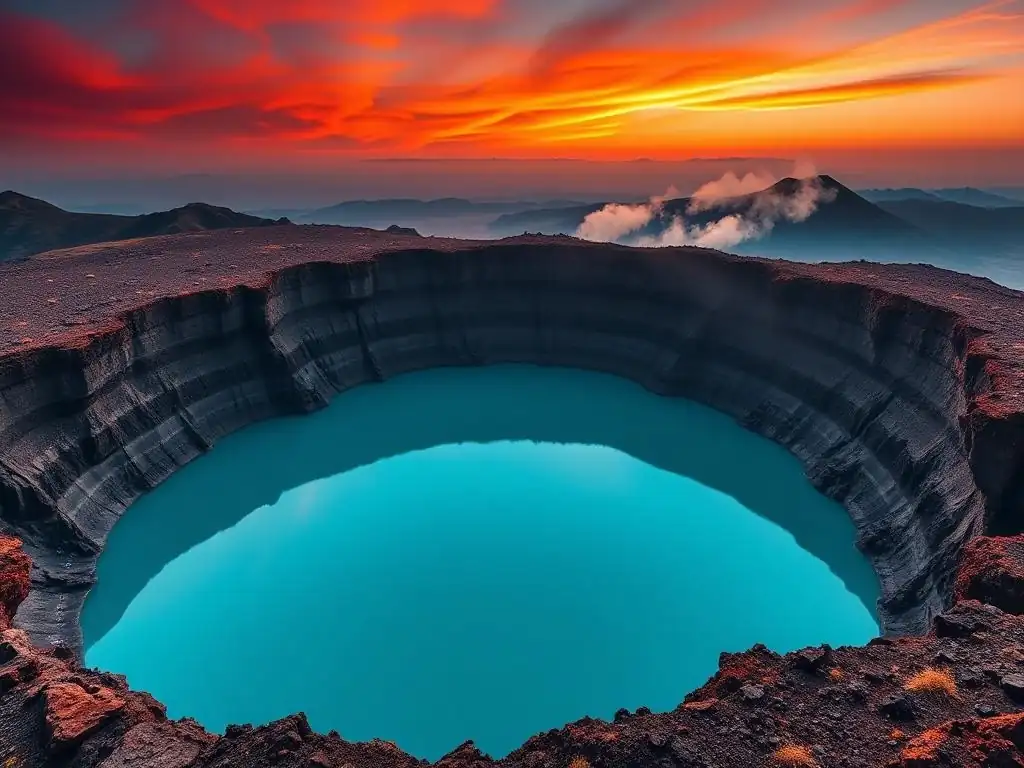
Welcome to Volcano Explorers, where we chase the fiery heart of our planet! Have you ever wondered how a lake can form in the middle of a volcanic field... without a towering cone in sight? Prepare to unravel the enigma of maar craters formation and features – explosive remnants that challenge everything you thought you knew about volcanoes. Dive in, and discover the hidden forces that shape these fascinating geological wonders. The secrets are waiting to be unearthed...
- The Formation and Significance of Maar Craters
- Introduction to Maar Craters
- Formation Process of Maar Craters
- Identifying Features of Maar Craters
- Notable Examples of Maar Craters
- Distinguishing Maar Craters from Other Craters
- The Science of Phreatomagmatic Eruptions
- Significance of Studying Maar Craters
- Conclusion: Unveiling Maar Crater Mysteries
-
Frequently Asked Questions
- What exactly are maar craters and how are they formed?
- How are maar craters different from other types of volcanic craters?
- What are some common features found in and around maar craters?
- Are maar craters considered dangerous, and why or why not?
- Where can I find examples of maar craters around the world, and what makes them interesting?
- Final Reflection: Echoes of Ancient Fire
The Formation and Significance of Maar Craters
Introduction to Maar Craters
Definition of Maar Craters
Maar craters are distinctive volcanic landforms characterized by their broad, low-relief profiles and often containing crater lakes. Unlike stratovolcanoes or shield volcanoes that build towering cones through successive lava flows and ash deposits, maar craters are formed by explosive eruptions that excavate a wide, bowl-shaped depression in the Earth's surface.
These eruptions, known as phreatomagmatic eruptions, are driven by the interaction of magma with groundwater or surface water. The term "maar" itself originates from the local dialect of the Eifel region in Germany, where these features are particularly well-preserved and studied, highlighting their geological significance and the historical recognition of this unique volcanic structure.
Characteristics of Maar Craters
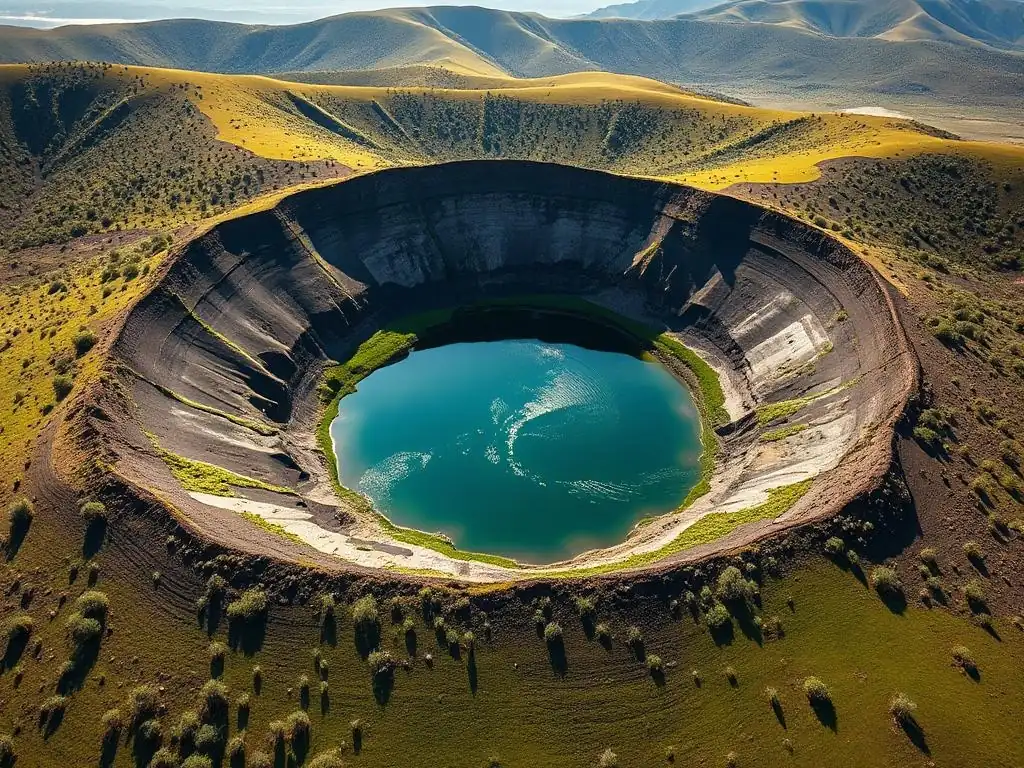
Maar craters exhibit several defining characteristics that set them apart from other volcanic features. Typically, they are circular to elliptical depressions, often quite wide—ranging from a few hundred meters to several kilometers in diameter—but relatively shallow in depth. The surrounding terrain is usually flat or gently sloping, with a low rim composed of fragmented volcanic debris, called a tuff ring, which is ejected during the explosive eruption.
A key feature is the absence of a prominent volcanic cone; the explosive energy is directed outwards and upwards, rather than building a significant edifice. Many maar craters host lakes, known as maar lakes, which form in the depression after the eruption ceases, further contributing to their unique landscape and ecological importance. The relatively gentle slopes and surrounding low-lying ejecta make them appear as subtle yet significant features in the volcanic landscape.
Formation Process of Maar Craters
Magma Intrusion
The genesis of a maar crater begins with the ascent of magma from deep within the Earth's crust towards the surface. This magma, molten rock containing dissolved gases, rises due to its lower density compared to the surrounding solid rocks. As the magma nears the surface, it may encounter aquifers or bodies of groundwater.
The depth and nature of this magma intrusion are critical factors in determining the type of volcanic eruption that will occur. In the case of maar craters, the magma doesn't necessarily reach the surface directly to effuse as lava; instead, it acts as a heat source to trigger a powerful steam explosion when it interacts with water. This subsurface interaction is what fundamentally differentiates the formation of maar craters from other types of volcanic craters.
Groundwater Interaction and Phreatomagmatic Eruption
The crucial step in maar crater formation is the violent interaction between the intruding magma and groundwater. When hot magma encounters water, whether it's groundwater, lake water, or even seawater, it rapidly heats the water far beyond its boiling point. This superheating causes instantaneous vaporization, leading to a dramatic and explosive expansion of steam.
The efficiency of this heat transfer from magma to water is incredibly high, resulting in a rapid build-up of pressure. This type of eruption is termed a phreatomagmatic eruption, emphasizing the involvement of both water (phreato) and magma. The intensity of the explosion depends on factors like the depth and volume of water, the temperature and composition of the magma, and the confining pressure of the surrounding rocks.
Crater Formation and Ejecta Deposition
The immense pressure generated by the superheated steam and expanding gases overcomes the strength of the overlying rocks, leading to a powerful explosion. This explosion excavates a large, bowl-shaped cavity in the ground – the maar crater itself. The explosive force shatters the surrounding rocks and propels a mixture of steam, volcanic gases, fragmented magma (pyroclasts), and pulverized country rock outwards and upwards.
This ejecta is deposited around the newly formed crater, creating a low-lying rim known as the tuff ring. The size and shape of the crater and the characteristics of the ejecta are influenced by the energy of the explosion, the depth of the water table, and the geological properties of the area. The process is often relatively rapid, potentially occurring within hours or days for smaller maars.
Formation of Tuff Ring
The tuff ring surrounding a maar crater is formed from the ejecta of the phreatomagmatic eruption. This ring is typically composed of poorly consolidated volcanic ash, lapilli (small rock fragments), and bombs (larger ejected blocks), along with fragments of pre-existing rocks from the surrounding area. The deposition pattern of the tuff ring is often asymmetrical, influenced by wind direction during the eruption and the topography of the surrounding landscape.
The thickness of the tuff ring is usually greatest near the crater rim and gradually thins outwards. Analyzing the composition and structure of the tuff ring provides valuable insights into the nature of the eruption, the materials involved, and the geological history of the region. For instance, the presence of specific rock fragments within the tuff ring can indicate the depth and geological layers through which the eruption occurred.
Identifying Features of Maar Craters
Circular Depression and Low Relief
One of the most distinctive identifying features of maar craters is their circular or near-circular depression. This basin-like shape is a direct result of the explosive excavation process that forms them. Unlike volcanic cones that rise above the landscape, maar craters are depressions set into the surrounding terrain, often appearing as significant hollows in otherwise relatively flat areas.
Furthermore, maar craters are characterized by their low relief. This means that the height difference between the crater rim and the surrounding land is typically small, often just a few tens of meters, and the overall profile is subdued compared to the steep slopes of stratovolcanoes or the broad shields of shield volcanoes. This low-relief characteristic can make them less visually imposing than other volcanic landforms, yet their size and circular shape are key identifiers.
Tuff Ring Composition and Structure
The tuff ring surrounding a maar crater is another critical identifying feature. As previously mentioned, it is composed of pyroclastic material – fragments of volcanic rock, ash, and debris ejected during the eruption. The composition of the tuff ring is heterogeneous, reflecting the mix of materials excavated from depth and those derived from the magma itself.
Examining the structure of the tuff ring often reveals layering, indicative of different phases of the eruption or variations in ejecta deposition. The grain size distribution within the tuff ring can also vary, with coarser material typically found closer to the crater rim and finer ash further away. Analyzing the components and structure of the tuff ring is crucial for confirming a maar crater's volcanic origin and understanding the dynamics of its formation.
Presence or Absence of Crater Lake
Many, but not all, maar craters are occupied by crater lakes. These lakes form in the depression after the eruption has ceased and groundwater or surface runoff accumulates within the basin. The presence of a maar lake is a strong indicator of a maar crater, especially because the relatively impermeable nature of the crater floor, often lined with fine ash and altered volcanic material, can help to retain water.
However, it's important to note that not all maar craters contain lakes. Some may be dry due to local hydrological conditions, infilling with sediment over time, or subsequent erosion. Therefore, while a crater lake is a common and visually striking feature of many maar craters, its absence does not necessarily rule out the identification of a landform as a maar.
Notable Examples of Maar Craters
Eifel Region, Germany
The Eifel region in western Germany is renowned for its concentration of well-preserved maar craters, serving as the type locality for these volcanic features. This area boasts approximately 70 maars, many of which are now scenic lakes, such as the Pulvermaar and the Laacher See. The Eifel maars formed during Quaternary volcanic activity, with eruptions occurring from about 700,000 to 10,000 years ago.
The region's geological history and relatively young age of the maars have contributed to their excellent preservation, making them a crucial site for studying maar craters formation and features. The Eifel maars provide valuable insights into phreatomagmatic processes and have been extensively researched, contributing significantly to our understanding of these volcanic landforms.
Alaska, USA
Alaska, with its active volcanic regions, is home to numerous maar craters, particularly in areas where volcanic activity interacts with abundant water sources, such as glacial meltwater and lakes. Examples include maars found within the Aniakchak National Monument and Preserve, and in the Seward Peninsula region. The Alaskan maars are diverse in age and size, reflecting the complex geological history of the region and the varied conditions under which they formed.
Studying Alaskan maar craters provides opportunities to investigate phreatomagmatic volcanism in different geological settings, including those influenced by glacial environments. The remote and often challenging terrain of Alaska also makes these maars less disturbed by human activity, offering relatively pristine examples for scientific study.
Zuni Salt Lake, New Mexico, USA
Zuni Salt Lake in New Mexico is a prominent and well-studied example of a dry maar crater in a semi-arid environment. Unlike the lake-filled maars of the Eifel or Alaska, Zuni Salt Lake is a saline playa (salt flat) occupying a large maar crater. This maar formed approximately 17,000 years ago during a phreatomagmatic eruption.
The absence of a persistent lake is attributed to the arid climate and high evaporation rates in the region. Zuni Salt Lake maar is notable for its exceptionally well-preserved tuff ring and the evidence it provides about the interaction of magma with shallow aquifers in a desert environment. The site is also significant culturally and historically, with evidence of salt extraction by indigenous peoples for centuries.
Distinguishing Maar Craters from Other Craters
Maar Craters vs. Calderas
While both maar craters and calderas are volcanic depressions, they form through fundamentally different processes. Calderas are large, basin-shaped depressions formed by the collapse of a volcano's magma chamber after a massive eruption of magma. They are typically much larger than maar craters, often tens of kilometers in diameter, and are associated with large stratovolcanoes or shield volcanoes.
In contrast, maar craters are relatively small, formed by explosive steam eruptions due to magma-water interaction, and do not involve the emptying of a large magma chamber leading to collapse. Calderas are characterized by their association with major volcanic edifices and effusive eruptions, while maar craters are defined by their phreatomagmatic origin and lack of a significant volcanic cone.
Maar Craters vs. Impact Craters
Distinguishing maar craters from impact craters, formed by meteorite or asteroid impacts, is crucial in planetary geology. Impact craters are also circular depressions, but they are created by the hypervelocity impact of an extraterrestrial object. Geological evidence can help differentiate them.
Impact craters often exhibit features like central peaks, uplifted rims, and evidence of shock metamorphism in the rocks, such as shatter cones and planar deformation features in minerals. Maar craters, conversely, show volcanic ejecta (tuff rings), lack central peaks formed by rebound, and do not display shock metamorphic features indicative of hypervelocity impact. The geological context and the types of rocks and structures associated with each type of crater provide diagnostic clues for their origin.
Maar Craters vs. Tuff Cones
Tuff cones, also known as cinder cones or scoria cones, are another type of volcanic cone built from pyroclastic material. However, they are distinct from maar craters and tuff rings in their formation and morphology. Tuff cones are formed by Strombolian or Vulcanian eruptions, which are driven by gas release from magma, not necessarily involving external water.
They are cone-shaped hills with a central crater at the summit, built up by the accumulation of pyroclastic material around the vent. In contrast, maar craters are depressions, and their tuff rings are low-lying rims surrounding the excavated crater. Tuff cones represent constructive volcanic landforms built upwards, while maar craters are primarily excavations into the pre-existing landscape with relatively low-profile ejecta rims.
The Science of Phreatomagmatic Eruptions
Role of Water-Magma Interaction
The core of phreatomagmatic eruption science lies in understanding the intricate interaction between magma and water. This interaction is not simply about magma heating water to boiling; it's a complex process involving rapid heat transfer, phase changes, and explosive expansion. The efficiency of heat transfer from magma to water in phreatomagmatic eruptions is remarkably high compared to other heat transfer scenarios.
This rapid transfer leads to the formation of a vapor film around the magma, which can then collapse, causing rapid mixing and even more efficient heat transfer, leading to explosive vaporization. The ratio of water to magma, the depth of interaction, and the confining pressure all play crucial roles in dictating the style and intensity of the phreatomagmatic eruption.
Energy Release and Explosion Dynamics
Phreatomagmatic eruptions are characterized by their explosive energy release, which is driven by the rapid expansion of steam. The energy released in these explosions is a combination of thermal energy from the magma and the energy of phase change as water turns to steam. The explosion dynamics involve complex shock waves, fragmentation of both magma and surrounding rocks, and the ejection of pyroclastic material at high velocities.
The morphology of maar craters and the characteristics of their tuff rings reflect the nature of these explosion dynamics. Scientists use experimental studies, numerical modeling, and field observations to further understand the physics of phreatomagmatic explosions, including factors controlling fragmentation efficiency and ejecta dispersal.
Factors Influencing Eruption Style
Several factors influence the style and intensity of phreatomagmatic eruptions, leading to variations in maar crater morphology and ejecta characteristics. The water-to-magma ratio is a primary control; too little water may not generate a significant explosion, while excessive water might quench the magma and suppress explosivity. The depth of water interaction is also crucial; shallower interactions tend to produce more dispersed ejecta, while deeper interactions may lead to more focused explosions.
Magma properties, such as viscosity and gas content, and the geological properties of the surrounding rocks, including their strength and permeability, also play significant roles in shaping the eruption style and the resulting maar crater. Understanding these factors is essential for assessing volcanic hazards associated with phreatomagmatic eruptions.
Significance of Studying Maar Craters
Indicators of Past Volcanic Activity and Hydrological Conditions
Maar craters serve as valuable geological archives, providing insights into past volcanic activity and hydrological conditions of a region. The presence of maar craters indicates past phreatomagmatic volcanism, which can be related to broader volcanic episodes in a region. The characteristics of the tuff rings, including their composition and the types of rocks they contain, can reveal information about the subsurface geology and the depth of magma-water interaction during past eruptions.
Furthermore, the presence or absence of maar lakes, and the sediments within them, can provide records of past climate and hydrological changes. Studying maar craters thus contributes to reconstructing the volcanic and environmental history of an area.
Assessment of Volcanic Hazards
Understanding maar craters is crucial for volcanic hazard assessment, especially in regions where phreatomagmatic volcanism is a potential threat. Although maar-forming eruptions are typically not as large as caldera-forming eruptions, they can still be hazardous due to their explosive nature, the ejection of ballistic projectiles, and the generation of base surges – ground-hugging clouds of hot gas and ash that can extend several kilometers from the crater.
Identifying and characterizing maar craters in a volcanic region helps to delineate potential eruption sites and assess the areas that could be affected by future phreatomagmatic activity. This information is vital for land-use planning, infrastructure development, and emergency preparedness in volcanically active zones.
Understanding Volcanic Processes
The study of maar craters provides a unique window into the fundamental processes of magma-water interaction and phreatomagmatic volcanism. Maar craters represent a distinct type of volcanic eruption mechanism, different from purely magmatic eruptions that build cones through lava flows and tephra fall.
Investigating the formation, morphology, and ejecta characteristics of maar craters helps to refine our understanding of the physics and chemistry of explosive volcanism. This knowledge is not only relevant to Earth science but also has implications for understanding volcanic processes on other planets and moons in our solar system where water and volcanic activity may have co-existed.
Conclusion: Unveiling Maar Crater Mysteries
Maar craters, seemingly simple depressions in the landscape, are in fact complex volcanic features born from powerful phreatomagmatic explosions. Their formation, driven by the dramatic interaction of magma and water, reveals a fascinating aspect of volcanic activity that contrasts with the more commonly recognized cone-building volcanoes. From the classic examples in the Eifel region to those scattered across Alaska and New Mexico, each maar crater tells a story of explosive energy and geological forces at play.
By studying maar craters formation and features, scientists continue to unravel the mysteries of these “explosions without mountains,” gaining deeper insights into volcanic processes, assessing hazards, and understanding the dynamic interplay between Earth's molten interior and its hydrosphere. These subtle yet significant volcanic landforms offer invaluable clues to the Earth's past, present, and future volcanic landscape.
Frequently Asked Questions
What exactly are maar craters and how are they formed?
Maar craters are volcanic craters formed by explosive eruptions when magma interacts with groundwater. This interaction creates steam explosions that excavate a wide, shallow crater.
How are maar craters different from other types of volcanic craters?
Unlike stratovolcanoes or shield volcanoes, maar craters lack a prominent volcanic cone or mountain. They are typically broad, shallow depressions surrounded by a low ring of ejected material.
What are some common features found in and around maar craters?
Common features include a wide, shallow crater, often filled with water forming a lake. Surrounding the crater, you might find a low tuff ring composed of fragmented volcanic rock and ash.
Are maar craters considered dangerous, and why or why not?
While the initial eruption forming a maar crater is violent, maar craters themselves are generally not considered highly dangerous after formation. However, the area can still be susceptible to gas emissions or future eruptions if the magma source remains active.
Where can I find examples of maar craters around the world, and what makes them interesting?
Maar craters can be found in various locations worldwide, like Germany's Eifel region or the Alaska Peninsula. They are interesting because they provide insights into shallow volcanic processes and often host unique ecosystems in their crater lakes.
Final Reflection: Echoes of Ancient Fire
The exploration of maar craters, as we've seen, reveals a fascinating interplay between volcanic power and geological artistry. The absence of towering peaks, replaced by subtle depressions, speaks volumes about the diverse expressions of Earth's inner forces, and their ongoing impact on our planet's surface. Understanding these unique formations is not just an academic exercise; it's a crucial step in deciphering the broader story of volcanism and its potential hazards.
The subtle beauty and explosive origins of maar craters serve as a constant reminder of the dynamic forces shaping our world. This exploration has deepened my appreciation for the hidden stories etched into the landscape, stories of sudden eruptions and the quiet aftermath. The earth has music for those who listen.
- William Shakespeare. This quote resonates deeply, as the study of maar craters is, in essence, listening to the earth's geological symphony, a symphony composed of fire, water, and time.
As we conclude this journey into the depths of maar craters, I invite you to reflect on the power and fragility of our planet. Consider the lessons these formations hold – lessons about the unpredictable nature of Earth's processes and the importance of understanding and respecting its forces. Let the mystery of maar craters inspire you to look closer at the world around you, to appreciate the hidden stories in every landscape, and to champion responsible stewardship of our planet's resources.
Unravel the enigma of maar craters—explosive volcanic events that leave behind surprisingly flat landscapes. Learn how these unique geological formations defy the typical image of a volcanic eruption, and discover the fascinating science behind their creation. Explore the mysteries of these hidden wonders and gain a deeper understanding of Earth's dynamic processes. Dive into the world of maar craters now!