
The Formation of Calderas: A Story of Magma and Collapse

Welcome to Volcano Explorers, where the Earth breathes fire and molten rock paints the landscape. Ever wondered about the colossal scars etched onto our planet, those vast volcanic depressions known as calderas? Prepare to journey into the heart of volcanic science as we unravel the mysteries of how calderas are formed. But be warned: understanding their creation is only the beginning. What lies beneath… might surprise you. Dare to explore?
- Understanding Calderas: Volcanic Depressions Explained
- The Magmatic Engine: How Magma Plays a Role in Caldera Development
-
The Mechanics of Collapse: Stages of Caldera Formation
- Stage 1: Build-up to Eruption - Increasing seismicity, ground deformation, and gas emissions
- Stage 2: The Cataclysmic Eruption - Understanding Explosive Volcanism
- Stage 3: Roof Collapse - How Calderas Form Through Subsidence
- Stage 4: Post-Collapse Activity - Resurgence, lake formation, and hydrothermal activity
- Types of Calderas: Exploring Different Formation Mechanisms
- Notable Calderas Around the World: Case Studies
- Factors Influencing Caldera Size and Shape
- Calderas and Volcanic Hazards: Understanding the Risks
- The Geological Significance of Calderas: What They Tell Us About Earth's Interior
- Frequently Asked Questions
- Final Reflection: Echoes of Ancient Eruptions
- Unearth Your Inner Volcanologist!
Understanding Calderas: Volcanic Depressions Explained
What is a Caldera? Defining Caldera Structures
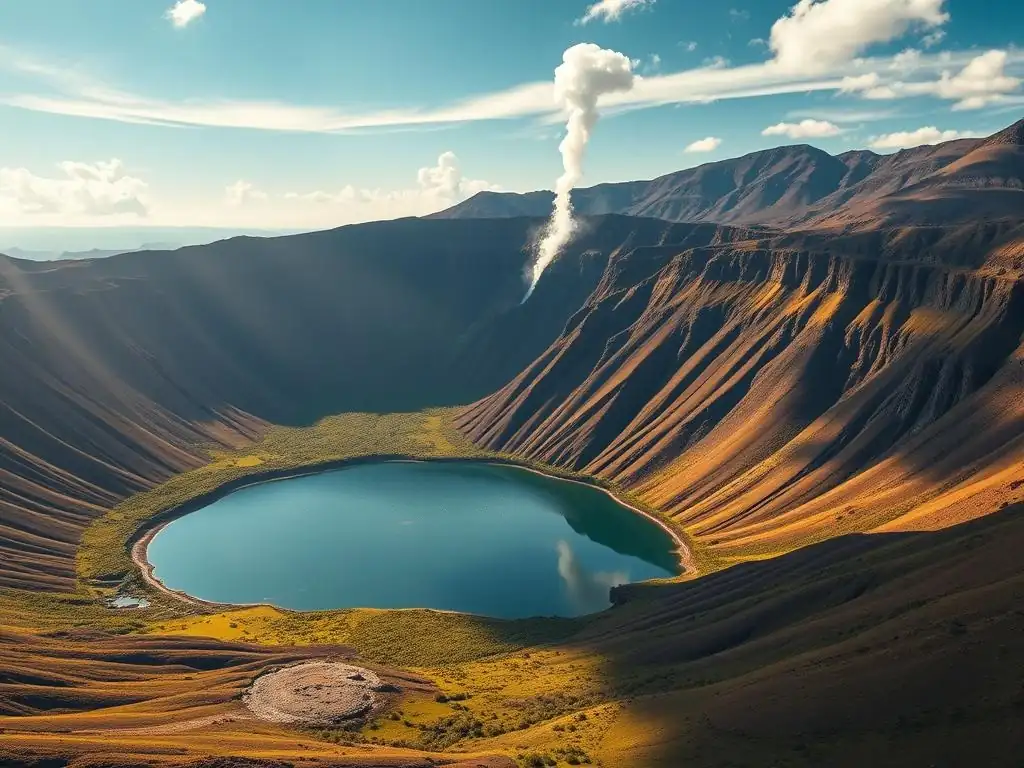
A caldera is a large, basin-shaped volcanic depression formed by the collapse of land after a magma chamber is emptied during a volcanic eruption. Often mistaken for craters, which are formed by impact or explosive ejection of material, calderas are significantly larger and are a direct result of the ground surface subsiding into the space vacated by evacuated magma.
These impressive geological features can span many kilometers in diameter, dwarfing typical volcanic craters and sometimes hosting lakes, resurgent domes, and hydrothermal systems within their boundaries. The term "caldera" itself originates from the Spanish word for "cauldron," aptly describing the large, bowl-like shape of these volcanic depressions.
Calderas are distinct geological features that provide valuable insights into the volcanic processes occurring beneath the Earth's surface. Unlike craters, which are typically found at the summit of a volcano and are directly related to the vent of eruption, calderas represent a much broader and deeper structural change. They are not simply holes blown out by eruptions, but rather the surface expression of a major emptying event in the magma chamber below.
This process of collapse can occur rapidly during a single massive eruption or gradually over multiple eruptive episodes. Understanding calderas is crucial for volcanologists as they represent some of the most powerful and potentially hazardous volcanic systems on Earth.
Calderas vs. Craters: Differentiating Volcanic Landforms
While both calderas and craters are depressions in the Earth's surface associated with volcanic activity, they are fundamentally different in their formation, size, and significance. Craters are typically smaller, bowl-shaped depressions formed either by the explosive ejection of material during an eruption or by the impact of meteorites. Volcanic craters are usually located at the summit of a volcano and are directly connected to the volcanic conduit, acting as the vent from which lava and ash are erupted. They are relatively shallow and their size is directly related to the force and duration of the eruption that created them.
In contrast, calderas are much larger, often tens of kilometers in diameter, and are formed by the inward collapse of the ground surface following the evacuation of a large volume of magma from a subsurface magma chamber. This collapse is not an explosive process itself, but rather a gravitational adjustment to the removal of support beneath the surface. Calderas are significantly deeper and wider than craters and are not necessarily located at the summit of a volcanic edifice.
They can form on shield volcanoes, stratovolcanoes, or even in relatively flat volcanic fields. The sheer scale of calderas and their formation mechanism distinguish them as features of a different magnitude compared to volcanic craters, reflecting much larger and more impactful volcanic events.
The Magmatic Engine: How Magma Plays a Role in Caldera Development
Magma Chamber Formation: The Source of Caldera-Forming Eruptions
The formation of a caldera is inextricably linked to the presence and behavior of a large magma chamber beneath the volcano. Magma chambers are vast reservoirs of molten rock located within the Earth's crust. They form over long periods as magma, generated by the partial melting of the mantle, rises and accumulates at shallower depths.
The size and depth of these magma chambers are crucial factors in determining the potential for caldera-forming eruptions. Large magma chambers, capable of storing massive volumes of magma, are the engines that drive the most explosive and caldera-generating volcanic events. These chambers can be located several kilometers below the surface and can be tens of kilometers in diameter themselves.
The processes that lead to magma chamber formation are complex and involve factors such as tectonic setting, crustal structure, and the density differences between magma and surrounding rocks. Magma tends to rise because it is less dense than the solid rock around it. As magma ascends, it may encounter layers of rock that are more resistant to its upward movement, causing it to pool and accumulate.
Over time, these accumulations can grow into substantial magma chambers. The pressure within these chambers builds up as more magma is injected, and the surrounding rocks are subjected to increasing stress. This pressure buildup is a critical precursor to caldera-forming eruptions, as the eventual release of this pressure is what drives the explosive emptying of the chamber and subsequent collapse.
Magma Composition and Caldera Eruption Style
The composition of magma plays a crucial role in determining the style of volcanic eruption and the likelihood of caldera formation. Magmas rich in silica (SiO2), such as rhyolites and dacites, are generally more viscous than low-silica magmas like basalt. This higher viscosity means that gas bubbles, which are dissolved in magma at depth, have difficulty escaping as the magma rises towards the surface. The trapped gas pressure builds up within the viscous magma, leading to highly explosive eruptions. These explosive eruptions are the primary mechanism by which magma chambers are rapidly emptied, setting the stage for caldera collapse.
Conversely, basaltic magmas, with their lower silica content and lower viscosity, tend to produce effusive eruptions, characterized by lava flows and fountains. While basaltic volcanoes can also form calderas, the mechanisms are often different, and they are typically associated with the drainage of magma chambers through lateral eruptions or dike intrusions, leading to a more gradual subsidence.
Caldera-forming eruptions are most commonly associated with highly evolved, silica-rich magmas due to their explosive potential. The explosivity is further enhanced by the presence of water in the magma, which can lead to even more violent phreatomagmatic eruptions, further contributing to the emptying of the magma chamber and the formation of large calderas.
The Mechanics of Collapse: Stages of Caldera Formation
Stage 1: Build-up to Eruption - Increasing seismicity, ground deformation, and gas emissions
The formation of a caldera is not an instantaneous event but rather a process that unfolds over time, often beginning with a period of unrest that signals the impending eruption. Stage 1, the build-up phase, is characterized by increasing seismicity, ground deformation, and changes in gas emissions around the volcano. As magma rises and pressure within the magma chamber increases, the surrounding rocks experience stress, leading to an increase in the frequency and intensity of earthquakes. These earthquakes are often shallow and can be felt by local populations, serving as an early warning sign of potential volcanic activity.
Ground deformation is another key indicator of magma movement. As magma accumulates in the chamber, the ground surface above can bulge or inflate, sometimes by several centimeters or even meters. This deformation is measured using techniques like GPS and satellite interferometry.
Changes in gas emissions, particularly increases in sulfur dioxide (SO2) and carbon dioxide (CO2) concentrations, also signal that magma is rising and degassing. Monitoring these precursory signs is crucial for volcano observatories to assess the likelihood of an eruption and to provide timely warnings to communities at risk. The intensity and duration of this build-up phase can vary greatly, ranging from weeks to months or even years before a caldera-forming eruption occurs.
Stage 2: The Cataclysmic Eruption - Understanding Explosive Volcanism
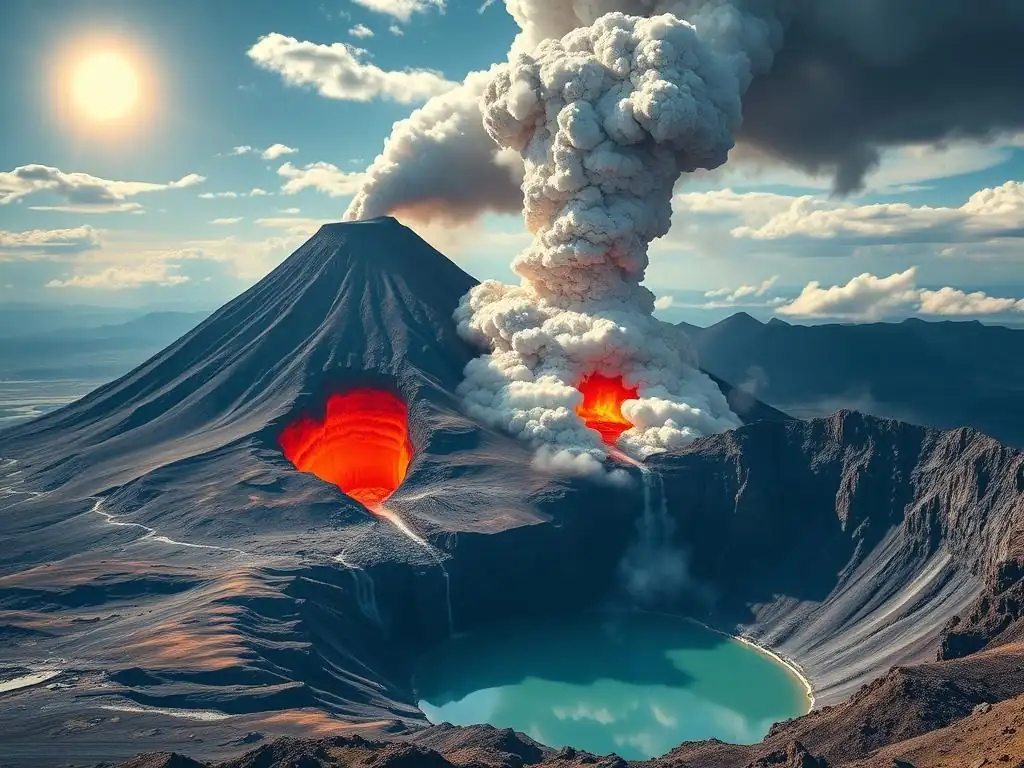
Stage 2 marks the climax of caldera formation: the cataclysmic eruption. This phase is characterized by incredibly powerful explosive volcanism, driven by the rapid decompression of gas-rich magma. As the pressure within the magma chamber exceeds the strength of the overlying rocks, a fracture propagates to the surface, initiating the eruption.
The sudden release of pressure causes the dissolved gases in the magma to exsolve and expand violently, fragmenting the magma into ash, pumice, and volcanic gases. This mixture is ejected into the atmosphere at supersonic speeds, forming towering eruption columns that can reach tens of kilometers into the stratosphere.
These eruptions are among the most energetic geological events on Earth, capable of ejecting hundreds to thousands of cubic kilometers of volcanic material in a short period. The eruption style is typically Plinian or ultra-Plinian, characterized by sustained, high eruption columns and widespread pyroclastic flows. Pyroclastic flows are hot, fast-moving currents of gas and volcanic debris that surge down the flanks of the volcano, devastating everything in their path.
The sheer volume of material erupted during this stage is what leads to the significant emptying of the magma chamber, which is the prerequisite for the next critical stage: roof collapse. Understanding the dynamics of these explosive eruptions is crucial for assessing the hazards associated with caldera systems and for developing effective mitigation strategies.
Stage 3: Roof Collapse - How Calderas Form Through Subsidence
Stage 3 is the defining moment in caldera formation: the roof collapse. Following the massive eruption in Stage 2, a significant volume of magma has been evacuated from the magma chamber beneath the surface. This removal of magma support leads to a decrease in pressure under the overlying rocks. Unable to support its own weight, the roof of the magma chamber begins to subside or collapse inward along ring faults. These ring faults are fractures that develop around the perimeter of the emptying magma chamber, facilitating the downward movement of large blocks of crust.
The collapse is not necessarily a single, sudden event but can occur in stages, with blocks of the roof foundering along the ring faults. The size and shape of the resulting caldera are determined by the extent of the magma chamber emptying and the geometry of the ring fault system. The depth of the collapse can range from hundreds of meters to over a kilometer.
The process of roof collapse is primarily driven by gravity and is a relatively rapid geological process, often occurring over hours, days, or weeks following the main eruption. This subsidence creates the characteristic large, basin-shaped depression that defines a caldera, marking the dramatic reshaping of the volcanic landscape.
Stage 4: Post-Collapse Activity - Resurgence, lake formation, and hydrothermal activity
Stage 4 represents the period of post-collapse activity within and around the newly formed caldera. Even after the caldera-forming eruption and collapse, the volcanic system is not necessarily dormant. Often, there is continued volcanic activity within the caldera, albeit typically less explosive than the caldera-forming eruption itself. This post-collapse activity can include resurgence, the slow uplift of the caldera floor, often forming a resurgent dome in the center of the caldera. Resurgence is caused by the re-inflation of the magma chamber at depth as magma slowly replenishes the evacuated space.
Calderas frequently become sites of lake formation, as the depression can trap rainwater and snowmelt. Caldera lakes, such as Crater Lake in Oregon, USA, are often deep and scenic features. Hydrothermal activity is also common in calderas, with hot springs, fumaroles, and geysers often developing due to the residual heat from the magma chamber and the circulation of groundwater through fractured rocks within the caldera. These hydrothermal systems can be significant geothermal resources. Post-collapse activity can continue for thousands of years, with subsequent eruptions, further deformation, and ongoing hydrothermal processes shaping the long-term evolution of the caldera landscape.
Types of Calderas: Exploring Different Formation Mechanisms
Explosive Calderas: Formed by Violent Eruptions
Explosive calderas are the most commonly recognized type and are formed by the mechanism described in detail above: a massive, highly explosive eruption followed by roof collapse. These calderas are associated with silica-rich magmas and are characterized by their large size, often exceeding 15-20 km in diameter. The eruptions that create explosive calderas are among the largest and most violent volcanic events on Earth, often classified as super-eruptions. They eject enormous volumes of ash and pumice, blanketing vast areas and having significant global impacts on climate and atmospheric conditions.
Examples of explosive calderas include Yellowstone Caldera in the United States and Toba Caldera in Sumatra, Indonesia. The formation of these calderas is a relatively rapid process, with the main eruption and collapse phase occurring over a short geological timescale, although the build-up phase can be prolonged. Explosive calderas often exhibit distinct geological features such as thick deposits of ignimbrite (welded tuff formed from pyroclastic flows), extensive ashfall deposits, and prominent ring fault systems marking the boundaries of the collapsed area. Due to their potential for catastrophic eruptions, explosive calderas are closely monitored by volcanologists worldwide.
Piston Calderas: Gradual Subsidence and Block Faulting
Piston calderas, also known as trapdoor calderas, are characterized by a more gradual subsidence of a relatively coherent block of crust along steep, inward-dipping faults. Unlike explosive calderas, the formation of piston calderas is not necessarily associated with a single, extremely large explosive eruption. Instead, they may form through a series of smaller eruptions or even through non-eruptive magma withdrawal. The subsidence in piston calderas is often asymmetric, with one side of the caldera subsiding more than the other, resembling the movement of a piston or trapdoor.
The formation mechanism of piston calderas is thought to involve the drainage of magma from a shallow magma chamber, leading to a reduction in pressure and subsequent gravitational collapse. The faults that bound piston calderas are typically steeply dipping and planar, reflecting the block-like nature of the subsidence. Examples of piston calderas include some calderas in Iceland and Japan. While piston calderas may not be associated with the same magnitude of explosive eruption as explosive calderas, they still represent significant volcanic depressions and can be associated with hazards such as ground deformation, earthquakes, and smaller-scale eruptions within the caldera.
Shield Volcano Calderas: Collapse in Shield Volcanoes
Shield volcano calderas are distinct from explosive and piston calderas as they form on shield volcanoes, which are characterized by their broad, gently sloping profiles and basaltic composition. These calderas are typically smaller and shallower than explosive calderas and are formed by different mechanisms related to the unique eruptive style and magma dynamics of shield volcanoes. Shield volcano calderas often form through the drainage of magma from the summit magma reservoir, either laterally through rift zones or downwards into deeper parts of the volcanic edifice.
The collapse in shield volcano calderas can be gradual and may occur in stages, often associated with flank eruptions or dike intrusions that tap magma from the summit chamber. The caldera floors in shield volcanoes are often characterized by lava lakes, pit craters, and fumaroles, reflecting ongoing degassing and magmatic activity. Examples of shield volcano calderas include the summit calderas of Kilauea and Mauna Loa in Hawaii.
These calderas are dynamic features, constantly being reshaped by eruptions, lava flows, and further collapses. While shield volcano calderas are generally less explosive than explosive calderas, they still pose hazards related to lava flows, gas emissions, and localized explosions.
Notable Calderas Around the World: Case Studies
Yellowstone Caldera: A Supervolcano Example
Yellowstone Caldera, located in Wyoming, USA, is one of the world's most famous and extensively studied supervolcanoes. It is an explosive caldera, formed by three massive caldera-forming eruptions over the past 2.1 million years. The most recent of these, the Lava Creek eruption about 631,000 years ago, created the present-day caldera, which measures approximately 55 by 72 kilometers. Yellowstone is a prime example of how calderas are formed through catastrophic explosive eruptions and subsequent collapse. The caldera is characterized by its vast size, geothermal features including geysers and hot springs, and ongoing ground deformation and seismicity.
The Yellowstone volcanic system is driven by a large magma chamber beneath the caldera, which is responsible for the region's intense geothermal activity and potential for future eruptions. Scientists continuously monitor Yellowstone for signs of volcanic unrest, including changes in ground deformation, seismicity, and gas emissions. While another caldera-forming eruption at Yellowstone is considered a low probability in the near future, understanding its past eruptions and ongoing activity is crucial for assessing and mitigating potential volcanic hazards. Yellowstone serves as a key case study for understanding the behavior and potential impacts of supervolcanoes and explosive caldera systems.
Santorini Caldera: A History of Explosive Eruptions
Santorini Caldera, located in the Aegean Sea, Greece, is a stunningly beautiful and historically significant caldera formed by a series of explosive eruptions, most notably the Minoan eruption around 1600 BCE. This eruption, one of the largest volcanic events in human history, devastated the Minoan civilization on Santorini and may have contributed to the legend of Atlantis. The Minoan eruption created the present-day caldera, which is now partially submerged by the sea, forming a dramatic ring of islands around a central lagoon.
Santorini's caldera is a classic example of an explosive caldera, formed through a Plinian eruption followed by roof collapse. The eruptions at Santorini are driven by the subduction of the African plate beneath the Aegean Sea, which generates magma with a high silica content, leading to highly explosive volcanism.
The caldera has experienced numerous eruptions throughout its history, and while less frequent than in the past, volcanic activity continues, with ongoing monitoring and research focused on understanding the potential for future eruptions and associated hazards in this densely populated region. Santorini provides a compelling case study of the long-term evolution of an explosive caldera and its impact on human history and civilization.
Long Valley Caldera: Ongoing Deformation and Geothermal Activity
Long Valley Caldera, located in eastern California, USA, is a large caldera that formed about 760,000 years ago during a massive eruption of Bishop Tuff. The caldera measures approximately 17 by 32 kilometers and is notable for its ongoing volcanic unrest, including ground deformation, seismicity, and geothermal activity. Long Valley is considered a resurgent caldera, with a prominent resurgent dome in the center of the caldera floor, indicating ongoing inflation of the magma chamber beneath.
Since the 1980s, Long Valley Caldera has experienced periods of increased volcanic unrest, with episodes of accelerated ground deformation and earthquake swarms, raising concerns about the potential for future eruptions. While no major eruption has occurred in recent times, the caldera is actively monitored by the USGS, and research continues to investigate the magmatic system beneath Long Valley and assess the volcanic hazards.
The ongoing deformation and geothermal activity at Long Valley make it a valuable natural laboratory for studying caldera processes and for developing techniques to monitor and forecast volcanic eruptions in caldera systems. Long Valley exemplifies a caldera that is still volcanically active and undergoing dynamic changes in the post-collapse phase.
Factors Influencing Caldera Size and Shape
Magma Volume and Eruption Intensity
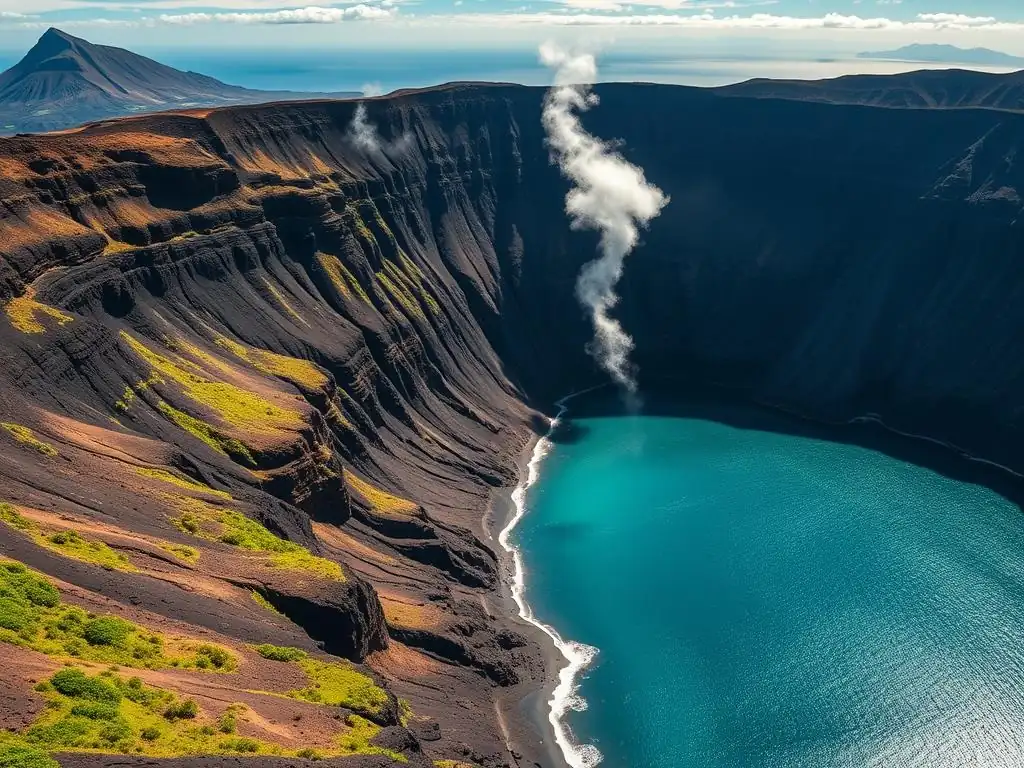
The size and shape of a caldera are fundamentally influenced by the volume of magma erupted and the intensity of the eruption. Larger magma volumes, when evacuated during an eruption, will generally lead to larger calderas. The amount of collapse is directly related to the amount of support removed from beneath the caldera roof. Eruption intensity, which is related to the rate of magma discharge, also plays a role. Highly intense eruptions, characterized by rapid magma evacuation, can lead to more abrupt and extensive collapse, potentially resulting in larger and more steeply walled calderas.
Conversely, smaller eruptions or more gradual magma withdrawal may result in smaller or less well-defined calderas. The relationship between magma volume and caldera size is not always linear, as other factors such as the depth and geometry of the magma chamber, the strength of the overlying rocks, and the tectonic setting also contribute. However, in general, the larger the volume of magma erupted, the greater the potential for significant caldera formation. The volume of erupted material is a primary control on the scale of caldera collapse and the overall dimensions of the resulting volcanic depression.
Tectonic Setting and Crustal Structure
The tectonic setting in which a caldera forms and the structure of the Earth's crust beneath it exert significant influence on caldera size and shape. Calderas formed in extensional tectonic settings, where the crust is being stretched and thinned, tend to be larger and more irregular in shape. The thinner crust and pre-existing faults in extensional regions can facilitate magma ascent and accumulation, leading to larger magma chambers and potentially more voluminous eruptions. The extensional stresses can also influence the geometry of ring faults and the pattern of caldera collapse.
In contrast, calderas formed in compressional tectonic settings or areas with thicker, more stable crust may be smaller and more structurally controlled by pre-existing weaknesses in the crust. The presence of pre-existing faults, fractures, and variations in crustal thickness can guide the location and orientation of ring faults and influence the shape of the collapsing block.
The regional stress field and the mechanical properties of the crust play a crucial role in determining how the ground responds to magma withdrawal and the ultimate morphology of the caldera. The interplay between tectonic forces and volcanic processes shapes the diverse forms of calderas observed around the world.
Role of Water: Phreatomagmatic Explosions and Caldera Formation
Water can play a significant role in caldera formation, particularly in enhancing the explosivity of eruptions and influencing the style of collapse. When magma interacts with groundwater or surface water, it can lead to phreatomagmatic explosions, which are significantly more violent than purely magmatic eruptions. The rapid heating and vaporization of water in contact with hot magma causes explosive fragmentation of both magma and surrounding rocks, generating large volumes of ash and expanding the reach and impact of the eruption.
Phreatomagmatic explosions can contribute to a more efficient emptying of the magma chamber, potentially leading to larger and deeper calderas. In some cases, the interaction of magma with water can also influence the shape of the caldera, creating more complex and irregular caldera boundaries. Coastal calderas or those formed in areas with abundant groundwater are particularly susceptible to phreatomagmatic activity.
The presence of water not only increases the explosive energy of eruptions but can also alter the mechanical properties of the collapsing ground, potentially affecting the geometry and stability of the caldera structure. The interaction between magma and water is therefore an important factor to consider when studying caldera formation and evolution.
Calderas and Volcanic Hazards: Understanding the Risks
Caldera-Forming Eruptions: The Potential for Catastrophic Events
Caldera-forming eruptions represent some of the most catastrophic natural disasters on Earth. These events have the potential to cause widespread devastation over vast areas and can have significant global impacts. The primary hazards associated with caldera-forming eruptions include massive pyroclastic flows, which can incinerate and bury landscapes for hundreds of kilometers from the caldera, and widespread ashfall, which can disrupt infrastructure, agriculture, and air travel across continents. The atmospheric injection of volcanic gases, particularly sulfur dioxide, can lead to global cooling and acid rain, impacting climate and ecosystems worldwide.
The scale of caldera-forming eruptions is orders of magnitude larger than typical volcanic eruptions. A single super-eruption can eject hundreds to thousands of cubic kilometers of volcanic material, compared to cubic kilometers or less in typical eruptions. The societal impacts of a caldera-forming eruption would be immense, potentially leading to widespread infrastructure damage, displacement of populations, and long-term economic disruption. Understanding the potential hazards associated with caldera systems is crucial for developing effective mitigation strategies and for preparing communities at risk for these rare but potentially devastating events.
Monitoring Calderas: Detecting Signs of Unrest
Monitoring caldera systems is essential for detecting signs of volcanic unrest and providing timely warnings of potential eruptions. Volcano observatories employ a range of techniques to monitor calderas, including seismometers to detect earthquakes, GPS and satellite interferometry to measure ground deformation, and gas sensors to monitor changes in volcanic gas emissions. Increases in seismicity, ground uplift, and changes in gas flux can indicate magma movement and pressure buildup beneath the caldera, signaling potential unrest.
Real-time monitoring networks provide continuous data that allows volcanologists to track changes in volcanic activity and assess the likelihood of an eruption. Advanced analytical techniques and modeling are used to interpret monitoring data and to develop eruption forecasts. Effective caldera monitoring requires a multidisciplinary approach and international collaboration to share data, expertise, and best practices. Early detection of volcanic unrest and timely warnings are crucial for mitigating the risks associated with caldera systems and for protecting communities living near these potentially hazardous volcanoes.
Living Near a Caldera: Safety and Preparedness
Living near a caldera, while potentially offering benefits such as geothermal resources and fertile volcanic soils, also carries inherent risks. Communities living in caldera regions need to be aware of the potential volcanic hazards and prepared for potential eruptions. Safety measures include understanding volcanic alert levels and evacuation plans, participating in emergency drills, and having emergency supplies readily available. Public education and community engagement are crucial for raising awareness about volcanic risks and promoting preparedness.
Land-use planning and building codes can also play a role in mitigating volcanic hazards, by restricting development in high-risk areas and ensuring that infrastructure is designed to withstand volcanic impacts. Effective communication between volcano observatories, emergency management agencies, and the public is essential for disseminating warnings and coordinating response efforts during volcanic crises. Preparedness is key to minimizing the impacts of volcanic eruptions and ensuring the safety of communities living near calderas. Understanding the specific hazards associated with a particular caldera and taking proactive steps to prepare can significantly reduce the risks.
The Geological Significance of Calderas: What They Tell Us About Earth's Interior
Calderas as Windows into Magma Chambers
Calderas provide geologists with valuable insights into the workings of magma chambers, which are otherwise hidden deep beneath the Earth's surface. The formation of a caldera is a direct consequence of magma chamber processes, and the resulting caldera structure exposes a cross-section of the upper crust and the plumbing system of a volcanic system. By studying the rocks and structures within and around calderas, geologists can learn about the size, shape, depth, and evolution of magma chambers.
Calderas act as natural laboratories for investigating magmatic processes, including magma generation, storage, differentiation, and eruption. The deposits associated with caldera-forming eruptions, such as ignimbrites and ashfall deposits, provide information about the composition, temperature, and volatile content of the erupted magma. The study of caldera structures and their associated volcanic rocks helps to refine models of magma chamber dynamics and to improve our understanding of the processes that drive volcanic eruptions. Calderas serve as crucial geological archives of magmatic activity and provide a unique window into the Earth's interior.
Calderas and Hydrothermal Systems: Geothermal Energy Potential
Many calderas are associated with active hydrothermal systems, characterized by hot springs, fumaroles, and geysers. These hydrothermal systems are driven by the residual heat from the magma chamber beneath the caldera and the circulation of groundwater through fractured rocks. Caldera hydrothermal systems represent significant geothermal energy resources, which can be harnessed for electricity generation and direct heat applications. Geothermal power plants are often located in caldera regions, utilizing the hot water and steam from these systems to produce clean and sustainable energy.
The geological structures within calderas, such as ring faults and fractured volcanic rocks, provide pathways for groundwater flow and heat transfer, enhancing the geothermal potential. The study of caldera hydrothermal systems is important for understanding the processes of heat and mass transfer in volcanic regions and for optimizing geothermal energy development. Calderas not only represent volcanic hazards but also offer valuable geothermal resources, highlighting the complex and multifaceted nature of these geological features. The sustainable utilization of geothermal energy from caldera systems can contribute to a cleaner energy future.
Calderas and Ore Deposits: Formation of Valuable Minerals
Calderas are often associated with the formation of valuable mineral deposits. The hydrothermal systems active within calderas can transport and deposit dissolved metals and minerals, concentrating them in economically viable ore deposits. The geological structures within calderas, such as faults and fractures, act as conduits for hydrothermal fluids and provide sites for mineral precipitation. Various types of ore deposits, including gold, silver, copper, lead, zinc, and molybdenum, can be found in caldera settings.
The volcanic rocks and hydrothermal alteration associated with caldera formation create favorable conditions for ore mineralization. The study of caldera-related ore deposits is important for understanding the processes of ore formation and for mineral exploration. Calderas are not only significant volcanic features but also important geological environments for the concentration of valuable mineral resources. The economic potential of caldera-related ore deposits has led to mining activities in many caldera regions around the world.
Frequently Asked Questions
How are calderas formed?
Calderas are formed through massive volcanic eruptions that empty the magma chamber beneath a volcano. This leads to a collapse of the summit into the emptied space, creating a large, bowl-shaped depression.
What is the key difference between a caldera and a crater?
While both are depressions in volcanic landscapes, a caldera is significantly larger and formed by collapse. A crater is typically smaller and formed by explosive ejection of material during an eruption.
What role does magma play in the formation of a caldera?
Magma is crucial. A large volume of magma must erupt from the magma chamber for the summit to become unstable and collapse, forming the caldera.
Are all calderas formed in the same way?
While the basic principle involves magma chamber emptying and collapse, the specifics can vary. Factors like rock type, eruption style, and tectonic setting can influence the exact process.
What are some examples of famous calderas around the world?
Some well-known examples include Yellowstone Caldera in the United States, Lake Toba in Indonesia, and Mount Aso in Japan. These calderas showcase the scale and impact of these geological formations.
Final Reflection: Echoes of Ancient Eruptions
The study of caldera formation, as we've explored, isn't just about understanding geological processes of the past; it's about understanding the potential for future volcanic hazards. The sheer scale of caldera-forming eruptions dwarfs anything witnessed in recorded history, making it crucial to decipher their formation mechanisms and predict their behavior. Understanding how calderas are formed is, therefore, a matter of global safety and preparedness.
The enduring impact of these colossal events resonates through the landscapes they create and the ecosystems they shape. Witnessing the remnants of ancient calderas, from Yellowstone to Toba, is a humbling reminder of the Earth's immense power and the impermanence of our own existence. The mountains are calling and I must go.
- John Muir. This quote encapsulates the awe and respect that these geological giants inspire, urging us to learn from their history.
Now, consider the implications of this knowledge. How can we, as individuals and as a society, better prepare for the possibility of future caldera-forming eruptions? Let the lessons learned from the study of how calderas are formed inspire a renewed commitment to scientific research, disaster preparedness, and a deeper appreciation for the dynamic forces that shape our planet. Let us strive to be informed, responsible stewards of this Earth, ready to face the challenges that lie ahead.
Unearth Your Inner Volcanologist!
Thanks for exploring the fascinating world of caldera formation! We hope you now understand the powerful forces shaping our planet and the dramatic landscapes they create. Ready to delve deeper?
Explore the Yellowstone Caldera virtually using online resources and imagine the immense forces involved in its creation. Share this article with fellow earth science enthusiasts and spark a conversation about the world's most impressive calderas. Join the Volcano Explorers' community forum to discuss caldera collapse and learn from other volcano enthusiasts.
What other volcanic landscapes intrigue you, and what questions remain about the power of magma? Let us know in the comments below!