Volcanic Ash and Tephra Fallout: Understanding the Invisible Rain
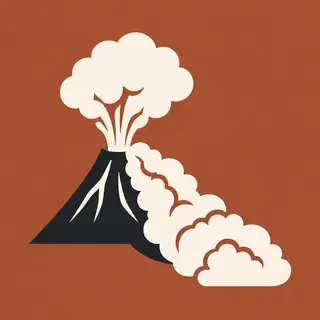
When a volcano erupts, it doesn't just send lava down the slope—it launches a storm of fragmented rock, ash, and glass into the atmosphere. This subcategory of VolcanoExplorers.org focuses on tephra fallout, the umbrella term for all solid material ejected during an eruption, and its finer, powdery cousin, volcanic ash. Unlike flowing molten rock, ash spreads across thousands of kilometers, affecting air travel, water supplies, buildings, and agriculture. Here, you will learn what tephra is made of, how it travels, and why it remains one of the most far-reaching volcanic hazards on Earth, armed with the knowledge to interpret ash advisories and protect your community.
🌋 What Exactly Is Tephra and How Does It Differ from Ash?
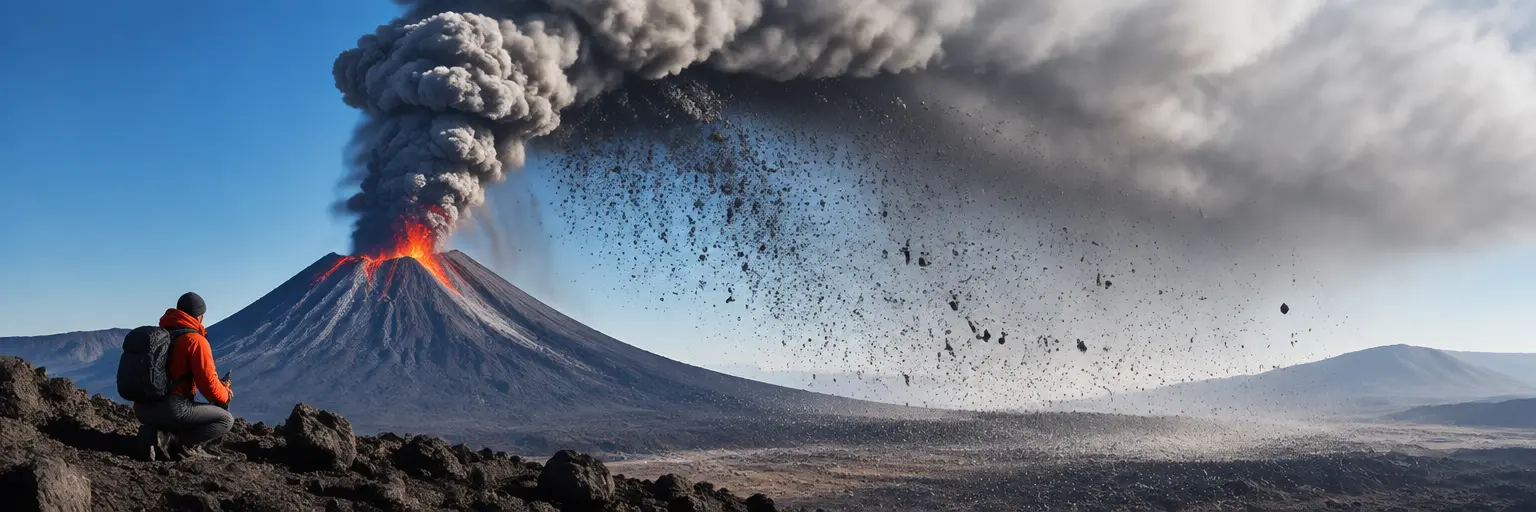
Tephra is any solid material—rock fragments, pumice, glass shards, and crystals—ejected into the air during an eruption. The classification depends on particle size: volcanic ash refers to grains smaller than 2 millimeters, while lapilli range from 2 to 64 millimeters, and any larger blocks and bombs are simply called tephra. Ash is often mistaken for smoke or dust, but it is actually jagged, abrasive glass and pulverized rock that can be sharp enough to scratch metal and lungs alike.
Understanding this distinction matters for safety and science. Ash can stay suspended in the atmosphere for days, circling the globe, whereas lapilli falls out closer to the vent, causing severe damage to roofs and vehicles. In this section, you’ll explore the physical properties of tephra, including density, grain size, and composition, which dictate how far and fast it travels. By reading on, you’ll grasp why even a small ash particle can cause jet engines to fail, and why clean-up operations require special respiratory protection.
🛫 The Hidden Journey: How Wind Currents Govern Ash Dispersal
Once tephra leaves the crater, its path is entirely controlled by atmospheric winds, altitude, and particle settling velocity. Eruption columns can inject ash into the stratosphere, where strong jet streams carry it across continents. For example, the 2010 Eyjafjallajökull eruption in Iceland produced a fine ash cloud that grounded flights across Europe for a week, despite the volcano being relatively small. Here, we break down the physics of plumes, including how turbulent eddies, particle aggregation, and rain washout remove ash from the sky.
For residents and aviation professionals, this means official Volcanic Ash Advisories (VAAs) are your best guide. In this subcategory, you’ll learn how to read ash concentration charts and understand the difference between “trace” and “dense” ash. We also cover textural evidence from ancient deposits, showing how wind direction changes over a single eruption can produce layered tephra sequences, which volcanologists use to reconstruct past explosive events. Expect practical tips on monitoring local wind forecasts during an eruption.
🏚️ Structural Damage and Electrical Hazards of Ash Fallout
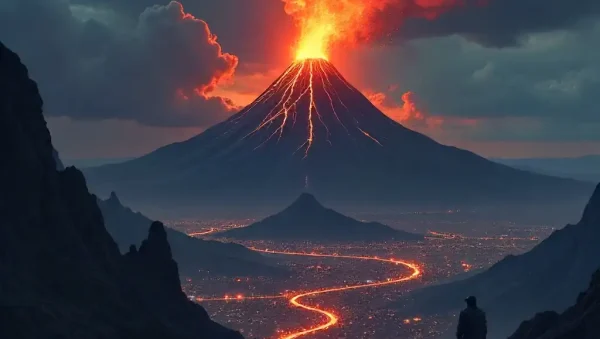
As little as one centimeter of wet ash can collapse weak roofs, and even dry ash is surprisingly heavy—a cubic meter can weigh over 1,000 kilograms. The real danger intensifies when ash mixes with rainfall, producing a cement-like sludge that clogs drains, disrupts power lines, and shorts out transformers. This section offers a detailed look at how ash loading is calculated, the building codes that apply in volcanic zones, and the hidden risk to water treatment plants, where fine ash disrupts filtration systems.
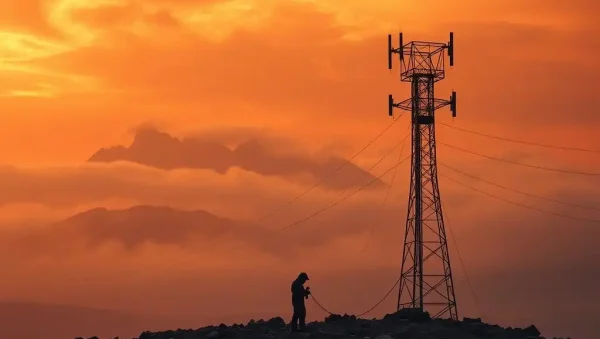
We also examine electrical hazards: volcanic ash is electrically conductive, and dry ash particles can generate static charges, leading to lightning within eruption columns. On the ground, ash contamination can destroy high-voltage insulators. For homeowners and engineers, our guides list actionable steps such as covering vents, clearing gutters, and using wet-mopping methods rather than vacuuming. You’ll learn from case studies of the 1991 Pinatubo eruption, where tephra fall damaged thousands of buildings, and how modern mitigation strategies have since evolved.
🌾 How Volcanic Tephra Enriches (and Threatens) Soil and Agriculture
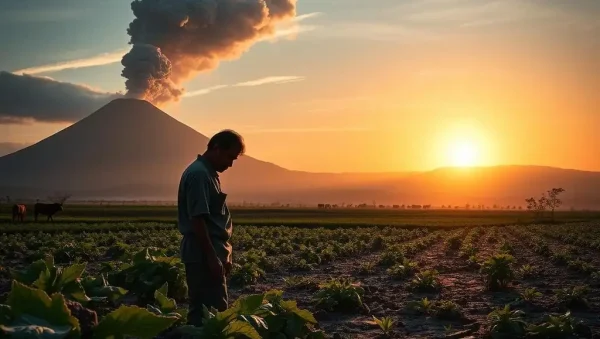
Counterintuitively, the same abrasive ash that devastates crops can become fertile farming ground over time. Tephra deposits break down into halogen-rich, highly mineralized soils that are among the most productive in the world, from Japan’s volcanic plains to Italy’s vineyards. But in the short term, ash fallout can bury pasture, grind down livestock teeth, and introduce toxic fluoride on leaf surfaces—poisoning grazing animals. This is a double-edged sword we explore in depth, balancing the immediate yield losses against long-term soil rejuvenation.
In this section, you will discover practical agricultural recovery techniques, such as using lime to neutralize acid leachates and selecting resilient crop varieties. We also share how key agricultural regions near volcanoes, like the slopes of Mount Merapi in Indonesia, manage repeated tephra falls. You’ll gain understanding of ash leachate chemistry, particularly soluble salts and heavy metals, which can contaminate drinking water and irrigation systems. Whether you’re a farmer or a student of environmental science, this content connects volcanic processes to food security.
💨 Health Risks and Protective Measures During Ash Events
Breathing volcanic ash is harmful to the respiratory system, eyes, and skin. The particles are jagged, often smaller than 10 micrometers, and can penetrate deep into alveoli—causing coughing, bronchitis, and aggravating asthma or COPD. Long-term exposure to silica-rich ash can lead to silicosis. This subsection provides clear guidance on respiratory protection, such as N95 or P100 masks, not surgical masks, and explains why vulnerable groups—elderly, children, and those with cardiovascular disease—should be prioritized for evacuation or sheltering.
We also outline emergency protocols for homes, schools, and workplaces: sealing windows, shutting off ventilation, and using alcohol-free wipes for eye cleaning. You’ll find a downloadable checklist for assembling a volcanic ash preparedness kit, which includes replacement air filters, bottled water, and eyewash. By reading this segment, you will understand the difference between short-term irritation and chronic disease, and how to safely clean up ash without sending clouds of it back into the air. This is a critical survival skill for millions living in volcanic shadows.
🌐 Remote Sensing and Modeling of Tephra Dispersal
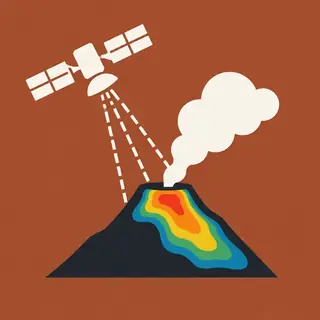
Modern volcanology relies on satellites, radar, and numerical models to predict tephra fallout in real time. Instruments like the MODIS and Sentinel-2 satellites detect ash clouds through thermal anomalies and reflectance signatures, while future forecasts use Lagrangian dispersion models like HYSPLIT or FALL3D to simulate trajectories. This section dives into how scientists convert ash plume height, mass eruption rate, and particle size distribution into hazard maps that authorities can trust.
You’ll gain insight into how ground-based disdrometers and ash collectors validate these models, refining uncertainty for future eruptions. We also examine the emergence of engineered solutions, such as using drones and LiDAR to measure ash thickness in inaccessible areas. With examples from the 2019 Tonga eruption and ongoing monitoring in Italy, this content shows how computational accuracy saves lives. You’ll learn to access public data portals that show ash advisories, enabling you to anticipate fallout even without professional training.
Frequently Asked Questions
What is the difference between volcanic ash and tephra?
Tephra is the general term for all solid fragments ejected from a volcano, regardless of size. Volcanic ash specifically refers to those fragments smaller than 2 millimeters, resembling sand or powder. Lapilli, blocks, and bombs are larger tephra particles. In practical terms, all ash is tephra, but not all tephra is ash.
How far can volcanic ash travel from its source?
With strong jet-stream winds, fine ash can circle the globe and remain in the stratosphere for months. For example, the 1991 Pinatubo eruption spread ash around the Earth within a few weeks. Typically, most coarse ash falls within 100 kilometers, but micrometer-scale particles can travel thousands of kilometers before settling.
Can I use a regular surgical mask to protect against volcanic ash?
No, a standard surgical mask is not effective for ash particles. You need an N95 or P100 respirator with an exhalation valve to filter out fine silicates. Cloth masks are inadequate. If no respirator is available, stay indoors with sealed windows and doors, and use a damp cloth over your mouth immediately.
Is volcanic ash good for soil?
Yes, over years to decades, tephra weathers into mineral-rich clays that provide essential nutrients like potassium and phosphorus, producing highly fertile soil. However, immediately after an eruption, ash can be acidic, contain toxic elements, and form a crust that blocks plant growth. Soil recovery often takes several growing seasons.
What should I do with ash in my yard after an eruption?
Wet it lightly with a sprayer before shoveling to prevent fine dust from becoming airborne. Use paper masks and goggles, then bag ash for disposal in coarse-grained landfill-safe containers. Do not dump ash into storm drains, as it clogs waterways. If you have crops, spray them clean rather than thoroughly washing, then test soil pH.