
Hotspot Mysteries: Volcanoes That Defy Plate Tectonic Boundaries

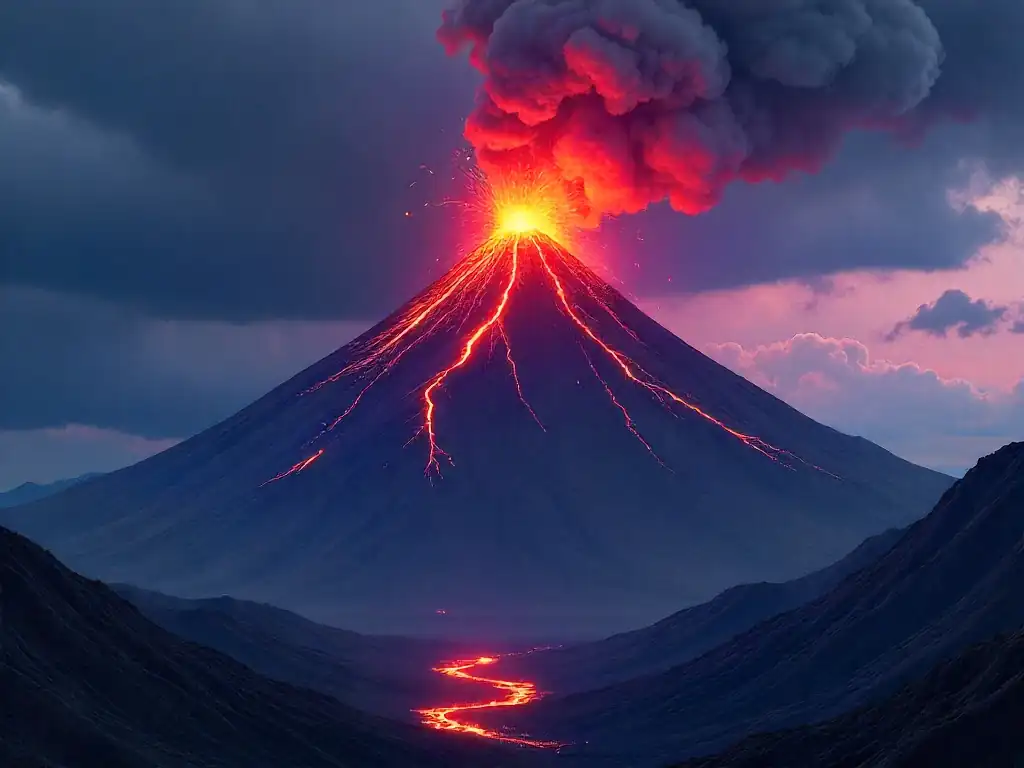
Welcome to Volcano Explorers, where the Earth whispers its fiery secrets! Ever wondered about the enigmatic volcanoes that seem to pop up where they shouldn't, defying the rules of plate tectonics? Dive into "Hotspot Mysteries: Volcanoes That Defy Plate Tectonic Boundaries" and prepare to unravel the geological puzzles behind these volcanic rebels. What forces lie hidden beneath the crust, and why do these fiery mountains emerge in unexpected locations? The answers await...
- Understanding Volcanoes and Plate Tectonics: A Foundation for Hotspot Exploration
- Hotspot Volcanoes: A Departure from Plate Tectonic Theory
- The Geology of Hotspot Volcanoes: Investigating Their Unique Characteristics
- The Science Behind Mantle Plumes: Exploring the Deep Earth
- Hotspot Volcanoes and Plate Movement: Unraveling the Relationship
- Notable Hotspot Volcanoes Around the World: Case Studies
- The Future of Hotspot Research: Unanswered Questions and Ongoing Investigations
-
Frequently Asked Questions
- What are hotspots and how do they relate to volcanoes?
- Why are volcanoes near plate boundaries more common than hotspot volcanoes?
- How do hotspot volcanoes defy plate tectonic boundaries?
- What are some famous examples of hotspot volcanoes?
- What can VolcanoExplorers.org teach me about volcanoes near plate boundaries and hotspots?
- Final Reflection: Unveiling Earth's Deep Secrets
- Unearth the Secrets of Volcanic Hotspots!
Understanding Volcanoes and Plate Tectonics: A Foundation for Hotspot Exploration
The Connection Between Plate Boundaries and Volcanic Activity
Volcanoes are dramatic expressions of Earth's internal heat, and their distribution across the globe is far from random. A significant proportion of volcanic activity is directly linked to the movement and interaction of Earth’s tectonic plates. The theory of plate tectonics revolutionized our understanding of geology, explaining how the Earth's lithosphere is divided into several plates that move and interact at their boundaries.
These boundaries, where plates converge, diverge, or slide past each other, are zones of intense geological activity, including earthquakes and, crucially, volcanism. The vast majority of the world's active volcanoes are found along these plate boundaries, a testament to the dynamic forces shaping our planet's surface.
The correlation between plate boundaries and volcanic activity stems from the processes driven by plate motion. As plates move, they create pathways for molten rock, or magma, to ascend from the Earth's mantle to the surface. The type of plate boundary dictates the specific mechanisms that lead to magma generation and, consequently, the characteristics of the volcanoes formed. Understanding this fundamental connection between plate tectonics and volcanism is essential before we can appreciate the intriguing exceptions to this rule: hotspot volcanoes, which seemingly arise independently of plate boundaries.
Subduction Zones and Volcano Formation
One of the most volcanically active plate boundary types is the subduction zone. These occur where tectonic plates converge, and one plate, typically the denser oceanic plate, is forced beneath another, often a continental plate. As the subducting plate descends into the Earth's mantle, it encounters increasing temperatures and pressures.
Water, carried into the mantle within hydrated minerals in the subducting plate, plays a critical role. This water lowers the melting point of the mantle rock above the subducting slab, causing partial melting. This process generates magma, which is less dense than the surrounding solid rock and therefore rises buoyantly towards the surface.
The rising magma at subduction zones is often rich in silica and dissolved gases, leading to explosive eruptions and the formation of stratovolcanoes, also known as composite volcanoes. These volcanoes are characterized by their steep, conical shape, built up from layers of lava flows, volcanic ash, and other pyroclastic materials.
The Pacific Ring of Fire, which encircles the Pacific Ocean, is a prime example of a region dominated by subduction zone volcanoes. Volcanic arcs like the Andes Mountains in South America, the Cascade Range in North America, and the island arcs of Japan and the Philippines are all products of subduction zone volcanism, showcasing the powerful link between plate convergence and the creation of volcanoes near plate boundaries.
Mid-Ocean Ridges: Another Type of Plate Boundary Volcanism
While subduction zones are associated with explosive volcanism, mid-ocean ridges represent another type of plate boundary where volcanoes are formed, albeit through a different mechanism. Mid-ocean ridges are divergent plate boundaries, where tectonic plates are moving apart. As plates separate, the underlying mantle rock rises to fill the space. This upward movement of mantle rock causes a decrease in pressure, a process known as decompression melting. Similar to the role of water in subduction zones, decompression melting lowers the melting point of the mantle rock, leading to the generation of magma.
The magma produced at mid-ocean ridges is typically basaltic in composition and relatively low in silica and dissolved gases. This results in effusive eruptions, characterized by the outpouring of lava flows rather than violent explosions. The vast majority of Earth's volcanism, in terms of volume, occurs at mid-ocean ridges, though much of it is submarine and less immediately visible than the dramatic eruptions of subduction zone volcanoes.
Iceland, while located on a mid-ocean ridge, is an exception with subaerial volcanism, offering a unique opportunity to study ridge processes above sea level. Mid-ocean ridge volcanism demonstrates that even where plates are pulling apart, the Earth's internal heat finds a way to express itself through the creation of volcanoes along plate boundaries.
Hotspot Volcanoes: A Departure from Plate Tectonic Theory
Defining Hotspot Volcanoes: Intraplate Volcanism
While plate boundaries account for the majority of volcanic activity, there exists a fascinating category of volcanoes that seem to defy this tectonic framework: hotspot volcanoes. Unlike volcanoes associated with subduction zones or mid-ocean ridges, hotspot volcanoes are not located at plate boundaries. Instead, they are found within the interior of tectonic plates, a phenomenon known as intraplate volcanism. This characteristic immediately sets them apart and raises intriguing questions about their origins and the processes driving their formation.
Hotspot volcanoes are often characterized by a persistent source of heat from deep within the Earth's mantle, seemingly independent of the plate tectonic processes occurring at the surface. They can occur in both oceanic and continental settings, leading to the formation of volcanic islands in the oceans and volcanic provinces on continents.
The linear chains of volcanic islands and seamounts, like the Hawaiian Islands, are classic examples of hotspot tracks, providing compelling evidence for the movement of tectonic plates over a relatively stationary heat source. Understanding hotspot volcanoes requires us to look beyond the immediate dynamics of plate boundaries and delve into the deeper, more enigmatic processes operating within the Earth's mantle.
The Mantle Plume Hypothesis: Explaining Hotspot Origins
The prevailing hypothesis to explain the origin of hotspot volcanoes is the mantle plume hypothesis. This theory proposes that hotspots are surface expressions of mantle plumes, which are upwellings of abnormally hot and buoyant material originating from deep within the Earth's mantle, possibly as deep as the core-mantle boundary, approximately 2,900 kilometers beneath the surface. These plumes are envisioned as narrow, cylindrical conduits of hot rock that rise through the mantle, driven by thermal buoyancy.
As a mantle plume rises, it undergoes decompression melting as it encounters lower pressures closer to the surface. This melting generates magma, which then ascends to the surface, leading to volcanic activity. The stationary nature of these plumes, relative to the moving tectonic plates above, explains the formation of linear volcanic chains.
As a plate moves over a plume, a succession of volcanoes is created, with the oldest volcanoes progressively moving away from the plume source and becoming extinct, while new volcanoes form directly above the plume. The mantle plume hypothesis provides a compelling framework for understanding the existence of volcanoes that are not directly associated with plate boundaries, offering a glimpse into the Earth's deep thermal structure and dynamics.
The Location of Major Hotspot Volcanoes Globally
Hotspot volcanoes are distributed across the globe, both in oceanic and continental settings. Some of the most well-known and studied hotspot volcanoes are located in the Earth's oceans. The Hawaiian-Emperor seamount chain in the Pacific Ocean is perhaps the most iconic example, stretching thousands of kilometers across the Pacific plate and showcasing the age progression characteristic of hotspot tracks. Other prominent oceanic hotspots include Iceland in the North Atlantic, the Galápagos Islands in the eastern Pacific, Réunion Island in the Indian Ocean, and the islands of Samoa and Tahiti in the South Pacific.
Continental hotspots are also significant, though perhaps less visually dramatic than their oceanic counterparts. Yellowstone National Park in North America is a prime example of a continental hotspot, famous for its geothermal features and history of large caldera-forming eruptions. The East African Rift Valley is another region influenced by hotspot activity, contributing to its complex geological landscape and volcanism.
The Afar Triangle in East Africa is considered a triple junction where three tectonic plates are diverging, potentially influenced by an underlying mantle plume, further complicating the interplay between plate tectonics and hotspot processes in certain regions of the globe where volcanoes seem to appear independently of traditional plate boundaries. These diverse locations highlight the global reach of hotspot volcanism and its importance in shaping the Earth's surface and geological history.
The Geology of Hotspot Volcanoes: Investigating Their Unique Characteristics
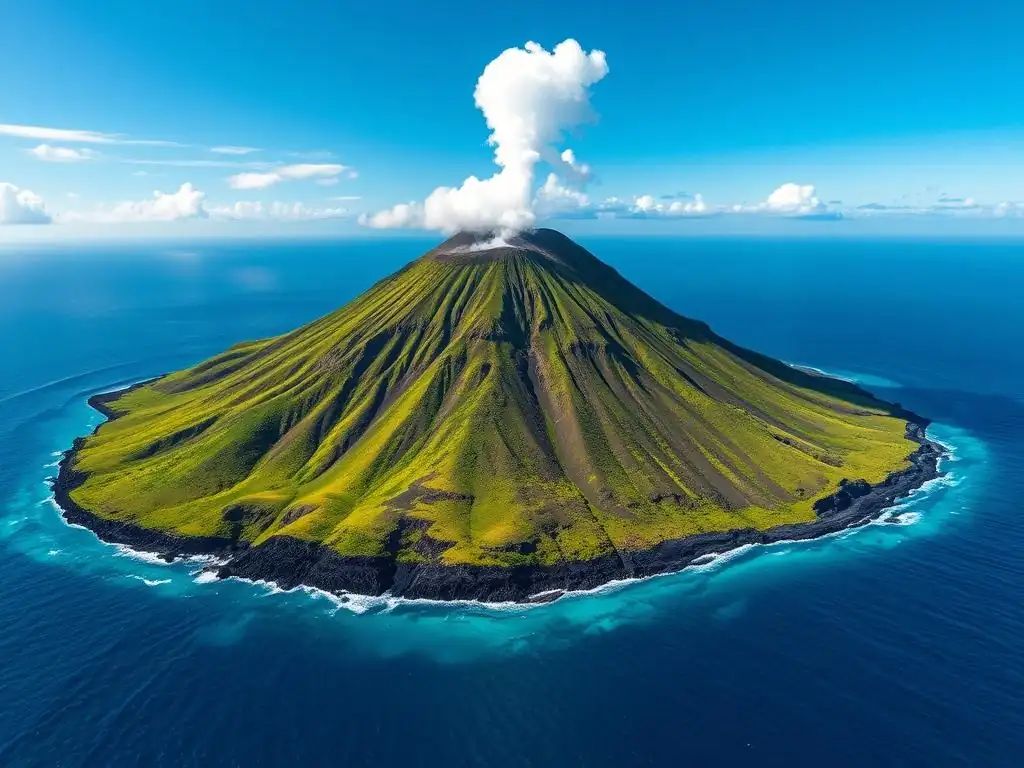
Examining the Volcanic Rock Composition of Hotspots
The volcanic rocks erupted at hotspot volcanoes often exhibit distinct geochemical characteristics that provide clues about their mantle source and the processes involved in their formation. Compared to volcanoes at plate boundaries, hotspot volcanoes frequently erupt basalts with compositions that are enriched in incompatible elements, elements that are preferentially partitioned into the melt phase during partial melting. These basalts are often referred to as Ocean Island Basalts (OIB) when found in oceanic settings, and they have unique isotopic signatures that differ from Mid-Ocean Ridge Basalts (MORB) and subduction zone volcanics.
The enrichment in incompatible elements and distinctive isotopic ratios in hotspot basalts are interpreted as evidence for a different mantle source region compared to plate boundary volcanism. Mantle plumes are hypothesized to originate from deep within the mantle, potentially sampling undegassed, more primitive mantle reservoirs that have not been as extensively processed by plate tectonics as the upper mantle source regions for MORB. Analyzing the trace element and isotopic compositions of hotspot volcanic rocks provides valuable insights into the heterogeneity of the Earth's mantle and the deep Earth processes that contribute to hotspot volcanism.
Analyzing the Age Progression of Hotspot Island Chains
One of the most compelling pieces of evidence supporting the mantle plume hypothesis is the age progression observed in hotspot island chains. As a tectonic plate moves over a relatively stationary mantle plume, a chain of volcanoes is formed, with the volcanoes becoming progressively older with increasing distance from the currently active hotspot. This age progression provides a record of plate motion over geological timescales and allows scientists to reconstruct the past movements of tectonic plates.
Precise radiometric dating of volcanic rocks along hotspot tracks, such as the Hawaiian-Emperor seamount chain, reveals a clear linear relationship between age and distance. The active volcanoes, like Kilauea and Mauna Loa in Hawaii, are located at the southeastern end of the chain, directly above the hypothesized hotspot.
Moving northwestward along the chain, the islands and seamounts become progressively older, culminating in the Emperor Seamounts, which are tens of millions of years older and located far to the northwest. This age progression is a powerful confirmation of the plate motion model and the stationary nature of mantle plumes, providing a unique window into the dynamics of the Earth's lithosphere and asthenosphere.
The Hawaiian-Emperor Seamount Chain: A Classic Hotspot Case Study
The Hawaiian-Emperor seamount chain stands as the archetypal example of hotspot volcanism and age progression. This remarkable volcanic chain stretches over 5,800 kilometers across the Pacific Ocean, from the active volcanoes of the Hawaiian Islands to the submerged Emperor Seamounts in the northwest Pacific. The chain exhibits a clear age progression, with the active volcanoes in Hawaii being the youngest, and the seamounts at the far end of the chain being the oldest, dating back over 80 million years.
The Hawaiian hotspot is believed to be caused by a mantle plume originating from deep within the Earth, possibly from the lower mantle. As the Pacific plate moves northwestward over this stationary plume, a succession of volcanoes has been created over millions of years. The bend in the Hawaiian-Emperor chain, occurring around 43 million years ago, is interpreted as a change in the direction of Pacific plate motion.
The Hawaiian Islands themselves are a showcase of active hotspot volcanism, with Kilauea being one of the most active volcanoes on Earth. The ongoing volcanic activity, coupled with the well-defined age progression along the entire chain, makes the Hawaiian-Emperor seamount chain a cornerstone in our understanding of hotspot volcanism and plate tectonics, illustrating how volcanoes can form far from plate boundaries and still provide valuable insights into Earth's dynamic processes.
The Science Behind Mantle Plumes: Exploring the Deep Earth
Seismic Studies and Mantle Plume Detection
Directly observing mantle plumes deep within the Earth is impossible, but scientists employ sophisticated techniques, particularly seismic tomography, to image and detect these hypothesized structures. Seismic tomography utilizes seismic waves generated by earthquakes to create three-dimensional images of the Earth's interior, similar to how medical CT scans create images of the human body. Mantle plumes, being hotter and less dense than the surrounding mantle, are expected to exhibit lower seismic wave velocities. Therefore, seismic tomography can identify regions of slower seismic wave speeds that may correspond to the location of mantle plumes.
Numerous seismic studies have identified regions of slower seismic velocities beneath known hotspot volcanoes, extending deep into the mantle. These low-velocity zones are often interpreted as evidence for the existence of mantle plumes. However, the resolution of seismic tomography at great depths is still limited, and the exact shape, size, and origin depth of mantle plumes remain subjects of ongoing research. While seismic evidence provides strong support for the mantle plume hypothesis, it is important to note that the interpretation of seismic images can be complex, and alternative explanations for low-velocity zones are also considered.
Geochemical Analysis: Tracing the Origin of Mantle Plume Material
In addition to seismic studies, geochemical analysis of hotspot volcanic rocks provides crucial insights into the origin and composition of mantle plume material. As mentioned earlier, hotspot basalts often exhibit unique isotopic signatures that differ from those of MORB and subduction zone volcanics. These isotopic variations are interpreted as reflecting different mantle source regions with distinct geochemical histories.
Geochemists analyze the ratios of various isotopes, such as strontium, neodymium, lead, and helium, in hotspot basalts to fingerprint their mantle source. Some hotspot basalts exhibit isotopic signatures that suggest they originate from a deep, less-degassed mantle reservoir that has been isolated from the convective mixing processes of the upper mantle for billions of years.
This "primitive" mantle material is hypothesized to be the source of mantle plumes. By comparing the isotopic compositions of hotspot basalts from different locations around the world, scientists are working to map the heterogeneity of the Earth's mantle and trace the pathways of mantle plumes from their deep origins to the surface.
Alternative Theories: Lithospheric Control and Small-Scale Convection
While the mantle plume hypothesis is the dominant explanation for hotspot volcanism, alternative theories have been proposed to explain intraplate volcanism without invoking deep mantle plumes. One such alternative is the "lithospheric control" hypothesis, which suggests that intraplate volcanism may be related to stresses and fractures within the lithosphere, the Earth's rigid outer layer. According to this theory, pre-existing weaknesses in the lithosphere can facilitate magma ascent from shallower mantle sources, without requiring a deep mantle plume.
Another alternative is small-scale convection in the upper mantle. This theory proposes that localized regions of upwelling and melting can occur in the upper mantle due to density variations and thermal instabilities, without requiring a plume originating from the deep mantle.
These alternative theories highlight the complexity of intraplate volcanism and the need for continued research to fully understand the processes driving volcanoes that are seemingly distant from plate boundaries. It is possible that multiple mechanisms may contribute to intraplate volcanism, and that the relative importance of mantle plumes versus other factors may vary depending on the specific location and geological setting.
Hotspot Volcanoes and Plate Movement: Unraveling the Relationship
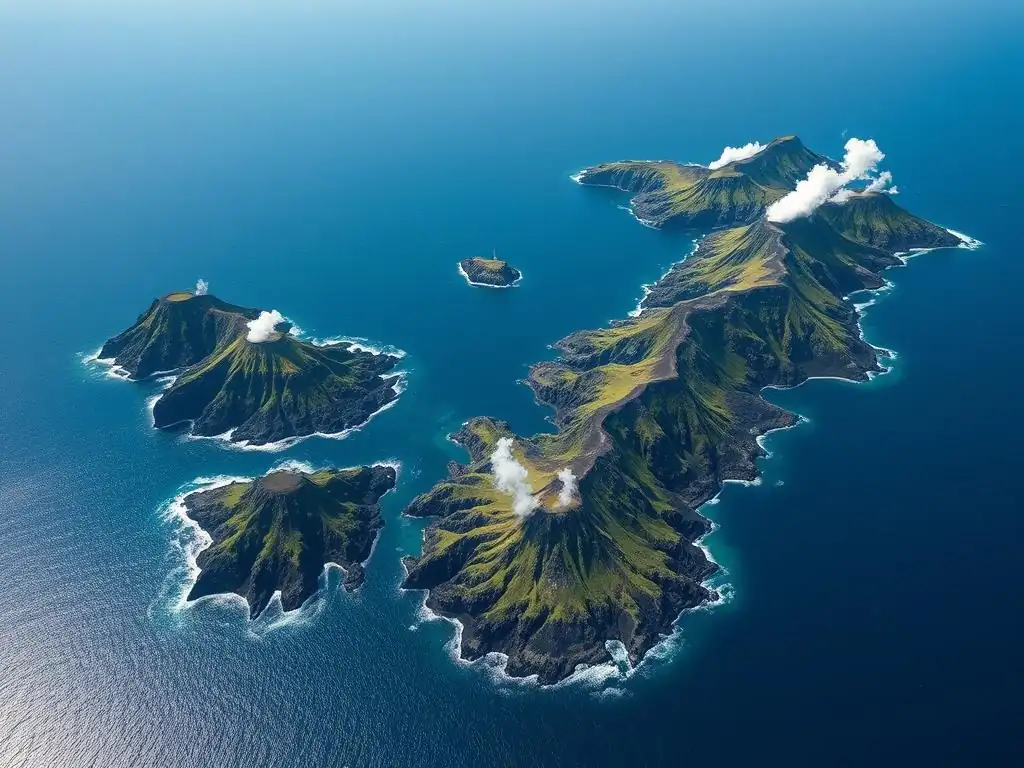
Using Hotspot Tracks to Determine Plate Motion
Hotspot tracks, the linear chains of volcanoes created as plates move over stationary hotspots, provide a valuable tool for reconstructing the history of plate motion. By dating the volcanoes along a hotspot track and measuring their distances from the current hotspot location, scientists can determine the speed and direction of plate movement over millions of years. The Hawaiian-Emperor seamount chain, with its well-defined age progression and bend, has been instrumental in understanding the past motion of the Pacific plate.
The bend in the Hawaiian-Emperor chain, dated to around 43 million years ago, is interpreted as a significant change in the direction of Pacific plate motion. Before this time, the Pacific plate was moving more northward, creating the Emperor Seamounts. After the bend, the plate's motion shifted to a more northwesterly direction, resulting in the formation of the Hawaiian Islands. By analyzing hotspot tracks from different locations around the world, geophysicists can piece together a global picture of plate motion history, providing crucial constraints for plate tectonic models and our understanding of Earth's dynamic evolution.
The Interaction Between Mantle Plumes and Plate Boundaries
While hotspot volcanoes are defined by their intraplate location, interactions between mantle plumes and plate boundaries can occur and influence volcanic processes. For example, a mantle plume located near a mid-ocean ridge can contribute to increased magma production and potentially modify the characteristics of ridge volcanism. The Iceland hotspot, situated on the Mid-Atlantic Ridge, is a prime example of such an interaction.
The Iceland hotspot is believed to contribute to the unusually thick crust and elevated topography of Iceland compared to typical mid-ocean ridges. The plume may also influence the geochemical composition of the erupted basalts along the ridge in the vicinity of Iceland. Understanding the interplay between mantle plumes and plate boundaries is important for a comprehensive understanding of global volcanism and the complex interactions between different mantle processes. These interactions can lead to variations in volcanic activity and crustal structure in regions where hotspots and plate boundaries coincide or are in close proximity.
Iceland: A Hotspot Situated on a Mid-Ocean Ridge
Iceland provides a compelling case study of a hotspot interacting with a mid-ocean ridge. Located on the Mid-Atlantic Ridge, a divergent plate boundary separating the North American and Eurasian plates, Iceland is also situated above a major mantle plume. This dual influence of plate tectonics and hotspot activity makes Iceland a unique and volcanically active region. The presence of the hotspot is believed to be responsible for the unusually high volume of volcanism in Iceland, leading to the formation of a subaerial island on a mid-ocean ridge, which is typically submarine.
The interaction between the plume and the ridge in Iceland is complex and still actively researched. The plume may contribute to decompression melting beneath the ridge, enhancing magma production and leading to thicker crust. It may also influence the spreading rate of the ridge and the geochemical characteristics of the erupted basalts.
Iceland's volcanism is a mix of both ridge-related and hotspot-related processes, resulting in a diverse range of volcanic features and eruption styles. The island's location at the intersection of a plate boundary and a hotspot makes it a valuable natural laboratory for studying the interplay between these two fundamental geological processes and their influence on volcanoes near plate boundaries, even if hotspots themselves are not at plate boundaries in the traditional sense.
Notable Hotspot Volcanoes Around the World: Case Studies
The Hawaiian-Emperor Seamount Chain: A Volcanic Time Capsule
Revisiting the Hawaiian-Emperor seamount chain, it serves not only as a prime example of hotspot volcanism but also as a volcanic time capsule, preserving a record of plate motion and mantle plume activity spanning millions of years. The active volcanoes on the Big Island of Hawaii, such as Kilauea and Mauna Loa, represent the current stage of hotspot volcanism, characterized by ongoing effusive eruptions and the formation of new volcanic land. Moving northwest along the chain, each island and seamount tells a story of past volcanic activity at different stages of the hotspot's history.
Kauai, the oldest of the main Hawaiian Islands, is significantly eroded and volcanically inactive, representing a more mature stage in the lifecycle of a hotspot volcano. Further along the chain, the Northwestern Hawaiian Islands and the Emperor Seamounts are progressively older and more deeply submerged, representing the waning stages of volcanism and the effects of subsidence as the lithosphere cools and sinks away from the hotspot.
Studying the geology, geochronology, and geochemistry of the volcanoes along the Hawaiian-Emperor chain provides a wealth of information about the evolution of hotspot volcanoes, plate tectonics, and the long-term dynamics of the Earth's mantle.
Yellowstone National Park: A Continental Hotspot with Supervolcanic Potential
Yellowstone National Park, located in the western United States, is a remarkable example of a continental hotspot, distinct from the oceanic hotspots that form island chains. Yellowstone is famous for its geothermal features, including geysers, hot springs, and mud pots, which are surface manifestations of the immense heat source beneath. The hotspot is responsible for a history of large caldera-forming eruptions, including three supereruptions in the past 2.1 million years, which have dramatically shaped the landscape and had global environmental impacts.
The Yellowstone hotspot is believed to be caused by a mantle plume rising beneath the North American continent. As the North American plate moves southwestward over the stationary plume, a track of volcanic calderas has been formed across the Snake River Plain.
Yellowstone's current caldera, formed by the most recent supereruption about 630,000 years ago, is a vast volcanic depression covering a large portion of the park. The ongoing geothermal activity and the potential for future large eruptions make Yellowstone a focus of intense scientific study and hazard assessment, highlighting the power and potential risks associated with continental hotspot volcanism.
Réunion Island: A Hotspot Volcano in the Indian Ocean
Réunion Island, located in the western Indian Ocean, is another notable example of an active hotspot volcano. This volcanic island is part of the Mascarene Islands, which also include Mauritius and Rodrigues, forming a hotspot chain. Réunion Island is dominated by two volcanoes: Piton des Neiges, an extinct shield volcano, and Piton de la Fournaise, one of the world's most active volcanoes. Piton de la Fournaise is a basaltic shield volcano that erupts frequently, providing ongoing opportunities to study hotspot volcanism in action.
The Réunion hotspot is believed to be responsible for the formation of the Deccan Traps, a massive flood basalt province in India, which erupted around 66 million years ago, coinciding with the Cretaceous-Paleogene extinction event. As the Indian plate moved northward over the Réunion hotspot, it initially created the Deccan Traps and subsequently the Mascarene Islands.
Réunion Island's active volcanism, its connection to the Deccan Traps, and its location in the Indian Ocean make it a significant hotspot volcano for understanding mantle plume processes and their potential influence on Earth's geological and biological history, showcasing again how volcanoes can exist far from traditional plate boundaries and yet be powerful forces shaping our planet.
The Future of Hotspot Research: Unanswered Questions and Ongoing Investigations
Improving Our Understanding of Mantle Dynamics
Despite significant progress in understanding hotspot volcanoes and mantle plumes, many fundamental questions remain unanswered, driving ongoing research in this field. One key area of investigation is the precise origin and nature of mantle plumes. Are they truly originating from the core-mantle boundary, or are they shallower features within the mantle? What is the composition and temperature of plume material? How do plumes interact with the surrounding mantle as they rise?
Researchers are using increasingly sophisticated seismic techniques, geochemical analyses, and geodynamic modeling to address these questions. Advanced seismic tomography is being employed to obtain higher-resolution images of mantle plumes at depth. Geochemical studies are focusing on analyzing a wider range of isotopes and trace elements in hotspot basalts to better constrain the composition of plume sources. Geodynamic models are being developed to simulate mantle convection and plume dynamics, testing different hypotheses about plume formation and evolution. These ongoing efforts aim to refine our understanding of mantle dynamics and the role of plumes in Earth's internal processes.
Predicting the Behavior of Hotspot Volcanoes
Predicting the behavior of any volcano is a complex challenge, and hotspot volcanoes are no exception. While some hotspot volcanoes, like Kilauea and Piton de la Fournaise, exhibit relatively predictable eruption patterns, others, particularly continental hotspots like Yellowstone, have the potential for infrequent but extremely large and impactful eruptions. Improving our ability to forecast eruptions at hotspot volcanoes is crucial for mitigating volcanic hazards and protecting communities living in volcanically active regions.
Scientists are using a variety of monitoring techniques to track the activity of hotspot volcanoes, including seismic monitoring, ground deformation measurements, gas emission analysis, and thermal imaging. By integrating data from these different sources and developing more sophisticated volcano monitoring models, researchers are working to improve eruption forecasting capabilities. Understanding the pre-eruptive signals and the underlying magmatic processes at hotspot volcanoes is essential for providing timely warnings and reducing the risks associated with these powerful natural phenomena.
The Role of Hotspots in Earth's Geologic History
Hotspots have played a significant role in shaping Earth's geological history over billions of years. Mantle plumes are thought to have contributed to continental breakup, the formation of large igneous provinces, and potentially even global climate change events. The Deccan Traps, associated with the Réunion hotspot, and the Siberian Traps, possibly linked to a mantle plume, are massive flood basalt provinces that have had profound impacts on Earth's environment and biological evolution.
Understanding the long-term influence of hotspots on Earth's geology and climate is a major area of ongoing research. Scientists are studying the geological record to identify past hotspot tracks and large igneous provinces, and they are investigating the potential links between hotspot volcanism and major geological and biological transitions in Earth's history. By unraveling the role of hotspots in Earth's past, we can gain valuable insights into the planet's long-term evolution and the ongoing processes that continue to shape our dynamic Earth, including the mysterious volcanoes that arise far from the well-understood zones near plate boundaries.
Frequently Asked Questions
What are hotspots and how do they relate to volcanoes?
Hotspots are areas of intense volcanic activity not directly associated with plate boundaries. They are thought to be caused by mantle plumes, rising columns of hot rock from deep within the Earth.
Why are volcanoes near plate boundaries more common than hotspot volcanoes?
Most volcanoes are found at plate boundaries because that's where tectonic plates interact, causing magma to rise due to subduction or rifting. Hotspot volcanoes are less frequent as they are caused by localized mantle plumes, which are less common than plate boundary interactions.
How do hotspot volcanoes defy plate tectonic boundaries?
Unlike volcanoes at plate boundaries, hotspot volcanoes form independent of plate interactions. As a plate moves over a stationary hotspot, a chain of volcanoes is created, showing the plate's movement.
What are some famous examples of hotspot volcanoes?
The Hawaiian Islands are a prime example of a hotspot volcano chain. Yellowstone National Park's geysers and volcanic activity are also attributed to a hotspot beneath the North American plate.
What can VolcanoExplorers.org teach me about volcanoes near plate boundaries and hotspots?
VolcanoExplorers.org provides educational resources on the science behind both types of volcanoes. It offers information on magma formation, eruption styles, and the geological processes that create these fascinating landforms.
Final Reflection: Unveiling Earth's Deep Secrets
The journey through the world of hotspot volcanoes, those geological enigmas seemingly unbound by the rigid rules of plate tectonics, reveals a profound truth: our understanding of Earth's inner workings is constantly evolving. While the dance of tectonic plates explains much of volcanic activity, these hotspot mysteries remind us that deeper, more complex processes are at play, shaping our planet in ways we are only beginning to comprehend.
The enduring fascination with volcanoes, especially those like Hawaii that stand as testaments to the power of mantle plumes, underscores their significant influence on both the scientific and cultural landscape. These geological wonders not only offer invaluable insights into Earth's internal dynamics but also inspire awe and reverence, reminding us of the planet's raw, untamed energy. The earth has music for those who listen.
- George Santayana. This quote perfectly encapsulates the profound connection we have with these geological marvels, urging us to listen to the stories they tell about our planet's past and future.
Now, as you reflect on the mysteries of hotspot volcanoes and their defiance of plate boundaries, consider the broader implications for your own understanding of the world. Embrace the spirit of inquiry, question established norms, and seek out the hidden connections that lie beneath the surface. Let the story of these geological anomalies inspire you to explore the unknown, to challenge assumptions, and to appreciate the dynamic and ever-changing nature of the world around you.
Here's a call to action based on the article "Hotspot Mysteries: Volcanoes That Defy Plate Tectonic Boundaries," targeted for "Volcano Explorers" at volcanoexplorers.org:
Unearth the Secrets of Volcanic Hotspots!
Thanks for diving deep into the fascinating world of volcanic hotspots and their unique place in our planet's geology. We hope you've enjoyed learning about these geological enigmas that challenge conventional plate tectonic theory. Now, let's put that knowledge to work and explore further!
Here are a few things you can do to continue your volcanic journey:
- Map Your Own Hotspot Adventure: Research potential hotspot locations near you or those you dream of visiting one day. Think beyond the well-known like Hawaii. Could there be a less-known hotspot shaping your local landscape?
- Share this article with fellow volcano enthusiasts! Help spread the word about these geological anomalies.
- Delve deeper into related topics! Read academic journals focusing on mantle plumes. See how the science changes over time as new discoveries are made.
What's one less known volcanic hotspot you're now curious to investigate? Share your thoughts in the comments below!