
Volcanic Ash and Pasturelands: Enhancing Grazing Lands for Livestock

Welcome to Volcano Explorers!
Ever wondered how something as destructive as a volcanic eruption could actually benefit the environment? Prepare to be surprised! This is the paradox we unravel in our latest exploration. Dive into "Volcanic Ash and Pasturelands: Enhancing Grazing Lands for Livestock" and discover the unexpected ways volcanic ash can revitalize grazing lands, providing a unique boost for livestock. Could this fiery byproduct hold a secret to healthier pastures? Read on, and let's unearth the truth together...
- Introduction: The Unexpected Benefits of Volcanic Ash for Pasturelands
- Understanding Volcanic Ash Composition and its Effects on Soil
- Volcanic Ash Benefits for Livestock Grazing: Improved Pasture Quality
- Managing Volcanic Ash in Pasturelands: Best Practices for Livestock Farmers
- Case Studies: Successful Pastureland Management After Volcanic Eruptions
- Conclusion: Harnessing the Power of Volcanic Ash for Sustainable Livestock Farming
-
Frequently Asked Questions
- How can volcanic ash benefit pasturelands used for livestock grazing?
- What types of livestock might benefit most from volcanic ash-enhanced pasturelands?
- Are there any risks associated with livestock grazing on volcanic ash-affected pasturelands?
- How long do the benefits of volcanic ash on pasturelands typically last?
- What precautions should farmers take when managing livestock on volcanic ash-covered pasturelands?
- Final Reflection: Reaping Resilience from Volcanic Ash
- Revitalize Your Rangeland: Steps to Thriving Pastures After Ashfall
Introduction: The Unexpected Benefits of Volcanic Ash for Pasturelands
Volcanic eruptions are often associated with destruction and devastation, images of pyroclastic flows and lava engulfing landscapes readily come to mind. However, in the aftermath of these dramatic events, nature often reveals a surprising resilience and even unexpected benefits. One such benefit, often overlooked, is the profound impact of volcanic ash on pasturelands.
While heavy ashfall can initially disrupt grazing and pose challenges, in the long term, volcanic ash can act as a potent natural fertilizer, revitalizing soils and enhancing the productivity of grasslands. This article explores the fascinating relationship between volcanic ash and pasturelands, revealing how this seemingly destructive material can actually enhance grazing lands for livestock, leading to improved forage quality and sustainable agricultural practices.
For livestock farmers in volcanic regions, understanding the effects of volcanic ash is crucial. Far from being just a nuisance, volcanic ash can be a valuable resource, offering a natural pathway to enrich their pastures. By understanding the composition of volcanic ash and its interaction with soil and vegetation, farmers can effectively manage their lands post-eruption, turning a potential crisis into an opportunity for long-term pasture improvement and increased livestock productivity. This article aims to provide insights into the science behind these benefits and offer practical guidance for managing volcanic ash in pastureland settings.
Understanding Volcanic Ash Composition and its Effects on Soil
The Chemical Makeup of Volcanic Ash: A Fertilizer in Disguise
Volcanic ash is not merely dust; it is a complex mixture of pulverized rock, minerals, and volcanic glass fragments ejected during explosive eruptions. The precise chemical composition of volcanic ash varies depending on the type of volcano and the magma source, but it typically contains essential plant nutrients. Key elements often found in volcanic ash include silica, alumina, iron, calcium, magnesium, potassium, sodium, phosphorus, and sulfur.
These are vital macronutrients and micronutrients that plants require for healthy growth and development. For example, potassium is crucial for water regulation and disease resistance in plants, while phosphorus is essential for root development and energy transfer.
The bioavailability of these nutrients in volcanic ash is also noteworthy. Many of these elements are present in forms that are readily accessible to plants, especially as the ash weathers and breaks down over time. This contrasts with some commercially produced fertilizers where nutrients may be in less readily available forms or require specific soil conditions to become plant-accessible.
Furthermore, volcanic ash can contain trace elements like zinc, copper, and molybdenum, which, although needed in smaller quantities, are also crucial for plant health and can be deficient in some soils. The slow release of these nutrients from the ash acts as a natural slow-release fertilizer, providing sustained nourishment to pasturelands over extended periods.
Impact of Ash on Soil Structure and Water Retention
Beyond its chemical composition, volcanic ash also significantly influences the physical properties of soil, particularly its structure and water retention capacity. The addition of volcanic ash can alter soil texture, porosity, and aggregate stability. In clay-rich soils, the coarser particles of volcanic ash can help to improve drainage and aeration. The ash particles create macropores, larger spaces within the soil, which facilitate better water infiltration and reduce waterlogging. This is particularly beneficial in areas prone to heavy rainfall, where improved drainage can prevent root rot and promote healthier plant growth.
Conversely, in sandy soils, volcanic ash can enhance water retention. The fine particles of ash, particularly volcanic glass, have a high surface area and can hold water effectively. When mixed with sandy soils, ash can increase the soil's water-holding capacity, making it more resilient during periods of drought. Furthermore, volcanic ash can contribute to the formation of more stable soil aggregates.
These aggregates are clumps of soil particles held together by organic matter and mineral components. Volcanic ash can act as a binding agent, improving soil structure and making it less susceptible to erosion. This enhanced soil structure not only improves water management but also creates a more favorable environment for plant roots to penetrate and access nutrients, ultimately benefiting pasture productivity.
Volcanic Ash Benefits for Livestock Grazing: Improved Pasture Quality
Enhanced Nutrient Content in Forage After Ashfall
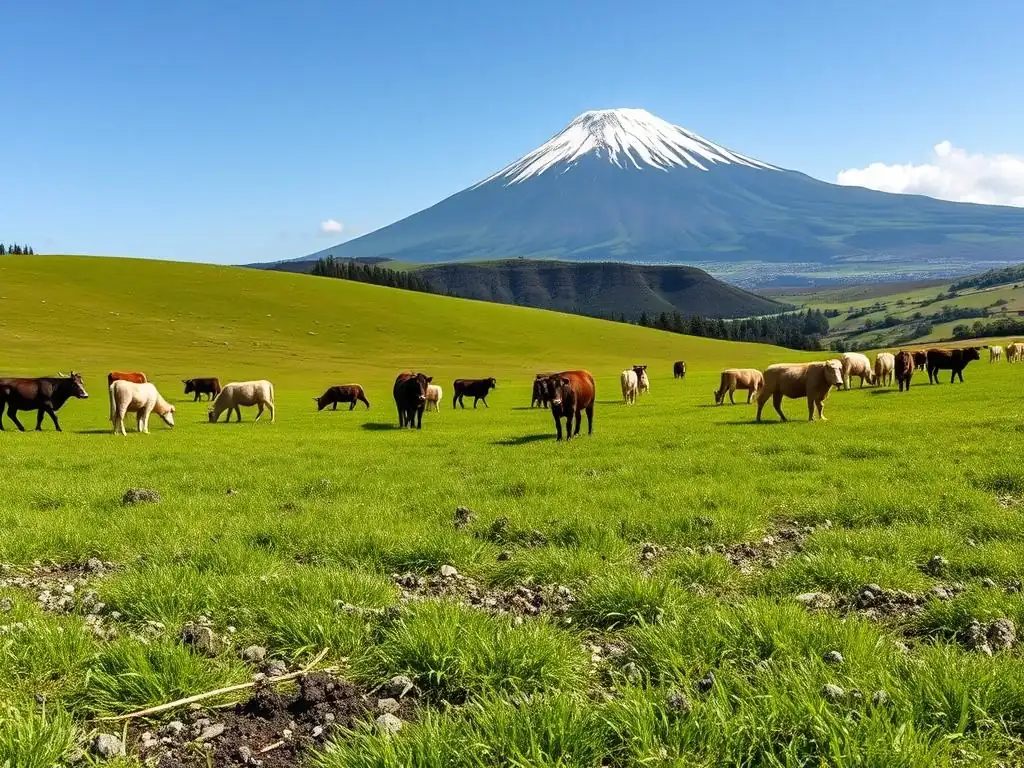
One of the most significant volcanic ash benefits for livestock grazing is the improvement in the nutrient content of forage. As volcanic ash weathers and releases its mineral components into the soil, these nutrients are readily taken up by pasture plants. Studies conducted in volcanic regions have consistently shown an increase in essential mineral concentrations in grasses and other forage species following ashfall.
For instance, research after eruptions of Mount Ruapehu in New Zealand demonstrated elevated levels of phosphorus and potassium in pasture grasses, crucial minerals for livestock health and productivity. Similarly, in Iceland, studies following the Eyjafjallajökull eruption in 2010 indicated an increase in mineral content, including calcium and magnesium, in grazing vegetation.
This enhanced nutrient content directly translates to improved forage quality for livestock. Animals grazing on ash-affected pastures benefit from a more mineral-rich diet, potentially leading to better overall health, improved growth rates, and enhanced reproductive performance. For example, adequate phosphorus intake is essential for bone development and milk production in cattle, while magnesium plays a critical role in nerve and muscle function. Volcanic ash, therefore, acts as a natural way to fortify pastures, providing livestock with a more balanced and nutritious diet, which can reduce the need for supplementary mineral licks and feed additives.
Increased Pasture Biomass and Forage Production
Beyond nutrient enrichment, volcanic ash can also stimulate increased pasture biomass and overall forage production. The fertilizing effect of volcanic ash, combined with improved soil physical properties, creates a more favorable environment for plant growth. The readily available nutrients in ash, particularly nitrogen, phosphorus, and potassium, promote vigorous vegetative growth, leading to higher yields of pasture biomass.
Observations following various volcanic eruptions have documented a surge in pasture growth in the years following ash deposition. For example, after the 1980 eruption of Mount St. Helens in Washington State, USA, areas that received moderate ashfall experienced a notable increase in plant productivity compared to un-ashed areas.
This increase in forage production is a significant benefit for livestock farmers as it translates to greater grazing capacity and potentially higher stocking rates. More abundant pasture means more feed available for livestock, reducing the need for supplemental feed and lowering production costs. Furthermore, the increased biomass can also contribute to improved soil health in the long term. Higher plant biomass leads to greater inputs of organic matter into the soil as plant roots and litter decompose. This organic matter further enhances soil fertility, water retention, and overall soil health, creating a positive feedback loop for sustained pasture productivity.
Palatability and Digestibility of Ash-Affected Pasture
While the nutritional benefits of ash-affected pasture are clear, it's also important to consider the palatability and digestibility of forage that has been exposed to volcanic ash. Generally, livestock readily graze on pastures that have received moderate amounts of ashfall. In fact, some studies suggest that ash-affected forage may even be more palatable to livestock. This could be due to the increased mineral content, which can make the forage more appealing to animals seeking specific nutrients. Anecdotal evidence from farmers in volcanic regions often supports this observation, with reports of livestock preferentially grazing on ash-covered areas.
Regarding digestibility, research indicates that moderate ashfall does not negatively impact the digestibility of forage. In some cases, the increased mineral content may even enhance digestibility by providing essential cofactors for digestive enzymes in livestock. However, it's important to note that heavy ashfall can pose challenges.
Thick layers of ash can physically smother plants and reduce their photosynthetic activity, potentially leading to a temporary decrease in forage quality and palatability. Additionally, very fine ash particles can adhere to plant leaves, potentially making them less palatable and, in extreme cases, causing mild digestive upset if ingested in very large quantities. Therefore, while generally ash-affected pasture is palatable and digestible, managing ashfall intensity and ensuring appropriate grazing management are crucial for maximizing the benefits and minimizing any potential negative impacts.
Managing Volcanic Ash in Pasturelands: Best Practices for Livestock Farmers
Assessing Ashfall Deposits and Soil Testing
Effective management of volcanic ash in pasturelands begins with a thorough assessment of ashfall deposits and soil testing. After a volcanic eruption, farmers should first evaluate the thickness and distribution of ash across their pastures. This can be done through visual inspection and by taking measurements of ash depth at various locations. Knowing the depth of ashfall is crucial as it influences the management strategies needed. Light ashfall (less than a few centimeters) may require minimal intervention, while heavy ashfall (tens of centimeters or more) will necessitate more intensive management practices.
Soil testing is equally important to understand the impact of ash on soil chemistry and nutrient levels. Farmers should collect soil samples from both ash-affected and un-affected areas for comparison. Standard soil tests can analyze pH, organic matter content, and the levels of essential plant nutrients like phosphorus, potassium, and micronutrients.
These tests will reveal the extent to which volcanic ash has altered soil properties and identify any nutrient imbalances or deficiencies that may need to be addressed. For example, while ash generally adds beneficial nutrients, it can sometimes temporarily alter soil pH, which may affect nutrient availability. Soil testing provides data-driven insights to guide informed decisions on fertilizer application, soil amendment, and overall pasture management strategies.
Strategies for Incorporating Ash into the Soil
Incorporating volcanic ash into the soil is a key strategy for maximizing its benefits and mitigating potential negative impacts. The method and intensity of incorporation will depend on the depth of ashfall and the type of pastureland. For light to moderate ashfall, natural processes like rainfall and animal trampling can gradually incorporate the ash into the topsoil over time. However, for heavier ashfall, active incorporation may be necessary to speed up the process and prevent issues like surface crusting or water runoff.
Mechanical methods, such as harrowing or light tillage, can be used to mix the ash with the topsoil. Harrowing is particularly suitable for pasturelands as it lightly disturbs the soil surface without significantly damaging existing vegetation. Tillage, while more effective at incorporating deeper ash layers, should be used cautiously in established pastures to avoid excessive soil disturbance and damage to plant roots.
In some cases, no-till farming techniques may be adapted to incorporate ash by using specialized equipment that minimizes soil disturbance. The goal of incorporation is to create a homogenous mixture of ash and topsoil, allowing plant roots to access the beneficial nutrients in the ash while improving soil physical properties. Incorporation also helps to reduce the risk of wind and water erosion of the ash layer itself.
Mitigating Potential Risks of Ash Ingestion by Livestock
While volcanic ash offers numerous benefits, it's also important to be aware of and mitigate potential risks associated with ash ingestion by livestock. The primary concern is the abrasive nature of volcanic ash particles, particularly fine ash, which can potentially cause irritation to the digestive tract and respiratory system if ingested in large quantities. However, in most grazing situations, the risk of significant health problems from ash ingestion is relatively low, especially with appropriate management practices.
Providing livestock with access to clean water is crucial as it helps to wash ash particles from the mouth and throat and reduces the overall intake of ash. Ensuring adequate forage availability also minimizes the likelihood of livestock excessively ingesting soil and ash while grazing. Rotational grazing systems can be particularly beneficial, allowing pastures to recover and reducing the concentration of ash on grazed areas.
In cases of very heavy ashfall, or if livestock show signs of respiratory or digestive distress, temporary removal of animals from ash-affected pastures may be necessary. Dust suppression measures, such as lightly watering pastures in dry conditions, can also help to reduce airborne ash and minimize inhalation risks. Generally, with sensible management and monitoring, the risks associated with ash ingestion by livestock can be effectively minimized, allowing farmers to harness the valuable benefits of volcanic ash for pastureland improvement.
Case Studies: Successful Pastureland Management After Volcanic Eruptions

Examples of Pasture Recovery in Iceland and Mount St. Helens Regions
Iceland and the Mount St. Helens region in the United States offer compelling case studies of successful pastureland management and recovery following volcanic eruptions. Iceland, a volcanically active island nation, has a long history of dealing with volcanic ashfall. Icelandic farmers have developed traditional practices for managing ash-affected pastures, often utilizing the natural fertilizing properties of volcanic ash.
Following eruptions like Eyjafjallajökull in 2010, Icelandic research demonstrated rapid pasture recovery and enhanced forage quality in ash-covered areas. Farmers reported observing increased grass growth and improved livestock health in the years after the eruption, attributing it to the nutrient enrichment from the volcanic ash. The Icelandic experience highlights the long-term resilience of pasturelands in volcanic environments and the potential for sustainable livestock farming in these regions.
In the Mount St. Helens region, the 1980 eruption provided a unique opportunity to study ecosystem recovery after a major volcanic event. While the eruption caused significant initial devastation, including heavy ashfall across vast areas, long-term studies revealed the remarkable recovery of vegetation, including pasturelands. Research documented increased plant productivity and nutrient cycling in ash-affected areas compared to un-ashed control sites.
Farmers in the region observed improved pasture growth and grazing capacity in the years following the eruption. These case studies from Iceland and Mount St. Helens demonstrate that, despite the initial disruption, volcanic ash can play a crucial role in long-term pastureland recovery and enhancement, fostering resilient and productive agricultural systems in volcanic landscapes.
Lessons Learned: Optimizing Livestock Grazing in Volcanic Areas
From these case studies and ongoing research, several key lessons have emerged regarding optimizing livestock grazing in volcanic areas. Firstly, understanding the specific characteristics of volcanic ash, including its chemical composition and particle size distribution, is crucial for tailored management strategies. Ash from different volcanoes will have varying nutrient profiles and physical properties, requiring adapted approaches. Secondly, proactive soil testing and monitoring of pasture nutrient levels are essential for informed decision-making on fertilization and grazing management. Regular soil tests allow farmers to track the long-term effects of ash on soil fertility and adjust their practices accordingly.
Thirdly, implementing appropriate grazing management practices, such as rotational grazing and adjusting stocking rates based on pasture productivity, is critical for sustainable pasture utilization in volcanic regions. Rotational grazing allows pastures to recover and prevents overgrazing, particularly in the initial years after ashfall when vegetation is re-establishing.
Finally, fostering knowledge sharing and collaboration among farmers, researchers, and extension services in volcanic areas is vital for disseminating best practices and building community resilience. By learning from past experiences and embracing adaptive management strategies, livestock farmers in volcanic regions can effectively harness the power of volcanic ash to create productive and sustainable pasturelands.
Conclusion: Harnessing the Power of Volcanic Ash for Sustainable Livestock Farming
Volcanic ash, often perceived as a destructive byproduct of volcanic eruptions, emerges as a surprisingly beneficial resource for pasturelands. Its rich mineral composition acts as a natural fertilizer, enhancing soil fertility and boosting forage quality. By improving soil structure and water retention, volcanic ash creates a more favorable environment for plant growth, leading to increased pasture biomass and productivity. For livestock farmers, these volcanic ash benefits translate to improved grazing capacity, enhanced animal nutrition, and potentially reduced reliance on synthetic fertilizers and feed supplements.
However, realizing these benefits requires informed management practices. Assessing ashfall deposits, conducting soil testing, and implementing appropriate incorporation strategies are essential steps. Mitigating potential risks associated with ash ingestion through proper water provision and grazing management ensures livestock health and productivity.
The case studies from Iceland and Mount St. Helens showcase the long-term resilience of pasturelands in volcanic regions and the potential for sustainable livestock farming by harnessing the power of volcanic ash. By embracing a proactive and knowledge-based approach, farmers in volcanic areas can transform volcanic ash from a perceived hazard into a valuable asset, fostering resilient and productive pasturelands for generations to come.
Frequently Asked Questions
How can volcanic ash benefit pasturelands used for livestock grazing?
Volcanic ash can act as a natural fertilizer, enriching the soil with essential minerals like phosphorus and potassium. This leads to improved grass growth and nutrient content.
What types of livestock might benefit most from volcanic ash-enhanced pasturelands?
Primarily, grazing animals such as cattle, sheep, and goats benefit from the improved forage quality. The increased mineral intake can lead to better overall health and productivity.
Are there any risks associated with livestock grazing on volcanic ash-affected pasturelands?
Yes, excessive ash ingestion can cause dental abrasion and digestive issues in livestock. Also, the ash may contain harmful substances depending on its composition.
How long do the benefits of volcanic ash on pasturelands typically last?
The duration of the benefits depends on the amount of ash deposited and the local climate conditions. Generally, the effects can last for several years, with the most significant impact seen in the first few seasons.
What precautions should farmers take when managing livestock on volcanic ash-covered pasturelands?
Farmers should monitor livestock for signs of health problems, provide supplemental feed if necessary, and ensure access to clean water. They should also consult with agricultural experts for specific recommendations.
Final Reflection: Reaping Resilience from Volcanic Ash
The preceding exploration of volcanic ash's surprising benefits for livestock grazing lands underscores a vital truth: nature's disruptions can, paradoxically, pave the way for renewal. What was once perceived solely as a destructive force can, with informed management and understanding, become a catalyst for enhanced pasture productivity and improved livestock health. This shift in perspective is crucial in a world increasingly facing environmental challenges.
The impact of volcanic ash on pasturelands extends beyond mere soil enrichment; it touches upon the very resilience of our agricultural systems and the well-being of the animals that depend on them. Witnessing the potential for these seemingly barren landscapes to flourish again, thanks to the very substance that initially threatened them, is a powerful reminder of nature's inherent capacity for regeneration. The ultimate test of a moral society is the kind of world that it leaves to its children.
- Dietrich Bonhoeffer. This quote reminds us that our stewardship of the land, even in the face of adversity, directly impacts future generations and their ability to thrive.
As you consider the insights shared in this article, I invite you to reflect on the potential for unexpected benefits within your own sphere of influence. What perceived obstacles might, with a shift in perspective and a commitment to innovation, become opportunities for growth and improvement? Embrace the challenge of finding resilience in the face of adversity, and let the story of volcanic ash and pasturelands inspire you to cultivate a more sustainable and thriving future, not just for livestock, but for all.
Revitalize Your Rangeland: Steps to Thriving Pastures After Ashfall
Thank you for exploring how volcanic ash impacts pasturelands and the innovative strategies for restoring them. We hope you gained valuable insights into revitalizing these vital livestock ecosystems. Now, let's put that knowledge into action!
Here are a few immediate steps you can take to improve the health of grazing lands:
- Implement a targeted ash management plan: Focus on nutrient replenishment and soil stabilization techniques tailored to your region's ash composition. This crucial step begins the restoration process.
- Share this article with local ranchers and agricultural communities to foster collaboration and solutions for managing ash-affected lands.
- Explore funding opportunities and grants for ecological restoration. Consider initiating a local project with landowners.
What innovative techniques are you planning to implement to support ash-affected pasturelands in your community? Share your ideas in the comments below!