
When the Earth Trembles: Volcanoes in Apocalyptic Visions

Welcome to Volcano Explorers!
Ever wondered why volcanoes so often feature in our nightmares and legends of the end times? Dive into the heart of apocalyptic visions of volcanoes and discover how these fiery mountains have shaped not only our planet, but also our deepest fears and artistic expressions. Prepare to explore the cultural significance of these geological titans and unravel the stories etched in ash and lava. What secrets will you unearth?
Exploring the Connection Between Volcanic Eruptions and End-of-the-World Scenarios
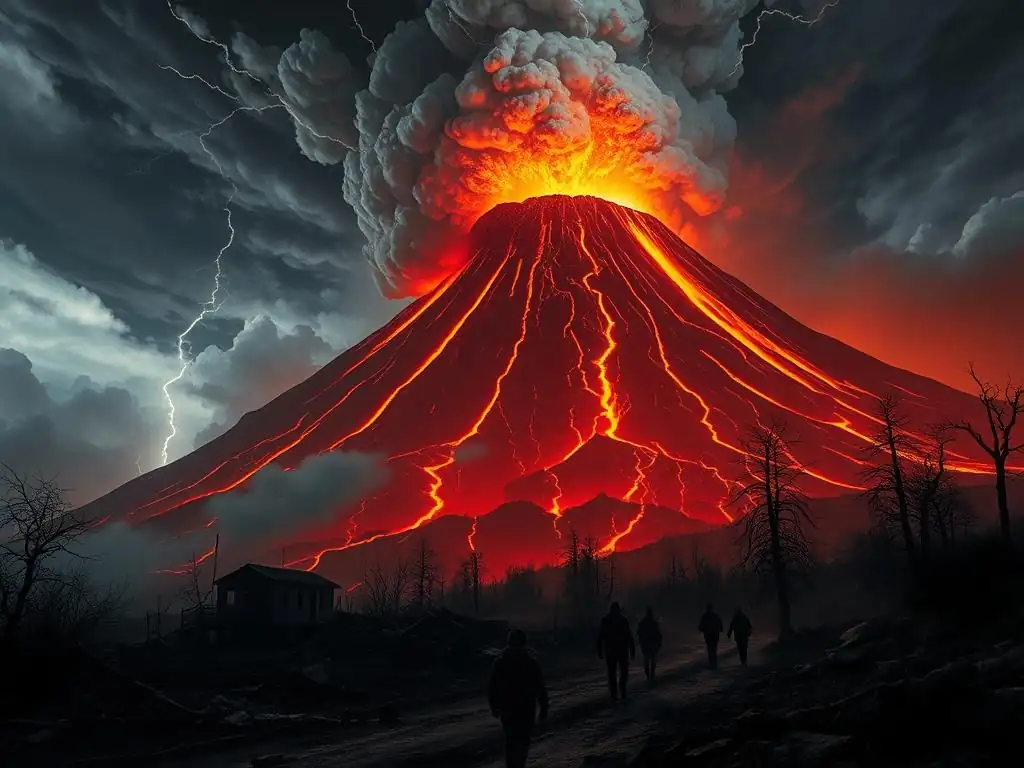
Throughout history, volcanic eruptions have been some of the most dramatic and terrifying natural events witnessed by humanity. The sheer power unleashed, the earth-shattering explosions, and the subsequent devastation have understandably led to their association with apocalyptic visions. Imagine the sky darkening at midday, choked with ash, the sun obscured for weeks or months, crops failing, and the very ground beneath trembling and spewing fire.
For ancient civilizations, lacking the scientific understanding we possess today, such occurrences were readily interpreted as signs of divine wrath, the end of times, or the destruction of the world as they knew it. These interpretations weren't solely based on fear; the tangible consequences of large eruptions – famine, disease, and societal disruption – could indeed feel like the unraveling of civilization itself.
The connection between volcanic eruptions and apocalyptic scenarios is deeply rooted in human experience and cultural memory. From the catastrophic eruption of Vesuvius in 79 AD, which buried Pompeii and Herculaneum, to the more recent, albeit smaller, eruptions that have disrupted air travel and local economies, the impact of volcanoes is undeniable. When considering truly massive eruptions, like those of supervolcanoes, the potential for global-scale devastation becomes chillingly apparent.
These events, while rare, are capable of altering global climates, triggering widespread famine, and causing societal collapse. It is this potential for widespread and catastrophic destruction that firmly cements volcanoes in our apocalyptic imagination, making them potent symbols of earthly endings.
VolcanoExplorers.org: Understanding the Cultural Impact of Volcanic Activity
VolcanoExplorers.org serves as a vital resource for understanding not only the scientific aspects of volcanism but also its profound cultural impact on societies across the globe. While the website delves into the geology, physics, and chemistry behind volcanic eruptions, it also recognizes that volcanoes are more than just geological phenomena. They are powerful forces that have shaped human cultures, beliefs, and artistic expressions for millennia. By exploring the cultural significance of volcanoes, VolcanoExplorers.org aims to provide a holistic understanding of these awe-inspiring natural wonders, acknowledging their role in shaping human history and imagination.
Through dedicated sections focusing on storytelling traditions, mythology, and art, VolcanoExplorers.org illuminates how different cultures have interpreted and integrated volcanoes into their worldviews. The website examines how volcanic landscapes have inspired myths and legends, how eruptions have been depicted in art and literature, and how communities living near volcanoes have developed unique cultural practices and beliefs to coexist with these powerful forces of nature. By bridging the gap between scientific knowledge and cultural understanding, VolcanoExplorers.org offers a richer and more nuanced perspective on volcanoes, recognizing their enduring impact on the human psyche and our collective apocalyptic visions.
Volcanic Imagery in Religious Texts: Revelation and Norse Mythology
Religious texts across various cultures frequently employ powerful natural imagery to convey messages of divine judgment, destruction, and the end of the world. Volcanoes, with their fire, smoke, and earth-shattering power, naturally lend themselves to such apocalyptic visions. In the Book of Revelation, for instance, vivid descriptions of cosmic upheaval and divine wrath often echo volcanic phenomena.
Imagery of fire raining from the sky, mountains burning, and the earth quaking are reminiscent of large-scale eruptions and are used to symbolize the final judgment and the destruction of the existing world order. The "great mountain, burning with fire" cast into the sea, as described in Revelation 8:8, is a particularly striking example of volcanic imagery used in an apocalyptic context.
Similarly, Norse mythology, with its dramatic tales of Ragnarök – the twilight of the gods – incorporates volcanic elements into its end-of-the-world scenario. While not explicitly detailing volcanic eruptions, the descriptions of fire giants, the world serpent Jörmungandr rising from the sea, and the sky and earth burning are evocative of the chaos and destruction associated with volcanic catastrophes.
The volcanic landscapes of Iceland, where much of Norse mythology originated, likely influenced these apocalyptic visions. The ever-present threat of volcanic activity in such regions would have provided a tangible and terrifying backdrop for imagining the end of the world, embedding volcanic imagery deeply within their religious and mythological narratives.
Myths and Legends: Volcanoes as Portals to the Underworld and Divine Wrath
Beyond religious texts, myths and legends from around the world frequently depict volcanoes as portals to the underworld or expressions of divine wrath. The fiery depths of a volcano, spewing lava and gases, were easily imagined as entrances to subterranean realms inhabited by gods, demons, or the spirits of the dead.
In Greek mythology, for example, Mount Etna in Sicily was considered the forge of Hephaestus, the god of fire and blacksmiths, and a gateway to Tartarus, the deepest abyss of the underworld. These beliefs often stemmed from the observable phenomena associated with volcanoes – the earth opening up, releasing fire and smoke from its depths, and the rumbling sounds emanating from within, all contributing to the idea of a hidden, powerful realm beneath the surface.
Furthermore, volcanic eruptions were often interpreted as acts of divine punishment or displeasure. Ancient societies, lacking scientific understanding of geological processes, attributed natural disasters to the will of the gods. A sudden, violent eruption could be seen as a sign of divine anger, a response to human transgressions, or a warning of impending doom.
Legends often arose around specific volcanoes, explaining their eruptions as consequences of mythical events or divine interventions. These myths served not only to explain the terrifying power of volcanoes but also to reinforce social norms and moral codes, suggesting that obedience to divine will was necessary to avoid such catastrophic displays of wrath and prevent apocalyptic outcomes.
From Dante's Inferno to Modern Dystopian Novels: The Volcano's Role in Storytelling
Volcanoes have long served as potent symbols in literature, particularly in narratives exploring apocalyptic or dystopian themes. In Dante Alighieri's 14th-century epic poem Inferno, the journey through hell is vividly depicted as a descent into a fiery, volcanic landscape. The imagery of fire, brimstone, and molten rock permeates Dante's hell, creating a terrifying and visceral representation of punishment and damnation. This volcanic inferno serves as a powerful metaphor for the consequences of sin and the ultimate apocalyptic judgment, influencing subsequent literary depictions of hell and dystopian landscapes for centuries.
In modern dystopian novels, volcanoes continue to play a significant role in portraying post-apocalyptic worlds or societies on the brink of collapse. Authors often utilize volcanic eruptions as a catalyst for societal breakdown, depicting scenarios where eruptions trigger climate change, resource scarcity, and mass migrations.
In Cormac McCarthy's The Road, for instance, while the specific cause of the apocalypse is ambiguous, the ashen, desolate landscape is strongly suggestive of a volcanic winter, creating a bleak and unforgiving backdrop for the story of survival and despair. Volcanoes, in these narratives, represent not just physical destruction but also the fragility of civilization and the potential for natural forces to unleash apocalyptic transformations upon the world.
Volcanic Landscapes as Symbols of Destruction and Renewal: "The Eruption of Vesuvius" by J.M.W. Turner and its Interpretation
Art, like literature, has also captured the apocalyptic power and symbolism of volcanoes. J.M.W. Turner's painting The Eruption of Vesuvius (various versions exist, depicting different eruptions) exemplifies how volcanic landscapes can be interpreted as both symbols of destruction and, paradoxically, renewal. Turner's dramatic depiction of the erupting Vesuvius, with its fiery plumes reaching into the night sky and the chaotic scenes of human response in the foreground, captures the terrifying spectacle of a volcanic catastrophe. The painting vividly conveys the destructive power of nature, emphasizing the vulnerability of human civilization in the face of such forces.
However, beyond the immediate destruction, volcanic landscapes also possess an inherent element of renewal. Volcanic ash, while initially devastating, enriches the soil over time, leading to fertile lands that can support abundant life. The very process of volcanic eruption, while destructive, is also a creative force, reshaping landscapes and creating new geological formations.
Turner's painting, while primarily focusing on the dramatic and destructive aspects of the eruption, can also be interpreted through this lens of renewal. The aftermath of volcanic events, while initially appearing apocalyptic, ultimately paves the way for new beginnings, making volcanic landscapes complex symbols that embody both destruction and the cyclical nature of creation and rebirth in apocalyptic visions of volcanoes.
Supervolcano Eruptions: A Real-World Apocalyptic Threat
While often relegated to fiction, supervolcano eruptions represent a real-world apocalyptic threat, capable of causing global-scale devastation far exceeding that of typical volcanic events. Supervolcanoes, such as Yellowstone in the United States, Lake Toba in Indonesia, and Lake Taupo in New Zealand, are characterized by their potential to erupt with magnitudes thousands of times greater than historical eruptions. These eruptions are not your typical cone-shaped volcano explosions; instead, they involve massive caldera collapses, spewing colossal volumes of ash, gas, and pyroclastic material into the atmosphere.
The Volcanic Explosivity Index (VEI) scale, which measures the magnitude of eruptions, goes up to 8. Supervolcano eruptions are typically VEI 8 events, the highest level, while Mount St. Helens in 1980 was a VEI 5.
The potential consequences of a supervolcano eruption are truly apocalyptic. A VEI 8 eruption would eject thousands of cubic kilometers of material into the atmosphere, blanketing vast regions in thick ash, disrupting air travel globally, and collapsing infrastructure. More critically, the massive release of sulfur dioxide gas would lead to a rapid and significant global cooling, potentially triggering a "volcanic winter."
Crop failures would become widespread, leading to famine and societal collapse. Scientists estimate that a Yellowstone-level supereruption could plunge the planet into a period of climate disruption lasting years, if not decades, fundamentally altering global ecosystems and human civilization, fulfilling many apocalyptic visions of volcanoes.
Pyroclastic Flows, Lahars, and Ash Clouds: The Devastating Effects of Volcanic Activity
Beyond the long-term climatic impacts, the immediate effects of volcanic eruptions are also incredibly destructive and contribute to their apocalyptic image. Pyroclastic flows are among the most lethal volcanic hazards. These are superheated avalanches of gas, ash, and rock fragments that can travel at speeds exceeding 700 kilometers per hour and reach temperatures of up to 1000 degrees Celsius. Pyroclastic flows incinerate everything in their path, leaving behind a wasteland of ash and debris. The destruction of Pompeii and Herculaneum by pyroclastic flows from Vesuvius in 79 AD serves as a stark historical example of their devastating power.
Lahars, volcanic mudflows, are another significant hazard. These are mixtures of volcanic ash, rock debris, and water that can flow down volcanic slopes with immense force and speed, similar to concrete. Lahars can bury entire towns, destroy infrastructure, and reshape landscapes. The 1985 Nevado del Ruiz eruption in Colombia triggered a lahar that destroyed the town of Armero, killing over 25,000 people, highlighting the catastrophic potential of these volcanic mudflows.
Finally, volcanic ash clouds, while seemingly less dramatic, can have widespread and disruptive effects. Ash can collapse roofs, contaminate water supplies, disrupt air travel by damaging jet engines, and cause respiratory problems. The cumulative impact of pyroclastic flows, lahars, and ash clouds creates a scenario of widespread destruction and chaos, reinforcing the apocalyptic nature of volcanic eruptions.
The Impact of Volcanic Eruptions on Global Temperatures and Weather Patterns
Volcanic eruptions, particularly large ones, have a significant impact on global temperatures and weather patterns, contributing to apocalyptic visions of volcanoes by demonstrating their capacity to alter the world's climate. When volcanoes erupt, they release large quantities of gases into the atmosphere, including sulfur dioxide (SO2). This sulfur dioxide reacts with water vapor in the stratosphere to form sulfate aerosols, tiny particles that reflect sunlight back into space.
This process reduces the amount of solar radiation reaching the Earth's surface, leading to a cooling effect. The 1815 eruption of Mount Tambora in Indonesia, one of the largest eruptions in recorded history, caused the infamous "Year Without a Summer" in 1816, with widespread crop failures and famine across the Northern Hemisphere due to the volcanic cooling effect.
The magnitude of the cooling effect depends on the size and sulfur content of the eruption. Large, sulfur-rich eruptions can cause global average temperatures to drop by several degrees Celsius for months or even years. While this cooling might seem beneficial in a warming world, the rapid and drastic temperature changes can disrupt weather patterns, leading to extreme events such as droughts, floods, and unusually cold winters.
These climate disruptions can have severe consequences for agriculture, ecosystems, and human societies, contributing to the apocalyptic scenarios associated with major volcanic events. The link between volcanic eruptions and climate change highlights the far-reaching and potentially devastating global impacts of these natural phenomena.
The Potential for Volcanic Activity to Trigger a "Volcanic Winter"
The most extreme climate consequence of a large volcanic eruption is the potential for a "volcanic winter," a prolonged period of global cooling and climate disruption that can have near-apocalyptic effects. A volcanic winter is triggered by massive injections of sulfur dioxide into the stratosphere, leading to a significant increase in sulfate aerosols. These aerosols block sunlight, causing a substantial drop in global temperatures.
The Tambora eruption in 1815, while causing a "Year Without a Summer," did not fully trigger a volcanic winter in the most extreme sense. However, even larger eruptions, such as hypothetical supervolcano eruptions, could potentially induce a more severe and prolonged volcanic winter.
A true volcanic winter could last for several years, with global temperatures plummeting, growing seasons drastically shortened, and widespread crop failures becoming inevitable. Ecosystems would be severely stressed, and mass extinctions could occur. For human societies, a volcanic winter would mean widespread famine, resource scarcity, and societal collapse.
The geological record provides evidence of past volcanic winters associated with massive eruptions that have contributed to significant environmental and biological changes, including potential links to past extinction events. The threat of a volcanic winter underscores the apocalyptic potential of large-scale volcanic activity, demonstrating their capacity to trigger global catastrophes that could drastically alter the course of human history and life on Earth.
Volcanoes in Film and Video Games: "Dante's Peak" and "Minecraft"
Modern media, particularly film and video games, frequently utilize volcanoes as powerful symbols of destruction and apocalyptic scenarios, further cementing their place in contemporary apocalyptic narratives. Films like Dante's Peak (1997) vividly depict the dramatic and terrifying aspects of a volcanic eruption, showcasing pyroclastic flows, lahars, and ashfall in a disaster movie format.
While often exaggerating the scientific accuracy for dramatic effect, these films tap into the public's fascination with and fear of volcanoes, portraying them as forces of nature capable of unleashing chaos and devastation upon unsuspecting communities. These cinematic representations contribute to the popular perception of volcanoes as inherently dangerous and apocalyptic.
Video games also incorporate volcanoes in diverse ways, ranging from realistic simulations to fantastical interpretations. In games like Minecraft, volcanoes, often stylized and less scientifically accurate, can represent challenging environments and sources of valuable resources like obsidian. However, even in stylized games, the destructive potential of lava and volcanic terrain is often emphasized, reinforcing the association of volcanoes with danger and transformative power. The inclusion of volcanoes in popular media reflects and amplifies their cultural significance as symbols of both destruction and creation, ensuring their continued presence in our collective imagination as apocalyptic forces.
Reflecting Societal Fears: Why Volcanoes Continue to Captivate Our Imagination
Volcanoes continue to captivate our imagination and feature prominently in apocalyptic narratives because they tap into deep-seated societal fears about the fragility of civilization and the power of nature. The unpredictable and often violent nature of volcanic eruptions embodies the chaotic forces that can disrupt and destroy human societies.
The imagery of fire, smoke, and earth-shattering explosions evokes primal fears of destruction and annihilation, resonating with our vulnerability in the face of overwhelming natural power. In an era of increasing environmental awareness and anxieties about climate change, volcanoes serve as a stark reminder of the Earth's raw power and the potential for catastrophic natural events to reshape our world.
Furthermore, volcanoes represent a unique combination of destruction and creation. While eruptions are undeniably destructive, they also create new land, fertile soils, and geothermal energy. This dual nature mirrors the cyclical processes of life and death, creation and destruction, that are often central to apocalyptic narratives.
The enduring fascination with volcanoes stems from their ability to embody these fundamental contrasts, serving as both a terrifying threat and a symbol of the Earth's dynamic and transformative forces. They represent a tangible manifestation of the planet's immense power, constantly reminding us of our place within a larger, and sometimes volatile, natural world, fueling our apocalyptic visions of volcanoes.
Volcano Monitoring and Early Warning Systems: Minimizing the Impact of Eruptions
In the face of the real and imagined apocalyptic threat of volcanoes, scientific advancements in volcano monitoring and early warning systems play a crucial role in minimizing the impact of eruptions and mitigating potential disasters. Volcanologists employ a range of sophisticated instruments to monitor volcanic activity, including seismometers to detect ground movements, GPS stations to measure ground deformation, gas sensors to analyze volcanic gas emissions, and satellite imagery to track thermal changes and ash plumes. By continuously monitoring these parameters, scientists can detect subtle changes in volcanic behavior that may indicate an impending eruption.
Early warning systems, based on scientific monitoring, are essential for providing timely alerts to communities at risk, allowing for evacuations and other preparedness measures. The development of increasingly accurate forecasting models and improved communication technologies has significantly enhanced the effectiveness of these systems.
For example, the USGS Volcano Hazards Program in the United States and similar organizations worldwide continuously monitor volcanoes and provide real-time information and warnings. While it is impossible to completely prevent the destructive forces of volcanic eruptions, effective monitoring and early warning systems are critical tools for reducing casualties and minimizing the societal and economic impacts of these natural hazards, moving away from purely apocalyptic outcomes.
Community Resilience and Evacuation Strategies: Lessons Learned from Past Volcanic Disasters
Beyond scientific monitoring, community resilience and well-planned evacuation strategies are vital components of mitigating the impact of volcanic eruptions and fostering a less apocalyptic scenario. Communities living near active volcanoes need to be educated about volcanic hazards, evacuation routes, and emergency preparedness measures. Regular drills and community-based preparedness programs can significantly improve response times and reduce casualties when an eruption occurs. The successful evacuation of communities around Mount Pinatubo in the Philippines before its massive 1991 eruption is a testament to the effectiveness of proactive preparedness and community involvement.
Lessons learned from past volcanic disasters highlight the importance of clear communication, effective leadership, and community-specific evacuation plans. Evacuation strategies must consider the specific hazards posed by each volcano, the local topography, and the needs of the community. For example, lahars require different evacuation routes and strategies than ashfall.
Building community resilience also involves investing in infrastructure that can withstand volcanic hazards, developing economic diversification strategies to reduce dependence on volcano-prone areas, and fostering a culture of preparedness and self-reliance. By combining scientific monitoring with robust community resilience and evacuation strategies, societies can significantly reduce their vulnerability to volcanic hazards and move from apocalyptic visions towards more manageable risks.
The Dual Nature of Volcanoes: Creation and Destruction
While volcanoes are undeniably associated with apocalyptic visions of destruction and chaos, it is crucial to recognize their dual nature as forces of both creation and destruction. Volcanic eruptions can devastate landscapes, disrupt climates, and threaten human societies. However, they are also fundamental processes in the Earth's geological cycle, responsible for creating new land, enriching soils, and driving plate tectonics. Volcanic activity has played a crucial role in shaping the Earth's atmosphere and oceans, and geothermal energy from volcanoes provides a sustainable energy source.
This duality is reflected in our cultural perceptions of volcanoes. They are symbols of both terror and awe, destruction and renewal. Apocalyptic visions of volcanoes capture the destructive potential, but they often overlook the creative forces inherent in these geological phenomena. Understanding this dual nature is essential for a balanced perspective on volcanoes, recognizing them not just as threats but also as integral components of a dynamic and ever-changing planet. VolcanoExplorers.org aims to foster this understanding, exploring both the dangers and the wonders of volcanoes.
Volcanoes: A Reminder of Earth's Raw Power and Humanity's Vulnerability
Ultimately, volcanoes serve as a powerful reminder of Earth's raw power and humanity's inherent vulnerability in the face of natural forces. They demonstrate the immense energies contained within our planet and the capacity of geological processes to reshape landscapes and influence global climates on scales that dwarf human endeavors. Apocalyptic visions of volcanoes, while often exaggerated in fiction and mythology, are rooted in the very real potential for volcanic eruptions to cause widespread devastation and societal disruption.
However, volcanoes also inspire awe and wonder, showcasing the dynamic and dramatic nature of our planet. They remind us that Earth is not a static and unchanging entity but a living, breathing system constantly evolving and transforming. By studying volcanoes, monitoring their activity, and preparing for potential eruptions, we not only mitigate risks but also deepen our understanding of the Earth and our place within it. Volcanoes, in their apocalyptic and creative duality, serve as a constant reminder of the power of nature and the importance of respecting and understanding the planet we inhabit.
- Exploring the Connection Between Volcanic Eruptions and End-of-the-World Scenarios
- VolcanoExplorers.org: Understanding the Cultural Impact of Volcanic Activity
- Volcanic Imagery in Religious Texts: Revelation and Norse Mythology
- Myths and Legends: Volcanoes as Portals to the Underworld and Divine Wrath
- From Dante's Inferno to Modern Dystopian Novels: The Volcano's Role in Storytelling
- Volcanic Landscapes as Symbols of Destruction and Renewal: "The Eruption of Vesuvius" by J.M.W. Turner and its Interpretation
- Supervolcano Eruptions: A Real-World Apocalyptic Threat
- Pyroclastic Flows, Lahars, and Ash Clouds: The Devastating Effects of Volcanic Activity
- The Impact of Volcanic Eruptions on Global Temperatures and Weather Patterns
- The Potential for Volcanic Activity to Trigger a "Volcanic Winter"
- Volcanoes in Film and Video Games: "Dante's Peak" and "Minecraft"
- Reflecting Societal Fears: Why Volcanoes Continue to Captivate Our Imagination
- Volcano Monitoring and Early Warning Systems: Minimizing the Impact of Eruptions
- Community Resilience and Evacuation Strategies: Lessons Learned from Past Volcanic Disasters
- The Dual Nature of Volcanoes: Creation and Destruction
- Volcanoes: A Reminder of Earth's Raw Power and Humanity's Vulnerability
- What is the main focus of VolcanoExplorers.org?
- How does VolcanoExplorers.org address the dangers of volcanoes?
- What kind of educational content is available on VolcanoExplorers.org?
- Does VolcanoExplorers.org only focus on the negative aspects of volcanoes?
- How does the article "When the Earth Trembles: Volcanoes in Apocalyptic Visions" relate to the overall theme of VolcanoExplorers.org?
Frequently Asked Questions
What is the main focus of VolcanoExplorers.org?
VolcanoExplorers.org explores the science, safety, and cultural impact of volcanoes. It offers educational content, safety guides, and real-time updates. The site aims to showcase both the beauty and danger of these natural wonders.
How does VolcanoExplorers.org address the dangers of volcanoes?
The website provides safety guides and evacuation tips for those living near active volcanoes. It also offers real-time updates on volcanic activity around the world, helping people stay informed.
What kind of educational content is available on VolcanoExplorers.org?
The site explores the science behind volcanic activity, including magma formation and different types of volcanoes. It also covers famous eruptions throughout history and how volcanologists study these phenomena.
Does VolcanoExplorers.org only focus on the negative aspects of volcanoes?
No, the website also celebrates the beauty and cultural significance of volcanoes. There are sections dedicated to photography, travel, and the diverse cultural meanings associated with volcanoes.
How does the article "When the Earth Trembles: Volcanoes in Apocalyptic Visions" relate to the overall theme of VolcanoExplorers.org?
The article explores the dramatic and powerful nature of volcanoes, highlighting their potential to reshape landscapes and inspire apocalyptic visions. This aligns with the site's exploration of the beauty and danger of volcanoes.
Final Reflection: The Enduring Power of Volcanic Apocalypses
The fiery imagery of volcanic eruptions, once confined to geological textbooks, now resonates with a chilling familiarity in our increasingly volatile world. The apocalyptic visions of volcanoes, explored throughout this article, are no longer mere fantasies, but potent symbols of the unpredictable forces shaping our planet and our future. The anxieties they represent – of sudden destruction, environmental upheaval, and the fragility of civilization – are amplified by the very real threats of climate change and geological instability that we face today.
The enduring power of these volcanic apocalypses lies in their ability to tap into our primal fears and anxieties about the unknown. They serve as a stark reminder of our vulnerability in the face of nature's raw power, a power that can both create and destroy. This understanding is crucial, not just for appreciating the narratives we create, but for confronting the challenges we face. The only constant is change,
as Heraclitus famously said, and volcanoes, in their dramatic transformations, embody this truth with unparalleled force.
Now, consider the lessons learned from these apocalyptic visions. How can we, as individuals and as a society, better prepare for the unexpected? How can we foster resilience in the face of potential disaster? Let the fiery narratives of volcanic apocalypses not paralyze us with fear, but instead, ignite within us a renewed sense of responsibility, a deeper appreciation for the planet we inhabit, and a commitment to building a more sustainable and secure future for all.
Ignite Your Inner Explorer: Experience the Power of Volcanoes!
Thanks for exploring the powerful symbolism of volcanoes in apocalyptic narratives. You've discovered how these natural forces shape our planet and our imaginations. Ready to turn that knowledge into adventure?
Here’s how you can delve deeper:
- Plan Your Volcanic Expedition: Research and choose a volcano—nearby or a dream destination—and start planning your trip. Don't just imagine the eruption; witness the raw power of the landscape firsthand!
- Share your favorite volcanic myth or legend with a friend and spark a conversation about humanity's relationship with nature's power.
- Join the Volcano Explorers community forum. Share your volcano-themed art, writing, or photography, and connect with fellow enthusiasts.
What fascinating volcanic fact or fictional scenario will you share first? Let's ignite the discussion below!