
Echoes of Eruptions: How Volcanic Catastrophes Influenced Religious Beliefs

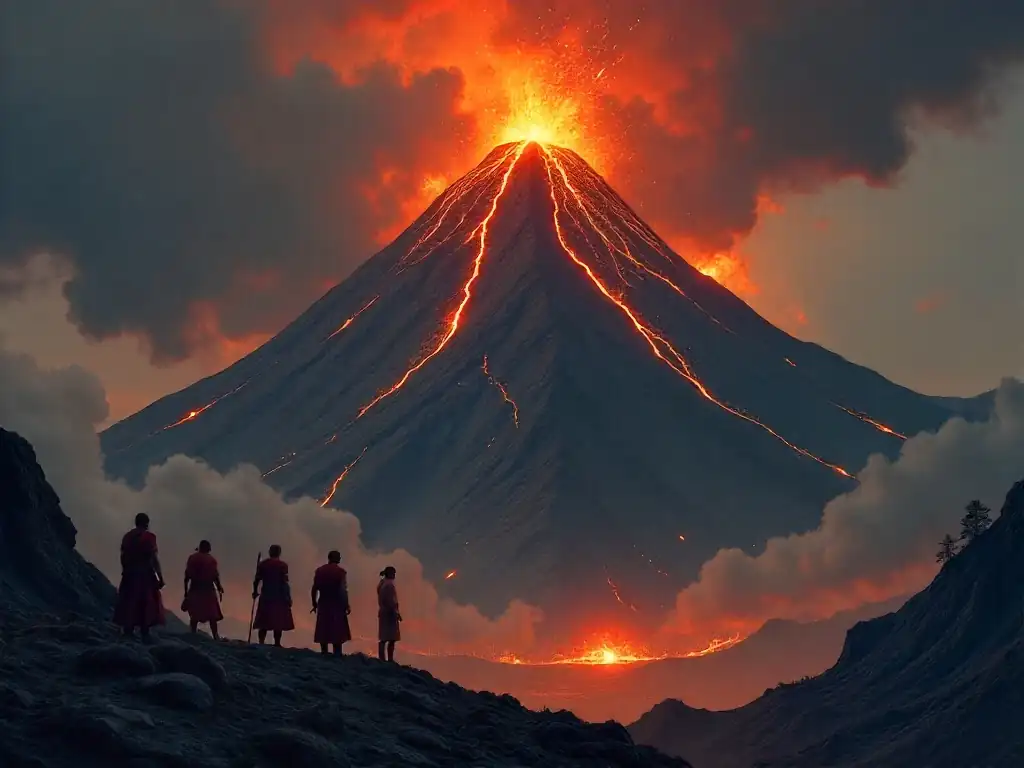
Welcome to Volcano Explorers!
Dare to venture into the heart of Earth's fiery soul? Here, we unravel the mysteries and marvels of volcanoes, from their scientific underpinnings to their profound impact on our world. Prepare to be captivated as we explore the often-overlooked connection between fiery mountains and the human spirit. Today, we delve into a fascinating question: how did the raw power of volcanic eruptions shape the very foundations of religious belief? A world of ancient fears and awe-inspiring deities awaits... continue reading to uncover the surprising answers.
- Introduction: The Intersection of Volcanoes, Mythology, and Faith
- Ancient Civilizations and Volcanic Deities
- The Biblical Flood and Volcanic Theories
- Volcanic Eruptions as Divine Punishment
- Volcanic Landscapes as Sacred Sites
- Modern Interpretations of Volcanic Phenomena in Religion
- Conclusion: The Lasting Legacy of Volcanoes on Religious Thought
-
Frequently Asked Questions
- How might volcanic eruptions have shaped ancient religious beliefs?
- What specific religious stories or myths are thought to be linked to volcanic events?
- How did ancient cultures living near volcanoes try to appease the volcanic deities?
- Does the website "Volcano Explorers" offer information on the cultural significance of volcanoes?
- What is the lasting impact of volcanic events on religious thought and iconography?
- Final Reflection: The Enduring Power of Awe
- Unearth Your Own Connection to Volcanic Lore
Introduction: The Intersection of Volcanoes, Mythology, and Faith
VolcanoExplorers.org: Exploring the Cultural Impact of Volcanic Activity
VolcanoExplorers.org is dedicated to unraveling the multifaceted world of volcanoes, venturing beyond the purely scientific aspects to explore their profound influence on human culture and spirituality. While we delve into the geological processes that drive volcanic activity, it's equally important to understand how these dramatic natural events have shaped human beliefs, rituals, and societal structures throughout history. This article will explore the fascinating intersection of volcanology and religious studies, revealing how volcanic eruptions, in their terrifying power and awe-inspiring beauty, have become deeply intertwined with humanity's quest to understand the world and our place within it.
Our exploration extends to the cultural narratives that have sprung up around volcanoes. From ancient myths populated by fire deities to modern interpretations of volcanic phenomena in spiritual contexts, VolcanoExplorers.org recognizes volcanoes not just as geological features, but as powerful symbols imbued with meaning. We aim to shed light on how societies across the globe have interpreted volcanic eruptions, integrating these spectacular displays of Earth's power into their religious frameworks and belief systems, demonstrating the enduring legacy of volcanoes on human thought and cultural expression.
Connecting Volcanic Eruptions and Religious Beliefs: An Overview
The connection between volcanic eruptions and religious beliefs is a deeply rooted phenomenon, stretching back to the earliest civilizations. For societies lacking scientific understanding of geological processes, volcanic eruptions—with their earth-shattering explosions, rivers of fire, and skies darkened by ash—were often interpreted as acts of divine will, manifestations of supernatural forces, or punishments from angered deities. These interpretations were not merely symbolic; they profoundly shaped religious practices, influencing rituals, mythologies, and even social structures.
This article will trace the threads connecting volcanic activity and religious thought across diverse cultures and time periods. We will examine how ancient civilizations personified volcanoes as gods and goddesses, the rituals they performed to appease these fiery deities, and the role volcanic events played in creation myths and apocalyptic prophecies. By exploring specific examples from around the world, we will uncover the recurring patterns in how humans have sought to understand and respond to the awe and terror inspired by volcanic eruptions, revealing the enduring impact of these natural phenomena on the tapestry of religious belief.
Ancient Civilizations and Volcanic Deities
Volcano Gods and Goddesses: Pele (Hawaii), Vulcan (Roman), Mount Asama Kami (Japan)
Across diverse cultures, the raw power of volcanoes has led to their personification as deities, embodying both creation and destruction. Perhaps one of the most well-known examples is Pele, the Hawaiian goddess of volcanoes and fire. Legends depict Pele as a volatile and powerful figure, responsible for the volcanic activity of the Hawaiian Islands. Her wrath is said to manifest in eruptions, and offerings are traditionally made to appease her and ensure her favor. Pele's influence permeates Hawaiian culture, deeply embedded in myths, chants, and dances, illustrating the intimate connection between volcanic activity and religious expression in the islands.
In Roman mythology, Vulcan was the god of fire, metalworking, and volcanoes. His forge was believed to be located beneath volcanoes, and the rumbling and eruptions were attributed to his hammering and fiery craftsmanship. Vulcan's association with fire and creation, as well as his potential for destructive power, made him a significant deity in the Roman pantheon.
Similarly, in Japan, the Mount Asama Kami is revered as the spirit or deity residing in Mount Asama, an active volcano. Historical records detail rituals performed to placate the Asama Kami, particularly during periods of heightened volcanic activity. These examples, from Hawaii, Rome, and Japan, demonstrate a global pattern of assigning divine agency to volcanoes, reflecting humanity's attempt to understand and control these formidable forces of nature through religious frameworks.
Rituals and Sacrifices to Appease Volcanic Fury
The perception of volcanic eruptions as divine expressions of anger or displeasure naturally led to the development of rituals and sacrifices aimed at appeasing these perceived volcanic deities. Archaeological evidence and historical accounts reveal a variety of practices intended to pacify volcanic forces and avert further destruction. In ancient Pompeii, before its catastrophic eruption in 79 AD, evidence suggests the worship of Vulcan, with altars and temples dedicated to him. It is plausible that rituals and offerings were made in an attempt to ensure his benevolence and protection from volcanic disaster, although tragically, these efforts proved insufficient.
Across the Pacific, in cultures surrounding active volcanoes, offerings ranging from food and precious objects to, in some historical instances, human sacrifices were performed to appease volcano gods. Accounts from early European explorers in regions like Central and South America describe indigenous populations engaging in elaborate ceremonies near volcanoes, offering sacrifices to ensure continued fertility of the land and to prevent destructive eruptions.
These rituals, whether in the form of simple offerings or more complex ceremonies, underscore the deep-seated belief that human actions could influence volcanic activity through divine mediation, highlighting the profound intersection of religious practice and the lived experience of volcanic landscapes.
The Role of Volcanoes in Creation Myths
Beyond deities and rituals, volcanoes often feature prominently in creation myths, serving as powerful symbols of origin and transformation. In many cultures, the fiery, earth-shaping power of volcanoes is seen as analogous to the primordial forces that brought the world into existence. For instance, some Polynesian creation myths depict volcanic eruptions as integral to the formation of islands, with deities using fire and lava to sculpt the land from the sea. This perspective positions volcanoes not merely as agents of destruction, but as fundamental architects of the world itself.
The concept of creation arising from chaos is frequently mirrored in volcanic mythology. The violent and transformative nature of eruptions, capable of both obliterating existing landscapes and creating new landforms, aligns with creation narratives that emphasize the emergence of order from primordial chaos. Volcanoes, in this context, become symbolic of the raw, untamed power of creation itself, representing the dynamic and often violent processes that shape the world. This association of volcanoes with the very act of creation further solidified their sacred status and their central role in the cosmologies of many cultures living in volcanic regions.
The Biblical Flood and Volcanic Theories
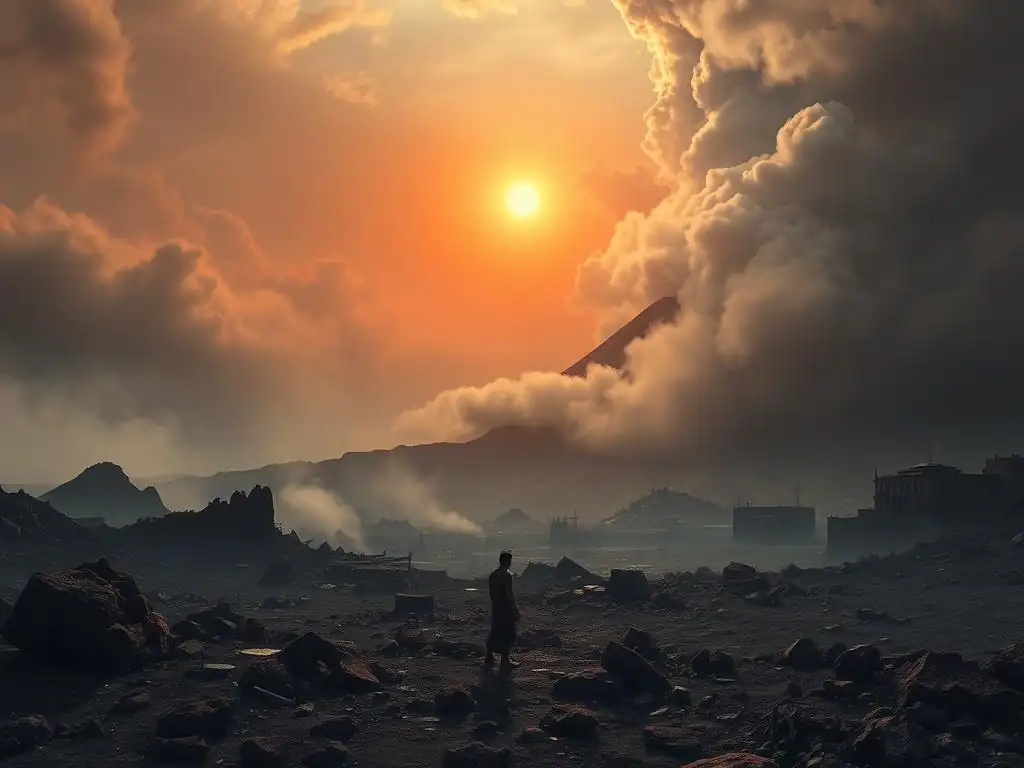
Examining the Geological Evidence for Catastrophic Floods
The biblical narrative of Noah's Ark and the Great Flood is a cornerstone of Judeo-Christian tradition, describing a global deluge as divine punishment for humanity's wickedness. While traditionally interpreted as a purely miraculous event, alternative theories have explored potential geological triggers for widespread flooding, including the possibility of volcanic activity playing a significant role.
Geological records do show evidence of massive floods throughout Earth's history, such as the Missoula Floods in North America at the end of the last Ice Age, which were caused by the sudden draining of glacial lakes. While these floods were not directly caused by volcanic eruptions, they demonstrate the scale and impact of large-scale flooding events on the Earth's surface.
Further research has investigated the potential for volcanic eruptions to contribute to or exacerbate flood events. Massive volcanic eruptions, particularly those associated with supervolcanoes, can trigger significant climate changes, including rapid melting of glaciers and ice sheets due to increased atmospheric aerosols and greenhouse gases.
Additionally, volcanic activity can directly cause lahars, which are volcanic mudflows capable of immense destruction and flooding in valleys and low-lying areas. While the geological evidence does not definitively point to a single volcanic event causing a global flood as described in the Bible, it does highlight the potential for volcanic activity to contribute to catastrophic flooding events, prompting consideration of these natural forces in the context of flood narratives.
Linking Volcanic Events to the Genesis Narrative
The Genesis flood narrative, while often viewed through a purely religious lens, can be re-examined in light of potential geological influences, including volcanic events. Some researchers propose that the "fountains of the deep" and "windows of heaven" mentioned in Genesis, traditionally interpreted as sources of rain and subterranean water, could be metaphors for volcanic eruptions and their associated phenomena.
Massive volcanic eruptions release vast quantities of water vapor into the atmosphere, which can contribute to increased rainfall and potentially trigger periods of prolonged precipitation. Furthermore, submarine volcanic eruptions, or those occurring in coastal areas, could be interpreted as "fountains of the deep" unleashing water from beneath the Earth's surface.
While this interpretation remains speculative, it offers an intriguing perspective on the Genesis flood narrative, suggesting that the biblical account may be rooted in real environmental events experienced by ancient societies. Volcanic eruptions, with their capacity to alter weather patterns, trigger floods, and dramatically reshape landscapes, could have been profoundly impactful events that were later incorporated into religious narratives, imbued with theological meaning. This perspective does not negate the religious significance of the flood narrative, but rather enriches it by exploring potential connections to observable natural phenomena, highlighting the interplay between environmental experiences and the development of religious stories.
The Impact of Volcanic Ash on Ancient Societies and Beliefs
Beyond floods, volcanic eruptions unleash a cascade of environmental effects, including the widespread dispersal of volcanic ash, which can have profound consequences for societies and their belief systems. Volcanic ash clouds can darken the sky, block sunlight, and lead to crop failures, famine, and societal disruption. For ancient civilizations dependent on agriculture, a major volcanic eruption and its associated ashfall could have been devastating, impacting not only their physical survival but also their worldview. The sudden onset of darkness and environmental degradation could easily be interpreted as divine displeasure or a cosmic imbalance.
The historical record contains numerous examples of societies impacted by volcanic ash and its consequences. The eruption of Mount Tambora in 1815, one of the largest volcanic eruptions in recorded history, caused a "year without a summer" due to the global dispersal of volcanic ash. This event led to widespread crop failures, famine, and social unrest in many parts of the world.
It is conceivable that such events in antiquity, lacking scientific understanding, were interpreted through a religious lens, reinforcing beliefs in divine intervention and punishment. The tangible and devastating effects of volcanic ash on daily life could have solidified the association between volcanic eruptions and divine wrath, shaping religious narratives and influencing societal responses to natural disasters.
Volcanic Eruptions as Divine Punishment
The Destruction of Pompeii and the Wrath of the Gods
The catastrophic destruction of Pompeii and Herculaneum by the eruption of Mount Vesuvius in 79 AD is perhaps one of the most iconic examples of a volcanic eruption interpreted as divine punishment. The Roman cities, known for their relative prosperity and, according to some accounts, moral laxity, were suddenly engulfed by pyroclastic flows and buried under volcanic ash.
For contemporary observers, and for subsequent generations, the swift and complete annihilation of these cities could easily be seen as divine retribution for their perceived sins. Historical accounts, such as those by Pliny the Younger, vividly describe the horror and devastation, but also hint at interpretations that framed the disaster as a consequence of divine anger.
The sheer scale and suddenness of the Vesuvian eruption lent itself to religious interpretations. The event occurred during the reign of Emperor Vespasian, who had previously suppressed the Jewish revolt in Judea, and some interpretations linked the volcanic disaster to divine displeasure with Roman actions or with the moral state of Roman society.
While it's impossible to definitively know the prevailing religious interpretations of the eruption at the time, the historical context and the nature of the disaster strongly suggest that many Romans, particularly those inclined towards religious explanations, would have viewed the destruction of Pompeii and Herculaneum as a manifestation of divine wrath. This event became a potent symbol in Western culture, representing the potential for sudden and catastrophic punishment from above.
Interpreting Volcanic Disasters as Moral Judgments
The tendency to interpret volcanic disasters as moral judgments is not unique to the Roman era or the eruption of Vesuvius. Throughout history, societies facing volcanic eruptions have often sought to understand these events within a framework of divine justice, attributing them to moral failings or societal transgressions.
This interpretation stems from a fundamental human need to find meaning in suffering and to explain seemingly inexplicable catastrophes. In cultures where religious belief systems emphasize divine intervention in human affairs, natural disasters, including volcanic eruptions, can readily be understood as expressions of divine displeasure and calls for repentance or moral reform.
This tendency to link natural disasters with moral failings is evident across various religious traditions and historical periods. From ancient Mesopotamian flood myths to medieval European interpretations of plagues and earthquakes, there is a recurring pattern of viewing disasters as punishments for sin or as divine warnings. Volcanic eruptions, with their dramatic and destructive power, fit readily into this framework. The imagery of fire and brimstone, often associated with divine punishment in religious texts, resonates strongly with the visual spectacle of volcanic eruptions, further reinforcing the interpretation of these events as moral judgments.
The Influence of Volcanoes on Apocalyptic Visions
The destructive power of volcanic eruptions has also contributed to apocalyptic visions and end-of-the-world scenarios in various religious and cultural traditions. The dramatic and transformative nature of large eruptions, capable of altering landscapes, disrupting climates, and causing widespread devastation, can easily evoke imagery of cosmic upheaval and the end of civilization. Volcanic eruptions, therefore, have served as potent metaphors for the forces of destruction and renewal that often feature in apocalyptic prophecies.
The Book of Revelation in the Christian Bible, for example, contains imagery that resonates with volcanic phenomena, such as mountains burning, the sky turning dark, and plagues of fire and smoke. While these are symbolic representations, the underlying imagery likely draws upon real-world experiences of natural disasters, including volcanic eruptions.
Similarly, in Norse mythology, the Ragnarök, or twilight of the gods, involves a fiery destruction of the world, with volcanic fire playing a significant role. The recurring motif of fire and destruction in apocalyptic narratives across cultures suggests that volcanic eruptions, as powerful and visually striking displays of Earth's destructive forces, have profoundly influenced human conceptions of the end times and the ultimate fate of the world.
Volcanic Landscapes as Sacred Sites
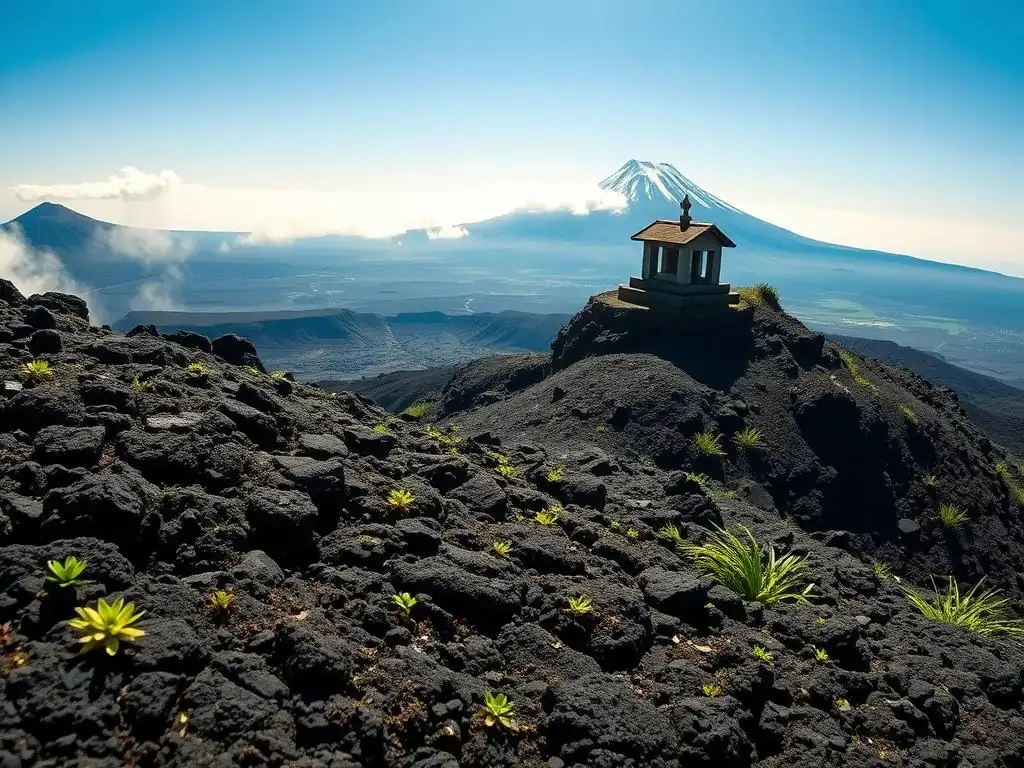
Volcanoes as Places of Pilgrimage and Worship
Beyond the fear and awe inspired by eruptions, volcanoes themselves, even when dormant, have often been regarded as sacred sites, drawing pilgrims and becoming centers of worship. The imposing presence of a volcano, its connection to the depths of the Earth, and the lingering traces of volcanic activity, such as geothermal features, contribute to an atmosphere of mystery and power that fosters spiritual significance. Volcanoes become places where the veil between the earthly and the divine seems thin, inviting religious devotion and pilgrimage.
Mountaintop shrines and temples are common on or near volcanoes around the world, indicating their importance as sacred spaces. Pilgrimages to volcanoes are often undertaken for spiritual purification, seeking blessings, or connecting with the perceived deities or spirits residing within the mountain.
The arduous ascent to the summit, often through challenging volcanic terrain, can itself be seen as a form of religious devotion, a physical manifestation of spiritual dedication. The panoramic views from volcanic summits, often overlooking vast landscapes shaped by volcanic activity, can further enhance the sense of awe and spiritual connection, solidifying the volcano's status as a sacred place.
The Spiritual Significance of Volcanic Features: Craters, Lava Flows, and Hot Springs
Specific volcanic features, beyond the overall mountain, often possess their own spiritual significance. Volcanic craters, the mouths of these powerful mountains, are frequently seen as gateways to the underworld or to the realm of deities. Their deep, cavernous nature evokes a sense of mystery and hidden power, associating them with the inner workings of the Earth and the forces that originate from within. Lava flows, the solidified rivers of fire, become tangible reminders of the volcano's creative and destructive potential, often imbued with symbolic meaning related to transformation and purification.
Hot springs and geothermal areas, common in volcanic regions, are often considered sacred due to their perceived healing properties and their connection to the Earth's internal heat. In many cultures, hot springs are seen as gifts from the Earth or from benevolent deities, offering physical and spiritual cleansing. Rituals involving bathing in or drinking from hot springs are prevalent in volcanic regions, reflecting the belief in their sacred and restorative power. These specific volcanic features, craters, lava flows, and hot springs, contribute to the overall sacred character of volcanic landscapes, each element imbued with symbolic and spiritual meaning.
Examples of Sacred Volcanoes Around the World: Mount Fuji (Shinto), Mount Agung (Balinese Hinduism), Pacaya (Mayan Spirituality)
Numerous examples of sacred volcanoes exist around the world, each reflecting the unique cultural and religious context of its region. Mount Fuji in Japan, an iconic stratovolcano, is deeply revered in Shinto and Japanese Buddhism. Considered a sacred mountain (kami) in Shinto, it is a major pilgrimage site and a symbol of Japan itself. Ascending Mount Fuji is a spiritual journey for many, and the mountain's perfectly symmetrical cone shape has inspired countless works of art and religious devotion for centuries.
Mount Agung in Bali, Indonesia, is another example of a profoundly sacred volcano, central to Balinese Hinduism. Considered the holiest mountain on Bali, Mount Agung is believed to be the abode of the gods and is the axis of the universe in Balinese cosmology. The Pura Besakih temple complex, Bali's "mother temple," is located on the slopes of Mount Agung, further solidifying its religious significance. Eruptions of Mount Agung are viewed as significant spiritual events, requiring elaborate ceremonies and offerings to restore balance and harmony.
In Guatemala, Pacaya volcano holds spiritual significance for Mayan communities. Traditional Mayan ceremonies are still practiced on Pacaya, maintaining a connection to ancient Mayan beliefs and reverence for volcanic forces. These diverse examples, from Japan to Bali to Guatemala, illustrate the global phenomenon of volcanoes as sacred sites, reflecting the enduring power of these natural wonders to inspire religious devotion and shape cultural landscapes.
Modern Interpretations of Volcanic Phenomena in Religion
Contemporary Beliefs About Volcanoes and Spirituality
Even in the modern era, with increased scientific understanding of volcanology, volcanoes continue to hold spiritual significance for many, and new interpretations of volcanic phenomena emerge within contemporary belief systems. While the scientific explanation of volcanic eruptions as geological processes is widely accepted, for some, this knowledge does not diminish the sense of awe and wonder, nor does it preclude spiritual interpretations. Instead, science and spirituality can coexist, with volcanoes seen as both natural wonders and expressions of a deeper, perhaps divine, creative force.
Contemporary spiritual perspectives on volcanoes often emphasize their transformative power and their connection to Earth's energy. Volcanoes can be seen as symbols of inner transformation, representing the fiery crucible of change and renewal. The raw energy unleashed by eruptions can be interpreted as a manifestation of life force, a reminder of the dynamic and ever-changing nature of the universe.
New Age spirituality and earth-based religions often incorporate volcanoes into their practices and beliefs, recognizing their sacredness and drawing inspiration from their powerful symbolism. This demonstrates a continuing evolution of religious and spiritual interpretations of volcanoes, adapting ancient reverence to modern contexts.
The Intersection of Science and Faith in Understanding Volcanic Events
The relationship between science and faith in understanding volcanic events is not necessarily one of conflict, but rather one of complementary perspectives. Science provides the tools to understand the geological processes that drive volcanic activity, to monitor volcanoes, and to mitigate the risks associated with eruptions.
Faith, on the other hand, offers frameworks for interpreting the meaning and significance of these events within a broader spiritual or moral context. For many, scientific understanding enhances, rather than diminishes, the sense of awe and wonder at the power of nature, and can even deepen their appreciation for the intricate workings of the planet.
Religious communities often play a crucial role in responding to volcanic disasters, providing aid, comfort, and spiritual support to affected populations. Faith-based organizations are often among the first responders in disaster relief efforts, demonstrating the practical and compassionate dimensions of religious belief in the face of natural catastrophes.
Furthermore, religious leaders can offer ethical frameworks for addressing issues related to environmental stewardship and human responsibility in volcanic regions, promoting sustainable living and disaster preparedness. This intersection of science and faith allows for a more holistic understanding of volcanic events, integrating both the scientific understanding of natural processes and the human need for meaning, purpose, and spiritual resilience.
The Enduring Power of Volcanoes to Inspire Awe and Reverence
Regardless of scientific advancements or shifts in religious interpretations, the enduring power of volcanoes to inspire awe and reverence remains constant. Volcanoes are among the most dramatic and visually stunning natural phenomena on Earth. Their eruptions are spectacles of immense power, capable of reshaping landscapes and capturing the human imagination. Even dormant volcanoes, with their imposing presence and geothermal activity, evoke a sense of ancient power and mystery. This inherent awe-inspiring quality of volcanoes transcends cultural and religious boundaries, connecting people across diverse backgrounds in a shared sense of wonder.
The combination of beauty and danger inherent in volcanoes contributes to their enduring fascination. Their beauty lies in the dramatic landscapes they create, the vibrant colors of volcanic minerals, and the spectacular displays of eruptive activity. Their danger is a stark reminder of the raw power of nature and the fragility of human existence in the face of such forces.
This duality of beauty and danger makes volcanoes compelling subjects of both scientific study and spiritual contemplation. They serve as constant reminders of the immense forces that shape our planet and the enduring mystery of the natural world, ensuring their continued power to inspire awe and reverence for generations to come.
Conclusion: The Lasting Legacy of Volcanoes on Religious Thought
Summarizing the Connection Between Volcanic Eruptions and Religion
Throughout history, volcanic eruptions have profoundly impacted religious thought, shaping belief systems, rituals, and mythologies across diverse cultures. From ancient civilizations personifying volcanoes as deities and performing sacrifices to appease their wrath, to interpretations of volcanic disasters as divine punishment and the integration of volcanic imagery into apocalyptic visions, the influence of volcanic activity on religious expression is undeniable.
Volcanoes have not only been feared for their destructive potential, but also revered as sacred sites, places of pilgrimage, and sources of spiritual power. This enduring connection between volcanic eruptions and religion reflects humanity's ongoing quest to understand and interpret the powerful forces of nature within a meaningful framework.
The recurring themes of divine agency, punishment, creation, and transformation associated with volcanoes across different religious traditions highlight the universality of human responses to these dramatic natural events. Lacking scientific understanding, ancient societies naturally turned to religious explanations to make sense of volcanic eruptions, integrating them into their existing belief systems and adapting their practices accordingly. Even in the modern era, while scientific understanding of volcanology has advanced significantly, the spiritual and symbolic significance of volcanoes persists, demonstrating the lasting legacy of these natural phenomena on human thought and cultural expression.
The Importance of Understanding the Cultural Significance of Volcanoes
Understanding the cultural significance of volcanoes is crucial for a comprehensive appreciation of their role in human history and society. Volcanoes are not merely geological features; they are also cultural landscapes, imbued with meaning, symbolism, and spiritual significance.
Recognizing the cultural dimensions of volcanoes allows us to move beyond a purely scientific perspective and to appreciate the diverse ways in which humans have interacted with and interpreted these powerful natural forces. This understanding is particularly important in volcanic regions, where cultural beliefs and practices often play a significant role in shaping community responses to volcanic hazards and in fostering a sense of connection to the land.
Furthermore, exploring the intersection of volcanology and religious studies provides valuable insights into the human condition itself. It reveals our innate capacity to find meaning in the face of both awe-inspiring beauty and terrifying destruction. It highlights our enduring need to understand our place in the universe and to grapple with the forces that shape our world. By studying the cultural significance of volcanoes, we gain a deeper appreciation for the rich tapestry of human experience and the enduring power of both nature and belief to shape our lives.
VolcanoExplorers.org: Further Resources on Volcanoes and Culture
VolcanoExplorers.org is committed to providing a wealth of resources for those seeking to delve deeper into the cultural significance of volcanoes. Beyond this article, our website offers a variety of content exploring the mythology, folklore, and religious practices associated with volcanoes around the world. We feature articles on specific sacred volcanoes, accounts of historical eruptions and their cultural impact, and explorations of contemporary spiritual interpretations of volcanic phenomena. Our resources are designed to be informative, engaging, and accessible to a wide audience, from students and researchers to anyone with a general interest in volcanoes and culture.
We encourage visitors to explore our website further to discover more about the fascinating intersection of volcanology and religious studies. Through articles, photo galleries, and interactive maps, VolcanoExplorers.org aims to illuminate the rich cultural heritage associated with volcanoes and to foster a greater appreciation for the complex and multifaceted relationship between humans and these awe-inspiring natural wonders. Join us as we continue to explore the cultural echoes of eruptions and the enduring legacy of volcanoes on religious thought and human civilization.
Frequently Asked Questions
How might volcanic eruptions have shaped ancient religious beliefs?
Volcanic eruptions, being powerful and destructive events, were often interpreted as acts of divine punishment or manifestations of godly power, influencing early religious narratives.
What specific religious stories or myths are thought to be linked to volcanic events?
Some scholars suggest connections between volcanic eruptions and stories like the biblical flood or the destruction of Sodom and Gomorrah, attributing these events to divine wrath or supernatural forces triggered by volcanic activity.
How did ancient cultures living near volcanoes try to appease the volcanic deities?
Many cultures practiced sacrifices and rituals aimed at appeasing what they perceived as the volcanic deities, hoping to prevent future eruptions or mitigate their impact. These varied greatly depending on the specific culture.
Does the website "Volcano Explorers" offer information on the cultural significance of volcanoes?
Yes, VolcanoExplorers.org has sections dedicated to the cultural significance of volcanoes across the globe, exploring how different societies have interpreted and interacted with these natural wonders.
What is the lasting impact of volcanic events on religious thought and iconography?
Even today, the imagery and symbolism associated with volcanoes, such as fire and destruction, continue to influence religious thought, representing divine judgment or the transformative power of nature.
Final Reflection: The Enduring Power of Awe
The echoes of volcanic eruptions, as we've explored, resonate far beyond the immediate devastation, shaping the very bedrock of our beliefs. The profound impact of these natural cataclysms on ancient religions underscores the enduring human need to understand and contextualize the seemingly incomprehensible forces of nature. These events weren't just geological occurrences; they were interpreted as divine pronouncements, shaping moral codes and societal structures in ways that continue to ripple through history.
The influence of volcanic events on the cultural and social landscape is undeniable. It's humbling to consider how these forces, both destructive and creative, have shaped our spiritual narratives and continue to inspire a sense of awe and reverence in the face of the unknown. The most beautiful thing we can experience is the mysterious. It is the source of all true art and science.
- Albert Einstein. This quote encapsulates the essence of how these powerful events, while terrifying, also sparked a deep curiosity and a search for meaning that fueled religious and philosophical thought.
As we conclude this exploration of volcanic eruptions and religion, I invite you to reflect on the power of nature to shape our understanding of the world and our place within it. Consider how the stories we tell ourselves, the beliefs we hold, are often born from moments of profound disruption and transformation. What "volcanic eruption" is shaping your own beliefs and understanding? Embrace the awe, the mystery, and the opportunity to find deeper meaning in the face of the unknown.
Unearth Your Own Connection to Volcanic Lore
Thank you for exploring the profound link between volcanic events and the evolution of religious beliefs. We hope you found a new appreciation for how these powerful forces shaped human culture and understanding. Now, it's time to explore further and connect with the echoes of eruptions in your own way:
- Delve deeper: Research volcanic legends within your family history.: You might be surprised by what you discover!
- Share this article with friends and family to spark a discussion about the interplay between nature and belief.
- If you are comfortable sharing, tell us how volcano-related folklore affected your community, by using the hashtag #VolcanoLore on social media.
What compelling volcanic myth or legend will you explore first?