
From Barren Rock to Biological Boom: The Stages of Biodiversity in Volcanic Regions

Welcome to Volcano Explorers!
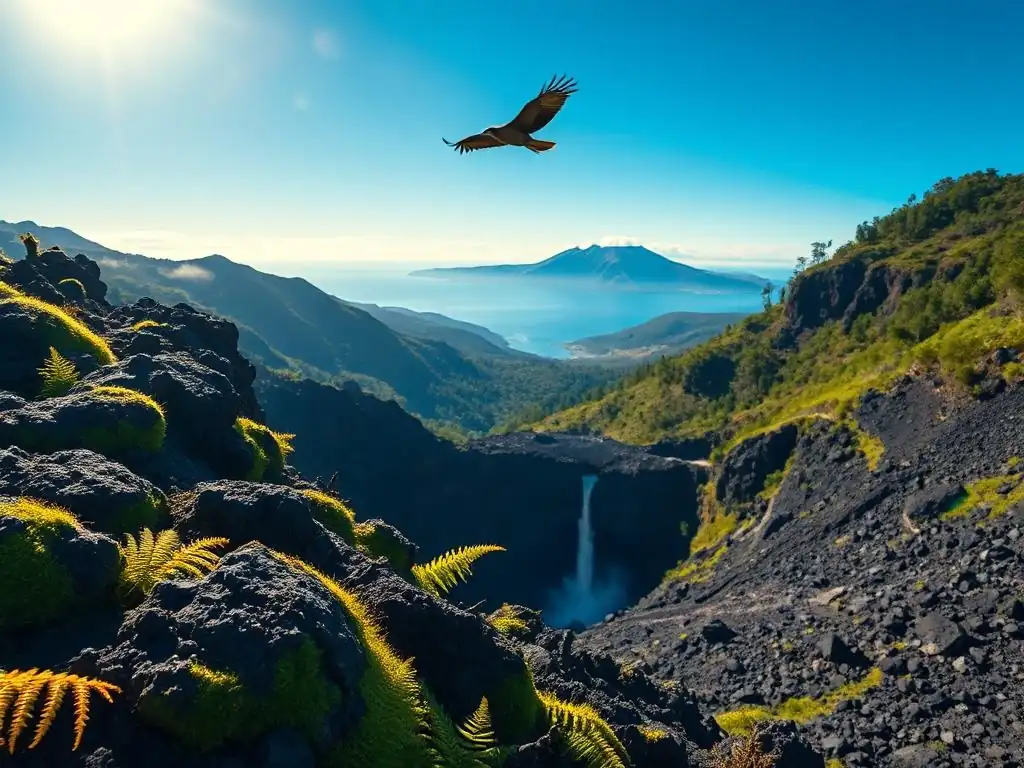
Prepare to be astonished. What if we told you that even amidst the fire and brimstone, life finds a way? Dive into our latest exploration and discover the surprising secrets of biodiversity in volcanic ecosystems. How can life flourish in such seemingly hostile environments? Uncover the fascinating stages of ecological succession, from barren rock to thriving habitats, and witness the resilience of nature's most tenacious pioneers. Let the journey begin...
- Introduction: Volcanoes, Destruction, and the Unexpected Rise of Life
- Stage 1: The Sterile Beginning - Initial Colonization of Volcanic Rock
- Stage 2: The Emergence of Simple Life Forms - Microbial and Plant Pioneers
- Stage 3: The Arrival of Vascular Plants and Invertebrates - A Budding Ecosystem
- Stage 4: The Development of Complex Communities - The Formation of Biodiversity Hotspots
- Stage 5: Mature Ecosystems - Stability and Resilience in Volcanic Landscapes
- Threats to Biodiversity in Volcanic Regions
- Conservation Strategies for Protecting Volcanic Biodiversity
- Conclusion: Appreciating the Dynamic Nature of Life on Volcanoes
-
Frequently Asked Questions
- How can life thrive in seemingly barren volcanic environments?
- What role does volcanic ash play in establishing biodiversity?
- What are some examples of unique species found in volcanic ecosystems?
- How do different types of volcanic eruptions impact the subsequent biodiversity?
- How long does it typically take for a volcanic region to recover its biodiversity after a major eruption?
- Final Reflection: The Enduring Power of Resilience
- Witness Nature's Resilience: Plan Your Volcano Adventure!
Introduction: Volcanoes, Destruction, and the Unexpected Rise of Life
Exploring the Paradox: Volcanic Landscapes and Thriving Ecosystems
Volcanoes are often perceived as agents of destruction, unleashing fiery lava flows, ash clouds, and toxic gases that obliterate landscapes and extinguish life. Images of Pompeii and the aftermath of Mount St. Helens vividly illustrate this destructive power. However, beneath this dramatic facade lies a remarkable paradox: volcanic regions, despite their potential for devastation, can become vibrant hubs of biodiversity. These seemingly barren landscapes, forged from fire and rock, are not ecological dead zones but rather dynamic environments that, over time, foster a surprising array of life.
This transformation from sterile rock to flourishing ecosystem is a testament to nature's resilience and adaptability. While volcanic eruptions undoubtedly cause initial setbacks, they also initiate a process of ecological renewal. The very materials ejected from volcanoes – nutrient-rich ash and newly formed volcanic rock – become the foundation upon which life rebuilds and diversifies. From the volcanic islands of Hawaii, teeming with unique flora and fauna, to the lush volcanic slopes of Costa Rica, biodiversity in volcanic ecosystems thrives, showcasing nature’s capacity to reclaim and revitalize even the most dramatically altered environments.
Biodiversity in Volcanic Ecosystems: More Than Just Survival
The concept of biodiversity in volcanic ecosystems extends far beyond mere survival in harsh conditions. It encompasses the incredible variety of life forms – from microscopic bacteria to complex plant and animal communities – that find niches and thrive in these unique settings. It's not just about organisms enduring extreme temperatures or nutrient scarcity; it's about the evolution of specialized adaptations, the development of intricate ecological relationships, and the establishment of species richness that can rival, and in some cases exceed, that of other ecosystems.
Consider the volcanic landscapes of Iceland, where despite the challenging climate and geologically young terrain, a surprising level of biodiversity has emerged. From hardy mosses and lichens that colonize lava fields to specialized insects and birds that rely on these habitats, volcanic regions are not simply marginal environments but rather unique ecosystems that contribute significantly to global biodiversity. Studying biodiversity in volcanic ecosystems is crucial for understanding ecological resilience, evolutionary processes, and the potential for life to flourish even in the face of dramatic environmental change.
Stage 1: The Sterile Beginning - Initial Colonization of Volcanic Rock
The Immediate Aftermath: Post-Eruption Landscape and Lack of Life
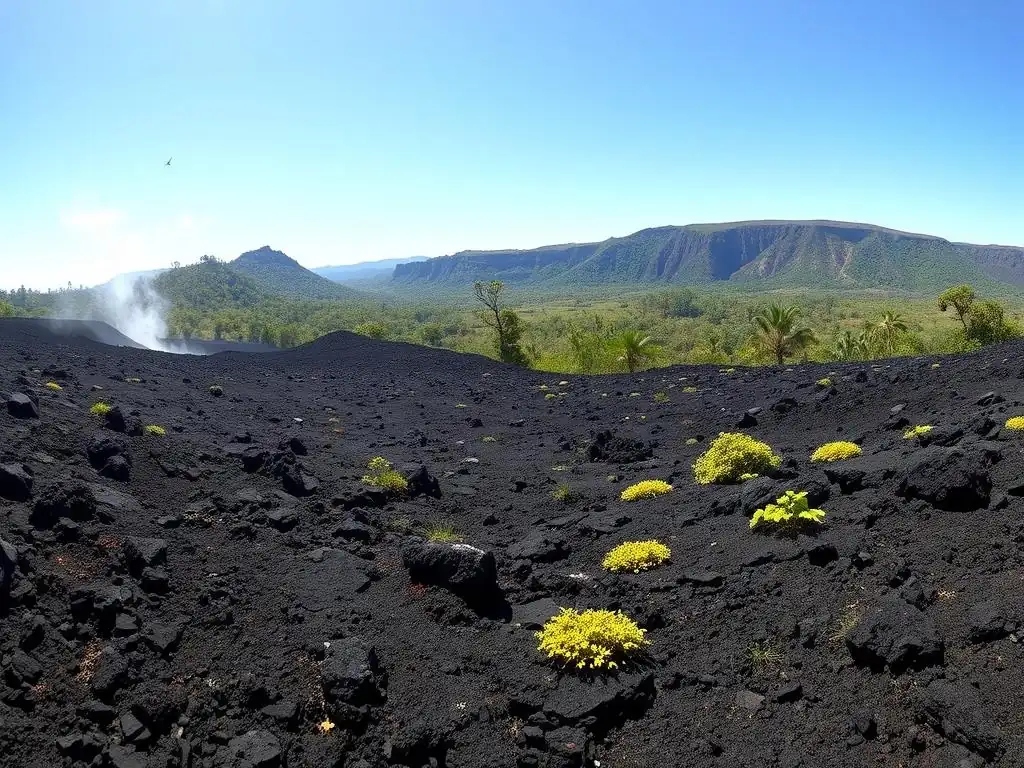
In the immediate aftermath of a volcanic eruption, the landscape is often characterized by stark desolation. Molten lava flows solidify into vast expanses of rock, blankets of ash cover the terrain, and toxic gases linger in the air. Temperatures on the newly formed volcanic surfaces can be extreme, and essential resources like water and nutrients are scarce or entirely absent. Visually, the scene is often monochrome – shades of grey and black dominate, punctuated perhaps by the reddish hues of oxidized iron in the volcanic rock. Life, as we typically perceive it, appears to be utterly absent.
This initial sterility is not merely an aesthetic observation; it is a biological reality. The intense heat of volcanic activity sterilizes the ground, eliminating pre-existing soil organic matter and any lingering seeds or spores. The newly formed volcanic rock is devoid of the essential nutrients that plants and animals require. Furthermore, the physical conditions are inhospitable: unstable surfaces, harsh weather exposure, and a lack of shelter contribute to a seemingly lifeless environment. This seemingly barren canvas, however, is the starting point for a remarkable ecological journey.
Pioneer Species: The First Inhabitants of Volcanic Terrain
Despite the harsh conditions of a freshly erupted volcanic landscape, life finds a way to return. Pioneer species are the vanguard of this biological resurgence – organisms uniquely adapted to colonize and survive in these extreme environments. These are the ecological trailblazers, paving the way for more complex communities to follow. Often, the first colonizers are microscopic, such as certain types of bacteria and archaea, but more visible pioneers quickly emerge.
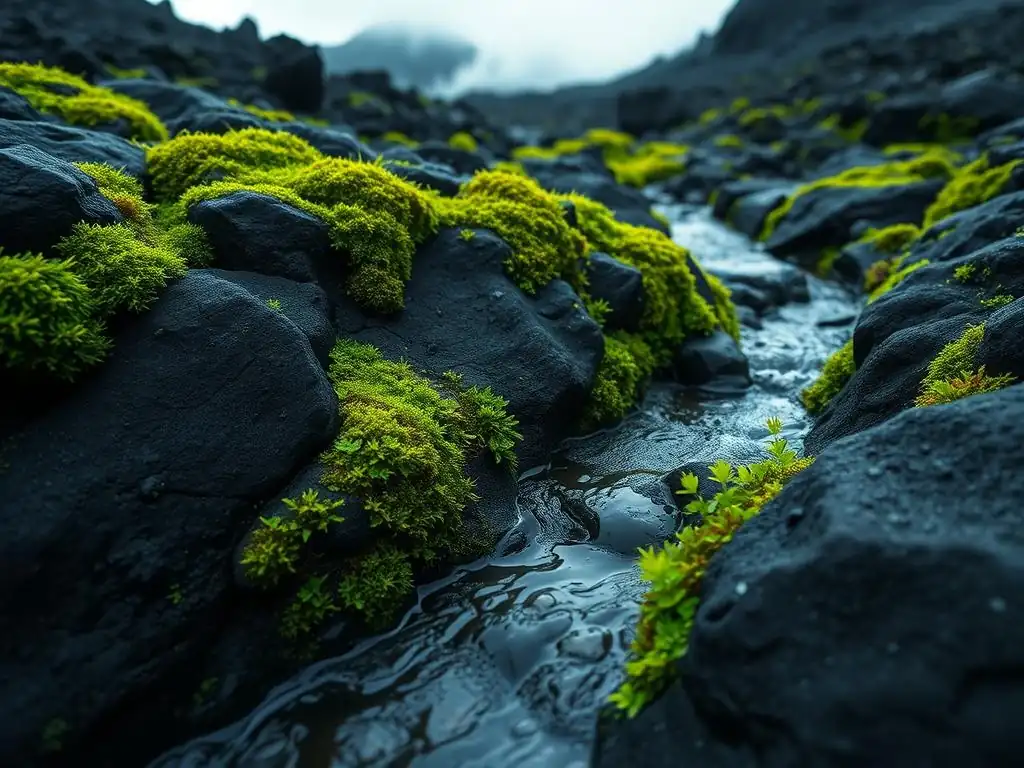
Among the most recognizable pioneer species in volcanic regions are lichens and mosses. Lichens, symbiotic partnerships between fungi and algae or cyanobacteria, are particularly adept at colonizing bare rock. They can withstand desiccation, extreme temperatures, and nutrient-poor conditions. Similarly, mosses, with their simple structure and ability to absorb moisture directly from the air, can establish themselves on volcanic rock surfaces. These pioneer species play a crucial role in initiating the process of ecological succession, transforming the sterile volcanic landscape into a habitat capable of supporting a wider array of life.
Weathering and Soil Formation: Laying the Foundation for Future Life
The initial colonization by pioneer species is not merely about survival; it is also about environmental modification. Pioneer species actively contribute to the gradual process of weathering and soil formation, transforming the barren volcanic rock into a substrate capable of supporting more complex plant life. This transformation is a slow and incremental process, often taking decades or even centuries, but it is fundamental to the development of biodiversity in volcanic ecosystems.
Weathering occurs through both physical and chemical means, often facilitated by pioneer organisms. Lichens, for example, secrete acids that chemically break down the surface of volcanic rock, releasing minerals and creating fissures. The physical growth of plant roots, however small, can also contribute to rock fragmentation.
As pioneer species die and decompose, they contribute organic matter to the developing substrate. This organic matter, combined with weathered rock particles, forms the rudimentary beginnings of soil. This nascent soil, though initially thin and nutrient-poor, provides a foothold for subsequent waves of colonization by more demanding plant species, marking the transition to the next stage of ecological succession.
Stage 2: The Emergence of Simple Life Forms - Microbial and Plant Pioneers
Microbial Mats: The Unseen Architects of Early Volcanic Life
While lichens and mosses are visible pioneers, microbial mats often precede them and play a critical, though less conspicuous, role in shaping early volcanic ecosystems. Microbial mats are complex communities of microorganisms, primarily bacteria, archaea, and sometimes fungi, that form layered structures on surfaces. In volcanic regions, these mats can colonize hot springs, lava tubes, and even damp rock surfaces, often before any macroscopic life is apparent. They are the unseen architects of early volcanic life, initiating nutrient cycling and altering the chemical environment.
These microbial communities are incredibly diverse and metabolically versatile. Some microbes are chemotrophs, deriving energy from inorganic compounds released from volcanic rock, such as sulfur or iron. Others are phototrophs, harnessing sunlight for energy.
Crucially, many microbes in volcanic mats are involved in nutrient cycling, including nitrogen fixation, which converts atmospheric nitrogen into forms usable by plants. They also contribute to the decomposition of organic matter, releasing nutrients back into the ecosystem. Microbial mats, therefore, are not just early colonizers; they are essential ecosystem engineers that lay the groundwork for more complex life to follow, enhancing the biodiversity in volcanic ecosystems from the ground up.
Lichens and Mosses: Breaking Down Rock and Building Soil
Lichens and mosses are not only among the first visible colonizers of volcanic landscapes but also active agents in the crucial processes of rock breakdown and soil development. Their ability to thrive on bare rock and their biological activities accelerate the transformation of sterile volcanic terrain into a more hospitable environment. This role is critical for paving the way for more complex plant communities and, consequently, increased biodiversity in volcanic ecosystems.
Lichens, through their symbiotic partnership, are particularly effective at weathering rock. The fungal component of a lichen secretes organic acids that chemically dissolve minerals in the rock surface. This process releases essential nutrients and creates microscopic fissures.
Simultaneously, the physical structure of lichens and mosses traps moisture and airborne particles, contributing to the accumulation of organic matter. As these organisms grow, die, and decompose, they add organic material to the weathered rock fragments. This gradual accumulation of organic matter, combined with the continued breakdown of rock, slowly leads to the formation of a rudimentary soil layer, enriched by the biological activity of these pioneer plant communities.
The Role of Nitrogen Fixation in Volcanic Soil Development
Nitrogen is often a limiting nutrient in newly formed volcanic soils. Volcanic rock itself is typically poor in nitrogen, and the intense heat of eruptions can volatilize any pre-existing nitrogen in the soil. Therefore, the introduction of nitrogen into these nascent ecosystems is crucial for plant growth and overall ecosystem development, significantly impacting the potential for biodiversity in volcanic ecosystems. Nitrogen fixation, the conversion of atmospheric nitrogen gas into biologically available forms like ammonia, is a vital process in this context.
Certain types of bacteria and cyanobacteria are capable of nitrogen fixation. In volcanic environments, these nitrogen-fixing microbes can be found free-living in the soil, or in symbiotic relationships with pioneer plants like lichens. For instance, some lichens host cyanobacteria as their photosynthetic partner, which also provides fixed nitrogen to the lichen symbiosis.
This nitrogen, released through decomposition and nutrient cycling, becomes available to other organisms, including the vascular plants that will colonize later. The input of nitrogen through fixation is a fundamental step in enriching volcanic soils and creating conditions that can support a wider range of plant and animal life, driving the progression of ecological succession and increasing biodiversity in volcanic ecosystems.
Stage 3: The Arrival of Vascular Plants and Invertebrates - A Budding Ecosystem
Vascular Plant Colonization: Holding the Soil and Adding Biomass
Following the pioneering efforts of microbes, lichens, and mosses, vascular plants begin to colonize volcanic landscapes. Vascular plants, with their specialized tissues for water and nutrient transport, represent a significant step in ecological succession. Their arrival marks a transition from simple pioneer communities to more complex and structurally diverse ecosystems, boosting biodiversity in volcanic ecosystems. These plants not only add significantly to the ecosystem's biomass but also play a crucial role in stabilizing the developing soil and further modifying the environment.
The types of vascular plants that initially colonize volcanic regions are typically hardy and adaptable species. Ferns, grasses, and certain shrubs are often among the first to establish themselves. Their root systems, more extensive than those of mosses or lichens, help to bind the soil particles together, reducing erosion and improving soil structure.
As vascular plants grow and photosynthesize, they contribute a substantial amount of organic matter to the soil through leaf litter and root decomposition. This increased organic matter content further enriches the soil, improving its water-holding capacity and nutrient availability, thereby creating more favorable conditions for subsequent plant and animal colonization.
Invertebrate Arrival: Insects, Spiders, and the Start of the Food Web
The establishment of vascular plants creates new opportunities for other life forms to colonize volcanic ecosystems. Invertebrates, animals without backbones, are crucial for the next stage of ecological development. The arrival of insects, spiders, worms, and other invertebrates marks the beginning of more complex food webs and ecological interactions within these nascent environments, enhancing the biodiversity in volcanic ecosystems and ecosystem functioning.
Insects, often arriving through wind dispersal or as flying adults, are among the earliest invertebrate colonizers. They may feed on plant material, decaying organic matter, or even each other. Spiders, as predators, soon follow, preying on insects and other small invertebrates.
Earthworms, if conditions allow, can contribute to soil aeration and nutrient cycling by processing organic matter. These invertebrates play vital roles in pollination, seed dispersal, decomposition, and nutrient cycling. Their presence initiates the development of food webs, linking plants and animals in a network of energy flow and nutrient transfer, further driving ecological succession and increasing biodiversity in volcanic ecosystems.
The Interplay Between Plants and Animals in Volcanic Environments
As vascular plants and invertebrates become established, the interactions between them become increasingly important in shaping the developing volcanic ecosystem. These interactions, ranging from mutualism to competition, contribute to the structure and function of the ecosystem and influence the trajectory of ecological succession, playing a key role in shaping biodiversity in volcanic ecosystems.
Pollination is a critical interaction, with insects and other invertebrates acting as pollinators for many vascular plants. This mutualistic relationship ensures plant reproduction and the continuation of plant communities. Herbivory, the consumption of plants by animals, is another significant interaction. Invertebrate herbivores feed on plant leaves, stems, and roots, influencing plant growth and community composition.
Predation, as mentioned earlier, controls invertebrate populations and creates a more balanced ecosystem. Decomposition by invertebrates and microbes breaks down dead plant and animal matter, releasing nutrients back into the soil for plant uptake. These intricate interplays between plants and animals drive nutrient cycling, energy flow, and community dynamics, contributing to the increasing complexity and biodiversity in volcanic ecosystems.
Stage 4: The Development of Complex Communities - The Formation of Biodiversity Hotspots
Krakatoa: A Case Study of Ecological Succession
The volcanic islands of Krakatoa, Indonesia, offer a compelling real-world case study of ecological succession following a catastrophic volcanic eruption. The eruption of Krakatoa in 1883 was one of the most powerful in recorded history, effectively sterilizing the islands. However, within years, life began to return, providing scientists with a natural laboratory to observe the stages of ecological succession in a volcanic environment and understand the processes driving biodiversity in volcanic ecosystems.
Initially, colonization was slow, with pioneer species like ferns, grasses, and wind-dispersed seeds arriving from neighboring islands. Over time, the vegetation became more complex, with the establishment of forests and a wider array of plant species. Animal life followed, with insects, birds, reptiles, and mammals gradually colonizing the islands.
Studies on Krakatoa have documented the sequential arrival of different species groups, the changes in vegetation structure over time, and the development of ecological interactions. Krakatoa stands as a testament to the resilience of life and the capacity of volcanic landscapes to recover and become biodiversity hotspots, illustrating the long-term processes shaping biodiversity in volcanic ecosystems.
The Role of Endemism in Volcanic Biodiversity: Unique Species Evolution
Volcanic regions, particularly volcanic islands, are often hotspots of endemism – the presence of species found nowhere else on Earth. Isolation, coupled with unique environmental conditions, drives evolutionary processes that lead to the development of distinct species lineages in volcanic areas, significantly contributing to global biodiversity in volcanic ecosystems. This endemism is a key characteristic of volcanic biodiversity and highlights the importance of these regions for conservation.
Volcanic islands, being geographically isolated, limit gene flow between populations, promoting genetic divergence and speciation. The diverse habitats within volcanic landscapes, ranging from lava flows to forests, further contribute to niche specialization and adaptive radiation. Examples of volcanic endemism are abundant.
The Galapagos Islands, a volcanic archipelago, are famed for their endemic finches, tortoises, and iguanas, which evolved in isolation and adapted to the unique island environments. Similarly, the Hawaiian Islands are renowned for their endemic plant and bird species. These examples underscore the significant role of volcanic regions in fostering unique evolutionary pathways and contributing disproportionately to global biodiversity in volcanic ecosystems through endemism.
Competition and Cooperation: Shaping the Volcanic Ecosystem
As volcanic ecosystems mature, ecological interactions like competition and cooperation become increasingly important in shaping community structure and influencing biodiversity in volcanic ecosystems. These interactions determine species distributions, resource utilization, and the overall functioning of the ecosystem. Understanding these dynamics is crucial for comprehending the complexity and resilience of biodiversity in volcanic regions.
Competition for resources, such as light, water, and nutrients, intensifies as plant and animal communities become denser and more diverse. Species compete for available niches, influencing community composition and potentially leading to competitive exclusion, where stronger competitors displace weaker ones. However, cooperation and mutualism also play a vital role.
Mycorrhizal fungi, for example, form symbiotic relationships with plant roots, enhancing nutrient uptake in nutrient-poor volcanic soils. Pollination and seed dispersal mutualisms, as discussed earlier, are essential for plant reproduction and ecosystem functioning. These complex interactions, both competitive and cooperative, shape the structure, dynamics, and ultimately, the biodiversity in volcanic ecosystems as they mature over time.
Stage 5: Mature Ecosystems - Stability and Resilience in Volcanic Landscapes
Climax Communities: Achieving Ecological Balance in Volcanic Areas
In the later stages of ecological succession, volcanic ecosystems can reach a state of relative stability, often referred to as a climax community. This doesn't imply a static endpoint but rather a dynamic equilibrium where the ecosystem is characterized by complex interactions, high biomass, and a relatively stable species composition. Mature volcanic ecosystems, while still subject to disturbances, demonstrate a degree of ecological balance and represent the culmination of the succession process, showcasing the potential for high biodiversity in volcanic ecosystems to develop over time.
Climax communities in volcanic regions can vary depending on factors like climate, altitude, and substrate type. They may include mature forests, grasslands, or shrublands, characterized by a diverse array of plant and animal species. These ecosystems exhibit complex food webs, intricate nutrient cycles, and well-developed soil profiles. While volcanic activity remains a potential disturbance factor, mature ecosystems in volcanic areas have evolved to withstand and recover from natural perturbations, demonstrating a degree of ecological resilience and stability, reflecting the long-term development of biodiversity in volcanic ecosystems.
Resilience to Volcanic Disturbances: Adapting to Change
Volcanic ecosystems, by their very nature, are subject to periodic disturbances from volcanic activity. However, rather than being simply vulnerable, these ecosystems often exhibit remarkable resilience – the capacity to absorb disturbance and reorganize while undergoing change, so as to still retain essentially the same function, structure, identity, and feedbacks. This resilience is a key characteristic of biodiversity in volcanic ecosystems and reflects the evolutionary adaptations of species to life in dynamic volcanic landscapes.
Resilience mechanisms in volcanic ecosystems are multifaceted. Some plants have evolved to resprout from roots or rhizomes after volcanic disturbances like ashfall or pyroclastic flows. Seed banks in the soil can persist through eruptions, providing a source for recolonization.
Fast-growing pioneer species can quickly re-establish themselves in disturbed areas, initiating secondary succession. Furthermore, the spatial heterogeneity of volcanic landscapes, with areas of varying disturbance intensity, can act as refugia, allowing species to persist and subsequently recolonize more heavily impacted zones. This inherent resilience allows biodiversity in volcanic ecosystems to persist and recover even in the face of recurrent volcanic activity, highlighting the adaptive capacity of life in these dynamic environments.
The Importance of Long-Term Monitoring of Volcanic Ecosystems
Understanding the long-term dynamics of biodiversity in volcanic ecosystems, including ecological succession, resilience, and the impacts of disturbances, requires sustained, long-term monitoring. Monitoring programs provide valuable data on species changes, ecosystem processes, and the effects of both natural and human-induced factors. This information is crucial for effective conservation management and for gaining deeper insights into the ecological processes shaping life in volcanic regions.
Long-term monitoring in volcanic areas can track vegetation recovery after eruptions, assess the impacts of invasive species, and detect changes related to climate change. Data collected over decades can reveal trends in species richness, community composition, and ecosystem functioning. For example, long-term studies on Mount St. Helens in the USA have provided invaluable insights into ecological succession following a major volcanic eruption.
Similarly, ongoing monitoring of volcanic islands like Krakatoa continues to yield data on colonization, species interactions, and ecosystem resilience. These long-term datasets are essential for informing conservation strategies and enhancing our understanding of the dynamic nature of biodiversity in volcanic ecosystems.
Threats to Biodiversity in Volcanic Regions
Invasive Species: Disrupting Native Volcanic Flora and Fauna
Invasive species pose a significant threat to biodiversity in volcanic ecosystems worldwide. Volcanic regions, particularly islands, are often vulnerable to invasions due to their isolation, unique native species that have not evolved defenses against introduced competitors or predators, and often disturbed environments that can be readily colonized by non-native organisms. Invasive species can disrupt native food webs, outcompete native flora and fauna, and alter ecosystem processes, leading to declines in native biodiversity and ecosystem degradation.
Examples of invasive species impacting volcanic ecosystems are numerous. Introduced rats and cats can prey heavily on native birds and reptiles, driving population declines or extinctions. Invasive plants, such as non-native grasses or shrubs, can outcompete native vegetation for resources, altering habitat structure and reducing the diversity of native plant communities.
For instance, in Hawaii, invasive plants like Miconia calvescens have transformed native rainforests, threatening endemic plant species and altering ecosystem hydrology. Controlling and managing invasive species is a critical challenge for conserving biodiversity in volcanic ecosystems and requires ongoing efforts to prevent new introductions and mitigate the impacts of existing invaders.
Climate Change: Altering Temperature and Precipitation Patterns
Climate change represents a growing threat to biodiversity in volcanic ecosystems, adding to the existing pressures from volcanic activity and other environmental stressors. Changes in temperature and precipitation patterns, increased frequency of extreme weather events, and rising sea levels can all have profound impacts on volcanic habitats and the species that depend on them. These climate-related changes can alter species distributions, disrupt ecological interactions, and exacerbate the vulnerability of already fragile volcanic ecosystems.
For example, changes in precipitation patterns can affect water availability in volcanic regions, impacting plant growth and the distribution of water-dependent species. Rising temperatures can alter species phenology (timing of life cycle events) and create thermal stress for organisms adapted to cooler conditions.
Sea level rise threatens coastal volcanic habitats, such as mangrove forests and coastal wetlands, which are important for biodiversity in volcanic ecosystems. The combined effects of climate change and other stressors can reduce the resilience of volcanic ecosystems and increase the risk of species extinctions, highlighting the urgent need to address climate change and its impacts on biodiversity in volcanic ecosystems.
Human Impact: Mining, Tourism, and Habitat Destruction
Human activities exert considerable pressure on biodiversity in volcanic ecosystems, often leading to habitat destruction, pollution, and increased disturbance. Mining and quarrying activities directly destroy volcanic habitats and can lead to soil erosion and water contamination. Tourism, while potentially beneficial economically, can also have negative impacts if not managed sustainably, including habitat degradation, disturbance to wildlife, and the introduction of invasive species. Habitat destruction and fragmentation from development, agriculture, and infrastructure further reduce the extent and connectivity of volcanic ecosystems, threatening native species and reducing overall biodiversity in volcanic ecosystems.
For instance, geothermal energy development in volcanic regions can lead to habitat loss and disturbance, as well as potential pollution from geothermal fluids. Unregulated tourism can damage fragile volcanic landscapes, trample vegetation, and disturb wildlife. Urban development and agriculture can encroach upon volcanic habitats, fragmenting ecosystems and reducing the available space for native species. Minimizing human impact through sustainable land management practices, responsible tourism, and conservation planning is essential for protecting biodiversity in volcanic ecosystems and ensuring their long-term persistence.
Conservation Strategies for Protecting Volcanic Biodiversity
Protected Areas: Preserving Unique Volcanic Habitats
Establishing protected areas is a cornerstone of conservation strategies for biodiversity in volcanic ecosystems. National parks, nature reserves, and other forms of protected areas provide legal frameworks and management structures to safeguard unique volcanic habitats and the species they harbor. Protected areas can encompass a range of volcanic features, from active volcanoes and lava fields to geothermal areas and mature forests, ensuring the preservation of representative samples of biodiversity in volcanic ecosystems.
Protected areas can effectively limit habitat destruction from development, mining, and unsustainable agriculture. They can also facilitate the management of invasive species and the implementation of restoration efforts. Examples of volcanic protected areas include Volcanoes National Park in Hawaii, Teide National Park in Tenerife, and Tongariro National Park in New Zealand. These protected areas not only conserve biodiversity in volcanic ecosystems but also provide opportunities for scientific research, education, and sustainable tourism, contributing to both conservation and societal benefits.
Restoration Efforts: Re-establishing Native Plant Communities
In degraded volcanic ecosystems, restoration efforts are crucial for re-establishing native plant communities and enhancing biodiversity in volcanic ecosystems. Restoration projects can involve a range of activities, including invasive species removal, native plant propagation and planting, soil rehabilitation, and habitat management. The goal of restoration is to accelerate the recovery of degraded volcanic habitats and promote the return of native flora and fauna, enhancing overall biodiversity in volcanic ecosystems.
Restoration techniques in volcanic areas may need to be adapted to the specific challenges of these environments, such as nutrient-poor soils and harsh climatic conditions. Using locally sourced native plant species is essential to ensure genetic adaptation and ecological compatibility. Community involvement and long-term monitoring are also critical components of successful restoration projects. Examples of restoration efforts in volcanic regions include re-vegetation projects on volcanic slopes, wetland restoration in geothermal areas, and invasive species control programs in volcanic national parks, all aimed at enhancing biodiversity in volcanic ecosystems.
Sustainable Tourism: Minimizing Impact on Volcanic Ecosystems
Sustainable tourism practices are essential for minimizing the impact of tourism on biodiversity in volcanic ecosystems while still allowing people to appreciate these remarkable landscapes. Sustainable tourism aims to balance economic benefits with environmental protection and social responsibility. This approach involves minimizing negative impacts, maximizing positive contributions to local communities, and promoting environmental awareness among visitors.
Sustainable tourism practices in volcanic areas can include developing eco-friendly infrastructure, managing visitor access to sensitive areas, promoting responsible wildlife viewing, and educating tourists about the ecological value of volcanic ecosystems. Supporting local businesses and communities that are committed to sustainable tourism can also contribute to conservation efforts. By adopting sustainable tourism principles, volcanic regions can benefit from tourism revenue while minimizing negative impacts on biodiversity in volcanic ecosystems and ensuring the long-term preservation of these unique natural assets.
Conclusion: Appreciating the Dynamic Nature of Life on Volcanoes
The Unexpected Beauty of Biodiversity in Volcanic Landscapes
The journey from barren volcanic rock to thriving ecosystem reveals the unexpected beauty of biodiversity in volcanic ecosystems. What initially appears as a scene of devastation transforms over time into a vibrant tapestry of life, showcasing nature's remarkable capacity for resilience and renewal.
Volcanic landscapes, far from being lifeless wastelands, are dynamic environments that support a surprising array of species, many of which are uniquely adapted to these challenging conditions. The beauty of biodiversity in volcanic ecosystems lies not only in the visual spectacle of lush vegetation and diverse fauna but also in the intricate ecological processes and evolutionary adaptations that underpin these remarkable ecosystems.
The stark contrast between volcanic destruction and the subsequent biological boom highlights the dynamic nature of life on Earth. Volcanoes, while capable of immense destruction, are also agents of creation, forming new land and releasing nutrients that ultimately support life. The ability of life to colonize and thrive in these seemingly inhospitable environments is a testament to its adaptability and persistence. Appreciating the unexpected beauty of biodiversity in volcanic ecosystems fosters a deeper understanding of ecological processes and a greater appreciation for the resilience of life in the face of environmental change.
The Importance of Studying and Protecting Volcanic Ecosystems for Future Generations
Studying and protecting biodiversity in volcanic ecosystems is of paramount importance for future generations. These ecosystems provide valuable insights into ecological succession, evolutionary processes, and the resilience of life to disturbance. They also harbor unique species and genetic resources that may have significant scientific and economic value. Furthermore, volcanic landscapes provide essential ecosystem services, such as water regulation, soil formation, and carbon sequestration. Conserving biodiversity in volcanic ecosystems ensures the continued provision of these benefits for future generations.
Protecting volcanic ecosystems requires a multifaceted approach, including establishing protected areas, managing invasive species, mitigating human impacts, and addressing climate change. Raising public awareness about the ecological value of volcanic regions and promoting sustainable practices are also crucial for long-term conservation success. By investing in research, conservation, and education, we can ensure that future generations have the opportunity to experience and learn from the remarkable biodiversity in volcanic ecosystems.
Volcanoes: A Testament to the Resilience of Life.
Volcanoes, often symbols of destruction and chaos, ultimately stand as a powerful testament to the resilience of life. From the sterile aftermath of eruptions, life emerges, adapts, and diversifies, transforming barren landscapes into vibrant ecosystems. The story of biodiversity in volcanic ecosystems is a story of ecological renewal, evolutionary adaptation, and the enduring power of life to reclaim and thrive even in the most dramatically altered environments.
Volcanoes, in this context, are not just forces of destruction but also catalysts for creation, driving ecological change and shaping the remarkable tapestry of life on Earth. They remind us of the dynamic and resilient nature of our planet and the enduring capacity of life to persist and flourish in the face of adversity.
Frequently Asked Questions
How can life thrive in seemingly barren volcanic environments?
Volcanic environments, despite initial devastation, eventually support life through primary succession. This process begins with hardy organisms like bacteria and lichens breaking down rock, creating soil and paving the way for more complex life forms.
What role does volcanic ash play in establishing biodiversity?
Volcanic ash, while initially destructive, is rich in nutrients and minerals. Over time, it acts as a natural fertilizer, enriching the soil and allowing plants to colonize the area.
What are some examples of unique species found in volcanic ecosystems?
Volcanic ecosystems often host endemic species that have adapted to the specific conditions. This includes specialized plants that can tolerate high acidity and animals that have adapted to the harsh landscape.
How do different types of volcanic eruptions impact the subsequent biodiversity?
The type of eruption influences the degree of destruction and the nutrient composition of the ash. Explosive eruptions can cause widespread devastation, while effusive eruptions may create new land for colonization.
How long does it typically take for a volcanic region to recover its biodiversity after a major eruption?
Recovery time varies depending on factors like eruption severity, climate, and proximity to other ecosystems. It can take decades, even centuries, for a volcanic region to achieve a stable and diverse ecosystem.
Final Reflection: The Enduring Power of Resilience
The journey from barren volcanic rock to a thriving ecosystem is a testament to nature's unparalleled resilience, a concept that resonates deeply in our current world. Witnessing the gradual re-establishment of life in these seemingly inhospitable environments underscores the profound capacity for recovery and adaptation that exists within the natural world. This process, meticulously detailed throughout this article, serves as a powerful reminder of the interconnectedness and fragility of life on Earth, and the importance of understanding the mechanisms that drive biodiversity in even the most extreme conditions.
The study of biodiversity in volcanic ecosystems has not only broadened our scientific understanding but has also profoundly influenced our perspective on ecological succession and conservation efforts. Personally, witnessing the tenacity of life in these landscapes has instilled a deeper appreciation for the intricate web of interactions that sustain our planet. This understanding is crucial as we face increasing environmental challenges. The resilience of nature is astonishing, but it is not infinite. We must act now to protect the biodiversity that sustains us all.
This quote encapsulates the urgency and responsibility we bear to safeguard these vital ecosystems and the lessons they offer.
As you reflect on the remarkable journey from barren rock to biological boom, consider the lessons of resilience and adaptation that volcanic ecosystems so vividly illustrate. Let this understanding inspire you to become a steward of biodiversity, advocating for its protection and embracing sustainable practices in your own life. The future of our planet depends on our collective commitment to fostering a world where life, in all its diverse and resilient forms, can flourish.
Witness Nature's Resilience: Plan Your Volcano Adventure!
Thank you for exploring the fascinating journey of life's resurgence on volcanic landscapes! Now that you understand the incredible stages of biodiversity, it's time to experience this powerful process firsthand.
Here's how you can deepen your understanding and contribute to our knowledge:
- Plan your visit! Discover a volcanic region near you and witness these stages of ecological succession. Observe the pioneer species and the flourishing biodiversity. Remember to document your findings and adhere to local regulations to protect these fragile environments.
- Share your insights! Start a discussion in the comments, and let us know what surprised you most about nature's ability to rebound after a volcanic eruption.
- Help us document. Have you taken photos of unique flora or fauna in volcanic regions? Contribute your observations to Volcano Explorers; your documentation could help inform future research and conservation efforts.
What specific volcanic landscape are you most eager to explore, and what unique adaptations are you hoping to observe?