
Can Forests Tame Volcanoes? Exploring the Protective Role of Vegetation in Volcanic Areas


Welcome to Volcano Explorers, where the Earth breathes fire and beauty clashes with raw power. Have you ever considered that the key to mitigating volcanic impact might lie not in concrete barriers, but in the silent strength of the trees themselves? Our latest exploration, “Can Forests Tame Volcanoes? Exploring the Protective Role of Vegetation in Volcanic Areas,” delves into the surprising connection between forests and volcanoes protection. Prepare to uncover how these vital ecosystems can offer a natural defense against the forces of nature, and ask yourself: are we underestimating the power of green?
- Introduction: The Interplay Between Forests and Volcanoes
- How Forests Protect Against Volcanic Hazards: A Multi-Layered Defense
- Case Studies: Forests Providing Volcanic Protection Around the World
- Forest Regeneration After Volcanic Eruptions: A Story of Resilience
- The Importance of Forest Management for Volcanic Risk Reduction
- The Future of Forests and Volcanoes Protection: Challenges and Opportunities
- Conclusion: Recognizing the Vital Role of Forests in Volcanic Environments
-
Frequently Asked Questions
- How do forests help to protect against volcanic hazards?
- Can forests prevent volcanic eruptions?
- What types of vegetation are most effective in protecting against volcanic hazards?
- How does deforestation impact the risks associated with volcanic eruptions?
- What role do volcanologists play in understanding the relationship between forests and volcanoes?
- Final Reflection: Nature's Silent Guardians
- Uncover Nature's Volcanic Shield!
Introduction: The Interplay Between Forests and Volcanoes
Volcanoes and Vegetation: An Unexpected Relationship
Volcanoes are often perceived as agents of destruction, characterized by fiery eruptions and devastation. Images of lava flows incinerating everything in their path and ash clouds blanketing landscapes are commonly associated with volcanic activity. However, beneath this dramatic surface lies a less obvious, yet crucial relationship: the interplay between volcanoes and vegetation. While eruptions undoubtedly cause immediate and significant damage to forests, the long-term interaction is far more complex, revealing a surprising capacity for forests to not only recover from volcanic events but also to offer a degree of protection against certain volcanic hazards.
This relationship is far from one-sided. Volcanic eruptions, while destructive in the short term, also contribute to the long-term fertility of soils through the deposition of nutrient-rich volcanic ash. Over geological timescales, volcanic landscapes often become hotspots of biodiversity, supporting lush and diverse ecosystems. The very ground that volcanoes build can become the foundation for thriving forests. This seemingly paradoxical interaction highlights the resilience of nature and the intricate ways in which ecosystems adapt and even benefit from dramatic natural disturbances. The study of forests and volcanoes protection reveals a dynamic and essential ecological balance.
Understanding the Volcanic Impact on Forest Ecosystems
Volcanic eruptions exert a multifaceted impact on forest ecosystems, ranging from immediate annihilation to more subtle, long-term alterations. The most immediate and devastating effects stem from pyroclastic flows, searing hot mixtures of gas and volcanic debris that can obliterate entire forests in seconds. Lava flows, while slower, similarly incinerate vegetation in their path, leaving behind barren landscapes. Furthermore, the sheer force of volcanic blasts can flatten forests for considerable distances, a stark example witnessed during the 1980 eruption of Mount St. Helens, where forests were leveled radially outwards from the volcano.
Beyond these catastrophic events, volcanic ashfall presents a more widespread impact. Heavy ashfall can physically smother vegetation, blocking sunlight and disrupting photosynthesis. The weight of ash can also break branches and even topple trees, particularly in areas with heavy snowfall accumulating on top of the ash layer.
Moreover, volcanic gases released during eruptions, such as sulfur dioxide, can contribute to acid rain, damaging foliage and altering soil chemistry. In the long term, while volcanic ash can enrich soils with nutrients, it initially creates a harsh environment, altering soil pH, texture, and nutrient availability, which profoundly affects forest regeneration and the composition of plant communities. Understanding these diverse impacts is crucial for appreciating the role of forests in mitigating volcanic risks and for informed forest management in volcanic regions.
How Forests Protect Against Volcanic Hazards: A Multi-Layered Defense
Reducing Erosion: Forest Cover as a Soil Stabilizer in Volcanic Regions
One of the most significant protective roles of forests in volcanic regions is their capacity to reduce soil erosion. Volcanic landscapes, often characterized by steep slopes and loose volcanic deposits, are inherently prone to erosion, especially after an eruption strips away vegetation. Forest cover acts as a natural soil stabilizer through a combination of mechanisms.
The intricate root systems of trees and understory plants bind the soil particles together, creating a cohesive matrix that is far more resistant to the erosive forces of water and wind. This is particularly critical on the steep flanks of volcanoes where gravity exacerbates erosion.
Furthermore, the forest canopy plays a vital role in intercepting rainfall. Instead of directly impacting the soil surface with full force, raindrops are intercepted by leaves and branches, dissipating their energy and allowing water to gently filter down to the ground. This canopy interception significantly reduces surface runoff, a major driver of soil erosion, especially in regions experiencing intense rainfall.
In volcanic areas, where heavy rainfall is common, and the newly deposited volcanic materials are easily erodible, the soil-stabilizing function of forests becomes indispensable in maintaining landscape integrity and preventing landslides and mudflows. In areas like the volcanic slopes of the Andes, the presence of intact forests is directly linked to reduced erosion rates compared to deforested areas.
Mitigating Lahars: The Role of Vegetation in Slowing Mudflows
Lahars, volcanic mudflows composed of water, volcanic ash, and debris, are among the most destructive volcanic hazards. They can travel at high speeds, carrying massive amounts of sediment and obliterating everything in their path. While forests cannot entirely stop lahars, they play a crucial role in mitigating their impact by slowing down flow velocity and altering flow paths. Dense forest vegetation acts as a physical barrier, impeding the momentum of lahar flows. Trees and undergrowth create friction and resistance, effectively reducing the speed and erosive power of these mudflows.
Beyond physical obstruction, forests also contribute to lahar mitigation through their influence on water infiltration and soil stability. Forest soils, enriched with organic matter and riddled with root channels, exhibit higher infiltration rates compared to bare ground. This enhanced infiltration capacity means that a portion of the water within a lahar can be absorbed into the forest floor, reducing the overall volume and fluidity of the mudflow.
Moreover, the soil-stabilizing effect of forests, as discussed earlier, helps to prevent the incorporation of additional soil into the lahar flow, further limiting its size and destructive potential. Studies conducted in volcanic regions prone to lahars, such as around Mount Rainier in Washington State, have shown that forested areas experience significantly reduced lahar impacts compared to deforested zones, highlighting the protective function of vegetation.
Buffering Ashfall: Forests as a Natural Shield Against Volcanic Ash
Volcanic ashfall, while less immediately destructive than pyroclastic flows or lahars, can still have significant impacts on ecosystems and human infrastructure. Forests act as a natural buffer against the adverse effects of ashfall, providing a degree of protection to the underlying environment. The dense canopy of a forest intercepts a considerable proportion of falling volcanic ash, preventing it from directly reaching the ground surface. This interception is particularly effective for moderate ashfall events, where a substantial amount of ash can be captured by the leaves and branches of trees.
By intercepting ash, forests reduce the direct impact on understory vegetation, soil organisms, and water bodies. The ash collected by the canopy is gradually released over time through rainfall and wind, lessening the shock load of ash deposition on the ground. This buffering effect is crucial for protecting sensitive ecosystems within forests and for reducing the burden of ash removal in populated areas adjacent to forests.
Furthermore, the presence of a forest canopy can modify the distribution of ashfall, leading to a more even and less concentrated deposition pattern compared to open areas, which can be beneficial for overall ecosystem recovery and reducing localized impacts. Forests surrounding volcanoes like Popocatépetl in Mexico have been observed to effectively reduce the amount of ash reaching the ground in nearby communities.
Impact on Air Quality: Forests and the Absorption of Volcanic Gases
Volcanic eruptions release a variety of gases into the atmosphere, including sulfur dioxide (SO2), carbon dioxide (CO2), and hydrogen sulfide (H2S), which can negatively impact air quality and human health. While forests cannot eliminate volcanic gas emissions, they do play a role in absorbing some of these gases, thereby contributing to a minor improvement in air quality in volcanic regions. Trees and other vegetation absorb gases like SO2 and CO2 through their stomata, small pores on their leaves, during the process of photosynthesis and respiration.
Sulfur dioxide, a significant volcanic gas pollutant, can be absorbed by forest canopies, although excessive concentrations can also damage vegetation. Trees also sequester carbon dioxide, a greenhouse gas, which, while not a primary concern during volcanic eruptions in terms of immediate air quality impact, contributes to long-term climate regulation. The capacity of forests to absorb volcanic gases is limited and varies depending on forest type, species composition, and environmental conditions.
However, in areas surrounding volcanoes, the presence of healthy forests can contribute to a slight reduction in the concentration of certain volcanic gases in the air, offering a modest improvement in air quality and mitigating some of the respiratory health risks associated with volcanic emissions. Further research is needed to quantify the precise extent of volcanic gas absorption by different forest types and under varying eruption scenarios.
Case Studies: Forests Providing Volcanic Protection Around the World
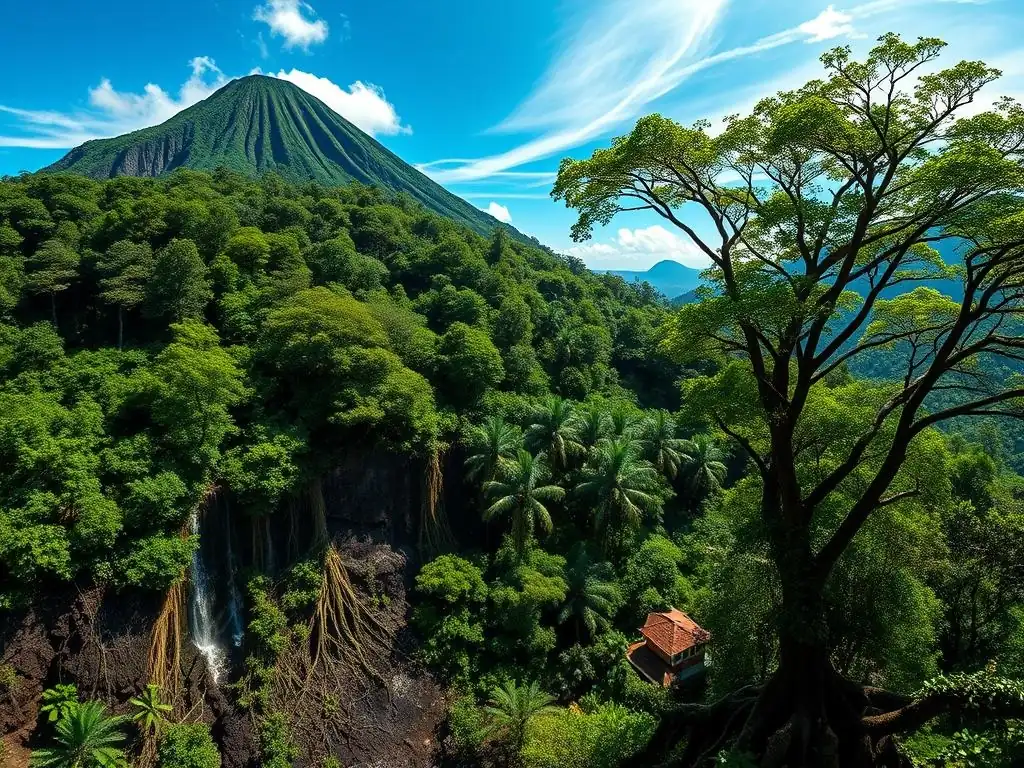
Mount St. Helens and the Surrounding Forest: A Case Study in Washington State, USA
The 1980 eruption of Mount St. Helens in Washington State, USA, serves as a powerful case study illustrating both the destructive force of volcanoes and the remarkable resilience of forests. The eruption devastated a vast area, flattening forests and depositing thick layers of volcanic ash. Within the blast zone, forests were completely obliterated, while areas further out experienced varying degrees of damage from ashfall and the lateral blast. Initial assessments depicted a landscape seemingly devoid of life, a testament to the eruption's intensity.
However, the story of Mount St. Helens is also one of remarkable ecological recovery, demonstrating the inherent protective functions of forests in the long term. Even in the most severely impacted areas, surviving pockets of vegetation and buried seeds initiated a process of natural regeneration. The surrounding forests, although damaged, played a crucial role in stabilizing the landscape, preventing widespread erosion on the newly formed volcanic slopes.
The rapid re-establishment of vegetation, including pioneer species like fireweed and vine maple, quickly began to bind the loose volcanic deposits, minimizing soil loss and paving the way for the return of more complex forest ecosystems. The Mount St. Helens National Volcanic Monument stands today as a testament to the power of natural forest regeneration and the inherent capacity of forests to recover and protect volcanic landscapes over time.
Mount Pinatubo Ecosystem Recovery: Lessons from Forest Regeneration in the Philippines
The 1991 eruption of Mount Pinatubo in the Philippines, one of the largest volcanic eruptions of the 20th century, provides another compelling example of forest resilience and recovery in a tropical volcanic environment. The eruption caused widespread devastation, including pyroclastic flows, lahars, and heavy ashfall, impacting extensive forest areas surrounding the volcano. Tropical rainforests, known for their biodiversity and complex structure, faced significant challenges in the aftermath of the eruption.
Despite the initial devastation, the forests around Mount Pinatubo exhibited a remarkable capacity for regeneration. Studies conducted in the years following the eruption revealed a relatively rapid recovery of forest cover, driven by both resprouting of surviving trees and the colonization by pioneer species. The warm and humid tropical climate, coupled with the resilience of rainforest ecosystems, facilitated this recovery process.
The re-establishment of forest vegetation played a vital role in stabilizing the volcanic slopes, reducing erosion, and mitigating the risk of lahars in the long term. The lessons learned from Mount Pinatubo highlight the inherent resilience of tropical forests in the face of volcanic disturbances and underscore the importance of forest conservation for long-term ecosystem stability and volcanic hazard mitigation in tropical regions.
Comparing Forested vs. Deforested Volcanic Slopes: Impact on Erosion and Runoff in Java, Indonesia
Java, Indonesia, a highly volcanically active island, offers a natural laboratory for comparing the hydrological and erosional effects of forested versus deforested volcanic slopes. With a dense population and intensive agriculture, Java experiences significant deforestation, particularly on the slopes of its numerous volcanoes. This provides a stark contrast between areas where forests remain intact and those where they have been cleared for other land uses.
Studies conducted in Java have consistently demonstrated a clear difference in erosion and runoff rates between forested and deforested volcanic slopes. Forested areas exhibit significantly lower rates of soil erosion and surface runoff compared to deforested areas, even under similar rainfall conditions. The presence of forest cover, with its canopy interception, root reinforcement, and organic-rich soils, effectively reduces erosion and promotes water infiltration into the ground.
In contrast, deforested volcanic slopes, often converted to agriculture or bare land, are highly susceptible to erosion, leading to increased sediment loads in rivers, soil degradation, and heightened risk of landslides and mudflows. These comparative studies in Java provide compelling evidence for the critical role of forests in regulating hydrological processes and mitigating erosion in volcanic landscapes, directly impacting water resources and landscape stability.
Forest Regeneration After Volcanic Eruptions: A Story of Resilience
Natural Forest Succession Following Volcanic Events
Following a volcanic eruption, even one of catastrophic scale, the process of forest regeneration, known as ecological succession, begins. This natural process is a testament to the resilience of ecosystems and the inherent drive of nature to restore balance. Ecological succession in volcanic landscapes typically starts with primary succession in areas completely devoid of life after a major eruption, such as lava flows or pyroclastic flow zones. Pioneer species, hardy plants adapted to harsh conditions, are the first to colonize these barren substrates.
These pioneer species, often including lichens, mosses, and certain grasses and shrubs, play a crucial role in initiating soil development. They begin to break down the volcanic rock, add organic matter to the soil, and create microhabitats that facilitate the establishment of later successional species. Over time, as soil conditions improve and competition dynamics shift, these pioneer communities are gradually replaced by more complex plant communities, eventually leading to the re-establishment of forests.
Secondary succession occurs in areas where the eruption caused less complete devastation, such as areas affected by ashfall or lateral blasts, where some soil and vegetation may have survived, accelerating the recovery process. The timeline for forest regeneration varies depending on the severity of the eruption, climate, and the availability of seed sources, but the underlying process of ecological succession is a fundamental aspect of volcanic landscape recovery.
The Role of Pioneer Species in Volcanic Soil Recovery
Pioneer species are the unsung heroes of volcanic soil recovery. These hardy organisms are uniquely adapted to colonize the harsh, nutrient-poor environments left behind by volcanic eruptions. They are the first life forms to establish themselves on barren volcanic substrates, paving the way for the return of more complex ecosystems. Pioneer plants often exhibit characteristics such as rapid growth, efficient dispersal mechanisms, and tolerance to nutrient-poor conditions. Many pioneer species also have symbiotic relationships with nitrogen-fixing bacteria, which allows them to thrive in soils lacking in nitrogen, a crucial nutrient for plant growth.
Examples of pioneer species in volcanic environments include fireweed, lupines, and certain types of grasses and shrubs. These plants play a vital role in soil development by breaking down volcanic rock through physical and chemical weathering, adding organic matter to the soil through decomposition, and improving soil structure. Their root systems further stabilize the soil, reducing erosion and creating a more hospitable environment for subsequent plant colonization. In essence, pioneer species act as ecosystem engineers, modifying the harsh volcanic landscape and initiating the long process of soil recovery, making it possible for forests to eventually regenerate and thrive.
Human-Assisted Reforestation Efforts in Volcanic Landscapes
While natural forest regeneration is a powerful and essential process, human-assisted reforestation efforts can play a crucial role in accelerating recovery, particularly in areas severely impacted by volcanic eruptions or where natural regeneration is slow due to various factors. Human intervention can be particularly beneficial in areas where seed sources are limited, soil degradation is severe, or where rapid forest restoration is needed for erosion control and community protection.
Human-assisted reforestation efforts in volcanic landscapes often involve planting native tree species that are adapted to the local volcanic environment and contribute to ecosystem recovery. Careful selection of species, site preparation, and seedling protection are essential for successful reforestation. Techniques such as direct seeding, seedling planting, and soil stabilization measures can be employed to enhance forest establishment.
Community involvement is also crucial for the long-term success of reforestation projects, ensuring local ownership and sustainable forest management practices. In areas where volcanic eruptions have severely degraded forest ecosystems, human-assisted reforestation can significantly expedite the recovery process, enhancing both ecological restoration and volcanic risk reduction.
The Importance of Forest Management for Volcanic Risk Reduction
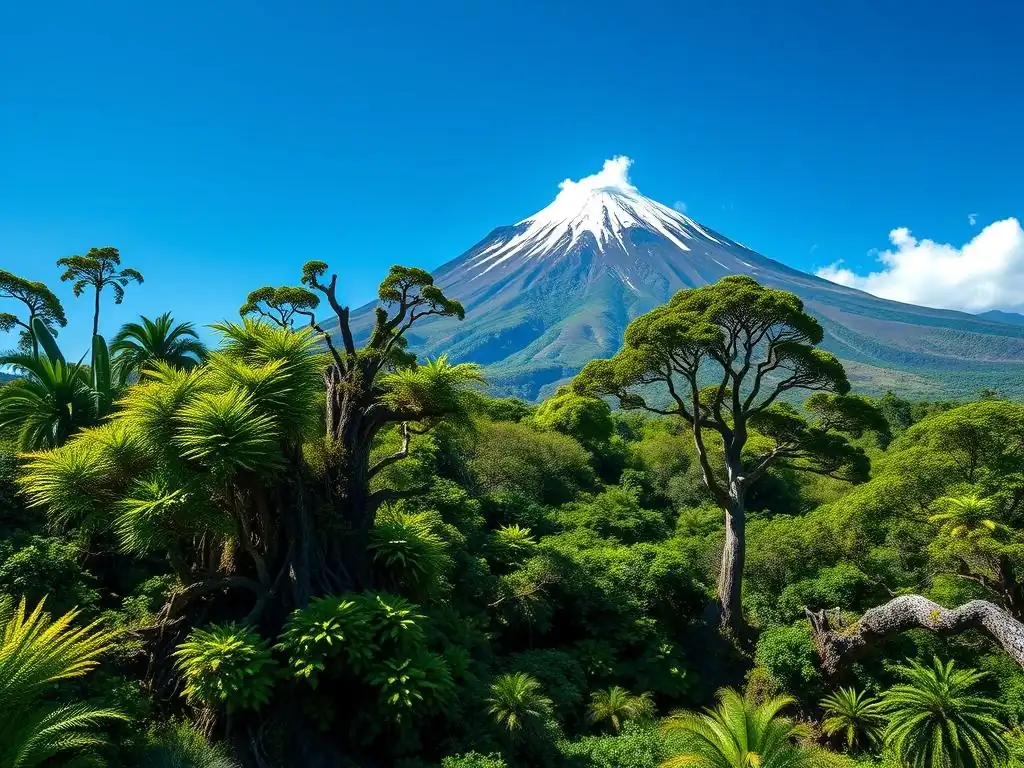
Sustainable Forestry Practices in Volcanic Areas
In volcanic regions where forests are both ecologically important and economically valuable, sustainable forestry practices are crucial for ensuring long-term forest health, timber production, and volcanic risk reduction. Sustainable forestry aims to balance timber harvesting with the conservation of forest ecosystems and their protective functions. In volcanic areas, this balance is particularly critical due to the inherent hazards and the vital role of forests in mitigating these risks.
Sustainable forestry practices in volcanic regions should prioritize selective logging over clear-cutting, minimizing soil disturbance and maintaining continuous forest cover. Selective logging allows for the harvesting of mature trees while retaining younger trees and understory vegetation, preserving the soil-stabilizing and erosion-reducing functions of the forest. Reforestation efforts following harvesting should focus on planting native tree species and promoting biodiversity.
Furthermore, sustainable forestry plans should incorporate buffer zones around critical volcanic features and sensitive ecosystems, minimizing the impact of logging activities on volcanic hazards and biodiversity conservation. By implementing sustainable forestry practices, volcanic regions can benefit from both the economic value of forests and their essential protective functions against volcanic hazards.
Conservation Strategies for Protecting Volcanic Forests
Conservation strategies are paramount for safeguarding volcanic forests and ensuring their continued role in volcanic risk reduction and biodiversity preservation. Volcanic forests are often unique ecosystems, harboring specialized plant and animal communities adapted to volcanic environments. They also provide critical ecosystem services, including erosion control, water regulation, and carbon sequestration, in addition to their volcanic hazard mitigation functions.
Effective conservation strategies for volcanic forests include establishing protected areas, such as national parks and reserves, to safeguard representative forest ecosystems and biodiversity hotspots. Strict regulations on deforestation, illegal logging, and land conversion are essential for maintaining forest cover. Reforestation and habitat restoration programs can enhance forest connectivity and resilience.
Community-based conservation initiatives, involving local communities in forest management and protection, are crucial for long-term conservation success. Monitoring forest health and biodiversity within volcanic regions is also essential for adaptive management and ensuring the effectiveness of conservation strategies. By implementing comprehensive conservation strategies, we can ensure the long-term protection of volcanic forests and their invaluable ecosystem services.
The Role of Local Communities in Forest Management and Volcanic Safety
Local communities residing in volcanic regions are integral stakeholders in forest management and volcanic safety. Their livelihoods, well-being, and safety are directly linked to the health and integrity of surrounding forests and the potential risks posed by volcanic activity. Engaging local communities in forest management and volcanic risk reduction efforts is not only ethically sound but also crucial for the effectiveness and sustainability of these initiatives.
Community-based forest management approaches empower local communities to participate in decision-making processes related to forest use and conservation. This can include collaborative forest management agreements, community forestry programs, and participatory monitoring initiatives. Integrating local knowledge and traditional ecological practices into forest management plans can enhance their effectiveness and cultural appropriateness.
Furthermore, local communities play a vital role in volcanic early warning systems, evacuation planning, and disaster preparedness. Empowering communities to manage their forests sustainably and participate in volcanic safety measures strengthens local resilience and ensures that forest management and volcanic risk reduction efforts are aligned with community needs and priorities.
The Future of Forests and Volcanoes Protection: Challenges and Opportunities
Climate Change and its Impact on Volcanic Forests
Climate change presents a significant challenge to the future of volcanic forests and their capacity to provide protection against volcanic hazards. Changes in temperature, precipitation patterns, and extreme weather events can directly impact forest health, resilience, and distribution. Increased frequency and intensity of droughts can stress forests, making them more vulnerable to diseases, insect outbreaks, and wildfires, potentially reducing forest cover and their protective functions.
Altered rainfall patterns can affect soil erosion rates and lahar dynamics in volcanic regions. Changes in snowpack and glacier melt, often associated with volcanoes, can also influence lahar initiation and magnitude. Climate change may also shift the distribution of tree species, potentially altering forest composition and their effectiveness in mitigating volcanic hazards.
Understanding the complex interactions between climate change and volcanic forests is crucial for developing adaptive forest management strategies and ensuring the continued protective role of forests in a changing climate. Research is needed to assess the vulnerability of different volcanic forest types to climate change and to identify management practices that enhance forest resilience in the face of these challenges.
Integrating Forest Management into Volcanic Hazard Mitigation Plans
Integrating forest management into comprehensive volcanic hazard mitigation plans is essential for enhancing community safety and resilience in volcanic regions. Traditionally, volcanic hazard mitigation has focused primarily on engineering solutions, monitoring systems, and evacuation plans. However, recognizing the vital protective functions of forests, integrating forest management into these plans offers a nature-based solution that can complement and enhance conventional mitigation measures.
Forest management strategies for volcanic hazard mitigation can include maintaining or restoring forest cover in critical areas, such as steep slopes and lahar pathways, to reduce erosion and mitigate mudflow risks. Establishing greenbelts of forests around populated areas can provide a buffer against ashfall and lahars.
Integrating forest considerations into land-use planning in volcanic regions can help to minimize development in high-hazard zones and maintain forest cover in protective areas. Collaboration between volcanologists, forest managers, land-use planners, and local communities is crucial for effectively integrating forest management into volcanic hazard mitigation plans and ensuring a holistic approach to risk reduction.
Future Research Directions: Understanding the Complex Interactions Between Forests and Volcanoes
Further research is crucial to deepen our understanding of the complex interactions between forests and volcanoes and to optimize the use of forests for volcanic risk reduction. Several key research directions warrant attention. Firstly, quantifying the precise effectiveness of different forest types in mitigating specific volcanic hazards, such as lahars and ashfall, under varying eruption scenarios is essential. This could involve field experiments, modeling studies, and remote sensing analysis.
Secondly, investigating the long-term impacts of volcanic eruptions on forest ecosystems, including forest regeneration dynamics, biodiversity recovery, and carbon sequestration, is crucial for informing long-term forest management and conservation strategies. Thirdly, assessing the vulnerability of volcanic forests to climate change and identifying adaptive management practices to enhance forest resilience is a critical area of research.
Finally, exploring the socio-economic dimensions of forest management for volcanic risk reduction, including community perceptions, economic incentives, and policy frameworks, is essential for ensuring the sustainable and equitable integration of forests into volcanic hazard mitigation efforts. Continued research in these areas will provide valuable insights for enhancing both ecosystem health and community safety in volcanic regions worldwide.
Conclusion: Recognizing the Vital Role of Forests in Volcanic Environments
Forests as Natural Protectors: A Summary of Benefits
Forests are not merely passive bystanders in volcanic landscapes; they are active agents of protection, offering a multitude of benefits that contribute to ecosystem stability and community safety. As natural soil stabilizers, forests significantly reduce erosion on steep volcanic slopes, preventing landslides and maintaining landscape integrity. Their role in mitigating lahars, by slowing down mudflows and reducing their erosive power, is crucial in protecting downstream communities and infrastructure.
Forest canopies act as natural shields, buffering the impact of volcanic ashfall and reducing its direct effects on ecosystems and human settlements. Even in terms of air quality, forests contribute by absorbing some volcanic gases, offering a minor improvement in atmospheric conditions.
In essence, forests function as natural infrastructure in volcanic environments, providing cost-effective and ecologically sound solutions for volcanic risk reduction. Their multifaceted protective roles highlight their intrinsic value and underscore the importance of their conservation and sustainable management in volcanic regions worldwide. Recognizing forests as vital components of volcanic landscapes is essential for fostering a more holistic and resilient approach to volcanic hazard mitigation.
Protecting Forests for Enhanced Volcanic Resilience
Protecting and restoring forests in volcanic regions is not just an environmental imperative; it is a crucial strategy for enhancing volcanic resilience – the capacity of communities and ecosystems to withstand and recover from volcanic events. Healthy, intact forests provide a natural defense against various volcanic hazards, reducing their impact and facilitating faster recovery after eruptions. Investing in forest conservation, sustainable forestry practices, and reforestation efforts in volcanic landscapes is an investment in community safety, ecosystem health, and long-term resilience.
By prioritizing forest protection in volcanic regions, we can harness the natural protective power of these ecosystems, creating safer, more sustainable, and more resilient environments for both people and nature. Recognizing the vital role of forests in volcanic environments and taking proactive steps to conserve and manage them is essential for building a future where communities can thrive in harmony with these powerful and dynamic natural forces.
Frequently Asked Questions
How do forests help to protect against volcanic hazards?
Forests can reduce the impact of volcanic eruptions by slowing down lahars and absorbing ashfall. This mitigation helps to protect surrounding communities.
Can forests prevent volcanic eruptions?
No, forests cannot prevent volcanic eruptions. However, they can provide a degree of protection against secondary hazards like mudflows and landslides that often follow an eruption.
What types of vegetation are most effective in protecting against volcanic hazards?
Dense, mature forests with deep root systems are generally the most effective. These help to stabilize the soil and minimize erosion during volcanic activity.
How does deforestation impact the risks associated with volcanic eruptions?
Deforestation increases the risk of landslides and mudflows following an eruption. The absence of tree cover also allows ash to spread more easily, impacting a wider area.
What role do volcanologists play in understanding the relationship between forests and volcanoes?
Volcanologists study the interactions between vegetation and volcanic processes to understand how forests can mitigate volcanic hazards. They also assess the vulnerability of forested areas to eruptions.
Final Reflection: Nature's Silent Guardians
The exploration of the symbiotic relationship between forests and volcanoes reveals a profound truth: nature's resilience is often underestimated. The evidence presented throughout this article underscores the crucial role vegetation plays in mitigating volcanic hazards, from stabilizing slopes to reducing the impact of ashfall. This understanding is not merely academic; it's a vital consideration in land management and disaster preparedness, particularly in regions where these powerful forces of nature converge.
The concept of forests acting as a buffer against volcanic fury has deeply resonated with me, highlighting the interconnectedness of ecosystems and the importance of conservation. It reminds us that our actions, both positive and negative, have far-reaching consequences on the delicate balance of our planet. Look deep into nature, and then you will understand everything better.
- Albert Einstein. This quote encapsulates the essence of this exploration, urging us to appreciate the intricate mechanisms at play and to learn from the wisdom of the natural world.
As we conclude this journey into the protective embrace of forests around volcanoes, I invite you to consider your own relationship with nature. How can you contribute to preserving these vital ecosystems and promoting a future where humanity and the environment coexist in harmony? Let us all strive to be mindful stewards of the Earth, recognizing the power and potential of nature's silent guardians to protect us all.
Uncover Nature's Volcanic Shield!
Thank you for diving into the fascinating world where forests and volcanoes intertwine! We hope you’ve gained a newfound appreciation for the vital role vegetation plays in mitigating volcanic hazards. Now, it's time to put that knowledge into action!
Here are a few ways you can continue your exploration:
- Become a Citizen Scientist: Identify and document the types of vegetation growing in volcanic regions near you. Share your observations with local conservation groups and contribute to understanding how ecosystems respond to volcanic activity.
- Discover: Explore the effects of volcanic activities on your nearest forest.
- Share Your Insights: Share this article with friends and family on social media to spread awareness about the surprising benefits of forests in volcanic areas!
What practical steps will you take to further explore the relationship between forests and volcanoes in your community? Let us know in the comments below!