
The Minoan Eruption: A Cataclysm that Shaped the Aegean

Welcome to Volcano Explorers!
Prepare to journey back in time and uncover the secrets of a world forever changed. The earth trembled, the sky turned black, and an ancient civilization faced its ultimate test. What truly happened after The Minoan Eruption, and how did its fiery breath reshape the Aegean forever? Dive into our latest exploration of this cataclysmic event and begin to unravel the mysteries that still smolder beneath the surface. Your adventure begins now...
- Introduction: Unveiling the Minoan Eruption of Thera
- The Geological Setting of Thera (Santorini) Before the Eruption
- The Minoan Civilization: A Flourishing Culture Before the Fall
- The Minoan Eruption: Chronology and Magnitude
- The Immediate Impact of the Minoan Eruption on Thera
- The Minoan Eruption Impact on Aegean: Long-Term Consequences
- Minoan Eruption Impact on Aegean Trade Routes and Networks
- The Minoan Eruption and the Legend of Atlantis: A Possible Connection?
- Reconstructing the Minoan Eruption: Modern Research and Discoveries
- The Legacy of the Minoan Eruption: Lessons for Today
- Conclusion: Reflecting on the Minoan Eruption's Profound Influence on the Aegean
-
Frequently Asked Questions
- What was the Minoan Eruption and where did it occur?
- How did the Minoan Eruption impact the Minoan civilization?
- What were the environmental consequences of the Minoan Eruption in the Aegean?
- How did the Minoan Eruption affect other cultures and regions beyond the Aegean?
- How do scientists study the impact of the Minoan Eruption on the Aegean today?
- Final Reflection: Echoes of Thera
- Unearth the Secrets of Thera's Fury!
Introduction: Unveiling the Minoan Eruption of Thera
The Aegean Sea, a cradle of ancient civilizations, witnessed one of the most catastrophic volcanic events in human history: the Minoan eruption of Thera, modern-day Santorini. This colossal eruption, occurring in the Bronze Age, not only devastated the island of Thera but also profoundly impacted the wider Aegean region, leaving an indelible mark on the environment, climate, and possibly the course of Minoan civilization. Understanding this eruption is crucial for grasping the geological forces that shape our planet and the vulnerability of human societies to natural disasters, even in antiquity.
The Minoan eruption stands as a pivotal moment in both geological and archaeological records. Its magnitude dwarfs many more recent volcanic events, and its effects resonated across a vast area. By examining the geological evidence, archaeological findings, and historical context, we can begin to reconstruct the sequence of events, assess the scale of destruction, and explore the long-term consequences of this ancient cataclysm on the Aegean world and beyond. This article aims to delve into the intricacies of the Minoan eruption, exploring its geological setting, its impact on the Minoan civilization, and its lasting legacy.
The Geological Setting of Thera (Santorini) Before the Eruption
The Volcanic History of Santorini: A Precursor to Catastrophe
Santorini, famed for its breathtaking caldera and whitewashed villages, owes its dramatic landscape to a long and violent volcanic history. Before the Minoan eruption, Thera was not the crescent-shaped island we know today, but a larger, more circular landmass formed by centuries of volcanic activity. This activity is part of the Hellenic Volcanic Arc, a region characterized by intense geological dynamism. Santorini’s volcanic system had been intermittently active for hundreds of thousands of years prior to the Minoan event, building up a complex stratigraphy of lava flows, ash layers, and caldera collapses.
The geological record reveals that Thera had experienced numerous smaller eruptions before the Minoan event, indicating a history of magma build-up and release. These earlier eruptions, while significant in their own right, served as a prelude to the truly colossal Minoan eruption.
Studies of the volcanic deposits on Santorini and surrounding islands reveal layers of pumice and ash from these pre-Minoan events, demonstrating the island's inherent volcanic instability and setting the stage for the eventual catastrophic eruption. This history of activity was a key factor in shaping the landscape and geological makeup of Thera, making it susceptible to a massive explosive event.
Thera's Tectonic Environment: Understanding the Aegean Volcanic Arc
The Aegean Volcanic Arc, of which Santorini is a part, is a direct consequence of the complex tectonic interactions between the African and Eurasian plates. The African plate is subducting beneath the Eurasian plate along the Hellenic Trench, a deep underwater trench located south of Greece. This subduction process, where one tectonic plate slides beneath another, generates immense heat and pressure, melting the mantle rock and creating magma that rises to the surface. This process is responsible for the volcanism throughout the Aegean Sea, including the formation of Santorini's volcanic system.
The tectonic setting explains why Santorini is such a volcanically active region. The subduction zone provides a constant source of magma, feeding the volcanoes of the Aegean Arc. The specific geometry of the subduction zone and the regional fault systems also influence the type and style of volcanic eruptions.
The Aegean region is characterized by a combination of explosive and effusive volcanism, with Santorini being particularly prone to large-scale explosive eruptions due to the composition of its magma and the geological structure of the area. This tectonic context is essential for understanding not only the Minoan eruption but also the ongoing volcanic activity in the Aegean.
The Minoan Civilization: A Flourishing Culture Before the Fall
Minoan Crete: The Center of a Thriving Bronze Age Society
The Minoan civilization, centered on the island of Crete, was a sophisticated Bronze Age culture that flourished in the Aegean from approximately 2700 to 1450 BC. Named after the legendary King Minos, the Minoans were renowned for their advanced society, intricate art, and extensive trade networks. Their palaces, such as Knossos and Phaistos, were complex architectural marvels, showcasing their engineering prowess and administrative capabilities. Minoan society was highly organized, with a centralized palace system that controlled economic activities, religious practices, and artistic production.
Minoan culture was characterized by its vibrant art, including frescoes, pottery, and sculpture, which depicted scenes of nature, religious rituals, and daily life. Their writing system, Linear A, remains largely undeciphered, adding to the mystique of this ancient civilization. The Minoans were skilled seafarers, dominating trade routes across the Aegean and beyond.
Their influence extended throughout the Cycladic islands, including Thera, where a significant Minoan settlement, Akrotiri, thrived before its catastrophic burial by the volcanic eruption. The Minoan civilization represented a pinnacle of Bronze Age culture in the Aegean, a sophisticated society poised to be dramatically impacted by the forces of nature.
Minoan Trade and Influence in the Aegean Sea
Minoan Crete's strategic location at the crossroads of Europe, Asia, and Africa, coupled with their maritime skills, allowed them to establish a vast and influential trading network across the Aegean Sea. Minoan ships sailed throughout the region, exchanging goods such as pottery, textiles, metalwork, and agricultural products for raw materials like metals, obsidian, and precious stones. Their trade routes extended to mainland Greece, the Levant, Egypt, and possibly even further afield, making them a dominant economic and cultural force in the Bronze Age Aegean.
The Minoan influence was not limited to trade; it also extended culturally and politically. Minoan artifacts and architectural styles have been found throughout the Aegean islands, indicating a significant degree of cultural exchange and possibly some form of Minoan political or economic control. Akrotiri on Thera, for example, is a prime example of Minoan influence outside of Crete, showcasing Minoan architectural styles, frescoes, and material culture. This widespread Minoan presence in the Aegean highlights their importance and the potential for a major disruption in their sphere of influence to have far-reaching consequences across the region.
The Minoan Eruption: Chronology and Magnitude
Dating the Minoan Eruption: Scientific Methods and Debates
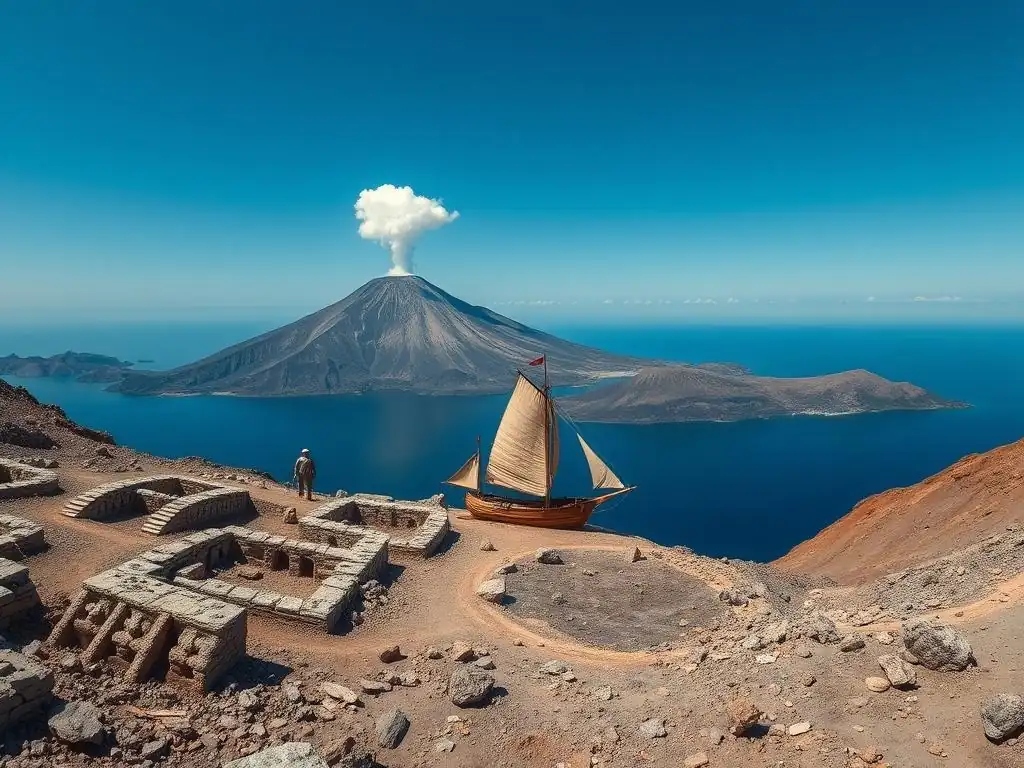
Precisely dating the Minoan eruption has been a subject of intense scientific debate for decades. Initially, archaeological evidence suggested a date around 1500 BC, based on pottery styles found in the volcanic deposits. However, radiocarbon dating of organic materials buried by the eruption has consistently pointed to an earlier date, centered around the late 17th or early 16th century BC, specifically around 1627-1600 BC. This discrepancy between archaeological and radiocarbon dates has led to what is known as the "High Chronology" versus "Low Chronology" debate.
The radiocarbon dates are supported by other scientific methods, including dendrochronology (tree-ring dating) and ice core analysis. Tree-ring studies have shown evidence of a climate anomaly around 1627 BC, potentially linked to a large volcanic eruption. Similarly, ice cores from Greenland and Antarctica show increased sulfate deposits around this time, also suggestive of a major volcanic event.
While the exact year remains debated, the weight of scientific evidence currently leans towards a date in the late 17th or early 16th century BC for the Minoan eruption, significantly earlier than the initially proposed archaeological date. This revised chronology has profound implications for understanding the eruption's impact on Minoan and wider Aegean history.
The Volcanic Explosivity Index (VEI) of the Minoan Eruption: A Colossal Event
The Minoan eruption is classified as a VEI 6 or 7 event, placing it among the largest volcanic eruptions of the Holocene epoch. The Volcanic Explosivity Index (VEI) is a scale from 0 to 8 that measures the explosivity of volcanic eruptions, based on factors like the volume of ejected material, eruption column height, and duration. A VEI 6 eruption is considered "Colossal," while a VEI 7 is classified as "Super-Colossal." For comparison, the 1883 Krakatoa eruption was a VEI 6, and the 1815 Tambora eruption, one of the largest in recorded history, was a VEI 7.
Estimates of the total volume of material ejected during the Minoan eruption range from 30 to 60 cubic kilometers, a truly enormous amount. The eruption column is estimated to have reached heights of up to 35-40 kilometers, injecting vast quantities of ash and gases into the stratosphere. The immense energy released during the eruption is comparable to multiple hydrogen bombs detonating simultaneously.
The VEI 6-7 classification underscores the Minoan eruption's extraordinary magnitude and its potential for widespread and devastating consequences across the Aegean and beyond. This colossal event was not just a local disaster; it was a major geological event with regional and potentially global ramifications.
Phases of the Eruption: From Plinian Column to Pyroclastic Flows
The Minoan eruption unfolded in distinct phases, each characterized by different volcanic phenomena and levels of intensity. The eruption likely began with a Plinian phase, named after Pliny the Younger's description of the 79 AD Vesuvius eruption. This phase is marked by the explosive ejection of pumice and ash high into the atmosphere, forming a towering eruption column. This Plinian phase would have resulted in significant ashfall across the surrounding region, blanketing landscapes in volcanic debris.
Following the Plinian phase, the eruption transitioned into more violent phases, characterized by pyroclastic flows and surges. Pyroclastic flows are fast-moving, extremely hot mixtures of gas and volcanic debris that travel down the flanks of a volcano. Pyroclastic surges are similar but less dense and more turbulent.
These flows and surges are incredibly destructive, capable of incinerating everything in their path. The eruption culminated in caldera collapse, as the emptying magma chamber beneath Thera could no longer support the overlying landmass, leading to the island's central part collapsing into the sea, creating the iconic caldera of Santorini. This multi-phase eruption sequence explains the diverse volcanic deposits found on Santorini and the widespread devastation caused by the Minoan event.
The Immediate Impact of the Minoan Eruption on Thera
The Destruction of Akrotiri: A Pompeii of the Bronze Age
The Minoan settlement of Akrotiri on Thera was completely destroyed and buried by the Minoan eruption, earning it the moniker "Pompeii of the Bronze Age." The eruption's initial Plinian phase showered Akrotiri with pumice and ash, burying the city under meters of volcanic debris. This rapid burial, while destructive, also acted as a preservative, encapsulating buildings, artifacts, and even organic materials in a time capsule. Unlike Pompeii, however, there is no evidence of human remains found at Akrotiri, suggesting that the inhabitants may have had time to evacuate before the most catastrophic phases of the eruption.
The archaeological excavations at Akrotiri have revealed a remarkably well-preserved Minoan city, providing invaluable insights into Bronze Age Aegean life. Multi-story buildings with sophisticated plumbing and drainage systems have been unearthed, adorned with stunning frescoes that depict scenes of daily life, religious rituals, and the natural world. Pottery, tools, furniture, and other artifacts have been recovered, offering a detailed picture of Minoan material culture. Akrotiri's destruction, while tragic, has paradoxically provided an unparalleled window into the Minoan world, frozen in time by the volcanic eruption.
Tsunami Generation: The Ripple Effect of the Eruption
The Minoan eruption, with its colossal energy release and caldera collapse, generated a massive tsunami that radiated outwards across the Aegean Sea and beyond. The sudden displacement of a vast volume of water during the caldera formation created a powerful wave, or series of waves, that impacted coastlines throughout the region. Geological evidence for this tsunami includes layers of tsunami deposits found on Crete, other Cycladic islands, and even the coast of Turkey and Israel. These deposits consist of marine sediments, pumice, and archaeological debris, indicating the inundation of coastal areas by a large wave.
The Minoan tsunami would have had devastating immediate impacts on coastal settlements across the Aegean. Low-lying coastal cities and villages, including Minoan settlements on Crete, would have been flooded, causing widespread destruction of buildings, infrastructure, and agriculture. Harbors and ships would have been destroyed, disrupting maritime trade and communication networks. While the precise height and reach of the Minoan tsunami are still debated, it is clear that it was a significant and destructive event, contributing to the overall catastrophe of the Minoan eruption and its far-reaching consequences.
Ashfall and Tephra Deposition: Covering the Aegean in Volcanic Debris
The Plinian phase of the Minoan eruption ejected enormous quantities of ash and tephra (volcanic rock fragments) into the atmosphere, which were then dispersed across the Aegean region and beyond by prevailing winds. Ashfall is a significant volcanic hazard, capable of disrupting agriculture, damaging infrastructure, and impacting human health. The Minoan eruption's ashfall layer has been identified in sediment cores and soil profiles across a wide area, providing evidence of the eruption's regional impact.
The thickness of the ash layer varies with distance from Santorini, being thickest on nearby islands and thinning out further away. On islands closer to Thera, the ashfall would have been substantial, potentially burying agricultural land, damaging crops, and contaminating water sources. Even at greater distances, finer ash particles could have caused respiratory problems, reduced sunlight, and impacted ecosystems. The widespread ashfall from the Minoan eruption was a major environmental consequence, contributing to the disruption and devastation across the Aegean region in the immediate aftermath of the volcanic event.
The Minoan Eruption Impact on Aegean: Long-Term Consequences
Climate Change and Its Effects on the Aegean Region
A volcanic eruption of the magnitude of the Minoan event can inject vast quantities of sulfur dioxide and other gases into the stratosphere, leading to a temporary period of global cooling. These volcanic gases react in the atmosphere to form sulfate aerosols, which reflect sunlight back into space, reducing the amount of solar radiation reaching the Earth's surface. While the exact global climate impact of the Minoan eruption is still debated, evidence suggests that it may have contributed to a period of cooler temperatures and altered weather patterns in the Aegean region and potentially beyond.
Paleoclimate records from the Aegean and surrounding areas show evidence of environmental changes around the time of the Minoan eruption, including shifts in vegetation patterns and potentially changes in precipitation. These climate perturbations could have had significant impacts on agriculture and ecosystems in the Aegean region, potentially exacerbating the societal disruptions caused by the eruption itself.
While the long-term climate effects of the Minoan eruption are complex and still under investigation, it is plausible that it contributed to a period of environmental stress in the Aegean, adding to the challenges faced by Minoan society and other cultures in the region.
The Impact on Minoan Agriculture and Society
The Minoan eruption had a devastating impact on Minoan agriculture, which was the foundation of their society. The ashfall from the eruption would have blanketed agricultural lands on Thera and surrounding islands, burying crops and rendering fields infertile in the short term. The tsunami would have inundated coastal plains, destroying agricultural infrastructure and salinizing arable land. The combination of ashfall, tsunami damage, and potential climate changes would have severely disrupted Minoan food production.
The disruption to agriculture would have had cascading effects on Minoan society. Food shortages could have led to famine, social unrest, and economic instability. The palaces, which controlled agricultural production and distribution, would have been severely weakened in their ability to manage resources and maintain social order. The Minoan eruption, therefore, not only caused immediate physical destruction but also undermined the economic and social foundations of Minoan civilization, contributing to its eventual decline.
The Possible Collapse of the Minoan Civilization: A Controversial Theory
The extent to which the Minoan eruption contributed to the collapse of the Minoan civilization remains a subject of intense debate among archaeologists and historians. While the eruption undoubtedly caused immense destruction and disruption in the Aegean, the Minoan civilization on Crete persisted for some time after the eruption. However, the eruption may have weakened Minoan society, making it more vulnerable to other factors, such as invasion by Mycenaean Greeks from the mainland.
Some scholars argue that the Minoan eruption directly triggered the collapse of Minoan civilization by causing widespread environmental devastation, economic collapse, and social upheaval. Others propose a more nuanced scenario, suggesting that the eruption was one of several factors that contributed to Minoan decline. These factors could include internal social and political stresses, competition with rising Mycenaean power, and long-term environmental changes.
While the Minoan eruption alone may not have been solely responsible for the civilization's demise, it undoubtedly played a significant role in reshaping the Aegean world and influencing the trajectory of Minoan history. The Minoan eruption impact on Aegean civilization was undeniably profound, even if the exact nature and extent of its influence are still debated.
Minoan Eruption Impact on Aegean Trade Routes and Networks
The Minoan eruption and its aftermath significantly disrupted maritime activities and trade routes across the Aegean Sea. The tsunami generated by the eruption would have destroyed harbors and ships, crippling Minoan naval capabilities and trade networks. Ashfall and pumice floating in the sea would have posed navigational hazards, making seafaring dangerous and hindering maritime traffic. The destruction of coastal settlements and trading centers would have further disrupted trade flows and economic exchange.
In the immediate aftermath of the eruption, Minoan control of Aegean trade routes would have been severely weakened. The disruption to maritime activities would have had far-reaching economic consequences, impacting not only Minoan Crete but also other regions that relied on Minoan trade. The post-eruption Aegean would have been a more dangerous and unpredictable environment for seafaring, requiring adaptation and potentially leading to shifts in trade routes and power dynamics in the region.
Economic Repercussions: The Decline of Minoan Dominance
The disruption of trade and the devastation of Minoan infrastructure and agriculture had significant economic repercussions, contributing to the decline of Minoan dominance in the Aegean. The Minoan economy, which relied heavily on maritime trade and agricultural surpluses, was severely weakened by the eruption. The loss of trading partners, the disruption of supply chains, and the decline in agricultural production would have led to economic hardship and instability in Minoan Crete.
The economic weakening of Minoan Crete, in turn, may have paved the way for the rise of Mycenaean power on the Greek mainland. The Mycenaeans, who were already expanding their influence in the Aegean, may have taken advantage of Minoan vulnerability to assert their dominance and take over Minoan trade networks. The Minoan eruption, therefore, may have indirectly contributed to a shift in power in the Aegean, marking the decline of Minoan civilization and the ascendance of Mycenaean Greece. The long-term economic ramifications of the Minoan eruption impact on Aegean trade were substantial and transformative.
The Minoan Eruption and the Legend of Atlantis: A Possible Connection?
Plato's Atlantis: Parallels with the Minoan Civilization and its Demise
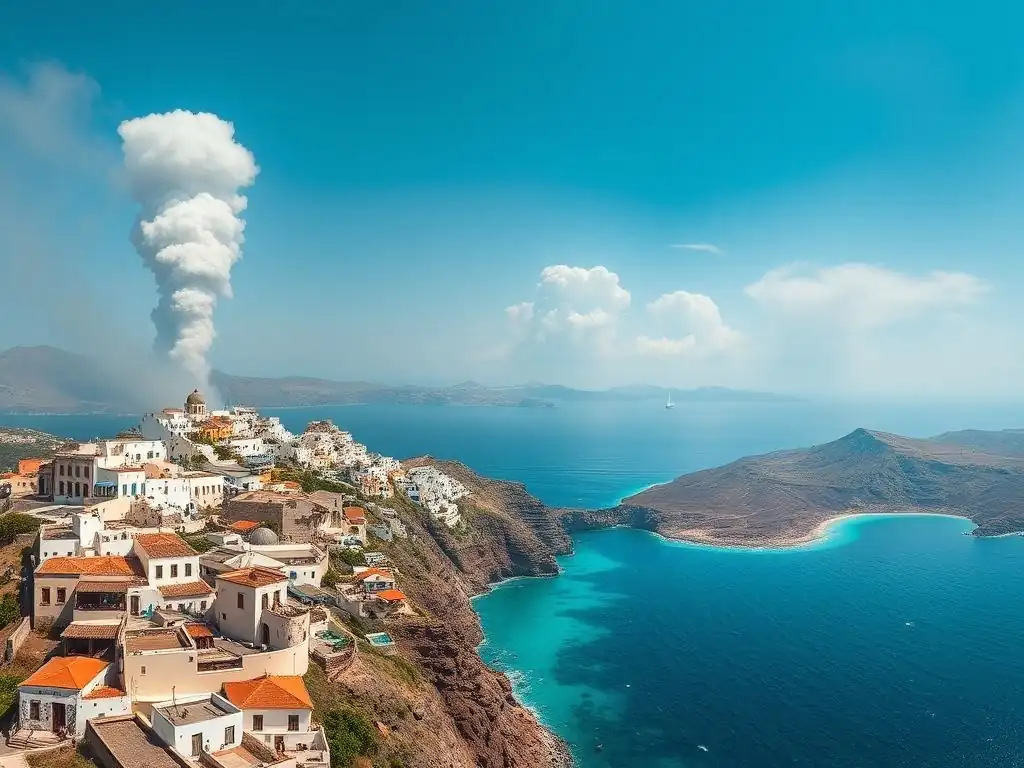
The legend of Atlantis, famously described by the ancient Greek philosopher Plato, has long fascinated scholars and the public alike. Plato described Atlantis as a powerful and advanced island civilization that mysteriously vanished in a cataclysmic event. Intriguingly, many parallels exist between Plato's description of Atlantis and the Minoan civilization and its sudden decline following the Thera eruption. Some scholars have proposed that the Minoan eruption and the destruction of Minoan civilization may have been the historical basis for the Atlantis myth.
Plato described Atlantis as a maritime power with advanced technology, rich culture, and a centralized government, all characteristics that resonate with the Minoan civilization. He also described Atlantis as being destroyed by earthquakes and floods, a description that could be interpreted as reflecting the volcanic eruption and tsunami at Thera. While Plato's Atlantis is undoubtedly a myth, the parallels with the Minoan civilization and its demise are striking and have fueled speculation about a possible connection between the two.
Geological Evidence and the Atlantis Myth: Separating Fact from Fiction
While the parallels between Atlantis and the Minoan civilization are intriguing, it is important to distinguish between myth and geological reality. There is no geological evidence to support the existence of a large, lost continent like Atlantis sinking beneath the ocean. Santorini, however, did experience a catastrophic volcanic eruption and caldera collapse, which dramatically reshaped the island's landscape and generated a devastating tsunami. This geological event is a real historical event that could have inspired or contributed to the Atlantis myth.
The Minoan eruption provides a plausible geological context for some elements of the Atlantis myth, such as the sudden disappearance of a civilization, the destruction by earthquakes and floods, and the submersion of land. However, Plato's account of Atlantis also contains mythical and allegorical elements that go beyond the historical reality of the Minoan eruption. While the Minoan eruption may have provided a kernel of historical truth for the Atlantis legend, it is important to recognize that Atlantis remains primarily a myth, albeit one that may have been inspired by real events and civilizations of the ancient Aegean.
Reconstructing the Minoan Eruption: Modern Research and Discoveries
Archaeological Excavations at Akrotiri: Unearthing the Past
The ongoing archaeological excavations at Akrotiri on Santorini have been instrumental in reconstructing the Minoan eruption and understanding its impact. Since their commencement in the 1960s, these excavations have unearthed a remarkably preserved Minoan city, providing a wealth of information about Minoan life, architecture, art, and technology. The finds at Akrotiri have transformed our understanding of the Minoan civilization and the events surrounding the eruption.
The meticulous excavation of Akrotiri continues to reveal new discoveries, shedding further light on the Minoan city and the eruption. The frescoes, pottery, and other artifacts recovered from Akrotiri provide invaluable insights into Minoan culture and society before the catastrophe. The spatial distribution of volcanic deposits within Akrotiri helps to reconstruct the sequence of eruption phases and their impact on the city. Archaeological research at Akrotiri remains a crucial source of information for understanding the Minoan eruption and its consequences.
Volcanological Studies: Modeling the Eruption and Its Aftermath
Volcanological studies play a vital role in reconstructing the Minoan eruption from a geological perspective. Volcanologists analyze the volcanic deposits on Santorini and surrounding islands to determine the eruption's magnitude, phases, and dispersal patterns. They use sophisticated techniques to date the eruption, analyze the composition of volcanic rocks, and model the eruption dynamics. These studies help to create a detailed picture of the eruption's physical processes and its environmental impacts.
Computer simulations and models are used to reconstruct the eruption column height, pyroclastic flow paths, and tsunami generation. These models help to visualize the eruption and its aftermath, providing insights into the scale and intensity of the event. Volcanological research continues to refine our understanding of the Minoan eruption, providing crucial data for assessing volcanic hazards and understanding the long-term impacts of large volcanic eruptions.
Geophysical Surveys: Mapping the Subsurface of Santorini
Geophysical surveys, such as seismic reflection and gravity surveys, are used to map the subsurface structure of Santorini and the surrounding caldera. These surveys provide information about the geometry of the caldera, the distribution of volcanic rocks, and the location of magma reservoirs beneath the island. Geophysical data helps to understand the volcanic system of Santorini and its potential for future eruptions.
Subsurface mapping reveals the complex geological structure of the Santorini caldera, including the layers of volcanic deposits from previous eruptions and the location of fault lines and magma chambers. This information is crucial for assessing volcanic hazards and monitoring the current volcanic activity at Santorini. Geophysical surveys complement archaeological and volcanological studies, providing a comprehensive picture of the Minoan eruption and the ongoing volcanic processes at Santorini.
The Legacy of the Minoan Eruption: Lessons for Today
Understanding Volcanic Hazards: Preparing for Future Eruptions
The Minoan eruption serves as a stark reminder of the immense power of volcanic eruptions and the potential for catastrophic consequences. Studying the Minoan eruption provides valuable lessons for understanding volcanic hazards and preparing for future eruptions in volcanically active regions worldwide. The eruption highlights the importance of monitoring volcanoes, assessing volcanic risks, and developing effective evacuation plans.
The Minoan eruption demonstrated the devastating impacts of pyroclastic flows, tsunamis, and ashfall. These hazards are relevant to many volcanic regions around the world, including areas in the Pacific Ring of Fire, Italy, and Iceland. By studying past eruptions like the Minoan event, scientists and emergency managers can better understand the potential hazards and develop strategies to mitigate the risks to human populations and infrastructure. The Minoan eruption's legacy is a call to preparedness and vigilance in the face of volcanic threats.
The Importance of Archaeological Preservation: Protecting Our Heritage
The preservation of Akrotiri, despite its tragic destruction, underscores the importance of archaeological preservation. Akrotiri provides an unparalleled window into the Minoan civilization and the Bronze Age Aegean, offering invaluable insights into human history and culture. The archaeological site serves as a reminder of the fragility of cultural heritage and the need for proactive measures to protect archaeological sites from natural disasters and human activities.
The ongoing work at Akrotiri highlights the value of archaeological research and conservation. The careful excavation and preservation of Akrotiri ensure that future generations can learn from this remarkable site and appreciate the richness of Minoan civilization. The Minoan eruption's legacy includes a strong message about the importance of protecting our shared cultural heritage for the benefit of humanity.
The Enduring Mystery of the Minoan Eruption and Its Impact
Despite decades of research, the Minoan eruption continues to hold mysteries and spark ongoing scientific debate. While much has been learned about the eruption's chronology, magnitude, and impact, some aspects remain uncertain or contested. The precise dating of the eruption, the full extent of its climate effects, and its exact role in the decline of Minoan civilization are still subjects of active research and discussion.
The enduring mystery of the Minoan eruption is part of its fascination and its continued relevance. The eruption serves as a reminder of the complexity of natural processes and the challenges of reconstructing past events. It also highlights the ongoing process of scientific discovery and the continuous refinement of our understanding of the Earth's dynamic systems and their interactions with human societies. The Minoan eruption remains a captivating subject of study, promising further insights and discoveries in the years to come.
Conclusion: Reflecting on the Minoan Eruption's Profound Influence on the Aegean
The Minoan eruption of Thera was a cataclysmic event that profoundly shaped the Aegean region and left a lasting legacy on history and culture. From its devastating immediate impacts on Thera and surrounding islands to its potential long-term consequences for Minoan civilization and Aegean trade networks, the eruption stands as a pivotal moment in the Bronze Age world. The Minoan eruption impact on Aegean civilization is undeniable, even centuries later.
The eruption serves as a powerful reminder of the forces of nature and the vulnerability of human societies to volcanic hazards. It also highlights the resilience of human cultures and their capacity to adapt and rebuild in the face of adversity. The ongoing research into the Minoan eruption continues to yield new insights, enriching our understanding of both volcanic processes and the complex interplay between natural disasters and human history. The Minoan eruption remains a compelling subject of study, offering valuable lessons for the present and future.
Frequently Asked Questions
What was the Minoan Eruption and where did it occur?
The Minoan Eruption was a massive volcanic explosion that occurred on the island of Thera (modern Santorini) in the Aegean Sea. It's considered one of the largest volcanic events in human history.
How did the Minoan Eruption impact the Minoan civilization?
The eruption likely devastated the Minoan civilization on Crete and surrounding islands. It caused widespread destruction from tsunamis, earthquakes, and ashfall.
What were the environmental consequences of the Minoan Eruption in the Aegean?
The eruption had significant environmental impacts, including climate change due to ash, destruction of ecosystems, and altered landscapes across the entire Aegean region.
How did the Minoan Eruption affect other cultures and regions beyond the Aegean?
While the primary impact was in the Aegean, the eruption might have had indirect effects on other Mediterranean cultures through climate disruption and trade routes.
How do scientists study the impact of the Minoan Eruption on the Aegean today?
Scientists use various methods, including geological studies of volcanic deposits, archaeological evidence, and computer modeling to reconstruct the eruption's effects and understand its long-term consequences.
Final Reflection: Echoes of Thera
The Minoan eruption, though millennia past, continues to resonate within the Aegean and beyond. Its impact on the Aegean, both immediate and long-term, is undeniable, shaping the region's landscape, climate, and even the course of civilization. Understanding the scale and consequences of this cataclysm is not merely an exercise in historical reconstruction; it's a vital lesson in the power of nature and the fragility of human endeavors.
The eruption's influence extends far beyond the physical realm, subtly shaping our understanding of resilience and societal collapse. The enduring mystery surrounding the Minoan civilization, and the potential role the eruption played in its decline, serves as a potent reminder of the interconnectedness of humanity and the environment. The past is never dead. It's not even past.
- William Faulkner. This quote encapsulates the enduring relevance of the Minoan eruption, a constant whisper in the winds of the Aegean, reminding us of the forces that can shape our world.
As we contemplate the Minoan eruption's impact on the Aegean, let us also consider its implications for our own time. What lessons can we learn from the resilience, or lack thereof, of past civilizations in the face of environmental catastrophe? The echoes of Thera challenge us to reflect on our relationship with the natural world and to strive for a future where we are better prepared to face the inevitable challenges that lie ahead. Let us learn from the past, not to fear the future, but to build a more sustainable and resilient world for generations to come.
Unearth the Secrets of Thera's Fury!
Thanks for delving into the gripping story of the Minoan Eruption! Now that you understand the immense power and historical impact of this ancient cataclysm, it's time to become a true Volcano Explorer and help us keep this history alive.
Here's how you can take the next step:
- Embark on a virtual journey! Explore our interactive map of the Aegean and pinpoint the locations most affected by the eruption, then share your findings with fellow volcano enthusiasts.
- Help us expand the Volcano Explorers database! Contribute by adding details about the volcanic ash layers found in various regions affected by the eruption. Even small details can make a huge difference.
- Spark the conversation! Share this article with friends, family, and fellow history buffs to spread awareness of the Minoan Eruption and its profound impact.
Ready to become an active part of the Volcano Explorers community and help keep the memory of Thera alive?