The Ethics of Volcano Warning: Balancing Alertness with Avoiding Panic
Volcano warning systems are crucial, but striking a balance between timely alerts and preventing unnecessary panic is key. Volcano warning ethics and…
Read article
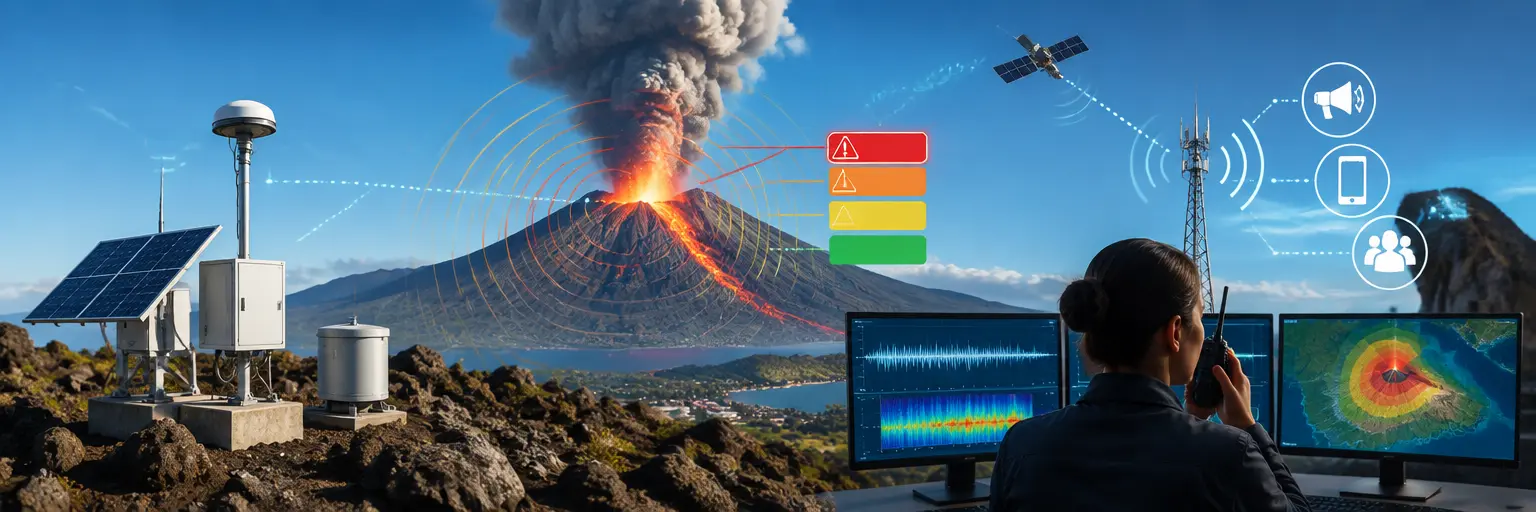
Volcano early warning systems are your first line of defense when the earth starts rumbling. These intricate networks of seismometers, gas sensors, and ground-deformation monitors feed data to volcanologists, who then translate raw science into clear alert levels—from green (normal) to red (eruption imminent). But technology only works if people understand it. That’s why we break down how alert level communication bridges the gap between scientists, local authorities, and the public, using vivid color codes, straightforward advisories, and community drills. Whether you’re a traveler eyeing a volcanic peak or a resident in the shadow of a giant, knowing how to interpret these signals—and how to act fast—can save lives. Explore the systems that turn silent monitoring into life-saving messages, and learn what each status truly means for your safety and preparedness.

Volcano warning systems are crucial, but striking a balance between timely alerts and preventing unnecessary panic is key. Volcano warning ethics and…
Read article
Volcano warning systems face significant challenges. Accurately predicting eruptions remains elusive, leading to costly false alarms and potentially catastrophic underestimation of real…
Read article
VolcanoExplorers.org reveals the critical importance of effective early warning volcano communication systems for communities living near active volcanoes, ensuring timely evacuations and…
Read article
A volcano orange alert signifies escalating unrest. VolcanoExplorers.org provides crucial volcano orange alert preparation guidance, equipping you with essential safety knowledge and…
Read article
VolcanoExplorers.org emphasizes volcano emergency preparedness drills, crucial for communities near active volcanoes. Regular practice ensures swift, safe evacuations during real eruptions, safeguarding…
Read article
Volcano alerts, while crucial for safety, significantly impact the economies of nearby communities. This article on VolcanoExplorers.org explores the complex balancing act…
Read articleWhen a volcano stirs, clear and timely communication can mean the difference between life and death. This subcategory of Volcano Safety & Preparedness breaks down how scientists monitor restless giants, how official alert levels are assigned, and how those warnings reach you—whether you're a resident, a traveler, or a curious explorer. We’ll demystify the color-coded systems, explain the science behind each escalation, and show you exactly what to do when sirens sound. By mastering these communication protocols, you’ll be empowered to respond confidently and responsibly to any volcanic threat.
Volcano alert levels are the universal language of danger. Most agencies, including the USGS, use a four-tier system: Green (normal), Yellow (advisory), Orange (watch), and Red (warning). Each color reflects increasing volcanic unrest, from minor seismic tremors to imminent eruption. Understanding these categories is your first defense—they tell you not only the current threat but also the expected timeline of potential activity.
For example, a Yellow alert might indicate elevated gas emissions or small earthquakes, while Orange suggests heightened unrest with possible eruption within weeks. A Red alert means an eruption is imminent or underway. Knowing these levels helps you gauge whether to prepare for evacuation or simply monitor updates. We’ll walk through real-world examples, like the 2018 Kīlauea crisis, where color changes triggered life-saving decisions for thousands of residents.
Behind every alert is a network of seismometers, GPS sensors, gas analyzers, and satellite imagery. These tools track ground deformation, earthquake swarms, and sulfur dioxide emissions—all precursors to eruptions. No single signal is definitive, so volcanologists combine data streams to build a threat picture. For instance, a sudden inflation of the volcano’s flanks paired with increasing tremor frequency often signals magma rising toward the surface.
This subcategory teaches you to interpret basic monitoring data, such as earthquake magnitudes or tiltmeter readings. You’ll learn how early warning systems like the Hawaiian Volcano Observatory’s alert cascade work in real time. We also spotlight breakthroughs in machine learning that now predict some eruptions days in advance, giving communities precious extra hours to act. Understanding these tools demystifies the science and builds trust in official warnings.
An alert is useless if it never reaches you. Effective communication uses redundant, multi-layered channels: outdoor sirens, radio and TV broadcasts, text message alerts, social media, and even door-to-door sirens in high-risk zones. Local emergency managers tailor messages to specific communities, translating technical jargon into simple, actionable instructions—like “Evacuate Zone A now” or “Shelter indoors, close windows.”
We’ll compare best practices from Japan, Indonesia, and the United States, where SMS-based systems have proven critical. You’ll also learn how to sign up for local alert apps, set up wireless emergency alerts on your phone, and verify information from official sources versus rumors. This section emphasizes that your personal preparedness plan should include multiple ways to receive updates, ensuring you never miss a critical warning even during power outages or network failures.
Knowing the alert level is only half the battle; acting on it is the other. Many volcano-prone regions conduct regular evacuation drills, simulating everything from ashfall to lava flows. Participating in these drills builds muscle memory for what to do when the real alarm sounds. This includes packing a go-bag, knowing your evacuation route, and designating a family meeting point outside the danger zone.
We’ll explore case studies from Mount Rainier in the U.S. and Mount Merapi in Indonesia, where layered early warning systems reduced casualties dramatically. You’ll discover how communities use “hazard maps” to identify safe corridors and shelter locations. Beyond official drills, we’ll cover how to create a personal volcanic emergency kit, including N95 masks for ash, goggles, and a battery-powered radio. These actionable steps transform you from a passive observer into an active participant in your own safety.
Volcanoes don’t respect borders, and neither should warnings. International bodies like the UN’s Volcanic Ash Advisory Centers (VAACs) coordinate real-time data to alert aviation, while regional observatories share seismic readings across continents. This global network ensures that even remote eruptions get early detection and that travelers receive warnings before entering hazardous zones.
We’ll highlight how the Smithsonian’s Global Volcanism Program tracks eruptions worldwide, feeding into national alert systems. You’ll learn how to access global volcanic activity maps and interpret ash cloud trajectories that affect flights. For frequent travelers, this section is invaluable—it helps you check the alert level of any volcano before booking a trip. By understanding this interconnected web, you appreciate that volcano safety is a collective, international effort, not just a local concern.
A Volcano Warning (Red) means an eruption is imminent or already happening. You should immediately follow evacuation orders, avoid low-lying areas, and protect yourself from ash fallout. Stay indoors if possible, seal windows, and listen to local authorities for real-time instructions. This is the highest risk phase, so prioritize safety over routine activities.
During heightened unrest, alert levels can change in real time, sometimes multiple times a day. Agencies typically issue updates after major seismic events or gas emission spikes. In calm periods, updates may be weekly or monthly. Always check official sources like USGS or local observatories for the latest status rather than relying on outdated information or social media posts.
Yes, most regions use Wireless Emergency Alerts (WEA) that send text-like notifications to all compatible phones within a designated area. However, these require network coverage and can be delayed in remote spots. Always back up your smartphone with a battery-powered radio and local sirens to ensure you receive warnings even if cellular networks fail.
A Yellow alert signals elevated unrest, not an imminent eruption. You should stay informed by checking updates from the local volcano observatory, avoid restricted zones, and carry a basic emergency kit. If you’re hiking, ask park rangers about current conditions. While risk is low, preparedness prevents panic if the alert escalates.
Yes, volcanologists watch for a sudden increase in volcanic tremor, rapid ground deformation, or continuous gas emissions. Escalation often follows a pattern of accelerating seismicity and visible steam plumes. Official agencies issue a “watch” status (Orange) to signal that an eruption is possible within weeks; if those signs intensify quickly, they upgrade to Red with minimal notice.