Discover the Best Books and Documentaries on Volcanoes and Eruptions
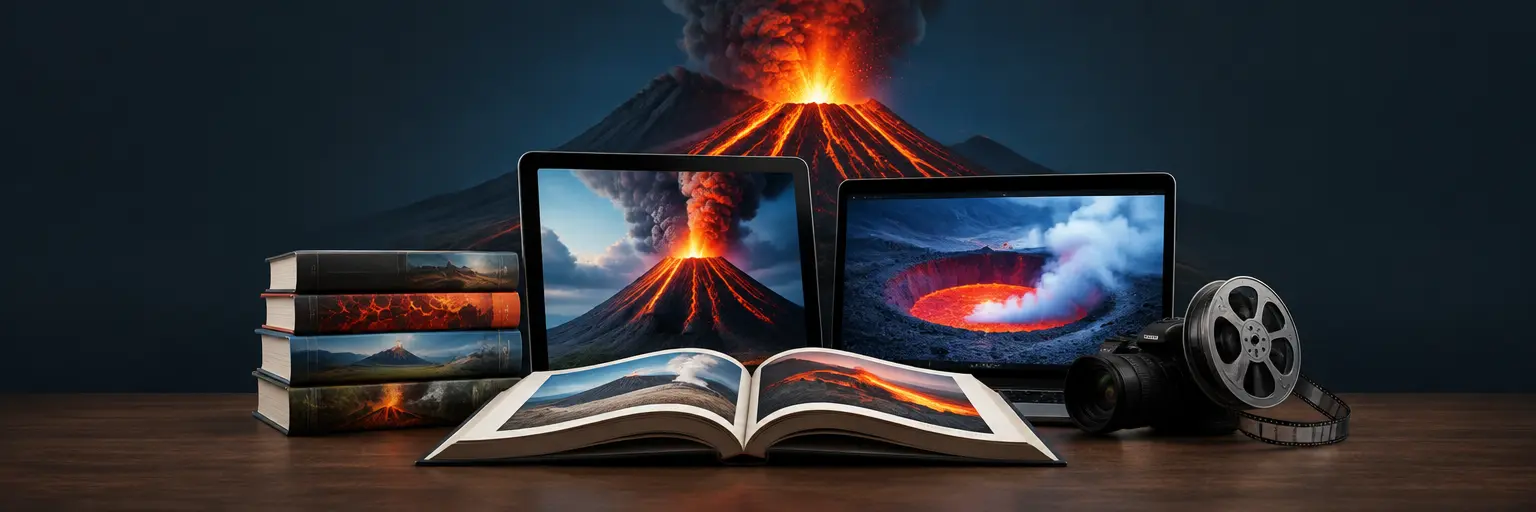
Welcome to Volcano Explorers’ curated library of the most riveting and authoritative resources on volcanic science, history, and storytelling. Whether you’re a budding geologist, a lifelong learner, or a thrill-seeker, this section gathers must-read books and must-watch documentaries that capture the raw power of eruptions and the dedicated scientists who study them. Each selection has been handpicked for accuracy, visual appeal, and narrative depth, ensuring you experience volcanoes from the safety of your home while gaining a profound appreciation for their majestic fury.
🌋 Foundational Science Books for Volcano Enthusiasts
Start your journey with accessible yet scientifically rigorous books that explain the mechanics of volcanoes—from plate tectonics to magma chemistry. Works like *Volcanoes: Fire from the Earth* by Maurice Krafft and *The Volcano Adventure Guide* by Rosaly Lopes blend vivid imagery with clear explanations, making complex concepts digestible for beginners. You’ll also find academic classics like *Volcanoes* by Peter Francis, which delve into eruption types and monitoring techniques, ideal for anyone wanting a serious grounding in volcanology.
These books not only teach you *how* volcanoes work, but also *why* they matter for our planet’s future. Expect engaging diagrams, real-world case studies, and insights into how scientists predict eruptions. By the end, you’ll be able to distinguish a stratovolcano from a shield volcano and understand pyroclastic flows with confidence. Perfect for classroom use or personal study, these foundational texts are the bedrock of any volcano lover’s library.
🎥 Cinematic Documentaries That Bring Eruptions to Life
For visual learners, documentaries offer unforgettable, up-close footage of eruptions, lava flows, and the aftermath of catastrophic events. The BBC’s *Volcano Live* presented by Kate Humble and Iain Stewart takes you to active craters around the globe, while National Geographic’s *Inside the Volcano* uses cutting-edge CGI to peel back Earth’s crust. These films combine breathtaking cinematography with expert interviews, making you feel the heat and hear the rumble right from your screen.
Beyond raw spectacle, these documentaries also explore human stories—communities evacuated, rescue missions, and the scientists who risk everything for data. You’ll gain a visceral understanding of how eruptions shape landscapes and cultures, from Pompeii to modern-day Iceland. Many titles include interactive extras on DVD or streaming platforms, such as 3D models and timeline graphics, enriching your viewing experience. Whether you’re hosting a movie night or homeschooling, these films inspire awe and respect for our planet’s living geology.
📚 Memoirs and Survival Stories from Eruption Survivors
Nothing captures the human experience of a volcanic disaster like firsthand accounts. Books such as *Krakatoa: The Day the World Exploded* by Simon Winchester and *The Last Days of St. Helens* by Richard L. Williams weave personal diaries, survivor interviews, and historical records into gripping narratives. These memoirs transport you to the moment of eruption—the sky darkening, the ground shaking, and the scramble for safety—offering an emotional connection that pure science cannot provide.
These stories also highlight resilience and community response, showing how people rebuild after devastation. You’ll read about the 1883 Krakatoa tsunami, the 1980 Mount St. Helens blast, and the 2018 Fuego eruption in Guatemala, each documented with journalistic precision. These books serve as powerful reminders of nature’s unpredictability and the fragility of human life. They are perfect for book clubs or anyone seeking a narrative-driven approach to natural history, blending thriller-like pacing with factual accuracy.
🔬 Advanced Guides for Aspiring Volcanologists
If you’re ready to dive deeper, technical manuals and field guides will sharpen your skills. Titles like *Encyclopedia of Volcanoes* edited by Haraldur Sigurdsson and *Volcanotectonics* by Agust Gudmundsson offer in-depth chapters on eruption dynamics, geophysics, and hazard mapping. These resources are essential for university students, researchers, or hobbyists who want to understand seismic data, gas emissions, and remote sensing technologies used in modern monitoring.
Expect rigorous explanations of lahar modeling, tephra dispersion, and deformation studies, reinforced with data sets and case studies from recent eruptions. Many guides also include practical exercises—such as interpreting volcano seismograms or calculating eruption columns—making them invaluable for self-study. While dense, these books reward readers with a comprehensive toolkit to analyze volcanic activity critically. Pair them with online databases like the Smithsonian’s Global Volcanism Program for a complete, professional-grade education.
🌏 Cultural and Historical Perspectives on Volcanic Landscapes
Volcanoes are more than geological phenomena; they shape myths, art, and civilizations. Explore books like *The Volcano: Rescue from Whakaari* by Alistair Barrie and *Mountains of Fire: The Menace, Meaning, and Magic of Volcanoes* by Clive Oppenheimer, which examine how indigenous peoples have revered and feared these peaks. You’ll discover how eruptions influenced ancient Roman politics, Hawaiian creation chants, and Japanese shrine rituals, offering a holistic view of humanity’s relationship with fire.
Documentaries such as *Volcanoes of the Deep Sea* (in part about hydrothermal vents) and *The Fire Within* delve into cultural symbolism and even mythological monsters like Pele the Hawaiian goddess. These resources are excellent for travelers, historians, and anthropologists alike, revealing how diverse societies interpret volcanic activity. They also touch on current debates—like geotourism’s impact on fragile ecosystems—giving you a balanced perspective. This section enriches your understanding of volcanoes far beyond science, connecting them to our shared human story.
📖 Family-Friendly and Kid-Approved Volcano Education
Young explorers will love interactive books and documentaries designed for curious minds. *Volcanoes!* by Gail Gibbons and *The Magic School Bus Blows Its Top* use playful illustrations and simple language to explain eruption basics, while the BBC’s *Operation Ouch!* special on volcanic gases makes learning fun. These resources feature hands-on experiments—like baking soda vinegar eruptions—and colorful diagrams that simplify concepts like magma chambers and lava viscosity.
Documentaries like National Geographic’s *Volcano!* for kids include animated segments and inspiring scientist profiles, encouraging the next generation of geologists. Parents and educators can find companion activities, quizzes, and printable lesson plans online. This category ensures that children grasp not only the dangers but also the wonder of volcanoes, fostering a lifelong curiosity about our dynamic Earth. Perfect for STEM education at home or in the classroom, these picks balance entertainment with solid, age-appropriate facts.
Frequently Asked Questions
What is the best beginner-friendly book about volcanoes?
Volcanoes: Fire from the Earth by Maurice Krafft is ideal for beginners. It combines stunning photographs with straightforward explanations of eruption types and volcanic landforms. You’ll learn about key examples like Mount Etna without needing a geology degree, making it a perfect starting point for casual readers.
Are there documentaries suitable for young children?
Yes, National Geographic’s Volcano! and Magic School Bus Blows Its Top are excellent for kids aged 5–10. They use friendly characters, simple narration, and engaging visuals to teach basic concepts like lava and eruption triggers, while avoiding graphic or scary content.
Which documentary shows real eruption footage in high definition?
BBC’s Volcano Live offers some of the sharpest HD footage of active eruptions, including drone shots of lava fountains and pyroclastic flows. It’s available on streaming platforms like Amazon Prime and BBC iPlayer, giving you a front-row seat to natural spectacles.
Are there books that cover both science and mythology?
Absolutely. Clive Oppenheimer’s Mountains of Fire and Simon Winchester’s Krakatoa blend scientific analysis with cultural histories, myths, and personal narratives. These works show how volcanoes influenced art, religion, and politics, appealing to readers interested in humanities as well as geology.
Can I find free educational documentaries on volcanoes online?
Yes, YouTube hosts many free documentaries, such as PBS’s NOVA: Deadliest Volcanoes and Smithsonian’s short films. University channels also offer lecture series. For legally free options with high production value, check your local library’s streaming service or PBS’s official website.