Explore University Programs and Degrees in Volcanology
If you are passionate about understanding the fiery forces that shape our planet, pursuing a formal education in volcanology is the first step toward a rewarding scientific career. This subcategory guides you through the diverse academic pathways available, from undergraduate foundational studies to advanced doctoral research. Here, you will discover how to choose the right university, what specialized skills are taught, and how these programs blend geology, chemistry, and physics to prepare the next generation of volcano experts. Whether you aspire to monitor active volcanoes or conduct groundbreaking research, this resource is your essential academic compass.
🌋 Undergraduate Foundations in Earth Sciences
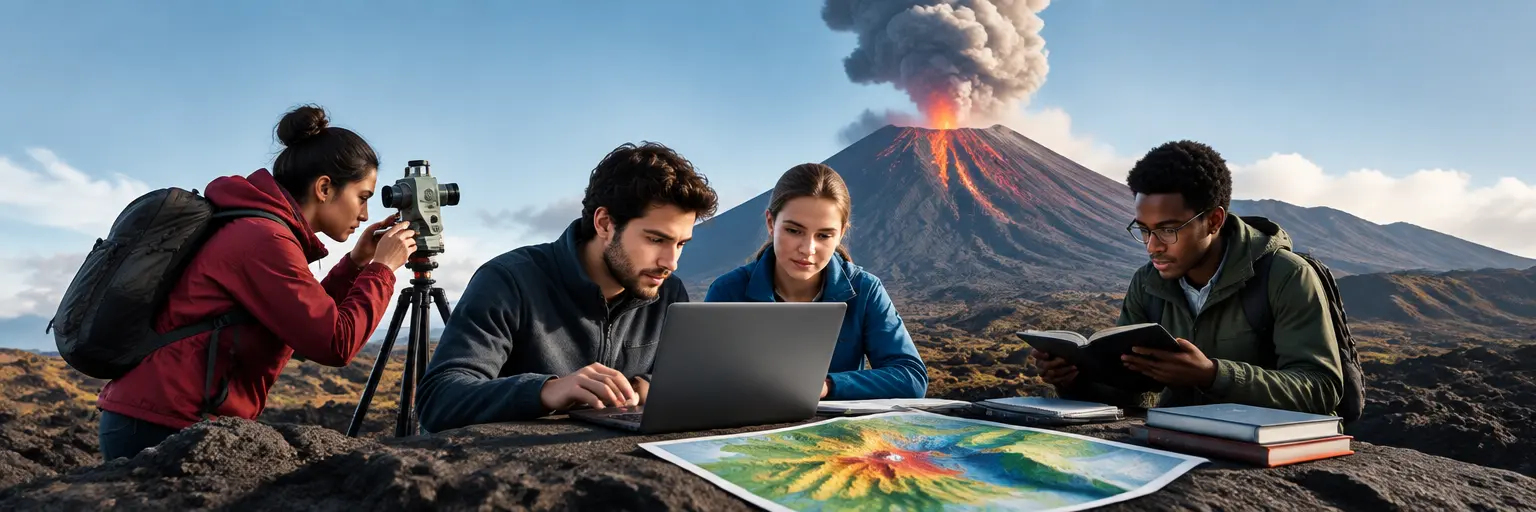
Bachelor’s degrees in geology, earth sciences, or environmental science provide the essential groundwork for any aspiring volcanologist. These programs typically cover mineralogy, petrology, structural geology, and geophysics, giving you a broad understanding of Earth’s systems. Expect hands-on laboratory work with rock samples and introductory field trips to volcanic terrains, where you will learn basic mapping and sampling techniques. Many universities stack optional modules in volcanology within these degrees, allowing early specialization.
Beyond coursework, undergraduate research projects or internships with geological surveys can offer valuable exposure to real-world volcanic monitoring. Look for programs that emphasize quantitative skills, including statistics and GIS (Geographic Information Systems), which are increasingly critical in hazard assessment. A strong foundation here not only opens doors to entry-level technician roles but also creates the academic portfolio necessary for competitive master’s applications in specialized volcanology tracks.
🔬 Master’s Programs: Specialized Volcanology Training
Graduate-level master’s degrees in volcanology or applied geophysics allow you to dive deep into magma dynamics, eruption forecasting, and tephrochronology. These programs often include intensive fieldwork, using instruments like seismometers and gas sensors on active or dormant volcanoes. Expect a curriculum that blends theoretical modelling with practical risk communication, preparing you for roles in government agencies, environmental consultancies, or volcanic observatories. Choose a university with active research groups in your area of interest—be it explosive eruptions, lava flow dynamics, or volcanic hazards.
Most master’s programs culminate in an original thesis, where you might analyze satellite imagery of ash plumes or reconstruct past eruption timelines from sediment cores. This research experience is your springboard into a PhD or industry careers. Many courses also offer partnerships with volcanic observatories (e.g., in Iceland, Italy, or the USGS), providing direct pathways to operational monitoring roles. If you seek a fast track to applied science, a professional master’s with a internship component can be exceptionally valuable.
🏛️ Doctoral Research: Leading Edge of Volcanology
PhD programs are for those aiming to become leading researchers or university professors in volcanology. Doctoral research is highly specialized, often focusing on a single volcano or planetary volcanic feature, using advanced tools like isotope geochemistry or numerical eruption simulations. You will work closely with a supervisor, publish peer-reviewed papers, and present at international conferences like AGU or IAVCEI. Expect four to five years of rigorous inquiry, but with significant freedom to shape your own research questions.
Admission to top PhD programs typically requires a strong master’s degree and clear research proposal. Funded positions often come attached to specific grants, focusing on topics like volcanic ash impact on aviation or deep-sea eruptions. During your PhD, you will develop the project management and writing skills needed for academia, national geological surveys, or research institutes like INGV or GNS Science. Graduates are highly sought after for their analytical rigor, problem-solving abilities, and crisis response training.
🌍 Online and Distance Learning Options
Not everyone can relocate for a degree. Fortunately, several reputable universities offer online postgraduate certificates or even full online master’s in volcanology-related fields. These programs use virtual labs, interactive simulations, and recorded field lectures to teach remote sensing, hazard mapping, and risk communication. They are ideally suited for working professionals in mining, environmental management, or emergency response who wish upskill for a career shift. Ensure that any online program provides live interactions with faculty and access to industry-standard software like ArcGIS or FLO-2D.
Distance learning degrees often require one or two short residential field schools for hands-on learning. While you miss the informal learning of campus life, the flexibility is unmatched. You can study part-time over three to four years, balancing work and family. Some programs even offer optional in-person modules at volcanic sites in Italy, New Zealand, or Costa Rica. Always verify accreditation and alumni outcomes before enrolling, as this ensures your investment pays off with real career advancement.
💰 Scholarships and Funding Opportunities
Financing your education in volcanology is often a major concern. Fortunately, international funding bodies like the Fulbright Commission, the European Union’s Erasmus+ program, and national research councils (e.g., NSF, NERC) regularly fund students in this field. Many universities also offer merit-based scholarships or research assistant positions that waive tuition and provide a living stipend. Check specific departmental pages for competition deadlines—early applications are crucial. Also, volcanic-specific foundations, such as the IAVCEI grants for young scientists, can support fieldwork or conference travel.
Additionally, many volcanic observatories and mining companies sponsor degrees in applied volcanology to train future employees. For instance, the USGS offers paid internships that can convert into full-time positions. Keep your portfolio strong by volunteering with local science museums or citizen science projects like Volcano Watch. Do not let financial barriers stop you; with careful planning, dozens of routes exist to fund your dream education. Always contact financial aid offices early to explore niche scholarships, including those for women in geosciences or underrepresented minorities.
Frequently Asked Questions
What undergraduate degree is best to start volcanology?
The most common path is a Bachelor of Science in Geology, Earth Sciences, or Geophysics. These programs build your foundational knowledge in mineralogy, petrology, and physics, which are essential for volcanic studies. Some universities offer specific “Volcanology” minors or electives, but a general earth science degree with research experience is equally effective.
Can I study volcanology entirely online?
Yes, several accredited universities offer online master’s degrees in volcanology, applied geosciences, or remote sensing. These programs typically include virtual labs and one or two short field schools in volcanic regions. They are excellent for working professionals, though you must verify that the program includes practical, hands-on components to meet industry standards.
How long does a volcanology PhD take to complete?
A PhD in volcanology usually takes between four and five years of full-time study. This includes coursework, comprehensive exams, fieldwork, and the completion and defense of an original dissertation. Time can vary based on research complexity, data availability, and whether you secure additional funding. Some students finish in three and a half years if their fieldwork is straightforward.
What skills do volcanology degrees teach beyond geology?
Beyond traditional geology, you will develop skills in mathematics, physics, computer modelling, and data analysis. Hazard communication, crisis management, and fieldwork safety (including first aid and rope techniques) are also core components. Many programs teach GIS, satellite image analysis, and Python programming for processing seismic or gas data, making graduates versatile for broader environmental careers.
Are jobs available for graduates in volcanology?
Yes, employment opportunities exist at volcanic observatories, research institutes, environmental consulting firms, and governmental agencies like USGS or INGV. Graduates also work in hazard preparedness planning for cities near volcanoes, or in industries like geothermal energy and mineral exploration. While specialized roles can be competitive, the wider skills in geoscience and data analysis open many doors.