
From Crater to Coast: The Complete Journey of a Lava Flow

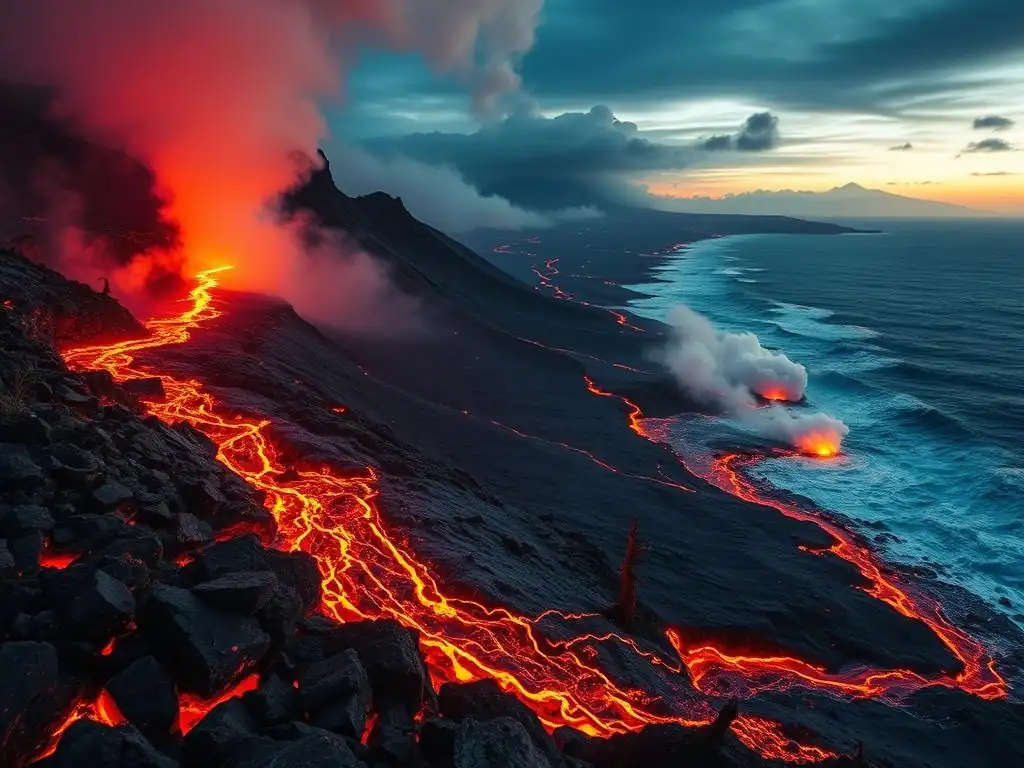
Welcome to Volcano Explorers, where the Earth's fiery heart beats! Prepare to be captivated as we unravel the mysteries of these geological giants. Ever wondered what happens after molten rock bursts forth from a volcano's maw? Dive in now, and discover the complete lava flow journey explained – a breathtaking and destructive force sculpted by intense heat and pressure. But where does it really begin, and what happens along the way? The answers await...
- From Vent to Ocean: The Complete Journey of a Lava Flow
- Understanding the Eruption: The Genesis of a Lava Flow
- The Initial Descent: Lava Flow Trajectory and Early Cooling
- Mid-Course Dynamics: Channel Formation and Flow Rate Changes
- Approaching the Ocean: Interaction with the Environment
- Solidification and Formation of Volcanic Landscapes
- Case Studies: Famous Lava Flow Journeys
- Monitoring and Prediction: Mitigating Lava Flow Hazards
- The Enduring Legacy: Lava Flows and Coastal Evolution
- Frequently Asked Questions
- Final Reflection: The Enduring Power of Creation and Destruction
- Unearth Your Inner Volcanologist!
From Vent to Ocean: The Complete Journey of a Lava Flow
Understanding the Eruption: The Genesis of a Lava Flow
Magma Composition and Its Role in Lava Flow Formation
The journey of a lava flow begins deep beneath the Earth's surface with magma, molten rock that varies significantly in composition. This composition is the primary determinant of a lava flow's behavior and its ultimate path. Magma rich in silica, like rhyolitic or andesitic magma, tends to be highly viscous, meaning it resists flow. Imagine honey versus water – high-silica magma is like honey.
This high viscosity is due to the complex chains of silica molecules that hinder movement. Conversely, basaltic magma, with lower silica content, is much more fluid, flowing more like water. This difference in fluidity is crucial: basaltic lava flows can travel vast distances and spread out thinly, while high-silica flows are typically thicker, slower, and more localized.
The temperature of the magma also plays a critical role. Hotter magma is less viscous and flows more easily. Basaltic magmas, erupting at temperatures between 1000°C to 1200°C (1832°F to 2192°F), are generally hotter than andesitic or rhyolitic magmas, which erupt at slightly lower temperatures.
Furthermore, the presence of dissolved gases within the magma influences its explosivity and, indirectly, the initial characteristics of a lava flow. Magma with higher gas content can lead to more explosive eruptions, fragmenting the lava and influencing the style of the initial outflow. Understanding these fundamental properties of magma composition is key to comprehending the entire lava flow journey explained in subsequent sections.
Eruption Style and Initial Flow Dynamics
The style of a volcanic eruption dictates the very beginning of a lava flow's journey. Effusive eruptions, characterized by the relatively gentle outpouring of lava, are the source of most lava flows. These eruptions occur when the pressure from dissolved gases in the magma is not sufficient to cause a violent explosion.
Instead, magma rises to the surface and flows out of vents or fissures. In contrast, explosive eruptions, driven by high gas pressure and viscous magma, are less likely to produce extensive lava flows. Explosive eruptions often result in pyroclastic flows, ash clouds, and volcanic bombs, rather than the continuous outpouring of molten rock needed to form a lava flow.
The initial dynamics of a lava flow are heavily influenced by the eruption rate and the vent geometry. A high eruption rate, meaning a large volume of lava erupted per unit time, will result in a larger and potentially faster-moving lava flow. The shape of the vent also matters; fissure eruptions, where lava emerges from long cracks in the ground, can create broad, sheet-like lava flows, while central vent eruptions from cone-shaped volcanoes tend to produce flows that radiate outwards in channels or lobes.
The initial slope around the vent is also a crucial factor, immediately directing the lava flow's path downhill and influencing its early velocity. These factors combine to set the stage for the entire lava flow journey explained as it moves away from the vent.
Factors Influencing Lava Viscosity and Gas Content
Several interconnected factors govern lava viscosity and gas content, ultimately shaping the characteristics of a lava flow journey. As previously mentioned, silica content is paramount; higher silica (SiO2) content increases viscosity. This is because silica tetrahedra link together in molten rock, forming complex chains that resist flow.
Rhyolitic lavas, with over 70% silica, are significantly more viscous than basaltic lavas, which contain around 50% silica. Temperature is inversely related to viscosity; as lava cools, it becomes more viscous and sluggish. The cooling process begins immediately upon eruption and continues throughout the lava flow journey explained, constantly altering the lava's ability to flow.
Gas content, primarily water vapor, carbon dioxide, and sulfur dioxide, also plays a complex role. Dissolved gases reduce magma viscosity to some extent, but more importantly, they drive eruptions. As magma rises to the surface, pressure decreases, and dissolved gases exsolve (come out of solution) forming bubbles.
In low-viscosity basaltic magma, these bubbles can escape relatively easily, leading to effusive eruptions and fluid lava flows. However, in high-viscosity magma, gas bubbles struggle to escape and can build up pressure, potentially leading to explosive eruptions. The interplay of silica content, temperature, and gas content is fundamental to understanding why different volcanoes produce such diverse lava flow types and behaviors.
The Initial Descent: Lava Flow Trajectory and Early Cooling
Following the Path of Least Resistance: Terrain and Slope Effects
Once erupted, a lava flow embarks on its journey, relentlessly dictated by gravity and the topography of the land. Lava, like water, naturally follows the path of least resistance, flowing downhill and accumulating in valleys and depressions. Steeper slopes accelerate lava flow velocity, allowing it to travel further and spread more rapidly. Conversely, gentle slopes cause lava to slow down, thicken, and potentially widen as it spreads laterally. The pre-existing terrain is therefore a critical factor in determining the initial trajectory and overall path of a lava flow journey explained.
Natural features such as valleys, ridges, and hillsides act as channels and barriers, respectively, guiding and diverting the flow. A valley will concentrate the lava, forming a channelized flow that can travel considerable distances. Ridges and elevated terrain, on the other hand, can act as natural levees, confining the flow to certain areas or diverting it around obstacles.
Even subtle changes in slope can significantly alter the direction and speed of a lava flow. Volcanologists meticulously study topographic maps and digital elevation models to understand and predict how terrain will influence lava flow paths, especially in populated areas near volcanoes. The interaction between gravity, slope, and terrain is the primary driver of the initial descent of a lava flow.
Early Stages of Cooling: Crust Formation and Heat Loss
As lava flows away from the vent, it immediately begins to lose heat to the surrounding environment through radiation, convection, and conduction. The surface of the lava flow cools much faster than the interior, leading to the formation of a solid crust. This crust acts as an insulator, slowing down further heat loss from the molten lava beneath. The formation of a crust is a crucial stage in the lava flow journey explained, as it affects the flow's morphology, its ability to travel long distances, and its interaction with the environment.
The rate of cooling and crust formation depends on several factors, including the lava's temperature, its composition, the ambient air temperature, and wind conditions. Basaltic lava flows, being hotter and more fluid initially, tend to form thinner crusts compared to more viscous andesitic or rhyolitic flows.
The development of a crust does not mean the lava flow stops moving; instead, the molten interior continues to flow beneath the solidified surface, sometimes breaking through the crust to create new flow lobes or breakouts. This process of crust formation and continuous internal flow is fundamental to understanding how lava flows evolve and progress across the landscape.
Different Types of Lava Flow Based on Initial Eruption Conditions
The initial conditions of an eruption, combined with the lava's properties and early cooling processes, lead to the formation of distinct types of lava flows. Two primary types of basaltic lava flows are commonly recognized: Pahoehoe and A'a. Pahoehoe lava, derived from the Hawaiian term for "smooth, unbroken," is characterized by its smooth, ropy, or billowy surface.
It forms from highly fluid basaltic lava that cools and solidifies while still flowing, creating these characteristic textures. Pahoehoe flows often advance in lobes or toes and can travel long distances due to their low viscosity and efficient heat retention beneath the surface crust.
In contrast, A'a lava, also from Hawaiian terminology meaning "stony rough lava," has a rough, jagged, and clinkery surface. A'a forms from lava that is slightly more viscous and cools more rapidly, or from Pahoehoe lava that has lost heat and become more viscous. As A'a lava flows, the surface crust breaks apart into angular fragments that tumble and rub against each other, creating the characteristic rough texture.
A'a flows tend to be thicker and move more slowly than Pahoehoe flows, often advancing as a steep front of loose rubble. Understanding the difference between Pahoehoe and A'a lava is essential for deciphering the lava flow journey explained in various volcanic settings.
Mid-Course Dynamics: Channel Formation and Flow Rate Changes
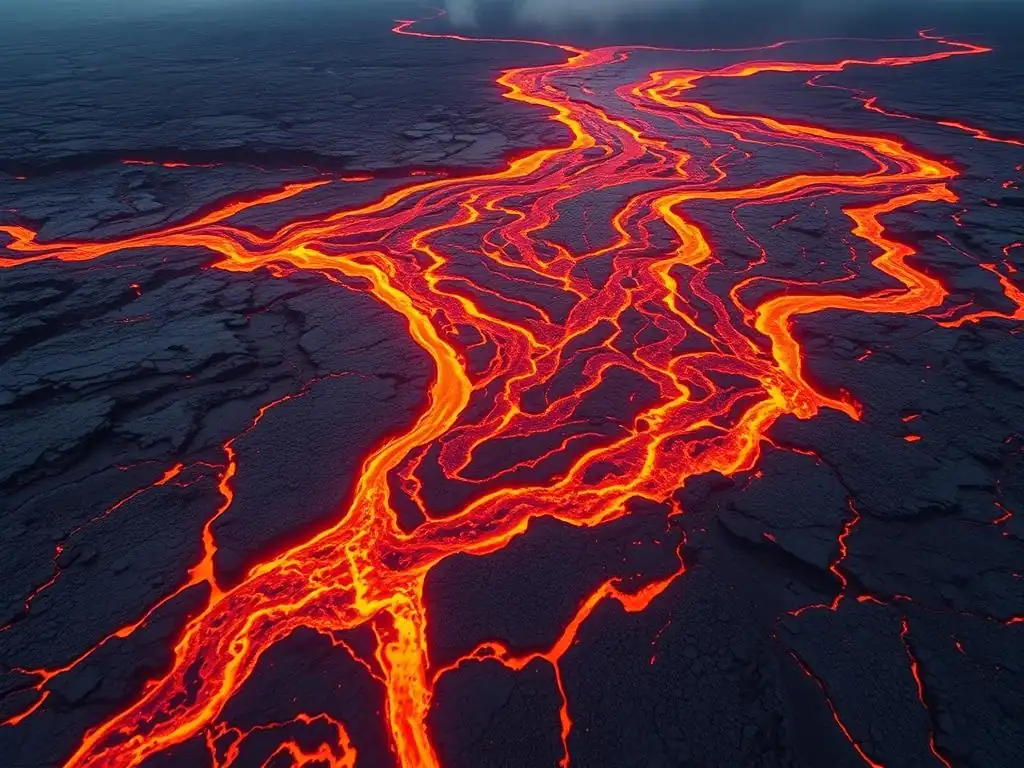
Development of Lava Channels and Tubes
As a lava flow progresses further from the vent, it undergoes significant changes in its dynamics, often leading to the formation of lava channels and tubes. Initially, lava flows may spread out in sheets, but as cooling and crust formation progress, the flow tends to concentrate into channels. Lava channels are linear depressions or troughs that confine the flow, allowing it to travel more efficiently and maintain higher temperatures by reducing surface area exposure to the air. These channels act as conduits, guiding the lava flow journey explained over longer distances.
In some cases, lava channels can further evolve into lava tubes. Lava tubes are cave-like tunnels formed when the surface of a lava channel crusts over completely, creating an insulating roof above the flowing lava. Lava tubes are incredibly efficient at transporting lava with minimal heat loss.
Within a lava tube, lava can remain molten for extended periods and travel at relatively high speeds over considerable distances, sometimes kilometers, even on gentle slopes. The formation of lava channels and tubes is crucial for the long-runout potential of many basaltic lava flows, enabling them to reach coastal areas far from their volcanic source.
Factors Affecting Lava Flow Velocity and Volume
Several factors dynamically influence lava flow velocity and volume as the flow moves through its mid-course journey. Slope remains a primary control; steeper slopes continue to accelerate flow velocity, while flatter areas cause deceleration and potential widening of the flow. However, other factors become increasingly important. Viscosity, which changes as the lava cools and potentially degasses, plays a critical role. As lava cools, viscosity increases, slowing down the flow. Conversely, if new, hotter lava is continuously supplied from the vent, it can maintain or even increase flow velocity.
Channelization and tube formation significantly impact flow velocity and volume transport. Confining the flow within channels or tubes reduces heat loss and allows for more efficient transport of lava, maintaining higher velocities and allowing larger volumes of lava to be delivered further downstream. Obstructions in the flow path, such as changes in terrain, vegetation, or human-made structures, can also dramatically affect velocity and volume. Obstacles can cause ponding of lava, flow diversions, and changes in flow direction, impacting the overall lava flow journey explained. The interplay of these dynamic factors makes predicting lava flow behavior complex but also fascinating.
The Impact of Obstacles on Lava Flow Direction
During its mid-course, a lava flow inevitably encounters obstacles that significantly influence its direction and path. These obstacles can be natural, such as hills, ridges, valleys, and dense vegetation, or human-made, including roads, buildings, and engineered structures. Larger obstacles, like hills and ridges, can act as major barriers, diverting the lava flow around them. The lava will typically flow around the flanks of such obstacles, potentially splitting into multiple lobes that rejoin further downstream or flow in separate directions.
Smaller obstacles, such as individual trees or buildings, may be engulfed or overridden by the lava flow, but even these can influence the local flow direction and speed. For instance, a cluster of trees might slow down the flow locally and create minor diversions. Engineered structures, like earthen dams or walls, can be used to intentionally redirect lava flows, as famously attempted during the 1973 Eldfell eruption in Iceland.
Understanding how obstacles interact with lava flows is crucial for hazard assessment and mitigation strategies in volcanically active regions. Predicting the impact of obstacles is a key component of understanding the complete lava flow journey explained and its potential consequences.
Approaching the Ocean: Interaction with the Environment
Lava Flow Interaction with Seawater: Explosions and Steam
When a lava flow finally reaches the coast and encounters seawater, a dramatic interaction occurs, marked by explosions and the generation of large steam plumes. The extreme temperature difference between the molten lava (often over 1000°C) and the relatively cool seawater causes rapid and violent boiling of the water. This rapid vaporization results in phreatomagmatic explosions, which can eject hot rocks, steam, and ash into the surrounding area. These explosions are often localized to the lava entry points but can pose a significant hazard in coastal zones.
The interaction zone where lava meets seawater is characterized by intense steam plumes that rise high into the atmosphere. These plumes are composed of water vapor, volcanic gases, and fine particles. Visibility can be severely reduced in these steam clouds, and the condensing steam can lead to acid rain downwind. The intensity of the interaction depends on factors such as the lava flow rate, the volume of seawater, and the geometry of the coastline. Understanding these interactions is critical for assessing coastal hazards associated with the lava flow journey explained as it reaches the sea.
Coastal Hazards: Lava Entry and Land Expansion
The entry of lava flows into the ocean presents a range of coastal hazards. Beyond the immediate explosive interactions, the continued influx of lava can cause significant land expansion. As molten lava pours into the sea, it cools and solidifies, adding new land to the coastline. This process of land creation, known as lava delta formation, can dramatically alter coastal morphology over time. However, these newly formed lava deltas are often unstable and prone to collapse into the sea, generating waves and further hazards.
The area immediately adjacent to the lava entry point is subject to intense heat, steam, and potential explosions. Coastal infrastructure, such as roads, buildings, and harbors, can be directly destroyed or damaged by the advancing lava flow. Seawater heated by the lava can also become corrosive and harmful to marine life in the immediate vicinity.
Furthermore, the steam plumes generated at the coastline can carry volcanic gases and particulate matter inland, affecting air quality and potentially posing respiratory hazards. Coastal communities need to be aware of these diverse hazards associated with the final stage of the lava flow journey explained as it enters the ocean.
Environmental Impact of Lava Flows on Coastal Ecosystems
The environmental impact of lava flows reaching coastal ecosystems is profound and multifaceted. In the immediate path of the lava flow, complete destruction of both terrestrial and marine habitats occurs. Coastal vegetation, coral reefs, and intertidal zones are buried or incinerated by the molten rock. Marine organisms in the immediate vicinity are killed by the extreme heat and changes in water chemistry. The introduction of large volumes of hot lava and associated gases into the ocean can temporarily alter seawater temperature, pH, and oxygen levels, impacting marine life on a broader scale.
However, lava flows also create new land, which over time, can be colonized by pioneer species, initiating ecological succession. The newly formed volcanic rock provides a substrate for plant growth and can eventually lead to the development of new coastal ecosystems.
Nutrients released from the weathering of volcanic rock can enrich surrounding waters, potentially enhancing marine productivity in the long term. While the immediate impact is destructive, the long-term effect of lava flows on coastal ecosystems is one of renewal and landscape evolution, demonstrating the dynamic interplay between volcanic processes and the environment as the lava flow journey explained reaches its conclusion at the coast.
Solidification and Formation of Volcanic Landscapes
Cooling Processes and Rock Formation
The final stage of a lava flow journey explained involves its complete cooling and solidification, transforming molten rock into solid volcanic rock and shaping the landscape. Cooling is a gradual process that occurs through several mechanisms, primarily radiation of heat into the atmosphere, conduction into the ground beneath, and convection within the lava flow itself. The rate of cooling is influenced by the lava flow's thickness, surface area, composition, and the surrounding environmental conditions. Thicker flows cool more slowly due to their greater volume and insulation.
As lava cools, minerals begin to crystallize out of the melt. The specific minerals that form and their crystallization sequence are determined by the lava's composition and cooling rate. Basaltic lava, for example, typically crystallizes minerals like plagioclase feldspar, pyroxene, and olivine. The interlocking network of these crystallized minerals solidifies the lava into igneous rock. The textures and structures of the resulting volcanic rock reflect the cooling history and flow dynamics of the lava. Rapid cooling can lead to fine-grained textures, while slower cooling allows for the growth of larger crystals.
Different Types of Lava Rock Formed (e.g., Pahoehoe, A'a)
The distinct types of lava flows, Pahoehoe and A'a, solidify into correspondingly different types of lava rock, preserving their characteristic surface textures. Pahoehoe lava, with its smooth, ropy surface, solidifies into a relatively smooth volcanic rock that retains the undulating and folded appearance of the original flow. Upon close inspection, Pahoehoe rock often exhibits a glassy surface and may contain vesicles (gas bubbles) formed during cooling.
A'a lava, in contrast, solidifies into a very rough and jagged volcanic rock. The clinkery surface of A'a flows is preserved in the solidified rock, creating a highly irregular and fragmented texture. A'a rock is typically denser than Pahoehoe rock and may also contain vesicles, but its defining characteristic is its angular and broken appearance.
Beyond Pahoehoe and A'a, other volcanic rock types can form from lava flows depending on their composition and cooling history. For example, columnar basalt, characterized by hexagonal columns, forms from the slow cooling and contraction of thick basalt flows. Understanding the different types of lava rock helps geologists interpret past volcanic activity and reconstruct the lava flow journey explained from the solidified landscape.
Long-Term Impact on Coastal Morphology
Lava flows that reach the coast have a profound and long-lasting impact on coastal morphology, reshaping coastlines over geological timescales. The addition of new land through lava delta formation expands coastlines seaward, creating new promontories and altering the shape of bays and inlets. Over time, wave erosion and weathering processes act upon these newly formed volcanic coastlines, modifying their shape and creating features such as sea cliffs, arches, and stacks.
The resistant nature of volcanic rock means that lava flow coastlines can be relatively stable and long-lasting features. They can provide protection to inland areas from wave action and coastal erosion. The alternating processes of volcanic eruptions building out the coastline and erosion shaping it create diverse and dynamic coastal landscapes.
In areas with repeated volcanic activity, successive lava flows can build up thick sequences of volcanic rock, significantly altering the coastal profile and creating unique geological formations. The long-term impact of lava flows on coastal morphology is a testament to the powerful and constructive forces of volcanism in shaping our planet, marking the enduring legacy of the lava flow journey explained.
Case Studies: Famous Lava Flow Journeys
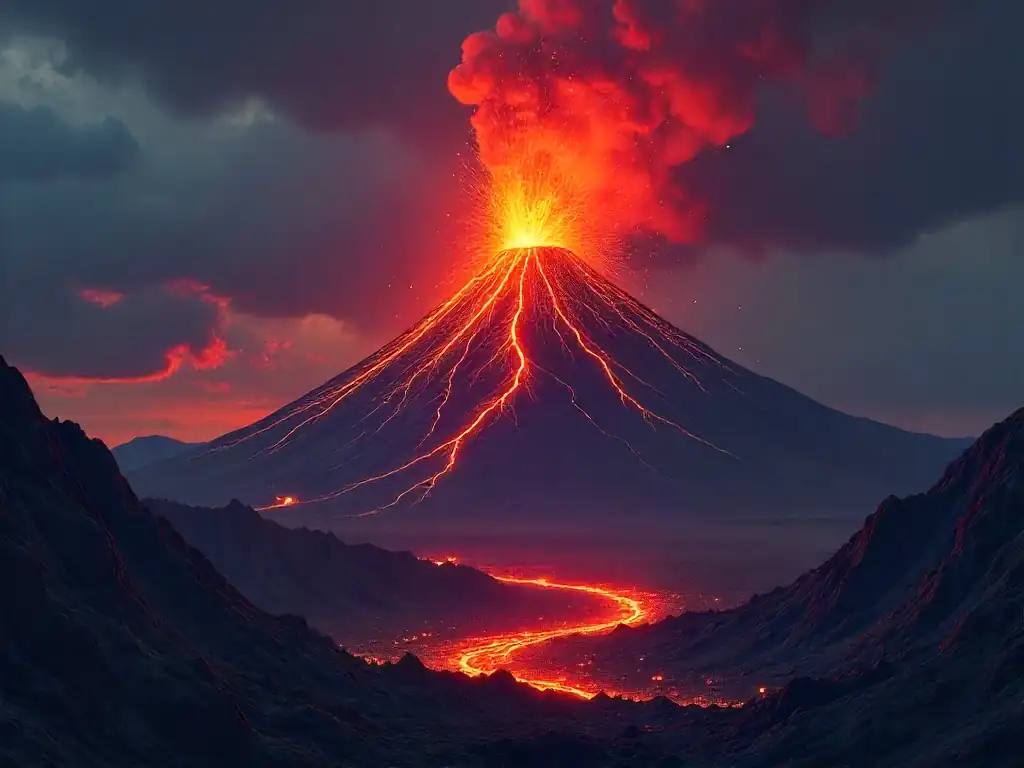
Nyiragongo Lava Lake Outflow (2002): A Detailed Analysis
The 2002 eruption of Mount Nyiragongo in the Democratic Republic of Congo provides a stark example of a devastating lava flow journey explained with rapid and far-reaching consequences. Nyiragongo is known for its persistent lava lake in its summit crater, containing unusually fluid, low-silica basaltic lava. In January 2002, a major flank eruption occurred, draining a significant portion of the lava lake and sending a highly mobile lava flow down the volcano's slopes towards the city of Goma, located on the shores of Lake Kivu.
The lava flow was exceptionally fast-moving, reaching speeds estimated up to 60 km/h (37 mph) in some sections due to the steep slopes and the extremely low viscosity of the lava. Within hours, the lava flow reached Goma, a city of several hundred thousand people at the time. It flowed through the city center, destroying thousands of homes and infrastructure, and eventually entered Lake Kivu.
The eruption and lava flow resulted in significant loss of life, widespread displacement, and long-term economic disruption. The Nyiragongo 2002 event underscores the extreme hazard posed by fast-moving, low-viscosity lava flows, especially in densely populated volcanic regions.
Eldfell Eruption, Iceland (1973): A Detailed Analysis
The 1973 eruption on Heimaey Island, Iceland, known as the Eldfell eruption, provides a compelling case study of a lava flow journey explained where human intervention significantly altered its course and impact. The eruption began unexpectedly on the eastern flank of the island, just outside the main town of Vestmannaeyjar. A fissure opened up, erupting basaltic lava that rapidly built a new volcanic cone, named Eldfell ("Fire Mountain"). A major concern was the advancing lava flow threatening to close off the harbor, the island's economic lifeline.
In a remarkable engineering effort, Icelandic authorities and residents worked tirelessly to slow and divert the lava flow by spraying it with seawater. The cooling effect of the seawater solidified the lava surface, creating barriers and altering the flow path. Millions of cubic meters of seawater were pumped onto the advancing lava front over several months.
While the lava still caused significant damage and buried part of the town, the harbor was ultimately saved. The Eldfell eruption demonstrates the potential, and limitations, of lava flow diversion efforts and highlights the importance of community resilience and rapid response in volcanic crises.
Lessons Learned From Studying Lava Flow Journeys
Studying famous lava flow journeys, such as Nyiragongo 2002 and Eldfell 1973, provides invaluable lessons for understanding and mitigating lava flow hazards. The Nyiragongo event emphasizes the extreme danger posed by fast-moving lava flows and the need for effective monitoring and rapid evacuation plans in vulnerable areas. The Eldfell eruption demonstrates the potential for lava flow diversion using cooling techniques, but also highlights the immense resources and effort required for such interventions and their limited applicability in all situations.
Across numerous case studies, key lessons emerge regarding lava flow behavior: topography is a dominant control on flow paths, lava viscosity and eruption rate are critical factors determining flow speed and extent, and early warning and preparedness are essential for minimizing the impact of lava flows on communities. Continued research and analysis of past lava flow journeys are crucial for improving our ability to forecast lava flow paths, assess hazards, and develop effective mitigation strategies, ensuring a safer coexistence with volcanoes.
Monitoring and Prediction: Mitigating Lava Flow Hazards
Volcanological Monitoring Techniques for Lava Flow Tracking
Effective monitoring is crucial for tracking the progress of a lava flow journey explained and providing timely warnings to at-risk communities. Volcanologists employ a range of sophisticated techniques to monitor volcanic activity and lava flows. Ground-based monitoring includes visual observations, thermal cameras, and GPS measurements.
Visual observation from the ground and aircraft provides real-time information on flow direction, extent, and activity. Thermal cameras detect infrared radiation, allowing scientists to map the temperature distribution of lava flows, even at night or through smoke. GPS instruments precisely measure ground deformation, which can indicate changes in magma pressure and movement beneath the surface, potentially preceding changes in lava flow activity.
Satellite-based monitoring provides a broader perspective and allows for remote observation of lava flows, especially in inaccessible areas. Satellite imagery, including thermal infrared and radar data, can be used to map lava flow extent, track flow advance rates, and monitor changes in volcanic activity over time. Seismic monitoring, using networks of seismometers, detects ground vibrations associated with volcanic activity, including magma movement and eruptions.
Changes in seismicity can provide early warnings of potential lava flow eruptions or changes in flow behavior. Gas monitoring, measuring the composition and flux of volcanic gases, provides insights into magma degassing and can indicate changes in eruptive activity. These diverse monitoring techniques, combined, provide a comprehensive picture of volcanic activity and lava flow dynamics.
Predicting Lava Flow Paths and Potential Impacts
Predicting lava flow paths is a complex but essential aspect of mitigating lava flow hazards. While precisely forecasting the exact path of a lava flow is still challenging, volcanologists use various models and tools to estimate potential flow paths and assess areas at risk. Topographic maps and digital elevation models are fundamental for lava flow path modeling. Gravity-driven lava flow models simulate the flow of lava over a digital terrain, taking into account slope, flow rate, and lava viscosity. These models can generate probabilistic hazard maps, showing areas with different levels of lava flow inundation probability.
Empirical models, based on observations of past lava flow events, can also be used to estimate potential flow lengths and areas of impact for future eruptions from the same volcano. Geographic Information Systems (GIS) are powerful tools for integrating various datasets, including topographic data, population density, infrastructure locations, and lava flow hazard maps.
GIS analysis allows for assessing the potential impact of lava flows on communities and infrastructure, identifying areas of highest risk, and planning evacuation routes and mitigation measures. While uncertainties remain in lava flow path prediction, these modeling and analytical techniques significantly improve our ability to anticipate and prepare for lava flow hazards, based on the lava flow journey explained by past events.
Safety Measures and Evacuation Strategies for Coastal Communities
For coastal communities living near active volcanoes, preparedness and effective safety measures are paramount for mitigating lava flow hazards. Early warning systems are crucial, relying on robust volcanological monitoring networks and clear communication channels to alert residents of impending eruptions and lava flow threats. Evacuation plans should be well-defined, regularly practiced, and tailored to the specific volcanic hazards in the area. Evacuation routes should be clearly marked and maintained, and designated safe zones away from potential lava flow paths should be established.
Community education and awareness programs are essential to ensure that residents understand the risks associated with lava flows, know how to recognize warning signs, and are familiar with evacuation procedures. Emergency supplies, including food, water, first-aid kits, and communication devices, should be readily available in households and community centers.
Land-use planning and building codes in volcanic hazard zones should consider lava flow risks, discouraging development in high-hazard areas and promoting lava-resistant construction techniques where appropriate. International collaboration and knowledge sharing among volcanologists, emergency managers, and communities in volcanic regions are vital for improving lava flow hazard mitigation globally, ensuring that communities are better prepared for the challenges posed by the lava flow journey explained and its potential impacts.
The Enduring Legacy: Lava Flows and Coastal Evolution
The Role of Lava Flows in Shaping Coastal Landforms
Lava flows are a fundamental force in shaping coastal landforms over geological time scales. Their repeated eruptions and solidification contribute to the construction of volcanic coastlines, creating distinctive features that characterize many volcanic islands and coastal regions around the world. Lava deltas, formed where lava flows enter the ocean, extend coastlines seaward, adding new land and altering coastal configurations. Volcanic headlands and peninsulas are often formed by resistant lava flows that protrude into the sea, shaping the coastline's outline.
Volcanic islands themselves are built up from submarine and subaerial lava flows, accumulating over millions of years to create emergent landmasses. The erosional forces of waves and weathering then sculpt these volcanic coastlines, carving out sea cliffs, arches, stacks, and other characteristic coastal features from the solidified lava rock.
The interplay between volcanic construction and coastal erosion creates diverse and dynamic coastal landscapes. The long-term geological evolution of many coastlines is inextricably linked to the eruptive history of nearby volcanoes, highlighting the significant role of lava flows in shaping the Earth's surface, and the lasting impact of the lava flow journey explained on coastal geography.
Long-Term Ecological Succession in Lava Flow Areas
While initially destructive, lava flows eventually become the foundation for new ecosystems through the process of ecological succession. The barren volcanic rock left behind after a lava flow solidifies is gradually colonized by pioneer species, initiating a long-term process of ecosystem development. Lichens and mosses are often the first colonizers, breaking down the rock surface and creating a thin layer of soil. These pioneer plants are followed by grasses, ferns, and shrubs, gradually increasing vegetation cover and soil development.
Over time, trees may establish themselves, leading to the development of more complex forest ecosystems. The rate of ecological succession in lava flow areas depends on factors such as climate, rainfall, nutrient availability, and seed dispersal. In tropical environments with abundant rainfall and sunlight, succession can be relatively rapid, with forests developing within decades or centuries.
In colder or drier environments, the process can take much longer. Lava flows, therefore, represent not only destructive events but also opportunities for ecological renewal and the creation of new habitats, demonstrating the resilience of nature in the face of volcanic disturbances, and the ecological rebirth that follows the lava flow journey explained.
The Beauty and Power of Volcanic Landscapes
Volcanic landscapes shaped by lava flows possess a unique and compelling beauty, reflecting both the destructive power and creative force of volcanic processes. The stark contrasts of black volcanic rock against the blue ocean or green vegetation create visually striking scenery. The textures of lava flows, from the smooth, ropy surfaces of Pahoehoe to the jagged, clinkery fields of A'a, add to the aesthetic appeal of volcanic landscapes. Coastal lava formations, such as sea arches and stacks carved from volcanic rock, are dramatic reminders of the dynamic interaction between volcanism and the sea.
Beyond their visual beauty, volcanic landscapes evoke a sense of power and awe, representing the immense geological forces that shape our planet. They serve as natural laboratories for studying geological processes, ecological succession, and the interplay between Earth's systems.
Volcanic landscapes attract scientists, tourists, and adventurers alike, drawn to their raw beauty, geological significance, and the inherent fascination with volcanoes. The enduring legacy of lava flows is not only etched into the physical landscape but also into our collective imagination, reminding us of the Earth's dynamic nature and the awe-inspiring power of volcanic events, marking the final chapter in the lava flow journey explained and its lasting impact on our world.
Frequently Asked Questions
What is the initial stage of a lava flow journey?
The initial stage involves magma rising to the surface and erupting from a volcano's vent or fissure. This is where the lava's journey begins, often at the crater itself.
How does the viscosity of lava affect its flow?
Lava viscosity, or its resistance to flow, significantly impacts its speed and distance. Low-viscosity lava, like basalt, flows much further and faster than high-viscosity lava, like rhyolite.
What are some common features formed by cooling lava flows?
Cooling lava can create diverse features, including lava tubes, pahoehoe, and a'a'. These formations are determined by the lava's composition, cooling rate, and surrounding environment.
How do lava flows impact the surrounding environment?
Lava flows can cause significant environmental changes by destroying vegetation, altering landscapes, and affecting water sources. However, over time, the cooled lava can also create fertile ground for new plant life.
What safety precautions should be taken during a lava flow event?
It is crucial to evacuate immediately if a lava flow threatens your area. Stay informed through official channels, and avoid approaching active lava flows due to extreme heat and toxic gases.
Final Reflection: The Enduring Power of Creation and Destruction
The journey of a lava flow, as we've explored, is a testament to the Earth's raw power, a dance between creation and destruction that shapes landscapes and defines geological timelines. Understanding this process is more crucial than ever, as we grapple with the impacts of climate change and the increasing frequency of natural disasters, reminding us of the forces that both build and threaten our world.
The sheer scale and transformative nature of a lava flow's journey profoundly impacts our understanding of geological processes and our place within them. Witnessing the slow, inexorable advance of molten rock, reshaping the land in its wake, evokes a sense of awe and humility. It reminds us that the Earth is a dynamic entity, constantly evolving, and that we are but temporary inhabitants on its surface. The mountains are fountains of men as well as of rivers, of glaciers, of fertile soil. The great poets, philosophers, scientists, artists, the world's teachers, have come from the mountains.
- John Muir, perfectly capturing the duality of creation and destruction inherent in these natural processes.
As we conclude this exploration of the lava flow's journey, I invite you to reflect on the lessons it holds. Consider the resilience of nature, the power of transformation, and the interconnectedness of all things. How can we, as individuals and as a society, learn to live in harmony with these powerful forces? Let the journey of the lava flow inspire you to embrace change, to appreciate the beauty of impermanence, and to act as stewards of our planet, ensuring that future generations can witness the awe-inspiring spectacle of nature's creative and destructive power.
Unearth Your Inner Volcanologist!
Thanks for journeying with us through the fiery tale of lava's journey! We hope you've gained a newfound appreciation for the raw power and incredible processes that shape our planet. Now, let's put that knowledge to good use!
Here's how you can continue your volcanic exploration:
- Commit to learning one new thing about volcanology each week. Explore different volcano types, eruption styles, or the fascinating creatures that thrive near geothermal vents.
- Share this article with a friend who you think would be fascinated by the journey of a lava flow! Spark their curiosity and spread the wonder.
- Consider attending a local geology event or joining an online volcanology community. You might be surprised at the passionate individuals you'll meet and the exciting discussions you'll discover.
What's one surprising fact you learned about lava flows that you're eager to share with others?