
Unraveling Krakatoa: Myths and Realities of the 1883 Volcanic Event

Welcome to Volcano Explorers!
Prepare to question everything you thought you knew about the earth's fiery giants. Today, we're plunging into the heart of a legend, separating fact from fiction surrounding one of history's most devastating events. Are you ready to unravel the truth behind the Krakatoa 1883 eruption myths? The real story is more explosive than you can imagine... keep reading to discover the shocking realities.
- Introduction: Exploring the Krakatoa 1883 Eruption and Its Enduring Legacy
- Krakatoa's Cataclysm: Separating Fact from Fiction
- Myth #1: Krakatoa's Eruption Destroyed the Entire Island
- Myth #2: The Krakatoa Sound Was the Loudest Sound Ever Recorded by Humans
- Myth #3: The Tsunamis Caused by Krakatoa Were the Largest in History
- Myth #4: All Life on the Islands Was Eradicated by the Krakatoa Eruption
- Myth #5: The Red Sunsets After Krakatoa Were Solely Due to Volcanic Ash
- Debunking Other Common Misconceptions About the Krakatoa Eruption
- The True Legacy of Krakatoa: Lessons Learned and Ongoing Research
- Conclusion: Reflecting on the Power and Impact of the Krakatoa Volcano
-
Frequently Asked Questions
- What were some common myths surrounding the 1883 Krakatoa eruption?
- How did the Krakatoa eruption actually impact the global climate?
- What role did cultural beliefs play in interpreting the Krakatoa eruption after it happened?
- Was the death toll of the Krakatoa eruption exaggerated in popular accounts?
- What's the real scientific understanding of the tsunamis generated by the Krakatoa eruption?
- Final Reflection: Echoes of Krakatoa's Fury
- Dive Deeper into the Krakatoa Story!
Introduction: Exploring the Krakatoa 1883 Eruption and Its Enduring Legacy
The year 1883 witnessed one of the most catastrophic volcanic eruptions in recorded history: the eruption of Krakatoa. This event, centered in the Sunda Strait between Java and Sumatra, unleashed a fury that resonated across the globe, leaving an indelible mark on both human memory and the planet's environment. The sheer magnitude of the Krakatoa eruption has, over time, become intertwined with myth and exaggeration, obscuring the factual details of this momentous geological event.
This article endeavors to dissect these pervasive myths surrounding the Krakatoa 1883 eruption, contrasting them with the established scientific and historical realities. By examining the true nature of the eruption's impact – from the fate of the islands to the reach of its sound and tsunamis – we aim to provide a clearer, more accurate understanding of this pivotal moment in volcanic history, separating fact from fiction and revealing the enduring legacy of Krakatoa.
Krakatoa's Cataclysm: Separating Fact from Fiction
The Krakatoa eruption of 1883 is shrouded in a veil of dramatic tales and often exaggerated accounts. While the event was undeniably cataclysmic, understanding its true nature requires careful examination and a separation of sensationalism from scientific fact. Many narratives surrounding Krakatoa have been embellished over time, leading to widespread misconceptions about the eruption's scale, impact, and lasting consequences.
This section aims to delve into the core of the Krakatoa event, presenting a factual overview grounded in geological and historical records, setting the stage to debunk the myths that have accumulated around this legendary volcanic explosion. By scrutinizing the historical context and geological evidence, we can begin to appreciate the real scale of the Krakatoa cataclysm and differentiate it from the fictionalized versions that have permeated popular culture.
The Krakatoa Eruption of 1883: A Historical Overview
The Krakatoa eruption in August 1883 was the culmination of months of increasing volcanic activity. Located on a volcanic island group in the Dutch East Indies (present-day Indonesia), Krakatoa had shown signs of unrest as early as May, with reports of steam and ash plumes. However, the truly paroxysmal phase began on August 26th, with a series of increasingly violent explosions.
The climax occurred on the morning of August 27th, with four colossal explosions, the most powerful of which is estimated to have occurred at 10:02 AM local time. These explosions were so immense they were heard thousands of kilometers away and triggered devastating tsunamis that ravaged the coastlines of Java and Sumatra. The eruption effectively obliterated much of the island of Krakatoa itself, leaving behind a profound scar on the landscape and in human history.
The immediate aftermath of the Krakatoa eruption was characterized by widespread devastation and chaos. Coastal towns and villages were decimated by the tsunamis, resulting in tens of thousands of fatalities. The atmospheric effects were equally dramatic, with volcanic ash and gases injected into the stratosphere, leading to spectacular sunsets and a noticeable drop in global temperatures for several years.
News of the disaster spread rapidly around the world via telegraph, capturing global attention and solidifying Krakatoa's place as a benchmark for volcanic catastrophe. The eruption prompted significant scientific investigation, contributing to advancements in volcanology and our understanding of the Earth's powerful geological forces.
Understanding the Scale of the Krakatoa Event: Geological Context
To truly grasp the magnitude of the Krakatoa 1883 eruption, it's crucial to understand its geological context. Krakatoa was part of the Sunda Arc, a highly active volcanic region formed by the subduction of the Indo-Australian Plate beneath the Eurasian Plate. This tectonic setting is responsible for the numerous volcanoes that dot Indonesia, including some of the world's most explosive.
The 1883 eruption was a Plinian-type eruption, characterized by the explosive ejection of vast quantities of gas, ash, and pumice. Estimates suggest that the volcanic explosivity index (VEI) of the Krakatoa eruption was 6, placing it among the largest eruptions in recent geological history, although still less powerful than the VEI 7 eruption of Tambora in 1815.
The explosive power of Krakatoa stemmed from the build-up of immense pressure within a magma chamber beneath the volcano. The magma was rich in silica and dissolved gases, making it highly viscous and prone to explosive eruptions when pressure was released. The series of explosions on August 27th were likely triggered by the collapse of the magma chamber roof and the rapid decompression of the superheated magma.
The geological consequences were profound: the original volcanic edifice was largely destroyed, and a massive caldera, a large volcanic crater, was formed beneath the sea. The eruption ejected an estimated 25 cubic kilometers of rock, ash, and pumice into the atmosphere, dramatically altering the landscape and impacting the global climate system for years to come.
Myth #1: Krakatoa's Eruption Destroyed the Entire Island
A common myth surrounding the Krakatoa eruption is that it completely annihilated the island, leaving nothing but empty ocean in its wake. This dramatic image, while capturing the destructive power of the eruption, is not entirely accurate. While the majority of the volcanic island of Krakatoa was indeed destroyed, remnants of the original landmass persisted, and importantly, a new volcanic island eventually emerged from the ashes. Understanding what truly happened to the Krakatoa island group requires a closer look at the fate of its constituent islands and the subsequent geological processes.
Reality: The Fate of Rakata, Danan, and Perboewatan Islands After the 1883 Eruption
Prior to the 1883 eruption, the Krakatoa island group comprised three main islands: Rakata, Danan, and Perboewatan. Rakata was the largest and tallest, containing the cone of old Krakatoa. Danan and Perboewatan were smaller cones situated to the north. The cataclysmic explosions of August 1883 dramatically altered this geography. Danan and Perboewatan were almost entirely submerged beneath the sea.
Rakata, however, fared somewhat differently. While the northern two-thirds of Rakata island, including its volcanic peak, was blown away, the southern portion remained above sea level. This surviving section of Rakata is still visible today, characterized by its dramatically truncated cliff face, a stark reminder of the immense forces unleashed during the eruption. Therefore, while the majority of Krakatoa as it existed in 1883 was indeed destroyed, the eruption did not result in the complete obliteration of all land in the area.
The southern part of Rakata Island, although significantly altered, provided a foundation for the eventual re-colonization of the area by plant and animal life. The cliffs of Rakata, standing as a testament to the eruption's power, serve as a crucial landmark in understanding the island's dramatic history.
The fact that part of Rakata survived is a key detail in dispelling the myth of total annihilation. Furthermore, the geological processes set in motion by the eruption would eventually lead to an even more remarkable development – the birth of a new volcanic island, directly within the caldera formed by Krakatoa's destruction.
The Formation of Anak Krakatau: A New Volcanic Island Rises
Perhaps the most compelling evidence against the myth of Krakatoa's complete destruction is the emergence of Anak Krakatau, meaning "Child of Krakatoa." In 1927, nearly 44 years after the cataclysmic eruption, a new volcanic island began to rise from the caldera formed in 1883. This marked the re-establishment of volcanic activity at Krakatoa, demonstrating that the region remained geologically dynamic. Anak Krakatau's formation is a testament to the ongoing volcanic processes within the Earth and a remarkable example of geological rebirth in the wake of immense destruction.
Anak Krakatau has grown steadily since its emergence, fueled by continuous eruptions of ash, lava flows, and pyroclastic material. It serves as a living laboratory for volcanologists and ecologists, providing valuable insights into island formation, volcanic processes, and ecological succession. The presence of Anak Krakatau definitively refutes the notion that the 1883 eruption permanently extinguished volcanic activity at Krakatoa or completely erased the islands from existence.
Instead, it demonstrates the cyclical nature of volcanic activity and the Earth's capacity for renewal, even after events of immense destructive power. Anak Krakatau stands as a powerful symbol of Krakatoa's enduring volcanic legacy and a constant reminder of the dynamic forces shaping our planet.
Myth #2: The Krakatoa Sound Was the Loudest Sound Ever Recorded by Humans
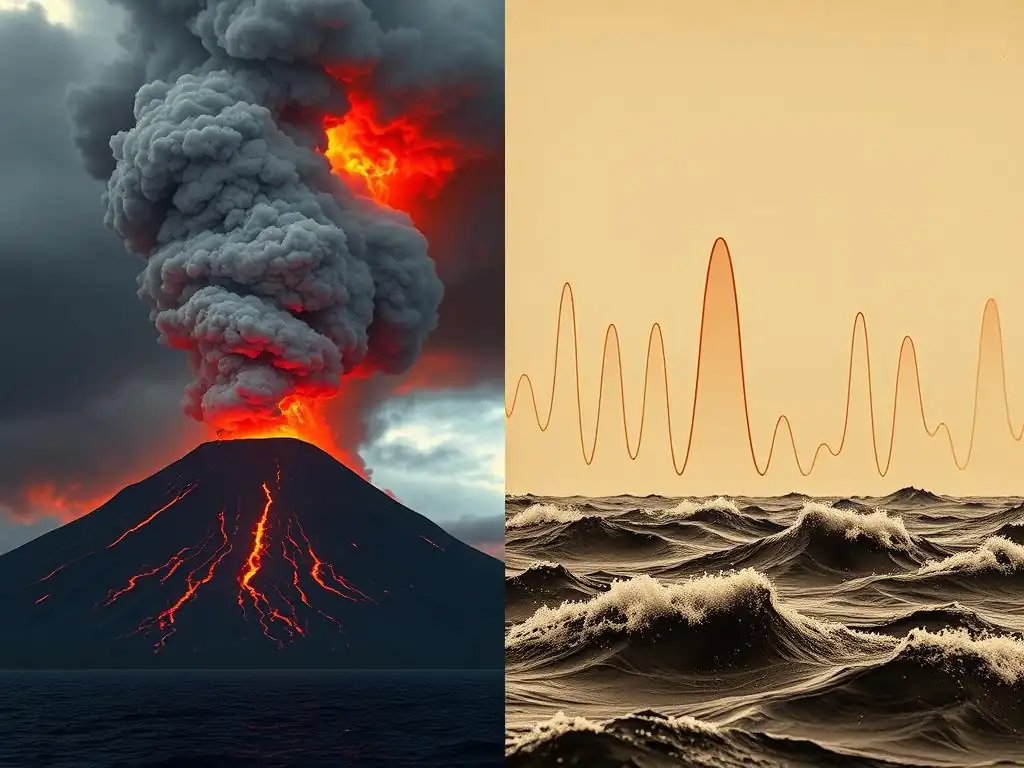
One of the most enduring and sensational myths surrounding the Krakatoa eruption is the claim that its sound was the loudest sound ever recorded in human history. While the explosions were undoubtedly incredibly powerful and the sound traveled vast distances, the assertion of "loudest sound ever" requires closer scrutiny and a more nuanced understanding of sound measurement and propagation. It's important to differentiate between the perceived loudness of the sound and its measured intensity and reach.
Reality: Measuring the Krakatoa Explosion's Sound and Atmospheric Pressure Waves
The Krakatoa explosions of 1883 generated exceptionally powerful sound waves and atmospheric pressure waves that were detectable across the globe. Eyewitness accounts from thousands of kilometers away describe hearing sounds like cannon fire or distant thunder. Barographs, instruments that measure atmospheric pressure, recorded the pressure waves generated by the eruption as they traveled around the world multiple times.
These pressure waves provide a more objective measure of the eruption's power than subjective accounts of loudness. While we lack precise decibel readings from the 1883 eruption (as decibel measurement technology was not yet developed in its modern form), the available evidence strongly indicates that the Krakatoa explosions produced an exceptionally intense sound.
The sound from Krakatoa is estimated to have reached levels of around 172 decibels at a distance of 100 miles (160 km). This is extraordinarily loud – for comparison, a jet engine at close range produces sound levels around 140 decibels, and sounds above 120 decibels can cause immediate pain and hearing damage. However, it's crucial to note that "loudest sound ever" is difficult to definitively prove or disprove.
There may have been other natural events, such as large meteorite impacts or even other volcanic eruptions in pre-recording history, that generated sounds of comparable or even greater intensity. Nevertheless, the Krakatoa sound stands as a remarkable example of the power of volcanic explosions to propagate sound waves across vast distances.
The Global Reach of the Krakatoa Sound: Accounts from Around the World
The truly remarkable aspect of the Krakatoa sound was its unprecedented global reach. Reports of hearing the eruption's sound came from locations as far away as Rodriguez Island in the Indian Ocean, approximately 4,800 kilometers (3,000 miles) west of Krakatoa, and Alice Springs in central Australia, roughly 3,600 kilometers (2,200 miles) to the southeast.
These accounts are not mere exaggerations or misinterpretations; they are corroborated by multiple independent sources, including ships' logs, telegraph reports, and personal diaries. The fact that the sound was heard over such immense distances is a testament to the sheer power of the Krakatoa explosions and the efficiency with which sound waves can travel through the atmosphere.
The propagation of the Krakatoa sound was aided by atmospheric refraction, a phenomenon where sound waves are bent or redirected as they travel through air layers of different temperatures and densities. This allowed the sound waves to travel much further than they would have in a uniform atmosphere.
The global reach of the Krakatoa sound is a unique and well-documented aspect of the eruption, distinguishing it from most other volcanic events in recorded history. While the claim of "loudest sound ever" may be hyperbolic and impossible to definitively verify, the Krakatoa sound undoubtedly represents one of the most remarkable and far-reaching auditory events in human experience.
Myth #3: The Tsunamis Caused by Krakatoa Were the Largest in History
Another commonly held belief is that the tsunamis generated by the Krakatoa eruption were the largest tsunamis ever recorded. While the Krakatoa tsunamis were undeniably devastating and caused immense loss of life, it is important to examine their actual size and impact in comparison to other major tsunami events throughout history. Contextualizing the Krakatoa tsunamis within the broader spectrum of tsunami events provides a more accurate perspective on their magnitude and significance.
Reality: Analyzing the Krakatoa Tsunami's Impact and Wave Heights
The tsunamis generated by the Krakatoa eruption were primarily caused by the massive caldera collapse that occurred during the August 27th explosions. This sudden displacement of a vast volume of water triggered a series of powerful waves that radiated outwards from Krakatoa.
These tsunamis were responsible for the majority of the fatalities associated with the eruption, devastating coastal communities in Java and Sumatra. While the precise height of the tsunami waves varied depending on location and coastal topography, estimates suggest that the waves reached heights of up to 40 meters (130 feet) in some areas close to Krakatoa, particularly along the western coasts of Java and southern Sumatra.
Further away from Krakatoa, the tsunami wave heights diminished but remained significant. For example, in Teluk Betung, Sumatra, the tsunami reached a reported height of around 15 meters (50 feet). These waves inundated coastal plains, destroying settlements and causing widespread destruction. While these wave heights are undeniably substantial and represent a devastating tsunami event, they are not the absolute largest tsunamis ever recorded. Other tsunami events, both historically documented and geologically evidenced, have generated waves of comparable or even greater heights.
Comparing the Krakatoa Tsunami to Other Major Tsunami Events
To put the Krakatoa tsunami into perspective, it is useful to compare it to other major tsunami events. The 2004 Indian Ocean tsunami, for example, generated waves that reached heights of over 30 meters (100 feet) in some areas and caused devastation across a much wider geographical region than the Krakatoa tsunamis.
Similarly, the 1755 Lisbon earthquake tsunami is estimated to have produced waves reaching heights of 20-30 meters (65-100 feet) in Portugal and North Africa. Geological evidence suggests that even larger tsunamis have occurred in the distant past, such as those associated with massive landslides in coastal areas or mega-thrust earthquakes in subduction zones.
While the Krakatoa tsunamis were exceptionally destructive and rank among the most deadly in recorded history, they are not statistically the largest in terms of wave height or overall energy released. The Krakatoa tsunamis caused an estimated 36,000 fatalities, a tragically high number, but less than the over 227,000 deaths attributed to the 2004 Indian Ocean tsunami.
Understanding the Krakatoa tsunamis in comparison to other major events helps to contextualize their magnitude and dispels the myth that they were definitively the largest tsunamis in history. They were, however, a profoundly significant and devastating tsunami event, highlighting the immense destructive potential of volcanic eruptions and the importance of coastal tsunami preparedness.
Myth #4: All Life on the Islands Was Eradicated by the Krakatoa Eruption
A dramatic and somewhat romanticized myth surrounding the Krakatoa eruption is that it completely sterilized the affected islands, eradicating all life and leaving behind a barren wasteland devoid of any living organisms. While the eruption undoubtedly caused immense ecological devastation, the reality is far more nuanced and ultimately showcases the remarkable resilience of life and the process of ecological recovery. The Krakatoa islands did not remain lifeless; instead, they became a fascinating case study in ecological succession and biological re-colonization.
Reality: The Remarkable Resilience of Life After the Volcanic Destruction
Contrary to the myth of complete eradication, life began to return to the Krakatoa islands relatively quickly after the 1883 eruption. While the volcanic explosions and subsequent ashfall and pyroclastic flows certainly devastated the existing ecosystems, they did not create a permanently sterile environment. Within a few years, pioneering plant species, primarily ferns and grasses, began to re-establish themselves on the volcanic debris. These early colonizers were likely dispersed by wind and ocean currents, demonstrating the crucial role of dispersal mechanisms in ecological recovery after disturbance.
Animal life also gradually returned to the Krakatoa islands. Insects, birds, and reptiles were among the first animals to re-colonize, arriving via flight or by drifting on debris rafts. The surrounding seas, while initially impacted by the eruption, also recovered relatively quickly, with marine life returning to the coastal waters. The Krakatoa islands, far from remaining barren, became a natural laboratory for studying ecological succession, the process by which ecosystems recover and develop over time after a major disturbance.
Krakatoa's Ecosystem Recovery: A Case Study in Ecological Succession
The recovery of the Krakatoa ecosystem has been meticulously studied by scientists for over a century, making it one of the most well-documented examples of ecological succession in the world. The islands have progressed through various stages of ecological development, from bare volcanic substrate to increasingly complex and diverse ecosystems. Early studies focused on the arrival and establishment of plant species, documenting the sequential colonization by different plant communities. Later research expanded to include animal recolonization, soil development, and the interactions between different species.
The Krakatoa case study has provided valuable insights into the mechanisms of ecological succession, including the importance of dispersal, competition, and facilitation in shaping ecosystem recovery. It has also highlighted the resilience of tropical ecosystems and their capacity to recover from even catastrophic disturbances. The Krakatoa islands today are covered in lush vegetation, supporting a diverse array of plant and animal life. This vibrant ecosystem stands in stark contrast to the myth of complete eradication and serves as a powerful testament to the enduring power of life to reclaim and regenerate even in the face of immense natural disasters.
Myth #5: The Red Sunsets After Krakatoa Were Solely Due to Volcanic Ash
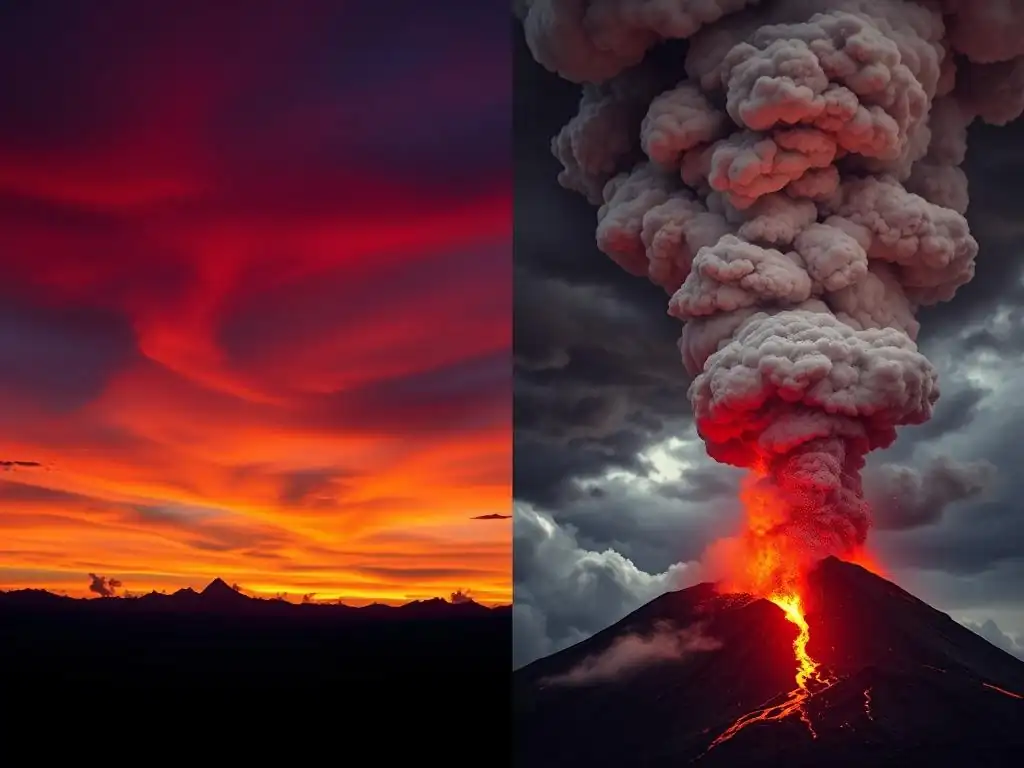
The spectacular red and orange sunsets observed worldwide for years after the Krakatoa eruption are often attributed solely to volcanic ash in the atmosphere. While volcanic ash certainly played a role, the reality is more complex and involves the combined effects of ash and, crucially, sulfur dioxide (SO2) gas injected into the stratosphere. Understanding the science behind these vivid sunsets requires considering the different ways volcanic ejecta interact with sunlight.
Reality: The Science Behind Krakatoa's Atmospheric Effects and Spectacular Sunsets
The brilliant sunsets following the Krakatoa eruption were not solely due to large ash particles. While ash, composed of pulverized rock and volcanic glass, does scatter sunlight, particularly at longer wavelengths (red and orange), the primary driver of the intensely colored sunsets was sulfur dioxide gas. During the eruption, Krakatoa injected an estimated 20 million tons of sulfur dioxide into the stratosphere, a stable layer of the atmosphere above the troposphere. In the stratosphere, sulfur dioxide gas reacts with water vapor to form sulfate aerosols, tiny droplets of sulfuric acid.
These sulfate aerosols are highly effective at scattering sunlight, and importantly, they scatter light in a way that enhances red and orange hues, particularly at sunrise and sunset when sunlight travels through a longer path in the atmosphere. The ash particles, being larger, tend to settle out of the atmosphere relatively quickly, but the sulfate aerosols can remain suspended in the stratosphere for years, causing prolonged atmospheric effects. Therefore, the long-lasting and exceptionally vibrant red sunsets after Krakatoa were primarily a result of the stratospheric sulfate aerosols formed from the eruption's sulfur dioxide emissions, not just volcanic ash.
The Impact of Sulfur Dioxide (SO2) and Aerosols on Global Climate
The stratospheric sulfate aerosols from the Krakatoa eruption not only caused spectacular sunsets but also had a measurable impact on global climate. These aerosols reflect incoming sunlight back into space, reducing the amount of solar radiation reaching the Earth's surface. This leads to a temporary cooling effect on global temperatures. Following the Krakatoa eruption, global average temperatures decreased by approximately 0.4 to 0.8 degrees Celsius (0.7 to 1.4 degrees Fahrenheit) for several years. This cooling effect, while relatively short-lived, demonstrated the potential for large volcanic eruptions to influence global climate.
The Krakatoa eruption provided early evidence of the connection between volcanic eruptions and climate change, a link that is now well-established in climate science. Large volcanic eruptions that inject significant amounts of sulfur dioxide into the stratosphere can cause temporary global cooling events. Studying the atmospheric and climatic effects of eruptions like Krakatoa helps scientists understand the complex interactions between volcanoes, the atmosphere, and the Earth's climate system. The legacy of Krakatoa's atmospheric effects extends beyond just beautiful sunsets; it contributed to our understanding of volcanic forcing on climate and the role of aerosols in global climate regulation.
Debunking Other Common Misconceptions About the Krakatoa Eruption
Beyond the major myths already discussed, several other misconceptions and less widely known facts surround the Krakatoa eruption. Addressing these further refines our understanding of the event and highlights some of its less obvious, yet significant, consequences. These include the role of pumice rafts in dispersing marine life and the scientific investigations initiated in the eruption's aftermath.
The Role of Pumice Rafts in Dispersing Marine Life
One fascinating, yet often overlooked, aspect of the Krakatoa eruption is the formation and dispersal of pumice rafts. Pumice, a lightweight volcanic rock formed from frothy lava, is highly buoyant and can float on water. The Krakatoa eruption produced vast quantities of pumice, which accumulated into large rafts that drifted across the Indian Ocean and beyond. These pumice rafts played a significant role in the dispersal of marine life and the re-colonization of the Krakatoa islands.
The pumice rafts acted as floating islands, carrying marine organisms such as corals, mollusks, and crustaceans across long distances. When these rafts eventually reached coastlines or other islands, they deposited their living cargo, contributing to the spread of species and the establishment of new populations. The pumice rafts from Krakatoa are believed to have played a role in the re-colonization of coral reefs and other marine ecosystems in the region following the eruption. This natural dispersal mechanism highlights the interconnectedness of marine environments and the unexpected ways in which volcanic eruptions can influence biological distribution.
The Krakatoa Committee and Scientific Investigations After the Eruption
The sheer scale and global impact of the Krakatoa eruption spurred significant scientific interest and investigation. In the aftermath of the eruption, the Dutch government established a "Krakatoa Committee" to study the event and its consequences. This committee, composed of scientists from various disciplines, undertook a comprehensive investigation that spanned several years and resulted in a multi-volume monograph detailing their findings.
The Krakatoa Committee's research was groundbreaking for its time, encompassing aspects of volcanology, geology, oceanography, meteorology, and biology. They meticulously documented the geological changes to the Krakatoa islands, analyzed the eruption's products, studied the tsunamis, and investigated the atmospheric effects. Their work significantly advanced scientific understanding of volcanic eruptions and their broader impacts. The Krakatoa Committee's investigations represent a landmark in volcanological research and underscore the enduring scientific legacy of the 1883 Krakatoa eruption.
The True Legacy of Krakatoa: Lessons Learned and Ongoing Research
The true legacy of the Krakatoa 1883 eruption extends far beyond the myths and sensational stories. It lies in the crucial lessons learned about volcanic hazards, the Earth's dynamic processes, and the resilience of life. Furthermore, Krakatoa continues to be a site of ongoing research, particularly concerning its actively growing offspring, Anak Krakatau, and the insights it provides into volcanic hazards and island formation.
Monitoring Anak Krakatau: Understanding Future Volcanic Hazards
Anak Krakatau remains an active volcano and is closely monitored by volcanologists. Its ongoing eruptions, while generally smaller than the 1883 event, serve as a constant reminder of the volcanic hazards present in the region. Monitoring Anak Krakatau provides valuable data on volcanic processes, eruption dynamics, and the potential for future large eruptions. Scientists use a range of techniques, including seismic monitoring, gas measurements, and satellite imagery, to track Anak Krakatau's activity and assess potential risks.
Understanding Anak Krakatau's behavior is crucial for mitigating volcanic hazards in the densely populated Sunda Strait region. The lessons learned from studying Krakatoa and Anak Krakatau have informed volcanic monitoring and hazard assessment efforts worldwide. The ongoing research at Krakatoa contributes to our ability to predict and prepare for future volcanic eruptions, potentially saving lives and reducing the impact of these powerful natural events.
Krakatoa 1883 Eruption Myths: A Summary of Key Findings
To summarize the key findings in debunking the myths surrounding the Krakatoa 1883 eruption:
- Island Destruction: Krakatoa was not entirely destroyed; part of Rakata island survived, and Anak Krakatau emerged later.
- Loudest Sound: While incredibly loud and far-reaching, claiming it was the "loudest sound ever" is difficult to verify and potentially hyperbolic.
- Largest Tsunamis: The tsunamis were devastating but not the largest in history when compared to other major tsunami events.
- Eradication of Life: Life was not eradicated; ecological recovery began quickly, showcasing remarkable resilience.
- Red Sunsets: Red sunsets were due to both ash and, more significantly, stratospheric sulfate aerosols from sulfur dioxide emissions.
These realities, grounded in scientific evidence and historical accounts, provide a more accurate and nuanced understanding of the Krakatoa eruption, moving beyond sensationalism and towards a deeper appreciation of this significant geological event.
Conclusion: Reflecting on the Power and Impact of the Krakatoa Volcano
The Krakatoa 1883 eruption stands as a stark reminder of the immense power of volcanic forces and their profound impact on both the natural world and human society. By unraveling the myths that have accumulated around this event and examining the factual realities, we gain a more accurate and insightful perspective on its true significance. Krakatoa's legacy is not just one of destruction and devastation, but also of resilience, ecological recovery, and scientific advancement.
The eruption prompted crucial scientific investigations, contributed to our understanding of volcanic processes and global climate, and highlighted the importance of volcanic hazard preparedness. The emergence of Anak Krakatau serves as a continuous reminder of the Earth's dynamic nature and the ongoing geological processes shaping our planet. By learning from Krakatoa's past, we can better prepare for future volcanic events and appreciate the awe-inspiring, yet potentially hazardous, power of volcanoes.
Frequently Asked Questions
What were some common myths surrounding the 1883 Krakatoa eruption?
Many myths claimed the eruption caused tsunamis that encircled the globe or created a complete global blackout. These are exaggerations or misinterpretations of the actual events.
How did the Krakatoa eruption actually impact the global climate?
The eruption injected massive amounts of sulfur dioxide into the stratosphere. This led to a temporary decrease in global temperatures due to solar radiation reflection.
What role did cultural beliefs play in interpreting the Krakatoa eruption after it happened?
Local populations often interpreted the eruption through existing mythologies and spiritual beliefs. This led to the creation of new stories and the incorporation of the event into local folklore.
Was the death toll of the Krakatoa eruption exaggerated in popular accounts?
While the death toll was undeniably devastating, some accounts overestimated the number of casualties. The actual death toll, though horrific, is believed to be around 36,000.
What's the real scientific understanding of the tsunamis generated by the Krakatoa eruption?
The tsunamis were caused by the volcanic explosion and subsequent caldera collapse. Scientists have a detailed understanding of the wave propagation and impact based on historical records and modern modeling.
Final Reflection: Echoes of Krakatoa's Fury
The echoes of Krakatoa's 1883 eruption continue to resonate today, serving as a stark reminder of the raw power of nature and the enduring human fascination with catastrophic events. Understanding the distinction between the myths and realities surrounding this volcanic event is crucial not only for historical accuracy but also for informing our preparedness and response to future natural disasters in an increasingly interconnected world.
The enduring allure of Krakatoa lies not just in its destructive force, but also in its profound impact on the global imagination. The stories, both factual and embellished, have shaped our understanding of volcanism and its potential consequences, influencing art, literature, and even scientific inquiry. The greatest tragedy is to not learn from the past.
This quote underscores the importance of critically examining historical events like the Krakatoa eruption, separating fact from fiction to better understand and mitigate future risks.
As we unravel the myths surrounding Krakatoa, let us also reflect on our own relationship with the natural world. Consider the lessons learned from this cataclysmic event and how they can inform our actions today. Are we truly prepared for the next major eruption, both in terms of scientific understanding and community resilience? Let us strive to honor the memory of those affected by Krakatoa by embracing a future where knowledge and preparedness guide our response to the ever-present forces of nature.
Dive Deeper into the Krakatoa Story!
Thank you for exploring the incredible story of Krakatoa with us. We hope you gained a deeper understanding of the myths and realities surrounding this iconic volcanic eruption. Ready to learn more?
Here are a few suggestions:
- Research the impact of the eruption on a specific community or individual and share their story online.
- Explore Volcano Explorers' extensive online image gallery for stunning visual records of the aftermath.
- Discuss this article with a friend and reflect on the lessons Krakatoa teaches us about resilience and our relationship with nature.
What aspect of Krakatoa surprised you the most, and how has it changed your perspective on natural disasters? Share your thoughts in the comments below!