
Did Hunga Tonga Rewrite the Rules of Volcanic Tsunamis in 2022?

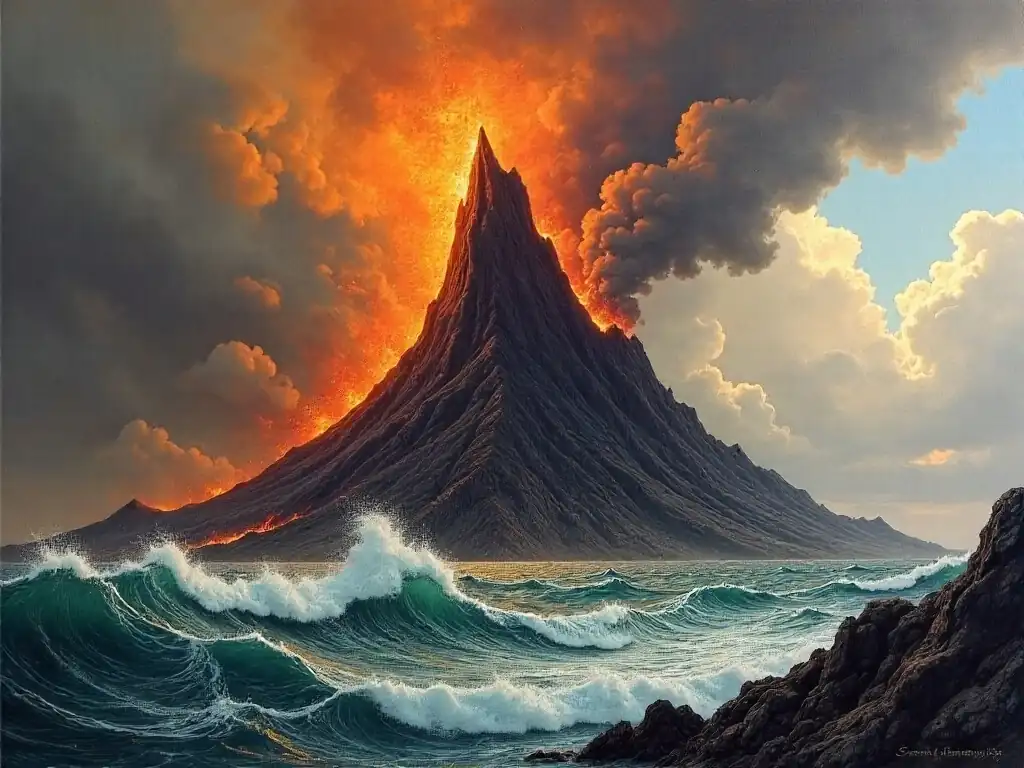
Welcome to Volcano Explorers, where the Earth breathes fire! Ever wondered if what you thought you knew about volcanic tsunamis was wrong? Prepare to have your understanding challenged as we dissect the shocking 2022 Hunga Tonga event. Was it just another eruption, or did it rewrite the rules? Dive in and uncover the surprising science behind the 2022 Hunga Tonga volcanic tsunami and its unprecedented impact.
- Introduction: The Unprecedented 2022 Hunga Tonga Eruption and Tsunami
- Understanding Traditional Volcanic Tsunami Formation
- The 2022 Hunga Tonga Eruption: A Different Kind of Volcanic Tsunami
- Challenging Conventional Tsunami Models: The Hunga Tonga Case Study
- New Research and Findings on the Hunga Tonga Tsunami Mechanism
- Global Impact and Propagation of the Hunga Tonga Tsunami
- Implications for Tsunami Warning Systems and Future Monitoring
- Lessons Learned from the 2022 Hunga Tonga Volcanic Tsunami
- Conclusion: Hunga Tonga - A Turning Point in Volcanic Tsunami Science
-
Frequently Asked Questions
- What made the Hunga Tonga-Hunga Ha'apai eruption and tsunami of 2022 so unique?
- How did the Hunga Tonga tsunami differ from tsunamis caused by earthquakes?
- What did scientists learn about volcanic tsunamis from the 2022 Hunga Tonga event?
- Were existing tsunami warning systems effective for the Hunga Tonga event?
- Could a similar volcanic tsunami happen again?
- Final Reflection: Echoes of Hunga Tonga and the Future of Preparedness
- Unearth Your Own Volcano Knowledge!
Introduction: The Unprecedented 2022 Hunga Tonga Eruption and Tsunami
The year 2022 witnessed a volcanic event of extraordinary magnitude – the eruption of Hunga Tonga-Hunga Ha'apai. This submarine volcano, located in the Tongan archipelago, unleashed an explosion that resonated around the globe, not only for its sheer power but also for the unusual tsunami it generated.
While volcanic tsunamis are not a new phenomenon, the 2022 Hunga Tonga volcanic tsunami presented a unique case study, challenging established scientific understanding and prompting a re-evaluation of how these natural hazards are formed and propagated. This eruption serves as a stark reminder of the complex and often unpredictable nature of volcanic activity and its far-reaching consequences, particularly in the context of tsunami generation.
The event on January 15, 2022, was characterized by an exceptionally rapid and violent eruption, injecting vast amounts of gas, aerosols, and ash high into the stratosphere. However, what truly distinguished this event was the nature of the resulting tsunami. Unlike many volcanic tsunamis linked to submarine landslides or caldera collapses, the Hunga Tonga tsunami appeared to be driven by atmospheric pressure waves generated by the eruption itself.
This mechanism, while previously considered, was not thought to be a primary driver of large, trans-oceanic tsunamis. The 2022 Hunga Tonga volcanic tsunami forced scientists to reconsider the dominant paradigms of volcanic tsunami generation and to explore the significant role of atmospheric coupling in these events.
Understanding Traditional Volcanic Tsunami Formation
Volcanic tsunamis, although less frequent than earthquake-generated tsunamis, are a significant hazard in volcanically active regions. Historically, the formation of these tsunamis has been largely attributed to several key mechanisms directly related to the volcanic activity itself, primarily involving the displacement of water due to mass movements or rapid changes in the seafloor. Understanding these traditional mechanisms is crucial to appreciate why the Hunga Tonga event was so exceptional and groundbreaking in the field of volcanology and oceanography.
Landslides and Pyroclastic Flows: Common Triggers of Volcanic Tsunamis
Submarine landslides represent a significant cause of volcanic tsunamis. These landslides can be triggered by volcanic eruptions destabilizing steep underwater slopes or by seismic activity associated with volcanism. When a large mass of rock and sediment slides into the ocean, it displaces a substantial volume of water, generating waves that radiate outwards as a tsunami.
Similarly, pyroclastic flows, hot, fast-moving currents of gas and volcanic debris, can also trigger tsunamis when they enter the sea. The rapid influx of material into the water, coupled with the potential for explosive interactions between hot pyroclastic material and seawater, can create significant water displacement and initiate tsunami waves. For instance, the 1883 Krakatoa eruption, while famously associated with atmospheric pressure waves, also likely generated tsunamis through pyroclastic flows entering the sea, contributing to the devastating waves that impacted coastlines across the Indian Ocean.
The Role of Caldera Collapse in Generating Tsunamis
Another well-established mechanism for volcanic tsunami generation is caldera collapse. Calderas are large, basin-shaped depressions formed after a voluminous eruption empties a volcano's magma chamber, causing the overlying ground to subside and collapse inwards. If a caldera collapse occurs in a coastal or island setting, the rapid subsidence of a large area of the seafloor can displace a massive volume of water, leading to the formation of a powerful tsunami.
The scale of the tsunami generated is often directly related to the size and speed of the caldera collapse. Historical examples, such as the caldera-forming eruption of Santorini around 1600 BCE, are believed to have generated significant tsunamis that impacted the Mediterranean region. The sudden and substantial change in bathymetry associated with caldera collapse makes it a potent mechanism for triggering large-scale tsunamis.
The 2022 Hunga Tonga Eruption: A Different Kind of Volcanic Tsunami
The 2022 Hunga Tonga-Hunga Ha'apai eruption stood apart from typical volcanic tsunami scenarios. While initial assumptions might have leaned towards landslide or caldera collapse mechanisms, the evidence rapidly pointed towards a more complex and less understood process. The characteristics of both the eruption and the resulting tsunami deviated significantly from what conventional models predicted, highlighting the need for a new perspective on volcanic tsunami generation.
Unique Characteristics of the Hunga Tonga-Hunga Ha'apai Eruption
Several features of the Hunga Tonga eruption distinguished it from other large volcanic events. Firstly, the eruption was exceptionally explosive, with a Volcanic Explosivity Index (VEI) estimated at 6, making it one of the largest eruptions in recent history.
However, unlike many VEI 6 eruptions, there was no significant caldera collapse associated with Hunga Tonga. Satellite imagery and bathymetric surveys conducted after the eruption revealed that while parts of the volcanic edifice were destroyed, a large-scale caldera collapse, the kind that would typically generate a massive tsunami through water displacement, did not occur.
Furthermore, the tsunami arrived remarkably quickly at distant locations, and its propagation speed and characteristics were not entirely consistent with tsunamis generated solely by water displacement from seafloor deformation. The rapid global propagation and the lack of clear evidence for a substantial water displacement mechanism from traditional sources suggested an alternative or additional tsunami generation mechanism was at play.
Atmospheric Pressure Waves and their Connection to the Tsunami
A key aspect of the Hunga Tonga eruption was the generation of powerful atmospheric pressure waves. The eruption produced a global atmospheric Lamb wave, a type of pressure wave that propagates horizontally through the atmosphere at high speeds.
These waves, radiating outwards from the eruption site, were detected by pressure sensors worldwide and even caused barometric disturbances in distant locations thousands of kilometers away. Crucially, research following the eruption strongly indicated that these atmospheric pressure waves played a significant, and perhaps dominant, role in generating the tsunami.
The rapid propagation of the Lamb wave, traveling at approximately the speed of sound in the atmosphere (over 1000 km/h), could explain the near-instantaneous arrival of the tsunami at distant shores, much faster than a typical tsunami traveling solely through water. This suggested that the atmospheric pressure pulse from the eruption was directly transferring energy to the ocean surface over a vast area, effectively "pushing" the ocean and generating the tsunami wave.
Challenging Conventional Tsunami Models: The Hunga Tonga Case Study
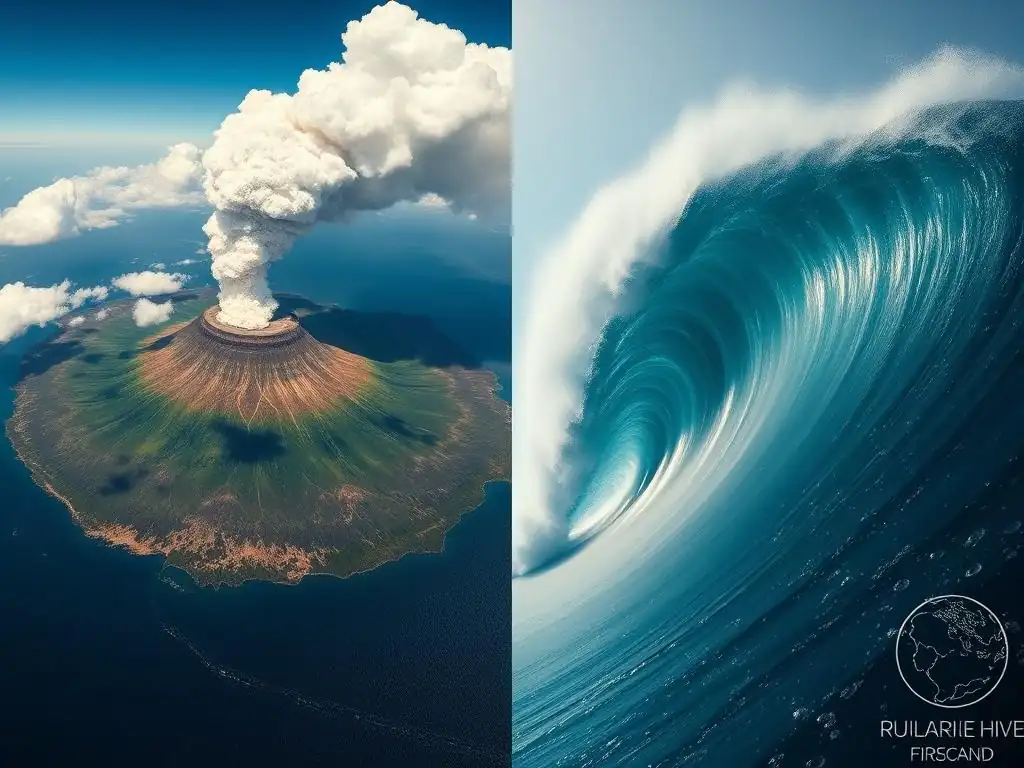
The 2022 Hunga Tonga volcanic tsunami exposed critical limitations in existing tsunami models, which are primarily designed to predict tsunamis generated by earthquakes or landslides. These models typically focus on seafloor deformation as the primary source of tsunami generation, calculating wave propagation based on water displacement and gravity. The Hunga Tonga event, however, demonstrated that atmospheric forcing could be a dominant factor in certain volcanic tsunamis, a mechanism not adequately incorporated into most standard tsunami prediction models.
Limitations of Existing Models in Predicting the 2022 Tsunami
Traditional tsunami models, relying on seafloor deformation as the primary input, struggled to accurately simulate the 2022 Hunga Tonga tsunami. When models were run using estimated seafloor changes based on pre- and post-eruption bathymetry, they significantly underestimated the observed tsunami heights and arrival times, especially at distant locations. For example, tide gauges thousands of kilometers from Tonga, such as in the Pacific coasts of North and South America, recorded tsunami waves with amplitudes exceeding expectations based on conventional models.
This discrepancy highlighted a fundamental gap in our predictive capabilities: the neglect of atmospheric forcing as a significant tsunami generation mechanism in volcanic eruptions. The Hunga Tonga event served as a stark reminder that relying solely on seafloor displacement models could lead to underestimation of tsunami hazards from certain types of volcanic eruptions, particularly those with strong atmospheric components.
The Significance of Atmospheric Coupling in Tsunami Generation
The Hunga Tonga eruption underscored the critical importance of atmospheric coupling in tsunami generation, particularly for highly explosive volcanic events. Atmospheric coupling refers to the transfer of energy from the atmosphere to the ocean. In the case of Hunga Tonga, the powerful atmospheric pressure waves, specifically the Lamb wave, exerted a direct downward pressure on the ocean surface over a vast area.
This pressure pulse acted like a giant piston, pushing down on the water and initiating a tsunami wave that then propagated outwards. This mechanism is distinct from traditional tsunami generation where energy is transferred from the solid Earth to the ocean through seafloor deformation.
The Hunga Tonga event demonstrated that for certain types of eruptions, the atmospheric contribution to tsunami generation can be as significant, or even more significant, than direct water displacement from volcanic mass movements or seafloor changes. This realization necessitates a paradigm shift in tsunami modeling and hazard assessment, requiring the integration of atmospheric dynamics and air-sea coupling processes into future models to more accurately predict and prepare for volcanic tsunamis.
New Research and Findings on the Hunga Tonga Tsunami Mechanism
Following the 2022 Hunga Tonga volcanic tsunami, a surge of research efforts focused on unraveling the precise mechanisms behind its generation and propagation. Scientists from various disciplines, including volcanology, atmospheric science, and oceanography, collaborated to analyze data from satellites, pressure sensors, tide gauges, and numerical models. This interdisciplinary approach yielded significant new insights, particularly regarding the role of atmospheric Lamb waves and the direct pressure-induced ocean displacement.
Studies on the Role of Atmospheric Lamb Waves
Numerous studies have since confirmed the dominant role of atmospheric Lamb waves in the Hunga Tonga tsunami. Researchers analyzed barometric pressure data from global networks and found clear evidence of a globally propagating Lamb wave emanating from the eruption site. Numerical simulations, incorporating atmospheric pressure forcing based on the observed Lamb wave characteristics, were able to reproduce the observed tsunami heights and arrival times much more accurately than models relying solely on seafloor deformation.
For example, studies published in journals like Nature and Geophysical Research Letters demonstrated that models incorporating atmospheric forcing could explain the rapid propagation and global reach of the tsunami, including the unusual phenomenon of multiple arrivals and the relatively long duration of the tsunami signal at distant locations. These studies provided compelling evidence that the atmospheric Lamb wave was not just a secondary effect, but a primary driver of the 2022 Hunga Tonga volcanic tsunami.
Evidence of Pressure-Induced Ocean Displacement
Further research provided direct evidence supporting the mechanism of pressure-induced ocean displacement. Scientists analyzed satellite altimetry data, which measures sea surface height, and observed a clear depression of the ocean surface in the vicinity of Hunga Tonga coincident with the arrival of the atmospheric pressure wave.
This observed sea surface depression directly correlated with the pressure pulse from the Lamb wave, indicating that the atmospheric pressure was indeed directly pushing down on the ocean surface and initiating the tsunami. Furthermore, analysis of tide gauge data revealed that the initial tsunami wave arrival was preceded by a slight sea level fall in some locations, consistent with the idea of an initial downward pressure pulse followed by the propagating tsunami wave.
These observations, combined with the modeling results, solidified the understanding that the 2022 Hunga Tonga volcanic tsunami was primarily generated by the direct transfer of atmospheric energy to the ocean through pressure waves, rather than solely through traditional water displacement mechanisms.
Global Impact and Propagation of the Hunga Tonga Tsunami
The 2022 Hunga Tonga volcanic tsunami was a truly global event, observed in all ocean basins and impacting coastlines thousands of kilometers from the source. Its propagation characteristics and global reach were distinct from typical earthquake-generated tsunamis, further highlighting the unique nature of this volcanic tsunami and its atmospheric generation mechanism.
Observed Tsunami Heights and Arrival Times Worldwide
The Hunga Tonga tsunami was detected by tide gauges and coastal monitoring stations across the Pacific, Atlantic, and Indian Oceans. Significant tsunami waves were recorded in locations as far away as Japan, Alaska, and even the Mediterranean Sea. In the near field, Tonga experienced tsunami wave heights of up to 15 meters in some coastal areas, causing significant damage and inundation.
Further afield, tsunami wave heights of 1-2 meters were observed along the Pacific coasts of North and South America, with notable impacts in places like California, Peru, and Chile. Even in the Atlantic, small but measurable tsunami signals were detected.
The arrival times of the tsunami at distant locations were remarkably rapid, consistent with the high propagation speed of the atmospheric Lamb wave. For instance, the tsunami reached the Pacific coast of the Americas in approximately 10 hours, much faster than would be expected for a tsunami generated solely by water displacement propagating at typical tsunami speeds in the ocean.
Distinguishing the Hunga Tonga Tsunami from Typical Earthquake-Generated Tsunamis
Several key characteristics differentiated the Hunga Tonga tsunami from typical earthquake-generated tsunamis. Firstly, the propagation speed was faster, as discussed earlier, due to the atmospheric forcing component. Secondly, the Hunga Tonga tsunami exhibited a longer duration and more complex wave train than many earthquake tsunamis. Tide gauges recorded tsunami signals for many hours, sometimes even days, after the initial arrival.
This prolonged duration is thought to be related to the extended period of atmospheric pressure oscillations following the eruption. Additionally, the Hunga Tonga tsunami displayed some unusual frequency characteristics, with a greater proportion of longer-period waves compared to typical earthquake tsunamis. These differences in propagation speed, duration, and frequency spectrum further underscored the distinct generation mechanism of the Hunga Tonga tsunami and its departure from the typical earthquake-driven tsunami paradigm.
Implications for Tsunami Warning Systems and Future Monitoring
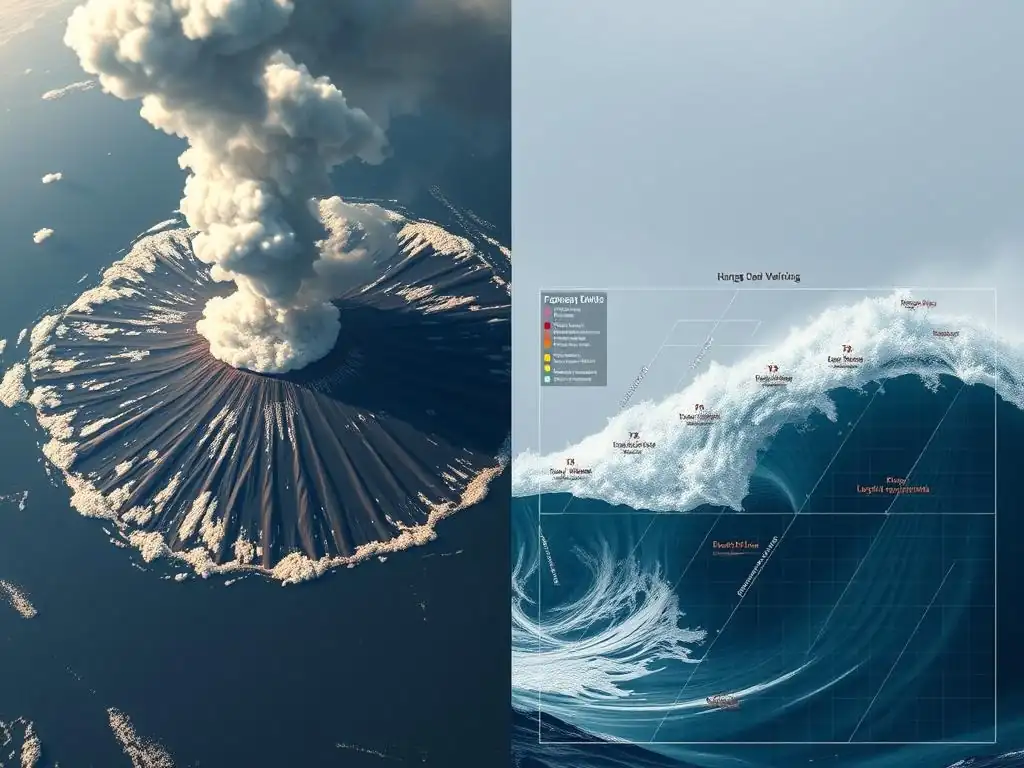
The 2022 Hunga Tonga volcanic tsunami revealed crucial gaps in existing tsunami warning systems, which are primarily designed to detect and warn for earthquake-generated tsunamis. The event highlighted the need to adapt and enhance these systems to account for the potential for atmospheric-driven volcanic tsunamis and to improve monitoring of both volcanic activity and atmospheric conditions.
Adapting Early Warning Systems to Account for Atmospheric Effects
Current tsunami warning systems largely rely on seismic networks to detect earthquakes and sea-level monitoring to confirm tsunami generation. However, these systems are not optimally designed to detect and respond to tsunamis primarily generated by atmospheric pressure waves. The Hunga Tonga event underscored the need to incorporate atmospheric monitoring data into tsunami warning protocols.
This could involve integrating data from barometric pressure sensors, infrasound networks, and meteorological satellites to detect and characterize atmospheric pressure waves associated with volcanic eruptions. Furthermore, tsunami models used in warning systems need to be updated to include atmospheric forcing mechanisms, allowing for more accurate prediction of tsunami generation and propagation in cases like Hunga Tonga. Developing "hybrid" tsunami warning systems that combine seismic, sea-level, and atmospheric data could significantly improve our ability to provide timely and effective warnings for all types of tsunamis, including those driven by atmospheric pressure from volcanic eruptions.
The Need for Improved Monitoring of Volcanic Activity and Atmospheric Conditions
The Hunga Tonga event also highlighted the necessity for enhanced monitoring of both volcanic activity and atmospheric conditions in volcanically active regions. Improved monitoring of submarine volcanoes, which are often less well-observed than terrestrial volcanoes, is crucial. This could involve deploying more underwater sensors, including pressure sensors and hydrophones, to detect pre-eruptive signals and monitor eruptive activity in real-time.
Furthermore, enhancing atmospheric monitoring capabilities in volcanic regions, particularly in remote areas, is essential. This could involve expanding networks of barometric pressure sensors and infrasound arrays to detect and track atmospheric pressure waves associated with volcanic eruptions. Combining improved volcanic and atmospheric monitoring with advanced modeling capabilities will be critical for developing more robust and comprehensive tsunami early warning systems that can effectively mitigate the risks from all types of volcanic tsunamis, including those driven by atmospheric forcing.
Lessons Learned from the 2022 Hunga Tonga Volcanic Tsunami
The 2022 Hunga Tonga volcanic tsunami provided invaluable lessons for the scientific community and for disaster preparedness efforts globally. It underscored the complexity of volcanic hazards, the interconnectedness of Earth systems, and the need for interdisciplinary research and a more holistic approach to hazard assessment and mitigation.
The Importance of Interdisciplinary Research in Understanding Complex Events
The Hunga Tonga event vividly demonstrated the importance of interdisciplinary research in understanding complex natural phenomena. Unraveling the mechanisms of the Hunga Tonga tsunami required the combined expertise of volcanologists, atmospheric scientists, oceanographers, and numerical modelers. Volcanologists contributed their knowledge of volcanic processes and eruption dynamics, atmospheric scientists provided insights into atmospheric wave generation and propagation, and oceanographers analyzed tsunami wave characteristics and propagation in the ocean.
Numerical modelers played a crucial role in integrating these diverse datasets and developing models that could simulate the complex air-sea interactions and tsunami generation processes. The success in understanding the Hunga Tonga event highlights the power of collaborative, interdisciplinary research in tackling complex scientific challenges and advancing our knowledge of natural hazards.
Rethinking Tsunami Hazard Assessments in Volcanically Active Regions
The 2022 Hunga Tonga volcanic tsunami necessitates a rethinking of tsunami hazard assessments in volcanically active regions. Traditional hazard assessments, often focused on earthquake-generated tsunamis and volcanic tsunamis driven by landslides or caldera collapses, may underestimate the risk from eruptions capable of generating strong atmospheric pressure waves. Future hazard assessments in volcanic regions should explicitly consider the potential for atmospheric-driven tsunamis, particularly for explosive submarine volcanoes.
This requires incorporating atmospheric forcing mechanisms into tsunami hazard models and considering the frequency and magnitude of explosive eruptions in hazard estimations. Furthermore, hazard assessments should be updated to account for the potential for rapid and far-reaching tsunamis generated by atmospheric pressure waves, as demonstrated by the Hunga Tonga event. Rethinking tsunami hazard assessments in volcanically active regions is crucial for developing more comprehensive and effective risk mitigation strategies and ensuring the safety of coastal communities.
Conclusion: Hunga Tonga - A Turning Point in Volcanic Tsunami Science
The 2022 Hunga Tonga-Hunga Ha'apai volcanic eruption and its associated tsunami marked a significant turning point in our understanding of volcanic tsunamis. This unprecedented event challenged long-held assumptions about tsunami generation mechanisms and highlighted the critical role of atmospheric coupling in certain volcanic eruptions. The 2022 Hunga Tonga volcanic tsunami served as a powerful real-world experiment, demonstrating that atmospheric pressure waves can be a dominant driver of large, trans-oceanic tsunamis, particularly from highly explosive volcanic eruptions.
The lessons learned from Hunga Tonga are profound and far-reaching. They necessitate a paradigm shift in tsunami science, requiring the integration of atmospheric dynamics into tsunami models and warning systems.
Moving forward, research efforts must continue to refine our understanding of atmospheric-ocean coupling in volcanic eruptions, improve monitoring capabilities for both volcanic and atmospheric activity, and develop more comprehensive and robust tsunami hazard assessments. The 2022 Hunga Tonga volcanic tsunami, while a devastating natural disaster, has also spurred a new era of volcanic tsunami research and preparedness, ultimately aimed at better protecting vulnerable coastal communities around the globe from these complex and powerful natural hazards.
Frequently Asked Questions
What made the Hunga Tonga-Hunga Ha'apai eruption and tsunami of 2022 so unique?
The 2022 Hunga Tonga eruption generated a tsunami that was unusual because it was largely driven by the atmospheric pressure wave from the explosion, rather than just the displacement of water by the eruption itself. This led to the tsunami travelling further and faster than expected.
How did the Hunga Tonga tsunami differ from tsunamis caused by earthquakes?
Unlike earthquake-generated tsunamis, the Hunga Tonga tsunami was primarily caused by an atmospheric pressure wave, resulting in a global impact with waves reaching distant coastlines, whereas earthquake tsunamis are usually caused by tectonic plate movement and are more localized.
What did scientists learn about volcanic tsunamis from the 2022 Hunga Tonga event?
The event highlighted the importance of considering atmospheric coupling in tsunami models and the potential for volcanic eruptions to generate globally significant tsunamis, even at considerable distances.
Were existing tsunami warning systems effective for the Hunga Tonga event?
Existing tsunami warning systems were partially effective, but the speed and global reach of the pressure wave-driven tsunami exposed limitations in their ability to accurately predict and warn for such events, requiring further refinement and data integration.
Could a similar volcanic tsunami happen again?
Yes, while the Hunga Tonga eruption was unique, it demonstrated that volcanic eruptions can indeed cause unexpectedly large and far-reaching tsunamis. This underscores the need for continuous monitoring and research to better understand and prepare for future volcanic tsunami events.
Final Reflection: Echoes of Hunga Tonga and the Future of Preparedness
The exploration of the 2022 Hunga Tonga volcanic tsunami reveals more than just a geological event; it underscores the urgent need to reassess our understanding of tsunami generation and the vulnerabilities of coastal communities. The sheer scale and atypical characteristics of this event serve as a stark reminder that nature's power can exceed our current predictive models, demanding a more comprehensive and adaptable approach to disaster preparedness.
The impact of Hunga Tonga extends far beyond the immediate devastation, forcing a re-evaluation of our risk assessments and early warning systems. This event has personally reinforced the importance of continuous learning and adaptation in the face of unpredictable natural phenomena. The only constant is change.
This ancient wisdom resonates deeply as we grapple with the lessons learned from Hunga Tonga, urging us to embrace innovation and collaboration in our efforts to protect lives and livelihoods.
As we move forward, let us not forget the lessons etched in the volcanic ash of Hunga Tonga. Consider how you can contribute to a more resilient future, whether through supporting scientific research, advocating for improved infrastructure, or simply raising awareness within your own community. The challenge is significant, but by embracing a spirit of vigilance and proactive engagement, we can collectively mitigate the risks and build a safer world for generations to come.
Alright, here's a Call to Action designed for the end of a web article titled "Did Hunga Tonga Rewrite the Rules of Volcanic Tsunamis in 2022?" on Volcano Explorers:
Unearth Your Own Volcano Knowledge!
Thank you for delving into the fascinating world of volcanic tsunamis and the impact of Hunga Tonga. Now that you've expanded your understanding of this complex phenomenon, it's time to take your exploration further!
Here are a few ways to continue your journey:
- Become a Citizen Scientist: Report unusual coastal activity near volcanic areas. Your observations could contribute to early warning systems!
- Explore the Volcano Explorers archive for more in-depth articles on volcanic eruptions around the globe, focusing on lesser-known events that shaped our understanding.
- Share this article with friends and colleagues who are interested in Earth sciences and disaster preparedness – let's spread awareness!
What surprising fact about volcanic tsunamis will you share with others today?